Australian Shepherd Growth Plates and When They Close
It's incredibly exciting to watch an Australian Shepherd puppy grow, seeing them transform from a fluffy little land shark into a lanky, energetic adolescent. But with all that growth comes a big responsibility for us owners, especially when it comes to protecting their developing bodies. One of the biggest concerns many of us have is exercising our eager pups too much, too soon, risking harm to those vulnerable growth plates. This guide will walk you through what growth plates are, when they typically close in an Australian Shepherd, and how you can ensure your growing companion stays healthy and injury-free as they mature.
What Are Growth Plates and Why They Matter So Much for Your Aussie
Let's start with the basics. What exactly are growth plates? Officially known as epiphyseal plates, these are areas of cartilage located near the ends of the long bones in young, growing dogs. Think of them like the "construction zones" of your puppy's skeleton. They're where new bone tissue is constantly being produced, allowing the bones to lengthen and your puppy to grow bigger.
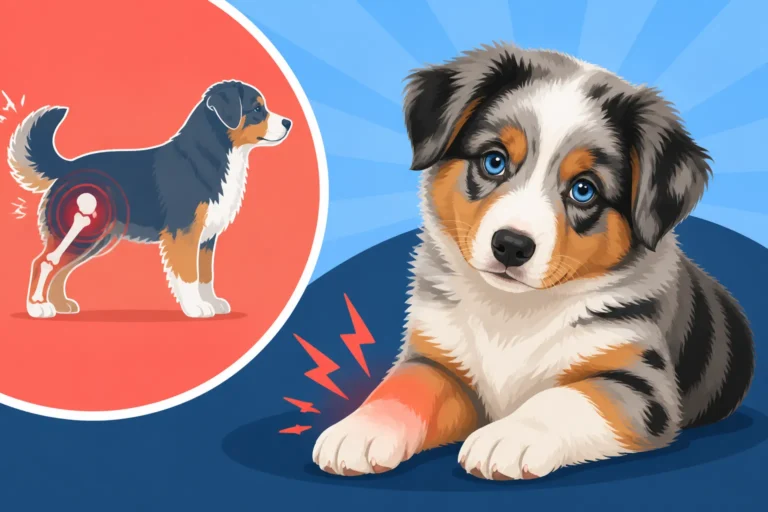
The crucial thing to understand about growth plates is that until they "close" – meaning they ossify or harden into solid bone – they are significantly weaker than the surrounding ligaments, tendons, and mature bone. This vulnerability makes them incredibly susceptible to injury. A hard landing, a sudden twist, or repetitive high-impact activities can cause a growth plate fracture, or even cause the growth plate to close prematurely. Unlike a broken bone in an adult dog, which often heals back to normal, damage to a growth plate can have lasting consequences, potentially leading to deformed limbs, chronic pain, and early-onset arthritis. This is particularly important for an active breed like the Australian Shepherd, known for their agility and boundless energy. We often want to harness that drive, but doing so too soon can have devastating effects on their long-term health.
Understanding the Australian Shepherd Growth Plate Closure Timeline
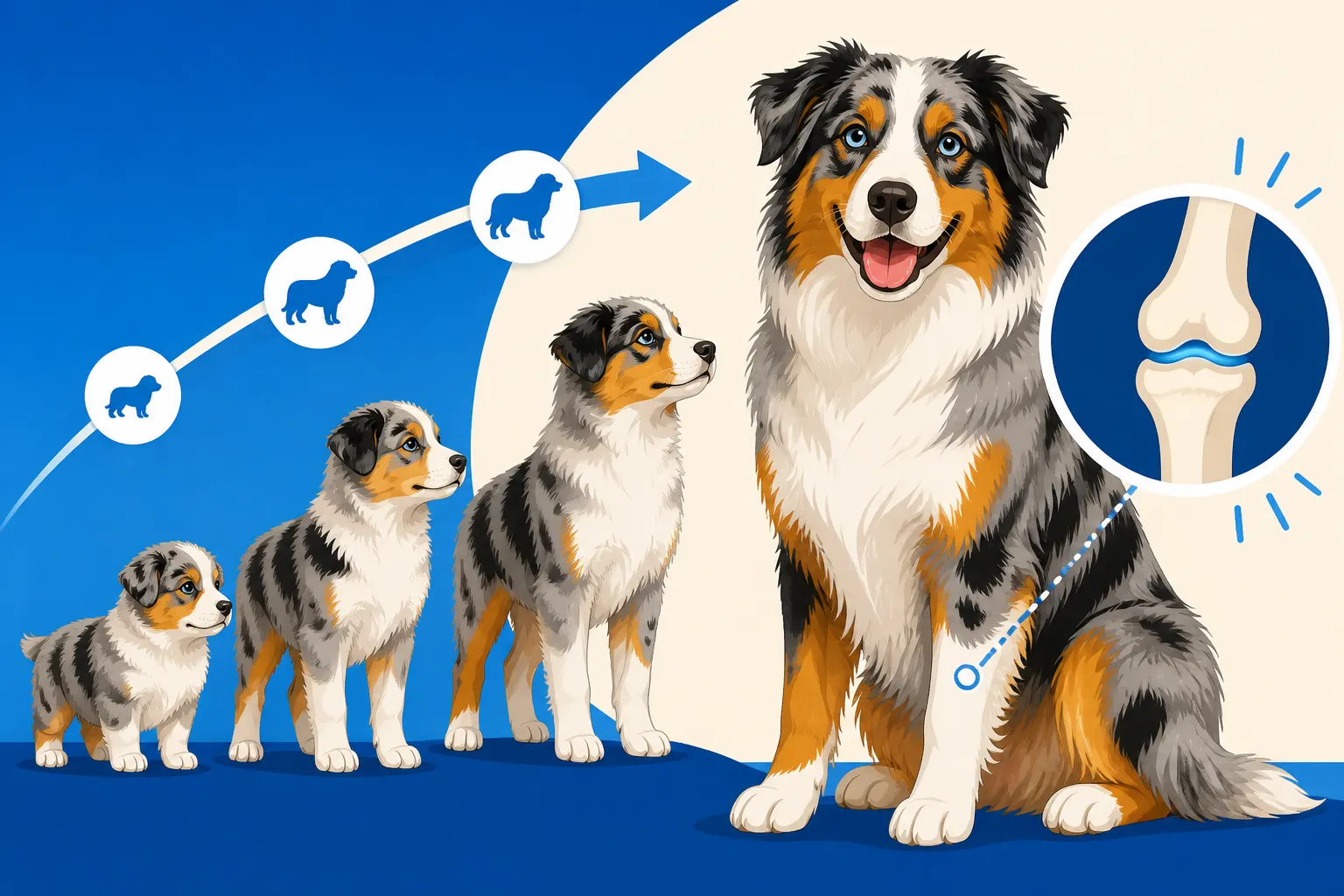
The timing of growth plate closure isn isn't an exact science, as it can vary slightly between individual dogs and even different bones within the same dog. However, for most medium to large breeds like the Australian Shepherd, we typically see growth plates closing somewhere between 12 to 18 months of age. Some Aussies, particularly larger males, might have certain plates, like those in the elbow or knee, that aren't fully ossified until closer to 24 months.
It's tempting to think your Aussie is "done growing" when they hit their adult height around a year old, but their bones are still very much in a delicate state. During this time, the cartilage is gradually replaced by bone, strengthening the structure. There's no magical day when all growth plates slam shut simultaneously; it's a gradual process. While an X-ray is the only definitive way to confirm that all growth plates have fused, your veterinarian can provide guidance based on your dog's age, breed, and physical examination. When you're looking for a puppy, reputable breeders should be knowledgeable about The Health Tests Every Australian Shepherd Parent Needs and understand these developmental stages, advising you on appropriate exercise.
Here’s a general timeline for growth plate closure in dogs, which applies broadly to Australian Shepherds, keeping in mind individual variation:
| Bone/Joint | Average Closure Age (Months) | Notes |
|---|---|---|
| Distal Ulna | 4-8 | One of the earliest to close; critical for forearm growth. |
| Proximal Radius | 6-10 | Also early, works with the ulna. |
| Humerus (Shoulder) | 8-12 | Upper arm bone. |
| Femur (Thigh) | 10-14 | Longest bone in the leg, important for hip and knee function. |
| Tibia/Fibula (Shin) | 10-14 | Lower leg bones. |
| Pelvis | 12-18 | Hip region, often one of the last areas to fully mature. |
| Vertebrae (Spine) | Up to 18-24 | Spinal growth can continue longer than limb bones. |
This table provides general guidelines, but always consult with your veterinarian for specific advice regarding your Australian Shepherd's development.
The Real Risks of Over-Exercising Your Young Australian Shepherd
It’s easy to get caught up in the incredible energy of an Australian Shepherd puppy. They’re practically bouncing off the walls, and we feel compelled to tire them out! However, pushing a young Aussie too hard before their growth plates are fully closed carries significant and often irreversible risks. These aren't just minor sprains; we're talking about injuries that can impact their quality of life for years, potentially leading to chronic pain and expensive veterinary interventions.
One common injury is an actual growth plate fracture. Because the plate is weaker than bone, it can fracture under stress that wouldn't necessarily break mature bone. This might happen from a hard fall, jumping repeatedly from high places, or even an awkward twist during intense play. Fractures often require surgical intervention and extensive recovery, which can be a huge financial and emotional strain. Another concern is avulsion injuries, where a ligament or tendon pulls a small piece of bone directly from the growth plate. This happens because the connective tissues are stronger than the plate itself, especially during sudden, powerful movements. Imagine your energetic Aussie suddenly slamming on the brakes after a full-speed sprint – that kind of force can be enough to cause damage.
Perhaps even more insidious is the risk of premature growth plate closure. If a growth plate is injured, it might fuse before it's supposed to. If this happens to one side of a bone or to one bone in a pair (like the radius and ulna in the forearm), the other side or bone continues to grow, leading to an angular limb deformity. These deformities can cause lifelong lameness, discomfort, and severely impact your dog’s mobility and gait. Corrective surgeries for these issues are complex, costly, and don’t always restore full function. Investing in pet insurance like Healthy Paws early on can be a lifesaver for unexpected situations like this, helping to cover the often hefty surgical and rehabilitation costs. We often talk about Australian Shepherd Hip Dysplasia and Working Joints, but growth plate injuries are equally serious for a developing dog's overall structural integrity. The last thing any of us want is our beloved companion to be suffering from Australian Shepherd Arthritis After Years of Work before they've even truly lived their adult life.
Nurturing Your Aussie: Safe Exercise and Activities for Growing Dogs
So, if intense exercise is out, what can you do with your high-energy Australian Shepherd puppy? The key is to focus on controlled, low-impact activities and prioritize mental stimulation over physical exhaustion. Remember, a tired brain is often just as effective as a tired body for an Aussie!
A good general rule of thumb for physical activity is "five minutes per month of age, twice a day." This means a 4-month-old puppy gets two 20-minute sessions of controlled exercise per day. This isn't forced running or endless fetch; it's supervised play, short walks on varied, soft terrain like grass or dirt trails, and exploring new environments. Avoid repetitive motions on hard surfaces such as pavement jogging or long, strenuous hikes. Jumping, especially off furniture or high platforms, should be discouraged until they are fully mature. Activities like intensive agility training, dock diving, or long-distance running should definitely be off-limits until your vet confirms those growth plates are closed. Many owners wonder about Exercise Limits for an Australian Shepherd Under a Year and it's truly about preventing long-term damage. Similarly, Stairs and a Young Australian Shepherd's Joints is a common concern – short periods are usually fine, but avoid long, frequent climbs.
Instead, channel that incredible Aussie intelligence! Engage them with puzzle toys, scent work (hiding treats around the house or yard), obedience training (which is excellent mental work), and learning new tricks. These activities burn mental energy, build your bond, and don't put undue stress on their developing joints. Puppy playdates with other appropriately matched and vaccinated puppies in a safe, supervised environment can be good for socialization and moderate exercise, but avoid roughhousing or disproportionate play with much larger or older dogs. Swimming, once your vet has given the okay and your puppy is comfortable and safe, can also be a wonderful low-impact exercise option. For breeds like the Australian Shepherd, known for their powerful drive, these types of activities will help fulfill their needs without putting them at risk. It’s a marathon, not a sprint, when raising an Aussie, and protecting their joints now means a healthier, happier companion for years to come. Thinking ahead, early joint support from a quality diet and careful exercise can help prevent An Aussie Stiff After a Career in Agility down the line. Even if you have pet insurance like Healthy Paws, it's always better to prevent injuries than to treat them.
Disclaimer
The information provided in this article is for general educational purposes only and is not a substitute for professional veterinary advice. Always consult with a qualified veterinarian for any health concerns or before making any decisions about your Australian Shepherd's care or exercise regimen.