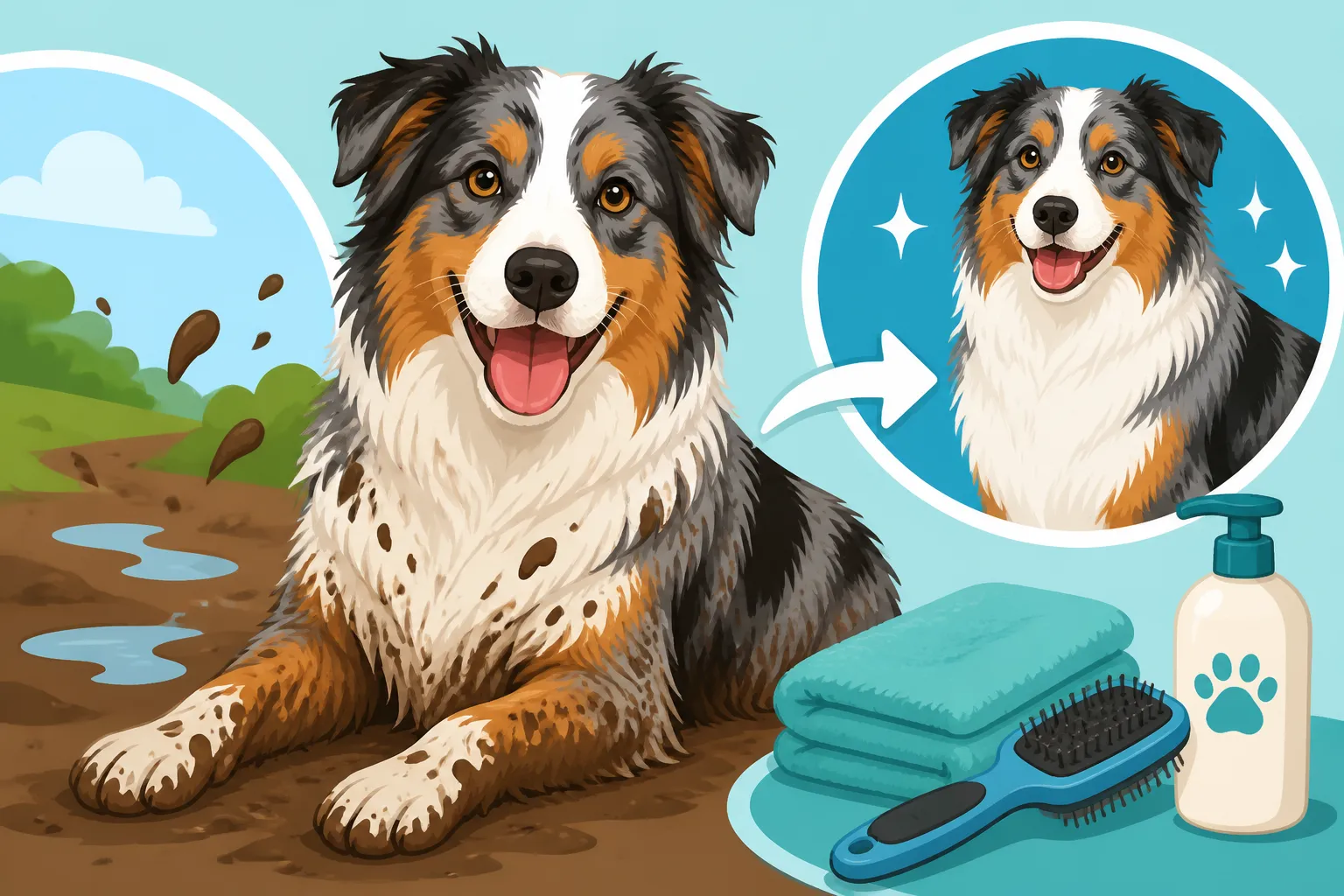
Australian Shepherd Coat Care After a Muddy Day
Oh, the sheer joy of an Australian Shepherd… and then the inevitable exasperation of seeing them emerge from a glorious, muddy adventure looking like a four-legged swamp monster! That magnificent double coat, so perfect for insulating them in winter and, theoretically, shedding water, becomes an absolute magnet for every speck of dirt, leaf litter, and sticky burr. If you've ever found yourself wrestling a mud-caked Aussie into the tub, or spent what feels like an entire afternoon picking tiny debris out of their glorious feathers, you know the struggle is real. This guide is here to walk you through the most effective, sanity-saving ways to tackle Australian Shepherd coat care after a muddy day, ensuring both their health and your peace of mind remain intact.
The Immediate Aftermath: Containing the Muddy Beast
When your Australian Shepherd bounds back inside, tail wagging, after an impromptu mud bath, your first instinct might be to panic. But a little preparation and a calm approach can save you a lot of clean-up time. The key is to intercept the mud before it gets tracked through your entire home.
The Mudroom or Designated "Decontamination Zone"
Every Australian Shepherd owner, whether they live on a sprawling farm or in a cozy apartment, needs a designated mud-handling zone. This could be a true mudroom, a tiled entryway, or even just a specific corner of the bathroom with a non-slip mat. The idea is to have a space where your dog can be contained and worked on without spreading the mess further. Imagine your Aussie, fresh from a romp in the soggy backyard after a rain shower, eager to greet you. Instead of letting them charge past, you gently steer them directly into this zone. Having a gate or a way to temporarily confine them to this area is incredibly helpful, especially for those high-energy Aussies who might try to make a run for it. This isn't just about cleanliness; it's about routine. Your dog will quickly learn that "mudroom" or "wash time" means a specific sequence of events, which can make the whole process less stressful for everyone involved. Keep a large, old towel or two, maybe even a dedicated "mud towel," handy right by the door, along with a stiff brush.
First Pass: Brushing and Wiping Away the Loose Stuff
Once your Australian Shepherd is safely in their designated area, resist the urge to immediately dunk them in water if the mud is still wet and clumpy. Often, a significant amount of mud can be removed more easily if it's allowed to dry a bit. Think about mud on your own shoes – it's far easier to brush off when it's dry than to smear around when wet. While you're waiting for the mud to dry on their coat, you can start with a preliminary wipe-down of their paws and legs if they're still dripping wet, using that dedicated mud towel. Gently blot and squeeze excess water and mud from their legs and belly.
Once the mud has started to dry, or if it's already mostly dry but caked on, a stiff brush can work wonders. A rubber curry comb or a ZoomGroom brush, often found on sites like Amazon, can effectively dislodge dried mud and dirt from their double coat without pulling too much on their fur. Work in the direction of hair growth, starting from their back and moving down their sides, legs, and especially those magnificent feathered trousers and tail. These longer areas are notorious for collecting debris. You'll be amazed at how much dirt can come off with just a good brushing, turning a solid brown leg back into a beautiful blue merle or red tri pattern. This initial step can drastically reduce the amount of mud you'll have to deal with in the bath, or even make a full bath unnecessary if the mud wasn't too extensive.
Deep Cleaning: When the Mud Won't Just Brush Off
Sometimes, no amount of brushing will cut it. For those truly epic mud adventures, a more thorough cleaning is in order. Getting an Australian Shepherd clean down to the skin, especially with their dense double coat, requires patience and the right technique.
Spot Cleaning for Minor Mud Patrols
Not every muddy outing requires a full bath. If your Aussie only managed to get their paws and lower legs dirty, or perhaps just a splash of mud on their chest, spot cleaning is your best friend. For this, gather a small basin of warm water, a clean washcloth or sponge, and a mild dog-specific shampoo. You can find excellent options for gentle, effective dog shampoos on Chewy. Avoid using human shampoos, as their pH balance is often too harsh for canine skin and can strip natural oils, leading to dryness and irritation.
Dampen the washcloth and apply a small amount of shampoo, lathering it up before gently scrubbing the affected areas. Focus on the paws, the insides of the legs, and the belly where mud loves to cling. Be thorough but gentle. Once you've scrubbed away the mud, use a fresh, damp cloth to rinse the shampoo out completely. Any residue left behind can cause skin irritation or lead to matting. Finish by blotting the area dry with a clean towel. Spot cleaning is a quick and effective way to manage minor mud incidents, keeping your dog comfortable and your house cleaner without the full production of a bath. Australian Shepherd Paw Injuries From Hard Running can also sometimes lead to small cuts that mud could irritate, so a good cleaning is crucial.
The Full Bath Protocol for a Truly Caked-On Aussie
For the days when your Australian Shepherd has gone full "mud monster," a proper bath is unavoidable. This isn't just about cosmetic appeal; caked-on mud can irritate their skin, harbor bacteria, and lead to mats if not removed. Start by making sure you have everything you need within reach: several large, absorbent towels, a good dog shampoo and conditioner (again, specifically formulated for dogs, available from retailers like Amazon), a rubber mat for the tub to prevent slips, and maybe a cup or pitcher for rinsing.
Begin by thoroughly wetting your Aussie's coat with lukewarm water. This is crucial for their dense double coat. You need to get the water all the way down to the skin. This can take several minutes, especially on their legs, belly, and under the armpits. Use a spray nozzle if you have one, as it makes penetration much easier. Once they are thoroughly soaked, apply shampoo, starting from their neck and working your way back, down their legs, and under their belly. Really work the shampoo in with your fingers, massaging it through the undercoat to ensure every hair is clean. Don't be shy about scrubbing gently! Pay extra attention to those areas that collect the most mud: the 'trousers' on their back legs, the chest, and their feet. If their mud situation is particularly severe, you might even consider a clarifying shampoo first, followed by a regular moisturizing one.
The most critical step in bathing an Australian Shepherd is rinsing. You absolutely must rinse thoroughly, and then rinse again. Any shampoo residue left in their thick undercoat can cause skin irritation, itching, and lead to flaky skin. Keep rinsing until the water runs clear and you can feel no slickness on their coat. It often takes much longer than you think! After the shampoo, a light conditioner can help to keep their coat soft, manageable, and prevent tangles. Again, rinse that out completely as well. This thorough cleaning not only removes the mud but also helps in maintaining a healthy coat. Washing Right Down to an Aussie's Skin is important for skin health and preventing issues like hot spots.
| Tool/Technique | Purpose | When to Use | Considerations |
|---|---|---|---|
| Stiff Brush | Removing dry, caked-on mud/dirt | Immediately post-mudding, once mud begins to dry. | Avoid pulling wet fur; gentle but firm strokes. |
| Curry Comb | Loosening dirt, stimulating skin, distributing shampoo | Dry mud removal, during shampooing to work product through undercoat. | Excellent for thick undercoats; easy to clean. |
| Dedicated Towels | Initial drying, containing mess | Entryway, before bath, post-bath blotting. | Keep separate from household towels; absorbent materials best. |
| Mild Dog Shampoo | Cleansing coat and skin | Spot cleaning, full bath. | pH balanced for dogs; avoid human products. |
| Dog Conditioner | Detangling, moisturizing coat | After shampooing, especially for longer feathers prone to tangles. | Helps maintain coat health and manageability. |
| Spray Nozzle | Thorough wetting and rinsing | Full bath. | Essential for penetrating dense double coats. |
Dealing with Dreaded Mats and Tangled Feathers
Mud isn't just dirty; it's a prime culprit for creating painful mats and tangles, especially in the longer "feathering" on an Australian Shepherd's legs, belly, and behind their ears. If the mud is still wet, it’s generally best to get the bulk of the mud off before tackling any major mats, as pulling on wet, muddy fur can be even more painful. However, if the mud has dried into a solid, matted clump, you might need to try and gently break it apart before bathing.
After a thorough bath and rinse, while the coat is still damp, is the ideal time to address any remaining tangles. Apply a good dog-specific detangling spray – you can find many effective ones on Chewy or at your local pet store. Work it into the matted areas. Then, using a slicker brush or a wide-toothed comb, slowly and gently work through the tangles, starting from the ends of the hair and working your way towards the skin. Never pull or yank, as this can hurt your dog and make them dread future grooming sessions. If you encounter a stubborn mat, you might need to carefully tease it apart with your fingers, or use a mat splitter. In severe cases, where mats are tight against the skin, professional grooming might be necessary to safely remove them. Prevention is always better than cure, so regular brushing, as discussed in Brushing an Australian Shepherd Twice a Week, can significantly reduce the chances of these muddy tangles turning into major headaches.
Drying the Australian Shepherd Double Coat
Properly drying an Australian Shepherd's double coat after a bath, especially a muddy one, is just as important as the washing itself. Leaving their coat damp can lead to skin issues like hot spots, mildew, and an unpleasant smell. Plus, a damp undercoat is a magnet for new dirt and can quickly form new mats.
Towel Drying and the Initial Water Removal
Once your Australian Shepherd is out of the tub, the first step is to remove as much water as possible with towels. Don't just rub vigorously, as this can actually cause tangles and damage the coat. Instead, gently squeeze and blot the water out of their fur, starting from their head and working down to their tail and legs. Use multiple absorbent towels – you'll be surprised how many it takes for a full-sized Aussie! Pay particular attention to their legs, chest, and belly, as these areas tend to hold a lot of water. You can gently press and roll the towel around their body, absorbing as much moisture as possible. This initial towel dry removes the majority of the surface water and will cut down significantly on the time needed for subsequent drying methods. Remember to also gently dry inside their ears, but avoid pushing anything into the ear canal.
The Power of Forced Air: Dog Dryers vs. Human Dryers
For an Australian Shepherd, a forced-air dog dryer is truly a game-changer. These powerful dryers are designed to blow cool or lukewarm air at a high velocity, effectively pushing water out of the dense undercoat without using excessive heat that could damage skin or hair. Drying an Aussie down to the roots is critical, and a human hairdryer, while it might seem convenient, is generally not suitable. Human hairdryers get too hot, can burn your dog's skin, and often lack the force needed to penetrate the thick undercoat, leaving it damp.
When using a dog dryer, keep the nozzle moving constantly, and work in sections. Start from the hindquarters and move forward, lifting sections of fur with your free hand to ensure the air reaches the skin. This technique, often called "line drying," involves separating the coat into small sections and drying each section down to the skin before moving on. This method is incredibly effective at preventing mats and ensuring thorough dryness. If you're considering purchasing one, there are many highly-rated dog dryers available on sites like Amazon that are well worth the investment. For more in-depth advice on this, you might find Why an Aussie Must Be Dried to the Roots helpful.
Preventing Post-Bath Mats and Skin Issues
Ensuring your Australian Shepherd is completely dry after a bath is paramount. Even a slightly damp undercoat can quickly lead to painful skin infections, known as "hot spots," or encourage the growth of mildew, creating an unpleasant odor. As you are drying, continue to brush their coat with a slicker brush or a pin brush. Brushing while drying helps to separate the hairs, allowing the air to circulate more effectively and preventing any new tangles or mats from forming as the coat dries.
After using a forced-air dryer, let your Aussie run around for a bit or give them one last good toweling down. Feel their coat all over, especially in the thickest areas like the ruff, the tail, and behind the ears, to ensure there are no lingering damp spots. A completely dry coat will lie properly, feel soft, and be free of any musty smell. This diligence in drying not only keeps their coat healthy and beautiful but also prevents discomfort and potential vet visits down the line. It’s an essential part of the care routine for a double-coated breed like the Australian Shepherd.
Proactive Strategies: Avoiding the Worst of the Mud
While knowing how to clean up a muddy Aussie is invaluable, even better is finding ways to prevent the worst of the mud from happening in the first place. A little foresight and some practical tools can save you a lot of grooming time.
Protective Gear: Booties and Rain Coats
For those truly soggy days, or if your yard becomes a mud pit after every rain, protective gear can be a lifesaver. Dog booties, for instance, can offer a barrier between your Australian Shepherd's paws and the mud. They take some getting used to for most dogs, but with patience and positive reinforcement (plenty of high-value treats!), many Aussies can learn to tolerate them. Look for booties that are waterproof and have a secure fastening mechanism to prevent them from slipping off mid-romp. You can find a wide variety of styles and sizes on Amazon. While they might not cover all the leg feathering, they significantly reduce the amount of mud tracked inside and keep paw pads cleaner.
Similarly, a lightweight, waterproof dog raincoat can protect a large portion of your Aussie's back, sides, and chest from getting completely soaked and caked in mud. While their long leg feathers will still likely get dirty, protecting the main body of their dense double coat means a much quicker clean-up. Some raincoats even have belly flaps for extra protection. Choosing a coat that fits well and allows for full range of motion is key, especially for an active breed like an Australian Shepherd. It might feel a bit silly at first, dressing your dog in gear, but the reduced clean-up time makes it incredibly practical.
Smart Grooming and Yard Management
Beyond protective gear, smart grooming practices and a bit of yard management can go a long way in minimizing muddy coat woes. Regular grooming is your first line of defense. Keeping your Australian Shepherd's coat well-maintained, with minimal mats and dead undercoat, means there's less for mud to cling to. The Rake That Reaches an Aussie Undercoat is an indispensable tool for this. Make sure to regularly trim the hair between their paw pads, as well as the longer feathering on their hocks and around their sanitary areas. These areas are prime spots for collecting mud, burrs, and other debris. Trimming them shorter, or doing Sanitary Trims on an Australian Shepherd, makes cleaning much easier.
Furthermore, consider your yard. Are there perpetually muddy spots where your Aussie loves to play? You might be able to mitigate these areas by laying down wood chips, gravel, or even temporary mats in high-traffic zones. Creating a designated "potty" area that's less prone to mud can also help. And, of course, the simplest preventative measure: always have a towel by the door. Make it a routine to wipe paws and give a quick brush-down before your Australian Shepherd fully enters the house, even if they don't look that dirty. Consistent daily attention, even just a minute or two, can prevent minor mud from becoming a major issue. This is also a good opportunity to perform Checking an Australian Shepherd for Burrs and Foxtails, which can get embedded after outdoor adventures.
Disclaimer
This article is for general informational purposes only and does not constitute professional advice. Laws, prices and regulations vary by location and change over time. Consult a qualified professional for guidance on your specific situation.