Cutting Aussie Nails Between Grooms
It's a common frustration for Australian Shepherd owners: you get your beautiful, energetic companion groomed, their nails are perfectly trimmed, and then what feels like mere weeks later, they're clicking on the floor again. Keeping up with your Aussie's nail length between professional grooming appointments can feel like a never-ending battle, but neglecting it can lead to real discomfort and even serious health issues for your dog. This guide will walk you through everything you need to know to confidently and safely manage your Australian Shepherd's nail care right at home, ensuring their paws stay healthy and happy.
Why Regular Nail Trimming is Non-Negotiable for Your Aussie's Health
You might think a little extra nail length is just a cosmetic issue, but for an active breed like the Australian Shepherd, it's far from it. Long nails aren't just annoying; they can fundamentally alter your dog's gait, cause pain, and lead to more severe problems down the line. It's a foundational part of their overall paw health, just as important as the care for their amazing double coat.
The Hidden Dangers of Overgrown Nails
Imagine wearing shoes that are constantly too small, pushing your toes up and back with every step. That's a bit like what an Australian Shepherd experiences with overgrown nails. When the nails get too long, they push against the ground, forcing the paw to splay outwards. This unnatural posture puts strain on the toe joints and can radiate up the leg, affecting the carpal joints, elbows, and even shoulders and hips. Over time, this constant stress can contribute to or exacerbate conditions like Australian Shepherd Arthritis After Years of Work, making movement painful and reducing their quality of life.
Beyond structural issues, there's the 'quick.' The quick is the blood vessel and nerve that runs through the core of your dog's nail. When nails are allowed to grow long, the quick grows with them. This means that when you do eventually trim them, there's less actual nail to trim before you hit the sensitive quick, making future trims even harder and increasing the risk of painful accidents. Nobody wants to hurt their dog, and the fear of cutting the quick can make owners hesitant, creating a vicious cycle of ever-longer nails and quicks.
Then there's the immediate danger: long nails are simply more prone to catching on carpets, rough terrain, or even during playful roughhousing. A torn or broken nail can be incredibly painful, often bleeding profusely and leaving the quick exposed to infection. Depending on the severity, a torn nail might require a costly veterinary visit, pain medication, and antibiotics, which is a situation every Aussie owner would prefer to avoid.
Maintaining Proper Paw Structure and Comfort
Keeping your Aussie's nails at an appropriate length ensures their paws can function as nature intended. When nails are short, the paw pads make full contact with the ground, providing natural traction and stability. This allows your Australian Shepherd to stand, walk, run, and jump with confidence, distributing their body weight evenly across their paw. For a breed that excels in dog sports, herding, and long hikes, maintaining this natural paw structure is paramount to their athletic performance and everyday comfort.
Proper nail length also plays a role in preventing other paw-related woes. Long nails can trap dirt, mud, and debris against the paw pad, creating a breeding ground for bacteria or fungi. This can lead to persistent paw pad irritation, redness, or even infections that are itchy and uncomfortable. Regular trims, combined with routine checks for burrs and foxtails (especially after outdoor adventures, as discussed in Australian Shepherd Paw and Coat Care After Fieldwork), contribute significantly to overall paw hygiene and health, minimizing the chances of these common irritations taking hold.
Understanding Your Aussie's Nails: The Anatomy of a Trim
Before you pick up any tools, it's vital to understand what you're actually trimming. Your Aussie's nails aren't just inert keratin; they're living structures with sensitive parts you need to protect. Knowing the anatomy will make you a more confident and effective nail trimmer.
Identifying the Quick and the Nail Structure
The most critical part of your dog's nail is the "quick." This is the pink, sensitive area that contains blood vessels and nerve endings. Cutting into the quick is painful for your dog and will cause bleeding. On light-colored or clear nails, the quick is usually visible as a pinkish area within the translucent nail. You'll see the translucent nail material and then, closer to the paw, the opaque pink quick. You want to trim just before the quick.
For Australian Shepherds with dark or black nails, identifying the quick can be much trickier, which is where many owners get nervous. You can't see the quick directly, so you have to learn to read the nail's cross-section. As you trim small slivers off a dark nail, you'll initially see a solid black or dark gray center. As you get closer to the quick, this center will change to a lighter gray, and then, just before the quick, you'll see a small, dark circle or oval—often described as a "bullseye" or "doughnut" shape. That's your cue to stop! It indicates you are right on the edge of the quick. Many experienced groomers and vets advise taking tiny, frequent cuts when dealing with dark nails to avoid over-trimming.
Each nail also has several layers. The outermost layer is the hard, protective keratin. Beneath that, especially closer to the quick, the nail tissue can be softer. Understanding this structure helps you make clean, precise cuts without crushing the nail.
Choosing the Right Tools for the Job
Having the right tools makes all the difference in making nail trims a smoother experience for both you and your Australian Shepherd. There are two primary types of tools for home nail care, each with its own benefits.
1. Nail Clippers:
There are generally two styles of clippers:
- Scissor-style clippers (Plier-style): These resemble heavy-duty scissors and are often preferred for larger, thicker nails. They offer good leverage and a clean cut. Brands like Safari or Millers Forge are popular choices and readily available on platforms like Chewy or Amazon.
- Guillotine-style clippers: These have a small hole where you insert the nail, and a blade slides across to cut it. They can be effective for some dogs, but some owners find them less intuitive or find they can crush the nail if not sharp or used correctly.
When choosing clippers, ensure they are sharp. Dull clippers can splinter or crush the nail, which is uncomfortable for your dog. A good pair of sharp clippers will make a clean cut.
2. Nail Grinders:
Nail grinders are rotary tools that file down the nail rather than cutting it. They're excellent for:
- Dark-nailed Aussies: Since you're filing gradually, it's much easier to avoid the quick. You can watch for the "doughnut" effect more easily.
- Smoothing edges: Grinders leave a smooth edge, which is great for preventing snags and can be more comfortable for your dog and less likely to scratch you or your floors.
- Dogs sensitive to clippers: Some Aussies dislike the sensation or sound of clippers, but might tolerate a grinder.
Popular brands include Dremel (which makes pet-specific models) and Casfuy, also widely available on Chewy and Amazon. If using a grinder, remember to introduce it slowly so your Aussie gets used to the sound and vibration.
Essential Accessories:
No matter which method you choose, you absolutely need styptic powder on hand. Products like Kwik Stop are readily available. This powder helps to quickly stop bleeding if you accidentally nick the quick. Don't skip this step – accidents happen, and being prepared keeps stress levels down for both of you. Good lighting is also crucial; a headlamp or a bright workspace will help you see the nail structure more clearly.
Here's a quick comparison of clippers vs. grinders:
| Feature | Nail Clippers (Scissor/Plier Style) | Nail Grinders (Rotary Tool) |
|---|---|---|
| Method | Cuts the nail with a sharp blade. | Files down the nail gradually using a rotating abrasive bit. |
| Speed | Generally faster for quick trims. | Slower, more gradual process. |
| Quick Visibility | Harder to judge on dark nails, easier on light nails. | Easier to avoid the quick, even on dark nails, due to gradual filing. |
| Finish | Can leave sharp edges if not filed afterward. | Leaves a smooth, rounded edge. |
| Noise/Vibration | Quiet, but the sudden "snip" can startle some dogs. | Produces a humming sound and vibration, which some dogs might dislike initially. |
| Risk of Quicking | Higher if not careful, especially on dark nails. | Lower risk, as filing is gradual. |
| Best For | Quick trims on cooperative dogs, clear-nailed dogs. | Dogs with dark nails, quick-phobic dogs, smoothing. |
| Cost | Generally lower initial cost. | Higher initial cost, but long-lasting. |
Step-by-Step Home Nail Trimming for Australian Shepherds
Now that you understand the "why" and "what" of nail care, let's get into the "how." The key is patience, positive reinforcement, and consistency.
Creating a Calm and Positive Trimming Environment
The foundation of successful home nail trims is making it a positive, or at least neutral, experience for your Aussie. Many dogs develop a fear of nail trims due to past negative experiences, often involving pain or being forced into uncomfortable positions.
Start by practicing paw handling well before you even introduce tools. Gently touch and massage their paws, including each toe and nail. Pair this with high-value treats and calm praise. Do this frequently, not just when you intend to trim. The goal is for your Aussie to associate paw handling with good things. This is a great example of Cooperative Care for an Australian Shepherd at the Vet, where the dog is an active, willing participant in their own care.
Choose a quiet time and location where you and your dog can be relaxed and undisturbed. A non-slip surface is helpful for stability. Offer a long-lasting chew or a Lickimat smeared with peanut butter to distract them during the process. If your Aussie is particularly anxious, you might break the process down into tiny steps: day one, just show them the clippers; day two, touch the clippers to a paw; day three, maybe trim one nail, and so on, building up slowly. Never force your dog or scold them if they pull away. End on a positive note, even if you only managed one nail.
The Trimming Technique: Clippers vs. Grinder
Once your Aussie is comfortable with having their paws handled and the tools are present, you can begin the actual trimming.
Using Clippers:
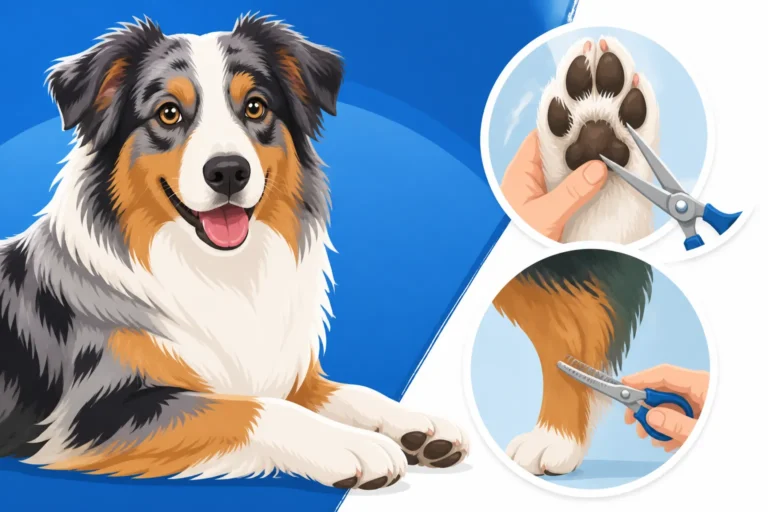
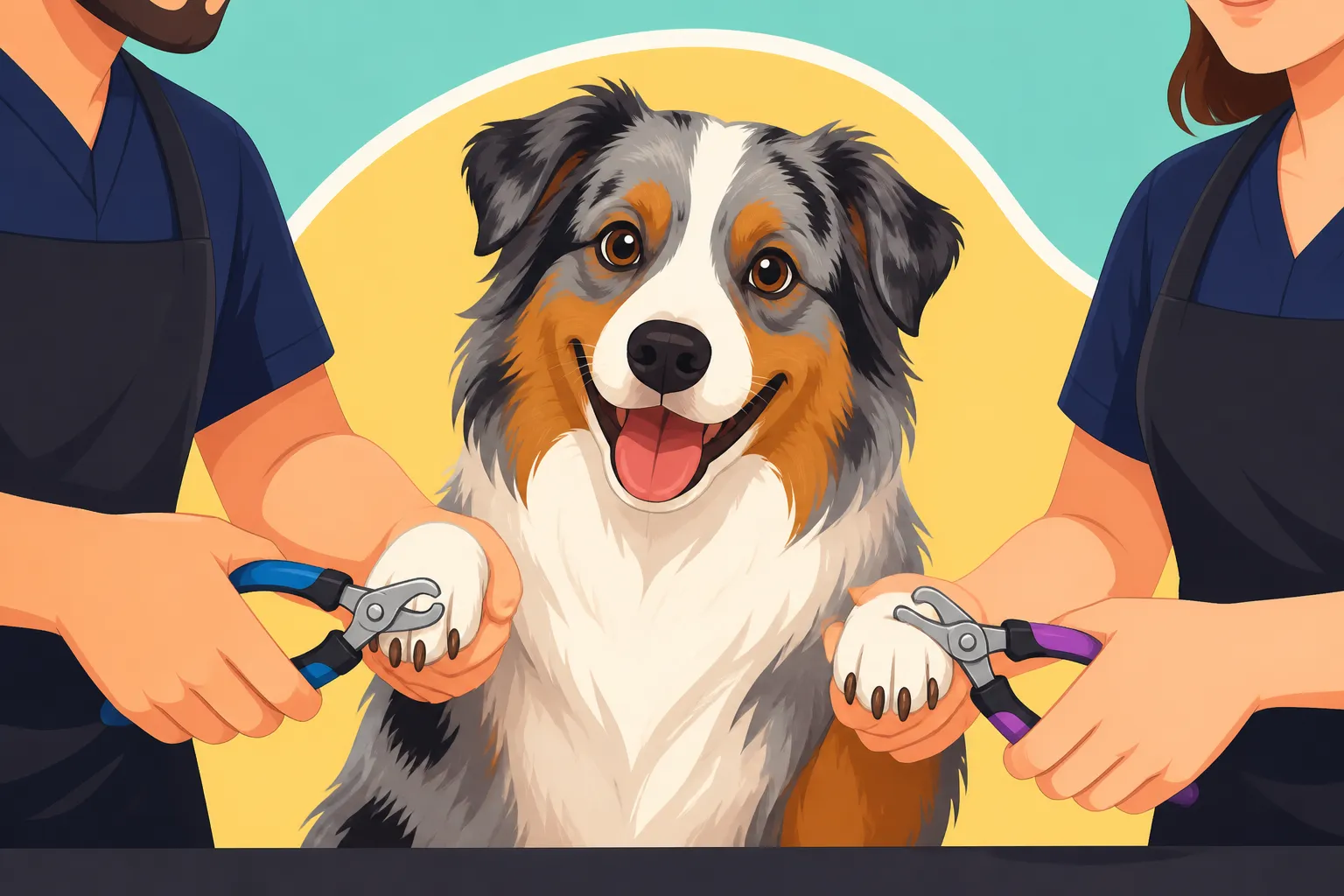
- Hold the Paw Securely: Gently hold your Aussie's paw, ensuring you have a clear view of the nail. Use your thumb on top of the paw and your fingers underneath to stabilize the toe and push the fur back.
- Position the Clippers: Hold the clippers firmly in your dominant hand. Position them at a 45-degree angle to the floor, cutting from the bottom of the nail upwards. This angle follows the natural curve of the nail and helps to avoid the quick.
- Make Small Cuts: This is crucial, especially for dark nails. Take off only a tiny sliver of the nail at a time. "Less is more" is the golden rule here. You can always take off more, but you can't put it back.
- Check the Cross-Section: After each small cut, examine the cut surface of the nail.
- Light nails: You'll see the white outer nail, and as you get closer to the quick, a pinkish area will appear. Stop when you see pink.
- Dark nails: You'll see a solid dark center. As you get closer to the quick, this center will become lighter gray, and then you'll see a small dark circle (the "bullseye" or "doughnut"). Stop immediately when you see this.
- Repeat for All Nails: Work through each nail, rewarding your Aussie with treats and praise for their cooperation. Don't forget the dewclaws (the thumbs on the inside of their front legs), as these don't wear down naturally and can grow into the paw pad if neglected.
Using a Grinder:
- Introduce Gradually: If new to grinding, let your Aussie hear the sound and feel the vibration first, away from their paws. Reward calmness.
- Hold the Paw Securely: Similar to clippers, hold the paw firmly and push back any fur to prevent it from getting caught in the grinder.
- Grind in Short Bursts: Turn the grinder on and off quickly. Touch the grinder to the tip of the nail for just a second or two, then pull away. This prevents heat buildup, which can be uncomfortable.
- Shape and Shorten: Work around the tip and sides of the nail, shaping it down gradually. For dark nails, constantly check the cross-section as you grind for the "doughnut" sign.
- Be Mindful of Heat: The friction from grinding can create heat. Take frequent breaks and don't hold the grinder on one nail for too long.
- Repeat and Reward: Continue with each nail, offering treats and praise.
Aim to trim your Aussie's nails every 2-4 weeks. The exact frequency will depend on how quickly their nails grow and how much natural wear they get from their activities. An Aussie that runs on pavement often might need less frequent trims than one that mostly walks on soft grass.
Dealing with Dark Nails and Unexpected Quickings
Dark nails are the nemesis of many home groomers. As mentioned, the key is to take very small cuts or use a grinder. When clipping, look at the underside of the nail. You'll often see a V-shape where the quick ends and the horny part of the nail continues. Aim to trim the tip of this V. With each tiny nip, check the cut surface for the tell-tale "doughnut" sign. Patience is your best friend here.
Despite your best efforts, sometimes you'll accidentally "quick" the nail. It happens to even experienced groomers and vets. The most important thing is to remain calm. A quicked nail will bleed, and your Aussie might yelp or pull away.
If you quick the nail:
- Apply Styptic Powder: Immediately apply a generous pinch of styptic powder directly to the bleeding tip of the nail.
- Apply Pressure: Hold gentle but firm pressure on the nail with your finger or a clean cloth for 30-60 seconds to help the powder adhere and stop the bleeding.
- Reassure Your Aussie: Speak calmly and offer comforting words. Don't make a huge fuss, which can escalate their anxiety. Offer a special treat after the bleeding has stopped.
- Don't Give Up: Try to finish the other nails later if your dog is too stressed, but don't let one negative experience derail all future trims. Just be extra gentle next time. Remember, your calm demeanor will help your Aussie recover much faster.
Advanced Tips and Maintaining Consistency
Mastering the art of home nail trims is an ongoing process, but with a few extra strategies, you can make it a stress-free routine for both you and your Australian Shepherd.
Incorporating Nail Care into Your Routine
The secret to keeping your Aussie's nails in top shape is consistency. Don't wait until you hear the tell-tale "click-clack" on your hardwood floors. Make nail checks a regular part of your interaction. You could integrate it into your daily cuddle time on the couch, or after their evening walk when they're a bit tired and relaxed. Just a quick check of each paw and a little praise for calm handling can go a long way.
Consistent, frequent trimming, even if you're only taking off tiny amounts, encourages the quick to recede over time. This makes future trims easier and safer, allowing you to get the nails even shorter without causing discomfort. Think of it as gently coaxing the quick back to where it should be.
While walking on hard surfaces like pavement can help naturally wear down the tips of the nails, it rarely gets them short enough, especially the dewclaws. It’s also important to be mindful of Australian Shepherd Paw Pads After Rough Ground, as excessive walking on harsh surfaces can cause wear and tear. Therefore, natural wear is a supplement, not a replacement, for regular trimming.
When to Seek Professional Help
While home grooming can save you money (think about Whether Home Grooming Saves an Aussie Owner Money compared to regular salon visits), it's important to know your limits. Some Australian Shepherds, particularly those with a history of negative experiences or high anxiety, simply will not tolerate home nail trims. Trying to force the issue can erode trust and potentially lead to bites.
In these cases, don't feel like a failure. Professional groomers and veterinary technicians are skilled at handling difficult dogs and can often get the job done efficiently and safely. You might consider using a professional for the initial "heavy lifting"—getting severely overgrown nails back to a manageable length and helping the quick recede. Then, if your dog becomes more tolerant, you can try maintaining them at home. For very anxious dogs, your vet might even recommend sedation for a stress-free trim. Implementing strategies like Muzzle Training an Australian Shepherd can also be incredibly helpful for vet visits, making the experience safer for everyone involved.
Remember that a full Australian Shepherd Grooming at $50 to $100 a Session often includes nail trimming, so if you're already going for a professional groom, their nails will be taken care of. However, waiting for a full groom every few months might not be frequent enough to keep nails optimally short. Combining professional grooms with regular, gentle home maintenance is often the best approach.
Lastly, if your Aussie's nails are so overgrown they're curling into their paw pads, causing lameness, swelling, or signs of infection, a visit to the veterinarian is essential. They can address any pain or infection and trim the nails safely, possibly under sedation if needed.
Disclaimer
This article is for general informational purposes only and does not constitute professional advice. Laws, prices and regulations vary by location and change over time. Consult a qualified professional for guidance on your specific situation.