Hereditary Cataracts in an Australian Shepherd
It’s a heart-wrenching moment for any Australian Shepherd parent: you look into those intelligent, expressive eyes, and you notice a subtle cloudiness, a hint of opacity that wasn't there before. Your heart sinks because you know what it often means – cataracts. This isn't just about cosmetic changes; it's about your dog's world, their navigation, their joy. This comprehensive guide is dedicated to shedding light on hereditary cataracts in Australian Shepherds, helping you understand what they are, how they develop, and the best ways to manage this challenging condition to ensure your beloved companion continues to thrive.
Understanding Hereditary Cataracts in Australian Shepherds
Watching your Australian Shepherd navigate their world is a joy, especially with their keen eyesight. But the thought of that vision diminishing due to something genetic can be incredibly worrying. Hereditary cataracts are a significant concern within the breed, and understanding them is the first step in protecting your furry family member.
What are Cataracts and Why Aussies are Prone?
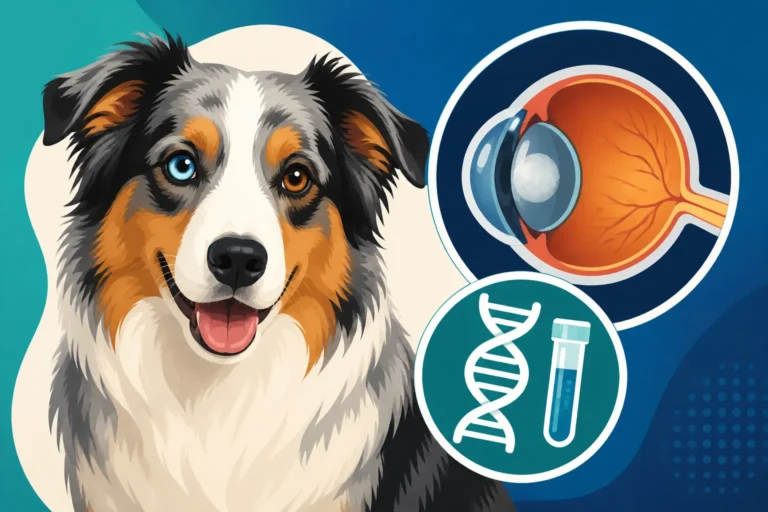
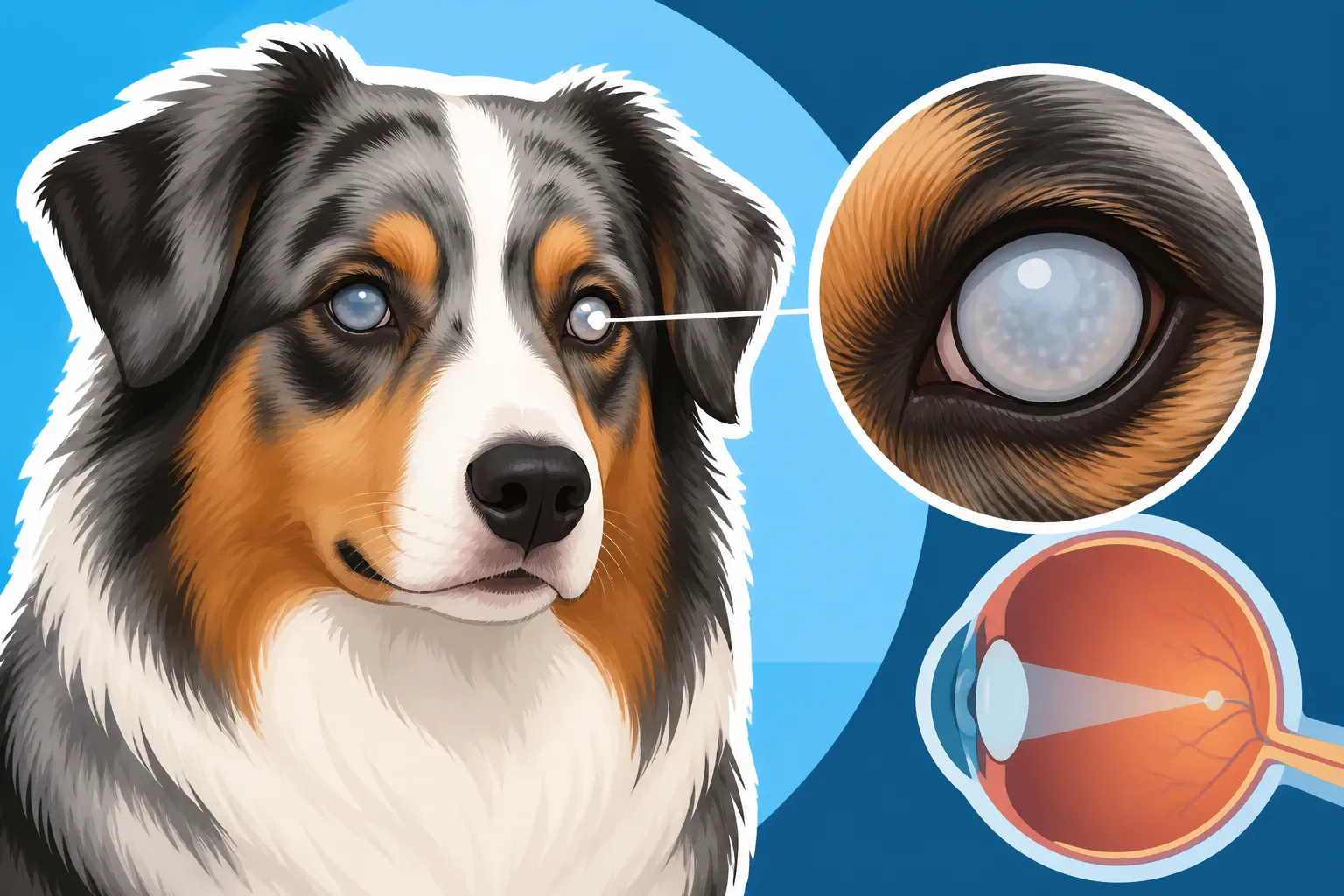
At its simplest, a cataract is an opacity or clouding of the lens of the eye, which normally should be crystal clear to allow light to pass through to the retina. Think of trying to look through a dirty or frosted window; that's essentially what your dog experiences. As the lens becomes opaque, light cannot reach the retina effectively, leading to impaired vision and, in severe cases, blindness. This isn't just a condition that comes with old age, though older Aussies can certainly develop cataracts (often called senile cataracts, which are different from hereditary ones). The frustration of seeing a relatively young, vibrant Australian Shepherd start to struggle with their sight due to a condition they inherited is truly challenging for owners.
Australian Shepherds are particularly prone to a specific type of hereditary cataract, often referred to as HSF4-associated cataracts. This genetic predisposition means that even with the most attentive care, some Aussies carry the blueprint for this condition within their DNA. It’s not something you did or didn’t do; it’s a roll of the genetic dice that makes them more susceptible compared to many other breeds. The concern often hits hard when you realize how much your Aussie relies on their vision for their daily activities, whether it's herding imaginary sheep in the backyard or catching a frisbee mid-air.
Identifying Early Signs of Hereditary Cataracts
The onset of hereditary cataracts can be insidious, often starting subtly and progressing over time. As a dedicated Australian Shepherd owner, you’re already tuned into your dog’s quirks and routines, and this attentiveness becomes crucial for early detection. One of the first signs you might notice, especially if the cataracts are affecting the central part of the lens, is a slight decrease in your Aussie's night vision. They might hesitate more on evening walks, stumble over familiar obstacles in dimly lit rooms, or seem less confident navigating stairs after dusk. This can be particularly frustrating for a dog that thrives on movement and activity.
As the condition progresses, the cloudiness in the lens becomes more apparent. You might notice a bluish-grey haze in the center of their pupil when looking at them in certain lights, particularly when light hits their eyes from the side or when their pupils are dilated. It often looks like a subtle pearl or frosted glass within the eye. Beyond the visual cues, behavioral changes are key indicators. Your Australian Shepherd might start bumping into furniture, misjudging distances when jumping, or becoming more hesitant to explore new environments. They might also react differently to shadows or sudden movements, sometimes startling more easily because their peripheral vision is compromised. If you’re seeing these changes, it's definitely time to schedule a visit to your vet or, ideally, a veterinary ophthalmologist, who can provide a much clearer picture of what’s happening with your dog’s eyes.
The Genetics Behind Australian Shepherd Cataracts
For Australian Shepherd owners, understanding the genetic underpinnings of conditions like hereditary cataracts is vital. It’s not just about what we see; it’s about the silent code carried in their DNA that can manifest in various health challenges. When it comes to cataracts, the story often circles back to a particular gene.
The HSF4 Gene and Its Role
The primary culprit behind many cases of hereditary cataracts in Australian Shepherds is a mutation in the HSF4 gene (Hereditary Cataracts – Heat Shock Transcription Factor 4). This gene plays a crucial role in lens development and maintenance, and a faulty version can disrupt this delicate process, leading to the formation of cataracts. What makes this gene particularly interesting, and sometimes frustrating for breeders, is its mode of inheritance. The HSF4 mutation is inherited in an autosomal dominant fashion with incomplete penetrance.
What does "autosomal dominant" mean for your Aussie? It means that a dog only needs to inherit one copy of the mutated gene (from either parent) to be at risk of developing cataracts. This is different from recessive conditions, where two copies are needed. However, the "incomplete penetrance" part adds another layer of complexity. It means that not every dog with one copy of the HSF4 mutation will necessarily develop cataracts, or they might develop them later in life, or they might have a milder form. This variability can make it a real challenge for breeders trying to eliminate the gene entirely, as outwardly healthy carriers can still pass it on. If an Aussie inherits two copies of the mutated gene, the risk and severity often increase significantly. This understanding helps shed light on why even well-bred Aussies can still surprise their owners with this condition, highlighting the critical need for genetic testing. For more detailed information, you can read about The HSF4 Test for Australian Shepherds.
Genetic Testing for HSF4 in Aussies
Given the genetic predisposition, one of the most powerful tools available to Australian Shepherd owners and breeders is genetic testing. This isn't some complex, invasive procedure; typically, it involves a simple cheek swab that collects cells for DNA analysis. Labs like Paw Print Genetics or Embark Vet offer comprehensive panels that include the HSF4 test, making it accessible for anyone to get a clearer picture of their dog's genetic makeup.
The results of an HSF4 genetic test will usually come back as one of three classifications: "Clear," "Carrier," or "Affected." A "Clear" result means your Aussie does not have the HSF4 mutation and cannot pass it on to offspring. A "Carrier" means your dog has one copy of the mutated gene. While carriers are at a higher risk for developing cataracts themselves (due to the dominant nature, even with incomplete penetrance), they can also pass that single copy to 50% of their puppies if bred. An "Affected" result means your Aussie has two copies of the mutated gene, putting them at the highest risk for developing cataracts, often at a younger age and with greater severity. They will pass a copy of the gene to 100% of their offspring. Knowing your dog's status isn't just for breeders; it provides peace of mind and allows you to be proactive in monitoring your dog's eye health. It’s an essential part of responsible pet ownership, helping to ensure the longevity and health of the breed, and is often included in The Genetic Panel Every Australian Shepherd Needs.
Diagnosing and Monitoring Cataracts in Your Aussie
Suspecting your Australian Shepherd might have cataracts is stressful, but a proper diagnosis can bring clarity and a path forward. The journey often begins with your regular veterinarian, but a specialist is usually required for a definitive diagnosis and treatment plan.
The Comprehensive Ophthalmic Exam
When you first bring your Australian Shepherd in with concerns about their vision, your general practice veterinarian will likely perform an initial eye exam. However, for a precise diagnosis of cataracts and to rule out other eye conditions, a visit to a board-certified veterinary ophthalmologist is highly recommended. These specialists have advanced equipment and expertise specifically for eye health.
During a comprehensive ophthalmic exam, the ophthalmologist will typically use several tools. They’ll often use an ophthalmoscope, a specialized light source and magnifying lens, to look deep into the eye and examine the lens, retina, and optic nerve. They'll also usually dilate your dog's pupils using eye drops, which allows for a much wider view of the lens and the back of the eye, making it easier to spot even very small or early cataracts. A crucial part of this exam is differentiating cataracts from nuclear sclerosis, a common and benign age-related change where the lens hardens and appears cloudy but doesn't significantly impair vision. It's easy for owners to mistake one for the other, which is why a specialist's eye is so important. For breeding Aussies or those with a known family history of cataracts, these comprehensive exams are typically recommended annually, or even twice a year, as part of their routine health screenings. This proactive approach can catch problems early, offering more treatment options. You might also ask your breeder about The Aussie Puppy Eye Check at Six Weeks, which can sometimes catch issues even earlier.
Tracking Progression and Vision Impairment
Once cataracts are diagnosed, the next step is often to monitor their progression. Not all cataracts develop at the same rate; some can remain small and static for years, barely affecting vision, while others can progress rapidly, leading to complete blindness within months. This variability can be frustrating as an owner, as it makes planning difficult. Your veterinary ophthalmologist will likely establish a schedule for follow-up exams to track the size, density, and location of the cataracts.
At home, you can also keep an eye on your Australian Shepherd's vision. Pay attention to their confidence in different lighting conditions, their ability to track toys, and any changes in their gait or spatial awareness. Are they bumping into the same corner table more often? Are they hesitant to jump on the couch they once scaled with ease? Keeping a log of these observations can be incredibly helpful for your vet. The most critical factor in deciding on intervention is often the impact on your dog's quality of life. If they are struggling to play, navigate their home, or showing signs of anxiety due to impaired vision, then treatment options become more urgent. It's about ensuring your Aussie can still enjoy life, even if that means making adjustments to their environment or considering surgical solutions. If you find your senior Australian Shepherd losing its sight, it can be beneficial to look into how to adapt your home.
| Characteristic | Cataracts | Nuclear Sclerosis |
|---|---|---|
| Appearance | Dense, opaque, often white or milky clouding | Hazy, bluish-grey, central haze; usually translucent |
| Location | Can affect any part of the lens | Primarily the nucleus (center) of the lens |
| Impact on Vision | Significant vision impairment or blindness | Minimal to no significant impact on vision |
| Age of Onset | Can be hereditary (young-adult) or age-related | Typically seen in older dogs (6+ years) |
| Cause | Protein aggregation, genetic factors (HSF4) | Normal aging process, hardening of lens fibers |
| Treatment | Surgical removal is the only effective treatment | No treatment needed, does not progress to blindness |
Management and Treatment Options for Aussie Cataracts
When faced with an Australian Shepherd diagnosed with cataracts, the thought of treatment can feel overwhelming. It’s important to know that while not all cataracts require intervention, for those that do, there are options to restore or preserve vision.
Medical Management and Supportive Care
It’s a common misconception that eye drops can "cure" cataracts. Unfortunately, for true cataracts (the irreversible clouding of the lens), there are currently no medically proven eye drops that can dissolve or reverse them. Any products advertised as such should be approached with extreme caution. However, certain eye drops might be prescribed by your vet or ophthalmologist to manage secondary issues, such as inflammation that can sometimes accompany cataract development, or to help dilate the pupil temporarily for better vision in certain conditions. Antioxidant supplements may also be suggested, though their efficacy in preventing or reversing cataracts is not definitively proven.
The real strength of medical management and supportive care lies in adapting the environment to help your visually impaired Australian Shepherd. This involves creating a consistent and safe living space. Avoid moving furniture around unnecessarily, especially in areas your dog navigates frequently. Keep pathways clear of clutter. Consider using tactile mats or subtle scent markers at the top and bottom of stairs to alert your dog to changes in elevation. This approach can significantly reduce anxiety and prevent accidents, allowing your Aussie to maintain confidence even with reduced vision. It's about maximizing their independence and comfort as their sight changes, similar to how owners adapt for Living With a Deaf Australian Shepherd.
Cataract Surgery and Post-Operative Care
For cataracts that significantly impair vision and impact your Australian Shepherd's quality of life, surgical intervention is often the most effective treatment. The procedure, called phacoemulsification, is very similar to human cataract surgery. It involves making a tiny incision in the eye, inserting a probe that uses high-frequency ultrasound waves to break up the cloudy lens, and then suctioning out the fragments. In most cases, an artificial intraocular lens (IOL) is then implanted to restore proper focus, much like a contact lens.
Cataract surgery boasts a high success rate in restoring vision, often around 90-95% for uncomplicated cases. However, it's not without risks. Potential complications include post-operative inflammation, glaucoma, retinal detachment, or infection, although these are relatively rare when performed by an experienced veterinary ophthalmologist. The commitment doesn't end with the surgery; extensive post-operative care is crucial for success. This typically involves administering multiple types of eye drops several times a day for weeks, if not months, to manage inflammation and prevent infection. Your Aussie will also need to wear an Elizabethan collar (the "cone of shame") to prevent rubbing or scratching their eyes, and their activity will be restricted to prevent undue strain or injury during the healing process. This entire process requires significant dedication, patience, and financial investment, which can certainly feel daunting. Having pet insurance, such as from Healthy Paws, can be incredibly helpful in mitigating the substantial cost of such specialized surgeries, which can easily run into thousands of dollars. Thinking about Whether an Aussie Sees Again After Cataract Removal is a good way to frame discussions with your vet.
Living with an Australian Shepherd with Cataracts
Discovering your Australian Shepherd has cataracts can feel like a curveball, throwing routines into disarray. However, a diagnosis isn't the end of their happy life; it's a new chapter where you learn to adapt and support them in navigating their changing world.
Adapting Your Home Environment
One of the most immediate and impactful things you can do for an Australian Shepherd with progressive cataracts is to adapt their home environment. A visually impaired dog thrives on predictability and consistency. This means consciously avoiding moving furniture, especially large pieces like couches, beds, or dining tables. Every time you shift something, your Aussie has to re-map their mental picture of their home, which can be disorienting and stressful. Think of it like walking into a familiar room in the dark and suddenly finding obstacles in new places.
To further aid their navigation, consider creating clear pathways, free of clutter, particularly to high-traffic areas like their food and water bowls, sleeping spot, and exit to the yard. Use different textures of mats or rugs at transitions (like doorways or the top/bottom of stairs) to give them tactile cues. Some owners even use faint scent markers or diffusers in key areas. For example, a lavender scent near their bed or a citrus scent near their water bowl can help them locate these important spots using their powerful sense of smell. At night, leaving a few low-level night lights on can make a huge difference in their confidence, especially if their night vision is the first to go. Remember, even if their vision is severely compromised, their other senses, especially smell and hearing, become heightened and can be powerful tools in helping them feel secure and aware of their surroundings. This thoughtful approach can dramatically improve their confidence and reduce anxiety, especially for An Old Australian Shepherd Losing Its Sight.
Supporting Your Visually Impaired Aussie's Quality of Life
Beyond environmental adjustments, actively supporting your Australian Shepherd's overall quality of life means engaging their other senses and maintaining a strong emotional connection. Routine is paramount. Stick to consistent feeding times, walk schedules, and play sessions. This predictability helps reduce stress and allows your dog to anticipate events without relying on visual cues. For enrichment, lean heavily into scent work. Hide treats around the house, use puzzle feeders, or introduce snuffle mats. Their nose is an incredible tool, and engaging it can be just as mentally tiring and satisfying as a long walk.
While vision might be fading, their need for connection and play remains. Use auditory cues during playtime – squeaky toys, crinkly balls, or even just your voice to guide them. Ensure all outdoor play is in a safely enclosed, familiar yard, or on a leash, as their strong herding drive might still cause them to bolt after perceived movement, putting them in danger if they can't see. Continue to talk to your Aussie frequently, using clear, calm vocal cues, as your voice becomes an anchor in their world. This process requires immense patience and empathy from you. It can be heartbreaking to watch your active Aussie struggle, but your unwavering support and adaptations allow them to continue living a full, happy life. When considering the comprehensive costs of managing such conditions, from routine vet visits to potential surgeries and specialized care, having robust pet insurance like Healthy Paws can significantly alleviate financial stress, allowing you to focus purely on your dog's well-being.
Prevention and Responsible Breeding Practices
For a breed as beloved and active as the Australian Shepherd, the incidence of hereditary conditions like cataracts is a serious concern. The power to reduce these risks lies largely in the hands of responsible breeders and informed prospective owners.
The Role of Responsible Breeders
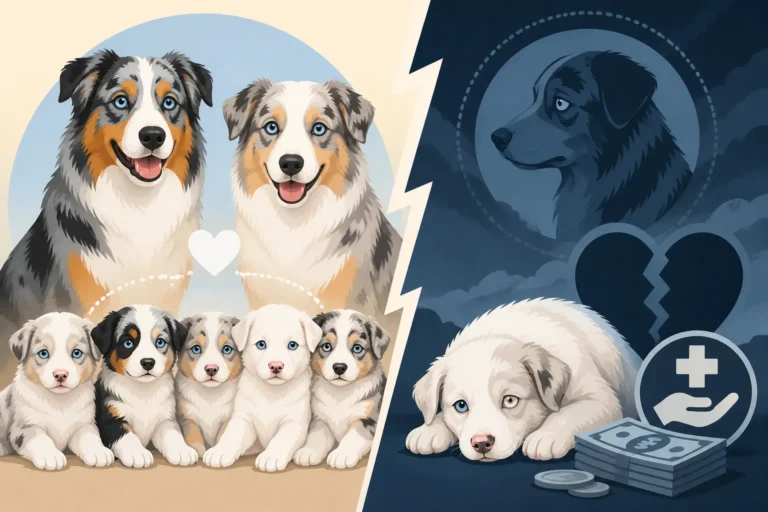
Responsible breeding is the cornerstone of preventing hereditary diseases. For hereditary cataracts in Australian Shepherds, this means rigorous genetic testing of all breeding stock before any breeding decisions are made. A truly ethical breeder will utilize DNA tests for the HSF4 gene, along with other health clearances, to ensure they are not inadvertently perpetuating or increasing the prevalence of the condition in future generations. Breeders should strive to breed only "Clear" to "Clear" individuals when possible. If a "Carrier" must be bred (perhaps due to exceptional temperament or working ability, and if they are clear of other debilitating conditions), they should only be bred to a "Clear" dog, and all offspring should be tested before placement to ensure no affected puppies are produced and to identify new carriers.
Transparency is non-negotiable. A responsible breeder will openly share the HSF4 test results for both parent dogs, as well as the results of any other recommended genetic screens or veterinary ophthalmic exams (ACVO exams). They won't make excuses or hide information. Their goal is to produce healthy, well-adjusted puppies that embody the best traits of the Australian Shepherd breed, and that includes sound vision. They understand that while a beautiful coat or impressive pedigree is desirable, health and temperament are paramount. This dedication to proactive health screening is why it's so important to seek out breeders who prioritize The Genetic Panel Every Australian Shepherd Needs.
Asking the Right Questions When Getting a Puppy
As a prospective Australian Shepherd owner, you have a critical role to play in encouraging responsible breeding and ensuring you bring home the healthiest puppy possible. Don't be afraid to ask direct and detailed questions about the health clearances of the puppy's parents. Specifically, inquire about the HSF4 genetic test results for both the dam (mother) and sire (father). A reputable breeder will have these results readily available and be happy to explain what they mean. They should be able to provide documentation, not just verbal assurances.
Beyond genetic tests, ask about eye certifications from a veterinary ophthalmologist, such as those conducted by the American College of Veterinary Ophthalmologists (ACVO). These exams can detect other eye issues in the parents that might not be genetic, but which are still important for overall eye health. It’s also wise to ask about the prevalence of cataracts in the parents' lineage, if known, as some lines may carry other cataract-causing genes not covered by the HSF4 test. While even the most diligent breeder can’t guarantee a dog will never develop a health issue, choosing a breeder who performs all recommended health clearances significantly reduces the risk. This thorough inquiry helps you understand the health legacy of your potential puppy and demonstrates your commitment to supporting ethical breeding practices. Being an informed buyer is crucial, and knowing The Test Results an Aussie Breeder Must Produce is a powerful tool in your hands.
Disclaimer
This article provides general information and is not a substitute for professional veterinary advice. Always consult with a qualified veterinarian or veterinary ophthalmologist for any health concerns or before making any decisions about your Australian Shepherd's care.