Double Merle Australian Shepherds and What Breeding Two Merles Costs
The stunning, mottled coat of an Australian Shepherd is often the first thing that catches people’s eye, and it’s no secret that the merle pattern is incredibly popular. But the desire for these striking colors has, unfortunately, led some breeders down a dangerous path: breeding two merle dogs together. This seemingly simple choice can have devastating and heartbreaking consequences, creating "double merle" puppies with severe health issues that come with immense emotional and financial costs. This comprehensive guide will peel back the layers of the merle gene, explain exactly what a double merle Australian Shepherd is, detail the severe health problems they face, and lay bare the true costs—both ethical and monetary—of irresponsible breeding practices.
Understanding the Merle Gene in Australian Shepherds
Before we can truly grasp the implications of a double merle, it’s essential to understand the merle gene itself and how it creates those beautiful, mottled patterns we all admire. It's a fascinating, yet sometimes tricky, piece of canine genetics.
The Genetics Behind Merle Patterns
The merle pattern is caused by a dominant gene, often referred to as the M-locus. When a dog inherits just one copy of this merle gene (let's call it 'Mm'), it's considered heterozygous merle, and that's when you see those gorgeous patches of dilute color on a solid base coat. Think of a blue merle, where black patches are diluted to shades of gray, or a red merle, where red patches become lighter, often liver or cinnamon. These dogs typically have vibrant, healthy coats, and often, stunning blue or marbled eyes that are perfectly functional. It’s this combination of unique coat patterns and eye colors that makes merle Australian Shepherds so sought after. The merle gene essentially acts like a dimmer switch, diluting random sections of the coat pigment and often affecting eye color too. It's a single gene with a profound visual impact, making each merle Aussie truly one-of-a-kind. If you're curious about the mechanics, a good place to start is exploring How Merle Works in an Australian Shepherd Coat.
Cryptic Merles and How They Fool Breeders
Here’s where things get a bit more complicated and, frankly, dangerous for a potential breeding program. A "cryptic merle" is an Australian Shepherd that carries the merle gene (Mm) but doesn't actually show any visible merle pattern in its coat. Their merle gene is usually a shorter version, often referred to as Mc or Ma, which only causes a very slight or undetectable dilution. On the surface, they might look like a solid black tri, red tri, or even a bi-color dog. This means a breeder could unknowingly pair a cryptic merle with a visible merle (Mm) or even another cryptic merle, believing they are breeding a "solid" dog.
The peril lies in the fact that while they don't look merle, they are merle genetically. If a cryptic merle is bred to a visible merle, there's still a 25% chance in each puppy of inheriting two copies of the dominant merle gene (MM), resulting in a double merle. This is why thorough genetic testing is absolutely non-negotiable for any Australian Shepherd intended for breeding. Relying solely on visual identification can lead to accidental double merle litters and all the heartbreaking health problems that come with them. To truly know if an Aussie is carrying the merle allele, breeders must utilize DNA Testing for the Merle Allele in an Aussie rather than just their eyes.
What Exactly is a Double Merle Australian Shepherd?
The term "double merle" isn't just a fancy way to describe a very merle-looking dog; it refers to a specific genetic condition with severe health ramifications. It's a stark reminder that sometimes, beauty can hide significant dangers when genetics aren't respected.
The Lethal Gene Combination
A double merle Australian Shepherd is a dog that has inherited two copies of the dominant merle gene (MM), one from each parent. This is sometimes referred to as a "homozygous merle." While a single merle gene (Mm) creates the desirable mottled coat, two copies of the gene result in an over-dilution of pigment, particularly in areas associated with hearing and vision development. This combination isn't just about coat color; it’s about a disruption in critical developmental pathways.
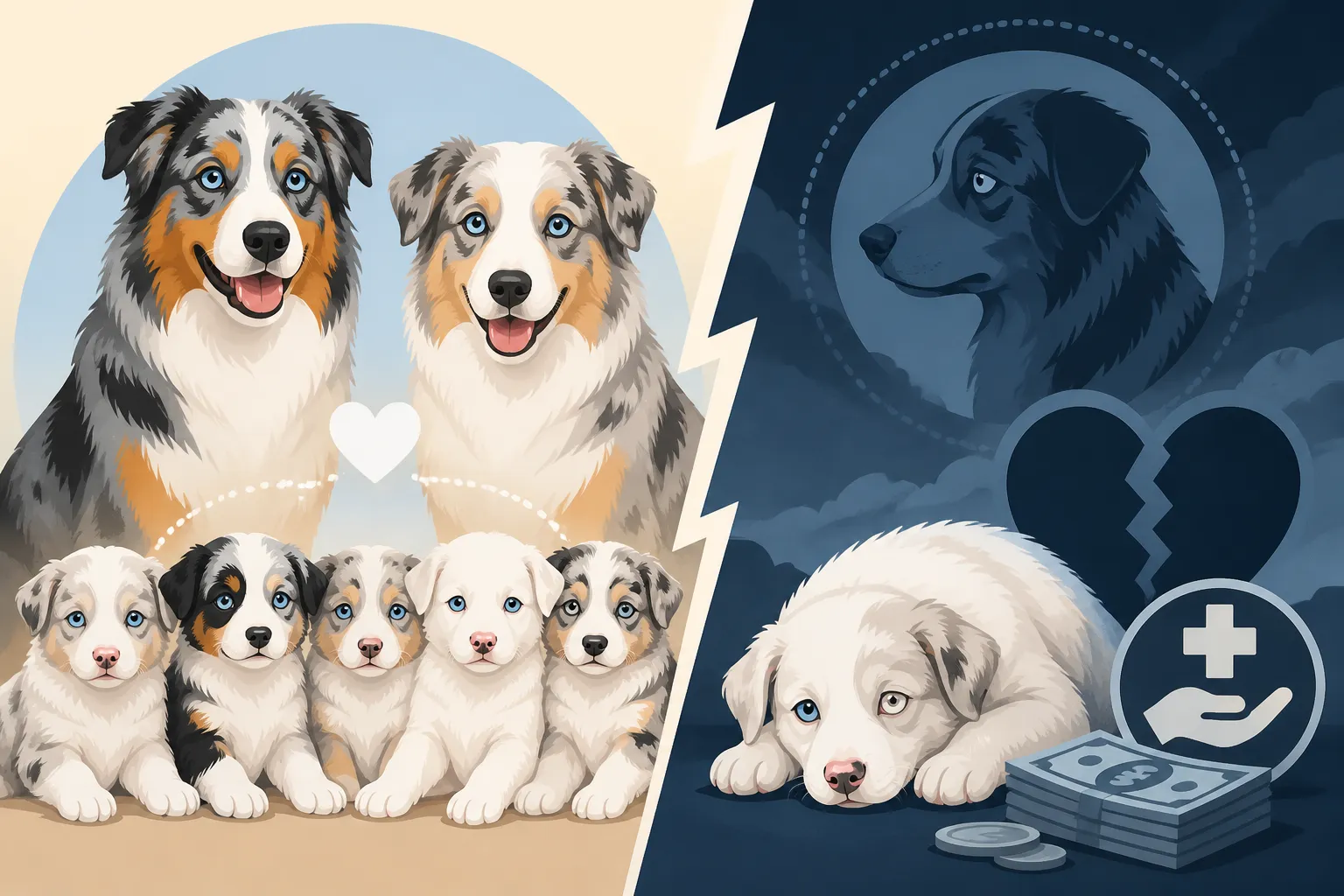
The most common way this happens is when two merle dogs (Mm x Mm) are bred together. Each puppy in that litter has a 25% chance of being a double merle (MM), a 50% chance of being a single merle (Mm), and a 25% chance of being a solid (mm). This means that even responsible breeders who accidentally breed a cryptic merle to a visible merle can end up with this lethal combination. The results are often devastating, with puppies facing profound disabilities from birth. It's why this pairing is considered utterly reckless by ethical breeders worldwide.
Identifying a Double Merle Puppy
Double merle puppies often have a very distinct appearance that sets them apart, though sometimes the signs can be subtle. The most striking visual characteristic is usually an excessive amount of white on their coats, particularly on the head and face. This isn't just the white trim you'd expect on a standard Aussie; it often appears as large, solid white patches that can sometimes make them look almost entirely white. This lack of pigment in the areas where the merle gene has over-diluted often correlates with the severity of their health issues.
Beyond the coat, you might notice signs of severe vision and hearing impairment almost immediately. Their eyes can be particularly telling: some double merle puppies are born with microphthalmia, meaning their eyes are unusually small, underdeveloped, or even completely absent. Others might have irregularly shaped pupils (iris coloboma) or a glassy, unfocused gaze. When it comes to hearing, these puppies often show no response to sound from a very young age. This combination of an overly white coat, often coupled with visible eye abnormalities and a lack of response to stimuli, is a strong indicator of a double merle. It's a heartbreaking sight for any breeder or owner, and these puppies require immediate, specialized veterinary care. It’s a tragic reality that A Quarter of a Merle Aussie Litter Born Double if two merle parents are bred.
The Severe Health Consequences for Double Merles
The health problems faced by double merle Australian Shepherds are not trivial; they are often severe, life-altering, and require extensive, ongoing care. These are not minor inconveniences but profound disabilities that impact every aspect of a dog's life.
Profound Deafness and Hearing Impairment
One of the most common and devastating health issues for double merle Australian Shepherds is deafness, which can range from partial to profound and affect one or both ears. The merle gene, in its homozygous form, interferes with the development of pigment cells (melanocytes) in the inner ear. These cells are crucial for the proper functioning of the cochlea, which transmits sound to the brain. Without them, the auditory nerve cannot develop correctly, leading to hearing loss.
A double merle puppy might be completely deaf from birth, never responding to sounds, or they might have unilateral deafness, meaning they can only hear out of one ear. Bilateral deafness, affecting both ears, is particularly challenging. Diagnosing deafness usually involves a Brainstem Auditory Evoked Response (BAER) test, a specialized test performed by a veterinary neurologist. Living with a deaf Australian Shepherd requires significant adjustments, from learning sign language for communication to ensuring their safety in environments where they cannot hear warnings. It’s a profound disability that requires immense patience and dedication from their human companions. For more insights, you might want to look into Deafness in a Double Merle Australian Shepherd and Living With a Deaf Australian Shepherd.
Ocular Defects and Blindness
In addition to hearing problems, double merle Australian Shepherds are highly susceptible to a range of severe ocular defects, often leading to partial or complete blindness. The same pigment dilution that affects the inner ear can also wreak havoc on the development of the eyes. These defects can include:
- Microphthalmia: This is arguably the most common and heartbreaking eye defect, where one or both eyes are abnormally small, shrunken, and often non-functional. The eye globes may be underdeveloped, leading to very limited or no vision.
- Iris Coloboma: A "keyhole" shaped pupil, where a portion of the iris fails to develop properly. This can cause increased light sensitivity and affect vision quality.
- Cataracts: Clouding of the lens of the eye, similar to hereditary cataracts seen in Aussies, but often more severe and appearing at a younger age in double merles.
- Retinal Detachment/Dysplasia: Improper development or detachment of the retina, which is crucial for processing images, leading to partial or total blindness.
The severity of these defects can vary widely, but often, double merles will have multiple eye abnormalities, leading to significant vision impairment or complete blindness. A veterinary ophthalmologist can diagnose these conditions through a thorough eye exam. The ethical implications of breeding practices that knowingly or unknowingly produce dogs with such profound visual impairments are clear; it causes immense suffering and a significantly reduced quality of life for these animals. Understanding these issues is critical, and for a deeper dive, read Eye Defects in a Double Merle Australian Shepherd.
The Ethical and Financial Costs of Breeding Two Merles
The decision to breed two merle Australian Shepherds together carries a heavy burden, not just in terms of the potential suffering of the puppies but also in the significant ethical and financial costs borne by breeders, owners, and rescue organizations.
Why Merle-to-Merle Breeding is Universally Condemned
Within the responsible dog breeding community, breeding two merle dogs together is almost universally condemned as an unethical and irresponsible practice. Why such a strong stance? Because the outcome is predictable and devastating: a high probability of producing puppies with severe, lifelong disabilities. As we discussed, each puppy in such a litter has a 25% chance of being a double merle, meaning one in four puppies could be born deaf, blind, or both. This isn't a rare anomaly; it's a statistically significant risk that responsible breeders simply will not take.
Reputable breeders prioritize the health and welfare of their dogs above all else. They adhere to strict ethical guidelines, perform extensive genetic testing, and carefully select breeding pairs to minimize the risk of inherited diseases. Breeding two merles goes against every principle of responsible breeding because it knowingly creates a high likelihood of suffering. It places an immense burden on the puppies, who face a lifetime of challenges, and on the owners who commit to their care. The very act of doing so suggests a disregard for animal welfare, often driven by a misguided desire for "more merle" puppies, which can tragically backfire. This is precisely Why Merle-to-Merle Aussie Breeding Is Called Reckless.
Financial Burdens of Caring for Special Needs Double Merles
Beyond the ethical quagmire, the financial cost of caring for a double merle Australian Shepherd can be astronomical, easily reaching into the tens of thousands of dollars over their lifetime. These are not typical vet bills; they are for specialized, ongoing care that can quickly deplete savings and challenge even the most prepared owner.
Consider the immediate costs:
- Specialist Consultations: A veterinary ophthalmologist will be needed for eye assessments, potentially multiple times. A veterinary neurologist will conduct BAER tests for hearing and may consult on other neurological issues. These specialist visits often cost several hundred dollars each.
- Diagnostic Imaging: Advanced imaging like MRIs may be recommended to assess brain development or other internal anomalies, which can cost thousands.
- Surgeries: While surgery can't "fix" microphthalmia or profound deafness, some double merles might develop other conditions like severe cataracts or glaucoma that require surgical intervention. These procedures can easily run into the thousands per eye.
- Medication: Ongoing medications for pain management, glaucoma, or other secondary conditions can become a recurring monthly expense.
Then there are the long-term, less obvious costs:
- Special Training: Training a deaf or blind dog requires specialized techniques, often involving professional trainers who understand their unique needs. This can mean private lessons costing hundreds to thousands of dollars.
- Special Equipment: Adaptive equipment such as vibration collars, halo harnesses for blind dogs, or extra-secure fencing to keep a disoriented dog safe, can add up.
- Increased Grooming: Some double merles may have skin sensitivities or coat issues due to their genetics, requiring more frequent or specialized grooming.
It's a stark reality that what might initially seem like a "cheap" puppy from an irresponsible breeder can quickly become the most expensive dog an owner will ever have. While pet insurance can be a lifesaver, it’s crucial to understand that pre-existing conditions—like those diagnosed at a young age in a double merle—are almost never covered. If an owner is proactive and gets coverage before any symptoms arise, a brand like Healthy Paws might offer some relief for unexpected illnesses or accidents later, but for the congenital defects inherent to double merles, coverage is typically denied. It's a heavy financial commitment that unprepared owners often cannot sustain, leading many double merles to end up in rescue. When considering a dog, it’s important to budget for scenarios like Aussie Vet Bills Between $15,000 and $40,000 and potential costs like Australian Shepherd Surgery Costs From Hips to Eyes.
Responsible Breeding Practices for Australian Shepherds
For those serious about contributing positively to the Australian Shepherd breed, responsible breeding is paramount. It involves far more than just having two pretty dogs; it’s a commitment to health, temperament, and genetic integrity.
Essential Genetic Health Testing Before Breeding
A cornerstone of responsible Australian Shepherd breeding is comprehensive genetic health testing. This isn't just a suggestion; it's an ethical imperative. Every breeding dog should undergo a full genetic panel to screen for common breed-specific diseases, as well as the all-important merle gene.
Key tests include:
- M-Locus (Merle Gene) Test: This DNA test, often done via a simple cheek swab, identifies whether a dog is solid (mm), a single merle (Mm), or a cryptic merle (Mcm, Mam, etc.). It’s the only way to definitively know a dog's merle status and prevent accidental merle-to-merle breedings.
- MDR1 Mutation Test: This test identifies if a dog carries the Multi-Drug Resistance 1 gene, which can cause severe reactions to certain common veterinary drugs.
- HSF4 (Hereditary Cataracts) Test: Australian Shepherds are prone to a specific type of hereditary cataract, and this test helps breeders avoid passing it on.
- OFA/PennHIP Evaluations: Hip and elbow dysplasia are significant concerns in many active breeds, including Aussies. Evaluations through the Orthopedic Foundation for Animals (OFA) or PennHIP help assess joint health.
- Eye Certifications (ACVO): Annual eye exams by a board-certified veterinary ophthalmologist (ACVO) screen for various inherited eye diseases like Collie Eye Anomaly and Progressive Retinal Atrophy.
These tests provide breeders with critical information to make informed decisions about pairing dogs. A breeder should always be transparent about these results and be able to provide documentation for both parent dogs. If a breeder can't or won't provide these results, it's a massive red flag. Knowing how to interpret results, such as Reading an Aussie MDR1 Result Line by Line, is vital. Ultimately, aspiring Aussie owners should expect to see documentation for The Genetic Panel Every Australian Shepherd Needs.
Screening Potential Mates and Understanding Pedigrees
Once a breeder has a thorough understanding of their own dog's genetic makeup and health clearances, the next crucial step is carefully screening potential mates. This isn't just about finding another healthy dog; it's about finding a partner whose genetics complement rather than compound any potential risks.
The absolute golden rule: Never breed two merle dogs together. This means if your dog is a merle (Mm or any variant thereof), its mate must be a solid (mm). This eliminates the 25% risk of producing double merles. Even if one dog is a cryptic merle, they still carry the merle allele and should only be bred to a solid-colored dog.
Beyond merle, responsible breeders delve deep into pedigrees. They study the health history of previous generations, looking for any recurring health issues like epilepsy, cancer, or autoimmune diseases. They network with other ethical breeders, attend breed-specific events, and utilize resources from organizations like the Australian Shepherd Club of America (ASCA) to ensure they are making the most responsible choices. They ask questions, demand transparency, and prioritize improving the breed's health. A reputable breeder will always be able to provide The Test Results an Aussie Breeder Must Produce for their breeding dogs. This diligence ensures that they are not just producing puppies, but healthy puppies, setting them up for long, happy lives.
Living With and Loving a Double Merle Australian Shepherd
Despite the tragic circumstances of their birth, double merle Australian Shepherds are incredibly resilient, loving dogs who deserve every chance at a full and joyful life. They thrive with dedicated owners willing to adapt and provide the special care they need.
Adapting Your Home for a Deaf or Blind Aussie
Bringing a deaf or blind Australian Shepherd into your home requires thoughtfulness and proactive adaptations to ensure their safety and maximize their quality of life. These aren't just "cute" quirks; they are significant disabilities that necessitate a different approach to their environment and training.
For a deaf Aussie:
- Visual Cues & Hand Signals: Your primary mode of communication will be visual. Teach clear hand signals for basic commands like sit, stay, come, and lie down. Consistency is key!
- Vibration Collars: These can be invaluable for getting their attention, especially outdoors. They're not shock collars but gentle vibrators used to signal "look at me."
- Secure Fencing & Leash Discipline: A deaf dog cannot hear a car coming or your call to stop. Securely fenced yards and diligent leash use in unfenced areas are paramount.
- Startle Avoidance: Always approach a deaf dog from the front or wake them gently with a touch to avoid startling them.
For a blind Aussie:
- Consistency is King: Keep furniture and belongings in consistent places to allow your dog to map out their environment. Any changes should be introduced slowly.
- Scent & Sound Cues: Use bells on family members' shoes or distinct scents at doorways to help them navigate.
- "Watch" or "Wait" Commands: Teach verbal cues to warn them of obstacles, stairs, or thresholds.
- Harness vs. Collar: A harness provides better control and less pressure on the neck if they bump into things. A "halo" harness can provide a physical buffer for dogs prone to head bumps.
- Safe Outdoor Spaces: Confined, familiar outdoor areas are best for off-leash play. Supervise closely in new environments.
For both:
- Enrichment: Engage their other senses! Scent work games (like "find the treat"), textured toys, and consistent routines provide mental stimulation and security.
- Baby Gates: Use baby gates to block off stairs or unsafe areas until your dog is fully comfortable with the layout.
The goal is to create a predictable, safe, and enriching environment where your double merle can thrive using their remaining senses. It takes patience, but the bond you form will be incredibly deep. Many owners find immense joy in Living With a Deaf Australian Shepherd.
Finding Support and Resources
You are not alone in caring for a double merle Australian Shepherd! A robust network of support and resources exists to help owners navigate the unique challenges and joys of these special dogs. Connecting with others who understand your journey can be incredibly empowering and practical.
- Special Needs Rescues & Advocacy Groups: Organizations like the Australian Shepherd Health & Genetics Institute (ASHGI) provide invaluable information on breed-specific health issues, including double merles. Many breed-specific rescues, or general special needs dog rescues, specialize in placing and supporting deaf or blind dogs. These groups often have vast experience and can offer guidance, advice, and sometimes even financial aid for specific needs.
- Online Communities & Forums: Social media groups and online forums dedicated to owners of deaf, blind, or double merle dogs are treasure troves of practical tips, emotional support, and shared experiences. Here, you can ask questions, celebrate milestones, and commiserate over challenges with people who genuinely understand.
- Experienced Trainers: Seek out positive reinforcement trainers who have specific experience working with deaf or blind dogs. They can help you adapt training methods, teach effective communication strategies (like clicker training for deaf dogs or specific verbal cues for blind dogs), and address any behavioral quirks that might arise from their sensory limitations.
- Veterinary Specialists: Maintain a strong relationship with your veterinary team, including any specialists (ophthalmologists, neurologists) involved in your dog's care. They are your primary resource for medical management and ensuring your dog's physical health.
Embracing these resources not only helps you provide the best possible care for your double merle Aussie but also builds a community that celebrates their unique spirit and resilience.
The True Cost of Breeding Merles – Beyond the Financial
While financial costs are tangible, the emotional and broader impacts of irresponsible merle breeding extend far beyond dollars and cents. These are the hidden tolls that affect individuals, the breed, and the very perception of animal welfare.
The Emotional Toll on Breeders and Owners
The emotional cost of breeding two merles, whether intentionally or accidentally due to a cryptic parent, is profound. For the breeders, the realization that they have produced puppies with severe disabilities can be devastating, leading to immense guilt, regret, and heartbreak. Even with the best intentions, the failure to perform proper genetic testing or fully understand merle genetics can lead to this outcome, leaving a lasting emotional scar. They are often faced with difficult decisions regarding the placement or long-term care of these special needs puppies, which can be emotionally grueling.
For the owners who adopt these double merle Australian Shepherds, the emotional commitment is equally immense. While they often fall deeply in love with their resilient companions, the daily challenges of caring for a deaf and/or blind dog can be emotionally draining. There are moments of frustration, fear for their dog's safety, and the constant vigilance required to navigate a world not built for them. Witnessing their beloved dog struggle with basic tasks can be heartbreaking. In severe cases, where the disabilities are compounded or lead to chronic pain, owners may face the agonizing decision of euthanasia, a burden no one should have to bear due to irresponsible breeding. The bond is deep, but the journey can be incredibly tough, filled with both triumphs and profound sorrows.
Impact on the Breed's Reputation and Health
The issue of double merle breeding extends beyond individual dogs and owners; it has a significant, detrimental impact on the overall reputation and health of the Australian Shepherd breed. When "backyard breeders" or those driven by profit over welfare knowingly breed two merles, it tarnishes the image of all Australian Shepherd breeders, especially the ethical ones who work tirelessly to preserve the breed's health and integrity. It paints the breed as one prone to severe genetic defects, which can deter potential responsible owners and lead to increased scrutiny from animal welfare advocates.
Furthermore, continued irresponsible breeding can contribute to an increase in genetic health problems within the broader Australian Shepherd population. While the double merle issue specifically relates to the M-locus, it highlights a broader problem of ignoring essential genetic testing and health clearances. If unchecked, this can lead to other genetic diseases becoming more prevalent, undermining years of effort by dedicated breeders to improve breed health. The long-term consequences are a compromised gene pool and a breed whose legacy is marred by avoidable suffering. This is why discussions around Whether Merle Aussie Breeding Should Be Regulated are so important for the future of the breed. Education and strict adherence to ethical breeding practices are the only ways to ensure the Australian Shepherd remains a healthy, beloved companion for generations to come.
Merle Gene Genotypes and Associated Risks
Here’s a table summarizing the different merle gene genotypes and the typical risks associated with each. This is crucial information for any Australian Shepherd breeder or potential owner.
| Genotype | Common Name | Description | Associated Health Risks | Breeding Advice |
|---|---|---|---|---|
| mm | Solid / Non-Merle | No merle gene present. Coat is a solid base color (e.g., black tri, red tri, bi-color). | No merle-related risks. | Can be bred to any merle (Mm) or non-merle (mm) dog. |
| Mm | Merle | One copy of the merle gene. Exhibits the classic merle pattern (e.g., blue merle, red merle). | Generally healthy, but can carry other breed-specific issues. | Must only be bred to a solid (mm) dog. Never to another merle (Mm). |
| Mcm | Cryptic Merle | One copy of a shorter merle gene variant. May appear solid with no visible merle pattern. | No merle-related risks, but still a carrier. | Must only be bred to a solid (mm) dog. Treat as a visual merle. |
| MM | Double Merle | Two copies of the merle gene. Results from breeding two merle dogs. Often excessively white coat. | High risk of severe deafness and ocular defects (blindness). | Should never be bred. |
Disclaimer
The information provided in this article is for educational and informational purposes only and does not constitute veterinary advice. Always consult with a qualified veterinarian or veterinary specialist for any health concerns or before making any decisions about your pet's health or breeding practices. Genetic testing and health screenings are complex, and results should always be interpreted by a professional.