The ASCA Australian Shepherd Standard
For anyone who’s ever admired the stunning presence of an Australian Shepherd, whether at a dog show, a working trial, or just strolling through the park, you’ve likely glimpsed the breed’s inherent balance and purpose. But understanding why certain Aussies command attention, beyond just their flashy coats, often comes down to their adherence to a breed standard. This guide dives deep into the ASCA Australian Shepherd Standard, helping you appreciate the meticulous details that define this remarkable working dog and giving you insight into what breeders strive for and judges evaluate.
The Foundation: What is the ASCA Standard and Why Does It Matter?
The Australian Shepherd Club of America (ASCA) breed standard isn't just a fancy document for show enthusiasts; it's the blueprint that defines the ideal Australian Shepherd. It outlines the physical characteristics, temperament, and movement that make an Aussie a true Australian Shepherd. For breeders, it's a guide to maintaining the breed's integrity, ensuring that each generation retains the working ability and sound structure for which Aussies are renowned. For owners, it offers a deeper appreciation for their dog's heritage and the specific traits that distinguish this intelligent, agile breed.
The Historical Context of ASCA
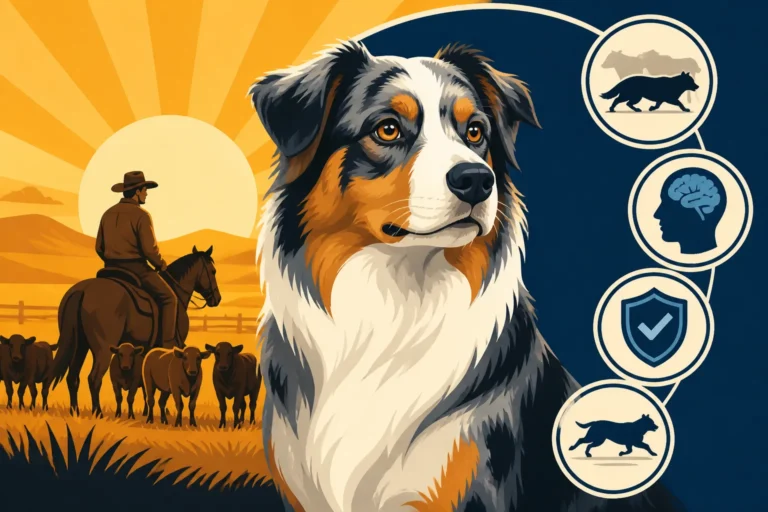
To truly grasp the ASCA standard, we need to understand ASCA itself. Unlike many breeds whose standards originated with the American Kennel Club (AKC), the Australian Shepherd's primary standard-bearer has historically been the Australian Shepherd Club of America (ASCA). ASCA was formed in 1957 by a group of dedicated ranchers and enthusiasts who wanted to preserve the working ability of the Australian Shepherd. They developed their own registry and breed standard, focusing heavily on function and temperament suitable for a ranch environment.
This historical emphasis means the ASCA standard isn't just about looks; it's about the whole package: a dog that can perform its duties efficiently and reliably. While other registries might have slightly different interpretations, the ASCA standard is often considered the foundation for the Australian Shepherd, shaping its development over decades. It's a testament to the commitment of those early breeders who recognized the unique qualities of these dogs and sought to ensure they weren't diluted by trends focusing solely on aesthetics. You can learn more about this journey in The Basque Shepherds Behind the Australian Shepherd.
Beyond the Show Ring: Practical Importance
You might think breed standards are only relevant for those who plan to compete in conformation shows, but that's a narrow view. The ASCA standard actually has profound practical implications for every Aussie owner. A dog that closely adheres to the standard is more likely to be structurally sound, with a body built for longevity and hard work. This means fewer potential health issues related to poor conformation and a greater ability to participate in activities like agility, obedience, or even just long hikes.
For example, the standard describes an Aussie's ideal angulation and bone structure. These aren't arbitrary details; they directly impact how a dog moves, how much stress is placed on its joints, and its endurance. A dog with correct structure is less prone to certain injuries or early onset arthritis. Even if your Aussie is a beloved family pet and never sees a show ring, a well-bred dog that aligns with the standard's emphasis on soundness will generally lead a healthier, more active life. This pursuit of the ideal form ensures that the breed remains capable and resilient, fulfilling its original purpose as a working partner.
General Appearance and Temperament
When you first see an Australian Shepherd, its overall impression is one of agility, intelligence, and readiness to work. The ASCA standard captures this essence, describing a dog of medium size and bone, possessing an intense gaze and an alert expression. It's a picture of an athlete, but one with a keen mind and an unwavering loyalty that defines the breed.
Ideal Size and Substance
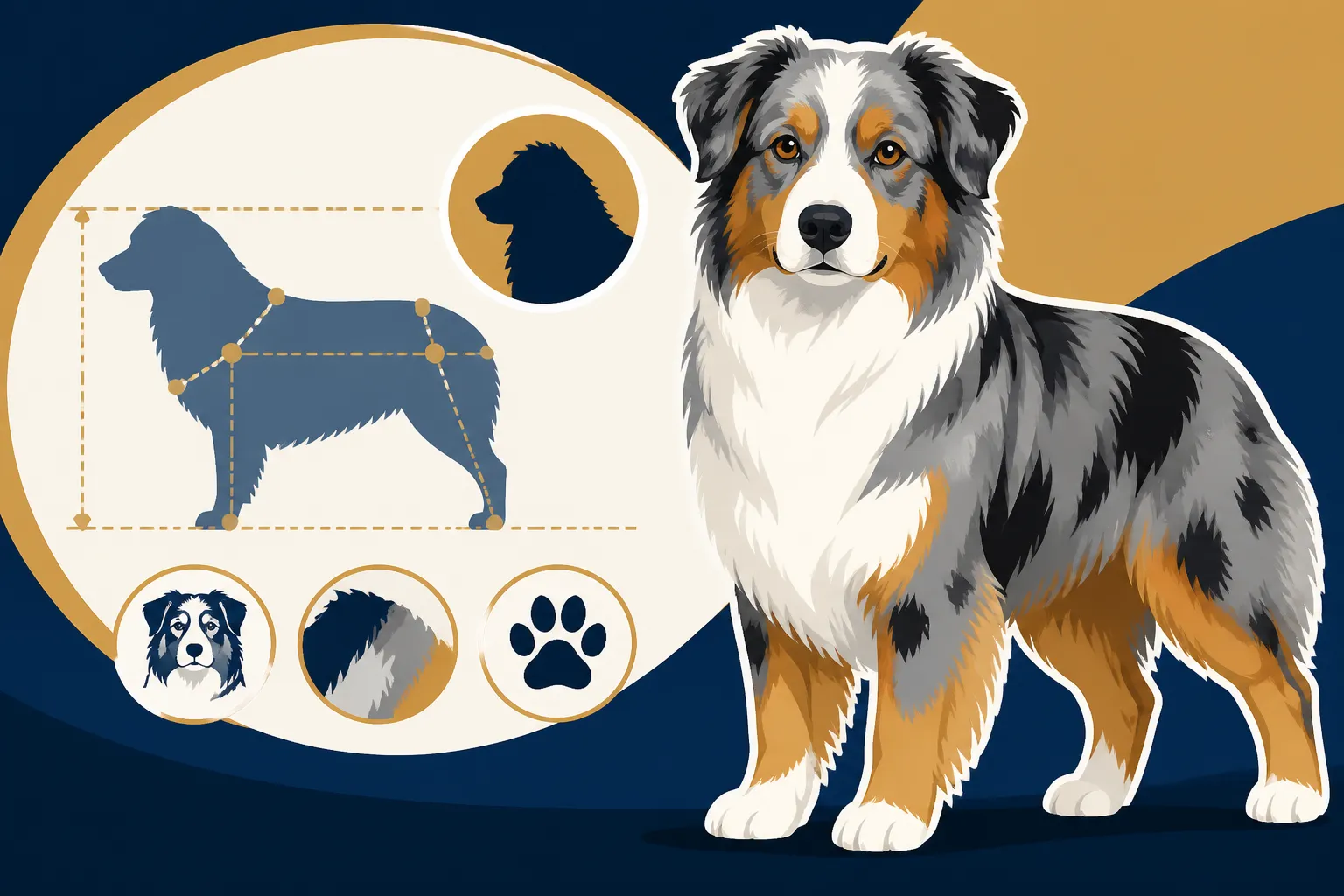
The ASCA standard specifies that males should ideally stand 20-23 inches at the shoulder, while females are 18-21 inches. This "medium" size is crucial; it means they're large enough to handle livestock and cover ground effectively, but not so large as to be cumbersome or prone to excessive joint strain. The standard also calls for moderate bone and substance. This isn't a heavy, bulky dog, nor is it delicate and refined. Instead, it's a balanced, athletic build that suggests power without excessive weight.
Imagine an Aussie trying to quickly turn a flock of sheep or dart through an agility course. A dog that is too heavy or too light would struggle. Too heavy, and it lacks the necessary quickness and stamina; too light, and it might not have the power or presence to command livestock. The ideal balance ensures both agility and endurance, making the Aussie a versatile and efficient worker. If you’re ever curious about the range, Australian Shepherd Height and Weight delves into the specifics. Maintaining this ideal size and substance also relies on proper nutrition, which is why brands like Chewy offer a wide range of formulas designed to support active, moderately built dogs.
The Hallmark Aussie Disposition
Beyond their striking looks, an Australian Shepherd's temperament is perhaps its most defining characteristic. The ASCA standard emphasizes an intelligent, eager-to-please, and alert nature. Aussies are described as keen, watchful, and exhibiting an intense "Aussie stare" when focused on a task or person. They are loyal companions, sometimes reserved with strangers but never shy or aggressive. This balance of friendliness with their family and a watchful distance from newcomers is a hallmark of the breed.
This intelligent and often intense focus is what makes them such exceptional working dogs and partners. They thrive on having a job, whether it's herding, agility, or complex obedience tasks. A truly well-tempered Aussie is calm and steady when not working, but instantly springs to life when given a task. Any signs of shyness, excessive timidity, or overt aggression are considered serious faults against the standard, as they detract from the dog's ability to be a reliable partner and safe companion. The standard values a stable, confident character above all, recognizing that a dog with a solid temperament is the true asset. For more on this, check out The Temperament the Aussie Standard Requires.
Head, Neck, and Body: The Aussie's Structure
The detailed descriptions of an Australian Shepherd's head, neck, and body in the ASCA standard are not just for aesthetics; they are all about functionality. Each feature contributes to the dog's ability to see, hear, communicate, and move effectively in a working environment. This structural integrity is what allows them to perform complex tasks with precision and endurance.
Head and Expression: The Window to the Soul
The head of an Australian Shepherd is often described as clean-cut, dry, and in proportion to the body. It should have a moderate stop, meaning the transition from forehead to muzzle is distinct but not abrupt. The muzzle tapers slightly from the base to a rounded tip, matching the length of the backskull. The standard emphasizes a keen and intelligent expression, with eyes that are almond-shaped and moderately set. These features collectively create the distinctive "Aussie look"—alert, discerning, and ready to respond.
The ears are set high on the head, triangular, and carried with a slight fold over or to the side when the dog is attentive. This ear set is critical for optimal hearing, allowing the Aussie to pick up subtle cues from handlers or livestock. Any deviations, such as overly heavy or low-set ears, can impact their ability to perform their job effectively. The eye color, while varied and often striking, should always convey that characteristic intelligent and watchful demeanor.
Neck, Topline, and Tail: The Working Frame
A strong, clean neck of moderate length, blending smoothly into the shoulders, is essential for an Australian Shepherd. This provides the power and flexibility needed for quick head turns and precise movements while working. The topline should be firm and level from the withers to the hip joint, or with a very slight slope. This sturdy back is the foundation for an efficient gait and the ability to propel themselves forward or turn on a dime.
The tail is another distinctive feature, and the ASCA standard accepts both natural bobtails and docked tails. A natural bobtail means the dog is born without a full-length tail, which is common in the breed. If docked, it should be no longer than four inches. The Australian Shepherd Natural Bobtail explains the genetics behind this. The tail, whether naturally bobbed or docked, serves to balance the dog during turns and jumps, making it an integral part of their working anatomy. The entire structure, from neck to tail, speaks to the breed's functional design.
Forequarters and Hindquarters: Power and Agility
The forequarters of an Australian Shepherd should be well-angulated, meaning the shoulder blade and upper arm meet at an angle that allows for a long, reaching stride. The legs should be straight and strong, with strong, oval-shaped feet that have well-arched toes and thick pads. This provides the necessary shock absorption and grip on varied terrain. Imagine an Aussie leaping over obstacles or maintaining footing on uneven ground—their forequarters are built for this kind of dynamic movement.
Similarly, the hindquarters are powerful and well-muscled, providing the drive and propulsion that define their energetic gait. The standard calls for moderate angulation, matching the forequarters, with strong, well-let-down hocks. This balanced angulation ensures that the dog moves efficiently, without wasted energy or undue strain on its joints. The combination of strong forequarters and hindquarters allows the Aussie to accelerate, stop, and change direction with incredible speed and grace, a necessity for a successful herding dog. Without this structural integrity, their ability to perform their inherent duties would be severely compromised.
Coat, Color, and Markings: The Visual Appeal
One of the most captivating aspects of the Australian Shepherd is their incredible variety of coats, colors, and markings. The ASCA standard meticulously describes these features, recognizing the beauty while always emphasizing that functionality and sound structure come first.
The Double Coat and Its Purpose
The Australian Shepherd possesses a medium-texture, straight-to-wavy double coat. This means they have a weather-resistant outer coat and a soft, dense undercoat. The standard calls for a coat that is moderate in length, with feathering on the backs of the legs and a mane around the neck, particularly in males. This double coat serves a vital purpose: protection. It insulates against both cold and heat, sheds water, and guards against brush and debris encountered during fieldwork.
While beautiful, this coat requires regular care to prevent matting and maintain its protective qualities. Many owners find a good deshedding tool indispensable, often found at pet supply retailers like Chewy, especially during the biannual "coat blow" when they shed heavily. The standard specifies that the coat should never be too coarse or too fine, nor should it obscure the dog's outline. It's a working coat, not merely an ornamental one, designed to withstand the elements and the rigors of an active life. To understand more about this, look up What the Standard Asks of an Aussie Coat.
Acceptable Colors and Patterns
The ASCA standard recognizes several base colors for Australian Shepherds: black, red, blue merle, and red merle. All colors may have white and/or copper trim. The merle patterns are particularly striking, with irregular patches of lighter and darker shades. The standard notes that white markings should not dominate the head and should not extend beyond a certain point on the body, nor should they appear as a solid white collar beyond the point of the shoulder blades.
The absence of a merle gene means a dog will be either solid black or solid red, with or without white and copper. The merle gene, when present, creates the beautiful dappling. It's important to remember that color distribution and patterns, while contributing to the Aussie's allure, do not impact their working ability or temperament. However, specific white markings, especially around the eyes and ears, are carefully considered due to their potential association with vision and hearing issues, particularly in double merles. For a deeper dive into patterns, read The Two Merle Patterns an Aussie Can Carry.
Eye Color and Pigmentation
The Australian Shepherd's eyes are famed for their captivating variety. The ASCA standard allows for blue, brown, amber, or any combination of these colors, including marbled or flecked eyes. This means one eye can be blue and the other brown, or an eye can have both colors marbled within it—a condition known as heterochromia. These unique eye colors are often tied to the merle gene.
However, beyond color, pigmentation is also key. The standard requires eye rims and nose leather to be fully pigmented, matching the coat color (black for black and blue merle Aussies, liver for red and red merle Aussies). Pink on the nose or eye rims is considered a fault, as proper pigmentation is a sign of overall health and can offer protection against sun exposure. While those dazzling blue eyes are a trademark, their health and proper pigmentation are always prioritized according to the standard. For more on eye color variations, see Australian Shepherd Eye Colors and Split Eyes.
Movement and Gait: Form in Motion
An Australian Shepherd's movement is perhaps the truest test of its structural integrity and working ability. The ASCA standard dedicates significant attention to how an Aussie moves, describing a gait that is efficient, fluid, and powerful, perfectly suited for a dog that needs to cover vast distances and make quick, agile turns.
The Effortless, Ground-Covering Stride
The ideal Australian Shepherd moves with a smooth, free-flowing, and ground-covering gait. This means each step should carry the dog forward with minimal wasted effort, giving the impression of efficiency and endurance. When viewed from the side, the dog's stride should be long and reaching in the forequarters, with a powerful drive from the hindquarters. This coordinated movement allows the dog to maintain speed and agility over long periods without tiring.
The standard emphasizes that the dog should not move with a short, choppy stride, which would quickly fatigue it, nor an exaggerated, high-stepping gait, which would be inefficient. The movement should be purposeful and athletic, reflecting its heritage as a herding dog that must maintain pace with livestock and react instantly to changes in direction. This effortless motion is a direct result of correct angulation and muscle development, all working in harmony.
Balance and Coordination in Action
As an Australian Shepherd picks up speed, its feet converge towards a centerline beneath its body, a phenomenon known as single tracking. This allows for greater balance and stability at higher speeds. The back should remain firm and level throughout the gait, indicating a strong topline and core. Any roll, sway, or hackney gait (high-stepping front action) is considered incorrect, as it compromises efficiency and puts undue stress on the dog's body.
When viewed from the front or rear, the legs should move parallel to each other, neither crossing over nor throwing out to the side. This straight, true movement ensures that the joints are working optimally and that the dog is moving with maximum power and minimum strain. A dog whose structure allows it to move with such balance and coordination is a testament to careful breeding and is inherently better equipped for a lifetime of activity, whether on the ranch or in performance sports. Understanding this aspect of the standard helps you appreciate the full athletic potential of the breed.
Faults and Disqualifications: What to Avoid
The ASCA standard isn't just about defining the ideal; it also clearly outlines what constitutes a fault and, in more severe cases, a disqualification. These guidelines are critical for breeders aiming to improve the breed and for judges evaluating dogs in the show ring. More importantly, understanding them can help prospective owners identify poorly bred animals that might carry health or temperament issues.
Common Structural and Temperamental Faults
Faults are deviations from the ideal described in the standard, ranging from minor to severe. Some common structural faults might include an overly long or short muzzle, ears that are entirely erect or fully dropped, or feet that are splayed or too long. For instance, too much or too little angulation in the forequarters or hindquarters would be considered a fault, as it affects the dog's movement and potentially its joint health.
Temperamentally, shyness, timidity, or a nervous disposition are significant faults. While Aussies can be reserved with strangers, they should never be fearful or lack confidence. Any hint of aggression towards people or other dogs, beyond a natural protective instinct when warranted, is also a serious fault. These temperamental issues undermine the breed's reputation as a loyal companion and reliable working dog. A good breeder will strive to eliminate such traits from their lines, focusing on the stable, confident temperament called for in the standard.
Disqualifying Features: Breeding and Showing Implications
Disqualifications are severe deviations that render a dog unable to compete in conformation events and should ideally prevent them from being bred. These are traits that fundamentally compromise the breed's integrity, health, or temperament. For example, a dog that is overtly aggressive or excessively shy would be disqualified from the show ring, reflecting its unsuitability for public interaction and breeding.
Physical disqualifications include males under 20 inches or over 23 inches, and females under 18 inches or over 21 inches. Other disqualifying factors include an unpigmented nose (dudley nose) where it should be black or liver, or a lack of pigment around the eye rims. White body splashes or markings that fall outside the specified acceptable areas are also disqualifications. Perhaps most critically, double merles that exhibit severe hearing or vision defects due to irresponsible breeding practices are a significant concern, though the standard focuses on phenotypic expression rather than genetic markers. You can read about these issues in What Puts an Aussie Out of the Ring. The ASCA standard aims to guide breeders towards producing healthy, sound, and temperamentally stable Australian Shepherds that embody the breed's storied working heritage.
Here's a quick summary of key traits from the ASCA Australian Shepherd Standard:
| Feature | ASCA Standard Description | Why It Matters |
|---|---|---|
| Size | Males: 20-23 inches; Females: 18-21 inches. Medium bone and substance. | Ensures agility for herding while maintaining strength and endurance. |
| Temperament | Intelligent, eager to please, alert, keen, watchful. Loyal but reserved with strangers. Never shy or aggressive. | Essential for a reliable working partner and a stable family companion. |
| Head | Clean-cut, dry, in proportion to body. Moderate stop, muzzle tapers slightly. Keen, intelligent expression. | Contributes to intelligence and communication; proper structure for sensory input. |
| Ears | High-set, triangular, moderate size. Break forward or to the side when attentive. | Optimal hearing for working commands and environmental awareness. |
| Eyes | Almond-shaped, moderately set. Blue, brown, amber, or any combination. Full pigmentation of eye rims. | Distinctive look, good vision, and protection from sun. |
| Neck | Strong, clean, moderate length, blending into shoulders. | Provides power and flexibility for head movements while working. |
| Topline | Firm and level from withers to hip joint, or with slight slope. | Foundation for efficient gait and overall structural integrity. |
| Tail | Natural bobtail or docked, not to exceed four inches. | Aids in balance and agility during movement. |
| Coat | Medium texture, straight-to-wavy double coat. Moderate length, with feathering and mane. Weather resistant. | Protection from elements and debris; proper insulation. |
| Colors | Black, Red, Blue Merle, Red Merle. All with or without white and/or copper trim. | Recognizes breed's genetic diversity while setting limits for health (e.g., white). |
| Movement | Smooth, free-flowing, ground-covering. Long reach, powerful drive. Single-tracking at speed. | Efficiency and endurance for extensive fieldwork and performance activities. |
Understanding the ASCA Australian Shepherd Standard is like holding the owner's manual for this incredible breed. It’s not just about winning ribbons, but about preserving the health, integrity, and working spirit of the Australian Shepherd for generations to come. When you look at your Aussie, know that every feature, from their intense gaze to their powerful stride, is part of a grand design to create the ultimate working companion.
Disclaimer
This article is for general informational purposes only and does not constitute professional advice. Laws, prices and regulations vary by location and change over time. Consult a qualified professional for guidance on your specific situation.