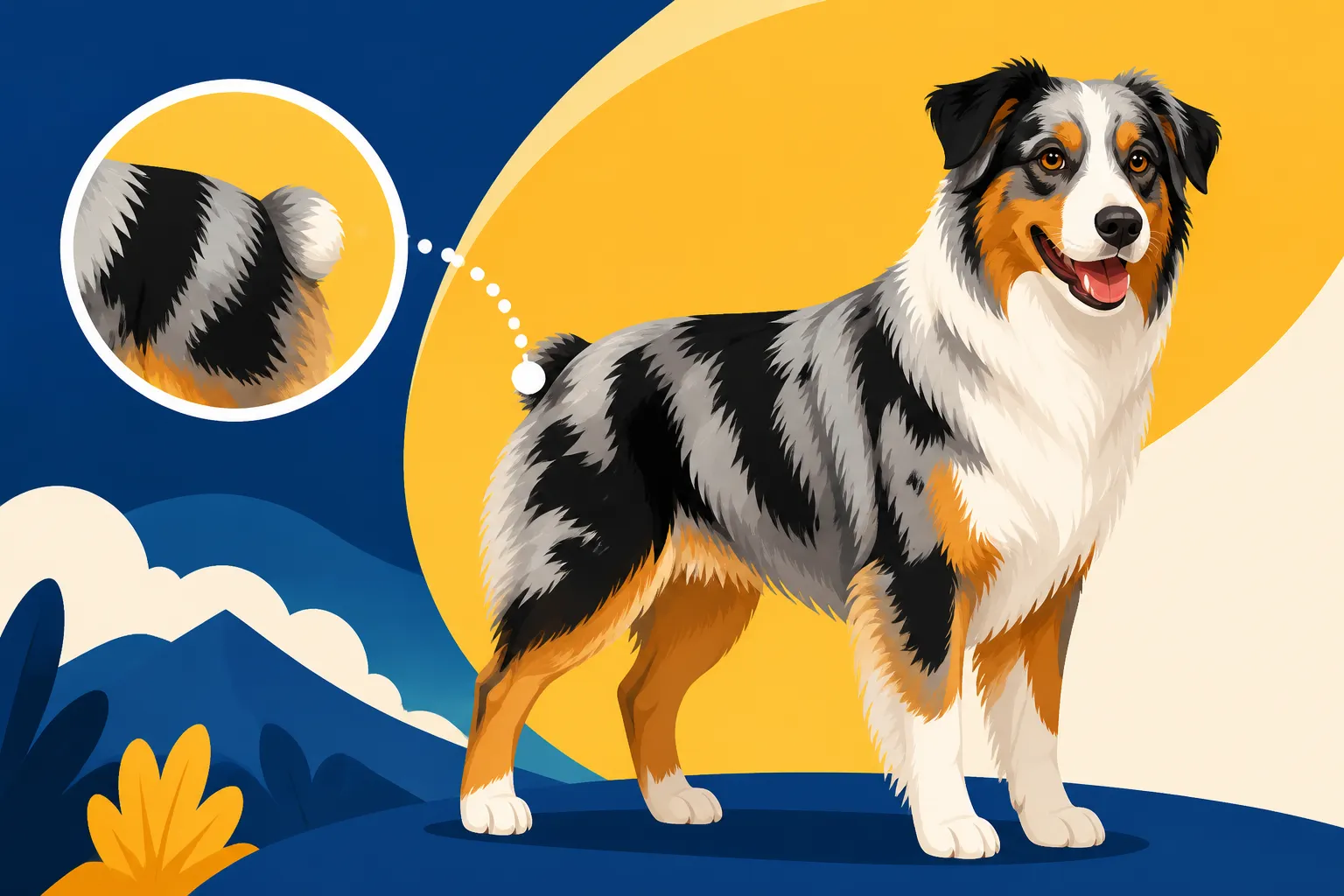
The Australian Shepherd Natural Bobtail
It’s a common sight: you see an Australian Shepherd with a short, stubby tail, and you immediately wonder if it was born that way or if it was docked. This question plagues many prospective and current Aussie owners, leading to confusion about genetics, breed standards, and ethical practices. This guide aims to clear up all the mysteries surrounding the Australian Shepherd's tail, exploring the natural bobtail (NBT) phenomenon, its genetic underpinnings, and the ongoing discussions around tail presentation in this incredible breed.
Understanding the Australian Shepherd's Tail — A Defining Trait
The tail of an Australian Shepherd is far more than just a wagging appendage; it's a key part of their historical identity, their balance, and even their communication. For many, the sight of a bobbed tail is synonymous with the breed, but the story behind those shorter tails is often misunderstood.
What is a Natural Bobtail?
A natural bobtail, or NBT, is exactly what it sounds like: an Australian Shepherd born with a tail significantly shorter than average, or even completely absent. This isn't the result of human intervention; it's a genetic trait. These tails can range from a very short stump, perhaps just an inch or two long, to what's often described as a "half-tail" of varying lengths, down to a full-length tail. The key is that the dog was born with this length. It’s not something a vet did when they were puppies. You might find a litter where some puppies have full tails, some have half-tails, and others have just a little nub, all from the same parents. How Many Aussie Puppies Arrive Without a Tail delves deeper into the statistics of this fascinating occurrence.
This natural variation is a distinguishing feature for many Aussies and has been present in the breed's lineage for generations. It’s part of what makes them unique, showcasing the incredible genetic diversity that exists within the breed. For owners, understanding if their Aussie is naturally bobbed or if their tail was docked is important, especially when discussing health history or potential breeding with veterinarians.
The Historical Context of Aussie Tails
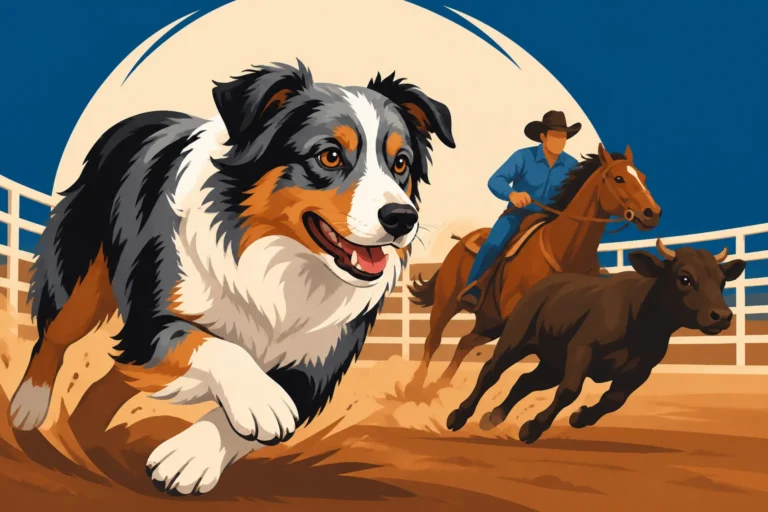
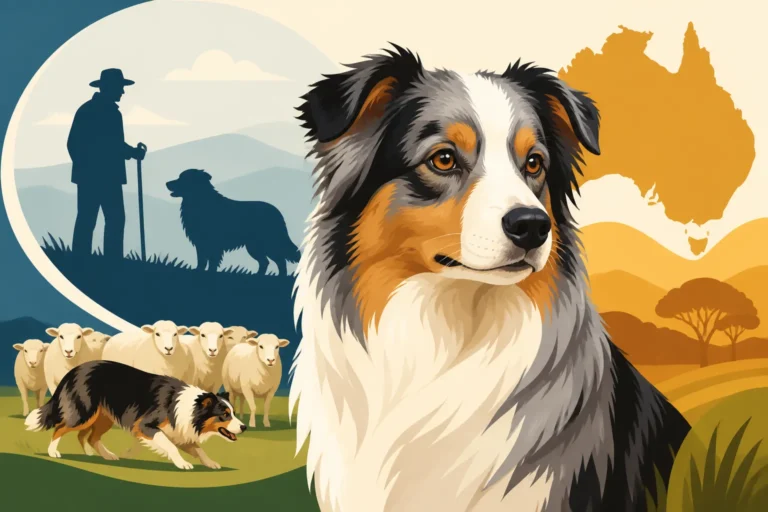
The Australian Shepherd, despite its name, was developed in the American West, primarily as a working dog for ranchers. In those early days, functionality was paramount, and often, the tails of working dogs were docked to prevent injury. A long tail could easily get caught in brush, stepped on by livestock, or even become a liability in tight spaces while herding. It was a practical decision made by ranchers to ensure the safety and efficiency of their valuable working partners. This practice became so ingrained that a bobbed tail became an expected characteristic of the breed.
Over time, as the breed gained popularity beyond the ranch and moved into show rings and family homes, the bobbed tail remained a strong part of the breed's visual identity. While natural bobtails existed, the practice of docking full tails became widespread to achieve the desired aesthetic. This historical context explains why so many Aussies have short tails, whether they were born that way or had their tails surgically altered. It's a tradition rooted in the breed's working past, even if the reasons for it have shifted for many modern-day Aussies.
Natural Bobtail vs. Docked Tail: A Visual Difference
Distinguishing between a natural bobtail and a docked tail can sometimes be tricky, especially if the docking was done expertly when the puppy was very young. However, there are often subtle cues. A naturally bobbed tail often has a softer, more rounded end, and the fur around it might blend more seamlessly with the body. The length can also vary widely, from a tiny nub to a half-length tail, and it may have natural kinks or twists.
A docked tail, on the other hand, typically presents a cleaner, more abrupt cut. If you feel the end of a docked tail, you might notice scar tissue or a slightly harder, blunter feel where the bone was severed. The hair might also grow a little differently right at the tip. For a long time, the expectation was a very short tail, often just a few inches, making a naturally longer bobtail stand out. Ultimately, the surest way to know is through genetic testing or by obtaining detailed records from the breeder.
Here's a quick comparison to help visualize the differences:
| Feature | Natural Bobtail (NBT) | Docked Tail |
|---|---|---|
| Origin | Genetic mutation; born that way | Surgical removal, usually at 2-5 days old |
| Appearance | Variable length (nub to half-tail), may have kinks/curves, softer end | Typically uniform short length, blunt/clean cut |
| Feel | Natural bone structure, sometimes uneven | May have scar tissue, firmer, abrupt end |
| Genetic Test | Positive for NBT gene (heterozygous) | Negative for NBT gene (if full-tailed parents) |
| Purpose | Natural variation in the breed | Historically, injury prevention for working dogs |
| Ethical Debate | No ethical debate on its existence, only on breeding practices for NBT x NBT | Significant ethical debate on welfare and necessity |
This table highlights the key differentiators, emphasizing that while both result in a short tail, their origins are entirely different.
The Genetics Behind the Natural Bobtail
The existence of the natural bobtail in Australian Shepherds isn't just a quirk of nature; it's a fascinating example of Mendelian genetics at play. Understanding the science behind it is crucial for responsible breeders and informed owners alike.
The T-Box Gene (C189G Mutation) Explained
The natural bobtail in Australian Shepherds, and several other breeds, is attributed to a specific mutation in the T-box gene, sometimes referred to as the C189G mutation. This gene plays a critical role in embryonic development, particularly in the formation of the tail and spine. It's an autosomal dominant trait, which means only one copy of the mutated gene is needed for a dog to express the bobtail characteristic.
A dog with a natural bobtail is typically heterozygous for this gene, meaning they have one copy of the NBT gene and one copy of the normal full-tail gene. This single copy is enough to cause the tail to be shorter. Dogs that are homozygous for the NBT gene—meaning they inherited two copies of the mutated gene—face severe developmental issues, which leads us to the next critical point. The Aussie Bobtail Gene and Its Lethal Pairing offers a detailed look into this complex genetic interaction.
The Lethal Gene Pairing and Ethical Breeding Concerns
Here’s where the genetics get really serious and why responsible breeding is so vital: the NBT gene, while dominant for tail length, is considered a "semi-lethal" dominant gene when two copies are inherited. If two Australian Shepherds carrying the natural bobtail gene (NBT/n, where NBT is the mutated gene and n is the normal gene) are bred together, there's a 25% chance that a puppy will inherit two copies of the NBT gene (NBT/NBT).
Puppies that inherit two copies of the NBT gene (homozygous) typically do not survive gestation or are born with severe defects, often involving spinal malformations that are incompatible with life. This means that breeding two natural bobtail Aussies together carries a significant risk of stillborn puppies, very small litter sizes, or puppies with severe health issues. For this reason, ethical Australian Shepherd breeders never breed two NBT dogs together. They will always breed an NBT dog with a full-tailed dog (n/n) to ensure healthy litters, even though this means approximately half the litter will have full tails. This careful consideration of genetics is similar to the caution taken in Why Aussie Breeders Never Cross Merle to Merle to avoid double merle issues.
Testing for the Natural Bobtail Gene
Given the serious implications of the lethal gene pairing, genetic testing for the natural bobtail gene is a cornerstone of responsible Australian Shepherd breeding. Breeders can easily test their dogs to determine if they carry the NBT mutation. A simple DNA test can tell them if a dog is NBT/NBT (never seen alive), NBT/n (natural bobtail), or n/n (full-tailed).
This testing allows breeders to make informed decisions about breeding pairs, ensuring that they never combine two NBT carriers. This practice helps to maximize litter health and avoid the tragic loss of puppies due to the lethal homozygous combination. For potential puppy buyers, asking a breeder about their genetic testing practices, including for the NBT gene, is a crucial step in ensuring you're getting a healthy puppy from a responsible program. It’s part of the comprehensive approach that includes The Genetic Panel Every Australian Shepherd Needs to ensure the long-term health of the breed.
The Controversies and Conversations Around Tail Docking
While the natural bobtail is a genetic marvel, the practice of tail docking has been a hot-button issue for decades, sparking passionate debates among dog owners, veterinarians, and animal welfare advocates.
Why Tail Docking Became Common Practice
Historically, tail docking became prevalent in many working breeds, including the Australian Shepherd, for practical reasons rooted in their demanding jobs. As mentioned, long tails were seen as a liability in herding dogs. They could be stepped on by livestock, snagged on barbed wire or dense underbrush, leading to painful injuries, infections, and time off work for a valuable animal. Ranchers believed that preemptively removing a portion of the tail was a humane way to prevent future suffering and maintain the dog's ability to perform its duties. This tradition carried over even as the breed transitioned from exclusively working roles to companion animals and show dogs.
Another less discussed reason for docking was a perception of breed aesthetics. Over generations, a short, bobbed tail became part of the "look" of an Australian Shepherd, as defined by various breed standards. Breeders and owners often opted for docking to conform to these aesthetic ideals, even if the practical working reasons no longer applied. It was simply "what an Aussie looks like."
The Ethical Debate: Welfare vs. Tradition
The ethical debate around tail docking centers squarely on animal welfare versus tradition and aesthetic preference. Opponents of docking argue that it is a painful, unnecessary surgical procedure performed on puppies without anesthesia, often before their nervous systems are fully developed. They contend that a dog's tail is vital for balance, communication, and protection, and its removal diminishes their natural capabilities and ability to interact with the world and other dogs. The notion that it prevents future injury is often debated, with many arguing that the risks of injury are overstated for most modern companion dogs.
Proponents, often drawing on historical tradition, emphasize the working heritage of breeds like the Australian Shepherd. They maintain that for active dogs, especially those involved in field work or intense sports, a docked tail can indeed prevent severe injuries. They also point to the long-standing breed standards that have, for many years, called for a short or bobbed tail. This debate highlights a clash between evolving understandings of animal sentience and modern veterinary ethics, and deeply held traditions of breed presentation. Tail Docking in Australian Shepherds Today explores the current state of this practice.
Legal Status of Tail Docking Around the World
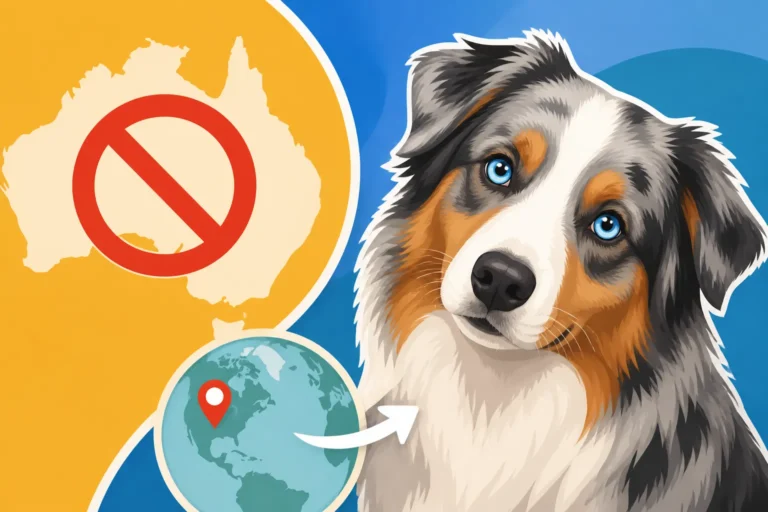
The legal landscape surrounding tail docking is as varied and contentious as the ethical debate itself. Many countries, particularly across Europe, have completely banned or severely restricted non-medical tail docking, viewing it as an unnecessary mutilation. These bans reflect a growing societal concern for animal welfare and a shift away from practices deemed cosmetic. For example, countries like the UK, Australia, and most of the European Union prohibit docking except when performed by a vet for therapeutic reasons.
In contrast, tail docking remains legal in many parts of North America, including the United States and Canada, though veterinary associations in these countries often oppose the practice. Breeders and owners in these regions still have the option to dock tails, often citing adherence to breed standards or personal preference. This patchwork of laws means that an Australian Shepherd born in one country might legally have its tail docked, while the same procedure on a puppy across a border could be illegal. These differing regulations reflect the ongoing global discussion about what constitutes humane animal care.
Living With an Australian Shepherd's Tail
Whether your Australian Shepherd has a natural bobtail, a docked tail, or a full-length tail, understanding its care, function, and communicative role is part of responsible ownership. Each tail type comes with its own considerations.
Grooming and Care for Different Tail Lengths
Regardless of length, an Australian Shepherd's tail needs attention. For full-tailed Aussies, their beautiful plume of hair is part of their double coat and requires regular brushing to prevent mats and tangles. The long feathering can pick up burrs, mud, and debris, especially if your Aussie enjoys romping through fields or hiking trails. Tools like a slicker brush and undercoat rake are essential, and occasionally, the feathering might need a trim for cleanliness. You might find great grooming tools, including deshedding brushes and detangling sprays for long Aussie tails, on sites like Chewy.
For natural bobtails or docked tails, while the length of hair is less, the area still needs care. The fur around the stubby tail can still mat, and the skin beneath needs to be kept clean and dry to prevent irritation or skin issues. During their twice-yearly "coat blow," even the short tail area will shed, requiring regular brushing to remove loose undercoat. Australian Shepherd Grooming and Shedding Costs details the commitment to keeping their coat healthy.
Communication and Balance: The Tail's Role
A dog's tail is an incredibly important tool for communication. A full-length tail, with its wide range of motion and expressiveness, helps an Australian Shepherd convey a vast array of emotions—from excitement and happiness (a vigorous full-body wag) to fear, submission (tucked between the legs), or alertness (held high and stiff). Other dogs read these signals intently, making a full tail a crucial part of canine social interaction.
For Aussies with natural bobtails or docked tails, this visual communication is significantly hampered. They still wag, often with their entire rear end, but the nuanced signals a longer tail provides are missing. Owners of bobbed or docked Aussies often learn to read other body language cues more closely, such as ear set, eye contact, and overall posture, to understand their dog's mood. While a short tail might seem inconsequential, it also plays a role in balance, especially during quick turns and maneuvers, something that is critical for a high-energy, agile breed like the Aussie. Australian Shepherd Movement in the Ring often considers how the whole dog moves, including tail carriage.
Health Considerations for Tails, Long or Bobbed
Different tail types can come with their own unique health considerations:
- Full Tails: The most common issue for full-tailed Aussies is injury, especially if they are highly active or working dogs. Tail breaks, sprains, or "happy tail" (a condition where a dog wags its tail so hard it repeatedly hits surfaces, leading to open wounds) can occur. Regular checks for cuts, scrapes, burrs, or ticks are essential, particularly after outdoor adventures.
- Natural Bobtails: While free from docking complications, NBTs are still part of the spinal column. Extremely short or kinked bobtails can sometimes be associated with mild spinal malformations that, while not lethal, might rarely lead to issues later in life. Responsible breeders screen for these possibilities.
- Docked Tails: The primary health concerns for docked tails arise from the procedure itself. If not performed by a skilled veterinarian, complications like infection, nerve damage (leading to pain or neuromas), or phantom limb pain can occur. In rare cases, a short docked tail can also make it harder for the dog to express its anal glands naturally, leading to impaction.
Regardless of your Aussie's tail type, monitoring for any signs of pain, tenderness, swelling, or changes in how they carry or move their tail is always important. Prompt veterinary attention for any tail injury or concern is crucial.
The Australian Shepherd Standard and Tail Presentation
Breed standards are the blueprints that define the ideal characteristics of a breed, guiding breeders and judges. For the Australian Shepherd, the tail has long been a point of discussion and evolution within these standards.
What the Breed Standards Say About Tails
Different kennel clubs and breed associations have varying stances on the Australian Shepherd's tail. For example, the Australian Shepherd Club of America (ASCA), which is the parent club for the breed and emphasizes its working origins, states that "a natural bobtail or docked tail is preferred." It specifically mentions that a full-length tail is acceptable but should not exceed three to four inches. This preference for a short tail reflects the breed's historical working role and established aesthetic. The ASCA Australian Shepherd Standard outlines these preferences in detail.
The American Kennel Club (AKC) standard, which Australian Shepherds joined later, also expresses a preference for a naturally bobbed or docked tail, not to exceed four inches. However, importantly, neither standard penalizes a naturally full-length tail, as long as it is well-carried and proportionate to the dog. This distinction is crucial because it means that a full-tailed Aussie is not inherently "faulted" in the show ring, though it might not align with the historical preference. This evolution acknowledges the increasing awareness of natural genetics and animal welfare.
How a Natural Bobtail is Judged in the Show Ring
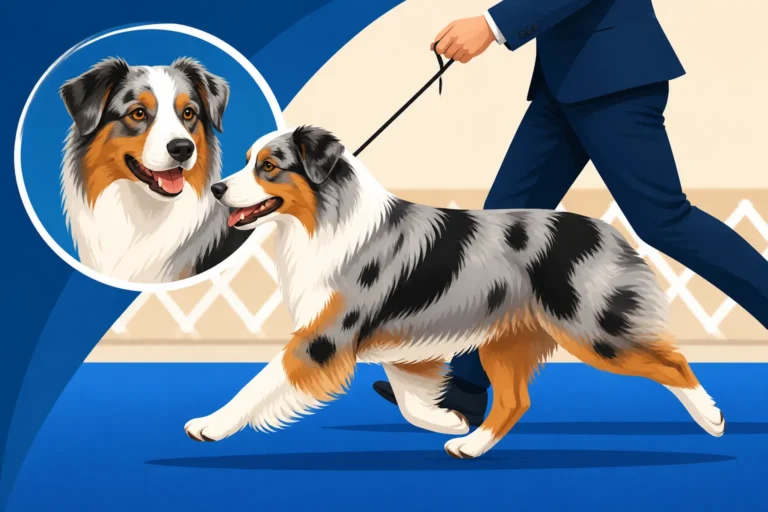
In the show ring, a natural bobtail is generally seen as perfectly acceptable, often preferred, as long as its length conforms to the breed standard (typically not exceeding 4 inches). Judges are looking for an overall balanced appearance, and a well-proportioned NBT or docked tail fits this traditional image. However, the quality of the NBT can be a factor. A very short, kinky, or severely malformed natural bobtail, though genetic, could potentially detract from the overall impression of soundness and balance, even if it doesn't technically incur a fault.
Conversely, a full-length tail, while acceptable, might face subtle challenges against the historical preference. Judges assess how the tail is carried and its overall fit with the dog's movement and structure. Whether a Long Tail Faults an Aussie in the Ring explains that while it's not a disqualification, the presentation of a full tail can still be subject to a judge's interpretation of overall balance and type. The breed standard dictates that the natural tail should be "set on moderately low" and "not curl over the back to the extent of interfering with the natural gait."
The Evolution of Tail Preferences in the Breed
The preference for a short tail in Australian Shepherds has deep roots in their working past, but societal views on animal welfare and cosmetic procedures are continually evolving. There's a growing movement advocating for a ban on all non-medical tail docking, which has led many breeders and enthusiasts to embrace full-tailed Aussies. This shift is also influenced by the understanding of NBT genetics and the desire to avoid the risks associated with breeding two NBT dogs.
Today, you'll see a broader acceptance of full-tailed Australian Shepherds in various activities, even if the "classic" bobbed tail remains iconic for many. This reflects a maturation of the breed community, balancing tradition with modern ethical considerations and scientific understanding. Whether your Aussie sports a natural bobtail or a long, flowing tail, what truly matters is their health, temperament, and your bond with them. Products like quality food from Chewy can support their overall health regardless of tail length, ensuring they have the energy for all their unique Aussie endeavors. Australian Shepherd Proportions in the Standard highlights that the overall dog's balance is key, not just one feature.
Disclaimer
This article is for general informational purposes only and does not constitute professional advice. Laws, prices and regulations vary by location and change over time. Consult a qualified professional for guidance on your specific situation.