What Puts an Aussie Out of the Ring
It’s a unique feeling when you watch your beloved Australian Shepherd trot across the living room, a perfect picture of grace and power, and you wonder, "Could they be a show dog?" Many of us dream of seeing our furry companions shine in the ring, but the world of dog shows, especially for a breed as precise as the Australian Shepherd, comes with a very specific rulebook. This guide is going to walk you through the nitty-gritty details of what might put an otherwise wonderful Aussie out of contention in the show ring, exploring the breed standard's fine print, from their physical build to their very personality.
Understanding the Australian Shepherd Breed Standard
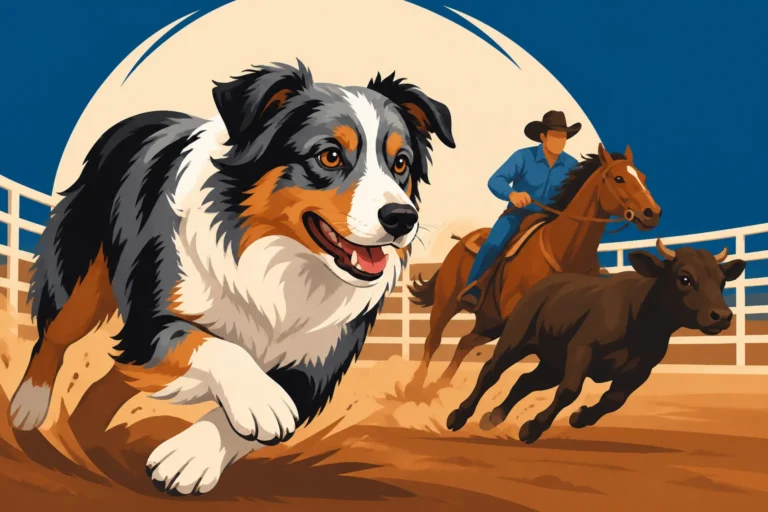
Before we dive into what disqualifies an Australian Shepherd from the show ring, it’s essential to grasp what the breed standard actually is and why it exists. Think of the breed standard as the blueprint for the ideal Australian Shepherd. It’s a detailed description of the perfect Aussie, outlining everything from their height and weight to their coat texture, eye color, and even their temperament. This isn't just about aesthetics; every aspect of the standard ties back to the breed’s original purpose as a highly intelligent, agile, and durable herding dog.
The breed standard is set by organizations like the Australian Shepherd Club of America (ASCA) and the American Kennel Club (AKC). These standards guide breeders in their efforts to produce healthy, functional dogs that embody the essence of the breed. When a dog is shown, judges meticulously compare them to this ideal blueprint. A "fault" is a deviation from the standard that is undesirable but doesn't necessarily eliminate a dog from competition. However, a "disqualification" (DQ) is a serious deviation that means the dog cannot be awarded points, win placements, or achieve championship titles in conformation events. It's a hard stop, preventing that dog from advancing in the show circuit, regardless of how lovely they might be in every other way. If you're serious about showing, understanding The Australian Shepherd Standard and What Judges Want is your first step.
The goal isn't just a pretty face; it’s about a dog whose form truly allows it to fulfill its original function. An Aussie that is too heavy, too light, too short, or too tall might struggle with the demands of a full day’s work in the field. Similarly, an Aussie with an incorrect coat might not have the protection it needs against the elements, and one with an unsound temperament could be a danger or ineffective on the ranch. It’s a holistic view of the breed, ensuring its health, functionality, and characteristic working drive are preserved.
Structural Disqualifications: When Form Fails Function
When a judge meticulously runs their hands over an Australian Shepherd in the show ring, they’re not just admiring the dog; they’re assessing its structure against the very precise measurements and proportions laid out in the breed standard. Any significant deviation can be considered a structural disqualification, effectively removing the dog from competition. These aren’t minor flaws; they are often issues that would genuinely hinder an Aussie’s ability to perform its traditional herding duties or lead to health problems.
Size Deviations: Too Big or Too Small
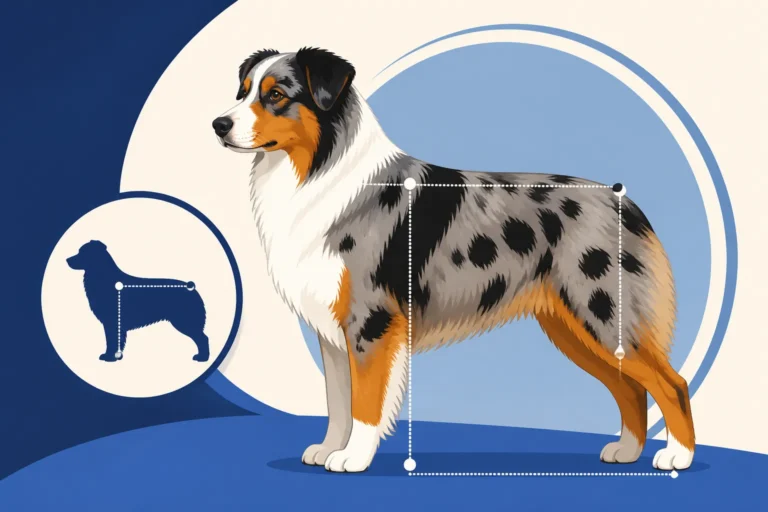
One of the most immediate structural disqualifications relates to size. The breed standard specifies a particular height range for Australian Shepherds, measured at the highest point of the shoulder blades. For males, this is generally 20-23 inches, and for females, 18-21 inches. An Aussie that falls outside this range, whether significantly taller or shorter, will be disqualified. Imagine a dog that needs to be agile enough to duck and weave around livestock but is either too cumbersome at a great height or too small to command respect. It just doesn't fit the job description.
A common scenario might involve a young Aussie who appears to be growing quite rapidly, leading owners to hope they’ll "fill out" into the standard. However, if that growth pushes them past the upper limit, or if an otherwise well-proportioned dog simply stops growing short of the minimum, it’s a disqualification. This emphasis on moderate size underscores the breed’s heritage as a working dog, requiring a balanced build for endurance and maneuverability in the field. Understanding Australian Shepherd Height and Weight is vital for prospective show dog owners.
Dental and Jaw Irregularities
The Australian Shepherd’s mouth is a tool, crucial for gripping and redirecting livestock without causing harm. Therefore, specific dental and jaw issues can lead to disqualification. The standard calls for a scissors bite, where the outer side of the lower incisors just touches the inner side of the upper incisors. An undershot bite (lower jaw protrudes) or an overshot bite (upper jaw protrudes, creating a gap) is typically a serious fault, but if it's severe enough to compromise the bite, it can become a disqualification. Missing teeth, beyond what might be allowed for specific incisors due to injury or age, can also be a disqualification.
It’s about function. A dog with a severely misaligned bite might have trouble picking up and holding a stick, never mind gently guiding a sheep. Breeders pay close attention to dentition, as it's not merely cosmetic but speaks to the dog's ability to perform tasks. While the dog might eat perfectly well from a bowl from Chewy, its working utility, as defined by the standard, would be compromised.
Tail and Dewclaw Standards
The Australian Shepherd is famously known for its natural bobtail, a genetic trait where some puppies are born with tails ranging from very short to moderate length. However, the standard also specifies what length of natural bobtail is acceptable. Tails that are too long to be considered a bobtail, or those that are docked to an incorrect length, can be a disqualification. Most standards specify that a natural bobtail should not exceed four inches. If an Aussie is born with a full-length tail, it is often docked to meet the aesthetic and historical preference of the breed, but if done incorrectly or if it’s too short, it can be problematic. This is why discussions around The Australian Shepherd Natural Bobtail and Australian Shepherd Docking and Where It Stands are so common among breeders and enthusiasts.
Additionally, the presence or absence of front dewclaws is sometimes addressed in the standard. While some breeds allow for their removal, some Australian Shepherd standards specify that front dewclaws are typically removed. However, if they are missing when the standard requires them, it could be a fault or even a disqualification depending on the specific wording.
Cryptorchidism
One of the more straightforward structural disqualifications applies only to male dogs: cryptorchidism. This is a condition where one or both testicles fail to descend into the scrotum. For a male dog to be eligible for conformation showing, both testicles must be fully descended and visible. This is not just a cosmetic issue; it's a genetic health concern and can predispose the dog to testicular cancer. Therefore, any male Aussie found to be unilaterally (one testicle) or bilaterally (both testicles) cryptorchid will be disqualified. This is a clear-cut rule, reflecting both breeding health and ethical considerations.
Temperament Disqualifications: More Than Just Manners
Beyond their physical appearance, an Australian Shepherd's temperament is a cornerstone of the breed standard. These dogs are celebrated for their intelligence, eagerness to please, and energetic drive. However, certain behavioral traits are considered so fundamentally detrimental to the breed's character that they will lead to immediate disqualification in the show ring. Judges are looking for a dog that is confident, controlled, and stable, embodying the steadfast nature required for herding work.
Extreme Shyness or Aggression
This is perhaps the most critical temperament disqualification. An Australian Shepherd must be exhibited in a show ring with confidence and composure. Any dog that displays extreme shyness—cowering, backing away from the judge, or showing overt fear when approached or touched—will be disqualified. This isn't just about a bit of ring nerves; it's about a fundamental lack of confidence that goes against the breed's inherently self-assured nature. A dog that cannot be confidently examined by a judge simply cannot be fairly assessed against the standard.
Conversely, overt aggression towards judges, other dogs, or people is also an immediate disqualification. An Australian Shepherd is meant to be watchful and protective of its flock or family, but never indiscriminately aggressive. A dog that lunges, growls, snaps, or attempts to bite demonstrates a temperament utterly unsuited for a show dog, and more importantly, for a safe and reliable companion. The breed standard emphasizes an even disposition, which is paramount for a dog that works closely with people and animals. If you're wondering about the ideal Aussie demeanor, studying The Temperament the Aussie Standard Requires is highly recommended.
Nervousness and Unmanageability
While less severe than outright aggression or shyness, a dog that is excessively nervous, jumpy, or easily startled can also fall into disqualifying territory. An Aussie should be attentive and responsive to its handler, but not so high-strung that it cannot settle or focus. A constant state of anxiety or frantic energy prevents the judge from observing the dog's gait, structure, and overall presentation accurately.
Similarly, a dog that is truly unmanageable in the ring—constantly pulling, resisting, or refusing to cooperate with its handler—can also be disqualified. While some spirited behavior is expected from a high-energy breed, a dog that cannot be controlled enough to be properly evaluated undermines the entire purpose of the conformation event. These are dogs that might be wonderful companions at home, perhaps even excelling in sports like agility where their drive is channeled differently, but in the specific context of a conformation show, these behaviors are unacceptable. This stability is why Aussies, when properly socialized, can be great family dogs, a topic explored further in Australian Shepherds With Children and Livestock.
Differentiating Ring Nerves from Fundamental Flaws
It's crucial to distinguish between a dog experiencing normal "ring nerves" and one with a true temperament disqualification. Many dogs can be a bit nervous or distracted in the busy, loud environment of a dog show. A good handler can often reassure their dog, and the dog will settle into its routine. Judges are experienced and can usually tell the difference between temporary unease and an ingrained behavioral issue.
However, if the shyness or aggression is so profound that the dog poses a risk or simply cannot perform its required movements or tolerate examination, then it crosses the line into disqualification. This focus on stable temperament reinforces the idea that Australian Shepherds should be confident, intelligent partners, capable of handling diverse situations without undue fear or aggression. While proper training and socialization are invaluable, a fundamentally unsound temperament often has a genetic component, which is why reputable breeders prioritize temperament in their breeding programs.
Color and Markings: Beyond the Beautiful Merle
Australian Shepherds are famous for their stunning array of coat colors and patterns, especially the mesmerizing merle. However, the breed standard is very particular about which colors and markings are acceptable in the show ring. Deviations in this area are not just about personal preference; they often relate to the breed's health, historical appearance, and the integrity of its genetic lines.
Unrecognized Base Colors
The accepted base colors for an Australian Shepherd are black, red, blue merle, and red merle. These colors can come with or without white and copper (tan) trim. Any other base color is a disqualification. For example, a solid yellow, dilute lavender, or liver-colored Aussie, while perhaps beautiful and unique in person, would be disqualified in the conformation ring because they do not conform to the established genetic palette of the breed.
The merle pattern itself is a complex genetic trait, resulting in mottled patches of color. The two recognized merle patterns are blue merle (black pigment diluted) and red merle (red/liver pigment diluted). You can learn more about The Two Merle Patterns an Aussie Can Carry. Solid black and solid red Australian Shepherds are also standard, often referred to as 'self-colored' when they lack white and copper trim, or as 'black tri' and 'red tri' when those markings are present. These tri-color patterns are very common and highly prized. Check out Black Tri and Red Tri Australian Shepherds for more details on these variations.
Excessive White Markings
This is a very common area for disqualification and often links to more significant health concerns. While white markings are characteristic of the Australian Shepherd, there are strict limits on their placement and extent. Disqualifying white markings typically include:
- White on the body between the withers and tail: White patches on the main body of the dog, outside of the neck, chest, legs, or face, are a disqualification.
- A "full white collar" extending beyond the point of the shoulder blades: While a white collar is acceptable, it must not extend too far back.
- White on the head that prevents pigmentation of the eye or eye rim: This is particularly important for merle dogs. White around the eyes that interferes with proper pigmentation can cause issues, especially concerning the health of the eye itself.
The concern with excessive white, especially in merle dogs, stems from the risks associated with breeding two merles together, which can result in "double merles." These dogs often have extensive white markings and can suffer from severe health issues like deafness and blindness. While a single dog with excessive white might not be a double merle, the standard aims to discourage traits associated with irresponsible breeding practices.
Eye Color Disqualifications
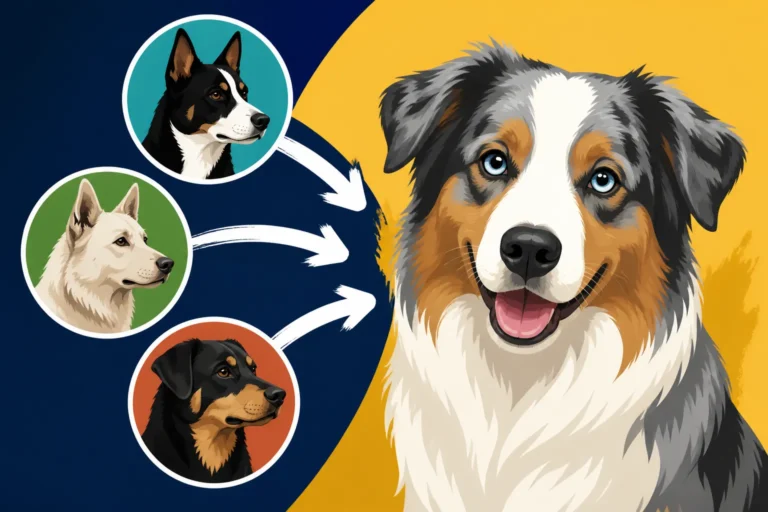
While Australian Shepherds are known for their striking eye colors, including blue, amber, brown, and marbled or "split" eyes (where one eye has multiple colors, or each eye is a different color), there are still boundaries. The overall pigmentation of the eye, eye rims, and nose should generally be in harmony with the dog’s coat color. For example, a black-based dog should have black eye rims and nose.
While specific eye color itself isn't often a direct disqualification unless it’s indicative of a severe health problem, certain conditions associated with eye abnormalities could lead to disqualification. For instance, severe microphthalmia (abnormally small eyes), especially when linked to excessive white, would certainly be a disqualifying trait. Eye defects are a critical part of the ACVO eye exam Australian Shepherd breeders run. For more on what's acceptable, refer to Australian Shepherd Eye Colors and Split Eyes.
Incorrect Coat Type
The Australian Shepherd’s coat is a functional double coat, designed to protect them from various weather conditions. It should be of medium texture, neither too coarse nor too fine, with a dense undercoat. While a woolly coat or one that is too short, lacking an undercoat, or too long could be a severe fault, it might not always be a disqualification unless the standard explicitly states it. However, a coat that is completely uncharacteristic of the breed’s working needs would certainly prevent a dog from winning any awards, as it goes against the very essence of What the Standard Asks of an Aussie Coat.
The judge's eye for detail regarding color and markings is exceptional. They are trained to spot even small white spots on the body or deviations in eye rim pigmentation. These stringent rules are in place not just for uniformity, but to uphold the health and genetic integrity of the breed. Breeders diligently consult resources like Reading an Australian Shepherd Pedigree and focus on The Test Results to Ask an Aussie Breeder For to avoid these disqualifying traits and ensure they are producing sound, healthy puppies that adhere to the breed's cherished standard.
Disclaimer
This article is for general informational purposes only and does not constitute professional advice. Laws, prices and regulations vary by location and change over time. Consult a qualified professional for guidance on your specific situation.