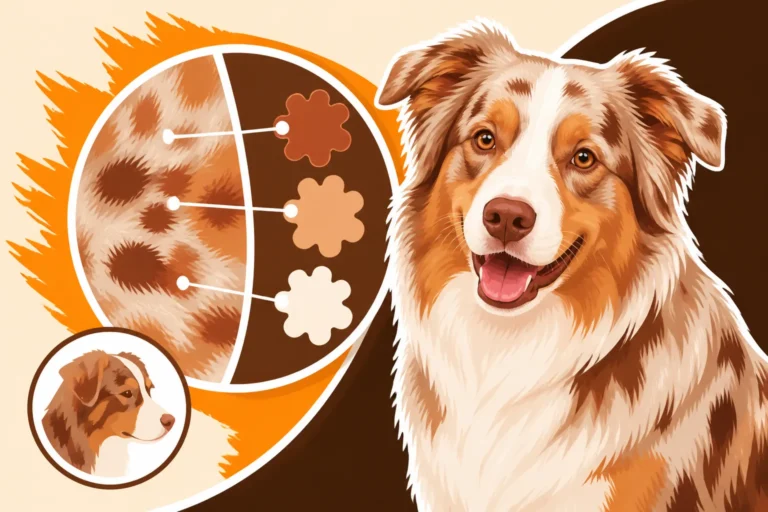
The Two Merle Patterns an Aussie Can Carry
You've just adopted one of those gorgeous Australian Shepherds, or maybe you're simply captivated by their stunning, mottled coats. But then you hear terms like "blue merle" and "red merle," and suddenly it feels like you need a genetics degree to understand what makes your dog so visually unique. It can definitely be confusing to differentiate between these beautiful patterns, and sometimes, breeders aren't always clear about what they mean. This guide is here to untangle the mystery, explaining in detail the two primary merle patterns an Australian Shepherd can carry, their visual characteristics, and the important genetic implications behind them.
What Exactly is "Merle" in an Australian Shepherd?
When we talk about "merle" in an Australian Shepherd, we're not just describing a single color; we're referring to a fascinating genetic pattern that dilutes specific areas of a dog's base coat color. Imagine taking a solid colored canvas and randomly splashing it with a lighter shade of the same color, creating a mosaic of dark and light patches. That's essentially what the merle gene does, resulting in that breathtaking, mottled, almost marbled effect that has become a hallmark of the Australian Shepherd breed.
This gene doesn't just lighten the coat uniformly; it acts in an irregular, unpredictable way. You'll see patches of the original, undiluted base color alongside areas where the pigment has been softened and faded. This is why no two merle Aussies ever look quite the same – each dog's pattern is as unique as a fingerprint. One might have large, distinct dark patches interspersed with lighter areas, while another might display a finer, more speckled dilution across their coat. The beauty lies in this inherent irregularity and variation.
Beyond the coat, the merle gene can also influence eye and nose pigmentation, adding another layer of individuality to an Aussie's appearance. It's common for merle Australian Shepherds to have striking blue eyes, or even eyes that are marbled with different colors, a condition known as heterochromia. One eye might be completely blue, while the other remains amber or brown. Additionally, the nose and paw pads can also show areas of pink or be partially unpigmented, sometimes referred to as a "butterfly nose." These unique pigmentations only enhance the captivating allure of a merle Aussie, making their gaze especially memorable.
The Blue Merle Australian Shepherd: Classic and Captivating
The blue merle Australian Shepherd is perhaps the most widely recognized and iconic merle pattern, instantly conjuring images of majestic working dogs with piercing eyes. This pattern begins with a solid black base coat. The merle gene then strategically dilutes patches of this black into various shades of grey, which can range from a light, silvery hue to a deep, dark charcoal. The combination of these grey tones with the remaining undiluted black patches creates an overall impression that many describe as a "blue" or "stormy sky" appearance.
Against this beautiful blue-grey backdrop, you'll find the distinctive black patches of the undiluted coat, which provide striking contrast and definition to the merle pattern. If your blue merle Aussie also displays rich copper or tan markings – typically on their eyebrows, cheeks, chest, and legs – they are referred to as a "blue merle tricolor." These copper points beautifully complement the cool tones of the merle, adding warmth and depth to the coat. A blue merle without these copper markings is simply known as a "blue bi-merle," focusing purely on the interplay of black, grey, and white.
The specific distribution and intensity of the blue-grey versus black patches can vary dramatically from one blue merle Aussie to another. Some might have extensive areas of dilution, making them appear predominantly light grey, while others will retain larger, more prominent black sections. White markings are also very common in blue merles, typically appearing as a blaze on the face, a collar around the neck, a white chest, and white on the belly and legs. These white accents further highlight the unique merle pattern, ensuring that each blue merle Australian Shepherd is a truly one-of-a-kind work of art.
The Red Merle Australian Shepherd: A Fiery Spectacle
While the blue merle often steals the spotlight, the red merle Australian Shepherd offers an equally stunning and perhaps even more unique aesthetic, with its warm, fiery tones. This pattern starts with a solid red, or liver, base coat. The merle gene then acts upon this red, diluting parts of it into lighter shades that can range from a delicate pale cream or fawn to a rich, burnished cinnamon or copper. The result is a breathtaking tapestry of varying red and liver hues, often reminiscent of an autumnal forest or a magnificent sunset captured in a dog's fur.
Just like with blue merles, the red merle features darker, undiluted liver-colored patches that stand out against the lighter, diluted red areas. These patches are essential for defining the merle pattern and providing that critical visual contrast. If your red merle Aussie also carries the genetic code for tan points, these will typically appear as a slightly deeper or richer shade of red, or a soft tan, on the same areas as a blue merle (eyebrows, cheeks, chest, and legs). This combination creates a "red merle tricolor." A key identifying feature of any red merle, whether tricolor or bi-color, is that their nose and eye rims will always be liver-colored, never black, which is a definitive way to differentiate them from a blue merle.
The intensity and specific shades within a red merle coat can be incredibly diverse. You might encounter a red merle that is predominantly light, with delicate fawn-colored dilution, or one that is a deep, rich mahogany with dramatic patches of darker liver. The contrast between these light and dark shades can be subtle and flowing, or quite bold and distinct, depending on the individual dog's genetics. White markings, similar to those found on blue merles, are also prevalent, adorning the face, chest, and legs. These can further enhance the vibrant and captivating appearance of these gorgeous dogs, often complemented by striking amber or green eyes.
Understanding the Genetics Behind Merle
The mesmerizing merle pattern in Australian Shepherds, whether blue or red, is all thanks to a dominant gene, commonly referred to as the 'M' gene. What this means in practical terms is that an Australian Shepherd only needs to inherit one copy of this gene from either parent to display the merle pattern. It's a powerful genetic switch, and its presence is what creates those beautiful, mottled coats we adore. If you're looking to dive deeper into how this works on a cellular level, resources like The Merle Gene and How It Dilutes Aussie Coat can provide fascinating insights into the specific genetic mechanisms at play.
However, this powerful gene carries a significant responsibility, especially when it comes to breeding. While one copy of the merle gene (Mm) creates the desired pattern, the real danger arises when two merle dogs are bred together. This pairing can result in offspring that inherit two copies of the merle gene (MM), leading to what is devastatingly known as "double merle" or sometimes, less accurately, "lethal white." These double merle puppies frequently suffer from severe health issues, including profound deafness and various degrees of blindness, which can range from impaired vision to complete absence of functional eyes. Reputable breeders conscientiously avoid merle-to-merle pairings at all costs because of the high probability of inflicting these severe, life-altering conditions on unsuspecting puppies. It’s a heartbreaking and entirely preventable outcome, and you can learn more about the critical reasons behind this strict breeding guideline in Why Aussie Breeders Never Cross Merle to Merle.
To complicate matters further, there's a phenomenon called "cryptic merle," which makes responsible breeding even more challenging. A cryptic merle Australian Shepherd carries the merle gene (often a shorter allele like Mc or MCR) but displays little to no visible merle patterning on their coat. To the untrained eye, they might appear to be a solid black or red, leading someone to believe they are not merle. However, genetically, they are merle and can pass the gene on to their offspring. This is why relying solely on visual inspection for breeding decisions is incredibly risky. Genetic testing is absolutely crucial to identify these hidden carriers, preventing accidental merle-to-merle breedings and the tragic birth of double merle puppies. Understanding DNA Testing for the Merle Allele in an Aussie is vital for any responsible owner or breeder.
Beyond Blue and Red: Merle and Other Markings
While the terms "blue merle" and "red merle" describe the primary diluted patterns, Australian Shepherds often feature additional markings that contribute to their unique and diverse appearances. These markings, while not part of the merle gene itself, are incredibly common and help define the overall look of an Aussie. One such set of markings is often referred to as the "Irish Pattern," which includes a distinct white blaze running up the face, a white collar draped around the neck, a prominent white chest, a white belly, and white on the lower legs and paws. These white areas provide stark contrast against the merle pattern and solid patches, making an Aussie's features truly pop. It’s important to note that while some white is desired, excessive white, particularly around the ears or eyes, can sometimes be an indicator of potential health issues, especially in cases of double merle.
Beyond the base merle and white markings, many Australian Shepherds are also "tricolor" merles. This means they display not just the merle pattern (blue or red) and white markings, but also distinct copper or tan points. These rich, warm markings typically appear as "eyebrows" above the eyes, on the cheeks, along the edges of the ears, on the chest, and on the legs. So, if you see a blue merle with these tan points, you’re looking at a "blue merle tricolor." Similarly, a red merle featuring these copper points is a "red merle tricolor." The addition of these copper accents adds another layer of complexity and beauty, creating a three-dimensional effect in their already intricate coats. When you're shopping for supplies, remember that Chewy offers a wide range of grooming tools perfect for keeping these multi-toned coats looking their absolute best.
In contrast to the tricolor merle, some Australian Shepherds are "bi-color" merles. This designation means they exhibit the merle pattern (either blue or red) and often white markings, but they lack the distinct copper or tan points. So, a blue merle without any copper would be called a "blue bi-merle," and a red merle without copper would be a "red bi-merle." These dogs are just as stunning, and sometimes their lack of copper points allows the beauty of the merle and white patterning to take center stage, creating a streamlined yet captivating appearance. Whether bi-color or tricolor, each merle Australian Shepherd possesses a truly individual look.
Why Identifying Merle Patterns Matters for Health and Breeding
Understanding the specific merle pattern an Australian Shepherd carries goes far beyond appreciating their stunning aesthetics; it delves deep into the realm of their health and the critical responsibility of ethical breeding. The most significant concern, as touched upon earlier, revolves around the severe health risks associated with the "double merle" genotype (MM). Puppies born from merle-to-merle breedings face a high probability of profound sensory deficits, including complete deafness and severe visual impairments. Conditions like microphthalmia, where the eyes are abnormally small or underdeveloped, and colobomas, which are structural defects in the eye, are tragically common in double merles. These aren't minor cosmetic issues; they are debilitating conditions that drastically impact a dog's quality of life, requiring extensive care, specialized training, and a profound commitment from their owners. You can gain a deeper understanding of these challenges by reading Deafness in a Double Merle Australian Shepherd and Eye Defects in a Double Merle Australian Shepherd.
Given these severe potential outcomes, genetic testing for the merle gene is not merely advisable; it is absolutely critical for any Australian Shepherd intended for breeding. As we discussed with cryptic merle, a dog that appears solid-colored to the eye can still carry a merle allele and pass it on. Without proper DNA testing, an unwitting breeder could accidentally pair a visually solid, but genetically cryptic merle, with a visible merle, leading to a litter of double merle puppies. Reputable breeders integrate DNA testing into their standard practices to precisely identify the merle status of their breeding stock. This crucial step ensures they make informed pairing decisions, mitigating the risk of producing puppies with devastating health problems. Resources like The Genetic Panel Every Australian Shepherd Needs can help owners understand the comprehensive health testing that should be undertaken for an Aussie.
Ultimately, identifying merle patterns is a cornerstone of responsible breeding practices within the Australian Shepherd community. Ethical breeders prioritize the health and welfare of their dogs above all else, including aesthetic preferences for certain coat patterns. They meticulously research pedigrees, perform all recommended health clearances, and utilize genetic testing to ensure that every breeding decision is made with the goal of producing healthy, well-adjusted puppies. Such breeders are transparent about their dogs' health test results and are more than willing to discuss their breeding philosophy with prospective owners. For new owners, this means seeking out breeders who are knowledgeable and forthcoming, rather than those who prioritize quick sales or specific rare coat colors without regard for genetic health. Choosing a puppy from a responsible breeder is perhaps the most important decision you'll make, and it sets the stage for a healthy, happy life for your new family member. When you bring your new Aussie home, you'll want reliable supplies, perhaps a comfortable dog bed from Chewy, for when they finally settle down after a day of admiring their beautiful coat.
Merle Patterns: Blue vs. Red At a Glance
To help consolidate the visual and genetic differences between the blue merle and red merle Australian Shepherd, here’s a quick reference table. This can be a handy tool when you're admiring different Aussies or trying to understand your own dog's specific coloring.
| Feature | Blue Merle Australian Shepherd | Red Merle Australian Shepherd |
|---|---|---|
| Base Coat Color | Black | Red (often referred to as liver or brown) |
| Merle Dilution | Diluted areas appear as various shades of grey (silver, slate, charcoal) | Diluted areas appear as lighter shades of red, fawn, cream, cinnamon |
| Undiluted Patches | Distinct black patches contrasting with grey | Distinct liver-colored patches contrasting with lighter reds |
| Nose & Eye Rims | Typically black; can have pink spots (butterfly nose) | Always liver-colored (never black) |
| Eye Color | Can be blue, marbled blue, amber, brown, or heterochromia | Can be blue, marbled blue, amber, green, or brown, heterochromia |
| Copper Markings | Often present, creating a "blue merle tri" | Often present, creating a "red merle tri" |
| Overall Hue | Cool, often striking, like a stormy sky or slate | Warm, rich, earthy, like autumn leaves or rust |
Keeping these distinctions in mind will not only deepen your appreciation for the diversity within the Australian Shepherd breed but also underscore the importance of genetic awareness. Whether you're a potential owner, a current Aussie parent looking for more insight, or just an admirer of these incredible dogs, understanding the nuances of their merle patterns is truly fascinating. Remember to provide your active Australian Shepherd with plenty of mental stimulation; Chewy offers a fantastic selection of puzzle toys that can engage their brilliant minds.
Disclaimer
This article is for general informational purposes only and does not constitute professional advice. Laws, prices and regulations vary by location and change over time. Consult a qualified professional for guidance on your specific situation.