Signs an Aussie Came From a Volume Breeder
It’s incredibly frustrating when you’re looking for a new Australian Shepherd puppy, full of excitement and hope, only to find yourself wondering if the breeder you’re talking to is genuinely reputable. The thought of bringing home a puppy that might have hidden health issues or severe behavioral problems due to poor breeding practices is enough to make anyone anxious. This guide is here to cut through the confusion and highlight the clear signs that an Australian Shepherd puppy might be coming from a volume breeder, helping you make a choice you can feel good about.
Understanding What a Volume Breeder Is And Isn't
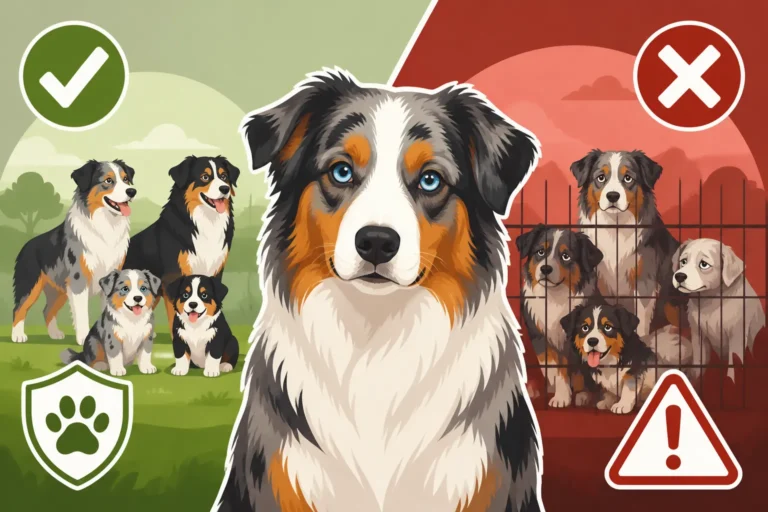
The term "volume breeder" can conjure up different images for different people, and it’s crucial to distinguish it from a truly responsible, albeit sometimes larger, breeding operation. A dedicated, ethical breeder, even one who might have a few litters a year, is driven by a deep love for the Australian Shepherd breed, a commitment to its health, temperament, and genetic integrity. They invest heavily in health clearances, early socialization, and offering lifelong support to the families who adopt their puppies. Their primary goal is to produce healthy, well-adjusted dogs that exemplify the breed standard and find them the very best homes possible.
A volume breeder, however, operates with a different mindset. Their primary motivator is often quantity and profit. This means they frequently cut corners on crucial aspects like comprehensive health testing for parent dogs, quality veterinary care, proper nutrition, and, critically, early socialization. The result? Puppies that are more susceptible to illness, fear, anxiety, or other behavioral challenges. While they might not be outright "puppy mills" in the most extreme, neglectful sense, their scale of operation often makes it impossible to provide the individualized attention and care that each Australian Shepherd puppy desperately needs during its formative weeks. Their objective isn't to advance the breed or cultivate perfect matches between puppy and family; it's simply to move puppies out the door as quickly and efficiently as possible.
The "Backyard Breeder" Versus the "Volume Breeder"
You often hear the phrase "backyard breeder," which typically refers to an individual who breeds their pet without extensive knowledge or planning, perhaps just once or twice. While these situations can certainly lead to issues due to a lack of understanding regarding genetics, health, and responsible practices, a volume breeder represents a different category entirely. A volume breeder can often present a surprisingly polished front—they might have a well-designed website, professional-looking advertisements, and even seem quite knowledgeable on the surface. This can make them incredibly deceptive to an unsuspecting prospective owner. They might even boast a continuous supply of Australian Shepherd puppies, implying a successful and in-demand operation.
The key difference lies in intent and scale. Backyard breeders often operate from a place of ignorance or well-meaning but misguided enthusiasm. Volume breeders, on the other hand, are often deliberate in their high-output, low-investment model. They are structured to maximize the number of puppies produced, often at the expense of individual well-being. This often means they house many breeding dogs, sometimes multiple breeds, ensuring a steady stream of litters. The critical downfall here is the lack of genuine investment in the individual puppy. It’s simply not feasible to provide every single puppy in a large, constantly rotating setup with the diverse experiences and one-on-one attention necessary to build a confident, resilient, and well-adjusted Australian Shepherd.
Why Volume Breeding Is Problematic for Australian Shepherds
Australian Shepherds are a breed known for their exceptional intelligence, high energy levels, and sensitive nature. They thrive on consistent, thoughtful development and a wealth of positive early experiences. A volume breeder's environment, by its very design, frequently falls short of providing this essential foundation. Imagine a puppy raised in a sterile, low-interaction kennel versus one growing up in a bustling family home, exposed to household sounds, various people, and different textures. The former is far more likely to develop fear-based behaviors, struggle with novel situations, and exhibit anxiety or reactivity when suddenly thrust into a new home environment. This critical period for The Australian Shepherd Socialization Checklist is often missed entirely.
Beyond temperament, there’s the significant and often hidden health risk. Responsible Australian Shepherd breeders meticulously invest in comprehensive health clearances for their breeding stock, including evaluations for hips (like OFA or PennHIP), elbows, eyes (CERF/ACVO exams), and DNA panels for breed-specific genetic conditions such as The MDR1 Mutation Half of Australian Shepherds Carry and Collie Eye Anomaly in an Australian Shepherd. These tests are expensive but absolutely vital for minimizing the risk of passing on inherited diseases. Volume breeders frequently bypass these crucial, costly steps to maximize profit. This means you might acquire a puppy that appears perfectly healthy on the surface, but unknowingly carries genetic predispositions to debilitating conditions that will manifest later in life, leading to immense emotional distress and substantial financial burdens for you as the owner. It’s a gamble that no aspiring Australian Shepherd owner should have to take.
Red Flags Before You Even See the Puppy
Identifying a volume breeder often starts long before you even consider visiting their facility. The initial communication—how they interact with you, the questions they ask (or don’t ask), and the information they readily provide (or conspicuously withhold)—can offer profound insights into their breeding philosophy and practices. Responsible breeders are typically highly selective about where their puppies go, having invested so much time, effort, and love into each one. Volume breeders, in stark contrast, tend to be far less discerning, viewing the process more as a transaction.
Lack of Thorough Screening Questions
A glaring red flag that should immediately raise your suspicions is a breeder who shows little to no interest in your living situation or experience. A truly responsible Australian Shepherd breeder acts as a careful steward of their puppies’ future. They will ask you a multitude of detailed questions about your lifestyle: do you live in an apartment or a house with a yard? What is your prior dog experience, especially with high-energy breeds? How much dedicated time can you commit to daily training, exercise, and mental stimulation for an Aussie? Do you have children or other pets? What are your long-term plans for the dog's future, including training, sports, and veterinary care? They want to be absolutely sure their puppy is going to a suitable, loving, and permanent home that genuinely understands and can meet the significant demands of an Australian Shepherd. If the breeder seems more preoccupied with receiving your payment than understanding if your home is the right fit, that’s a critical warning sign. They might be quick to tell you where to buy a starter kit on Chewy, but without truly caring about the environment their puppy will live in.
Consider the perspective: a reputable breeder is essentially conducting an in-depth interview to entrust you with the lifelong care of a living, breathing creature they have poured their heart and soul into. A volume breeder, on the other hand, often operates with a "first come, first served" or a "cash and carry" mentality. This makes the entire interaction feel transactional, akin to purchasing a commodity rather than adopting a beloved family member. They might even encourage you to choose a puppy based solely on its appearance, completely sidestepping discussions about individual temperaments or suitability for your specific household dynamics.
Evasive or Absent Health Testing Information
The cornerstone of ethical Australian Shepherd breeding is comprehensive health testing performed on the parent dogs. This goes far beyond a routine veterinary check-up. We're talking about official certifications for conditions like hip and elbow dysplasia (OFA or PennHIP scores), current eye examinations (CERF/ACVO certifications), and critical DNA screening panels for genetic conditions prevalent in the breed, such as The MDR1 Mutation Half of Australian Shepherds Carry, Collie Eye Anomaly in an Australian Shepherd, and hereditary cataracts, which can be identified via tests like the HSF4 gene test. If a breeder cannot promptly provide verifiable proof of these specific tests for both the dam (mother) and sire (father), or if they offer vague, dismissive excuses like "our vet says they're healthy" or "we don't believe in all those expensive tests," proceed with extreme caution.
A volume breeder might assert their dogs come from "healthy lines" or have been "vet checked," but without offering any tangible, verifiable documentation. They might only test for one or two conditions, or worse, none at all. You should expect to see actual certificates, not just rely on their verbal assurances. Furthermore, a responsible breeder will be able to clearly explain what these results mean for the puppies. For example, understanding Reading an Aussie MDR1 Result Line by Line is vital for any prospective owner of this breed. Without this level of transparency, you are essentially purchasing a lottery ticket for potentially massive future veterinary expenses and profound emotional distress.
Constant Availability of Puppies or Multiple Breeds
If a breeder consistently seems to have Australian Shepherd puppies available, or if they simultaneously advertise multiple litters of entirely different dog breeds, this constitutes a significant red flag pointing towards a volume breeding operation. Responsible, ethical breeders typically breed infrequently. Their litters are often carefully planned, sometimes with a waiting list of approved homes already in place, and they usually focus their efforts and expertise on one, or perhaps two, breeds that they are genuinely passionate about and deeply knowledgeable in. They meticulously space out litters to allow the dam ample time to fully recover physically and emotionally between pregnancies.
A continuous, unending supply of puppies strongly suggests overbreeding, which is inherently detrimental to the long-term health and well-being of the dam, and often compromises the quality and robustness of the puppies. It clearly indicates a focus on maximizing output rather than careful genetic selection, optimal rearing practices, and individualized attention. Similarly, a breeder who dabbles in numerous different breeds often lacks the specialized knowledge, dedication, and resources required to excel in any single one of them. It's incredibly challenging to master the nuances of one breed; achieving high standards across several breeds is nearly impossible for most operations. Be particularly wary if they are marketing "Miniature" or "Toy" Aussies alongside standard ones without demonstrating separate, ethical breeding programs for each size variation, as this can sometimes be a tactic to capitalize on popular trends without genuine breed stewardship.
Red Flags at the Breeder's Location
Once you’ve moved past the initial contact and arranged a visit, the environment where the Australian Shepherd puppies are being raised becomes an absolutely critical piece of the puzzle. A responsible breeder will wholeheartedly welcome you into their home, allowing you to observe the puppies in their everyday surroundings, interacting naturally with their mother. A volume breeder, however, will often attempt to meticulously control the viewing experience, limit your access to certain areas, or present a misleading, sanitized picture of their operation.
Restricted Access to Parents or the Entire Property
A fundamental expectation when visiting a reputable Australian Shepherd breeder is that you will meet the puppies' mother. The dam is an invaluable indicator of the potential temperament and health of her offspring, and observing her interactions with her babies and with you is crucial. While seeing the father might not always be feasible if he is a stud dog from an external kennel, the mother should unequivocally be present, visible, and housed in a clean, comfortable, and stimulating environment. If a breeder offers a litany of excuses for why you cannot see the mother—such as "she's too shy," "she's out for a walk," or "she's visiting family"—or if they only bring the puppies out to a neutral, separate area away from their actual living quarters, this is a significant red flag. Such evasiveness often signals an attempt to conceal the true conditions in which the dogs are kept.
Furthermore, a responsible breeder generally wants you to see the primary area where the puppies are being raised. This is typically within their home, or a dedicated, impeccably clean, and well-maintained nursery area that provides appropriate stimulation, safety, and hygiene. If you are only permitted to see the puppies in a small, isolated room, or worse, in a facility that feels disconnected from a true home environment, it strongly suggests a volume operation. Take careful note of how any other adult dogs on the property behave. Are they well-socialized, friendly, calm, and approachable, or do they appear overly timid, anxious, skittish, or engage in incessant barking from confinement? Their demeanor can be very telling.
Unsanitary or Overly Sterile Conditions
The living conditions for the Australian Shepherd puppies and their parents offer a profound insight into the breeder's standards of care. You should expect to see an environment that is clean and well-maintained, but not so sterile that it appears to have been hastily cleaned and disinfected moments before your arrival. A healthy, active puppy environment will inevitably have some natural doggy smells, but it should never be overwhelmingly foul, visibly dirty, or clearly indicative of overcrowding. Look for fresh, clean bedding, constant access to fresh water, and adequate space for the puppies to play, explore, and stretch their developing limbs.
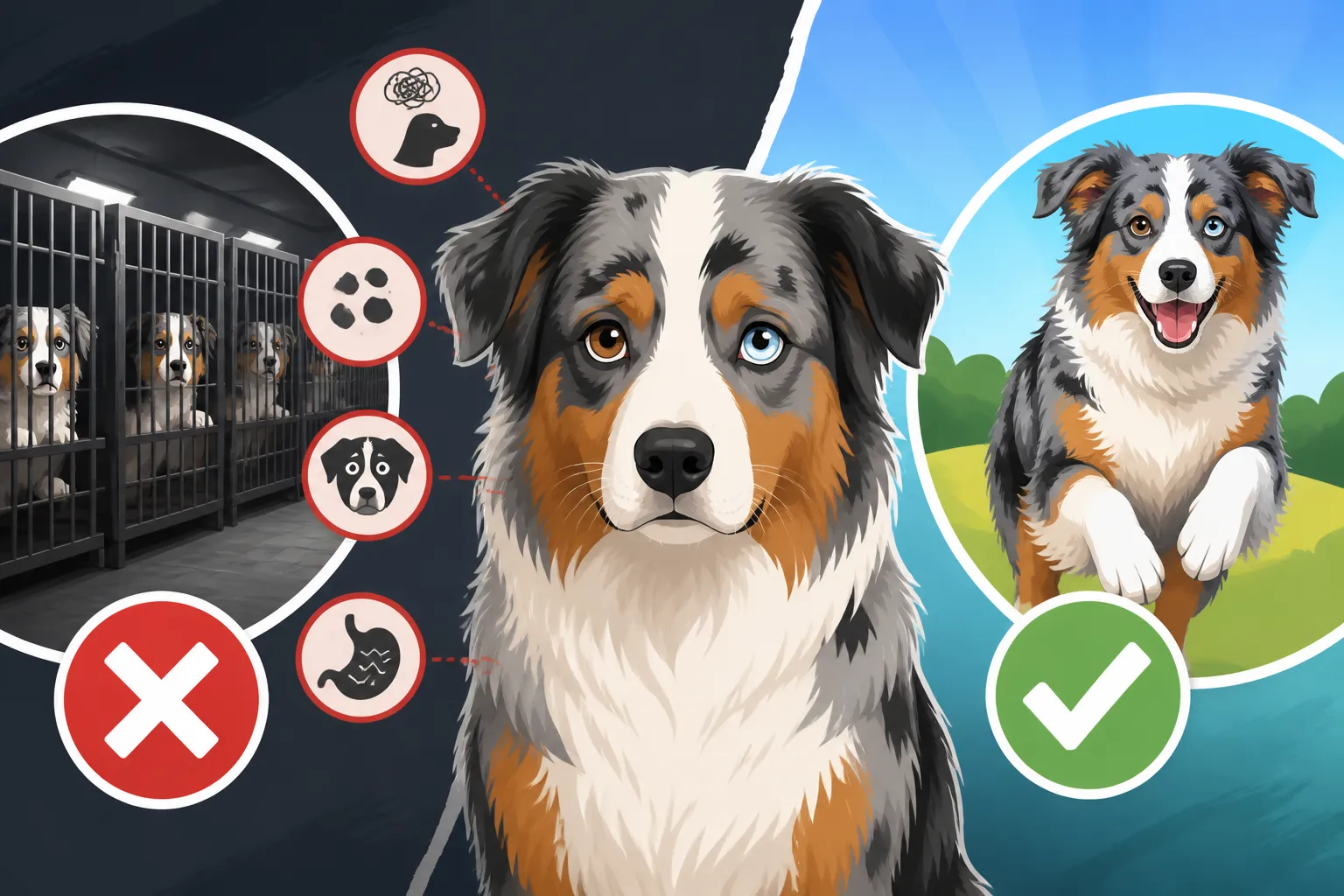
Equally concerning, an excessively sterile environment, such as puppies confined to isolated kennels with no toys, minimal bedding, or human interaction, is just as problematic as an unsanitary one. Puppies require diverse exposure to a variety of textures, sounds, and gentle human handling during their critical early weeks to develop into confident, well-adjusted adults. If the puppies seem isolated, withdrawn, or display overt signs of fear or hesitation when approached, it’s a strong indication that they are not receiving the essential early socialization needed for a balanced temperament. Conversely, if the premises are genuinely dirty, with visible accumulation of waste, mold, or an overpowering stench, you have almost certainly encountered a breeder prioritizing quantity over the fundamental welfare and hygiene of their animals. Such conditions dramatically escalate the risk of illnesses like Australian Shepherd Puppy Diarrhea After Homecoming or rampant parasitic infections.
Lack of Individualized Puppy Care and Socialization
During your visit, closely observe the Australian Shepherd puppies themselves. Do they appear robustly healthy, full of energy, and naturally curious? Are their eyes bright and clear, their coats shiny and free of parasites, and are they of an appropriate weight and condition for their age? Puppies from a volume breeder often seem less vigorous, perhaps a bit scruffy, or may exhibit subtle signs of minor illness such as persistent runny eyes or noses that have not been adequately addressed.
More importantly, pay keen attention to how the puppies interact with you and their immediate surroundings. Are they confident, playful, outgoing, and eager to engage when gently handled? A responsible breeder devotes countless hours to early socialization, meticulously exposing their puppies to a diverse array of people, household sounds, and gentle tactile experiences. They intrinsically understand that a puppy’s critical socialization window is incredibly brief and impactful. If the puppies appear overly timid, fearful, frantic, or consistently try to hide, it’s a monumental red flag indicating that they are not receiving the crucial early intervention necessary for developing a stable, well-adjusted temperament. They might be housed in groups, but lack the vital one-on-one attention that nurtures individual confidence. A good breeder ensures puppies hear typical household noises, grow accustomed to being gently picked up, and learn fundamental bite inhibition through supervised play with their littermates and mother.
Red Flags Regarding Health and Pedigree Documentation
Beyond the initial impressions and the physical environment, the paperwork (or glaring absence thereof) pertaining to the Australian Shepherd puppy's health history and lineage is often the most definitive indicator of a volume breeder. This is the stage where their lofty claims about "good lines" or "healthy dogs" either stand up to scrutiny or completely collapse under examination.
No Paperwork or Incomplete Registration Details
A responsible Australian Shepherd breeder will provide you with a comprehensive packet of documentation. This should include indisputable proof of the parent dogs' health clearances, official registration papers from a recognized registry (such as AKC or ASCA, depending on their specific breeding focus), and a detailed health record for your individual puppy, complete with vaccination dates, a confirmed deworming schedule, and reports from all veterinary check-ups. If a breeder is vague or evasive about registration, claims that "papers cost extra," or asserts their dogs are purebred without any verifiable lineage or pedigree, this is a colossal red flag. Volume breeders frequently skip official registration or maintain incomplete records because they do not invest the time, effort, or expense required to uphold proper, traceable breeding programs.
You should also expect to receive a clear, legally binding contract. This document typically outlines health guarantees, specific expectations for care, and the breeder's policy regarding returns or rehoming. This contract serves to protect both you and the breeder. If a breeder offers an Australian Shepherd puppy with no contract, or with a contract that appears unusually sparse, vague, or heavily favors only the breeder, it’s a strong indication that they may not truly stand behind the health and future of their dogs. Furthermore, ethical breeders often include clauses in their contracts about spaying or neutering by a certain age for pet-quality dogs, or specific requirements and conditions for breeding if you are acquiring a show or potential breeding prospect. A volume breeder typically shows little to no concern for these crucial long-term details; their primary interest is solely in closing the immediate sale.
Lack of Transparency About Potential Health Issues
Even the most meticulously planned and responsibly managed breeding programs can, on rare occasions, encounter health challenges. However, a responsible Australian Shepherd breeder will always be transparent and forthright about these possibilities. They will openly discuss common breed-specific health concerns, such as Australian Shepherd Epilepsy Starting Between One and Five or Hereditary Cataracts Clouding an Aussie Eye, and will clearly articulate the rigorous steps they take to minimize these risks within their lines. They will readily share any known health issues in the puppy's lineage and explain their screening protocols. A volume breeder, conversely, will almost invariably downplay, dismiss, or outright deny any potential or existing health concerns. Their objective is to sell puppies, not to educate prospective owners or prepare them for potential future challenges.
If a breeder appears dismissive of your informed questions about genetic conditions, or makes extravagant claims about their dogs being "bulletproof" or "never having health problems," it is a definitive sign that it's time to seek another breeder. No breeder, no matter how reputable, can legitimately guarantee that a dog will never develop health issues, but they can and should guarantee that they have done everything within their power to reduce those risks. They should be able to produce verifiable results from The Genetic Panel Every Australian Shepherd Needs for both parent dogs.
No Guarantees or Lifetime Support
A distinguishing characteristic of a truly reputable Australian Shepherd breeder is their unwavering, lifelong commitment to every puppy they bring into the world. They will offer robust health guarantees, typically covering genetic conditions, and often stipulate that if you are ever unable to keep the dog at any point in its life, it must be returned to them, rather than being rehomed independently or surrendered to a shelter. This demonstrates their profound dedication to the welfare of their dogs for their entire lives. Moreover, they will remain a valuable, accessible resource for advice and support throughout your Aussie's journey, from puppyhood through its senior years. Many responsible breeders genuinely enjoy staying in touch and are happy to chat about everything from optimal food choices (like specific brands found on Chewy) to effective training techniques for complex behaviors like Australian Shepherd Recall Around Moving Things.
Volume breeders rarely, if ever, extend such comprehensive, lifelong support. Once the puppy is sold and payment is received, their involvement typically ceases entirely. If a breeder exhibits no interest in the puppy's long-term well-being, offers only a minimal, short-term health guarantee (e.g., a mere 24-48 hours), or explicitly states that they do not wish to have the dog returned under any circumstances, these are potent indicators of a purely transactional approach, utterly devoid of genuine passion for the breed or sincere concern for the well-being of their puppies.
Here's a quick summary of key red flags to watch out for:
| Category | Reputable Breeder | Volume Breeder |
|---|---|---|
| Initial Contact | Asks extensive questions about your lifestyle. | Asks few questions, focuses on payment. |
| Health Testing | Provides verifiable health clearances for both parents (OFA, CERF, DNA). | Claims "vet checked" or "healthy" without documentation. |
| Puppy Availability | Breeds infrequently, often has waiting lists. | Always has puppies available, or multiple litters/breeds. |
| Parent Access | Insists you meet the mother, shows living environment. | Makes excuses for not seeing parents, controls viewing location. |
| Living Conditions | Clean, stimulating home environment, puppies well-socialized. | Unsanitary, overly sterile, or isolated kennels. |
| Puppy Temperament | Confident, playful, well-adjusted to handling. | Timid, fearful, frantic, or lacking proper early exposure. |
| Documentation | Provides registration papers, health records, detailed contract. | Vague on papers, no contract, or incomplete records. |
| Transparency & Support | Open about breed health risks, offers lifetime support. | Downplays health risks, minimal to no post-sale support. |
| Pricing Transparency | Clear pricing, explains what's included. | Vague pricing, "papers extra," hidden fees. |
Making an informed decision when bringing an Australian Shepherd into your life is one of the most critical choices you'll make, impacting both their well-being and your own family's happiness for years to come. By diligently recognizing and understanding these red flags, you can effectively avoid inadvertently supporting unethical breeding practices and significantly increase your chances of finding a healthy, happy, and well-adjusted companion from a breeder who genuinely cares.
Disclaimer
This article is for general informational purposes only and does not constitute professional advice. Laws, prices and regulations vary by location and change over time. Consult a qualified professional for guidance on your specific situation.