Why Mini Aussies Became a Separate Breed
It’s easy to look at a Miniature American Shepherd and think, "Oh, that's just a small Australian Shepherd!" Many people, myself included in my early days of getting into the breed, have been a bit confused by the similar looks, colors, and even temperaments. However, despite their shared ancestry and undeniable resemblances, the Miniature American Shepherd actually boasts a distinct identity and a fascinating journey that led to its recognition as an entirely separate breed. This guide will take you through the historical path and key distinctions that differentiate these beloved, intelligent working dogs.
The Vision for a Smaller Companion: Early Development of the "Miniature Australian Shepherd"
The story of the Miniature American Shepherd really begins with the enduring appeal of the Australian Shepherd itself. People fell in love with their sharp minds, boundless energy, and incredible loyalty, but for some, the traditional Aussie's size and intense drive presented certain logistical challenges. It was out of this practical consideration that the idea for a smaller version began to take root.
Why Smaller? The Call for a Compact Herder
Imagine living in a city apartment or a suburban home with a yard that, while nice, isn't quite the sprawling ranch an Australian Shepherd might instinctively desire. The full-sized Aussie, with its average weight of 40-65 pounds and shoulder height pushing up to 23 inches, can be a lot of dog to manage in a more confined space. They're bred to work all day, covering vast distances, and their sheer physical presence, coupled with their strong herding instincts, means they need significant room to express themselves safely and constructively.
This is where the vision for a smaller herder truly began. Breeders and enthusiasts started to see a demand for a dog that retained the Australian Shepherd's core qualities—its intelligence, trainability, striking looks, and devoted nature—but in a more compact package. The goal wasn't to create a docile lap dog, but rather a versatile companion whose energy and athleticism could be more readily accommodated by families with less acreage, or those involved in dog sports where a smaller, more agile dog might excel. They wanted a dog that could still perform tasks and engage in activities, but perhaps with a slightly less overwhelming physical footprint. Australian Shepherds in Apartments touches on the challenges of urban living with the larger breed.
Early Efforts and the Rise of Registries
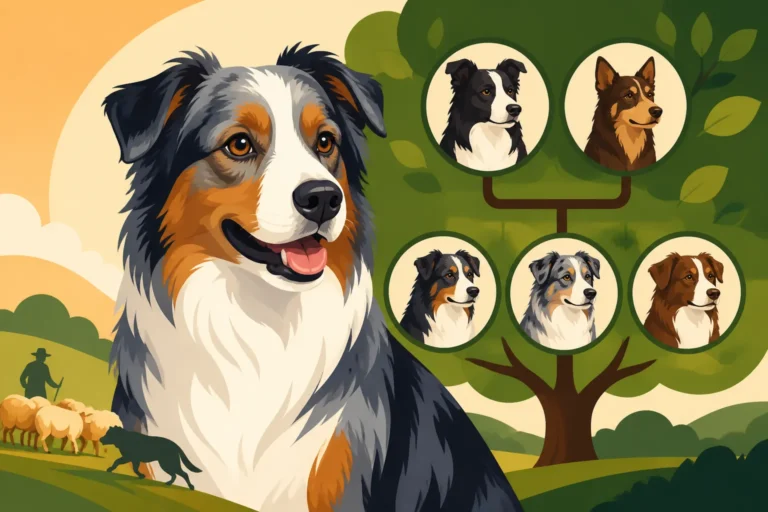
The initial steps in creating what would become the Miniature American Shepherd involved careful selection within existing Australian Shepherd lines. Breeders would seek out smaller individuals who still displayed the desirable physical and temperamental traits of the larger breed, and then breed them together. This was a deliberate effort to reduce size while preserving the essence of the Australian Shepherd. It was a gradual process, taking many generations of careful breeding.
As the population of these smaller Aussies grew, so did the need for their own dedicated organizations. Owners and breeders of these "Miniature Australian Shepherds" formed clubs and registries to document pedigrees, establish their own standards, and organize events. These early registries provided a framework for consistent breeding practices and helped to solidify the characteristics of the developing smaller type. Without these early dedicated groups, the breed might not have had the structure needed to eventually branch off. The community around these smaller dogs was passionate and committed to their development, recognizing their unique niche in the dog world.
The Path to Distinction: From Variety to Separate Breed Status
While the desire for a smaller version of the Australian Shepherd was clear, the journey to official breed recognition was anything but simple. It involved significant debate, the establishment of new standards, and ultimately, a rebranding to clearly define their separate identity.
The Naming Evolution and the ASCA's Stance
For many years, these smaller dogs were affectionately, and officially, known as "Miniature Australian Shepherds." This name, while descriptive of their origins, eventually became a point of contention with the parent breed club, the Australian Shepherd Club of America (ASCA). The ASCA staunchly maintained that the Australian Shepherd breed standard had a defined size range, and any dog falling significantly outside of that range, regardless of its qualities, should not be considered a "Miniature" version of the same breed. Their concern was about protecting the genetic integrity and the historical standard of the Australian Shepherd. They believed that creating "miniature" versions could dilute the characteristics that made the original breed unique.
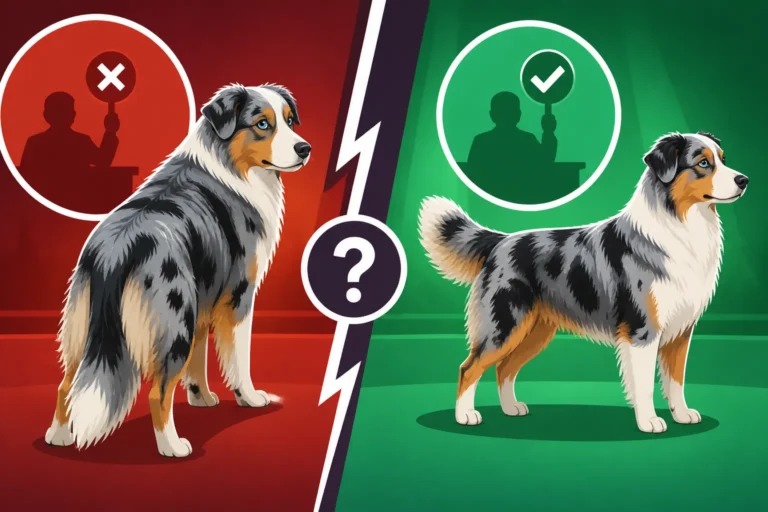
This stance meant that for the "Miniature Australian Shepherd" to gain wider recognition, particularly with major kennel clubs, a new path was necessary. The term "Miniature Australian Shepherd" implied a direct, smaller variant of the Australian Shepherd, which the ASCA and some purists of the larger breed were unwilling to accept as part of their established lineage. It became clear that to move forward, a distinct identity, including a new name, would be crucial for the breed to flourish independently. This move was not without its challenges, as passionate breeders on both sides debated the best way forward. You can delve into the details of the larger breed's official recognition by checking out The Australian Shepherd Standard and What Judges Want.
AKC Recognition and the Birth of the Miniature American Shepherd
The crucial turning point came with the involvement of the American Kennel Club (AKC). For a breed to be recognized by the AKC, it typically goes through several stages to prove its consistency, health, and a dedicated population. These stages include:
- Foundation Stock Service (FSS): This is where breeds with solid populations and consistent types begin. Dogs are registered, but cannot compete in AKC events.
- Miscellaneous Class: Breeds here can compete in certain events, gaining exposure and demonstrating their stability as a breed.
- Full Breed Recognition: Once a breed meets all criteria, it receives full recognition, gets its own breed standard, and can compete in all eligible AKC events.
The "Miniature Australian Shepherd" population entered the AKC's Foundation Stock Service. However, to avoid continued conflict and confusion with the Australian Shepherd, particularly with the ASCA's position, a decision was made to change the breed's name. In a move that mirrored how the Australian Shepherd itself, despite its name, was developed in the United States, the new breed was christened the "Miniature American Shepherd." This name clearly distinguished it as an American-developed breed, separate and apart from the Australian Shepherd.
On July 1, 2015, the Miniature American Shepherd achieved full AKC recognition, a monumental step that solidified its status as a distinct breed with its own breed standard. This new standard defined their ideal physical characteristics, temperament, and movement, officially separating them from their larger cousins while still acknowledging their shared historical roots. Understanding the different standards can be complex, and you can compare it to the main breed by reading about ASCA and the AKC Australian Shepherd Standards.
Beyond Size: Distinct Characteristics and Breed Standards
While size is the most obvious difference between the Australian Shepherd and the Miniature American Shepherd, their separation into distinct breeds also comes with subtle but important distinctions in their breed standards. These differences reflect the deliberate breeding choices made to create a smaller, yet still capable, herding and companion dog.
Size and Structure: A Comparative Look
The most striking difference, of course, is the size. Australian Shepherds typically stand taller and weigh more, reflecting their heritage as robust working dogs capable of handling various livestock in open ranch environments. Miniature American Shepherds, by design, are built to be more compact.
Here's a general comparison:
| Characteristic | Australian Shepherd (AKC) | Miniature American Shepherd (AKC) |
|---|---|---|
| Height | Males: 20-23 inches (51-58 cm) | Males: 14-18 inches (35.5-46 cm) |
| Females: 18-21 inches (46-53 cm) | Females: 14-18 inches (35.5-46 cm) | |
| Weight | Males: 50-65 pounds (23-29 kg) | Males: 20-40 pounds (9-18 kg) |
| Females: 40-55 pounds (18-25 kg) | Females: 20-40 pounds (9-18 kg) |
Beyond the numbers, there can also be subtle differences in overall structure and bone. While both breeds are athletic and well-proportioned, the Miniature American Shepherd's standard emphasizes a slightly more moderate build, reflecting its role as a smaller, highly agile dog. This isn't to say they are delicate; they are still sturdy and capable of strenuous activity, just scaled down. For an in-depth look at the larger breed's physique, check out Australian Shepherd Height and Weight.
Temperament and Drive: Similarities and Subtle Shifts
One of the main reasons for the Miniature American Shepherd's popularity is its retention of many of the Australian Shepherd's most beloved temperament traits. Both breeds are incredibly intelligent, highly trainable, and form deep, loyal bonds with their families. They thrive on having a "job" to do, whether that's traditional herding, excelling in dog sports, or simply being an engaged family companion.
However, there can be subtle differences in their drive and intensity. While both possess strong herding instincts—a characteristic you simply cannot train out of an Aussie or a Mini American—some Miniature American Shepherds might exhibit a slightly less overwhelming level of drive compared to some of the most intensely working-line Australian Shepherds. This isn't a universal rule, as individual genetics and breeding lines play a huge role, but it was a goal for some of the early developers of the smaller breed: a dog that was still active and intelligent but perhaps a bit easier to "turn off" indoors.
It's crucial to understand that neither is a couch potato. Both demand significant mental and physical engagement. Owners considering either breed need to be prepared for an active lifestyle. To understand the underlying instincts, read Australian Shepherd Temperament and Working Character and also The Australian Shepherd Herding Drive You Cannot Train Out.
Coat Colors and Markings: Shared Beauty
When you look at a Miniature American Shepherd, you'll immediately recognize the stunning array of coat colors and patterns that are so characteristic of the Australian Shepherd. Both breeds come in:
- Merle: Blue merle and red merle, with patches of darker color over a lighter, mottled background.
- Tri-color: Black tri and red tri, featuring rich black or red bodies with white and copper (tan) points.
- Bi-color: Black and white, or red and white, though less common.
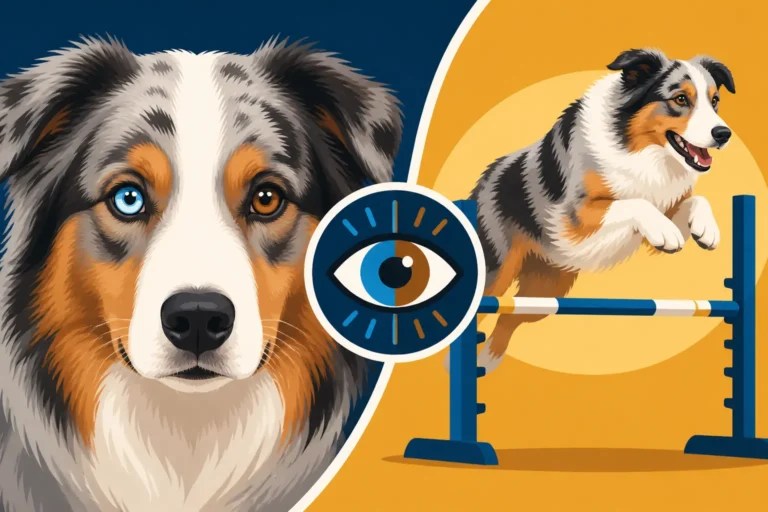
They also share the captivating possibility of blue eyes, marbled eyes, or even heterochromia (one blue, one brown eye), which adds to their striking appearance. These visual traits are deeply ingrained in their shared genetic heritage. The goal in developing the Miniature American Shepherd was never to change these aesthetic qualities, but simply to reduce the overall size while maintaining the breed's iconic look. So, when you see a beautiful blue merle Miniature American Shepherd, you're seeing a direct echo of its larger Australian Shepherd ancestors. For a deeper dive into the variety, explore Merle, Tri and Every Australian Shepherd Color.
The Miniature American Shepherd Today: A Popular and Versatile Breed
Since their formal recognition, Miniature American Shepherds have carved out a significant niche, proving themselves to be much more than just smaller versions of their ancestors. They are now a popular and highly respected breed in their own right, celebrated for their versatility and charming personalities.
Ideal Homes and Activities
The compact size of the Miniature American Shepherd has made them an incredibly popular choice for a broader range of households. While a full-sized Australian Shepherd might thrive best on a sprawling ranch, a Miniature American Shepherd can adapt beautifully to various living situations, including suburban homes and even apartments, provided their owners are committed to meeting their exercise and mental stimulation needs. They are not content to be mere decorative pets; they require consistent engagement.
They excel in a wide array of dog sports, often outshining larger breeds due to their agility and speed. You'll frequently see Miniature American Shepherds dominating in:
- Agility: Navigating obstacle courses with impressive grace and speed.
- Obedience and Rally: Demonstrating precision and teamwork with their handlers.
- Flyball and Disc Dog: Showcasing their athleticism and prey drive.
- Herding Trials: Even in a smaller package, their natural herding instincts are strong and can be honed for traditional work or fun, low-pressure activities like Treibball.
They are truly at their best in active households where they are considered integral family members, involved in daily activities, and given opportunities to learn and explore. For those interested in competitive avenues, Australian Shepherd Sports From Herding to Agility offers a great overview of the various disciplines.
Responsible Ownership and Breeder Selection
Just like their larger Australian Shepherd cousins, Miniature American Shepherds are intelligent, sensitive dogs who thrive on routine, clear communication, and plenty of positive reinforcement. Their smaller size does not translate to less energy or less need for mental work. Owners must be prepared for daily walks, playtime, training sessions, and puzzle toys to keep their sharp minds occupied. They can be prone to destructive behaviors or excessive barking if under-exercised or bored.
For anyone considering bringing a Miniature American Shepherd into their life, choosing a reputable breeder is paramount. A good breeder will prioritize the health and temperament of their dogs, conducting all recommended genetic health screenings and hip/elbow evaluations. This ensures that puppies are not only physically sound but also well-socialized from an early age, setting them up for success in their new homes. They should be transparent about their breeding practices, welcome questions, and provide documentation of health clearances. When you're gathering information and supplies for a new puppy, resources like Chewy can be invaluable for researching foods, toys, and training aids.
Understanding the potential health concerns that can affect both Australian Shepherds and Miniature American Shepherds is also vital. While some issues, like the MDR1 gene mutation, are shared due to common ancestry, specific breed clubs and organizations work to track and minimize these risks. Reputable breeders will be able to discuss these health tests in detail. The Health Tests Every Australian Shepherd Parent Needs provides a good starting point for understanding these critical screenings. You’ll also want to look for a breeder who understands the importance of early socialization, something explored in Socializing an Aussie Puppy Off the Farm. From finding the right food to selecting the best harness for your new companion, companies like Chewy offer a wide array of products designed to support your dog’s health and well-being.
Disclaimer
This article is for general informational purposes only and does not constitute professional advice. Laws, prices and regulations vary by location and change over time. Consult a qualified professional for guidance on your specific situation.