Working Collies in the Aussie Family Tree
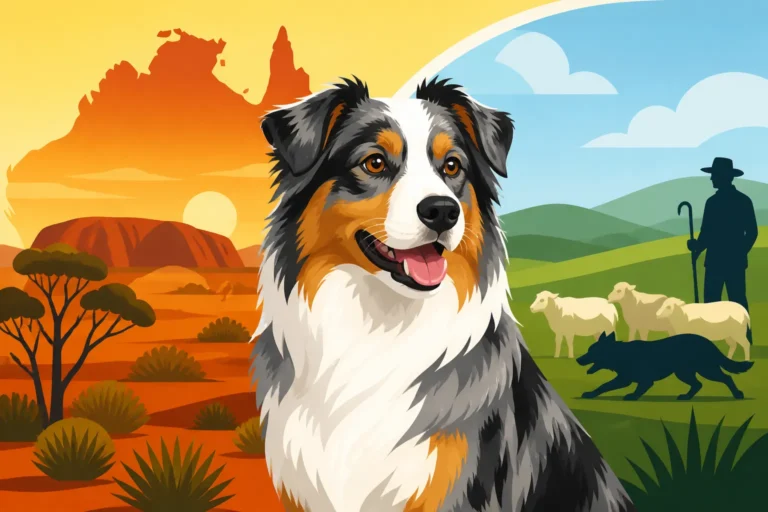
It’s a common misconception that Australian Shepherds hail from down under, perhaps because their name implies it. But the truth is, this incredible breed was developed right here in the American West. What often surprises people even more is how much of their story, their very essence, is woven with the threads of various "collie-type" dogs brought over by European settlers. Understanding the role of these working collies in the Australian Shepherd's family tree helps us appreciate the magnificent, intelligent, and driven companions we know today. This guide will explore that rich lineage and clarify how these dogs shaped the Aussie we love.
The Foundational Herding Dogs: Unpacking the Aussie's Ancestry
When we talk about the origins of the Australian Shepherd, it's easy to get lost in the mists of history. There wasn't a single, definitive moment where someone sat down and "created" the breed as we might think of it today. Instead, the Aussie emerged organically from a very real need on ranches across states like California, Colorado, and Wyoming. Ranchers needed intelligent, tireless dogs that could handle diverse livestock and terrains, adapting to the harsh conditions of the American frontier.
Where Did the Herding Instinct Come From?
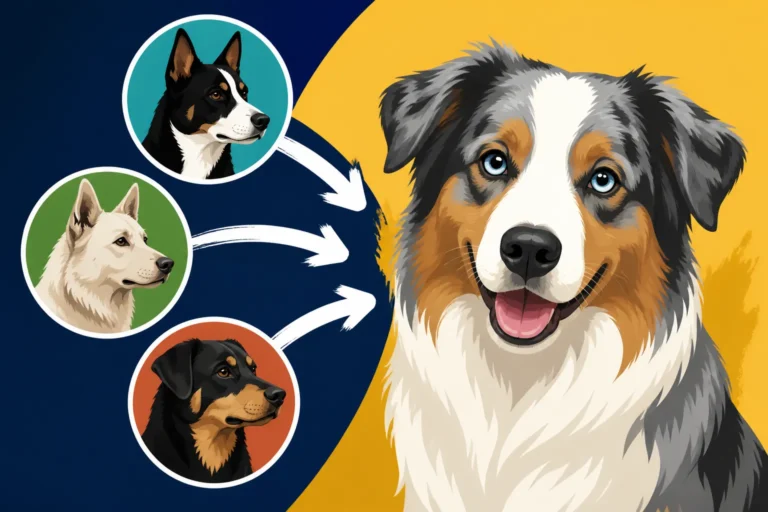
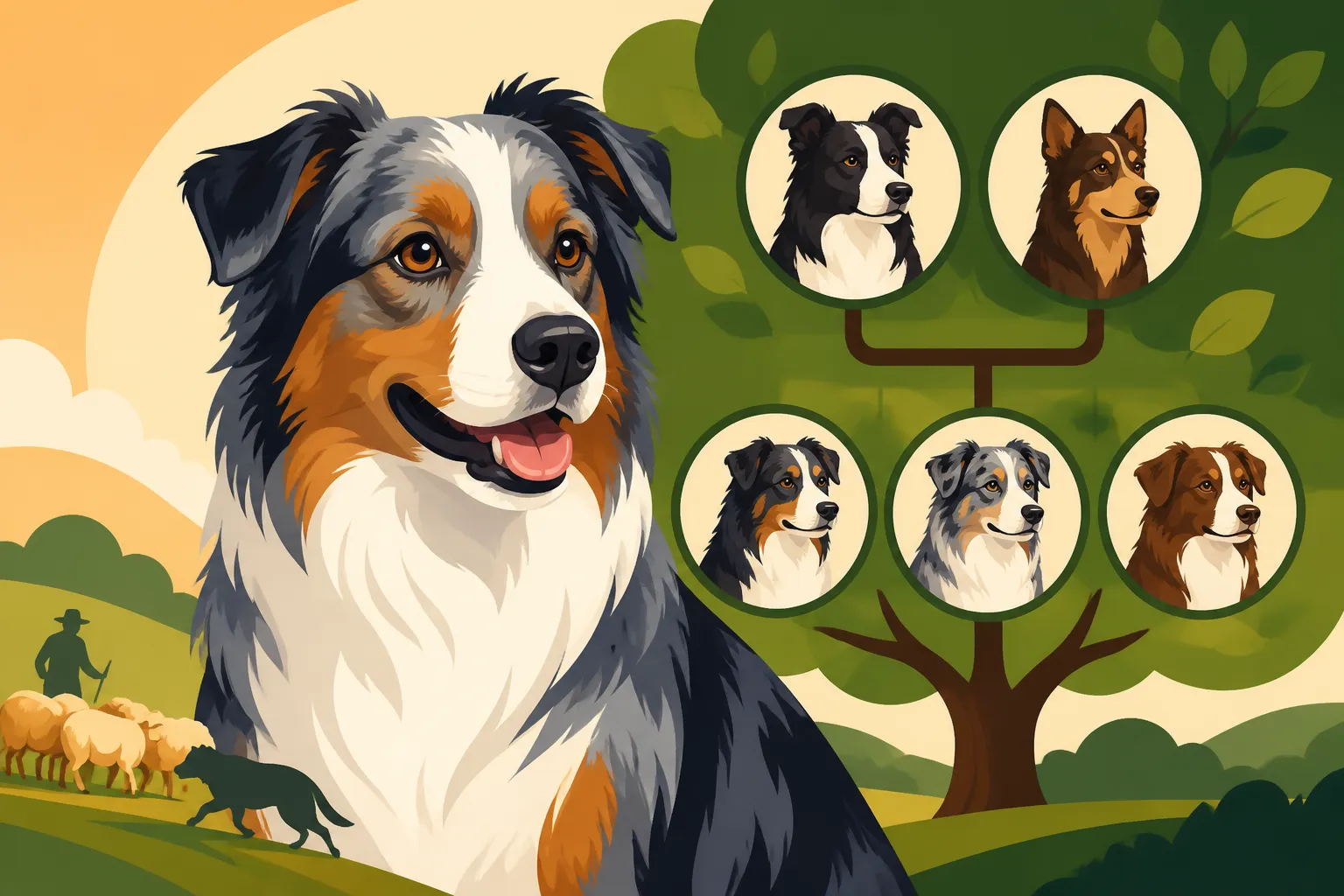
The intense herding drive that defines an Australian Shepherd didn't just appear out of thin air; it was carefully selected for over generations from dogs whose very purpose was to work livestock. These were not necessarily "purebred" dogs in the modern sense, but rather a collection of hardy, capable working dogs often referred to collectively as "shepherd dogs" or "collie-type" dogs. Many of these animals arrived with European immigrants, particularly Basque shepherds, who brought their own traditional herding dogs to the vast, open ranges of the American West. These were dogs bred for function, not fancy, and their ability to gather, move, and protect flocks was paramount. The Basque Shepherds Behind the Aussie played a crucial role, bringing their skilled dogs into this emerging population.
The Melting Pot of Western Ranches
The American West in the 19th and early 20th centuries was a melting pot of people and, consequently, their working dogs. As the sheep industry boomed, fueled by the Gold Rush and westward expansion, different types of herding dogs converged. Some came directly from Europe, others arrived via Australia (hence the enduring confusion about the "Australian" name), and many were simply the descendants of generations of working dogs bred for utility on ranches. These dogs included various strains of what we would broadly categorize as collies or sheepdogs – some likely ancestors of today's Border Collies, others perhaps more akin to Old English Sheepdogs or even Pyrenean Shepherds. The focus was always on their working ability, their stamina, and their keen intelligence. It was this diverse genetic pool, constantly refined by the demands of ranch life, that gave rise to the distinct characteristics of the Australian Shepherd.
Identifying the Collie Influence: More Than Just a Look
When you look at an Australian Shepherd, especially a merle-coated one, it's not hard to see a resemblance to certain types of collies. But the influence goes far deeper than just superficial appearance. The fundamental working traits, the temperament, and the innate intelligence that make Aussies such exceptional partners all trace back to their collie ancestors.
Beyond the Scottish Borders: A Broader Collie Family
It’s important to remember that "collie" isn't just one breed, like the modern Border Collie or Rough Collie. Historically, "collie" was a more general term for sheepdogs in various parts of Britain. These were dogs of incredible variation, bred for different landscapes and flock management styles. The dogs that contributed to the Australian Shepherd's development were likely diverse types of these working collies, rather than strictly a single established breed. They were valued for their "eye," their ability to control livestock with an intense gaze, and their powerful instinct to gather and drive. This foundational drive is so strong that we often say Why Herding Instinct Is the Aussie Operating System. These smart dogs thrive on mental challenges, and you'll find plenty of interactive toys and puzzle feeders available from retailers like Chewy that can help keep their active minds engaged, preventing boredom-driven mischief.
Shared Traits: Instincts, Intelligence, and Drive
The clearest link between early collies and the Australian Shepherd lies in their shared working characteristics. Both possess an extraordinary level of intelligence, a strong desire to please, and an almost insatiable work ethic. They are quick learners, capable of understanding complex commands and anticipating their handler's needs. This shared heritage is why you see similar traits in breeds like the Shetland Sheepdog, which also shares ancestry with these working collies. These dogs were selected for their problem-solving abilities on the pasture, their endurance over long days, and their unwavering focus on the task at hand. It's this innate drive that makes Aussies so good at dog sports like agility and obedience today, and why they absolutely thrive when they have a job to do.
Many owners turn to reputable online retailers like Chewy to find high-quality foods that support their active Aussies' nutritional needs, often seeking formulas designed for working breeds. Just as their ancestors needed robust nutrition for their demanding lives, modern Aussies benefit from diets that fuel their energy and maintain their strong bodies.
Here's a quick comparison of some general working collie traits and how they manifest in Australian Shepherds:
| Trait | General Working Collie-Type Dog (Ancestral) | Modern Australian Shepherd (Descendant) |
|---|---|---|
| Herding Style | Often low-headed, using "eye," broad gather | More upright, closer worker, strong "eye" and vocalization |
| Intelligence | Extremely high, quick to learn | Exceptionally high, thrives on mental stimulation |
| Energy Level | Very high, requires extensive work | Very high, needs 1-2 hours vigorous exercise daily |
| Trainability | Highly trainable, eager to please | Highly trainable, often excels in dog sports and obedience |
| Temperament | Focused, reserved with strangers | Alert, intelligent, reserved but not shy, devoted to family Australian Shepherd Temperament and Working Character |
| Coat Type | Varies; often medium-long, dense undercoat | Medium-long, double coat, water-resistant |
| Build | Athletic, agile, built for endurance | Slightly stockier than some collies, balanced and agile |
Distinguishing the Modern Australian Shepherd from Collies
While the Australian Shepherd clearly carries the genetic hallmarks of its collie ancestors, it also developed its own unique identity through generations of breeding specifically for the demands of American ranch work. It wasn't about creating another Border Collie; it was about refining a dog that was perfectly suited to a particular environment and job.
Evolution and Divergence
The "collie-type" dogs that arrived in America continued to interbreed and evolve in response to their new environment. Ranchers prioritized specific traits: dogs that could handle larger, more independent stock like cattle as well as sheep, often over vast, unfenced landscapes. This selective breeding gradually led to a dog that, while retaining the core intelligence and herding prowess of its ancestors, started to look and act distinctly different. For instance, the Australian Shepherd often developed a more upright, rather than "crouching," herding style compared to some Border Collies, allowing them to work more forcefully with stubborn livestock. Ranch Bred Against Ring Bred Australian Shepherds highlights this practical focus on utility.
One noticeable divergence is the prevalence of the natural bobtail in Australian Shepherds, a trait less common in many traditional collie breeds. This was often desirable in working dogs to prevent tail injuries during work in dense brush or around livestock. Another difference often lies in their overall build; while still incredibly agile, many Aussies tend to have a slightly more substantial, balanced physique compared to the lighter, more intensely built Border Collie.
The Unique Aussie Stamp
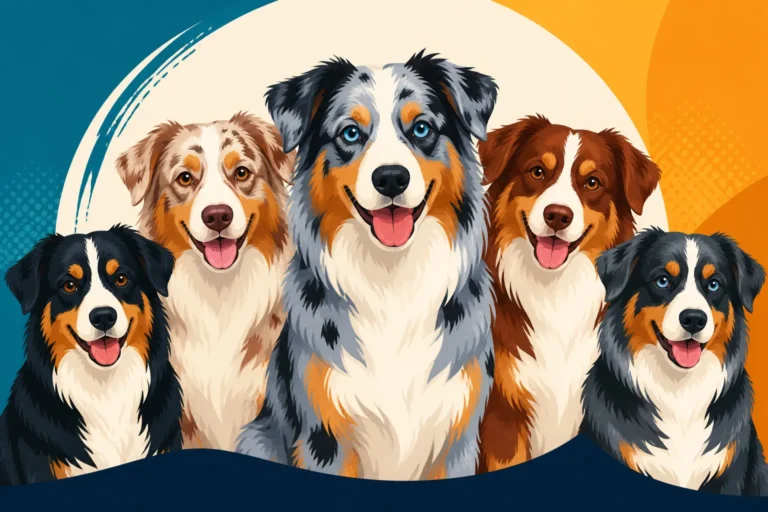
So, what truly defines the Australian Shepherd as distinct from its collie predecessors and cousins? It's a combination of physical and behavioral traits that, when put together, create a truly unique package. Their signature merle patterning, while present in some collies, became a defining and celebrated feature of the Aussie. Their intense, often striking, eye colors – sometimes even heterochromatic (two different colored eyes) – contribute to their captivating gaze.
Behaviorally, while sharing that incredible drive, the Aussie often possesses a pronounced "velcro dog" tendency, forming incredibly strong bonds with their primary handlers and families. They can be reserved with strangers, a trait likely inherited from their protective herding ancestors, but once they accept you, their loyalty is unwavering. They are eager to please and incredibly versatile, excelling not just in herding but in almost any dog sport or activity you can imagine, from agility to disc dog to obedience. Their willingness to engage and their joyful, intelligent presence make them cherished members of active families. Understanding their lineage helps us appreciate just how much heart and heritage goes into every Australian Shepherd.
Disclaimer
This article is for general informational purposes only and does not constitute professional advice. Laws, prices and regulations vary by location and change over time. Consult a qualified professional for guidance on your specific situation.