How the Aussie Standard Has Shifted Since 1991
If you've spent any time researching Australian Shepherds, you might have noticed that talking about "the standard" can sometimes feel a little like discussing two different breeds. It's a source of genuine confusion for many prospective owners and even some seasoned enthusiasts: what exactly is the official blueprint for an Aussie, and has it always been this way? This guide will dive deep into how the Australian Shepherd breed standard has evolved, particularly since 1991, and what those shifts mean for the dogs we love today.
The Australian Shepherd Before AKC Recognition: A Working Legacy
Before the early 1990s, the Australian Shepherd community was largely unified under one banner: the Australian Shepherd Club of America, or ASCA. This organization had been the primary registry and steward of the breed for decades, and its standard reflected a very specific vision for the Aussie.
The ASCA Standard as the Foundation
For many years, the ASCA standard was the standard for the Australian Shepherd. It wasn't just a guide for pretty dogs in a show ring; it was a blueprint for a functional, intelligent, and versatile working dog. When breeders looked at that standard, they weren't just thinking about perfect angles or coat texture for aesthetic appeal; they were considering how those physical traits contributed to a dog's ability to work sheep or cattle all day long.
The ASCA standard valued a keen intellect, strong herding instinct, and physical stamina above all else. A dog might have had slightly less flash in the coat or a slightly different ear set, but if it could gather a stubborn flock, stay focused under pressure, and remain sound after hours of demanding work, it was highly prized. This focus meant that while there was a general "look" for the Aussie, there was also a healthy acceptance of variation as long as the dog could perform its intended job. For instance, a dog with a "softer" eye might not win in a conformation ring, but if that eye was sharp enough to read a sheep's movement and respond instantly, its owner cherished it.
Form Following Function: The Original Ethos
The original ethos of the Australian Shepherd breed was firmly rooted in "form following function." Every aspect of the dog's structure, from its moderate bone to its agile frame, was understood in terms of its utility on a ranch. A strong, flexible back was essential for quick turns and pivots; a dense double coat provided insulation from both sun and cold; moderate angulation allowed for efficient movement without wasted energy.
This practical mindset influenced everything from acceptable size ranges to coat characteristics. Breeders weren't aiming for extremes; they wanted dogs that could endure long days in diverse climates, often in rugged terrain. They needed dogs that were tough, resilient, and intelligent enough to be problem-solvers on the ranch, not just beautiful ornaments. This focus on utility meant that while appearance was part of the standard, it was always secondary to the dog's working capability and temperament. The breed's distinctive athleticism and mental acuity were bred in, not merely hoped for. They wanted a dog that could jump into a stock trailer or swim a creek without hesitation, and every physical detail in the standard reflected that active lifestyle.
The AKC Standard: A New Era (1991 Onwards)
The landscape for the Australian Shepherd breed changed significantly in 1991 when the breed was recognized by the American Kennel Club (AKC). This was a momentous occasion for many, bringing new visibility and opportunities, but it also introduced a new set of considerations and, eventually, a new standard.
The Road to AKC Recognition and its Impact
The decision for the Australian Shepherd to seek AKC recognition was a complex one, driven by various factors, including the breed's growing popularity beyond working ranches. For some, it was a logical step to give the breed broader exposure and ensure its long-term future within the mainstream dog world. For others, particularly those deeply embedded in the working community, there were significant concerns. Many worried that the focus would shift from performance to pure aesthetics, potentially diluting the core working traits that defined the breed. You can imagine the lively discussions that must have happened!
The AKC officially accepted the Australian Shepherd into its Herding Group in 1993, two years after initial recognition. With this came the development of the AKC breed standard, which, while drawing heavily from ASCA's foundational document, began to emphasize certain aspects differently. Suddenly, there were two prominent "official" standards, creating a bit of a divide and requiring breeders to consider which path they would follow. Many still feel that Why Some Aussie Breeders Fought AKC Recognition was a very valid concern.
Emphasis on Conformation and Uniformity
One of the most noticeable shifts under the AKC standard was an increased emphasis on conformation, or the dog's physical appearance and adherence to a prescribed ideal for the show ring. While ASCA certainly had conformation events, the AKC world often brings with it a higher degree of specificity in judging minute details of structure, gait, and presentation.
This meant that certain physical traits that might have been less critical for a working dog suddenly gained more weight in the eyes of a judge. For example, precise angulation of the front and rear, the exact set and carriage of ears, and the overall "balance" of the dog became paramount. Breeders aiming for success in the AKC show ring naturally began to prioritize these traits, sometimes leading to a more uniform look within the show lines. The goal became to create a dog that not only could work but looked like the ideal representation of the breed when standing still or moving around a ring. This isn't to say AKC dogs don't work – many absolutely do – but the emphasis in the standard's interpretation can lean towards aesthetics.
Subtle Shifts in Temperament and Movement Descriptions
Beyond physical appearance, there were subtle but important shifts in how temperament and movement were described and interpreted. For instance, the ASCA standard always prized an intelligent, intense, and somewhat reserved nature with strangers, balancing a strong working drive with trainability. The AKC standard similarly values intelligence and loyalty, often describing the Aussie as "reserved with strangers" rather than immediately friendly, which is perfectly aligned with its heritage as a guardian and worker. However, the interpretation in a show setting might sometimes favor a dog that, while reserved, doesn't convey any hint of aggression or undue shyness, presenting a calm, collected demeanor.
Movement descriptions also saw refinements. While both standards demand agile, free, and smooth movement, the AKC show ring often emphasizes a particular type of gait – typically a ground-covering, efficient trot. This is important for judges to evaluate structure, but it can sometimes narrow the focus from the varied, quick, and powerful movements a dog needs for herding over rough terrain. A working dog might display a wider range of gaits, from a quick burst to a steady pace, all of which are functional but might not always fit the precise picture of a "perfect" trot in the ring. Australian Shepherd Movement in the Ring describes this in more detail.
Key Areas of Standard Evolution
When we talk about shifts in a breed standard, it's often in specific areas that either gain new emphasis or become points of debate. For the Australian Shepherd, several key characteristics have seen evolutionary changes in their interpretation since 1991.
Coat and Grooming Expectations
The Australian Shepherd's double coat is one of its most defining features – beautiful, functional, and, let's be honest, a source of constant shedding! Both standards describe a coat of moderate length, with a soft, dense undercoat and a weather-resistant outer coat. However, the emphasis on presentation for the show ring can sometimes lead to different grooming expectations.
In the working world, a dog's coat is primarily for protection against the elements, thorns, and rough conditions. A working Aussie might have a slightly shaggier, less "finished" look, but its coat is fit for purpose. In the show ring, while function is still acknowledged, judges also look for pristine condition, proper texture, and a neat presentation. This might mean more meticulous grooming, scissoring of stray hairs around the feet or ears, and ensuring the coat lies smoothly. It's not about altering the natural coat type, but about presenting it in its most ideal form. This can sometimes lead to a preference for a more abundant coat, as long as it doesn't hinder movement. Remember, Brushing an Australian Shepherd Through Coat Blow is a year-round job, but especially crucial for presentation!
Tail Status and the Natural Bobtail
The Australian Shepherd's tail has always been a distinctive feature, or lack thereof. The breed is known for its natural bobtail (NBT), a genetic trait where dogs are born with a tail significantly shorter than average, or even no tail at all. Historically, tails were often docked on Aussies to prevent injury during herding.
The ASCA standard always accepted both naturally bobbed and docked tails. When the AKC standard was developed, it also recognized the natural bobtail or a docked tail not exceeding four inches. However, over time, as views on tail docking have evolved globally and in some regions it's been restricted or banned, the emphasis and acceptance of natural bobtails have become more prominent. While docking is still permitted in many places and by breed standards, there's a growing appreciation for the natural appearance of the dog, whether it's an NBT or a full tail. It's a topic that sparks a lot of discussion, and understanding The Aussie Bobtail Gene and Its Lethal Pairing is important for any breeder.
Size, Substance, and Overall Balance
The official height range for Australian Shepherds, generally 20-23 inches for males and 18-21 inches for females, has remained relatively consistent across both ASCA and AKC standards. However, the interpretation of "substance" and overall "balance" can subtly shift.
"Substance" refers to a dog's bone, body, and overall robustness. A dog with good substance looks solid and well-built, not flimsy or coarse. While a working dog needs to be sturdy, it also needs to be agile and fast. In the show ring, there can sometimes be a subtle trend towards a slightly heavier-boned or more substantial dog, as long as it doesn't compromise agility. The "balance" of the dog—how all its parts fit together harmoniously—is crucial in both working and show contexts. A well-balanced dog moves efficiently and looks pleasing to the eye. The nuance in the standards since 1991 isn't necessarily a change in the numbers for height and weight, but perhaps in the aesthetic interpretation of what constitutes the "ideal" amount of bone and body to go with those measurements. Breeders, whether focused on show or work, are always striving for that sweet spot where power meets agility. What an Australian Shepherd Should Weigh often depends on their structure and activity level, not just a number on the scale.
Navigating the Standards: ASCA vs. AKC Today
It's clear that the Australian Shepherd breed standard has seen some shifts, primarily influenced by the breed's journey into the AKC mainstream. But what does this mean for the breed today, and how do owners and breeders navigate these different ideals?
Persistent Differences and Shared Goals
Today, both the ASCA and AKC standards for the Australian Shepherd coexist, each representing a slightly different emphasis while still describing the same magnificent breed. ASCA, true to its roots, continues to strongly prioritize working ability, drive, and the functional structure that supports it. While conformation is part of its activities, the working trials and instinct tests often hold a more central place in its philosophy. You'll find many breeders who exclusively breed and register with ASCA, firmly believing in preserving the breed's original purpose.
The AKC standard, on the other hand, strives to balance the breed's working heritage with the demands and aesthetics of the purebred dog show world. Many AKC Aussies excel in both conformation and performance events like agility, obedience, and even herding. The shared goal, despite these differences, is always to preserve the health, temperament, and unique characteristics of the Australian Shepherd. Both organizations aim for sound, intelligent dogs that are true to their heritage. It's simply a matter of where the emphasis lies. When considering a puppy, asking breeders about ASCA and the AKC Australian Shepherd Standards they adhere to can offer great insight into their breeding philosophy.
What These Shifts Mean for Owners and Breeders
For prospective Australian Shepherd owners, understanding these shifts is incredibly valuable. It helps you recognize that there isn't just one kind of Aussie. You might encounter "working line" Aussies, often bred by ASCA-focused breeders, who tend to have intense drive, a strong desire to herd, and a structure built for endurance and athleticism. Then there are "show line" Aussies, often bred by AKC-focused breeders, who still have strong working capabilities but might also exhibit a slightly more refined appearance that excels in the conformation ring. Of course, there's plenty of overlap, with many breeders producing versatile dogs that do well in both arenas.
For breeders, these standards serve as their guiding principles. A breeder committed to ASCA might place more weight on a dog's performance in a herding trial over a particular ear set, while an AKC breeder will carefully consider both working ability and how the dog stacks up against the visual ideal for the show ring. The key for any responsible breeder, regardless of their primary affiliation, is to use the standard as a tool to produce healthy, stable, and truly representative Australian Shepherds. Always ask about health clearances, temperament, and what the breeder's specific goals are for their breeding program. This will help you find a puppy whose lineage and upbringing align with your lifestyle expectations.
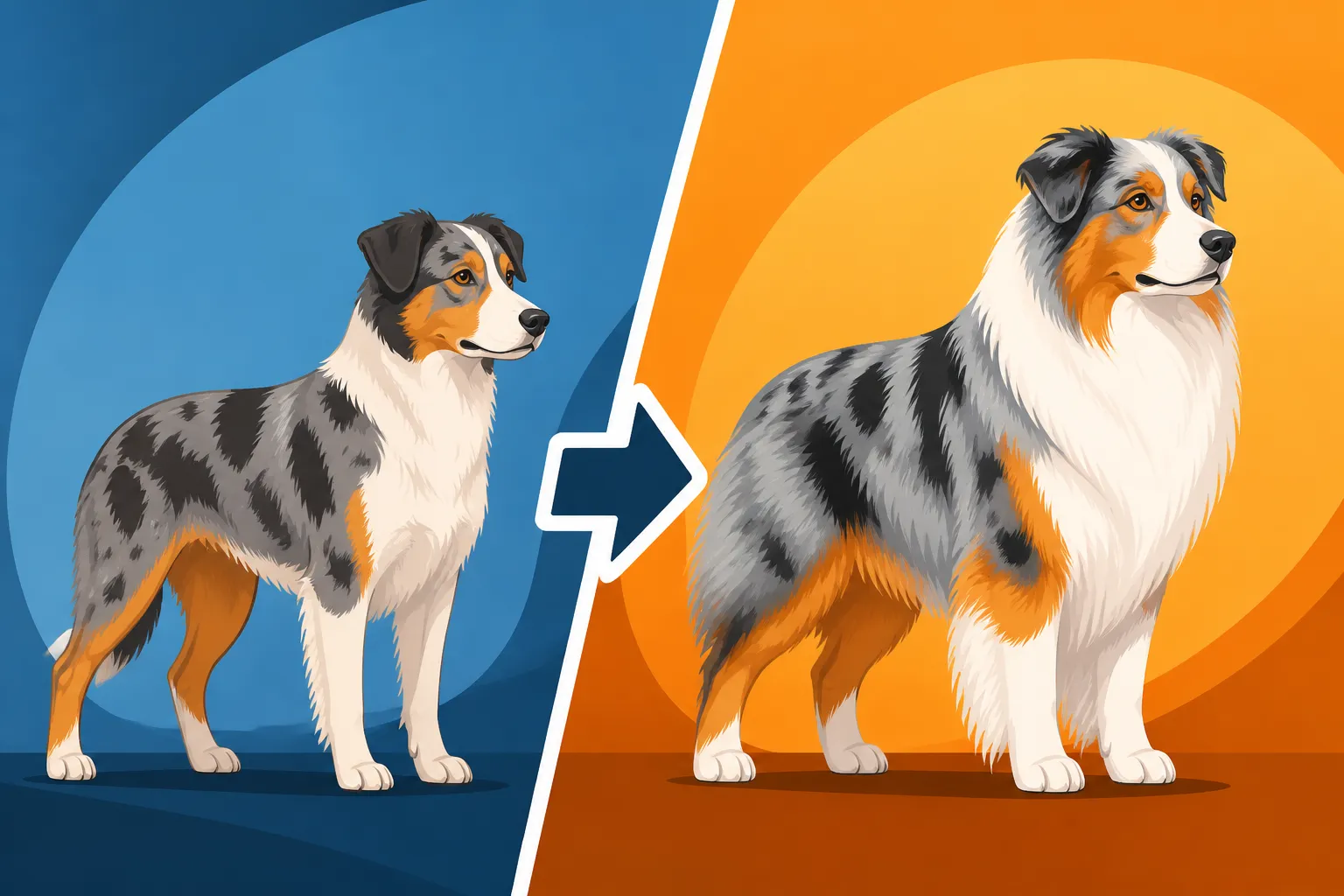
Ultimately, the shifts in the Aussie standard since 1991 highlight the dynamic nature of breed development. While the essence of the Australian Shepherd—its intelligence, loyalty, and herding prowess—remains constant, the way that essence is interpreted and presented has certainly broadened.
| Feature / Standard Focus | Pre-1991 (ASCA Influence) | Post-1991 (AKC Influence) |
|---|---|---|
| Primary Emphasis | Functionality, working ability, versatility on ranch, herding instinct. | Conformation (show ring appearance), balance of working ability and aesthetics, uniformity in type. |
| Temperament View | Intelligent, keen, devoted, reserved with strangers. Focus on mental aptitude for work. | Intelligent, keen, devoted, reserved with strangers. Emphasis on calm, confident presentation in various settings, including show ring. |
| Physical Appearance | Form follows function; sturdy, agile build for endurance. Acceptable variations as long as dog performs. | Refined focus on specific angles, proportions, and overall balance for ideal show presentation. Striving for a consistent, classic "look." |
| Coat Expectations | Moderate length, weather-resistant, practical. Grooming secondary to function. | Moderate length, correct texture (weather-resistant), well-presented for show. More detailed grooming for aesthetics. |
| Tail Status | Natural bobtail or docked tail. Emphasis on preventing injury in working environment. | Natural bobtail or docked tail not exceeding four inches. Growing appreciation for natural appearance alongside docking traditions. |
| Movement | Agile, free, powerful movement for varied terrain and quick maneuvers during herding. | Smooth, efficient, ground-covering trot prized in the show ring, demonstrating sound structure. |
| Breeder Focus | Often prioritized working titles, stock sense, and health. | Balanced approach, often seeking conformation titles, performance titles, and health clearances. |
Disclaimer
This article is for general informational purposes only and does not constitute professional advice. Laws, prices and regulations vary by location and change over time. Consult a qualified professional for guidance on your specific situation.