The Flea Products Dangerous to an MDR1 Aussie
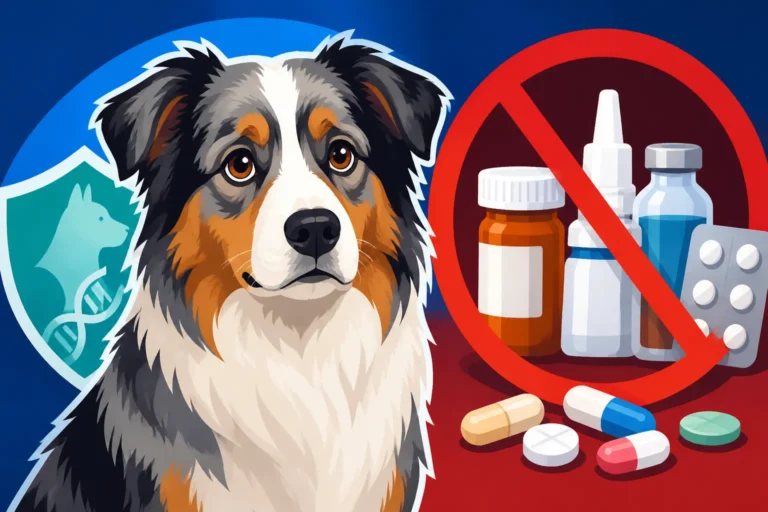
It’s a situation many of us Australian Shepherd parents dread: standing in the pet store aisle, or even at the vet’s office, staring at a wall of flea and tick preventatives and wondering if any of them are truly safe for our furry family member. The reality is, if your Aussie carries the MDR1 gene mutation, certain common products can be incredibly dangerous, even life-threatening. This guide is here to cut through the confusion and help you confidently identify the flea products that pose a risk and find safer alternatives for your precious Australian Shepherd.
Understanding the MDR1 Gene and Its Impact
For many years, owners and even some vets were puzzled by severe, sometimes fatal, reactions in certain dog breeds to otherwise common medications. Then, science gave us the answer: the MDR1 gene mutation. If you’re an Aussie parent, understanding this gene is absolutely crucial for your dog’s safety.
The P-glycoprotein and Drug Sensitivity
At its core, the MDR1 gene is responsible for producing a protein called P-glycoprotein. Think of P-glycoprotein as a diligent bouncer or a sophisticated pump system found in various places throughout your dog’s body – particularly in the brain, intestines, liver, and kidneys. Its primary job is to actively pump certain drugs and toxins out of cells and vital organs, preventing them from building up to dangerous levels. It’s like a detoxifier working overtime to keep harmful substances from accumulating where they shouldn't.
In dogs with a normal, functioning MDR1 gene, this P-glycoprotein system works beautifully, acting as a protective barrier. When certain drugs are administered, the P-glycoprotein identifies them, escorts them out of sensitive areas like the brain, and facilitates their excretion from the body. It’s a natural defense mechanism that most animals possess.
However, the MDR1 mutation means there’s a flaw in this system. The gene either produces a faulty P-glycoprotein or doesn't produce enough of it at all. This means that instead of being efficiently pumped out, certain medications are allowed to linger and accumulate. It’s a widespread issue, and it's why The MDR1 Mutation Half of Australian Shepherds Carry is such a critical piece of information for responsible owners.
Why Certain Drugs Become Toxic
When the P-glycoprotein isn't doing its job properly due to the MDR1 mutation, the consequences can be severe. The most critical area affected is often the brain. The brain has its own special protective layer called the blood-brain barrier. In a healthy dog, P-glycoprotein is a key component of this barrier, preventing many substances from crossing from the bloodstream into the delicate brain tissue.
But imagine that bouncer at the brain’s nightclub is asleep on the job, or simply not there. Drugs that would normally be blocked or quickly expelled now have free access to the brain. They accumulate, reaching dangerously high concentrations that lead to neurotoxicity. This can manifest in a terrifying array of neurological signs, from disorientation and tremors to seizures, blindness, coma, and even death. It’s not that the drug itself is inherently a poison to all dogs; it’s that the MDR1-mutated dog cannot process and eliminate it safely.
This is why seemingly standard doses of medications that are perfectly safe for other breeds, or even for Aussies with a normal MDR1 gene, can become profoundly toxic for an affected Australian Shepherd. The dosage isn't the problem; the dog's ability to metabolize it is. Understanding What MDR1 Does Inside an Australian Shepherd Brain makes it clear why vigilance with medications is not just recommended, but absolutely essential.
Specific Flea and Tick Products to Approach with Caution
When you have an Australian Shepherd with the MDR1 mutation, the seemingly simple act of choosing a flea and tick preventative becomes a high-stakes decision. Many commonly available products contain active ingredients that can be incredibly dangerous.
Macrocyclic Lactones (Avermectins)
This class of drugs is probably the most well-known culprit when it comes to MDR1 sensitivity. Macrocyclic lactones are highly effective against a broad spectrum of parasites, both internal (like heartworms and intestinal worms) and external (like fleas, ticks, and mites). They work by interfering with the nervous system of these parasites, leading to paralysis and death.
The classic example, and perhaps the most notorious, is Ivermectin. While Ivermectin is a miracle drug in many applications, for an MDR1-affected Australian Shepherd, it can be devastating. Even at doses considered therapeutic for many animals, it can easily cross the compromised blood-brain barrier in an MDR1 dog, leading to severe neurological signs. If you haven't already, reading How an MDR1 Australian Shepherd Reacts to Ivermectin will give you a stark picture of the risks involved.
Other drugs in this macrocyclic lactone family also need careful consideration, including:
- Selamectin: Found in topical products like Revolution.
- Milbemycin Oxime: Present in oral medications such as Interceptor and Sentinel.
- Moxidectin: Used in some heartworm preventatives like Advantage Multi and ProHeart 6/12.
It's crucial to understand the nuance here. While high doses of these drugs in older or less common flea/tick products are dangerous for MDR1 Aussies, many heartworm prevention doses of milbemycin oxime and moxidectin are generally considered safe. This is because the doses used for heartworm prevention are significantly lower than those used for treating other parasites. However, if your vet recommends a higher-dose product for a specific mite infestation, for instance, extreme caution and a clear discussion about your Aussie's MDR1 status are paramount. This distinction is vital, and you can delve deeper into it with Why Heartworm Doses Are Still Safe for an MDR1 Aussie. Always, always double-check the active ingredients and confirm with your vet, even if you’ve used a product before. Formulations can change, and it’s better to be overly cautious.
Other Drugs to Be Wary Of
While macrocyclic lactones are the primary concern for flea and tick prevention, other drugs can also pose a risk to MDR1-affected Australian Shepherds. It highlights the importance of comprehensive veterinary care and full disclosure of your dog's genetic status.
One such drug that might unexpectedly appear in some over-the-counter anti-diarrhea medications, but could potentially be in combination parasite products, is Loperamide. Commonly known by its brand name Imodium, loperamide is an opioid that, in normal dogs, doesn't readily cross the blood-brain barrier due to the P-glycoprotein pump. However, in an MDR1-mutant dog, it can easily enter the brain, leading to opioid toxicity symptoms like depression, staggering, slowed heart rate, and respiratory depression. It’s not a typical flea product, but it serves as a powerful reminder to scrutinize all medications. For more on this, check out Loperamide and Other Drugs That Harm an MDR1 Aussie.
Beyond flea and tick products, it's worth noting that certain chemotherapy drugs (like Vincristine, Vinblastine, Doxorubicin), certain anesthetics (like Butorphanol, Acepromazine), and even some antibiotics (like Erythromycin) need adjusted dosages or alternative choices for an MDR1-affected Aussie. While these aren't directly related to flea prevention, they illustrate the broader picture of drug sensitivity. For instance, Anesthetics That Need Adjusting for an MDR1 Aussie explores how common veterinary procedures can become complicated without proper knowledge of your dog’s MDR1 status. The takeaway message here is unwavering: always inform every veterinarian, veterinary technician, and even groomer about your Australian Shepherd's MDR1 status before any medication or product is administered.
Safe Flea and Tick Prevention for Your MDR1 Aussie
Navigating the world of parasite prevention with an MDR1-affected Australian Shepherd can feel overwhelming, but there are plenty of safe and effective options available. The key is knowledge, proactive communication, and choosing products specifically vetted for their safety.
Consulting Your Veterinarian and Genetic Testing
Your veterinarian is your absolute best ally in protecting your MDR1 Australian Shepherd. They have the most up-to-date knowledge on parasite prevalence in your specific area, understand the latest product formulations, and can tailor a prevention plan unique to your dog's needs and genetic status. Never make assumptions or rely solely on internet searches when it comes to your dog's health; always run your choices by your vet.
The single most empowering step you can take is to have your Australian Shepherd genetically tested for the MDR1 mutation. It's a simple, non-invasive cheek swab test that can provide definitive answers. Once you have those results, you know exactly what you're dealing with. If your dog tests as affected (MDR1/MDR1) or even a carrier (MDR1/N), it's vital information for their lifetime care. You can learn more about this crucial step with Testing an Australian Shepherd for MDR1.
When you receive the results, communicate them clearly and concisely to your veterinarian. Ensure it's prominently noted in your dog's medical file. It's also a smart idea to ensure that every member of the veterinary staff who might interact with your dog is aware. Many owners even go so far as to put "MDR1 Positive" on their dog's collar tag or carry a laminated card with them, especially during travel or emergencies. Think about Putting MDR1 on an Australian Shepherd's Collar Tag as a simple but powerful safety measure. Even if your Aussie is a carrier, meaning they have one copy of the mutated gene and one normal copy, it's still wise to exercise caution. While carriers typically don't show clinical signs with standard doses, individual sensitivities can vary, and it's best to be informed. You might be interested in delving into Whether an MDR1 Carrier Australian Shepherd Ever Reacts for more insights on this.
Approved and Generally Safe Product Categories
The good news is that advancements in veterinary medicine have brought several highly effective and safe flea and tick prevention options to the market for MDR1-affected dogs. These products generally work through different mechanisms that are not impacted by the faulty P-glycoprotein.
One of the most popular and broadly recommended classes of drugs for MDR1-sensitive dogs is the Isoxazoline family. These are oral medications that work systemically (meaning they are absorbed into your dog's bloodstream) and target the parasite's nervous system differently. They include active ingredients such as:
- Afoxolaner (e.g., NexGard)
- Fluralaner (e.g., Bravecto)
- Sarolaner (e.g., Simparica, Simparica Trio)
- Lotilaner (e.g., Credelio)
These oral chews are highly effective, long-lasting (some provide protection for up to 12 weeks), and are widely considered safe for MDR1-affected Australian Shepherds. They specifically target parasite receptors that are not part of the P-glycoprotein pathway, meaning the MDR1 mutation does not interfere with their metabolism or increase their toxicity.
Another generally safe category includes topical spot-on treatments that primarily work on the surface of the skin and hair follicles, with minimal systemic absorption. Active ingredients like Fipronil (e.g., Frontline Gold, Frontline Plus) are well-tolerated by MDR1-affected dogs. Similarly, products containing Permethrin (e.g., K9 Advantix II) are also generally safe for dogs, though it's a critical point to remember that permethrin is highly toxic to cats. If you have both dogs and cats, discuss this with your vet to ensure the safety of all your pets.
Flea and tick collars that slowly release active ingredients onto the dog's skin, such as the Seresto collar (which contains Flumethrin and Imidacloprid), are another option that typically presents a low risk for MDR1 dogs as the active ingredients are mostly absorbed topically rather than systemically.
Beyond specific pharmaceutical products, don't underestimate the power of environmental controls and regular physical checks. Keep your home clean by frequent vacuuming, especially in areas where your Aussie sleeps. Wash bedding regularly. After walks or time outdoors, thoroughly brush and check your dog for any hitchhiking fleas or ticks, especially around the ears, neck, armpits, and between the toes. Manual removal is always a safe method!
Proactive Steps for Prevention and Emergency Preparedness
Being an Australian Shepherd owner, especially one with an MDR1-affected dog, means adopting a proactive mindset toward their health and safety. Prevention goes beyond just applying a product; it’s about creating a safe environment and being prepared for the unexpected.
First, maintaining a clean home environment is paramount. Fleas often lay eggs in carpets, rugs, and bedding. Regular vacuuming, especially along baseboards and under furniture, can significantly reduce the flea population. Washing your dog's bedding in hot water weekly is also highly effective. If you live in an area with high flea pressure, consider using vet-approved household sprays or foggers that are safe for pets when your dog is not in the home, after discussing specific product safety with your vet.
If you plan to travel with your Australian Shepherd, research the local parasite risks for your destination. Some areas have a higher prevalence of certain ticks or diseases, which might necessitate adjusting your prevention strategy. Always pack your dog's medications and preventatives, along with their MDR1 documentation, when you travel.
Despite all precautions, accidents can happen. Your Aussie might get into something they shouldn't, or an emergency vet might administer a medication without knowing your dog's MDR1 status in a crisis. This is why having an emergency plan is crucial. Discuss with your regular veterinarian what steps you should take if your MDR1 Aussie is accidentally exposed to a dangerous drug. Have their contact information, as well as the contact for an emergency veterinary clinic that is aware of MDR1 sensitivities, readily accessible. It's not just a good idea, it’s critical to have Emergency Vet Instructions for an MDR1 Australian Shepherd prepared and easily shareable with anyone caring for your dog.
Considering the potential for accidental exposure and the costly, intensive care often required to treat neurological toxicity, robust pet insurance can be a genuine lifesaver for an MDR1 Australian Shepherd. Companies like Healthy Paws offer comprehensive coverage that can help offset the astronomical costs of emergency veterinary visits, diagnostics (like MRIs if neurological signs are severe), and extended hospital stays. While insurance doesn't prevent issues, it provides immense peace of mind that you can afford the best possible care if your dog ever faces an unexpected medical crisis. We all hope we never need it, but having that safety net is invaluable. Always remember to discuss all medications, supplements, and preventatives with your veterinarian. Your vigilance is the best defense your Australian Shepherd has.
Here’s a quick overview of some common flea and tick product types and their general safety for MDR1 Australian Shepherds:
| Product Type | Common Active Ingredients | MDR1 Safety (General) | Notes |
|---|---|---|---|
| Oral Isoxazoline Chews | Afoxolaner, Fluralaner, Sarolaner, Lotilaner | Generally Safe | Highly effective, absorbed systemically, but work via a mechanism unaffected by MDR1 mutation. (e.g., NexGard, Bravecto, Simparica, Credelio). |
| Topical Spot-Ons | Fipronil, Permethrin, Imidacloprid, Dinotefuran, Pyriproxyfen | Generally Safe | Primarily absorbed topically; minimal systemic absorption. Caution: Permethrin is toxic to cats. Always check active ingredients. (e.g., Frontline Gold, K9 Advantix II). |
| Flea/Tick Collars | Flumethrin, Imidacloprid, Tetrachlorvinphos, Propoxur | Generally Safe | Releases active ingredients topically over time. Seresto is a popular option. Avoid organophosphate collars (older types) if possible. |
| Macrocyclic Lactones (High Dose) | Ivermectin, Moxidectin, Milbemycin Oxime, Selamectin | DANGEROUS | Used in some specific flea/tick/mite treatments. Can cross blood-brain barrier in MDR1 dogs, causing severe neurological toxicity. |
| Macrocyclic Lactones (Heartworm Dose) | Milbemycin Oxime, Moxidectin, Selamectin | Generally Safe | Heartworm prevention doses are significantly lower and typically safe for MDR1 dogs. Always confirm with your vet. (e.g., Interceptor Plus, Advantage Multi). |
| Loperamide | Loperamide (commonly Imodium) | DANGEROUS | Used for diarrhea, not flea prevention. Included as a general warning for accidental exposure, as it can be toxic for MDR1 dogs. |
Always confirm product safety and dosage with your veterinarian, especially for an MDR1-affected Australian Shepherd.
Disclaimer
The information provided in this article is for general informational purposes only and does not constitute veterinary advice. Always consult with a qualified veterinarian for any health concerns or before making any decisions related to your pet's health or treatment. The specific needs of your Australian Shepherd, especially regarding drug sensitivities like the MDR1 mutation, should always be discussed with your trusted veterinary professional.