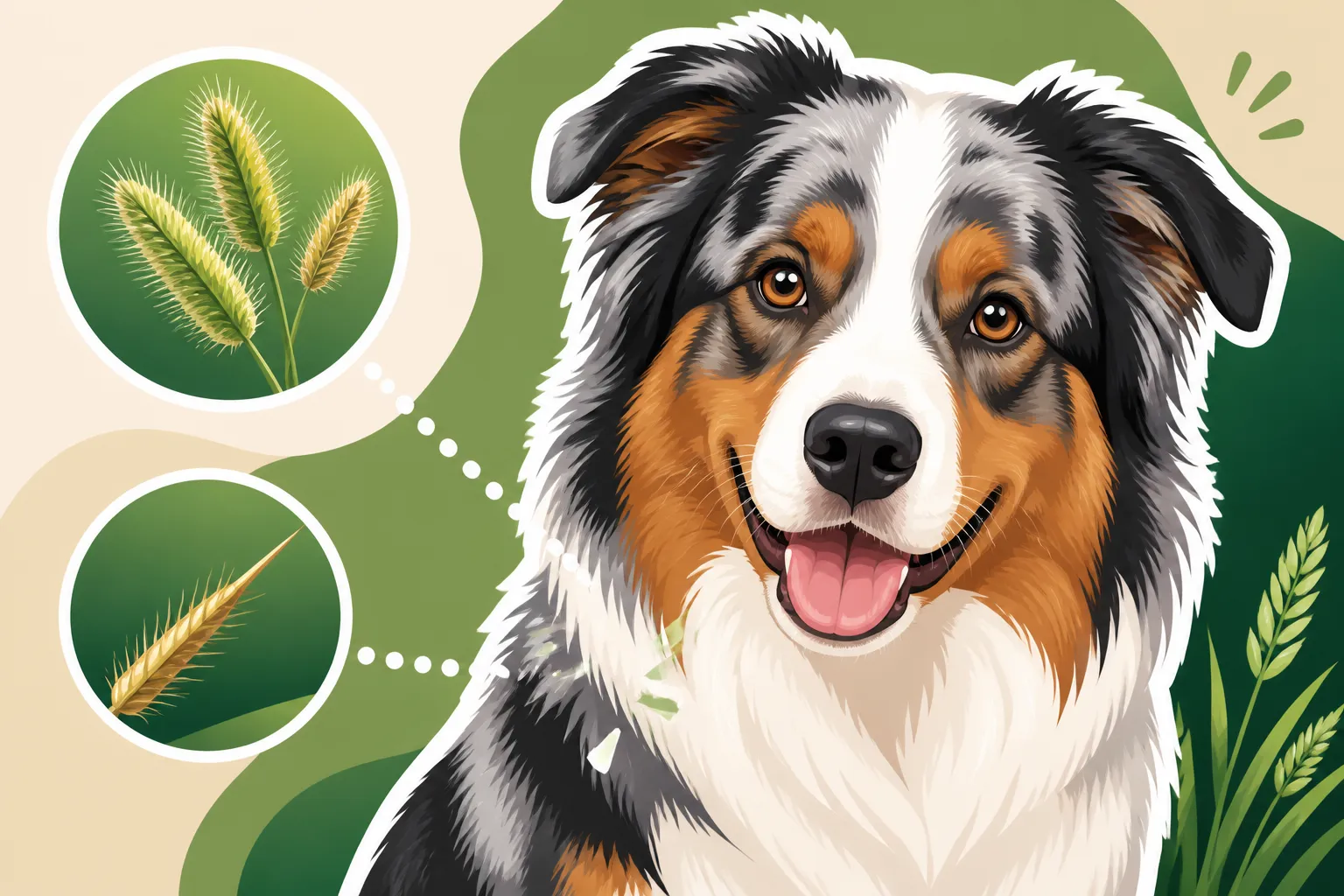
Grass Seeds and Foxtails in an Aussie Coat
One of the most insidious threats lurking in tall grass and dry fields for our active Australian Shepherds isn't always visible, and it's certainly not harmless. We're talking about those deceptively innocent-looking grass seeds and foxtails, which, with their barbed, arrow-like structures, have a nasty habit of embedding themselves into your Aussie's thick coat and skin, leading to painful infections, abscesses, and even much more serious internal damage. This guide will walk you through exactly what these plant invaders are, where they typically hide, how to spot the signs of trouble, and most importantly, how to keep your beloved herding dog safe from their relentless march.
Understanding the Insidious Nature of Grass Seeds and Foxtails
For anyone with an Australian Shepherd who loves to explore, run through fields, or even just enjoy a romp in an overgrown backyard, grass seeds and foxtails are a constant, worrying presence. These aren't just annoying burrs that tangle in the fur; they are biological nightmares designed by nature to travel, and unfortunately, your Aussie’s body can become their unwitting vehicle.
The Anatomy of the Threat
Foxtails, in particular, are the dried seed heads of certain grasses (like wild barley or cheatgrass, common across North America, especially in California and the Midwest). They get their name from their bristly, bushy appearance, similar to a fox's tail. But it’s their internal structure that makes them so dangerous. Each foxtail is comprised of tiny, barbed seeds that act like miniature harpoons. They have a pointed tip and backward-facing barbs, meaning they can easily penetrate skin or mucous membranes, but cannot easily back out. Think of it like a tiny, one-way fishhook. Once they get caught in your Aussie's fur, every movement, every shake, every step pushes them further inward.
Grass seeds, while sometimes less aggressive than a true foxtail, still pose a significant threat. Many common pasture grasses produce seeds with similar barbed or pointed designs, easily catching onto an Aussie's dense double coat. The texture of their coats, with both a soft undercoat and a coarser outer coat, makes them exceptionally good at trapping these botanical hitchhikers. It's not just the barbs; it's the sheer number of places these can hide and the relentless way they migrate.
The Insidious Path of Migration
Once a foxtail or grass seed latches onto your Aussie, its journey can be truly terrifying. Unlike a simple splinter, these seeds don't just stay put. The barbs, combined with your dog's natural movements, push them deeper into the tissue. They can penetrate the skin, burrow into the paw pads, get lodged in the ears, nose, eyes, or even be inhaled into the lungs. In rare, severe cases, they can travel through the body, reaching internal organs, causing abscesses, infections, and massive inflammation wherever they go. The longer they remain undetected, the deeper they travel and the more damage they inflict. This migratory behavior is why early detection and removal are absolutely critical. If you have an active Australian Shepherd that loves to be outdoors, you simply must understand this threat.
Where Foxtails and Grass Seeds Hide on Your Aussie
Australian Shepherds are particularly susceptible to these plant invaders due to their active lifestyles and their magnificent, dense coats. Their curious nature means they often explore areas where these seeds thrive, and their fur acts like a perfect trap.
Common Trapping Grounds in the Coat
The luxuriant double coat of an Australian Shepherd, while beautiful, is a magnet for all sorts of plant material, including foxtails and grass seeds. These seeds can embed themselves anywhere the fur is thick and dense.
- Paws and Between Toes: This is probably the most common spot. As your Aussie runs and walks, their paws are constantly interacting with the ground. The fur between their toes and on their paw pads provides a perfect entry point for seeds to burrow in. Once embedded, they can cause swelling, lameness, and severe infection. You might notice your dog constantly licking or chewing at their paws. For more on paw health, check out our guide on Australian Shepherd Paw Pads After Rough Ground.
- Ears: The feathered fur around an Aussie's ears, and the ear canal itself, are prime targets. Foxtails can easily work their way down the ear canal, causing intense irritation, head shaking, scratching, and ultimately, serious ear infections or even eardrum perforation. They can cause your dog immense pain and disorientation. This is why regular Australian Shepherd Ear Cleaning is so important, allowing you to catch anything unusual.
- Armpits and Groin: These areas are warm, moist, and have thinner skin, making them vulnerable. Seeds can get caught in the fur and then burrow into the skin, leading to painful abscesses.
- Undercoat and Feathering: The long feathering on an Aussie's legs, belly, and tail, along with the dense undercoat, are excellent at catching and holding onto seeds. These areas are harder to check thoroughly without dedicated grooming tools.
Vulnerable Entry Points Beyond the Fur
Beyond just getting stuck in the coat, foxtails and grass seeds have a knack for finding more sensitive entry points, which can lead to rapid and severe health issues.
- Nose: Curious Aussies love to sniff everything, including tall grasses. A foxtail can be inhaled right up the nostril, causing intense sneezing, nose bleeds, and nasal discharge. It's a truly distressing sight to see your dog pawing frantically at their nose.
- Eyes: While less common, a foxtail can irritate the eye, causing redness, discharge, squinting, and excessive tearing. If not removed quickly, it can cause corneal damage or even embed itself deeper behind the eyeball.
- Mouth and Throat: If your Aussie chews on grass or picks up a foxtail, it can become lodged in the gums, tongue, or tonsils, leading to pain, difficulty eating, and coughing. There have even been cases of foxtails migrating into the lungs after being inhaled or ingested, leading to severe pneumonia or lung abscesses.
- Genitals/Anus: For both male and female Aussies, these sensitive areas are vulnerable, especially if the dog sits or rolls in contaminated grass. Seeds can burrow into the skin, causing pain, licking, and infection.
The sheer variety of entry points underscores why vigilance is paramount. You really can't let your guard down, especially during peak foxtail season.
Spotting the Signs: When a Foxtail or Grass Seed Has Buried Itself
Recognizing the symptoms of a buried foxtail or grass seed early is crucial for preventing severe complications. Your Australian Shepherd will often give you clear indications that something is wrong, but you need to know what to look for, as their pain threshold can sometimes mask subtle cues.
Early Warning Signals by Location
The signs your Aussie exhibits will largely depend on where the sneaky seed has decided to make its unwelcome home.
- Paws: This is often where you'll first see trouble. Look for excessive licking or chewing of the paws, limping, tenderness, or swelling between the toes. You might notice a small red bump or a draining tract, which is the body's attempt to expel the foreign object. Your dog might be reluctant to put weight on the affected paw. If you regularly check their paws after walks, you're much more likely to catch this early.
- Ears: The most common signs are persistent head shaking, pawing at the ear, tilting the head to one side, or rubbing the ear against furniture or the ground. You might also notice redness, discharge, or an unpleasant odor from the ear canal. If you suspect a foxtail in the ear, do not attempt to remove it yourself, as you could push it deeper or damage the eardrum.
- Nose: If your Aussie suddenly starts sneezing violently, especially in fits, or has clear or bloody nasal discharge, a foxtail in the nose is a strong possibility. They might paw at their face or seem generally uncomfortable.
- Eyes: Squinting, rubbing the eye, excessive tearing, redness, or a thick discharge are all red flags. Your dog may hold the affected eye partially or completely shut. Any eye issue needs immediate attention.
- Skin/Coat: If a seed has burrowed under the skin, you might find a localized swelling, a firm lump, or a draining lesion that looks like a small puncture wound. Your Aussie might lick or chew persistently at the spot, and the area can be painful to the touch. The fur around the area might become matted or discolored.
When to Seek Immediate Veterinary Help
While you might be able to remove a superficially lodged seed (more on that in a bit), any suspicion of a deeply embedded or migrating foxtail or grass seed warrants an immediate trip to the veterinarian. Seriously, this isn't something to wait on. The longer it stays, the worse it gets.
- Persistent Symptoms: If your Aussie continues to show any of the signs mentioned above for more than a few hours, or if the symptoms worsen, it's time to call the vet.
- Deep Penetration: If you can see the seed but it's clearly embedded past the surface of the skin or deep within the ear canal, nose, or eye, do not try to extract it yourself. A veterinarian has the proper tools (like an otoscope for ears), lighting, and expertise to remove it safely, often requiring sedation to prevent further injury.
- Signs of Infection: Redness, swelling, heat, pain, pus, or lethargy can all indicate a serious infection that requires antibiotics and professional intervention. In some cases, a veterinarian might need to perform a surgical incision to locate and remove a deeply embedded seed, especially if an abscess has formed. This can lead to significant Australian Shepherd Surgery Costs From Hips to Eyes if not addressed quickly.
- Unexplained Lameness or Pain: If your Aussie is suddenly limping badly, favoring a limb, or yelping when touched in a particular area, and you can't find an obvious injury, consider a hidden foxtail.
This is where having pet insurance can truly be a lifesaver. Companies like Healthy Paws can help with the unexpected vet bills that arise from these kinds of emergencies. Dealing with a buried foxtail can easily lead to diagnostic tests, sedation, surgical removal, antibiotics, and follow-up care, which can add up quickly. Having a plan like Australian Shepherd Insurance at $35 to $55 a Month means you can make decisions based on your dog's health, not just your wallet.
Prevention and Removal: Protecting Your Aussie from These Pests
The best defense against foxtails and grass seeds is a strong offense. Being proactive with grooming, careful during outdoor activities, and knowing when to call the vet can save your Australian Shepherd a lot of pain and potential health crises.
Daily Grooming and Post-Outing Checks
Given their magnificent, dense coats and their love for adventure, Australian Shepherds require diligent grooming to prevent these botanical invaders from wreaking havoc.
- Regular Brushing: Incorporate daily brushing, especially during peak seasons when grasses are drying out. A good quality undercoat rake, like The Rake That Reaches an Aussie Undercoat, can help clear out loose fur where seeds might get trapped. Pay close attention to the feathering on legs, belly, and tail.
- Post-Outing Inspection Ritual: This is non-negotiable for an Aussie owner. After every walk, hike, or play session in grassy areas, perform a thorough head-to-tail inspection.
- Paws: Lift each paw and meticulously check between the toes and on the paw pads. Spread the fur apart to get a clear view. Feel for any bumps or tenderness.
- Ears: Gently lift the ear flap and visually inspect the ear canal opening. Run your fingers over the fur around the ears.
- Coat: Systematically run your hands through your Aussie's entire coat, feeling for any small burrs or seeds. Pay extra attention to the armpits, groin, and underbelly.
- Face: Check around the eyes, nose, and mouth for any lodged seeds.
- Trim Fur in Vulnerable Areas: Consider keeping the fur between your Aussie's toes and around their ear openings trimmed short, especially if you live in an area prone to foxtails. This reduces the surface area where seeds can catch and makes detection easier.
- Avoid High-Risk Areas: During peak foxtail season (typically late spring through summer and early fall in many regions), try to avoid walking your Aussie in tall, dry grass, fields, or overgrown trails. Stick to paved paths or well-maintained lawns. If you can't avoid them, keep your dog on a leash and consider protective gear like paw booties.
- Maintain Your Yard: Keep your own yard mowed short to reduce the presence of seed-bearing grasses.
Professional Vet Intervention and Treatment
Sometimes, despite our best efforts, a grass seed or foxtail will find its way in. When it does, knowing how and when to get professional help is key.
- Early Veterinary Visit: If you suspect a foxtail has entered a sensitive area (ear, nose, eye) or burrowed deeply under the skin, call your vet immediately. Don't wait to see if it "gets better." It won't; it will only get worse. Explain your concerns about foxtails specifically.
- Diagnosis and Removal: Your vet will conduct a thorough examination. For ears, they'll use an otoscope. For skin, they might feel for lumps or draining tracts. If a seed is suspected, they may need to sedate your Australian Shepherd to safely and completely remove it. This could involve using specialized instruments, or even minor surgery to locate and extract a deeply embedded or migrating seed. They may also flush areas like the nose or ear canal.
- Addressing Complications: If an infection or abscess has developed, your vet will prescribe antibiotics and potentially pain medication. In severe cases, where a foxtail has migrated internally, more extensive diagnostics like X-rays or ultrasound might be necessary, and the removal could be a complex surgical procedure.
- Follow-up Care: Always follow your vet's instructions for post-removal care, including administering all prescribed medications and attending any follow-up appointments.
Having a robust pet insurance plan can significantly ease the financial burden associated with these sudden, often costly, veterinary interventions. Healthy Paws is one of many reputable providers that offer coverage for unexpected illnesses and injuries, which certainly includes foxtail removals and the treatment of subsequent infections. Many Aussie owners find peace of mind knowing they have that financial safety net in place for things like an Australian Shepherd Emergency Vet Visit. It truly allows you to focus on your dog's recovery without the added stress of a massive, unexpected bill. Prioritizing your Aussie's health means being prepared for these sorts of common, yet serious, outdoor hazards.
Disclaimer
As a friendly lifestyle blogger, I aim to provide helpful and informative content. However, this article is not a substitute for professional veterinary advice. Always consult with a qualified veterinarian for any health concerns or before making any decisions related to your Australian Shepherd's care, diet, or treatment.