Australian Shepherd Puppy Diarrhea After Homecoming
Bringing a new Australian Shepherd puppy home is such an exciting time, filled with cuddles, playful nips, and boundless energy. But often, the joy can quickly turn to worry when your fluffy new family member starts having diarrhea. It's an incredibly common and incredibly stressful experience for new puppy parents, leaving you wondering if it's just nerves or something far more serious. This comprehensive guide will walk you through the reasons why your Aussie puppy might be experiencing an upset tummy after homecoming, what immediate steps you should take, and how to best prevent future digestive woes to keep your little herder healthy and happy.
The Stress of a New Home and Diet Changes
Imagine being a tiny puppy, suddenly plucked from everything you know – your mom, your siblings, familiar scents, sounds, and routines – and thrust into a brand new world. It’s a lot for a small creature to process! This massive change can easily trigger digestive upset, as stress directly impacts gut health. On top of that, a sudden change in diet can throw a puppy's sensitive system completely off balance.
Environmental Stress and Anxiety
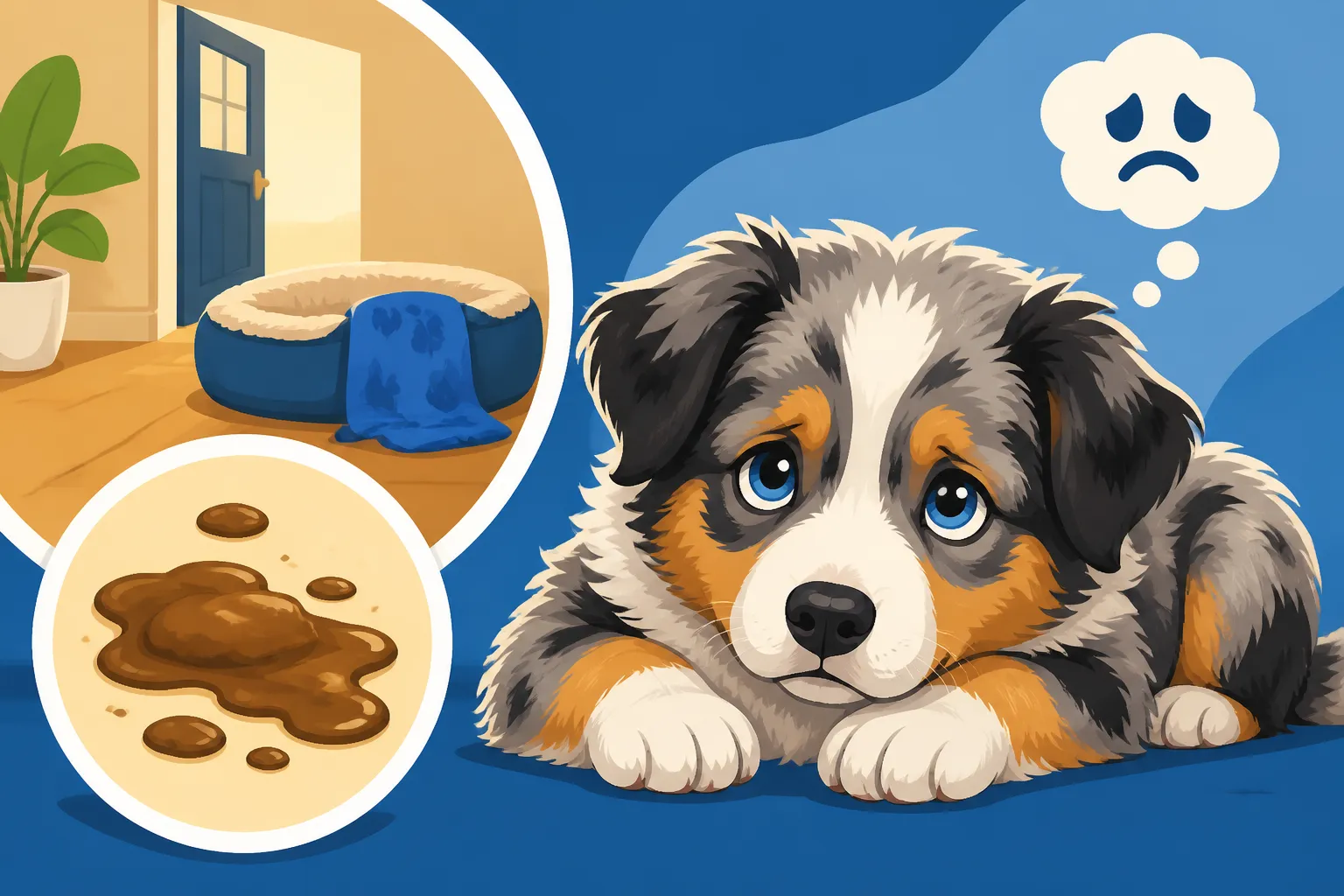
Moving to a new home is a huge transition for an Australian Shepherd puppy. They're leaving behind their littermates and their first human family, often for the very first time. This can induce a significant amount of stress and anxiety, even in a well-adjusted puppy. Their little bodies react to this emotional upheaval, and one of the most common physical manifestations is diarrhea.
Think about it from their perspective: suddenly, there are new smells, new sounds, new faces, and a completely different daily rhythm. They might be unsure where to relieve themselves, or they might feel overwhelmed by too much attention too soon. All this emotional input can lead to a stressed-out gut, resulting in loose stools or outright diarrhea. It's not uncommon for a puppy to have soft stools for a day or two purely due to this emotional adjustment. It’s vital to provide a calm, secure environment for your new Aussie to help them settle in, giving them a safe space away from constant stimulation. Gentle introductions to the new household and its members are key to reducing this initial stress.
The Sudden Switch in Diet
Another primary culprit behind post-homecoming diarrhea is a rapid change in diet. Many breeders will send a small bag of the food the puppy was eating, but if you switch to a different brand or type of food too quickly, it can wreak havoc on a young digestive system. A puppy's gut flora is still developing, making it very susceptible to changes.
Different dog foods have varying ingredients, protein sources, fat content, and fiber levels. A sudden introduction to a new food, even if it's a high-quality one, can cause gastrointestinal upset as your puppy's system tries to adapt. This is why most vets and experienced breeders advise a slow transition over several days, gradually mixing increasing amounts of the new food with decreasing amounts of the old. Ignoring this crucial step is a common misstep that often leads to diarrhea. Always ask your breeder what food your Aussie puppy was on, and if you plan to change it, prepare to do so gradually. For more information on proper feeding, you might want to read about An Aussie Puppy Stomach After Switching Food.
Common Medical Culprits Behind Puppy Diarrhea
While stress and diet changes are common, it's incredibly important not to dismiss diarrhea as purely environmental. Puppies are highly vulnerable to a range of medical issues, from microscopic parasites to serious viral infections, all of which can manifest as diarrhea. These conditions can quickly become severe in young pups.
Parasites: The Unseen Invaders
Parasites are a rampant problem in puppies, especially those coming from busy breeding environments or rescues. A puppy can pick up intestinal parasites from their mother, other littermates, or even from the environment before they ever set paw in your home. These tiny organisms irritate the intestinal lining, leading to inflammation, malabsorption, and, yes, diarrhea.
Common culprits include:
- Roundworms and Hookworms: These are often picked up from the mother. Puppies are usually dewormed multiple times by the breeder, but sometimes one round isn't enough, or they can get re-infected. You might even see spaghetti-like worms in their stool with severe infestations.
- Coccidia: This is a microscopic protozoan parasite that can cause severe, watery diarrhea, especially in stressed or immunocompromised puppies. It’s highly contagious among young dogs and requires specific medication different from standard dewormers.
- Giardia: Another microscopic protozoan, Giardia is often found in contaminated water or feces. It causes foul-smelling, sometimes greasy, diarrhea. It's notoriously hard to get rid of and can cause intermittent issues.
It's absolutely crucial that your vet checks your puppy's stool for these parasites. A fresh stool sample is often all they need to identify the problem and prescribe the correct treatment. Even if your breeder dewormed, persistent diarrhea warrants another check. You can learn more about how to protect your pup by checking out Parasite Prevention Safe for an MDR1 Australian Shepherd.
Viral and Bacterial Infections
Beyond parasites, puppies are also susceptible to a host of viral and bacterial infections, many of which are serious and require immediate veterinary attention. Their immune systems are still developing, leaving them vulnerable.
- Parvovirus (Parvo): This is every puppy owner's nightmare. Parvovirus is a highly contagious and often deadly viral infection that attacks the gastrointestinal tract, bone marrow, and heart. Symptoms include severe, bloody diarrhea, vomiting, lethargy, and loss of appetite. Puppies need a series of vaccinations, known as The Puppy Shot Series for an Aussie, to be protected, but they aren't fully immune until they've completed the full course. If you suspect parvo, do not delay – get to the vet immediately.
- Distemper: Another serious viral disease, distemper can also cause gastrointestinal upset alongside respiratory and neurological symptoms. It is also preventable through vaccination.
- Coronavirus: While usually milder than parvo, canine coronavirus can still cause diarrhea, vomiting, and lethargy, especially in young pups.
- Bacterial Infections: Certain bacteria, like Salmonella or Clostridium, can also cause severe diarrhea. These often require antibiotics and supportive care.
Because these infections can be life-threatening, particularly in young puppies, any persistent or severe diarrhea, especially if accompanied by vomiting, lethargy, or loss of appetite, should be considered an emergency. Do not wait to see if it improves on its own.
Other Health Concerns
While less common, other health issues can also lead to diarrhea in a new puppy.
- Foreign Body Ingestion: Puppies are notorious for exploring the world with their mouths. If your Aussie puppy has swallowed a toy part, a piece of string, or anything indigestible, it can cause an obstruction or irritation leading to vomiting and diarrhea. Keep a close eye on their environment.
- Food Allergies or Sensitivities: Although less common in very young puppies, some can have sensitivities to certain ingredients. This might manifest as chronic loose stools.
- Pancreatitis: While more common in adult dogs, inflammation of the pancreas can occur in puppies and cause digestive upset.
- Underlying Medical Conditions: Rarely, a puppy might have a congenital condition or another illness that affects their digestive system. This is why thorough Australian Shepherd Puppy Health Checks at Eight Weeks are so important.
It's also worth noting that medications given by a breeder, such as certain dewormers or antibiotics, can sometimes cause temporary diarrhea as a side effect. Always ask your breeder for a full history of any medications given.
Immediate Steps When Your Aussie Puppy Has Diarrhea
Finding your new Australian Shepherd puppy with diarrhea can be alarming, but knowing what to do immediately can make all the difference. The first priority is to assess the severity and get professional advice.
When to Call the Vet – Don't Delay
This is the most critical piece of advice: if your Aussie puppy has diarrhea, especially if it's severe, bloody, accompanied by vomiting, lethargy, loss of appetite, or lasts more than 24 hours, call your veterinarian immediately. Puppies can dehydrate incredibly quickly, and what might seem like a minor upset can escalate into a serious medical emergency in a matter of hours.
Here’s when you must call the vet:
- Bloody diarrhea: Even a little bit of blood can be a sign of something serious.
- Projectile vomiting along with diarrhea: This combination drastically increases the risk of dehydration.
- Extreme lethargy or weakness: If your puppy isn't playing, is unresponsive, or is struggling to stand.
- Loss of appetite or refusal to drink: Dehydration risk goes up dramatically if they won't eat or drink.
- Diarrhea lasting more than 24 hours: For a puppy, this is too long to wait.
- Puppy is very young (under 8 weeks) or very small: These puppies are even more fragile.
When you call the vet, be prepared to provide details: when the diarrhea started, its consistency (watery, mushy, bloody, mucousy), how often it's happening, if there's any vomiting, what the puppy has been eating, and if they've received any vaccinations or deworming. Having pet insurance, like a plan from Healthy Paws, can be incredibly reassuring during these stressful and often costly emergency situations. They can help with unexpected vet bills, allowing you to focus on your puppy's care.
Hydration and Electrolyte Support
Dehydration is the biggest danger with puppy diarrhea. Even if your vet advises monitoring for a short period, ensuring your puppy stays hydrated is paramount. Fresh water should always be available, but some puppies might be reluctant to drink, or the water might just pass right through them.
In some cases, your vet might recommend an electrolyte solution specifically formulated for dogs (not human sports drinks). These can help replenish lost minerals and encourage hydration. You can offer small amounts frequently, rather than a large bowl all at once, to prevent further stomach upset. If your puppy is refusing to drink, or if the diarrhea is severe, your vet might need to administer subcutaneous fluids (fluids under the skin) to combat dehydration effectively. Never force fluids down a puppy's throat, as this can cause them to inhale the liquid.
Implementing a Bland Diet
If your vet gives the green light to manage the diarrhea at home for a short period, a bland diet is usually the first step. The goal is to give your puppy's digestive system a much-needed break from rich, complex foods, allowing it to rest and recover.
A typical bland diet consists of:
- Boiled Chicken: Plain, skinless, boneless chicken breast, shredded. Avoid any seasonings or oils.
- Plain White Rice: Cooked thoroughly, without any butter, salt, or spices.
- Pumpkin: Canned plain pumpkin puree (not pumpkin pie filling!) is excellent for digestion due to its fiber content, which can help firm up stools. Start with small amounts.
Here’s a general guideline for a bland diet:
| Puppy Weight (lbs) | Boiled Chicken (cups) | Plain White Rice (cups) | Canned Pumpkin (Tbsp) | Feeding Frequency |
|---|---|---|---|---|
| 5-10 | 1/4 – 1/2 | 1/2 – 1 | 1/2 – 1 | 3-4 times/day |
| 10-20 | 1/2 – 1 | 1 – 2 | 1 – 2 | 3-4 times/day |
| 20-30 | 1 – 1.5 | 2 – 3 | 2 – 3 | 3-4 times/day |
Always consult your vet for precise portioning and duration. This is a temporary diet.
Start by feeding very small amounts frequently (e.g., a tablespoon every few hours). If the diarrhea improves and there's no vomiting, you can gradually increase the portion size. Once the stools have been firm for at least 24-48 hours, you can begin the slow transition back to their regular puppy food, mixing it with the bland diet over several days. Remember, a sudden switch back to regular food can cause a relapse.
Preventing Future Tummy Troubles for Your Aussie
While some things are out of your control, there’s a lot you can do to minimize the chances of your Australian Shepherd puppy experiencing digestive upset. Prevention often comes down to careful management and consistent routine.
Gradual Transitions and Consistent Feeding
One of the most important preventative measures is a slow and deliberate approach to any changes in your puppy's diet. If you know you want to switch your Aussie puppy to a new food brand, plan for it. Get a bag of the food the breeder was using (or ask them to send some home with you) and slowly mix in the new food over a week to ten days.
- Days 1-3: 75% old food, 25% new food.
- Days 4-6: 50% old food, 50% new food.
- Days 7-9: 25% old food, 75% new food.
- Day 10 onwards: 100% new food.
This gradual method allows your puppy's digestive system to slowly adjust to the new ingredients without shock. Consistency in feeding times and avoiding too many new treats or table scraps during the initial homecoming period are also crucial. Their little tummies need routine. For optimal growth and digestive health, following a schedule like Three Meals a Day for an Aussie Puppy is highly recommended. Limit new treats, especially those with rich ingredients, as they can easily upset a delicate balance.
Routine Vet Care and Preventative Measures
Regular veterinary care is non-negotiable for a healthy Australian Shepherd puppy. Your vet will guide you through the necessary vaccinations and deworming schedule, which are critical for protecting your pup from common and serious diseases that cause diarrhea.
Ensure your puppy completes their full vaccination series, including protection against Parvovirus and Distemper. Until they are fully vaccinated, exercise extreme caution in areas where unvaccinated dogs might have been, as many viruses can persist in the environment. Your vet will also recommend a regular deworming schedule, especially for puppies, to target common intestinal parasites. Even if your pup was dewormed by the breeder, follow your vet's advice for ongoing prevention. Knowing about Australian Shepherd Vaccination and MDR1 Concerns is also essential for responsible Aussie ownership, as some medications might need adjustments based on their genetic profile.
Finally, consider investing in pet insurance early on, especially with active breeds like Australian Shepherds who can sometimes get into scrapes or develop unexpected health issues. Providers like Healthy Paws can help manage the financial aspect of illnesses or accidents, giving you peace of mind. Keeping a clean environment, promptly cleaning up waste, and discouraging your puppy from eating unknown items or feces outside will also go a long way in preventing parasitic and bacterial infections. Staying proactive with their health is the best way to avoid scary situations and enjoy every moment with your energetic Aussie pup.
Disclaimer
The information provided in this article is for general informational purposes only and is not a substitute for professional veterinary advice. Always consult with a qualified veterinarian for any health concerns or before making any decisions related to your Australian Shepherd puppy's health and treatment.