Taking On an Aussie That Was Given Up at Two
It’s a heartbreaking reality: many beautiful, energetic Australian Shepherds find themselves in rescue at what should be the prime of their lives, often right around the two-year mark. You might feel a mix of sadness for their past and excitement for their future, but also a good dose of apprehension. Taking on an Aussie that was given up at two means stepping into a dog's life that has likely experienced upheaval, potentially inconsistent training, and unmet needs. This guide will walk you through understanding why these wonderful dogs end up in rescue, how to prepare your home, and most importantly, how to build a lasting, loving bond with your new companion.
Understanding Why an Australian Shepherd Lands in Rescue at Two
When you see a two-year-old Australian Shepherd in a shelter or rescue, your heart probably aches for them. You wonder how anyone could give up such a striking and intelligent dog. The truth is, it's rarely about the dog being "bad," and almost always about a mismatch of expectations and a fundamental misunderstanding of the breed's intense needs. This age, right around two years, is often a make-or-break period for many Aussie owners.
The "Adolescent Crisis" and Unmet Needs
Think about a human teenager: full of energy, testing boundaries, a little impulsive. Now imagine that, but in a dog that can herd livestock and outsmart a lot of people! Australian Shepherds hit their full physical and mental maturity between one and three years old, and for many, two is when their innate drive and intelligence really come to the forefront. If their puppyhood or early adolescence didn't include consistent training, vast amounts of appropriate exercise, and crucial mental stimulation, this age can become an "adolescent crisis" for owners.
Many people fall in love with the Aussie's striking looks, maybe even seeing them at a dog park and thinking, "What a beautiful, athletic dog!" They get a puppy, and it's cute and cuddly. But by two, that cute puppy has become a powerhouse. Their instinct to herd everything – children, other pets, even shadows – can escalate into persistent heel nipping or circling behaviors. If they're not given a job to do, that incredible brain goes to work finding its own job, which often translates into destructive chewing, incessant barking, or hyperactive pacing. It's not uncommon to see dogs land in rescue because their owners couldn't manage the sheer volume of energy and intelligence, leading to The Exercise Gap That Sends Aussies to Rescue. They might have provided an hour walk, but an Aussie needs far more engagement than just physical movement.
Common Behavioral Challenges and Misconceptions
The issues that lead to an Aussie being given up at two are often predictable, stemming from that core herding drive and high intelligence.
- Separation Anxiety: An Australian Shepherd is a companion dog to its core. Bred to work closely with their person, they can become deeply bonded and struggle immensely when left alone for long periods. If previous owners worked long hours and didn't properly crate train or desensitize their Aussie to being alone, a two-year-old might be panicking, howling, or destroying the house every time they're left.
- Reactivity: That sharp focus and sensitivity to movement, so valuable on a farm, can be a nightmare in an urban or suburban environment. A two-year-old Aussie might suddenly be lunging and barking at every passing dog, skateboard, or person on a bicycle. This often falls under Australian Shepherd Reactivity and Overarousal. Owners can feel embarrassed or overwhelmed, not understanding that this isn't aggression, but often an overstimulated herding instinct coupled with anxiety or frustration.
- Barking and Noise Sensitivity: Aussies are vigilant. They notice everything. A two-year-old, especially one who hasn't been properly socialized to a variety of sounds and environments, can become quite noise sensitive. This often manifests as excessive barking at noises, visitors, or even just things moving outside the window. This is a common reason for surrender, as detailed in articles discussing Australian Shepherd Barking and Noise Sensitivity.
- Resource Guarding: While not always present, some Aussies, particularly if they felt insecure in their previous home, can develop resource guarding tendencies around food, toys, or even their people. This can be intimidating for owners who don't understand how to manage it.
- Misunderstanding Intelligence: People often confuse "smart" with "easy to train." Aussies are smart, incredibly so. But that intelligence means they learn quickly – good and bad habits. They also need a strong leader and consistent boundaries. If an owner isn't consistent, the Aussie will happily take charge, leading to a dog that seems to ignore commands, pulls relentlessly on the leash, or counter-surfs with expert precision.
When a rescue contacts you about Why Aussies Land in Rescue at Eighteen Months, they'll often highlight these common themes. It’s a sad reality, but it means that with the right preparation and commitment, you can be the second chance a two-year-old Aussie desperately needs.
Preparing Your Home for a Rescued Two-Year-Old Aussie
Bringing home a two-year-old Australian Shepherd from a rescue is different from bringing home a puppy. This dog already has habits, fears, and possibly some baggage. Your role is to provide stability, clear expectations, and a safe environment for them to decompress and learn to trust. Preparation is key to ensuring a smooth transition.
Setting Up for Success: Environment and Routine
Before your new Aussie even steps paw inside, you need to have a clear plan and physical setup.
- Secure Containment: Aussies are known for their intelligence and agility, and a bored or anxious Aussie can be an escape artist. Ensure your yard has secure fencing, ideally at least six feet tall, with no easy digging spots or gaps. Inside, a sturdy crate is invaluable. Even if the dog wasn't crate trained before, starting fresh can offer them a safe den and prevent destructive behaviors when you can't supervise. Many new Aussie owners find durable crates and gates on sites like Chewy, which can be a lifesaver for setting up safe zones.
- Dedicated Space and Quiet Zone: Your new Aussie will likely be overwhelmed. Set up a quiet, comfortable space where they can retreat. This could be their crate covered with a blanket, or a specific dog bed in a low-traffic area. This "safe haven" is vital for decompressing.
- Predictable Schedule: Dogs thrive on routine, especially those who have experienced instability. Establish a consistent schedule for feeding, potty breaks, exercise, and quiet time. This predictability helps reduce anxiety and builds confidence. For example, knowing exactly when they'll eat and go outside helps them settle into your household rhythm.
- Management Tools: Invest in a good quality, well-fitting harness (front-clip options can be great for dogs who pull), a sturdy leash, and a long line. A long line is fantastic for practicing recall in a safe, open area, helping you work on Long Line Length for an Australian Shepherd right from the start. Gates can also be very useful to create boundaries within the home and prevent unwanted behaviors while you’re still getting to know your new friend.
Essential Supplies and Initial Costs
The initial investment for a rescue Aussie can be significant, even if the Aussie Rescue Fees Between $250 and $600 are lower than a puppy from a breeder. You'll need to stock up on essentials.
- High-Quality Food: Good nutrition is foundational to health and behavior. Ask the rescue what food they were on and try to stick with it for a few days to avoid stomach upset before slowly transitioning to a food of your choice. Many owners explore options like Ollie, which provides fresh, pre-portioned meals, ensuring optimal nutrition. Remember that a working breed needs nutrient-dense food, and often, their caloric needs will be higher than a more sedentary dog.
- Durable Toys: Aussies need toys that can withstand rigorous chewing and play. Puzzle feeders are excellent for mental stimulation, as covered in Puzzle Feeders and Enrichment Gear for an Aussie. Strong chew toys are a must, helping to redirect that oral fixation.
- Grooming Supplies: With their double coats, Aussies require regular grooming. Invest in a good slicker brush, an undercoat rake, and nail clippers. You'll want to get started with a regular brushing routine to prevent mats.
- Vet Check and Vaccinations: Schedule a vet appointment within the first few days. Your vet can perform a thorough check-up, ensure all vaccinations are current, and discuss parasite prevention. This is also a good time to get specific advice on managing a dog of their age and breed.
- Pet Insurance: Given that Aussies are prone to certain genetic conditions and can be quite active (leading to potential injuries), pet insurance can be a wise investment. Companies like Healthy Paws offer coverage that can significantly offset unexpected vet bills. It’s worth researching Australian Shepherd Insurance at $35 to $55 a Month to understand the costs and benefits.
Mental and Physical Exercise Strategy
A two-year-old Aussie's exercise needs are paramount. Simply letting them out in the yard isn't enough. You need a multi-faceted approach.
- Structured Walks: Go beyond just walking. Incorporate sniff walks, where you let them investigate scents, engaging their brain. Vary your routes to provide novelty. Use that harness to teach polite leash manners from day one.
- Puzzle Toys and Scent Work: As mentioned, mental exercise is just as important, if not more, than physical. Snuffle mats, treat-dispensing toys, and simple "find it" games using kibble or high-value treats can be incredibly tiring for an Aussie. Articles like Scent Games That Tire an Australian Shepherd offer great ideas for this.
- Short Training Sessions: Keep training sessions brief (5-10 minutes), positive, and fun. Work on basic obedience cues like sit, stay, and come, even if they seem to know them. This not only reinforces good manners but also builds your bond and provides mental engagement.
- Enforced Naps: An overstimulated or overtired Aussie can become a bratty, mouthy, or destructive one. Just like puppies, older dogs often benefit from enforced naps in their quiet space or crate, especially during the first few weeks as they adjust.
Building a Bond and Addressing Behavioral Issues
The first few weeks and months with your adopted two-year-old Aussie are crucial for building trust and setting the foundation for a lifetime together. It requires patience, consistency, and a willingness to understand their unique personality and past experiences.
The Two-Week Shutdown and Decompression
Many experienced rescue adopters advocate for what's known as the "two-week shutdown" or decompression period. This isn't a hard and fast rule, but a guiding principle to help your new dog adjust without being overwhelmed. The idea is to minimize new experiences and demands during the initial phase.
- Minimal Exposure: Avoid dog parks, crowded public places, and excessive visitors for the first couple of weeks. Your Aussie needs to learn your home and your routine first. Every new person, dog, or environment is a huge input for them, and they need time to process everything.
- Focus on Observation: Spend this time observing your dog. What makes them happy? What makes them nervous? Do they pace before going to the bathroom? What are their play cues? Learning their body language will be incredibly valuable for understanding their needs and preventing potential issues.
- Routine Above All: Stick to that predictable schedule you've established. This creates a sense of security. Feed them, take them out for potty breaks, and provide quiet time at the same intervals each day.
- "Nothing in Life is Free" (NILIF) Philosophy: This isn't about being harsh, but about establishing polite manners and making sure your Aussie looks to you for direction. Ask for a simple "sit" before putting down their food bowl, giving them a treat, or opening the door for a walk. This helps build your leadership role in a positive, cooperative way.
Finding the Right Professional Support
It’s completely normal to encounter behavioral quirks or challenges with a rescue dog. Don't hesitate to seek professional help early on.
- Positive Reinforcement Trainers: Look for a certified professional dog trainer (CPDT-KA or similar) who uses positive reinforcement methods. Avoid anyone who uses fear, intimidation, or punitive tools. A good trainer can help you refine basic obedience, address specific behaviors like pulling on the leash, or help you understand What a Trainer Charges for Aussie Herding Drive and how to manage it in a positive way.
- Behaviorists for Complex Issues: If your Aussie is displaying severe fear, aggression, or separation anxiety that impacts their quality of life or safety, consider consulting a veterinary behaviorist (DACVB) or a certified applied animal behaviorist (CAAB). These professionals have advanced degrees and can help diagnose underlying issues and develop comprehensive behavior modification plans, sometimes involving medication.
- Understanding the Aussie's Inherent Drive: Remember that your Aussie’s strong drives – to herd, to guard, to be active – are deeply ingrained. The goal isn't to "train them out," but to redirect them into appropriate, safe, and fulfilling outlets. This might mean enrolling in dog sports like agility, treibball, or scent work, or simply structuring your daily interactions to incorporate their natural tendencies.
Patience, Consistency, and Celebrating Small Wins
Adopting a two-year-old Australian Shepherd is a commitment, and it requires a significant amount of patience.
- It's a Marathon, Not a Sprint: Don't expect your Aussie to be a perfectly behaved, fully integrated family member overnight. It can take weeks, even months, for them to truly decompress and show their real personality. There will be good days and bad days. Stay consistent with your training, routine, and positive reinforcement.
- Managing Expectations: Be realistic. Your new Aussie might never be the life of the party at the dog park, or they might always have a certain level of alertness. Focus on what you can achieve together, celebrating improvements rather than striving for an impossible ideal. Their unique quirks are part of who they are, and often, what makes them so endearing once you understand them.
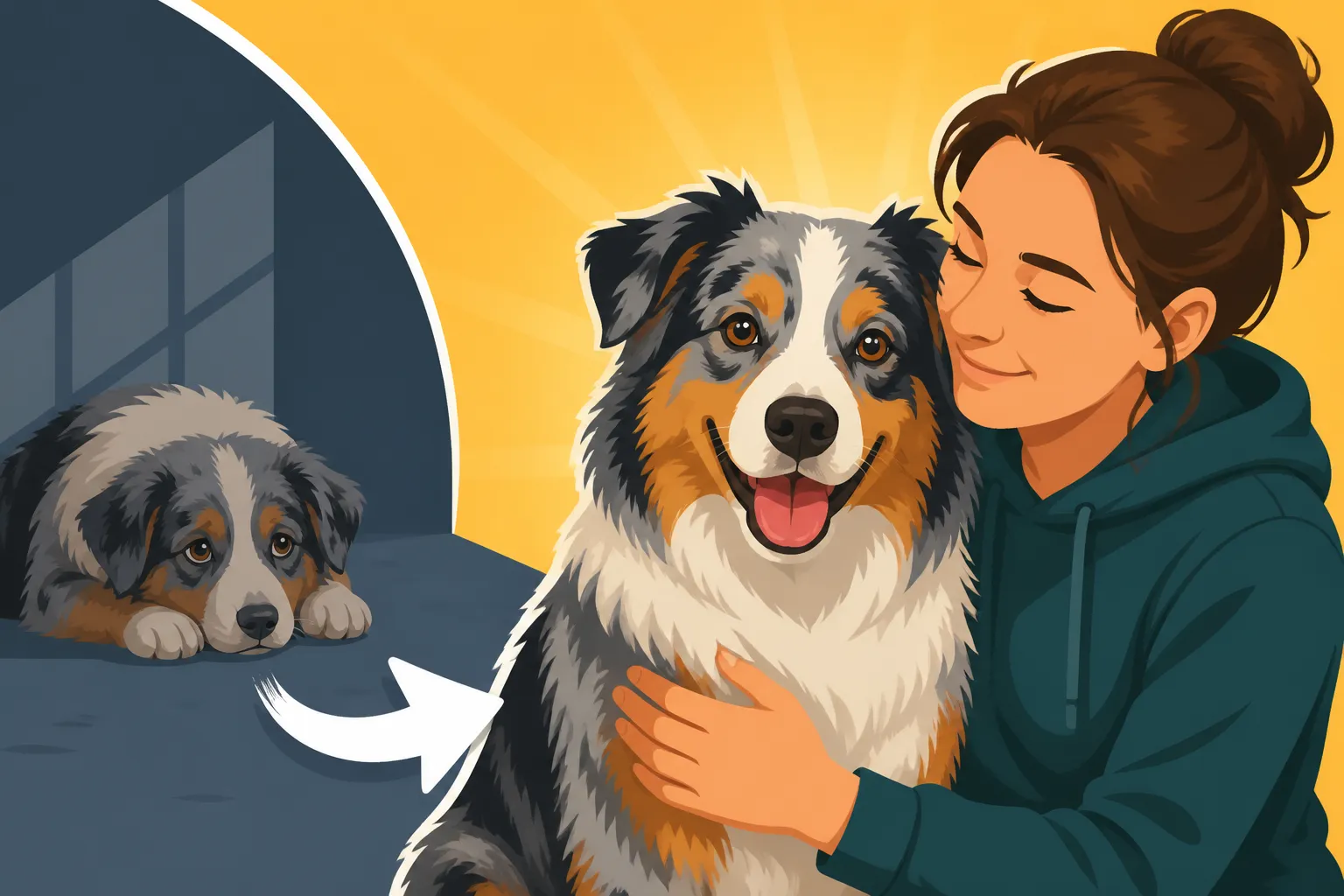
- The Reward: The bond you build with a rescue dog, especially one who has had a rough start, is incredibly powerful. Watching a nervous, shut-down Aussie blossom into a confident, happy companion is one of the most rewarding experiences. Every small win – a calm walk, a successful recall, a moment of relaxed napping – is a testament to your dedication and their resilience. You're not just giving them a home; you're giving them a second chance at life, and they will pay you back in loyalty and love a thousand times over.
| Decompression Checklist for a Rescued Aussie (First 2 Weeks) |
|---|
| Environment & Safety |
| Secure fenced yard checked for escape routes |
| Crate set up as a safe den (covered, comfortable) |
| Baby gates in place to manage access to rooms |
| Routine & Basic Needs |
| Consistent feeding times |
| Frequent, scheduled potty breaks |
| Designated quiet rest periods/enforced naps |
| Short, positive training sessions (5-10 mins) |
| Interaction & Socialization |
| Minimal visitors to the home |
| Avoid dog parks, crowded public places |
| Controlled, calm on-leash walks only |
| Hands-off approach initially; let dog initiate contact |
| Observe body language closely for signs of stress or comfort |
| Supplies & Health |
| High-quality food and water bowls |
| Durable chew toys and puzzle feeders |
| Grooming tools (brush, nail clippers) |
| Vet appointment scheduled for check-up |
| Pet insurance plan researched/initiated (e.g., Healthy Paws) |
Disclaimer
This article is for general informational purposes only and does not constitute professional advice. Laws, prices and regulations vary by location and change over time. Consult a qualified professional for guidance on your specific situation.