Whether a Shaved Aussie Coat Grows Back Right
It’s a hot summer day, or maybe your Australian Shepherd is blowing their coat for the hundredth time, leaving tumbleweeds of fur across every surface of your home. The thought crosses your mind: "What if I just shave them? Wouldn't that be easier, and wouldn't they be cooler?" It’s a common, understandable frustration, but reaching for those clippers can have lasting, damaging effects on your Aussie's unique coat. This guide will dive deep into why shaving an Australian Shepherd is almost always a bad idea, what truly happens when that beautiful double coat is removed, and what you can do instead to keep your companion comfortable and well-groomed.
The Marvel of the Australian Shepherd's Double Coat
To truly understand why shaving is problematic, we first need to appreciate the incredible design of an Australian Shepherd’s coat. It’s not just fur; it’s a sophisticated, two-layer insulation system that has evolved over generations to protect these working dogs in diverse climates. Your Aussie isn't built for a simple haircut like a poodle or a human; their coat is their armor and climate control.
Guard Hairs and Undercoat: A Dynamic Duo
An Australian Shepherd's coat consists of two distinct layers. The outer layer is made up of longer, coarser hairs called guard hairs. These are the hairs you see, the ones that give your Aussie their color and pattern—think blue merle, red tri, or classic black and white. These guard hairs are water-resistant and provide a crucial barrier against dirt, burrs, and UV radiation from the sun. They act like a natural raincoat and sunscreen all rolled into one. Beneath this protective layer lies the dense, soft undercoat. This fluffy layer is what provides insulation. In winter, it traps warm air close to the body, keeping your Aussie toasty. In summer, it helps circulate air, keeping them cool by preventing heat from penetrating directly to the skin, similar to how an insulated thermos keeps drinks cold. This intricate system is why the double coat is often referred to as an "all-weather" coat. You can learn more about The Australian Shepherd Double Coat Explained.
Natural Thermoregulation at Work
Many people mistakenly believe that removing all that fur will make their dog cooler in summer. In reality, the double coat is designed to do the opposite. The undercoat, when healthy and properly maintained, allows air to circulate against the skin. This airflow actually helps to dissipate heat from the body, much like how a well-ventilated attic keeps a house cool. When this system is intact, it offers protection from both extreme heat and cold. The guard hairs also shield the delicate skin from sunburn, which can be a serious concern for a shaved dog, especially those with lighter pigment or areas of pink skin. It’s a marvel of natural engineering, far more effective than any temporary trim.
Why Shaving an Australian Shepherd Can Be Detrimental
So, when we consider taking clippers to this perfectly designed coat, we're not just giving a dog a haircut; we're disrupting a finely tuned biological system. The repercussions can be far more significant and long-lasting than many owners anticipate, often leading to a host of problems that were never intended. This is why you often hear the advice, Why an Australian Shepherd Should Never Be Shaved.
The Disruption of Natural Coat Growth
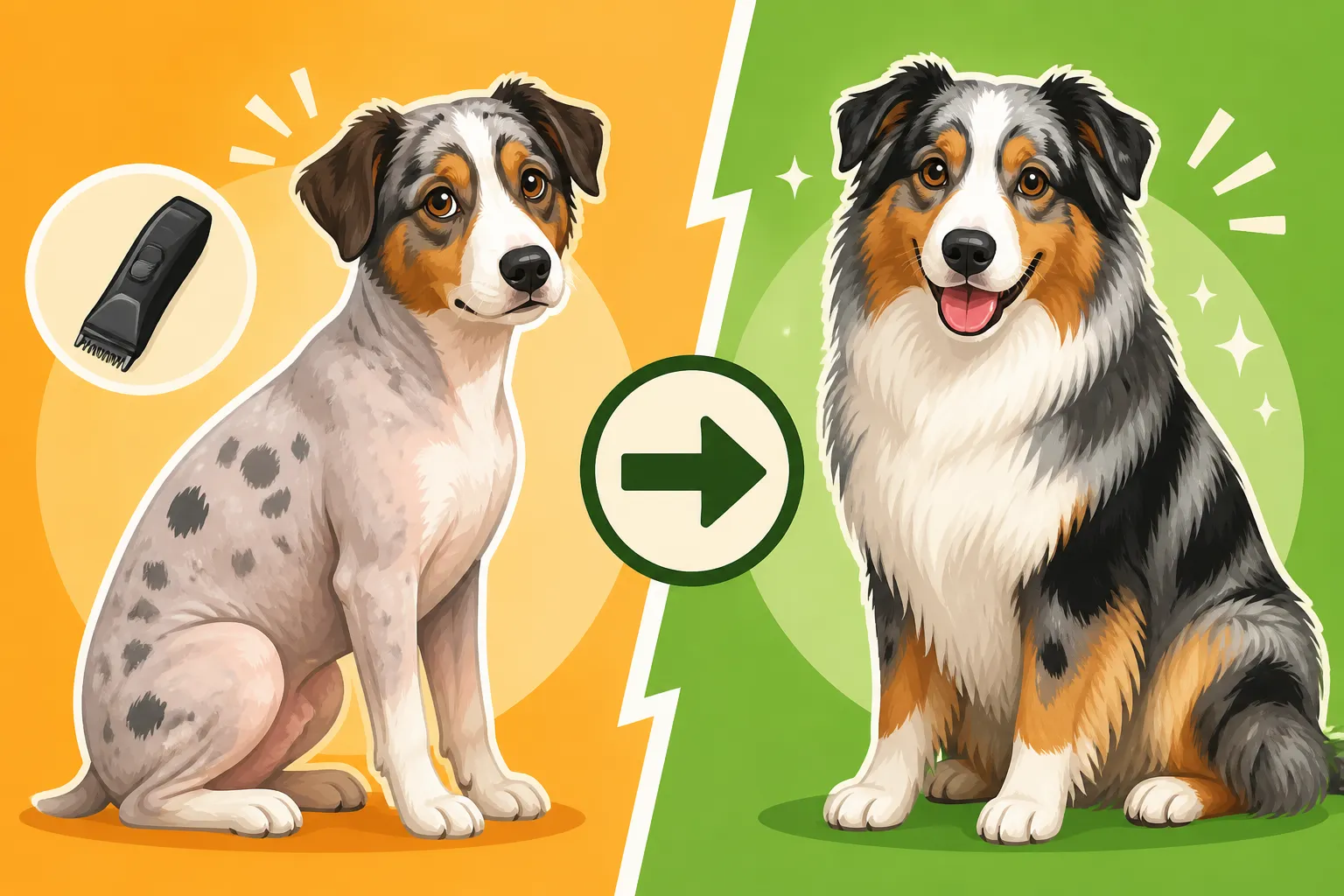
The most common and often devastating result of shaving a double-coated breed like an Australian Shepherd is that the coat simply doesn't grow back "right." What does that mean? For many Aussies, the soft undercoat grows back much faster and thicker than the coarser guard hairs. This leads to an imbalance: a dense, woolly layer without the protective, longer outer coat. This new growth pattern can paradoxically make the dog hotter because the dense, woolly undercoat impedes airflow and can mat quickly and severely right down to the skin. It can also trap heat rather than allowing it to dissipate. The guard hairs, which take much longer to grow back, may come in patchy, sparse, or even fail to grow back at all in some areas, leading to what groomers sometimes call "clipper alopecia" or "coat funk." This condition often leaves the dog with an uneven, unsightly coat that no longer functions as it should.
Increased Risk of Skin Issues and Sunburn
With the protective guard hairs removed, your Aussie’s skin is exposed to direct sunlight, making them highly susceptible to sunburn. Just like human skin, dog skin can burn, leading to pain, redness, peeling, and an increased risk of skin cancer over time. This is especially true for merle Aussies, who often have lighter skin or pink noses and eyelids. Sun exposure can also exacerbate or trigger Nasal Solar Dermatitis on an Aussie Nose. Many owners shave their dogs to make them "cooler," but without that crucial UV protection, the dog is at a higher risk of overheating and heatstroke because their skin is now absorbing direct solar radiation. The loss of the guard hairs also means less protection against insects, scratches, and environmental irritants. If your Aussie has areas of pink skin from their merle patterning, like those found in Whether a Merle Aussie Sunburns More Easily, the risk of severe sunburn and skin damage is even higher.
Matting and Grooming Challenges Post-Shave
It might seem counterintuitive, but a shaved double coat can actually become more prone to matting, or at least different kinds of matting, once it starts to grow back. As mentioned, the undercoat often grows in faster and denser, without the structure and separation provided by the guard hairs. This woolly texture can felt together quickly, forming mats that are even harder to remove than pre-shave mats. These mats, now closer to the skin, can pull, cause pain, and lead to skin infections and irritation. Areas like behind the ears and in the "armpits" become particularly problematic. What started as a desperate attempt to reduce grooming or solve a matting issue can quickly turn into a chronic and frustrating battle with a permanently altered coat texture. Addressing severe matting is better done by a professional groomer who can carefully de-mat or shave only the matted sections if necessary, rather than a full body shave. Knowing about The Mats That Form Behind Aussie Ears highlights the specific challenges.
The Long-Term Consequences of a Damaged Coat
The immediate aftermath of a shave can be disheartening, but the long-term effects on an Australian Shepherd's coat and overall well-being can be even more impactful. It's not just about aesthetics; it's about the functionality and health of their primary protective layer.
Permanent Texture Changes and "Coat Funk"
For some Australian Shepherds, especially older dogs or those with underlying health conditions, the coat may never fully recover its original texture and density. The guard hairs might grow back permanently softer, frizzier, or simply sparse, while the undercoat remains excessively dense and cottony. This irreversible alteration is often referred to as "coat funk" or post-clipping alopecia. It can mean your dog's coat is forever less effective at thermoregulation, more prone to matting, and may not shed properly, making future grooming a constant struggle. This can also leave the dog looking perpetually scruffy or unkempt, a far cry from their natural, flowing beauty. The integrity of their natural Australian Shepherd Skin, Coat and Allergy Problems system can be compromised, leading to chronic irritation.
Compromised Natural Insulation and Protection
A damaged coat means a compromised protective system. In the summer, the dense, matted undercoat that grows back inhibits the natural airflow that usually cools the dog, potentially making them hotter than if they had their intact double coat. In winter, if the guard hairs are sparse, the coat might not be able to shed snow and moisture effectively, leading to a colder, wetter dog, and potentially issues like hypothermia. The natural repellence against dirt, stickers, and burrs is also lost, meaning your adventure-loving Aussie will pick up more debris and require more frequent, intense cleaning. It removes their natural defense against the elements, making them more vulnerable.
| Feature | Intact Double Coat | Shaved Double Coat (Regrowth) |
|---|---|---|
| Thermoregulation | Excellent; insulates against heat and cold. | Poor; can trap heat, less insulation, uneven regrowth. |
| Sun Protection | High; guard hairs shield skin from UV rays. | Low to none; high risk of sunburn and skin cancer. |
| Water Resistance | Good; guard hairs shed water. | Poor; undercoat absorbs water, can lead to skin issues. |
| Protection | Excellent; guards against dirt, burrs, insects. | Poor; skin exposed, more vulnerable to irritants. |
| Matting Tendency | Managed with regular brushing; mats form on shedding. | High; dense, woolly undercoat mats easily and close to skin. |
| Aesthetics | Natural, flowing, distinct color patterns. | Patchy, fuzzy, uneven, often duller colors. |
| Long-Term Health | Supports healthy skin and coat. | Can lead to chronic skin irritation, alopecia, increased vet visits. |
Healthier Alternatives for Managing Your Aussie's Coat and Comfort
Thankfully, there are many effective and safe ways to manage your Australian Shepherd’s coat, keep them cool, and address common grooming challenges without resorting to shaving. These methods work with their natural coat, not against it, ensuring their long-term health and comfort.
Regular Brushing and Deshedding Routines
The absolute best way to manage an Australian Shepherd's coat, especially during heavy shedding cycles (their infamous "coat blow"), is consistent, thorough brushing. This means brushing multiple times a week, and even daily during peak shedding. You'll want to use the right tools: a good quality slicker brush for detangling and removing loose undercoat, and an undercoat rake to reach deep into the layers and pull out dead hair. Line brushing, where you part the coat and brush in sections down to the skin, is crucial to ensure you're getting all the loose undercoat out. This prevents mats from forming and allows air to circulate properly, helping with thermoregulation. You can find excellent deshedding tools on Amazon or Chewy. For a comprehensive guide on maintenance, check out Brushing an Australian Shepherd Twice a Week and information on The Rake That Reaches an Aussie Undercoat.
Professional Grooming for Deep Deshedding and Trims
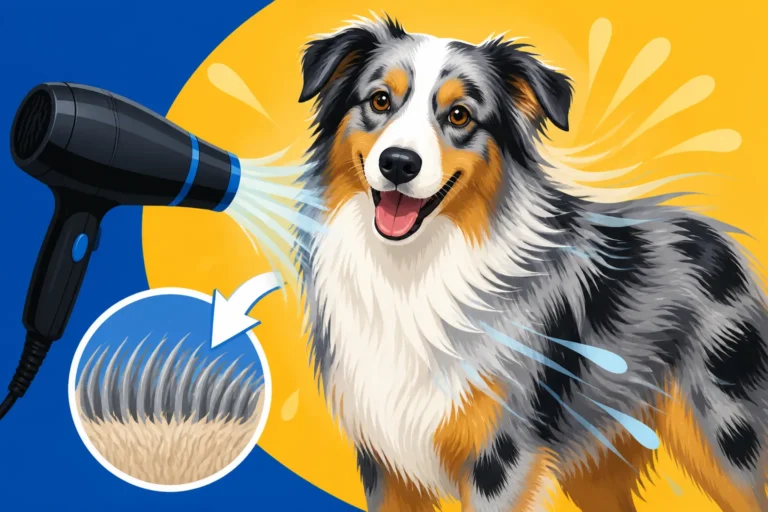
While regular home brushing is essential, a professional groomer who specializes in double-coated breeds can be an invaluable asset. They have high-velocity dryers that can blow out an incredible amount of loose undercoat, which is something most home vacuums and hair dryers simply cannot accomplish. These deep deshedding treatments not only reduce shedding in your home but also ensure the coat is clean and allows for optimal air circulation. Groomers can also perform sanitary trims around the hindquarters and paw pads, which helps with hygiene and prevents matting in those high-friction areas, without ever touching the main body coat. In some cases, light feathering trims are done to keep a neat outline, but these are vastly different from shaving down to the skin. To understand more about what a groomer can do, read about Deshedding Treatments at an Aussie Groomer.
Supporting Coat Health Through Nutrition and Environment
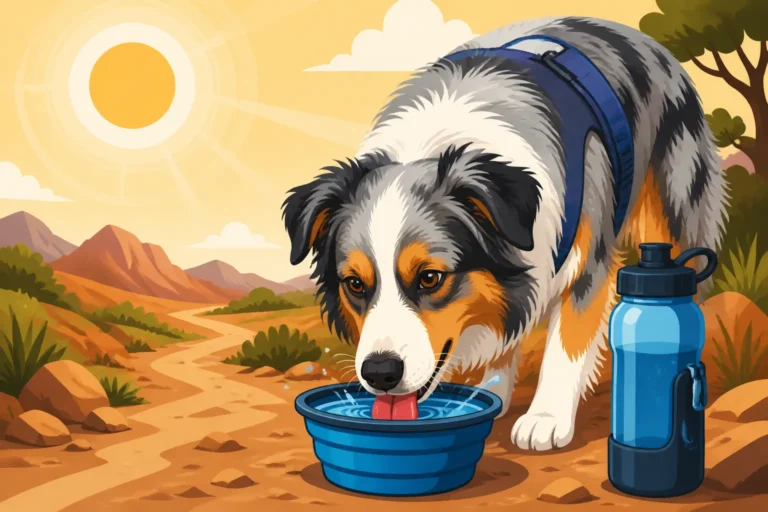
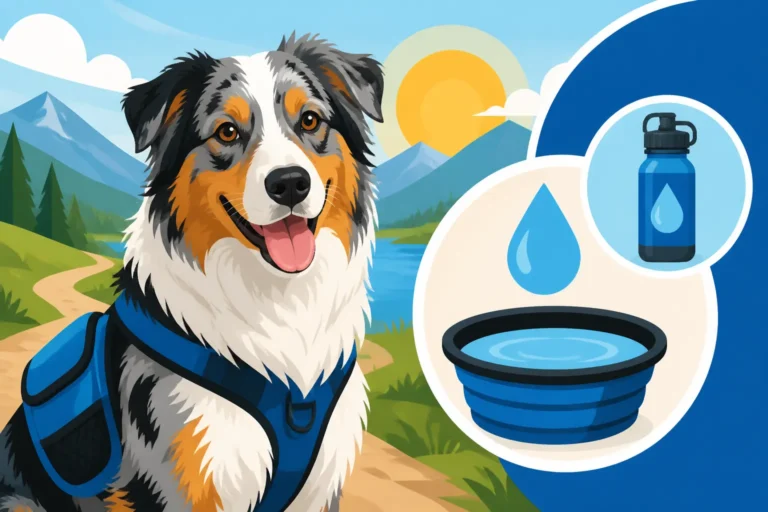
A healthy coat starts from within. Feeding your Australian Shepherd a high-quality, balanced diet rich in omega-3 and omega-6 fatty acids can significantly improve their coat health, making it stronger, shinier, and less prone to excessive shedding and matting. Brands like Ollie offer fresh, human-grade food options that can contribute to overall canine health, including skin and coat condition. Beyond diet, environmental factors play a role. Ensure your Aussie has access to shade and cool water, especially on hot days. Provide cooling mats or elevated beds that allow air circulation underneath. For exercise, consider early morning or late evening walks to avoid the peak heat. For more tips on keeping your dog comfortable in warm weather, refer to Keeping an Australian Shepherd Cool Under a Double Coat.
Disclaimer
This article is for general informational purposes only and does not constitute professional advice. Laws, prices and regulations vary by location and change over time. Consult a qualified professional for guidance on your specific situation.