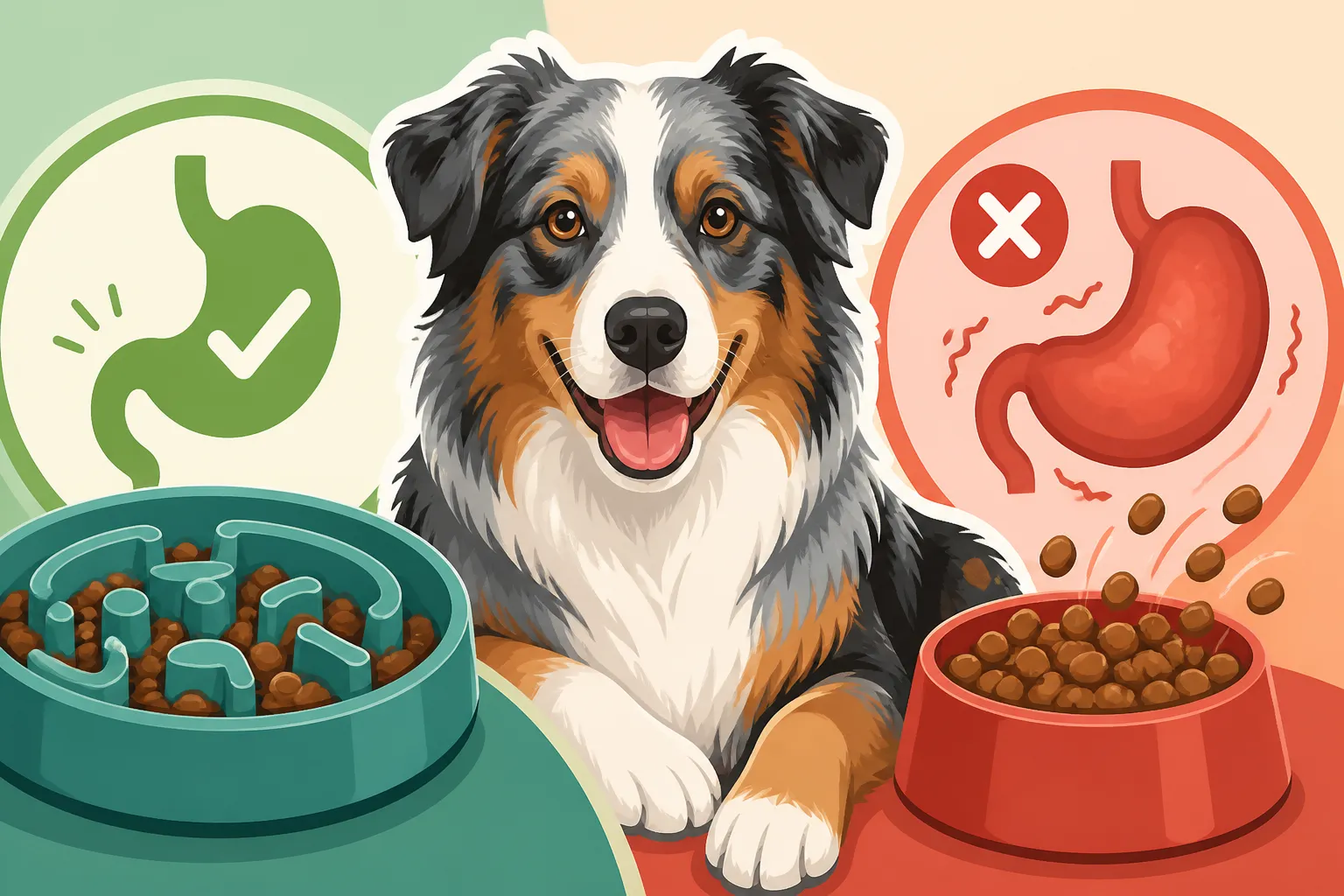
Slow Feeders and Bloat Prevention for an Aussie
The sudden, terrifying onset of bloat, or Gastric Dilatation-Volvulus (GDV), is a deep fear for many Australian Shepherd owners. One of the most common contributing factors to this life-threatening condition is how quickly our beloved Aussies wolf down their meals, gulping air along with their kibble. This guide will walk you through the connection between fast eating and bloat, and explore how slow feeder bowls can be a crucial tool in safeguarding your Aussie’s health, offering peace of mind to anxious owners.
Understanding Gastric Dilatation-Volvulus (GDV)
Gastric Dilatation-Volvulus, or bloat, is not just a simple upset stomach. It's a rapidly progressing, life-threatening condition that can affect any dog, but certain breeds, including our Australian Shepherds, are particularly predisposed due to their anatomy and energetic nature. It’s a terrifying experience for both dog and owner, and understanding what it is and why Aussies are susceptible is the first step in prevention.
What is Gastric Dilatation-Volvulus (GDV)?
At its core, GDV involves two main components: dilatation and volvulus. Dilatation refers to the stomach filling with gas, food, or fluid, causing it to swell to an alarming size. This distension can put immense pressure on other organs, making it difficult for the dog to breathe and affecting blood flow. The "volvulus" part is even more critical and deadly; it means the stomach actually twists on its axis, pinching off both the entry (esophagus) and exit (duodenum). Once twisted, nothing can pass through, and the trapped gas continues to build, leading to a cascade of severe problems, including shock, organ damage, and eventually, death if not treated immediately.
The speed at which this happens is what makes it so terrifying. A dog can go from looking perfectly fine to being in critical condition in a matter of minutes or a few short hours. It's not just discomfort; it's a medical emergency that requires immediate veterinary intervention, often surgical, to untwist the stomach and relieve the pressure.
Why Australian Shepherds Are Susceptible
Australian Shepherds, while not typically considered a giant breed, possess several characteristics that unfortunately make them more susceptible to bloat. Their deep, narrow chests are a significant anatomical factor. Imagine a long, narrow balloon – it's much easier for it to twist on itself when inflated than a wide, round one. This chest conformation provides the perfect environment for a distended stomach to rotate.
Beyond anatomy, the energetic and sometimes anxious temperament of many Aussies can also play a role. Dogs that are prone to stress, or those that eat very rapidly, gulping down their food and a lot of air in the process, increase their risk. Their active lifestyle also means they might be more prone to running and playing shortly after eating, which can be another contributing factor. It’s a cruel twist of fate that the very traits that make them such wonderful, active companions can also increase their vulnerability to such a devastating condition. This is why vigilance and preventative measures, like those discussed in Why an Aussie's Deep Chest Raises Bloat Risk, are so crucial for Aussie owners.
Recognizing the Warning Signs of Bloat
Knowing the signs of bloat is absolutely critical, as early detection can be the difference between life and death. Bloat progresses incredibly fast, so if you suspect it, you need to act immediately.
The most common and noticeable signs include:
- Distended Abdomen: Your Aussie's belly will appear swollen and feel tight, like a drum. This might be more obvious on one side.
- Retching without Vomiting: This is a classic sign. Your dog will try to throw up, strain, and heave, but nothing or very little will come out. They might produce some foamy saliva.
- Restlessness and Pacing: An affected dog will often be visibly uncomfortable, unable to settle, pacing, and looking at their flank.
- Drooling and Excessive Salivation: Due to nausea and discomfort.
- Pain and Discomfort: They may whine, groan, or resist being touched, particularly around their abdomen.
- Weakness and Collapse: As shock sets in, your dog might become weak, stagger, or even collapse. Their gums may appear pale.
If you observe any combination of these symptoms, especially the distended abdomen and unproductive retching, do not wait. Call your emergency vet immediately and head there as fast as possible. Time is of the essence, and swift action dramatically improves the prognosis. For more details on what to watch for, check out Bloat Warning Signs in an Australian Shepherd.
The Role of Fast Eating in Bloat Risk
It's natural to see your Aussie devour their food with gusto, especially after a long day of play or work. However, that enthusiastic gulping can inadvertently put them at a higher risk for bloat. The speed at which food goes down directly impacts how much air goes along with it, and that air is a primary culprit in the initial gastric dilatation phase of GDV.
The Dangers of Gulping Air with Food
When an Australian Shepherd eats at a frantic pace, they aren't just eating food; they're essentially vacuuming it up, along with significant amounts of air. This ingested air quickly accumulates in the stomach. Think of it like blowing up a balloon inside their stomach. The more air they swallow, the faster and larger their stomach distends. This distension is the dilatation part of GDV. While the mere presence of air might not immediately cause the stomach to twist (the volvulus), it creates the ideal conditions for it to do so. A heavily inflated stomach is far more likely to rotate and flip than one that is comfortably full.
This isn't just about the volume of food; it's about the speed. A dog that takes its time, chews, and breathes normally while eating ingests far less air. But an Aussie who inhales their meal in under a minute is setting themselves up for a potential problem, particularly if they then move around a lot shortly after.
Impact of Rapid Eating on Digestion
Beyond the immediate bloat risk, rapid eating can also negatively impact your Aussie's overall digestion. When food is swallowed too quickly, it's often not chewed adequately. Larger pieces of kibble are harder for the stomach to break down efficiently. This can lead to indigestion, gas, and even discomfort. The digestive system relies on a certain rhythm and sequence – salivary enzymes begin the breakdown process, followed by stomach acids and intestinal enzymes. Rushing this process means the digestive tract has to work harder and less effectively.
Over time, chronically fast eating could contribute to a less efficient digestive system, potentially leading to nutrient malabsorption, or simply more gas and stomach upset on a regular basis. It's about more than just the scary acute risk of bloat; it's about fostering healthy, calm eating habits for long-term well-being. If you're wondering about optimal feeding strategies, Feeding an Australian Shepherd That Works All Day offers valuable insights.
The Stress Factor in Fast Eating
Sometimes, fast eating isn't just about pure excitement for food; it can also be a sign of underlying stress or resource guarding. If an Aussie feels competition for their food, even if there are no other pets around, they might eat faster, driven by an instinct to secure their meal before it's "taken away." This can happen in multi-dog households, but even a single dog might develop this habit if they've experienced hunger or competition in the past, or if their environment is generally perceived as stressful during meal times.
The stress itself can affect digestion and increase overall bloat risk. When a dog is stressed, their body's "fight or flight" response is activated, diverting resources away from digestion. This can slow down gastric emptying, allowing food and gas to sit in the stomach for longer, further increasing the risk of distension and twisting. Addressing any underlying anxiety around food, by ensuring a calm, quiet feeding environment, can be just as important as the physical tools you use to slow down their eating.
Introducing Slow Feeder Bowls
Slow feeder bowls have revolutionized mealtime for fast-eating dogs, offering a simple yet incredibly effective way to mitigate bloat risk. These aren't just fancy dog bowls; they are engineered tools designed to make eating a challenge, turning mealtime into a mental exercise rather than a speed contest.
How Mazes and Ridges Work
The core principle behind most slow feeder bowls lies in their ingenious internal design. Instead of a wide, open basin, these bowls feature a series of obstacles – raised ridges, intricate mazes, spirals, or pillars. These aren't there just for aesthetics; they physically block large mouthfuls of food. Your Aussie can't just scoop up a huge gulp of kibble. Instead, they have to navigate their tongue around the obstacles, nudging individual kibble pieces out of the channels.
This forced manipulation means they can only take small bites at a time, drastically slowing down the eating process. By doing so, they naturally ingest less air, reducing the immediate risk of gastric distension. It also encourages them to engage with their food, using their brains and noses to work for each morsel, turning a fast gobble into a more thoughtful, extended meal. This engagement can also contribute to mental enrichment, something all smart Aussies need.
Different Styles of Slow Feeders
The market for slow feeders has expanded considerably, offering a variety of styles to suit different dogs and feeding preferences.
- Classic Maze Bowls: These are probably the most common, featuring simple raised patterns like waves or spirals. Brands like Outward Hound offer popular options found on Chewy and Amazon, with varying levels of complexity. They are generally made of sturdy plastic or ceramic and come in different sizes.
- Labyrinth Bowls: These often have deeper, more intricate channels, requiring more effort to extract the food. They are excellent for truly determined gulpers.
- Puzzle Bowls/Mats: Some slow feeders are more like puzzles, requiring the dog to move sliding parts or lift flaps to reveal food. While more engaging, they might be harder to clean.
- Inverted Bowls: These sometimes have a central dome or a shape that disrupts the bowl's interior, making it harder for the dog to get a full mouth.
When choosing, consider your Aussie's size, how quickly they eat, and whether they tend to chew or just swallow. A bowl that's too easy won't be effective, but one that's too frustrating might lead to them giving up.
Beyond Bowls: Puzzle Feeders and Lick Mats
While slow feeder bowls are fantastic, the concept of slowing down eating extends to other interactive feeding devices that can offer similar benefits and even more mental stimulation.
- Puzzle Feeders: These take the concept of a slow feeder to the next level, requiring dogs to solve a small "puzzle" to release their food. This could involve sliding compartments, rotating discs, or knocking over pieces. These are fantastic for Puzzle Feeders That Slow an Australian Shepherd and provide immense mental enrichment, which is vital for intelligent breeds like Aussies. They ensure that your dog is truly working for their meal, which taps into their natural foraging instincts. Brands like KONG offer various puzzle toys that can be stuffed with wet food or kibble, prolonging mealtime and engaging their minds.
- Lick Mats: While not traditional "slow feeders" for kibble, lick mats are excellent for wet food, yogurt, or peanut butter. They have textured surfaces designed to be licked clean. The repetitive licking action is incredibly calming for dogs and can extend the time it takes to consume a small amount of food or a treat. This can be great for anxious eaters or as a distraction during stressful situations.
- Snuffle Mats: These fabric mats have numerous folds and pockets where you can hide kibble. Your Aussie has to sniff and root around to find each piece, engaging their nose and slowing down their eating significantly. They are soft, washable, and great for both physical and mental stimulation.
Incorporating a variety of these tools can keep mealtime interesting and effective in preventing rapid ingestion of food and air. You might find a great selection of these on sites like Amazon or Chewy, offering different challenges for your clever canine.
| Slow Feeder Type | Primary Mechanism | Best For | Pros | Cons |
|---|---|---|---|---|
| Maze/Ridge Bowl | Internal obstacles (waves, spirals) | General fast eaters | Easy to clean, durable, widely available | Can become too easy for determined dogs |
| Puzzle Feeder | Sliding parts, compartments | Mental stimulation, extreme fast eaters | High mental engagement, very effective | Harder to clean, can be more expensive |
| Lick Mat | Textured surface | Wet food, calming, treats | Calming effect, easy to use with pastes | Not ideal for kibble, limited volume |
| Snuffle Mat | Fabric folds and pockets | Engaging scent work, all food types | High mental engagement, mimics foraging | Requires washing, might not be as durable |
Beyond the Bowl: Other Bloat Prevention Strategies
While slow feeder bowls are a fantastic frontline defense against bloat, they are just one piece of a larger puzzle. A holistic approach to bloat prevention involves careful consideration of several other feeding and lifestyle factors to further safeguard your Australian Shepherd.
Meal Frequency and Timing
How often and when you feed your Aussie can have a significant impact on bloat risk. Instead of one large meal a day, which can put a substantial volume of food and gas into the stomach at once, consider splitting their daily ration into two or even three smaller meals. This reduces the sheer amount of food in the stomach at any given time, making it less prone to distension and twisting.
For instance, if your Aussie eats 3 cups of kibble a day, instead of one large 3-cup meal, try two 1.5-cup meals, one in the morning and one in the evening. Or, if their schedule allows, three 1-cup meals spread throughout the day. This keeps their digestive system working steadily without overwhelming it. For guidance on how to portion, refer to Splitting an Australian Shepherd's Ration Into Two Meals or Daily Calories for a Fifty Pound Australian Shepherd. Consistent feeding times can also help regulate their digestive system and reduce anxiety around meals.
Restricting Exercise Before and After Meals
This is a critical, often overlooked, aspect of bloat prevention. Vigorous activity, especially running, jumping, or rolling, both immediately before and after eating, dramatically increases the risk of bloat. The stomach, especially if full of food and air, can jostle and twist during these movements.
- Before Meals: Avoid strenuous exercise for at least an hour before mealtime. Allow your Aussie to calm down and settle before presenting their food.
- After Meals: This is perhaps even more important. Do not allow your Australian Shepherd to engage in any vigorous activity for at least an hour, preferably two, after eating. This includes intense play, running, agility training, or even long walks. A short, leisurely potty break on a leash is fine, but anything that gets their body vigorously moving should be avoided. This allows the food to settle and begin digesting before any potential agitation. It's about letting gravity and digestion do their work in a calm state. More detailed advice can be found in How Long to Rest an Aussie After a Meal.
Considering Elevated Bowls
The topic of elevated bowls for bloat prevention has been a subject of debate. Historically, it was believed that elevated bowls reduced bloat risk by allowing dogs to eat in a more natural, upright position, supposedly ingesting less air. However, some studies have actually indicated that elevated bowls might increase the risk, particularly in large and giant breeds. The theory is that eating from an elevated position might encourage faster consumption or change the mechanics of swallowing in a way that allows more air to be swallowed.
Given the conflicting information, it's generally safer to feed your Australian Shepherd at ground level. If you currently use an elevated feeder, or are considering one, it's wise to discuss it with your veterinarian, who can provide guidance based on the latest research and your individual dog's health profile. Until there's a clearer consensus that unequivocally supports elevated bowls for bloat prevention, feeding on the floor is often recommended as the safer default.
Hydration and Water Intake
Proper hydration is always important for your Aussie's overall health, and it also plays a subtle role in bloat prevention. Ensuring your dog has access to fresh, clean water throughout the day is paramount. However, there are a couple of considerations around water intake at meal times:
- Avoid excessive water immediately before or after meals: Just like with food, gulping large quantities of water right before or after eating can contribute to a full stomach and potentially increase bloat risk. If your Aussie tends to chug water, consider offering smaller amounts more frequently, rather than a massive bowl all at once, especially around meal times.
- Don't restrict water entirely: It’s crucial not to withhold water. Instead, manage how they drink. If your dog drinks excessively quickly, a slow-water bowl or a bowl with a few clean rocks (too large to swallow) can help them take smaller sips.
- Water during exercise: On long trail days or during intense training, ensuring proper water intake throughout the activity is important, as covered in Australian Shepherd Water Needs on a Long Day Out, but again, avoid chugging huge amounts right before or after a meal.
A well-hydrated dog with consistent, moderate water intake is generally healthier, but it's the manner of drinking around meals that warrants attention for bloat prevention.
Choosing the Right Slow Feeder
With so many options on the market, choosing the perfect slow feeder for your Australian Shepherd can feel a bit overwhelming. It’s not just about picking the prettiest design; it’s about finding one that’s safe, effective, and fits seamlessly into your daily routine.
Material Matters: Plastic, Ceramic, Stainless Steel
The material of your slow feeder bowl is a crucial consideration for both safety and durability.
- Plastic: These are generally the most affordable and widely available. They come in countless designs and colors, offering a lot of variety. When choosing plastic, look for food-grade, BPA-free options. While convenient, plastic can sometimes harbor bacteria if not cleaned thoroughly, and some dogs might chew on them, creating rough edges where bacteria can hide. If your Aussie is a strong chewer, plastic might not be the most durable choice. Brands like Outward Hound, available on Chewy, offer many popular plastic maze bowls.
- Ceramic: Ceramic bowls are heavier and more stable, making them less likely to be pushed around by an enthusiastic eater. They are generally easier to clean than plastic and less prone to scratching. However, ceramic is fragile and can chip or break if dropped. A chipped ceramic bowl can have sharp edges, posing a risk to your dog’s mouth. They also tend to be heavier and more expensive.
- Stainless Steel: Often considered the gold standard for dog bowls, stainless steel is incredibly durable, non-porous (meaning it won't harbor bacteria), and easy to clean. It's resistant to chewing and typically lasts a lifetime. While there might be fewer intricate maze designs compared to plastic, many effective stainless steel slow feeder inserts or bowls are available. They are generally more expensive upfront but offer excellent long-term value and hygiene. If hygiene and durability are your top priorities, stainless steel is an excellent choice, though you might have to search a bit more to find specific designs. You can find robust stainless steel options on Amazon.
Consider your Aussie's chewing habits, how often you want to clean it, and your budget when making your choice.
Design Considerations: Complexity and Size
The effectiveness of a slow feeder largely depends on its design complexity and appropriate sizing for your dog.
- Complexity: For an Aussie who inhales food in seconds, a simple few ridges might not be enough. Look for bowls with more intricate patterns, deeper channels, or higher walls between sections. Some bowls offer adjustable difficulty levels or different inserts. The goal is to make it challenging enough to slow them down without being so frustrating that they give up or become overly anxious. If they manage to finish their meal almost as quickly as before, it’s time to upgrade to a more complex design.
- Size: The bowl must be appropriately sized for your Australian Shepherd. A bowl that's too small for their muzzle will be difficult for them to use comfortably, leading to frustration. Conversely, a bowl that's too large might not challenge them enough, allowing them to still take large gulps. Check product descriptions for recommended dog sizes or capacities (e.g., holds 2-3 cups of kibble). Also, consider the overall footprint if you have limited space. You want your Aussie to be able to comfortably reach all parts of the bowl without straining.
Cleaning and Durability
Let's be realistic: if something is hard to clean, you're less likely to use it consistently. Slow feeder bowls, by their very nature of having nooks and crannies, can be a bit more challenging to clean than a flat bowl.
- Ease of Cleaning: Look for bowls that are dishwasher-safe, which makes life much easier. If hand-washing, ensure the design allows you to reach all crevices to prevent food residue and bacteria buildup. Flexible silicone slow feeders can sometimes be easier to clean than rigid plastic or ceramic with tight corners.
- Durability: An Aussie is an active, sometimes boisterous, breed. Your slow feeder needs to stand up to daily use, potential nudging, and maybe even some minor chewing. Check reviews for comments on product longevity and resistance to damage. A flimsy bowl that cracks easily or has pieces that break off could be a choking hazard or become ineffective quickly. Investing a little more in a durable, well-made slow feeder will save you money and headaches in the long run.
Remember, the best slow feeder is the one your Aussie uses comfortably and effectively, and that you can maintain easily.
Integrating Slow Feeders into Your Routine
Bringing a slow feeder into your Aussie's life should be a smooth transition, not a source of stress. With a little patience and consistency, you can help your dog adapt to this new way of eating and make bloat prevention a seamless part of their daily routine.
Starting Your Aussie on a Slow Feeder
Introducing any new feeding method can sometimes be met with confusion or even suspicion from your dog. Here’s how to make the transition as positive as possible:
- Start Simple: If your Aussie has never used a slow feeder, don't jump straight to the most complex puzzle. Begin with a simpler maze design to allow them to get used to the concept of working for their food.
- Supervise Early Meals: Always supervise your Aussie during their first few meals with a new slow feeder. This allows you to observe how they're interacting with it. Are they frustrated? Are they figuring it out? Do they seem to be chewing on the bowl itself?
- Positive Reinforcement: Make it a positive experience! Praise them when they successfully get food out. You can even scatter a few easy-to-reach pieces on top initially to encourage them.
- No Pressure: If they seem overly frustrated or give up, don't force it. Try a different design or offer some of their food in a regular bowl alongside the slow feeder for a few meals, gradually increasing the proportion in the slow feeder. Most Aussies are smart and food-motivated enough to quickly learn the ropes.
The goal is to make mealtime a pleasant, slightly challenging experience, not a stressful one.
Monitoring for Effectiveness
Once your Australian Shepherd is regularly using a slow feeder, it's important to monitor its effectiveness to ensure it's truly serving its purpose.
- Timing: Time how long it takes your Aussie to finish their meal in the slow feeder compared to a regular bowl. You should see a significant increase in meal duration – aiming for at least 10-15 minutes for a typical meal, rather than 1-2 minutes.
- Behavior During Eating: Observe their behavior. Are they still gulping air, or are they taking more deliberate bites? Do they seem calmer while eating, or are they still frantic?
- Post-Meal Behavior: Are they less gassy or burpy after meals? Do they seem more settled and comfortable?
- Bowl Condition: Regularly check the bowl for any signs of damage or wear, especially if it's plastic, which might indicate they are chewing on it instead of just nudging food.
If you find that the slow feeder isn't slowing them down sufficiently, or if they've "mastered" it too quickly, it might be time to consider a more complex design or switch to a puzzle feeder that requires more mental effort. Remember, the effectiveness can change as your Aussie gets smarter and more adept!
When a Slow Feeder Isn't Enough
While slow feeders are an excellent tool, they are not a foolproof solution for every dog or every bloat risk. There might be situations where a slow feeder alone isn't sufficient, or where additional measures are necessary.
- Extreme Cases: For Aussies with extremely high bloat risk (e.g., those with a history of bloat in close relatives, or those exhibiting multiple risk factors), a slow feeder is a good start, but other preventative measures become even more critical.
- Gastropexy: In some cases, particularly for high-risk breeds or individuals, a veterinary procedure called a gastropexy might be recommended. This surgical procedure permanently attaches the stomach to the abdominal wall, preventing it from twisting. While it doesn't prevent the stomach from dilating (filling with gas), it can prevent the fatal volvulus. This is a significant decision and one that should be discussed thoroughly with your veterinarian. For more on this, see Whether an Australian Shepherd Needs a Gastropexy.
- Underlying Health Issues: If your Aussie continues to experience excessive gas, indigestion, or other gastrointestinal issues even with a slow feeder, it’s crucial to consult your vet. There could be underlying health conditions or food sensitivities contributing to their discomfort. For example, some Aussies might have issues with certain ingredients in their food, leading to more gas or digestive upset, as explored in Food Allergy Itching in an Australian Shepherd.
- Anxiety and Stress: If fast eating is linked to severe anxiety or resource guarding, addressing these behavioral issues with a certified professional dog trainer or veterinary behaviorist might be necessary in addition to using a slow feeder.
Slow feeders are a powerful tool in your preventative arsenal, but they work best as part of a comprehensive strategy that includes careful management, observation, and open communication with your veterinarian.
Disclaimer
This article is for general informational purposes only and does not constitute professional advice. Laws, prices and regulations vary by location and change over time. Consult a qualified professional for guidance on your specific situation.