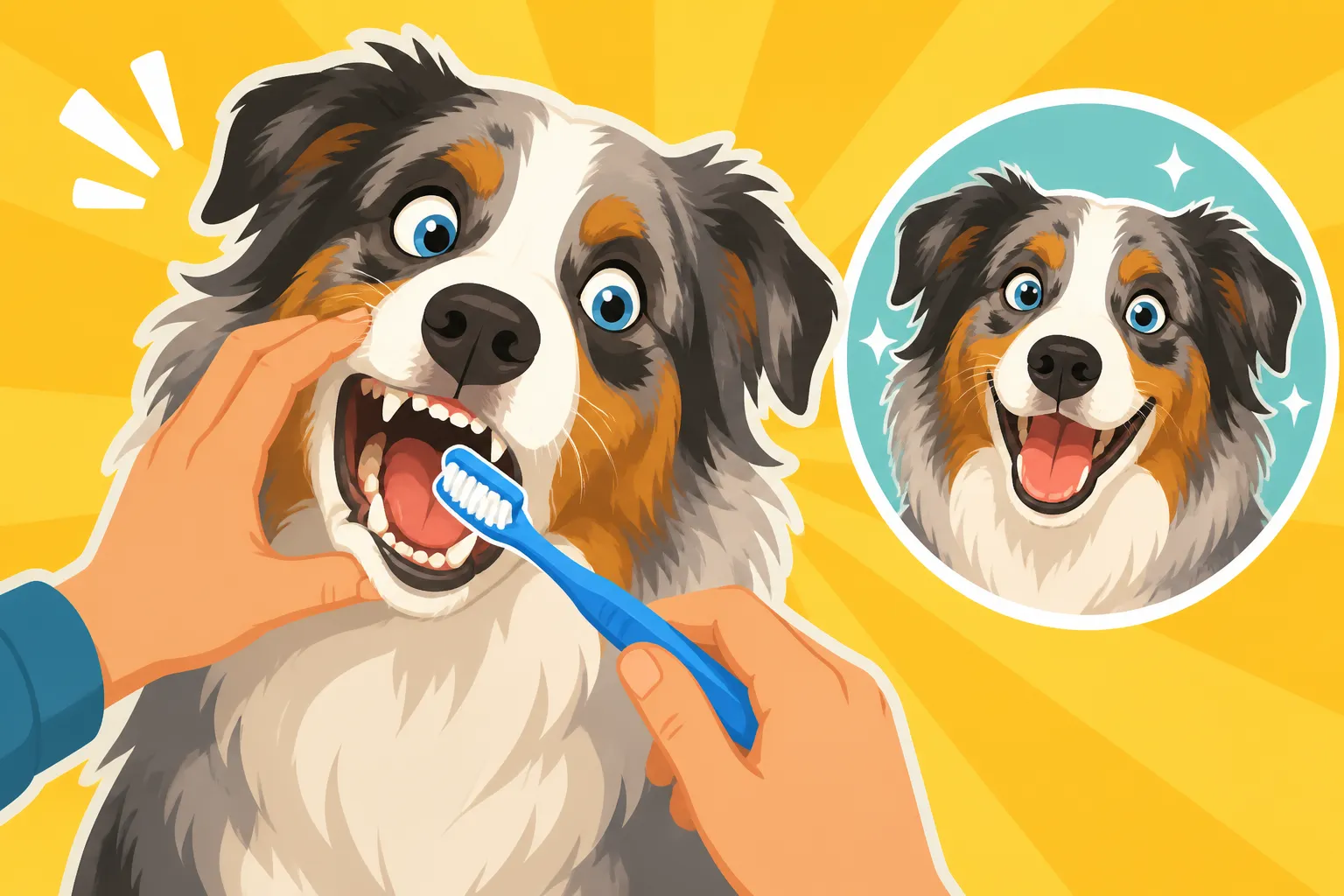
Getting a Toothbrush Into an Aussie Mouth
Many Australian Shepherd owners find themselves in a wrestling match just trying to get a glimpse inside their dog's mouth, let alone brush their teeth. It's a common frustration: you know dental hygiene is crucial, but your smart, sensitive Aussie seems to view a toothbrush as a personal affront. This guide is here to walk you through how to transform that struggle into a manageable, even positive, routine, ensuring your loyal companion maintains a healthy smile for years to come.
Why Dental Care is Such a Big Deal for Your Aussie
It’s easy to think of brushing your dog’s teeth as a nice-to-have, an extra step if you have the time and patience. But with an Australian Shepherd, or any dog really, regular dental care is absolutely non-negotiable for their long-term health and comfort. Neglecting those pearly whites can lead to a cascade of problems that go far beyond just bad breath.
More Than Just Bad Breath: The Health Risks
When plaque and tartar build up on your Aussie's teeth, it's not just an aesthetic issue. That furry coating is a breeding ground for bacteria. These bacteria don't just stay in the mouth; they can, and often do, enter the bloodstream, traveling to major organs like the heart, kidneys, and liver. This systemic spread of infection can contribute to serious health conditions, including heart disease, kidney disease, and even make other existing conditions like Australian Shepherd Autoimmune Disease more challenging to manage.
Imagine the discomfort. A severe dental infection can cause immense pain, making it difficult for your dog to eat, play, or even enjoy a gentle pat on the muzzle. Dogs are masters at hiding pain, a trait left over from their wild ancestors who couldn't show weakness. So, by the time you notice overt signs like dropping food or pawing at their mouth, the problem is often quite advanced. We're talking about chronic pain that chips away at their quality of life, silently impacting every single day. Regular brushing helps prevent this silent suffering, allowing you to catch issues early and maintain their overall well-being. Keeping up with dental hygiene is a proactive step in preventing significant health issues that can lead to major vet bills and heartache down the road.
The Aussie's Unique Mouth Challenges
Australian Shepherds, with their active lifestyles and often high-drive personalities, might present some specific challenges when it comes to dental care. While they don't have particular breed-specific dental diseases in the same way some breeds have, their general mouth structure and habits can predispose them to certain issues. Their powerful jaws, designed for herding and holding, mean they can be incredibly strong chewers. While chewing is good for dental health, some Aussies can be destructive chewers, damaging their teeth on inappropriate objects or fracturing molars on very hard chews.
Furthermore, their energetic nature means they're often outside, interacting with the environment. They might pick up sticks or other debris that can cause gum irritation or chips in their teeth. And let's be honest, getting a high-energy Aussie to stand still for a few minutes while you poke around their mouth can feel like trying to herd cats – a task they'd probably be better at than us! Their intelligence and sensitivity, while wonderful traits, can also mean they remember unpleasant experiences vividly, making subsequent attempts at dental care even harder. It’s important to approach them with patience and positive reinforcement, understanding that their initial reluctance isn’t defiance, but often a natural canine instinct or a learned aversion.
Gearing Up for Brushing Success: The Right Tools
Before you even think about introducing a toothbrush to your Aussie's mouth, you need to make sure you have the right equipment. Using human toothpaste or a brush that's too harsh can do more harm than good, so let’s talk about what you actually need to set yourself up for success.
Choosing the Right Toothbrush
This isn't a one-size-fits-all situation, especially when you're trying to ease your Aussie into a new routine. There are a few options, and you might need to try a couple to see what your dog tolerates best.
- Finger Brushes: These are small silicone brushes that slip over your finger. They're excellent for starting out because they allow you to maintain direct contact and control, which can be less intimidating for a dog. The soft nubs are gentle on gums. However, they don't offer the deep cleaning that a bristle brush does, and once your Aussie gets used to it, you'll likely want to upgrade. Think of them as training wheels.
- Long-Handled Pet Toothbrushes: These look more like human toothbrushes but are designed with specific angles and softer bristles for a dog’s mouth. Many have dual heads – a larger one for molars and a smaller one for incisors and canines. Brands like Virbac C.E.T. offer these, and you can usually find them easily on platforms like Amazon or Chewy. The longer handle helps you reach the back teeth without having to get your hand too far into their mouth, which many dogs appreciate.
- Electric Toothbrushes for Dogs: Yes, they exist! These can be incredibly effective for some dogs, offering a deeper clean with less effort on your part. However, the vibration and noise can be a significant hurdle for sensitive Aussies. If you go this route, introduce it very slowly, letting them investigate the brush while it's off, then on, rewarding calm behavior at every step. This isn't usually a starting point, but rather an advanced tool for a dog already comfortable with manual brushing.
The key is finding a brush that allows you to comfortably reach all surfaces of the teeth without causing discomfort. Always choose soft bristles to protect their gums.
Finding Toothpaste Your Aussie Will Love (or Tolerate)
This is perhaps the most critical component when it comes to palatability. Never, ever use human toothpaste on your dog. Human toothpaste often contains xylitol, an artificial sweetener that is highly toxic to dogs, or fluoride, which can cause stomach upset if swallowed (and your dog will swallow it).
Dog-specific toothpastes are formulated to be safe for ingestion and come in flavors that appeal to canines, like poultry, beef, peanut butter, or even vanilla mint. They are often enzymatic, meaning they contain enzymes that help break down plaque even with minimal brushing action.
- Enzymatic Toothpastes: Brands like Virbac C.E.T. or Petrodex are widely available and well-regarded. The enzymes in these pastes continue to work even after you've finished brushing, providing an extra layer of protection.
- Flavor Matters: You might need to experiment with a few flavors. What one Aussie loves, another might turn their nose up at. Start with a small tube of a popular flavor, like poultry, and see how it goes. Some dogs love the taste so much they view brushing as a treat! This is where you might find different options on Chewy or even specialized pet stores.
- Desensitizing to the Taste: Even if they like the flavor, they might be wary of the texture or the idea of something being in their mouth. Start by letting them lick a tiny bit of paste off your finger. Make it a positive experience, a yummy reward.
Finding the right toothpaste is half the battle won. If your Aussie enjoys the taste, they'll be much more cooperative with the brushing process itself.
Beyond the Brush: Supplementary Dental Aids
While brushing is the gold standard for dental care, supplementary aids can certainly help, especially if you're still working on getting your Aussie fully comfortable with the toothbrush. These are not replacements for brushing, but they can support oral hygiene.
- Dental Chews: Look for chews that are specifically designed to help reduce plaque and tartar. Brands like Greenies or dental sticks from Pedigree can be effective. The texture and shape are designed to scrape the tooth surface as your dog chews. Be mindful of ingredients if your Aussie has allergies, and always choose a size appropriate for their weight to prevent choking. You can find a vast selection on Amazon, often with customer reviews that can guide your choice.
- Water Additives: These are liquid solutions that you add to your dog’s drinking water. They contain ingredients designed to reduce bacteria in the mouth and freshen breath. They’re incredibly easy to use – just pour the recommended amount into their bowl. However, their effectiveness can vary, and some dogs might notice a slight change in water taste, leading them to drink less. Always introduce gradually.
- Dental Wipes: Similar to finger brushes, these are textured pads that fit over your finger, pre-soaked with dental cleaning solution. They’re great for a quick wipe-down of teeth and gums, especially the front teeth, and can be a good stepping stone towards a brush.
- Dental Diets: Some kibble formulations are specifically designed to clean teeth as your dog crunches them. These kibbles are often larger and have a fibrous texture that scrubs the tooth surface. Talk to your vet about whether a prescription dental diet, like those from Hill's Prescription Diet or Royal Canin, might be beneficial for your Aussie’s specific needs, especially if they are prone to significant tartar buildup. A fresh food service like Ollie might also offer specific dental-friendly recipes, but it's important to check their nutritional balance to ensure it meets your Aussie's overall needs.
Remember, none of these should completely replace brushing. Think of them as part of a multi-faceted approach to your Aussie’s oral health, working in conjunction with regular brushing and professional veterinary dental check-ups. It's about building a comprehensive routine that works for both you and your dog.
| Dental Tool | Primary Benefit | Best Use Case | Considerations |
|---|---|---|---|
| Finger Brush | Gentle introduction, direct feel | Beginners, sensitive dogs | Less effective for deep cleaning, temporary solution |
| Long-Handled Toothbrush | Effective cleaning, good reach | Established brushing routine | Can be intimidating initially, requires cooperation |
| Electric Toothbrush | Deep cleaning, reduced effort | Advanced users, specific dental needs | Noise/vibration can be a deterrent, slower introduction |
| Enzymatic Toothpaste | Breaks down plaque, safe to swallow | All brushing routines | Flavor preference varies, never use human toothpaste |
| Dental Chews | Plaque reduction, satisfies urge to chew | Supplementary, between brushes, reward | Monitor for choking, check ingredients, not a substitute |
| Water Additives | Reduces bacteria, freshens breath | Easy daily support | Variable effectiveness, some dogs dislike taste |
| Dental Wipes | Quick clean, gum massage | Quick touch-ups, initial desensitization | Less thorough than brushing |
The Step-by-Step Approach: Training for Toothbrush Acceptance
You wouldn't just grab a nervous child and shove a toothbrush in their mouth, right? The same gentle, patient approach is crucial for your Australian Shepherd. Building positive associations is the entire foundation of successful dental care for an Aussie. It’s a marathon, not a sprint, and every small positive step builds confidence.
Starting Slow: Desensitization is Key
The goal here is to make your Aussie comfortable with you handling their mouth, seeing the toothpaste, and eventually having something touch their teeth. This process can take days, weeks, or even longer, depending on your dog's personality and past experiences. Patience is your superpower.
- Muzzle Handling: Start by simply touching your Aussie’s muzzle gently. Do this when they are relaxed, perhaps while cuddling on the couch. Stroke their head, move to their cheeks, then their muzzle. If they tolerate it, immediately offer a high-value treat and praise. Repeat this many times throughout the day, every day, for a few days until they actively lean into your touch.
- Lifting Lips: Once they're okay with muzzle touches, gently try to lift their upper lip for just a second to expose a tooth or two. Again, treat and praise immediately. Don't push it. If they pull away, go back to just touching the muzzle. The idea is to keep it positive and brief. Gradually extend the time you hold their lip up.
- Introducing Toothpaste on Your Finger: Put a tiny, pea-sized dab of dog toothpaste on your finger. Let your Aussie sniff it. Then, let them lick it off your finger. Most dog toothpastes are flavored, so this should be a pleasant experience. Reward them lavishly for licking it. Once they enjoy this, try to gently rub a tiny bit of paste on one of their canine teeth or a front tooth with your finger. Just a quick dab and then treat and praise. This familiarizes them with the taste and sensation without the brush. This step is a fantastic way to introduce the "product" before the "tool." You want them to associate the taste of the toothpaste with good things, making the entire experience less daunting. Treat Costs for Daily Aussie Training can become an investment in their dental health at this stage.
Remember to keep these sessions incredibly short – literally just a few seconds at first. Always end on a positive note, even if you only achieved a tiny step. If your Aussie shows any signs of stress – yawning, licking lips excessively, turning their head away, or tensing up – stop, take a break, and try again later with an easier step. Forcing them will only create a negative association and make future attempts harder.
Introducing the Brush: Gentle and Positive Reinforcement
Once your Aussie is happy with you touching their mouth and loves the taste of the toothpaste off your finger, it’s time to bring in the actual toothbrush.
- Let Them Investigate: First, let them sniff and investigate the toothbrush. You might even put a tiny bit of toothpaste on it and let them lick it off. The goal is to make the brush itself a non-threatening object, or even a source of tasty treats.
- Gentle Introduction to Teeth: With toothpaste on the brush, gently lift your Aussie’s lip and quickly touch the brush to just one or two teeth, ideally the canines or front incisors. Just a quick touch, then remove, treat, and praise. This is not about brushing yet; it's about acceptance.
- Short Brushing Sessions: Over several days, gradually increase the duration and number of teeth you brush. Aim for circular motions on the outside surfaces of the teeth first, as these are where plaque tends to accumulate most. You don't need to scrub hard – gentle pressure is sufficient. Focus on a small section of teeth, praise, treat, then try another. Many Aussies are more tolerant of having their back teeth brushed first, as it's less direct.
- Target the Gum Line: The most crucial area to brush is the gum line, where the teeth meet the gums. This is where plaque accumulates and leads to gingivitis. Angle the brush bristles at about a 45-degree angle towards the gum line.
- Work Towards All Surfaces: Eventually, you’ll want to brush all surfaces, but don’t worry about the inside surfaces too much at first. Your dog’s tongue does a decent job of cleaning the inside, and most periodontal disease starts on the outside surfaces.
Always use a calm, reassuring voice. Keep sessions positive, brief, and consistent. If you only manage to brush a few teeth before your Aussie gets antsy, that's perfectly fine. You're building a foundation. Gradually, those few teeth will turn into a full mouth. This methodical approach will prevent your intelligent Aussie from developing a fear of the toothbrush, allowing you to incorporate this essential care into their life.
Making it a Routine: Consistency is Critical
The best dental care routine is one that happens regularly. Daily brushing is ideal, much like it is for humans. If daily isn't feasible, aiming for every other day is a good compromise. Less frequent than that significantly reduces the effectiveness.
- Choose a Consistent Time: Dogs thrive on routine. Pick a time of day when both you and your Aussie are relaxed – perhaps after their morning walk, or in the evening before quiet time.
- Create a Calm Environment: Choose a quiet spot where you won't be interrupted. Avoid high-traffic areas or times when there's a lot of activity in the house. This helps your Aussie focus and feel secure.
- Integrate into Daily Life: Think of brushing as just another part of their daily care, like feeding them or taking them out to potty. It becomes less of a "thing" and more of a normal occurrence.
- The Power of Repetition: The more consistently you do it, the more accustomed your Aussie will become. It moves from being a strange, new experience to a predictable part of their day that comes with yummy toothpaste and praise.
- Don't Give Up on Bad Days: There will be days when your Aussie is just not in the mood. Don't force it. Do a quick lick of toothpaste off your finger, or a quick wipe with a dental wipe, and then try again tomorrow. The worst thing you can do is make it a battle. Consistency over perfection is the motto here. You're aiming for long-term habits, not a single perfect session. This consistency is directly linked to preventing serious issues that might require Australian Shepherd Dental Tartar and Cleanings under anesthesia more frequently.
By following these steps with patience and positive reinforcement, you can gradually teach your Australian Shepherd that dental care is nothing to fear and can even be a pleasant part of their daily routine.
Common Roadblocks and How to Overcome Them
Even with the best intentions and all the right tools, you might hit some snags when trying to brush your Aussie’s teeth. It’s totally normal! Every dog is an individual, and some will be more resistant than others. The key is understanding why they might be resisting and finding alternative strategies.
Dealing with Resistance and Anxiety
If your Aussie is showing clear signs of resistance – pulling away, growling, snapping, or just generally making themselves stiff and uncomfortable – it's crucial to address the underlying anxiety rather than trying to force the issue. Forcing can break trust and make things much worse.
- Identify the Trigger: Is it the brush itself? The taste of the toothpaste? The way you're holding them? The position you're in? Try to isolate what causes their reaction. Sometimes, simply changing your approach, like sitting on the floor with them instead of standing over them, can make a difference.
- Go Back to Basics: If you're experiencing resistance, revert to an earlier, easier step in the desensitization process. For example, if they're growling at the brush, go back to just handling their muzzle and offering toothpaste from your finger. Rebuild the positive association from there.
- Force-Free Methods: Always prioritize positive reinforcement. Never scold or punish your dog for being fearful or resistant. That will only heighten their anxiety. Use high-value treats that your Aussie absolutely loves – cooked chicken, cheese, peanut butter (xylitol-free!), or a bit of fresh food like Ollie might offer. The goal is to create such a strong positive association with the rewards that they tolerate the brief discomfort for the delicious payoff.
- Shorten Sessions Even More: If you were trying for 30 seconds, try for 5 seconds. If you were trying for 5 seconds, try for 1 second. The goal is to end the session before they show signs of distress, ensuring every experience is positive.
- Professional Guidance: If you're really struggling, consider enlisting the help of a certified professional dog trainer or a veterinary behaviorist. They can observe your interactions, identify specific triggers, and provide tailored, force-free strategies to help your Aussie overcome their anxieties. This can be especially helpful if you have a sensitive Aussie who might be prone to general reactivity or fear.
Remember, a little progress every day is better than a big fight once a week. You want your Aussie to choose to cooperate, not to be coerced.
When Your Aussie Just Won't Cooperate
Sometimes, despite your best efforts, some Aussies simply will not tolerate a toothbrush. This can be disheartening, but it doesn’t mean their dental health is doomed. There are still options.
- Focus on the Auxiliaries: Double down on the supplementary dental aids we discussed earlier. This includes dental chews, water additives, and dental diets. While not as effective as brushing, they are significantly better than doing nothing at all. Make sure to choose vet-approved products, like those recommended by the Veterinary Oral Health Council (VOHC), which guarantees they meet specific standards for plaque and tartar reduction. You can usually find these products on Chewy or at your local pet supply store.
- Dental Wipes as Your Main Tool: If a brush is completely out, can you use dental wipes? These are often less intimidating than a brush and can still remove some plaque and stimulate gums. It's not a full brush, but it's a good step for maintenance.
- Frequent Professional Cleanings: If home care is truly impossible, your veterinarian will be your best friend. This might mean more frequent professional dental cleanings under anesthesia. While this comes with its own considerations (like costs and anesthetic risks), it's sometimes the only way to maintain proper oral health for some dogs. You'll want to discuss this thoroughly with your vet, especially considering potential Australian Shepherd Vet Bills Between $15,000 and $40,000 over their lifetime, where dental procedures can add up.
The important thing is not to give up on their dental health altogether. Even if you can't achieve daily brushing, finding a routine that works, even if it's alternative methods, is crucial.
Recognizing Signs of Dental Pain
Because dogs are so good at hiding pain, you need to be observant to catch the subtle cues that might indicate dental issues. If your Aussie is resistant to mouth handling, it could be due to pain, not just stubbornness.
Here are some signs to look out for:
- Bad Breath (Halitosis): While "dog breath" is often accepted, truly foul breath is not normal and is usually a sign of infection or significant bacteria buildup. This is often the first, most obvious sign that something is amiss. A truly healthy mouth has relatively neutral breath, or at least not something that clears a room! What an Aussie's Breath Says About Its Teeth can tell you a lot about their oral health.
- Changes in Eating Habits: Reluctance to eat hard kibble, dropping food, chewing on only one side of their mouth, or preferring softer foods can all be indicators of mouth pain. They might be hungry but the act of chewing is too painful.
- Paw at the Mouth or Face Rubbing: If your Aussie is frequently pawing at their mouth, rubbing their face on the carpet or furniture, or rubbing their cheek against your leg more than usual, they might be trying to alleviate discomfort.
- Drooling: Excessive drooling, especially if it's bloody or stringy, can be a sign of severe gum disease, abscesses, or other painful oral conditions.
- Visible Swelling or Bleeding: Swelling around the jaw, under the eyes (which can indicate a tooth root abscess), or visible bleeding from the gums are serious signs that require immediate veterinary attention.
- Personality Changes: A dog in chronic pain might become withdrawn, less playful, or even irritable and prone to snapping. If your usually sweet Aussie suddenly acts grumpily when you approach their head, pain could be the culprit.
- Tartar Buildup: While not a direct sign of pain necessarily, visible yellow or brown tartar on the teeth, especially near the gum line, is a clear indicator of dental disease progression and warrants a vet visit.
If you notice any of these signs, don't delay – schedule an appointment with your veterinarian. They can perform an oral exam and determine the best course of action, which may include a professional cleaning or other dental procedures. Early detection is key to preventing further complications and relieving your Aussie's discomfort.
Professional Dental Care: When Your Vet Steps In
Even with the most diligent home brushing routine, professional veterinary dental care is an essential part of your Australian Shepherd's overall health strategy. Think of it like your own dental check-ups – you brush daily, but you still see the dentist for a deeper clean and check-up. For Aussies, it's even more critical because they can't tell us when something hurts.
The Importance of Regular Vet Check-ups
Your annual (or sometimes bi-annual for older dogs or those prone to dental issues, like in Senior Australian Shepherd Care After Ten) veterinary check-up should always include a thorough oral examination. During this exam, your vet will visually inspect your Aussie's teeth and gums for signs of plaque and tartar buildup, gingivitis (gum inflammation), broken or loose teeth, abnormal growths, and any other indicators of oral disease.
What they can see in a conscious exam, however, is limited. They can only check the visible surfaces of the teeth and the front of the mouth. The most problematic areas, like under the gum line where periodontal disease truly takes hold, require more in-depth examination, often under anesthesia. Even so, these regular check-ups are crucial for catching early signs and deciding when a professional cleaning is warranted. Your vet can give you specific recommendations tailored to your Aussie's age, breed, and overall health status. This regular oversight is part of The Health Tests Every Australian Shepherd Parent Needs to ensure a long, healthy life.
Understanding Anesthetic Dental Cleanings
When your vet recommends a professional dental cleaning, it almost always means the procedure will be performed under general anesthesia. This isn't just because dogs are uncooperative; it's because a thorough, safe, and effective dental cleaning requires it.
Here's why anesthesia is necessary:
- Comprehensive Examination: Under anesthesia, your vet can perform a complete oral exam, including probing gum pockets, checking every tooth surface (inside and out), and taking full-mouth dental X-rays. X-rays are vital because much of dental disease, like bone loss, root abscesses, and impacted teeth, happens below the gum line where it's invisible to the naked eye.
- Thorough Scaling and Polishing: Specialized ultrasonic and hand instruments are used to meticulously remove plaque and tartar from above and, most importantly, below the gum line. This subgingival cleaning is impossible to do on a conscious animal and is the key to preventing and treating periodontal disease. After scaling, teeth are polished to smooth out any microscopic etches, making it harder for new plaque to adhere.
- Safety and Pain Control: Anesthesia allows the procedure to be performed without pain or stress to your dog. It also ensures they remain perfectly still, preventing injury to themselves or the veterinary staff from sharp instruments. Modern veterinary anesthesia protocols include pre-anesthetic blood work to assess organ function, IV fluids for blood pressure support, and continuous monitoring of vital signs (heart rate, breathing, oxygen saturation, temperature) by a dedicated veterinary technician. Pain management is also a critical component, with pain medication given before, during, and after the procedure.
- Extractions and Other Procedures: If severe dental disease is found (like deeply infected teeth, fractured teeth, or teeth with significant bone loss), extractions or other procedures can be performed during the same anesthetic event, minimizing the number of times your Aussie needs to go under.
While the thought of anesthesia can be worrying for any pet owner, for the vast majority of healthy dogs, the benefits of a professional dental cleaning far outweigh the minimal risks, especially given the serious health consequences of untreated dental disease. Discuss any concerns you have with your vet, who can walk you through their specific protocols and answer all your questions. This is an investment in your Aussie's overall health, similar to investing in high-quality food or proper exercise like Feeding an Australian Shepherd That Works All Day.
Post-Procedure Care and Maintaining Oral Health
After a professional dental cleaning, your Aussie might be a little groggy, but they'll often feel much better, especially if they had painful teeth extracted. Your vet will provide specific post-operative instructions, which might include:
- Soft Food: Offering soft food for a few days, particularly if extractions were performed, to allow the gums to heal.
- Pain Medication and Antibiotics: Administering any prescribed pain relief or antibiotics to manage discomfort and prevent infection.
- Rest: Ensuring your Aussie has a quiet, comfortable place to recover.
Once they've recovered, it's crucial to restart or intensify your home dental care routine. A professional cleaning essentially gives you a "clean slate," but it's up to you to maintain it. Without consistent daily or every-other-day brushing, plaque and tartar will begin to accumulate again fairly quickly.
This is your opportunity to build those strong habits we discussed. With their mouth feeling much better, your Aussie might even be more receptive to the toothbrush. Continue using positive reinforcement, high-value treats, and patience. Regular brushing, combined with dental chews and a proper diet, can significantly extend the time between professional cleanings, saving you money and minimizing the need for anesthesia. Think of it as a long-term strategy for their well-being; the initial investment in training and tools pays off in years of better health for your beloved Australian Shepherd.
Disclaimer
This article is for general informational purposes only and does not constitute professional advice. Laws, prices and regulations vary by location and change over time. Consult a qualified professional for guidance on your specific situation.