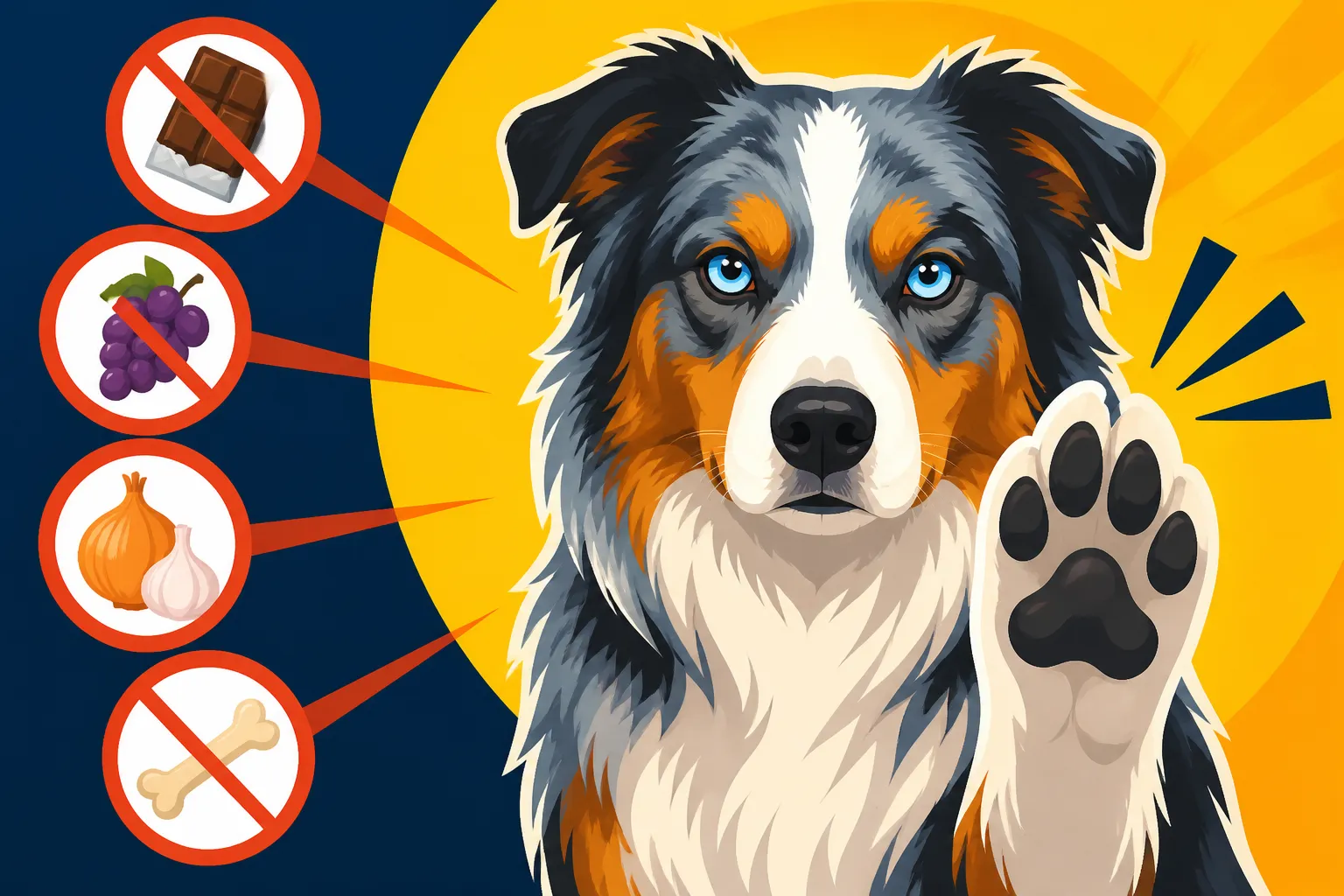
What to Keep Away From an Aussie
It feels like you need to have eyes in the back of your head sometimes, doesn't it? Australian Shepherds are famously intelligent and endlessly curious, which, while endearing, often means they're masters at finding trouble where you least expect it. Whether it's counter-surfing for a dropped snack, investigating a suspicious bottle under the sink, or deciding that a thorny rose bush looks like an exciting new chew toy, keeping an Aussie safe can feel like a full-time job. This guide is here to walk you through the myriad of household and outdoor hazards that could harm your beloved herding dog, providing detailed insights into what to keep away from your Australian Shepherd to ensure their well-being and peace of mind for you.
Foods That Are Absolute No-Gos for Your Aussie
Let's face it, our kitchens are full of delicious human treats, and our Aussies, with their keen noses and even keener intelligence, often know it. It’s not just about stopping them from getting a rogue crumb; some everyday foods are downright poisonous to dogs, even in small amounts. The trick is not just knowing what they are, but understanding why they're dangerous and how easily your clever Aussie might get into them. Every Australian Shepherd owner should have a mental checklist of these culinary landmines, because a moment of inattention can lead to a trip to the emergency vet.
Chocolate, Caffeine, and Xylitol: The Deadly Trio
These three are probably the most commonly known dangers, but their insidious nature is worth repeating. Chocolate and caffeine, found in everything from your morning coffee to your late-night dark chocolate bar, contain methylxanthines. For an Australian Shepherd, even a small amount can cause vomiting, diarrhea, tremors, seizures, and in severe cases, death. Dark chocolate and baking chocolate are particularly potent. Imagine your Aussie, quick as a flash, snatching a dropped piece of your holiday brownie. It might seem like a small bite, but depending on the cocoa content and your dog's size, it could be a significant dose. You need to be vigilant about securing all chocolate, even seemingly innocuous items like hot cocoa mix or chocolate-covered espresso beans.
Then there's xylitol, a sugar substitute that's gaining popularity in human products. It's a silent killer for dogs. Xylitol causes a rapid release of insulin, leading to a dangerous drop in blood sugar (hypoglycemia) and potential liver failure. This isn't just in sugar-free gum; it's in many "sugar-free" items, including certain peanut butters, toothpastes, baked goods, and even some vitamins. A common scenario we hear about is an Aussie getting into a purse and chewing on a pack of sugar-free gum, or licking up peanut butter from a seemingly innocent treat. Always check ingredient labels on any human food you might share, or any product your dog might accidentally ingest. It's truly shocking how many items now contain xylitol, and your Australian Shepherd deserves your absolute diligence in protecting them from it.
Grapes, Raisins, and Avocados: Hidden Dangers
The mystery surrounding grape and raisin toxicity is almost as frustrating as the danger itself. While the exact toxic compound remains unknown, even a small handful of grapes or raisins can cause acute kidney failure in dogs. Some Aussies might eat a few with no immediate ill effects, while others become gravely ill after just one or two. It's simply not worth the risk. This means being extra careful with fruit bowls on coffee tables, or dropped trail mix that contains raisins. A curious Australian Shepherd might see these as tasty little morsels, unaware of the potential for severe, life-threatening kidney damage.
Avocados are another food often found in human homes that can pose a problem. The concern here is a fungicidal toxin called persin, which is present in the fruit, pit, leaves, and bark of avocado plants. While the amount of persin in the fruit itself might be low enough not to be acutely toxic to most dogs, it can still cause vomiting and diarrhea. More importantly, the large pit presents a significant choking hazard or can cause an intestinal obstruction if swallowed by an enthusiastic Aussie. Imagine your clever dog managing to get hold of an avocado and trying to crack open that big pit – it's a recipe for disaster. It's always best to keep avocados completely out of reach. For a more comprehensive overview of common food dangers, you might find Kitchen Foods That Are Toxic to an Aussie helpful.
Onions, Garlic, and Chives: The Allium Family
This savory family of vegetables is a staple in many human dishes, but they are all toxic to dogs. Onions, garlic, leeks, and chives contain compounds that can damage your Australian Shepherd's red blood cells, leading to anemia. The damage might not be immediate; it can be a cumulative effect from repeated exposure, or a single large dose. Symptoms can include lethargy, weakness, pale gums, and discolored urine. Think about leftover pasta sauce, garlic bread, or even baby food containing onion powder – these can all be sneaky sources of trouble.
Many Aussie owners love to cook, and it’s easy to drop a piece of onion or garlic while prepping meals. Your diligent clean-up crew (your dog!) might be quick to gobble it up. It’s crucial to be mindful of where these ingredients are handled and stored. Even dried forms, like garlic powder or onion flakes, are highly concentrated and dangerous. Always assume that if you wouldn't intentionally feed it to your Aussie, it shouldn't be accessible at all, especially when it comes to the pervasive presence of alliums in so many processed human foods.
Alcohol and Raw Dough: Beyond the Buzz
While it might seem obvious, alcohol in any form is extremely dangerous for dogs. Ethanol poisoning can occur from alcoholic beverages, raw yeast dough, or even fermented fruits. Dogs are much more sensitive to alcohol than humans, and even small amounts can cause vomiting, diarrhea, incoordination, central nervous system depression, tremors, difficulty breathing, coma, and even death. Think about unattended drinks at a party, or even fermented apples that have fallen from a tree in your yard. Your Aussie's curiosity can lead them to sample things you'd never intend.
Raw yeast dough poses a dual threat. First, the warmth of your Aussie's stomach creates an ideal environment for the yeast to continue rising, causing the dough to expand. This can lead to severe bloating, abdominal pain, and potentially a life-threatening condition called Gastric Dilatation-Volvulus (GDV), or bloat. This is a particular concern for deep-chested breeds like Australian Shepherds. Second, as the yeast ferments, it produces alcohol, leading to alcohol poisoning as described above. If you're baking bread, keep that rising dough securely out of reach. The sight of a beautiful loaf rising might be tempting for a curious nose, but it could be a dire emergency. If you're ever worried about bloat, understanding Bloat Warning Signs in an Australian Shepherd is incredibly important.
Household Hazards: Beyond Just Food
Our homes are sanctuaries for us, but for a curious Australian Shepherd, they can be a labyrinth of potential dangers. Beyond the kitchen, every room can hold something harmful, from the medicine cabinet to the cleaning supplies under the sink. Aussies are naturally inquisitive and often problem-solvers, making them adept at getting into places we assume are secure. It's about thinking like your dog and proactively securing anything that could be chewed, swallowed, or absorbed.
Common Over-the-Counter and Prescription Medications
This is a huge one. Human medications are designed for human physiology, not canine. Even a single dose of certain drugs can be fatal for your Australian Shepherd. Common culprits include NSAIDs like ibuprofen (Advil, Motrin) and naproxen (Aleve), which can cause severe gastrointestinal ulcers and kidney failure. Acetaminophen (Tylenol) can damage liver cells and red blood cells, leading to anemia. Antidepressants, ADHD medications, heart medications, and even vitamins and supplements can cause serious neurological, cardiac, or systemic issues.
A typical scenario: you drop a pill and can't find it, only for your Aussie to quickly sniff it out and ingest it. Or perhaps a visitor leaves their medication on a nightstand, and your clever dog jumps up to investigate. All medications, whether over-the-counter or prescription, should be stored in high, securely locked cabinets. Child-proof containers are often not dog-proof. Remember your Australian Shepherd's intelligence; if they can figure out how to open a door or cabinet, they will.
Cleaning Products and Chemicals: Every Room a Minefield
From the bathroom to the laundry room, our homes are full of powerful cleaning agents that are highly toxic to pets. Bleach, drain cleaners, toilet bowl cleaners, oven cleaners, and even seemingly benign dish soaps can cause severe chemical burns to the mouth, esophagus, and stomach, or lead to systemic poisoning. Antifreeze, with its deceptively sweet taste, is particularly lethal and rapidly causes acute kidney failure. Even a small lick from a garage floor puddle can be fatal.
Consider how your Aussie moves through your home. Do they lick up spills? Chew on bottle caps? Investigate wet surfaces? All cleaning products should be stored in their original, clearly labeled containers in locked cabinets. Never leave buckets of cleaning solutions unattended, even for a moment. After cleaning, thoroughly rinse surfaces to remove any residual chemicals. This vigilance is particularly important in areas your Aussie frequently accesses, like the kitchen floor or the bathroom.
Toxic Houseplants: Pretty but Perilous
Many common houseplants, chosen for their aesthetic appeal, can be dangerous for pets. Lilies (especially Easter lilies, Tiger lilies, Daylilies) are highly toxic to cats, but some varieties can also cause gastrointestinal upset in dogs. Sago palms, popular in warmer climates and as indoor decorative plants, contain a potent neurotoxin that can cause liver failure, seizures, and death. Oleander, a beautiful flowering shrub, is extremely cardiotoxic. Poinsettias, while often exaggerated in their toxicity, can still cause mild gastrointestinal upset.
Australian Shepherds, especially puppies, might mouth or chew on plants out of curiosity or boredom. It’s important to identify all plants in your home and yard and confirm they are pet-safe. If you have toxic plants, either remove them or place them in areas that are absolutely inaccessible to your Aussie. This means hanging baskets, high shelves, or even entirely different rooms where your dog is not allowed. A quick search for "pet safe plants" can give you plenty of beautiful alternatives that won't pose a risk to your curious companion. Garden Plants Toxic to an Australian Shepherd offers more details on outdoor plant risks.
Outdoor Dangers: Keeping Your Adventurous Aussie Safe
Your Australian Shepherd thrives on outdoor activity, whether it's herding imaginary sheep in the backyard, hiking a trail, or playing fetch at the park. But just like indoors, the great outdoors holds its own set of dangers. From seemingly innocent garden products to wild flora and fauna, an adventurous Aussie can quickly find themselves in a precarious situation if you're not careful. Their intelligence and drive to explore mean they're always sniffing out something new, and sometimes, that something new is toxic.
Garden Plants and Pesticides: The Backyard Trap
Our beautifully manicured gardens can hide many threats. Fertilizers, especially those containing blood meal, bone meal, or iron, can be appealing to dogs due to their scent, but can cause severe gastrointestinal upset, pancreatitis, or even iron poisoning. Slug and snail baits, often containing metaldehyde, are highly toxic and can cause seizures, tremors, and respiratory failure. Rodenticides (rat and mouse poisons) are designed to be appealing and are incredibly dangerous, causing internal bleeding or neurological damage.
Beyond these chemicals, many common landscaping plants are toxic. Azaleas and rhododendrons contain grayanotoxins, which can affect the heart. Daffodils, tulips, and hyacinths (especially the bulbs) can cause severe gastrointestinal upset. Foxglove is another plant that can be lethal. When working in your yard, always keep your Aussie inside or closely supervised. Store all garden chemicals in secure, elevated, locked sheds. If you've just applied fertilizer, ensure your Aussie doesn't have access to the treated area until it's safe according to the product instructions. Your Aussie's nose will lead them to anything interesting, so be proactive.
Wild Mushrooms and Other Foraged Toxins
While enjoying a walk through a park or wooded area, your Australian Shepherd might encounter wild mushrooms. Distinguishing between safe and toxic mushrooms is incredibly difficult, even for mycologists, and nearly impossible for the average pet owner. Many toxic mushrooms can cause severe liver or kidney damage, neurological issues, or rapid onset of gastrointestinal distress. Symptoms often don't appear until it's too late.
The golden rule is: assume all wild mushrooms are toxic. If your Aussie sniffs out a mushroom, pull them away immediately. If you suspect your dog has eaten one, seek veterinary attention immediately and try to collect a sample of the mushroom (if safe to do so) for identification. Beyond mushrooms, wild berries, nuts, and other plant matter can also be toxic. Acorns, for instance, contain tannins that can cause kidney damage. Always keep a close eye on your foraging Aussie, especially if they have a tendency to "sample" things on walks.
Parasite Preventatives and External Chemicals
While essential for your Aussie's health, certain parasite preventatives or external chemicals can become hazards if misused or if your Australian Shepherd has particular sensitivities. For instance, some flea and tick products contain pyrethrins or permethrins. While generally safe for most dogs, products specifically for dogs should never be used on cats, and some dogs, especially those with the MDR1 mutation, can have adverse reactions to certain medications, including some parasite preventatives.
Always consult your vet about the safest and most effective parasite prevention for your individual Aussie. This is especially true if your dog is one of the many Australian Shepherds carrying The MDR1 Mutation Half of Australian Shepherds Carry. This genetic mutation can make them highly sensitive to a range of common drugs, including certain heartworm medications and flea/tick treatments. Using the wrong product or applying it incorrectly could lead to serious neurological symptoms. Always read labels carefully and only use products specifically designed and dosed for dogs of your Aussie's weight. If your Aussie has the MDR1 gene, it's crucial to know The Flea Products Dangerous to an MDR1 Aussie.
Choking Hazards and Indigestible Items
Australian Shepherds love to chew and explore with their mouths. It's how they learn about the world, and it's also a way they cope with boredom or anxiety. However, this natural behavior can quickly turn dangerous when they get hold of items that aren't meant for consumption. Choking, internal obstructions, and even poisoning can result from your Aussie's chewing habits, making it vital to scrutinize what they have access to.
Small Toys and Chewed-Up Objects
It's tempting to give your Aussie all sorts of toys, but not all are created equal in terms of safety. Small balls, particularly those that can fit past their molars, pose a significant choking risk. Overly enthusiastic play can lead to a ball lodging in the throat, cutting off their airway. Similarly, stuffed toys or even larger chew toys can become dangerous if your Aussie chews off and swallows smaller pieces. These pieces might not cause an immediate choke but can lead to intestinal blockages.
Hard chews like real bones (especially cooked ones that can splinter), antlers, or very hard nylon chews can break teeth. Bones can also get stuck in the mouth or throat, or splinter internally, causing punctures. When choosing toys, opt for those that are appropriately sized for your Aussie's mouth – too large to swallow whole, but not so hard that they risk dental damage. Always supervise chew time, and regularly inspect toys for wear and tear, replacing them when they become too small or damaged. You can find a good selection of durable toys on Chewy or Amazon that are designed with safety in mind.
Clothing, Socks, and String: Linear Foreign Bodies
The seemingly innocuous sock or piece of string can be one of the most dangerous items for a dog to swallow. These are called "linear foreign bodies," and they can wreak havoc on an Aussie's intestines. When a long, thin item like a sock, piece of yarn, or even dental floss is swallowed, one end can become lodged (often in the stomach or at the base of the tongue), while the other end continues to move through the intestines. As the intestines try to move the foreign body, they bunch up like an accordion, leading to severe damage, perforation, and peritonitis, which is often fatal.
This is a scenario many Australian Shepherd owners have faced with alarm: coming home to a missing sock, only to realize their dog might have ingested it. Be incredibly diligent about keeping all clothing, especially socks, underwear, and pantyhose, out of reach. If you do any crafting with string, yarn, or ribbon, always secure these materials. Even seemingly small pieces of tinsel or dental floss can be problematic. If you suspect your Aussie has swallowed a linear foreign body, immediate veterinary attention is crucial.
Batteries and Coins: Internal Damage Risks
Batteries and coins are not typical chew toys, but a curious Aussie might pick them up. Batteries, particularly button-cell batteries, can cause severe chemical burns to the mouth, esophagus, and stomach if chewed or swallowed. The electrolytic fluid released is highly corrosive and can cause deep tissue damage. These burns often aren't immediately apparent but can lead to serious long-term complications.
Coins, especially pennies minted after 1982, contain significant amounts of zinc. If ingested, the zinc can be absorbed into the bloodstream, causing severe red blood cell damage (hemolytic anemia), liver damage, and kidney failure. Other coins might also cause heavy metal toxicity or simply act as foreign bodies, creating an obstruction. Always be meticulous about keeping loose change and used batteries (from remotes, toys, etc.) out of your Australian Shepherd's reach. A quick sweep of the floor before your Aussie comes into a room can prevent a potential emergency.
Understanding Your Aussie's Unique Sensitivities
While many dangers apply to all dogs, Australian Shepherds come with a few breed-specific considerations that warrant extra attention. Their genetic makeup and energetic disposition mean certain health risks and sensitivities are more prevalent. Being aware of these unique aspects allows you to tailor your prevention strategies and provide the best possible care for your specific Aussie.
The MDR1 Mutation: A Critical Genetic Concern
This is perhaps one of the most important breed-specific sensitivities for Australian Shepherds. The MDR1 Mutation Half of Australian Shepherds Carry means they have a faulty gene that prevents certain drugs from being pumped out of the brain, leading to a build-up of toxins. This can cause severe neurological reactions, seizures, coma, and even death from otherwise safe medications. Common drugs affected include Ivermectin (found in some heartworm preventatives), Loperamide (Imodium), certain chemotherapy drugs, and even some anesthetics.
Every Australian Shepherd should be tested for the MDR1 mutation. Knowing your dog's status (clear, carrier, or affected) is vital for their entire life. If your Aussie is affected or a carrier, you must inform your veterinarian of this mutation before any medication is administered. It affects how they metabolize drugs and can change dosage requirements or even rule out certain medications entirely. This information should be on their collar tag, their vet records, and always conveyed verbally. For more depth, refer to What MDR1 Does Inside an Australian Shepherd Brain and The Drugs an MDR1 Australian Shepherd Cannot Take. You should also know How an MDR1 Australian Shepherd Reacts to Ivermectin and Anesthetics That Need Adjusting for an MDR1 Aussie.
Allergies and Dietary Sensitivities
Australian Shepherds can be prone to various allergies, both environmental and food-related. Food allergies often manifest as skin itching, chronic ear infections, or gastrointestinal upset like vomiting or diarrhea. Common food allergens include chicken, beef, dairy, wheat, and soy. It can be incredibly frustrating to see your Aussie constantly scratching or dealing with a dull coat and digestive issues.
If you suspect food allergies, your vet might recommend an elimination diet to identify the culprit. This involves feeding a novel protein source (one your dog has never eaten before) or a hydrolyzed protein diet for several weeks. Once the symptoms subside, ingredients are slowly reintroduced to pinpoint the allergen. Ensuring your Aussie eats a high-quality, appropriate diet is key. Brands like Ollie offer fresh, limited-ingredient diets that can be helpful for dogs with sensitivities, allowing you to carefully control what your dog consumes. You can read more about common issues in Australian Shepherd Skin, Coat and Allergy Problems and Food Allergy Itching in an Australian Shepherd.
Bloat Risk: A Breed-Specific Emergency
Gastric Dilatation-Volvulus (GDV), commonly known as bloat, is a life-threatening condition where the stomach fills with gas and then twists. It's an emergency that requires immediate veterinary intervention. While it can affect any deep-chested dog, Australian Shepherds, due to their chest conformation, are considered to be at a higher risk. The exact cause is unknown, but contributing factors can include eating one large meal a day, eating rapidly, exercising vigorously after eating, and stress.
To help mitigate this risk, many owners feed smaller, more frequent meals. Using a slow-feeder bowl can also prevent your Aussie from gulping down their food too quickly – you can find excellent options on Amazon or Chewy. Avoiding vigorous exercise for an hour before and after meals is also recommended. Know the signs of bloat: a distended abdomen, unproductive retching, pacing, restlessness, and general discomfort. This is an emergency that needs veterinary attention within minutes, not hours. Understanding Bloat Warning Signs in an Australian Shepherd is literally life-saving information for any Aussie owner.
No matter how vigilant you are, accidents can happen. It's always a good idea to have a plan. Keep your veterinarian's number, as well as the number for a local emergency veterinary clinic, readily available. Consider downloading a pet poison control app or keeping their helpline numbers handy. Quick action can make all the difference when your intelligent, curious Australian Shepherd inevitably finds something they shouldn't. And remember, proactive prevention is the best defense.
Table of Common Aussie Hazards
Here's a quick reference table outlining some of the most common hazards and their potential effects on your Australian Shepherd:
| Hazard Type | Specific Examples | Potential Effects (Aussie Specific) | Prevention Strategy |
|---|---|---|---|
| Toxic Foods | Chocolate, Xylitol | Vomiting, diarrhea, tremors, seizures, liver failure, blood sugar drops | Securely store all human food; check labels for xylitol in peanut butter, gum, etc. |
| Grapes, Raisins | Acute kidney failure | Keep fruit bowls out of reach; clean up dropped items immediately. | |
| Onions, Garlic, Chives | Red blood cell damage, anemia | Avoid feeding human leftovers; secure kitchen scraps. | |
| Raw Yeast Dough | Bloat (GDV risk for Aussies), alcohol poisoning | Keep rising dough securely contained and out of reach. | |
| Household Items | Human Medications (Ibuprofen, etc.) | GI ulcers, kidney failure, liver damage, neurological issues | Store all medications in locked, elevated cabinets. |
| Cleaning Products (Bleach, Antifreeze) | Chemical burns, kidney failure, systemic poisoning | Store in locked cabinets; wipe up spills immediately; never leave buckets unattended. | |
| Toxic Houseplants (Sago Palm, Lily) | Liver failure, seizures, GI upset | Identify and remove toxic plants or place them in inaccessible areas. | |
| Outdoor Dangers | Garden Chemicals (Slug bait, Fertilizer) | Seizures, GI upset, internal bleeding, organ damage | Store in locked sheds; restrict access to treated areas. |
| Wild Mushrooms | Severe organ damage (liver, kidney), neurological issues | Assume all wild mushrooms are toxic; supervise closely on walks; prevent foraging. | |
| Physical Hazards | Small/Damaged Toys, Bones | Choking, intestinal obstruction, fractured teeth | Choose appropriate-sized, durable toys; supervise chew time; replace worn toys. |
| Socks, String, Tinsel | Linear foreign body obstruction, intestinal damage | Keep all laundry and craft supplies out of reach. | |
| Batteries, Coins | Chemical burns, heavy metal poisoning (zinc), obstruction | Secure loose change and used batteries; sweep floors regularly. | |
| Aussie-Specific | MDR1-Affected Drugs | Severe neurological reactions, seizures, coma (due to genetic mutation) | Get Aussie tested for MDR1; inform vet of status before any meds; avoid contraindicated drugs. |
| Rapid Eating (Bloat) | Gastric Dilatation-Volvulus (GDV) – life-threatening | Feed smaller, more frequent meals; use slow-feeder bowls; avoid exercise before/after eating. |
Disclaimer
This article is for general informational purposes only and does not constitute professional advice. Laws, prices and regulations vary by location and change over time. Consult a qualified professional for guidance on your specific situation.