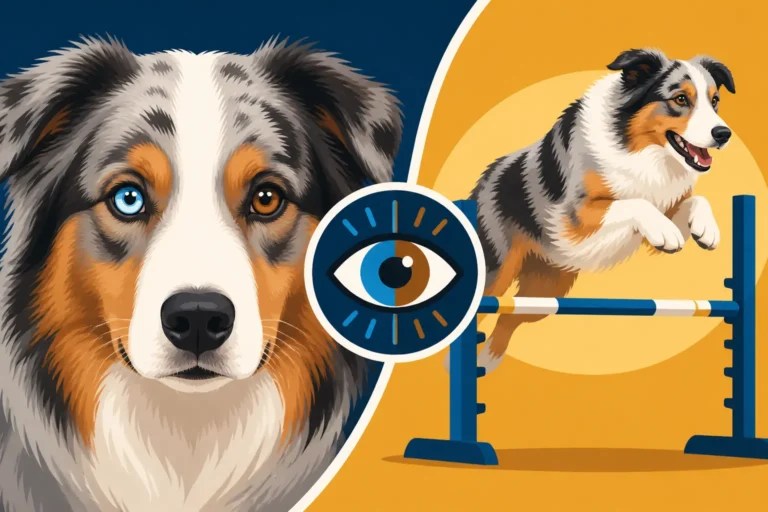
The Australian Shepherd in the AKC Herding Group
It’s easy to look at an Australian Shepherd, with their captivating eyes and boundless energy, and assume they hail from the land of kangaroos and koalas. But that's where the initial confusion begins for many new owners and admirers alike. These intelligent, driven dogs actually found their roots in the American West, not down under, and their journey into the prestigious American Kennel Club (AKC) Herding Group is a fascinating story of ranch work, rodeo fame, and dedicated breed enthusiasts. This comprehensive guide will unravel the Aussie's true heritage, explore its path to AKC recognition, and help you understand what being a member of the Herding Group truly means for this remarkable breed today.
A Deep Dive into the Australian Shepherd's True Origins
Before we delve into the world of kennel clubs and breed standards, it’s crucial to set the record straight on the Australian Shepherd's origins. The name itself is a historical quirk, a vestige of the breed's formative years in the burgeoning American West. Understanding this initial misnomer is key to appreciating the unique development path of these incredible dogs.
Dispelling the "Australian" Myth
The most common misconception about the Australian Shepherd is right there in its name. Despite what it suggests, this breed was not developed in Australia. In reality, their story is deeply intertwined with the American ranching boom of the 19th and early 20th centuries, particularly in states like California, Colorado, and Wyoming. The "Australian" part of their name likely comes from the fact that many of the sheep these dogs worked in the American West were imported from Australia, often arriving via the Basque shepherds who accompanied them. These shepherds brought their own herding dogs with them, and it's these dogs, mixed with others already present in America, that formed the foundation of what we now know as the Australian Shepherd. It's a common point of confusion, but once you understand the history, it makes perfect sense why the name stuck. The dogs were associated with the "Australian" sheep, not the continent itself. This fascinating tidbit really highlights Why the Australian Shepherd Is Not From Australia.
The Basque Connection and Early Influences
The true ancestral lineage of the Australian Shepherd traces back to the Pyrenees region, straddling the border between France and Spain. It was the Basque people, renowned for their shepherding traditions, who were instrumental in bringing the progenitors of the Aussie to the American West. As these industrious shepherds immigrated, seeking new opportunities, they brought with them their invaluable working dogs – hardy, intelligent canines perfectly suited to managing flocks across vast, open landscapes. These early dogs, often referred to simply as "Basque dogs" or "Pyrenean Shepherds," encountered and interbred with various other herding and farm dogs already established in America. This melting pot of genetics, driven by the practical needs of ranchers for a versatile, all-around stock dog, gradually coalesced into the distinct type that would become the Australian Shepherd. Their intelligence, stamina, and intuitive herding abilities were highly prized, solidifying their reputation as indispensable ranch partners. You can learn more about this rich heritage in The Basque Shepherds Behind the Australian Shepherd.
From Ranch Work to Rodeo Stardom
The Australian Shepherd’s character was forged in the demanding environment of the American West. They weren't bred for pretty looks or leisurely strolls; they were bred to work, and work hard. This inherent drive and versatility are what propelled them from obscure ranch dogs to beloved performers, catching the eye of a broader public.
The Aussie's Working Heritage
In the early to mid-20th century, the Australian Shepherd truly earned its stripes as the quintessential ranch dog. They were invaluable assets, capable of handling a wide array of livestock, from the feistiest cattle to the most stubborn sheep and the flightiest chickens. Ranchers needed dogs that could not only move animals but also think independently, make decisions, and adapt to rapidly changing situations. An Aussie had to be tough enough to handle a kick from a cow but gentle enough to guide a lamb. Their intuitive understanding of stock movement, coupled with their incredible stamina, meant they could work from dawn till dusk, covering miles of rugged terrain without complaint. These dogs were literally part of the ranching family, their keen intelligence and eagerness to please making them quick studies for any task presented to them. This foundation in practical, hard-hitting work distinguishes Ranch Bred Against Ring Bred Australian Shepherds even today.
Gaining Prominence in Rodeo Arenas
As ranching culture evolved, so too did the visibility of the Australian Shepherd. Their intelligence, agility, and striking appearance made them natural entertainers. It was in the vibrant, dusty arenas of post-World War II rodeos that the Aussie truly began to shine, transitioning from behind-the-scenes ranch hands to crowd-pleasing performers. Rodeo circuits, with their penchant for flashy acts and skilled animals, provided the perfect stage. Handlers like Jay Sisler became famous for their Australian Shepherds' incredible tricks, performing complex routines involving jumping, balancing, and even riding horses. These dogs weren't just cute; they were smart, athletic, and utterly devoted to their handlers, executing elaborate sequences with precision and enthusiasm. Their presence at rodeos introduced the breed to a national audience, cementing their image as intelligent, versatile, and highly trainable dogs. This period was crucial in expanding the breed’s reputation far beyond the ranch, making them famous for their flair as much as their function. Discover more about this era in How Rodeos Made the Australian Shepherd Famous.
The Journey to American Kennel Club Recognition
Despite their growing popularity, the Australian Shepherd's path to official recognition by the American Kennel Club was not a straightforward one. It involved decades of dedicated effort from breed enthusiasts, navigating the complexities of breed standards and the sometimes differing philosophies of existing breed clubs.
Early Breed Clubs and Standards
Before the AKC formally recognized the Australian Shepherd, the breed's preservation and promotion were primarily championed by the Australian Shepherd Club of America (ASCA). Established in 1957, ASCA became the primary registry for Australian Shepherds, focusing intensely on maintaining the breed's working abilities and preserving its core temperament. For many years, ASCA served as the guardian of the breed, emphasizing performance events like herding trials and promoting a working standard that reflected the Aussie's ranch heritage. The idea of AKC recognition, while offering broader visibility, was met with mixed feelings by some within ASCA. There was a genuine concern that entering the show dog world of the AKC might dilute the breed's working instincts or lead to an overemphasis on aesthetics rather than ability. This sentiment created a period of internal debate and differing opinions on the best path forward for the breed. Understanding this historical tension helps explain Why Some Aussie Breeders Fought AKC Recognition.
The AKC Herding Group's Appeal
The American Kennel Club organizes purebred dogs into various groups based on their primary historical function, and for the Australian Shepherd, the Herding Group was a natural, undeniable fit. This group is dedicated to breeds developed specifically to gather, herd, and protect livestock. Dogs in this group are characterized by their exceptional intelligence, strong working ethic, and often, an intense desire to control movement – a hallmark of herding behavior. The Australian Shepherd, with its keen "eye," agility, and inherent drive to manage stock, perfectly embodies these traits. The Herding Group celebrates the mental and physical prowess required for such demanding work, and the Aussie's inclusion acknowledged their rich history as indispensable partners on ranches and farms across America. For many enthusiasts, being recognized within this group by the AKC validated the breed's working heritage and brought it into alignment with other historically significant herding breeds, such as Border Collies and German Shepherds. This formal placement recognized the breed's innate capabilities and its deep connection to its original purpose. This article, The Australian Shepherd in the AKC Herding Group, further explores this fitting placement.
The Official Recognition Timeline
The Australian Shepherd’s journey to full AKC recognition was a multi-stage process that spanned several years, reflecting the careful deliberation involved in admitting new breeds. Initially, the breed was admitted into the AKC’s Miscellaneous Class in 1991, a provisional step that allowed Aussies to participate in certain AKC events like obedience and agility, but not conformation shows. This period served as a probationary phase, allowing the AKC to assess the breed's stability, population numbers, and the consistency of its type and temperament. During this time, breed enthusiasts worked diligently to meet the AKC's requirements, including establishing a national parent club that would represent the breed's interests within the AKC structure. Finally, after proving their worth and demonstrating their adherence to a consistent standard, the Australian Shepherd was granted full recognition and admitted into the Herding Group on January 1, 1993. This was a monumental milestone, marking the culmination of years of effort and officially welcoming the Aussie into the mainstream of the American purebred dog world. These two key dates, 1991 and 1993, signify The Two Dates That Brought the Aussie Into the AKC.
What AKC Recognition Meant for the Breed
The move to full AKC recognition in 1993 was a double-edged sword for the Australian Shepherd. While it brought undeniable benefits in terms of exposure and opportunities, it also presented new challenges and considerations for breeders and owners alike.
Increased Visibility and Popularity
One of the most immediate and profound impacts of AKC recognition was a dramatic surge in the Australian Shepherd's visibility and popularity. Suddenly, a breed that was once primarily known in working circles and rodeo arenas was featured in dog magazines, on television, and at major dog shows like Westminster. This exposure brought the Aussie into the homes and hearts of countless new families who were captivated by their intelligence, beauty, and spirited nature. The demand for Australian Shepherds grew significantly, which had both positive and negative consequences. On the positive side, it allowed more people to experience the joy of owning this exceptional breed and provided resources for breed-specific rescue organizations. However, the increased demand also, unfortunately, attracted some less reputable breeders who prioritized profit over health and temperament, sometimes leading to dogs with compromised genetics or unstable personalities. This rapid growth in public interest dramatically illustrates Why Aussie Popularity Rose Through the 2000s.
The Evolution of the Breed Standard
With AKC recognition came the establishment of an official AKC breed standard for the Australian Shepherd. This standard, a detailed description of the ideal physical and temperament traits, serves as the blueprint for judging in conformation shows and guiding responsible breeding practices. While closely aligned with the original working standards championed by ASCA, the AKC standard naturally placed a greater emphasis on certain aesthetic qualities relevant to the show ring, such as coat texture, color patterns, and overall balance. This isn't to say that working ability was disregarded; the AKC standard still strongly emphasizes the breed's intelligence, athleticism, and herding instinct. However, it did create a nuanced distinction between "show lines" and "working lines" within the breed, with some breeders focusing more intently on success in the conformation ring and others remaining steadfast in breeding for top-tier working ability. Both types still represent the Australian Shepherd, but their priorities can sometimes differ slightly in selection. Understanding these subtle differences is key to appreciating ASCA and the AKC Australian Shepherd Standards.
The Australian Shepherd's Place in the Herding Group Today
Today, the Australian Shepherd stands proudly as one of the most recognizable and beloved members of the AKC Herding Group. Their position reflects not only their historical purpose but also their continued excellence in a wide range of activities that showcase their innate abilities.
Herding Instinct vs. Pet Life
For an Australian Shepherd, herding isn't just a learned skill; it's an intrinsic part of who they are, a deeply ingrained instinct that guides much of their behavior. Even in a modern pet home, far removed from sheep or cattle, that herding drive will inevitably manifest. You might find your Aussie gently nudging children, circling family members in the yard, or even attempting to "herd" the vacuum cleaner as it moves across the floor. They are constantly assessing their environment, looking for things to organize and control, which can be amusing but also challenging for owners who aren't prepared. This intense focus on movement can lead to heel-nipping, chasing bicycles, or a strong desire to keep everyone in one place. Understanding this fundamental aspect of their personality is crucial for channeling it constructively. Providing appropriate outlets, like structured play, can make all the difference. You simply cannot train out The Australian Shepherd Herding Drive You Cannot Train Out.
Excelling in AKC Performance Sports
While their heritage is firmly rooted in herding, Australian Shepherds are far from one-trick ponies. Their exceptional intelligence, agility, and eagerness to please make them stellar competitors in virtually every AKC performance sport. These events provide crucial mental and physical stimulation, allowing Aussies to channel their natural drives in productive and exciting ways.
Here's a look at some of the AKC performance sports where Australian Shepherds typically excel:
| AKC Sport | Description | Why Aussies Excel |
|---|---|---|
| Agility | Dogs navigate an obstacle course (tunnels, jumps, weave poles, teeter-totters) accurately and against the clock, guided by their handler. | Their incredible athleticism, speed, and responsiveness to cues make them natural agility stars. They love the challenge and the close teamwork with their handler. The quick turns and bursts of speed are perfectly suited to their body type and energy levels. |
| Obedience | Dogs perform a set of exercises (heeling, recall, retrieving, stays) demonstrating reliable control and willingness to work with their handler. | Aussies are highly intelligent and thrive on learning. Their desire to please and focus on their handler means they can master complex obedience routines with precision and enthusiasm. They enjoy the structure and the mental workout. |
| Rally | A fun, fast-paced team sport where dog and handler navigate a course with numbered stations, performing specific exercises (e.g., sit-stay-walk around, spiral right) as instructed by signs. | It combines elements of obedience with a bit more freedom and encouragement, perfectly suiting the Aussie's desire for engagement and variety. They enjoy the continuous interaction and problem-solving involved in moving from station to station. |
| Herding | Dogs demonstrate their natural herding instincts and abilities by working live stock (sheep, ducks, cattle) under the guidance of a handler, simulating practical farm work. | This is their ancestral calling! Many Aussies have an innate ability to control and move stock, showing an impressive understanding of animal behavior and strong working ethics. It's a deep dive into their genetic heritage and a truly rewarding experience for both dog and handler. |
| Scent Work | Dogs use their powerful sense of smell to locate hidden target odors (essential oils) in various environments, mimicking the work of detection dogs. | Aussies possess excellent noses and a focused drive, making them adept at scent discrimination. This sport offers a fantastic mental workout, allowing them to engage their natural hunting and searching behaviors in a controlled and challenging way, often tiring them out more than physical exercise alone. |
| Dock Diving | Dogs run down a dock and jump into a pool of water, competing for distance or height in their retrieve. | While not all Aussies are naturally water dogs, many enjoy swimming and fetching. Their athleticism and love for retrieving make them potential candidates for this exciting sport, offering a high-energy outlet that also provides great physical conditioning. |
These sports offer incredible opportunities for Australian Shepherds to thrive, providing the mental and physical exercise they desperately need. Engaging in activities like those you can find supplies for on Chewy or at local pet stores helps fulfill their deep-seated desire to work and learn. Many owners find tremendous joy and build an unbreakable bond with their Aussies through these shared experiences. You can dive deeper into these fantastic options in Australian Shepherd Sports From Herding to Agility.
Living with an AKC Herding Group Australian Shepherd
Bringing an Australian Shepherd into your life means embracing a dog with a powerful intellect and an even more powerful drive. It's a commitment that requires understanding their unique needs to ensure a harmonious life together.
Meeting Their Drive for "Work"
One of the biggest misunderstandings about Australian Shepherds is the idea that simply letting them run in a yard or taking them for a daily walk is enough to satisfy them. While physical exercise is crucial for this active breed, it's the type of exercise and the inclusion of mental stimulation that truly makes the difference. An Aussie needs a "job" – something that engages their brilliant mind and allows them to feel useful. This could be anything from advanced obedience training, agility, or competitive herding to more informal activities like scent games, puzzle toys, or even just learning complex trick routines. They thrive on having a purpose, a challenge to solve, and consistent interaction with their human. Without adequate mental engagement, a bored Aussie will invent its own "job," which often involves destructive chewing, excessive barking, or relentless herding of anything that moves indoors. Providing structured activities that tap into their problem-solving abilities is far more effective than just physical exertion alone. It's about quality, not just quantity, when it comes to keeping an Aussie truly content. This dedication to purposeful activity is why it's so important to focus on Giving an Australian Shepherd a Job Instead of a Walk.
Understanding Their Temperament
The temperament described in the AKC Australian Shepherd standard paints a picture of an intelligent, alert, watchful, and animated dog. They are known for being devoted to their families but can often be reserved, sometimes even suspicious, with strangers. This isn't shyness or aggression; it's a natural caution born from their herding heritage, where they needed to be observant and protective of their flock. This reserved nature means that early and consistent socialization is absolutely critical for an Aussie puppy. Exposing them positively to a wide variety of people, places, sounds, and other dogs from a young age can help them develop into confident, well-adjusted adults. Without proper socialization, their natural suspicion can sometimes escalate into fear-based reactivity or excessive guarding behaviors. Once an Aussie accepts you, their loyalty is unwavering, and they will form incredibly strong bonds with their chosen humans. They are sensitive dogs who respond best to positive reinforcement and consistent, fair training. Their desire to please is immense, but they also have a strong will and need clear guidance. This deep dive into their intrinsic characteristics helps clarify Australian Shepherd Temperament and Working Character.
Responsible Ownership and the AKC Influence
The prominence of the Australian Shepherd within the AKC Herding Group also places a spotlight on the responsibilities of ownership and the importance of ethical breeding practices. Being part of such a recognized organization means adhering to certain standards that benefit the breed as a whole.
The Importance of Breeder Selection
Choosing an Australian Shepherd puppy should never be a spontaneous decision. With the breed's popularity, it's more important than ever to seek out responsible and ethical breeders who prioritize the health, temperament, and working ability of their dogs over profit. An AKC-registered litter provides a certain level of assurance regarding parentage, but it’s just the starting point. A truly reputable breeder will be transparent about their breeding practices, openly discuss the health history of their dogs, and eagerly answer all your questions. They should be actively involved in their breed community, perhaps participating in dog sports or conformation, and follow the guidelines set forth by the national breed club. Expect a good breeder to thoroughly vet you as well, ensuring their puppies are going to suitable homes that understand the commitment involved in owning an Aussie. They should also provide you with genetic health clearances for the parents and a clear health guarantee for the puppy. Resources like breeder directories often found on reputable pet supply sites such as Chewy, or through the national breed club's website, can be excellent starting points for your search. Taking your time to find the right breeder is paramount for starting off on the right paw with your new family member. This critical process is detailed in Choosing an Australian Shepherd Breeder.
Health Screening and Genetic Testing
One of the most significant advantages of a breed being part of the AKC structure, and having a dedicated parent club, is the emphasis on breed health. Responsible Australian Shepherd breeders understand the importance of comprehensive health screening for their breeding stock to minimize the incidence of genetic diseases in future generations. For Aussies, this includes screening for conditions like hip and elbow dysplasia, eye diseases such as Collie Eye Anomaly (CEA) and hereditary cataracts, and the MDR1 gene mutation. The MDR1 mutation is particularly crucial for Aussies, as it can cause sensitivity to certain common veterinary drugs, including some flea and tick preventatives and anti-diarrhea medications. Testing for this, and other genetic conditions, allows breeders to make informed decisions and helps owners understand their dog's potential health predispositions. A reputable breeder will provide documentation of these health clearances for both parents, usually from organizations like the Orthopedic Foundation for Animals (OFA) and the Canine Eye Registry Foundation (CERF) or the American College of Veterinary Ophthalmologists (ACVO). Insisting on these tests is a cornerstone of responsible Aussie ownership and vital for the long-term health of the breed. Every Australian Shepherd parent should ensure they understand The Genetic Panel Every Australian Shepherd Needs.
Disclaimer
This article is for general informational purposes only and does not constitute professional advice. Laws, prices and regulations vary by location and change over time. Consult a qualified professional for guidance on your specific situation.