Why an Aussie Herds Its Playmates
It’s a scene many Australian Shepherd owners know all too well: you’re at the dog park, your Aussie is having a grand time, and suddenly they’re not just playing, but directing the play, circling other dogs, nipping at their hocks, or trying to gather them into a tight group. This deeply ingrained herding instinct, while fascinating, can sometimes be a puzzle, leaving you wondering if it's normal play or something that needs managing. This guide is here to dive deep into why your Australian Shepherd herds its playmates, what those behaviors mean, and how to effectively manage this powerful drive to ensure everyone has a safe and enjoyable experience.
Understanding the Australian Shepherd's Herding Instinct
The Australian Shepherd isn't just a pretty face with striking eyes; they are, first and foremost, a working dog bred for centuries to gather and control livestock. That powerful drive doesn't just switch off when they're playing with other dogs or interacting with their human family. It's the very core of their being, their operating system, if you will.
The Deep Roots of the Herding Drive
To truly understand why your Aussie herds, you have to look back at their history. These dogs were developed on ranches, primarily in the American West, to be versatile and intelligent workers. They needed to think independently, manage diverse livestock, and respond keenly to their handler's cues. This wasn't just about chasing; it was about precision, strategy, and control. The instinct to gather, to move a group from one place to another, and to prevent individuals from straying is deeply hardwired into their DNA. It’s what made them invaluable ranch hands. You can learn more about this foundational trait in Why Herding Instinct Is the Aussie Operating System. This isn't just a learned behavior; it's an inherited predisposition, a core part of their genetic makeup that manifests in various ways, often subtly, sometimes overtly.
Think of it like a human's innate desire for connection or problem-solving. It's just there, influencing how they see the world and interact with it. For an Aussie, the world is often seen through the lens of a "flock" that needs managing, whether that flock is a group of sheep, a family of toddlers, or a bunch of other dogs at the park. They aren't trying to be mean; they are simply acting on an urge as natural to them as barking is to other breeds.
What "Herding" Looks Like in Play
When an Australian Shepherd engages its herding instinct with other dogs, the behaviors can be quite distinct from typical dog-to-dog play. It's not usually about wrestling or rough-housing. Instead, you'll often see:
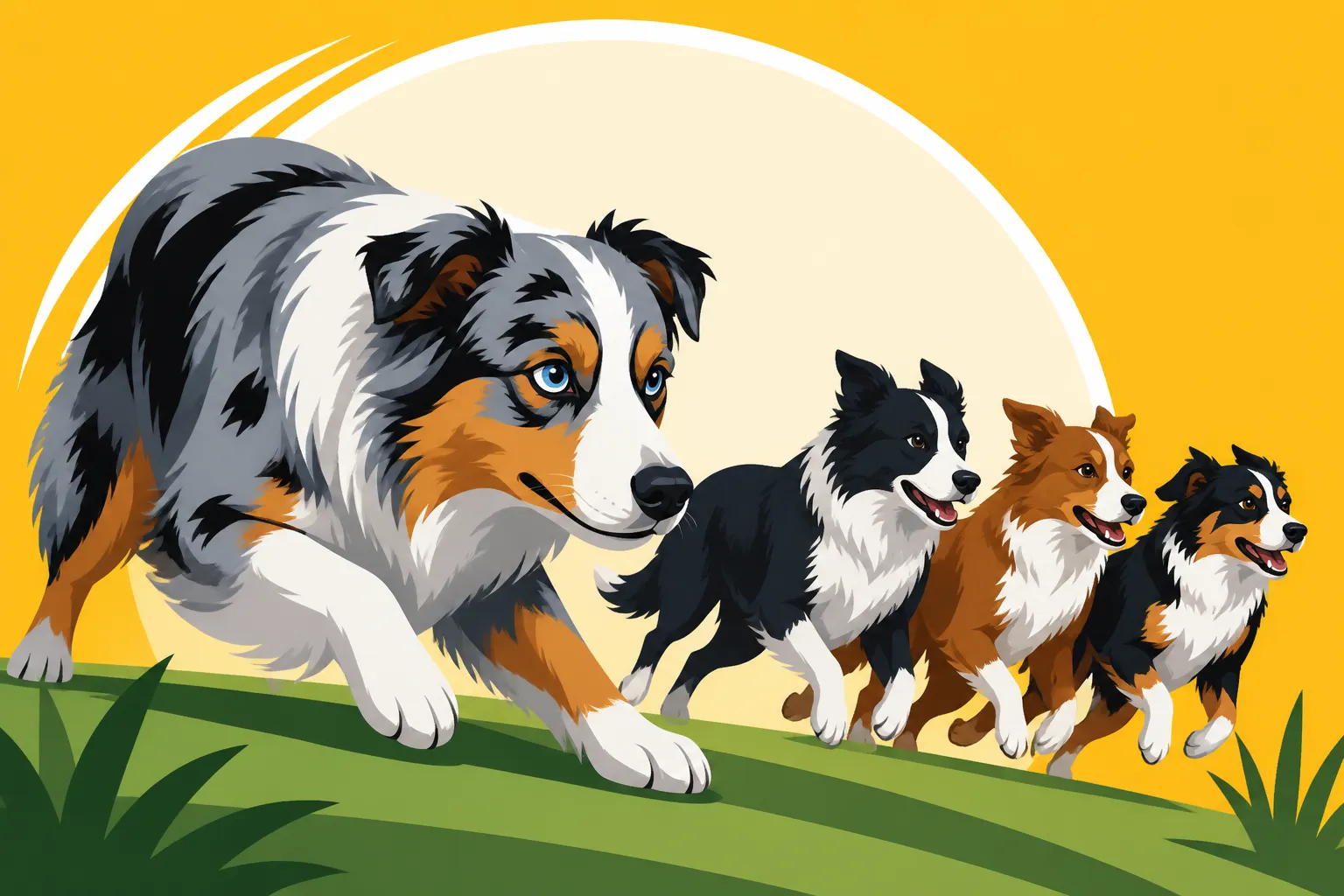
- Circling: Your Aussie might run wide loops around a group of playing dogs, trying to keep them contained or move them in a specific direction. It's like they're trying to draw an invisible fence around the "flock."
- "Eye" or Stare: They may fix another dog with an intense gaze, a classic herding trait used to intimidate and direct livestock. This "eye" can sometimes be unsettling to other dogs who don't understand it, especially if they are not herding breeds themselves.
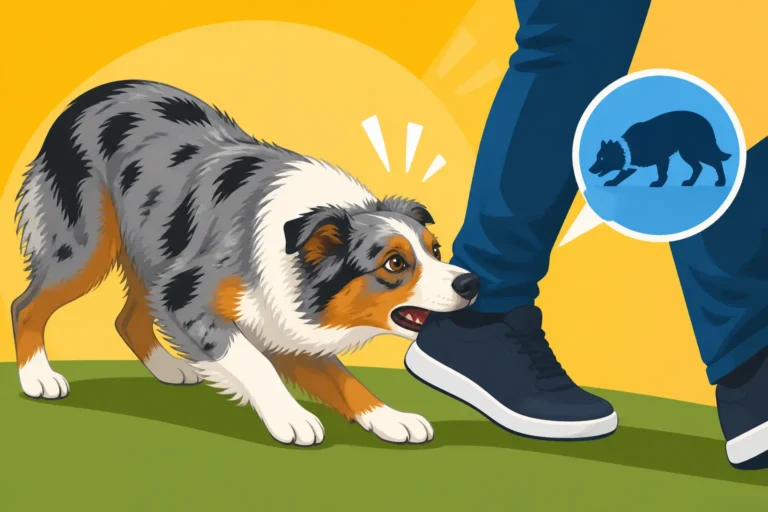
- Nipping at Heels or Hocks: A quick, gentle (usually!) nip or bump at the rear legs of another dog, intended to get them to move or change direction. This is a very functional behavior on a ranch, but it can be startling or annoying in a dog park setting.
- Bumping or Nudging: Using their body to gently push or guide other dogs. They might weave through a group, applying subtle pressure to influence movement.
- Blocking: Position themselves strategically to prevent another dog from moving in a certain direction, effectively cutting off an escape route.
- Chasing and Recalling: Not just random chasing, but chasing with a purpose – to gather or redirect. They might chase, stop, and then try to bring the other dog back to a central point.
It's important to differentiate these actions from general play. While all dogs chase and run, an Aussie's actions often have a specific intent: to organize, to control, to "herd." This can be a lot for non-herding breeds, who might just want to play freely without a furry director. Sometimes, this drive can even extend to humans, especially children, as detailed in An Australian Shepherd Herding Children in the Yard.
Differentiating Play from Aggression
This is a critical distinction for any Aussie owner. Playful herding is fundamentally different from aggressive behavior, though the lines can sometimes blur if not managed.
Playful Herding:
- Body Language: Generally loose, wiggly, and inviting. The tail might be wagging, ears are relaxed, and the overall demeanor is light. There might be a "play bow" before engaging.
- Intent: To engage, direct, and organize. The nips are usually inhibited, more of a "tag" than a bite, and there's no real intent to harm.
- Reaction of Other Dogs: Often, other dogs will tolerate it for a while, or even participate. Some dogs find it confusing or annoying, but not necessarily threatening at first. They might try to run away, which only encourages the Aussie's instinct.
- Aftermath: The Aussie usually disengages easily when called or redirected, and there's no lingering tension.
Aggressive Behavior (or herding escalating into frustration/aggression):
- Body Language: Stiff, tense, rigid. The tail might be held high and rigid, or tucked. Ears might be pinned back or forward aggressively. Growling, snarling, or hard barks are common.
- Intent: To warn off, assert dominance, or cause harm. Nips become harder, sustained bites, or are accompanied by other aggressive displays.
- Reaction of Other Dogs: Other dogs will show clear signs of discomfort, fear, or a defensive posture. They might snap back, cower, try to escape, or even whine.
- Aftermath: The Aussie may remain agitated, or the other dog may be genuinely hurt or scared.
It's vital to step in before playful herding crosses into frustration or aggression. An over-aroused Aussie, intensely focused on "managing" a chaotic group of dogs, can quickly tip into snapping or bullying if not given an appropriate outlet or a break. The goal is always to provide a safe and positive experience for all dogs involved. If you notice your Aussie becoming overly fixated, stiffening up, or if other dogs are clearly distressed, it's time to intervene.
Why Your Aussie Herds Other Dogs (And Humans!)
Understanding the "how" of herding is one thing, but exploring the "why" deepens our insight into the Australian Shepherd psyche. It's not just a random act; it's a response to their environment and their inherent programming.
The Drive to Control Movement
At its heart, herding is about the drive to control movement. An Australian Shepherd sees chaotic, undirected movement as something that needs organization. Think of a flock of sheep scattering – it's anathema to their instinct. They want to bring order to that perceived chaos.
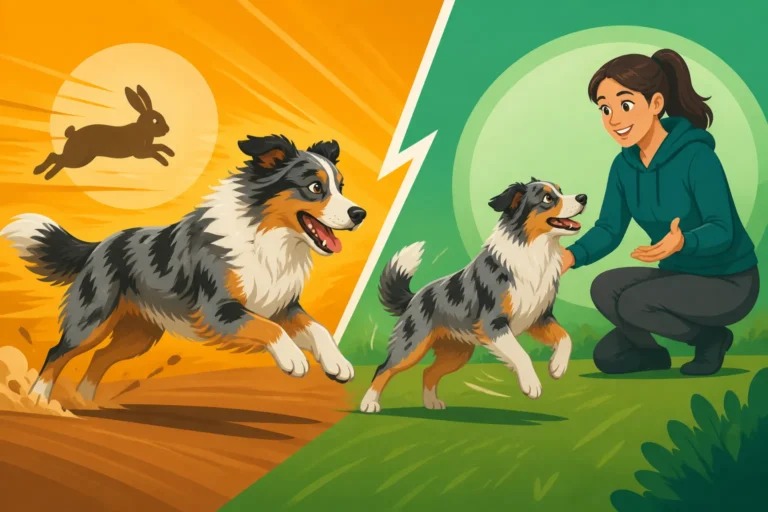
When other dogs are running, chasing, and playing without a clear pattern, your Aussie's brain interprets this as a "disorderly flock." Their instinct kicks in, compelling them to try and gather, direct, or contain the movement. It's not about being a bully; it's about fulfilling a deep-seated desire to manage and control their environment. This is why they might gravitate towards the fastest, most erratic runner in the park, or try to round up a group of puppies. They are attempting to impose structure. This drive is so powerful that it can even manifest indoors, with your Aussie attempting to herd anything from a vacuum cleaner to the family cats, as described in What an Australian Shepherd Tries to Herd Indoors. They're simply trying to bring everything back into their perceived "order."
Lack of Appropriate Outlets
One of the biggest reasons an Australian Shepherd might intensively herd other dogs at the park is a lack of appropriate outlets for their energy and instincts elsewhere. If a high-drive dog doesn't get to engage its brain and body in constructive, purposeful activities, it will find its own "job." And often, that job involves "herding" whatever is available – which, in an urban or suburban setting, often means other dogs, people, or even inanimate objects.
An Aussie needs more than just a physical walk. While physical exercise is crucial, it doesn't fully satisfy their mental needs. A simple stroll around the block or even an hour of off-leash running won't necessarily tire out their herding brain. They need tasks that require thought, problem-solving, and strategy. If they don't get opportunities for things like dog sports, scent work, or even structured training sessions, that pent-up mental energy and herding drive will inevitably spill over into their interactions with others. For many Aussies, just running isn't enough; they need to do something. This concept is explored further in Giving an Australian Shepherd a Job Instead of a Walk.
Overarousal and Frustration
Sometimes, herding behavior can intensify when an Australian Shepherd becomes overstimulated or frustrated. Dog parks, with their unpredictable dynamics, can be incredibly exciting and overwhelming for an Aussie. The sheer volume of movement, sounds, and smells can push them past their threshold for calm, thoughtful behavior.
An overaroused Aussie might get tunnel vision, becoming hyper-focused on the "flock" and less responsive to your cues. Their herding attempts can become more insistent, more forceful, and less like friendly play. This isn't necessarily aggression, but rather a manifestation of an overloaded nervous system. They might be frustrated that the "sheep" (other dogs) aren't cooperating, leading to more intense circling, bumping, or nipping. It's a prime example of Australian Shepherd Reactivity and Overarousal. Recognizing the signs of overarousal – panting, hyper-vigilance, difficulty disengaging, repetitive behaviors – is key to intervening before it escalates into something less desirable. This can be particularly noticeable if your Aussie starts to bark excessively or seem unable to "switch off" after intense play.
Strategies for Managing Herding Behavior in Play
Managing an Aussie's herding instinct isn't about eliminating it entirely – that's impossible and undesirable. It's about channeling it into appropriate, safe, and fun outlets, and teaching your dog impulse control.
Providing Constructive Herding Outlets
Since the herding drive is so strong, it's best to give your Aussie acceptable ways to express it. This helps fulfill their innate needs without them feeling the compulsion to "manage" other dogs or people.
- Flirt Poles: These are fantastic for channeling chasing and herding instincts. A long pole with a lure at the end allows your Aussie to chase, pounce, and "catch" without actually bothering another animal. You can find excellent, durable flirt poles on Amazon. They're a great way to simulate prey drive in a controlled environment.
- Herding Balls (Treibball): Some Aussies adore pushing large exercise balls around, which mimics the act of moving livestock. This can be a fantastic way to engage their herding drive in a solo activity or with minimal human direction. Look for heavy-duty, puncture-resistant balls suitable for dogs.
- Tug-of-War: A vigorous game of tug can be a wonderful outlet for their drive to "control" and redirect their energy. It's a physical and mental workout. Teaching a strong "drop it" command is crucial here. Learn more about how tug can be a great outlet in Redirecting an Aussie Onto a Tug Instead of a Heel.
- Dog Sports: Consider organized dog sports like actual herding trials, agility, flyball, or disc dog. These activities are designed to tap into an Aussie's natural drives and intelligence, providing immense satisfaction and a mental workout that truly tires them out.
| Outlet Type | Description | Benefits | Considerations |
|---|---|---|---|
| Flirt Pole | Pole with a rope and toy lure; dog chases and "herds" the lure. | Mimics chasing/prey drive, builds focus, provides high-intensity exercise in short bursts. | Requires handler involvement, not a solo activity. |
| Herding Ball | Large, durable ball for dogs to push and gather. | Channels herding instinct directly, good for strong dogs, can be done solo or with guidance. | Requires space, may not interest all Aussies. |
| Tug-of-War | Interactive game using a sturdy tug toy. | Builds focus, outlet for biting/pulling, strengthens bond (with rules). | Must have clear "drop it" and "take it" commands. |
| Agility | Obstacle course involving jumps, tunnels, weaves. | Excellent mental and physical challenge, builds confidence, strengthens teamwork. | Requires training and commitment, can be physically demanding. |
| Scent Work | Dogs find hidden odors in various environments. | Engages powerful nose, mentally tiring, low physical impact, builds confidence. | Requires specific training, can be done in small spaces. |
| Treibball | Sport where dogs herd large exercise balls into a goal. | Directly uses herding skills, builds communication, fun for many Aussies. | Requires space and specific equipment. |
Teaching an "Off Switch" and Impulse Control
Beyond providing outlets, it’s critical to teach your Aussie how to calm down and disengage. An "off switch" is invaluable for a high-drive dog.
- Mat Settle/Place Command: Teach your Aussie to go to a designated mat or "place" and relax. Reward them heavily for lying down calmly and staying there, even amidst distractions. This teaches them to settle and switch off their high energy. BAXTER & Bella offers excellent online training programs that focus on foundational skills like "place" and impulse control, perfect for teaching your Aussie to chill.
- "Leave It" and "Wait" Commands: These are paramount for an Aussie. "Leave it" helps them disengage from exciting stimuli, whether it's another dog they want to herd or something on the ground. "Wait" teaches patience before accessing rewards or desired activities. Consistency is key here.
- Structured Play: Instead of just letting your Aussie run wild with other dogs, structure their play. Use a long line in open areas to practice recalls and breaks. Intervene periodically to ask for a sit or a short stay, then release them to play again. This teaches them that play isn't an endless free-for-all and that you are still in control. For more on this, check out Teaching an Australian Shepherd an Off Switch.
- Enforced Naps: Especially for puppies and adolescent Aussies, sometimes intense herding is a sign of being overtired or overstimulated. Scheduling quiet time or crate time can help them reset.
Supervised Play and Strategic Interruptions
When your Aussie is interacting with other dogs, especially new ones or in unfamiliar environments like a dog park, active supervision is non-negotiable.
- Know Your Dog's Limits: Understand what triggers your Aussie's intense herding drive. Is it fast-moving small dogs? Large, boisterous dogs? Kids running? Knowing their triggers allows you to proactively manage situations.
- Short Play Sessions: Instead of letting them play for an hour straight, opt for shorter, more focused play sessions. Intervene frequently for calm breaks, water, or a quick training exercise.
- Redirection: If you see your Aussie starting to fixate or engage in intense herding behaviors, calmly call them away. Redirect their attention to you with a treat, a toy, or a short training cue. Then, give them a break, even if it means stepping away from the main group of dogs for a few minutes.
- Leash Management: Sometimes, a long line (a lightweight, non-retractable leash of 15-30 feet) in an open, safe area can give you just enough control to practice recall and redirection without fully restricting their movement. This helps build their reliability before trusting them completely off-leash.
- Avoid Overcrowded Dog Parks: These can be overwhelming for any dog, but especially for an Aussie with a strong herding drive. Too many chaotic dogs can make it nearly impossible for your Aussie to regulate themselves. Opt for quieter times or more controlled playdates with known dogs. The risks of dog parks for an Aussie can be significant, as discussed in Dog Park Risks for an Australian Shepherd.
When to Seek Professional Help
While much of an Aussie's herding behavior can be managed with consistent training and appropriate outlets, there are times when professional help is the best course of action.
Persistent, Unsafe Herding
If your Australian Shepherd's herding behavior becomes genuinely problematic, persistent, or even unsafe, it's time to call in an expert. This includes situations where:
- Other dogs are consistently being hurt or showing fear: If the nips become harder, or if other dogs are yelping, hiding, or actively avoiding your Aussie.
- The behavior is escalating: What started as mild nudging is now full-body tackling or relentless pursuit.
- Your Aussie is unmanageable: You cannot interrupt their herding focus, even with high-value treats or known commands.
- It's causing stress to you or your dog: If every outing is a source of anxiety because of the herding.
Unchecked herding can lead to dog fights, injuries, and a general reputation for your dog as a "nuisance" at the park, limiting their socialization opportunities. It's not fair to your Aussie or other dogs to allow it to continue if it's causing distress.
Finding a Trainer Who Understands Aussies
When looking for professional help, it's absolutely crucial to find a trainer who has extensive experience with herding breeds, specifically Australian Shepherds. Not all dog trainers understand the unique drives and nuances of these intelligent, energetic dogs. A trainer who works primarily with calmer breeds might misinterpret herding behaviors as simple aggression or naughtiness, leading to ineffective or even counterproductive training methods.
Look for trainers who:
- Understand breed-specific behaviors: They should immediately recognize and appreciate the working drive of an Aussie.
- Use positive reinforcement methods: Forceful or punishment-based methods can damage your Aussie's trust and exacerbate their anxiety or reactivity.
- Offer various training modalities: Group classes, private sessions, and even specialized herding instinct tests or introduction to actual livestock (if appropriate for your dog) can be beneficial.
- Can help you set realistic goals: They'll understand that you can't "train out" the herding instinct, but you can channel and manage it.
Don't be afraid to interview several trainers to find the right fit. Ask about their experience with herding breeds and their training philosophy. A good starting point can be found in Finding a Trainer Who Understands an Aussie.
Assessing Underlying Issues
Sometimes, a sudden change or escalation in behavior, including herding intensity, can be rooted in an underlying medical issue. Dogs often mask pain or discomfort, and a shift in their behavior might be the only clue.
- Pain: Arthritis, hip or elbow dysplasia, back pain, or even a subtle injury can make a dog irritable, less tolerant, and more prone to snapping or intense herding as a coping mechanism or a way to create space.
- Anxiety or Stress: Chronic stress, anxiety disorders, or even an acute stressful event can lead to behavioral changes, including increased reactivity or a heightened need to control their environment.
- Vision or Hearing Changes: As dogs age, or if they have congenital issues like those seen in some merle Aussies, changes in their senses can make them more startled or less confident, leading to different behavioral responses.
If your Aussie's herding behavior has suddenly become more intense, persistent, or aggressive, a veterinary check-up is always a wise first step. Rule out any physical ailments before attributing it solely to behavior. This is particularly important if you notice other changes like lameness, sensitivity to touch, or changes in appetite or sleep. Sudden Aussie Aggression and a Vet Check elaborates on the importance of ruling out medical causes for behavioral shifts. Your vet might recommend bloodwork, x-rays, or even a referral to a veterinary behaviorist if they suspect a complex underlying issue.
Remember, your Australian Shepherd's herding instinct is a gift, a testament to their heritage and intelligence. With understanding, patience, and consistent guidance, you can channel this powerful drive into a fulfilling life for both you and your extraordinary companion.
Disclaimer
This article is for general informational purposes only and does not constitute professional advice. Laws, prices and regulations vary by location and change over time. Consult a qualified professional for guidance on your specific situation.