Bringing an Aussie Into a House With a Dog
Bringing a new Australian Shepherd into a household with an existing dog can feel like walking a tightrope – you want everyone to get along, but you also know that an Aussie's unique blend of energy, intelligence, and herding instinct can either be a perfect complement or a chaotic challenge. This guide will walk you through the essential steps, from preparing your home to managing those first crucial interactions and fostering long-term harmony, helping you avoid common pitfalls and ensure a smooth transition for all your furry family members.
Preparing Your Home and Existing Dog for the New Arrival
Before your energetic Australian Shepherd puppy or adult dog even sets a paw inside your home, a bit of foresight and preparation can save you a world of stress. It’s not just about getting dog bowls ready; it’s about setting up an environment that encourages positive interactions and minimizes potential friction right from the start. Think of it as laying the groundwork for a successful diplomatic mission between two very different personalities.
Setting Up Separate Spaces and Resources
One of the biggest mistakes new multi-dog owners make is throwing everyone into the deep end, expecting them to sort it out. Instead, ensure both your resident dog and the incoming Aussie have their own safe, personal spaces. This means two crates, two beds, and two designated feeding areas that are far enough apart to prevent any territorial squabbles. Even if your dogs eventually become best friends, having these individual sanctuaries is vital for decompression, especially for a high-drive breed like an Australian Shepherd that can get overstimulated easily. You might even consider using baby gates, readily available on platforms like Amazon, to create distinct zones within your home, allowing visual contact without forced physical interaction initially.
Beyond sleeping and eating, consider resources like toys. While sharing might seem noble, it's often a source of conflict. Have a separate set of toys for each dog, and be particularly mindful of high-value items like chew bones. These should ideally be given when dogs are in their separate spaces, ensuring no one feels the need to guard their precious possessions. This proactive management of resources is crucial, as An Aussie Standing Over Its Toys can escalate quickly if not addressed.
Scent Swapping and Gradual Acclimation
Before the physical introduction, let your dogs get to know each other through their most powerful sense: smell. This technique, known as scent swapping, is incredibly effective and low-stress. Simply take a towel or blanket that has been with your new Aussie and present it to your resident dog, allowing them to sniff and investigate at their leisure. Do the same with an item carrying your resident dog's scent for the Aussie. This exchange of smells helps each dog create a preliminary "profile" of the other, reducing the novelty and potential anxiety when they finally meet face-to-face.
You can also leave these scented items in their respective separate spaces, allowing them to associate the new scent with a feeling of security. Repeat this process a few times over several days if possible. This isn't just a quirky step; it’s a fundamental part of socialization that helps manage expectations, especially for an Australian Shepherd, who can be quite sensitive to new sensory input and sometimes a bit reserved with strangers. It's about slowly introducing the idea of another dog's presence in their world, easing the transition rather than springing a surprise on them.
Managing Expectations and Resident Dog Routines
It’s easy to get caught up in the excitement of a new puppy, but don’t forget your resident dog! They are about to experience a significant change in their lives, and maintaining their routine as much as possible will provide stability and comfort. Stick to their regular feeding times, walk schedules, and play sessions. Sudden changes can lead to anxiety or resentment towards the new arrival. Your existing dog needs to feel secure and loved, knowing that their place in the family isn’t threatened.
Also, be realistic about how quickly your Australian Shepherd and resident dog will become friends. Some dogs click instantly, others take weeks or even months. An Aussie's high-energy and often "pushy" play style (think herding nips and circling) might not be appreciated by all dogs, especially those who prefer a more sedate interaction. Why an Australian Shepherd Nips at Heels can be a surprising and sometimes irritating behavior for another dog. Be prepared for a slow burn rather than an immediate friendship. Patience and careful supervision are your most valuable tools here.
The First Hello: Controlled Introductions
The initial meeting between your existing dog and the new Australian Shepherd is arguably the most critical step. This isn't a moment for spontaneous greetings at the front door; it requires careful planning to ensure it's a positive, low-stress experience for both animals. Think of yourself as a careful mediator, orchestrating a calm and respectful first impression.
Neutral Territory and Parallel Walks
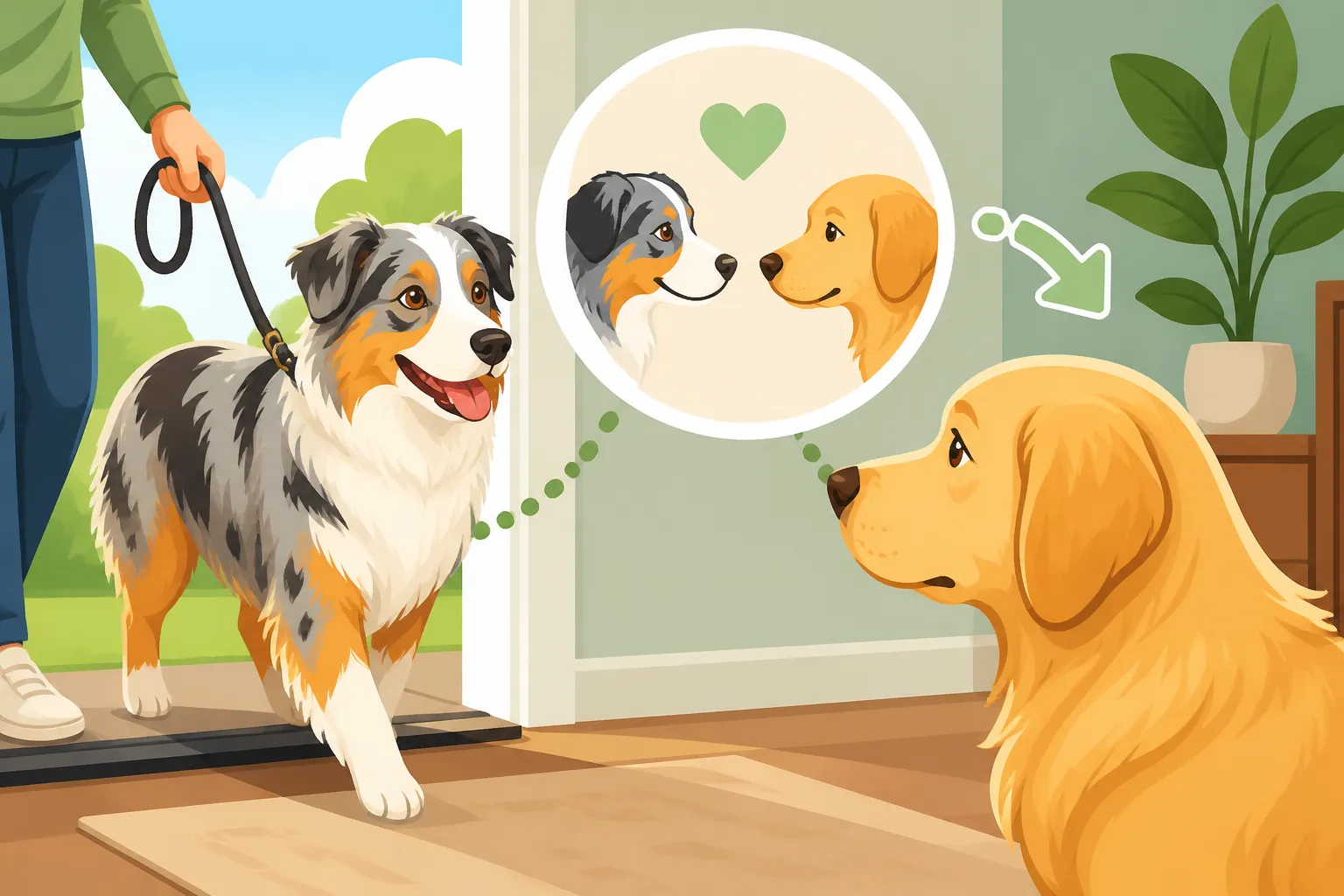
The very first physical introduction should always happen on neutral territory, meaning a place neither dog considers "theirs." A local park, a quiet field, or even a neighbor's yard can work perfectly. Crucially, both dogs should be on leashes, handled by separate adults. Avoid direct, face-to-face greetings initially. Instead, start with a parallel walk. Walk both dogs in the same direction, a good distance apart (perhaps 10-20 feet), allowing them to simply be in each other's presence without pressure to interact.
Observe their body language closely. Are their tails wagging loosely, or are they tucked? Are their bodies relaxed, or stiff? Are they glancing at each other casually, or staring intently? If they seem relaxed, you can gradually decrease the distance between them. The goal is for them to associate the other dog's presence with a calm, pleasant activity like a walk, rather than an intense, confrontational meeting. This parallel movement helps establish a sense of shared experience and purpose, diffusing potential tension.
Short, Supervised Interactions and Positive Reinforcement
Once the parallel walks are going well and both dogs appear comfortable, you can move to short, controlled, on-leash greetings. Keep these initial interactions brief, just a few minutes, and always end on a positive note before either dog becomes overstimulated or anxious. Reward calm behavior with praise and high-value treats. You want them to think, "Wow, good things happen when that other dog is around!"
It’s essential to be a good observer during these interactions. Look for signs of stress or discomfort: lip-licking, yawning, turning away, stiffness, hackles raised, or growling. At the first sign of tension, calmly separate them without scolding, increasing the distance and allowing them to decompress. The goal isn't to force friendship but to allow a gradual acquaintance where positive experiences outweigh negative ones. If you're unsure how to read their nuanced signals, resources like BAXTER & Bella’s online training programs can offer valuable insights into dog body language, helping you interpret subtle cues from your Australian Shepherd and resident dog.
Managing Energy Levels and Play Styles
Australian Shepherds are renowned for their high energy and unique play style, often involving chasing, circling, and body-bumping – behaviors that stem directly from their herding roots. This can be overwhelming or even annoying for a calmer, less active resident dog. It’s crucial to manage these energy differences carefully during introductions. Allow for short, supervised play sessions only if both dogs are engaging appropriately and equally.
If your Aussie is constantly trying to "herd" your resident dog, or if the resident dog seems stressed, intervene gently. Redirect the Aussie's herding tendencies onto a toy, like a flirt pole or a herding ball in a separate play area. An Aussie That Organizes the Dogs at the Park might find this challenging, but it’s vital to teach them appropriate play with housemates. Over-arousal can lead to unwanted behaviors or even conflict, so always be ready to step in and provide a "cool down" period if play gets too intense.
Living Together: Establishing New Norms
After the initial introductions, the real work of integrating your Australian Shepherd into your multi-dog household begins. It's about setting clear expectations, managing their environment, and building routines that foster respect and peaceful coexistence between your dogs. This phase requires consistency and a commitment to individual attention.
Separate Feeding and Resource Management
Even when dogs seem to be getting along splendidly, resource guarding can rear its head unexpectedly. To prevent issues, always feed your dogs separately, in different rooms or securely crated. This eliminates any potential competition over food. The same rule applies to high-value treats and chew toys. Give these items when dogs are apart, ensuring each feels secure in their possession without the need to guard. This practice is non-negotiable for peaceful cohabitation, especially with a breed as intelligent and sometimes sensitive to fairness as an Australian Shepherd.
Beyond food, consider other perceived resources. This could be a favorite sleeping spot, a specific toy, or even your attention. While it’s good to have communal items, be mindful of any tension surrounding them. If one dog consistently tries to take another’s item, or if body language becomes stiff around shared resources, it’s time to intervene and manage those items separately. This doesn't mean they can never share, but you should supervise carefully and remove items that cause conflict.
Establishing Consistent Routines and Boundaries
Dogs thrive on routine and clear boundaries, and a multi-dog household is no exception. Establish a consistent daily schedule for feeding, walks, potty breaks, and playtime. Predictability reduces anxiety and helps both dogs understand what to expect. For an Australian Shepherd, a breed that thrives on having a "job," incorporating specific training or enrichment activities into their individual routine is vital. This could be puzzle toys, a brief training session with you, or a solo walk.
It's also important to set boundaries for interactions. Don't allow one dog to constantly pester the other. If one dog is trying to rest and the other (especially a boisterous Aussie puppy or adolescent) keeps nudging them, intervene. Teach both dogs a "leave it" or "place" command to manage their proximity and ensure respectful personal space. This consistent guidance teaches them how to coexist politely within the household structure.
Ensuring Adequate Individual Attention
While the goal is for your dogs to live harmoniously, they shouldn't become co-dependent. Each dog needs individual attention, training, and exercise time with you. This not only strengthens your bond with each animal but also prevents jealousy and provides an outlet for their unique needs. Your Australian Shepherd, for instance, will likely require a significant amount of structured mental and physical activity that your older or less energetic resident dog might not.
Take your Aussie on solo walks, engage in one-on-one training sessions, or dedicate time for a focused play session. Do the same for your resident dog, whether it's a cuddle session, a quiet walk, or their favorite game. This individualized attention assures both dogs that they are valued members of the family, reducing any potential rivalry for your affection. It helps prevent An Australian Shepherd That Guards a Person from developing, ensuring a balanced relationship with you and each other.
| Aspect of Integration | Best Practices | Potential Challenges | Signs of Success |
|---|---|---|---|
| Feeding | Separate rooms or crates for meals | Resource guarding, eating too fast | Calmly eating, ignoring other dog's food |
| Resting/Sleeping | Designated, comfortable beds/crates for each dog | Constant pestering, inability to settle | Relaxed napping, choosing own bed |
| Playtime | Supervised, short sessions; redirect intense play | Over-arousal, one-sided play, herding attempts | Balanced play, taking breaks, appropriate cues |
| Attention | Regular individual training/cuddle sessions | Jealousy, attention-seeking behaviors | Both dogs seeking attention calmly, not competing |
| Training | Individual sessions, reward calm proximity | Difficulty focusing, reactivity to other dog | Responding to cues despite other dog's presence |
Troubleshooting and Ongoing Harmony
Even with the best preparation, integrating an Australian Shepherd into a multi-dog home can present challenges. Their intelligence and herding instincts mean that their behaviors can sometimes be intense or misunderstood. Staying vigilant, knowing how to intervene, and continuing to build positive associations are key to fostering lasting harmony.
Recognizing and Addressing Conflict Signals
Dogs communicate constantly, often through subtle body language that we might miss. Learning to recognize early signs of discomfort or potential conflict is paramount. This includes stiff body posture, hard stares, hackles raised, lip-licking, yawning, whale eye (showing the whites of their eyes), growling, or even persistent nudging that escalates. An Aussie might also try to "herd" another dog too intensely, which can be perceived as aggressive by the recipient. Australian Shepherd Reactivity and Overarousal can manifest in multi-dog settings, leading to tension if not managed.
If you observe these signals, intervene before a full-blown fight occurs. Calmly separate the dogs, increase distance, and give them a chance to decompress. Avoid scolding them, as this can heighten anxiety. Instead, focus on managing the environment to prevent future conflicts. Identify the triggers—is it a specific toy, being too close to the food bowl, or a particular time of day when energy levels are high? Once identified, you can actively work to avoid these situations or retrain responses.
Dealing with Herding Instincts Toward the Resident Dog
The Australian Shepherd’s strong herding drive is a defining characteristic, and it often extends to other household pets. Your Aussie might try to "gather" your resident dog, nipping at their heels, circling them, or bumping them with their nose. While this is natural for an Aussie, it can be extremely annoying, frightening, or even physically uncomfortable for another dog, potentially leading to resentment or conflict. An Australian Shepherd Nipping a Toddler's Ankles is similar to how they might attempt to control another dog.
Your job is to redirect this instinct onto appropriate outlets. Provide plenty of herding-substitute toys like large exercise balls or flirt poles, and engage your Aussie in games that satisfy their drive in a controlled way. When you see your Aussie starting to herd your resident dog, immediately redirect them to an approved toy or activity. Reward them heavily for engaging with the toy instead of the other dog. Consistent redirection and providing appropriate alternatives are key to managing this innate behavior.
Continual Socialization and Positive Association
Socialization isn't a one-time event; it's an ongoing process, especially in a multi-dog home. Continue to create positive experiences for both dogs together. This can include calm, supervised walks, shared training sessions where they work side-by-side (but not in direct competition), or simply quiet time together in the same room while you offer gentle pets and praise to both. You want them to continually associate each other's presence with good things and a sense of calm.
If your Aussie tends to be reserved with strangers or other dogs, continuing the practices from The Australian Shepherd Socialization Checklist can benefit their interactions within your home as well. Remember, true harmony isn't just the absence of conflict; it's the presence of peace, respect, and even affection. It takes time, patience, and a commitment to understanding the unique needs and communication styles of both your Australian Shepherd and your resident dog to build a truly cohesive household.
Disclaimer
This article is for general informational purposes only and does not constitute professional advice. Laws, prices and regulations vary by location and change over time. Consult a qualified professional for guidance on your specific situation.