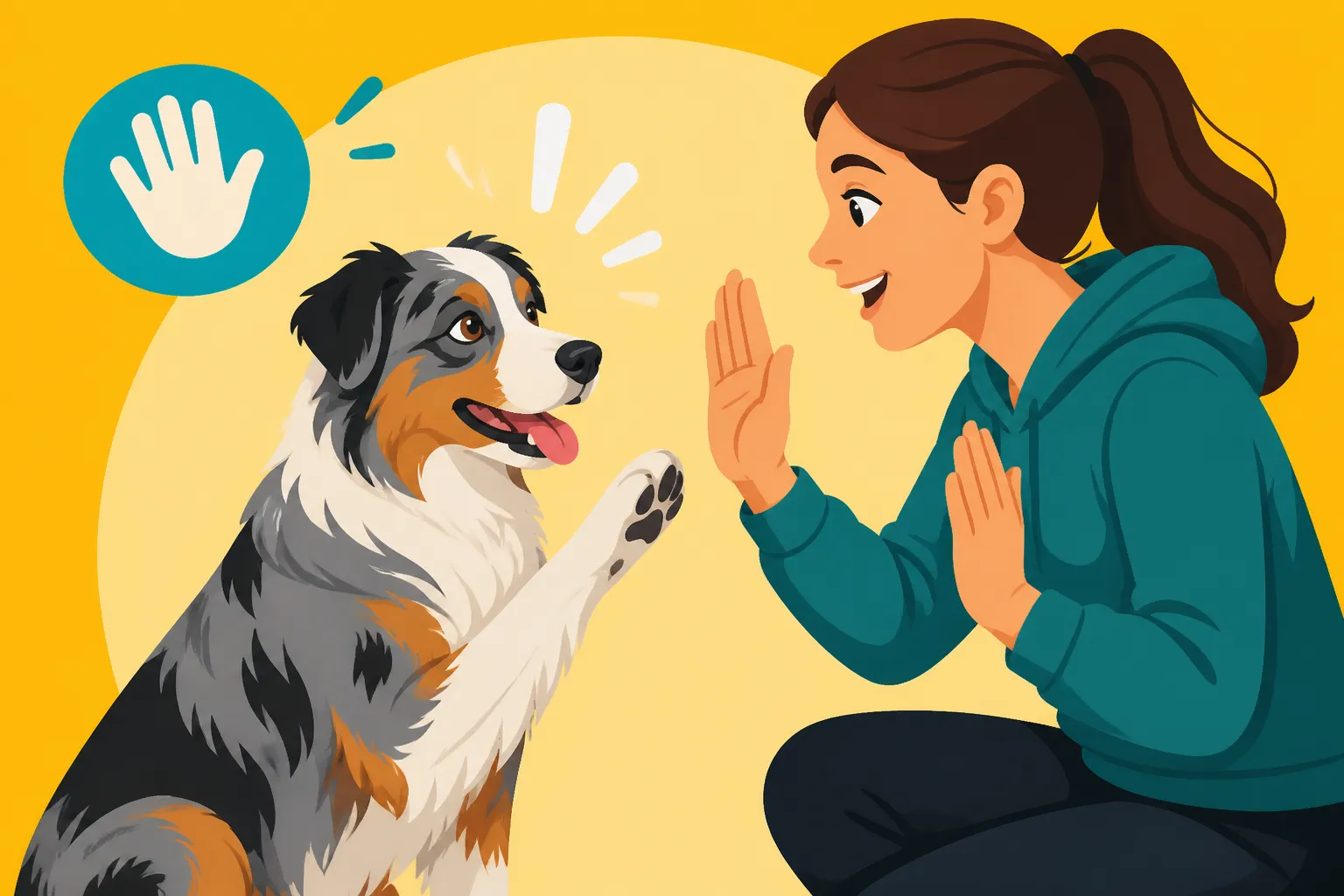
Teaching a Deaf Aussie Its First Signals
Bringing home a deaf Australian Shepherd puppy or realizing your older Aussie has lost their hearing can feel incredibly daunting. Suddenly, a whole layer of communication you took for granted, like calling their name or giving verbal commands, is gone. It’s easy to feel lost, wondering how you’ll ever teach them anything, let alone keep them safe. But I promise you, a deaf Aussie can live a rich, fulfilling life, and this guide is here to walk you through how to teach those vital first signals, building a strong, clear language between you both.
Understanding Deafness in Australian Shepherds and Its Impact on Communication
Discovering your Australian Shepherd is deaf can come as a shock. While some puppies are born deaf, known as congenital deafness, others might experience hearing loss gradually over time due to age, illness, or injury. Regardless of when it happens, the core challenge remains the same: finding new ways to communicate effectively with your highly intelligent, sensitive companion. It's not about what they can't do, but rather how you adapt to help them thrive.
Recognizing Congenital Deafness
For puppies, especially those with merle coats and blue eyes, congenital deafness is a real possibility. This type of deafness is often linked to the merle gene, particularly in Double Merle Australian Shepherds and What Breeding Two Merles Costs. Breeders should ideally have puppies BAER (Brainstem Auditory Evoked Response) tested, a simple, non-invasive test that confirms hearing in each ear. If you've just brought home a puppy and suspect deafness, you might notice they don't startle at loud noises, don't respond to their name, or sleep through sounds that would typically wake a hearing dog. Early detection is crucial, not for "fixing" the deafness, but for immediately adapting your training methods and building a bond based on visual cues from day one. It's a different path, not a lesser one. You might find more helpful insights in The BAER Test for Australian Shepherd Hearing.
When you get a deaf puppy, you're not just getting a dog; you're stepping into a unique communication partnership. They learn differently, relying heavily on their other senses, especially sight and vibrations. This means your interactions will be more visual, more intentional, and often, more physically expressive. It requires you to be a keen observer of their body language and to develop very clear, consistent hand signals. While the initial surprise or even sadness might be present, remember that a deaf Aussie doesn't know they're "missing out" on sound; they simply experience the world through a different, equally valid, sensory lens. They are just as capable of learning, loving, and engaging with the world as any other Australian Shepherd.
The Unique Challenges of a Deaf Aussie
Beyond the obvious communication barrier, a deaf Australian Shepherd faces particular challenges. Safety is a major concern. Without hearing, they can't detect approaching cars, the subtle rustle of a squirrel in the bushes, or a sudden warning from you if danger is near. This makes off-leash activities in unfenced areas extremely risky. Their high prey drive, a common Aussie trait, combined with their inability to hear, means they could bolt after a rabbit and be unaware of traffic until it's too late. This is why a solid, reliable visual recall is paramount, and why management, like secure fencing and long lines, becomes an even more critical part of their daily life.
Furthermore, a deaf Aussie might be more prone to being startled. Imagine living in a silent world, and then suddenly feeling a tap on your shoulder or seeing someone appear unexpectedly. This can make them jump, and in some cases, react defensively if they feel threatened. This isn't aggression; it's a natural startle response. To mitigate this, always approach them gently and in their line of sight, perhaps stamping your foot lightly on the ground to create a vibration, or waving your hand a little before making physical contact. Building trust around these interactions is key, ensuring they always associate your presence with positive, predictable experiences.
Establishing Foundational Communication: Your First Visual Signals
The cornerstone of living with a deaf Australian Shepherd is a robust system of hand signals. Forget everything you thought you knew about verbal commands; your hands, body language, and facial expressions will become your Aussie's primary dictionary. Starting with foundational signals builds a vocabulary that will serve you both for years, creating a seamless way to interact and give direction.
The Power of Hand Signals Over Voice Cues
Think of hand signals not as a substitute for verbal cues, but as their own powerful language. Unlike spoken words, hand signals are consistent across different environments, unaffected by background noise, distance, or even if your dog is looking away initially (a quick flash of a hand signal can catch their eye). The key to effective hand signals is consistency. Everyone in the household needs to use the exact same signal for the same command, every single time. There's no room for variation, as even subtle differences can confuse a dog relying solely on visual input.
When you introduce a signal, make it clear, concise, and distinct from others. For example, a flat hand might mean "stay," while a pointed finger means "come." It's helpful to stand in front of your dog when first teaching, allowing them to see your entire body, and ensuring good lighting. As they learn, you can gradually move further away or introduce distractions. Remember, an Australian Shepherd is incredibly intelligent and thrives on learning; they will pick up on these signals remarkably quickly once they understand the game.
Teaching "Watch Me" and Attention
Before you can teach any specific commands, your Aussie needs to understand how to give you their attention. This "watch me" signal is arguably the most important foundational cue. Without it, you're just talking to yourself with your hands. To teach it, stand in front of your Aussie with a high-value treat. Hold the treat near your eyes, so they have to look up at your face to see it. As soon as their eyes meet yours, even for a split second, give them your agreed-upon "yes" signal (a quick thumbs-up, a flick of the wrist, or a specific facial expression) and immediately reward them with the treat. Repeat this many times in short, fun sessions.
Once they reliably look at your face, you can introduce a hand signal for "watch me." Perhaps tap your chin or make a small circle with your pointer finger near your eye. Pair this signal with the action of bringing the treat to your face, then reward. Gradually, you'll fade the treat lure, so the hand signal itself becomes the cue for attention. This will be your go-to signal to get their focus before giving any other command, critical for safety and effective communication, especially when out in new environments.
Mastering "Sit" and "Come" Visually
With "watch me" established, you can move on to essential commands like "sit" and "come." For "sit," hold a treat above your Aussie's head, slowly moving it back towards their tail. As their nose follows the treat, their rear naturally lowers into a sit. The moment their rear touches the ground, give your "yes" signal and reward them. Once they reliably sit when lured, introduce your chosen hand signal for "sit" (e.g., an open palm moving downwards). Perform the signal, then the lure, then the reward. Over time, fade the lure until only the hand signal is needed.
"Come" is another critical safety command. Start in a quiet, confined space. Get your Aussie's attention with your "watch me" signal. Then, turn and walk a few steps away, kneeling down and making an exaggerated, inviting "come" signal (e.g., hands open, sweeping inwards). The moment they start moving towards you, give your "yes" signal, and reward them generously when they reach you. Make it a huge party! Practice this many, many times, gradually increasing distance and introducing mild distractions. For a deaf Aussie, a reliable visual "come" can literally be a lifesaver. You can find more detail on this in Teaching a Deaf Aussie Its First Signals.
Tools and Techniques to Support Training a Deaf Aussie
Training a deaf Australian Shepherd often involves a few specialized tools and techniques that hearing dog owners might not consider. These aren't crutches, but rather aids that enhance communication and ensure safety, allowing your Aussie to live a full and engaged life.
The Role of High-Value Treats and Lures
In the absence of verbal praise, high-value treats become an even more powerful motivator and communication tool for a deaf Aussie. A "high-value" treat means something your dog absolutely adores – tiny pieces of cooked chicken, cheese, hot dogs, or a special commercial treat. These aren't just rewards; they're feedback. When your Aussie performs a desired action, the immediate delivery of a fantastic treat tells them, "Yes! That's exactly what I wanted!" This instant reinforcement is vital because they can't hear your enthusiastic "Good dog!" or "Yes!"
Using these treats as lures is also incredibly effective for shaping new behaviors. As demonstrated with "sit," you use the treat to guide your dog into the correct position, then reward. Once the behavior is performed consistently, you introduce the hand signal, then eventually fade the lure. Investing in a variety of truly tempting treats and a good treat pouch (many excellent options are available on Amazon) will make your training sessions more efficient and enjoyable for both of you. Remember to keep sessions short, positive, and engaging to maximize learning and prevent frustration. Treats That Fit an Australian Shepherd Training Day is a good read for ideas.
Vibration Collars as a Gentle Communication Aid
A vibration collar can be an invaluable tool for getting a deaf Aussie's attention, especially at a distance or when their back is turned. It's crucial to understand that a vibration collar is not a shock collar. It simply provides a tactile cue – a gentle buzz – that signals "look at me!" or "something is about to happen." Introduce it positively: put the collar on, give a short vibration, and immediately follow with a high-value treat. Repeat this many times, associating the vibration with something wonderful.
Once they reliably look at you after a vibration, you can pair it with your "watch me" hand signal. Later, you can use the vibration as a pre-signal for "come." For instance, a quick vibration, then your "come" hand signal, followed by enthusiastic rewards when they reach you. Brands like Garmin and E-Collar Technologies offer reliable vibration-only training collars, and while they require careful and consistent introduction, they can significantly improve your ability to communicate with your deaf Australian Shepherd from afar. Always ensure the collar fits correctly and is used humanely as an attention-getter, not a punishment.
Utilizing Visual Cues in Everyday Life
Beyond formal hand signals, think about how you can incorporate visual cues into every aspect of your deaf Aussie's daily routine. Simple things can become powerful communication tools. For example, a specific light flickered on and off might mean it's time to go outside. A distinct wave of your hand could signal dinner time. Even your body posture and facial expressions communicate volumes. If you're happy and relaxed, they'll pick up on that visually. If you're tense or frustrated, they'll see that too.
Consider implementing a "touch" cue, where your Aussie targets your hand with their nose. This can be used to redirect their attention, lead them away from something, or even to move them to a specific spot. You might also want to explore using a laser pointer (used carefully and never directly in their eyes) to quickly direct their gaze to you from a distance, or a flashlight at night. The goal is to make your communication as rich and diverse as possible, recognizing that their visual world is their primary source of information.
Building a Strong Bond and Addressing Unique Challenges
Living with a deaf Australian Shepherd isn't just about teaching signals; it's about fostering an incredibly deep and trusting bond. Their reliance on you for information and safety means you become their eyes and ears in many situations, making that connection even more profound.
Consistency and Patience: The Keys to Success
When you're teaching a deaf Aussie, consistency isn't just a good idea; it's absolutely essential. Every family member, every person who interacts with your dog, needs to use the same hand signals, the same "yes" signal, and the same reward system. Inconsistency is incredibly confusing for a dog that relies solely on visual cues. Imagine trying to learn a new language where everyone pronounces words differently – it would be a nightmare! Create a cheat sheet or even a video of the signals for everyone to follow.
Patience is equally critical. There will be moments of frustration, especially when your Aussie isn't paying attention or seems to "forget" a signal. Remember, they're not being stubborn; they might be distracted, tired, or simply haven't made the connection yet. Avoid scolding or punishment, as this can damage trust and make them hesitant to engage. Instead, go back to basics, simplify the environment, use higher-value treats, and celebrate every tiny step of progress. That steady, calm demeanor from you will be their guiding light.
Socialization and Safety for Deaf Aussies
Socialization for a deaf Australian Shepherd needs a slightly different approach. While exposure to new sights, sounds (even if they can't hear them), people, and dogs is important, safety must always be paramount. They won't hear a playful bark or a warning growl from another dog, so close supervision is non-negotiable, especially during off-leash interactions. Look for calm, well-socialized dogs for them to interact with, and always introduce new dogs slowly and on leash. Socializing an Aussie Puppy Off the Farm can offer some general tips, but remember to adapt them for deafness.
For safety outdoors, a securely fenced yard is ideal. When on walks, a leash and harness are a must. Consider a brightly colored vest or collar that says "Deaf Dog" to alert others. This helps prevent people from startling them by approaching from behind or expecting a verbal response. For those situations where you need to give them a bit more freedom but still maintain control, a long line (like a 30-foot or 50-foot lead available on Amazon) can be a fantastic tool, allowing them to explore safely while you maintain a physical connection. Also, make sure their collar or harness has clear identification, including a note about their deafness, in case they ever get lost.
Celebrating Small Victories and Adapting as You Go
The journey of teaching a deaf Australian Shepherd is a marathon, not a sprint. It's filled with tiny triumphs that deserve to be celebrated! When they respond to "sit" with a wagging tail, when they check in with you after a vibration cue, or when they offer you their attention in a busy environment – these are all huge victories. Acknowledge them, praise them with your "yes" signal, and offer that fantastic treat. This positive reinforcement builds confidence in both of you.
Your Australian Shepherd will teach you as much as you teach them. Be open to adapting your methods, trying new signals, or finding creative ways to solve communication puzzles. Perhaps your Aussie responds better to hand signals given from a lower position, or they need a longer "watch me" cue before a new command. Raising a Deaf Australian Shepherd Puppy delves into some of these adaptations. Every deaf Aussie is an individual, and the unique language you build together will be a testament to your bond and their incredible capacity to learn and love, regardless of how they experience the world.
Table: Common Commands and Hand Signal Ideas
Here's a quick guide to some common commands and suggestions for visual hand signals. Remember, the most important thing is consistency!
| Verbal Command | Hand Signal Idea | Description |
|---|---|---|
| Watch Me | Tap chin, finger to eye, or quick wave from your face | Used to get your dog's attention and ensure they are looking at you before a command. This is foundational. |
| Sit | Open palm, fingers up, moving hand downwards from above their head | Guide their rear to the ground. Maintain an open, clear signal. |
| Stay | Flat hand held up, palm facing dog, like a "stop" sign | A clear, still signal to communicate holding position. |
| Come | Both hands open, sweeping inwards towards your chest, or a big, inviting arm wave | Exaggerated and welcoming, to encourage them to run towards you. This signal should be a "party" signal. |
| Down | Hand sweeping downwards from chest level to the floor | Mimics the action of lying down. |
| Stand | Hand held flat, palm down, sweeping slightly forward horizontally | Encourages them to rise to a standing position from a sit or down. |
| Leave It | Open hand pushed forward towards the object of interest, then quickly withdrawn | A firm "don't touch" signal, often combined with body blocking or stepping between the dog and the item. |
| Drop It | Open hand and fingers splayed, sweeping downwards | A signal to release an item from their mouth. Often paired with a trade for a better item. |
| No / Wrong | Quick, firm "thumbs down" or a sharp, quick wave of the hand from side to side | A clear, immediate signal to mark an undesired behavior without verbalizing. Follow with redirection to a desired behavior. |
| Yes / Good | Quick "thumbs up" or a distinct flick of the wrist | The visual marker signal to indicate they performed the correct action, always immediately followed by a treat. This is their equivalent of verbal praise. A training program like BAXTER & Bella often emphasizes positive marker training. |
Disclaimer
This article is for general informational purposes only and does not constitute professional advice. Laws, prices and regulations vary by location and change over time. Consult a qualified professional for guidance on your specific situation.