Cooperative Care for an Australian Shepherd at the Vet
One of the toughest parts of being an Australian Shepherd parent is undoubtedly the vet visit. It’s supposed to be about keeping our beloved dogs healthy, but for many Aussies, it can turn into a wrestling match, a frantic escape attempt, or a trembling, panting ordeal that leaves both you and your dog stressed for days. You want to do what’s best for them, but the sheer anxiety involved can make you dread scheduling those crucial appointments. This guide is all about transforming that fear and struggle into a partnership, teaching you how to implement cooperative care so your Aussie can feel more comfortable, empowered, and safe at the veterinary clinic.
Understanding Why Vet Visits Are Stressful for Australian Shepherds
It's easy to feel frustrated when your usually calm and intelligent Aussie turns into a panicked mess at the vet. But understanding why they react this way is the first step toward helping them. Australian Shepherds are incredibly sensitive, intelligent, and often very tuned into their environment and your emotions. This makes them wonderful companions, but also highly susceptible to stress in unfamiliar, high-stimulus situations.
The Aussie's Sensitive Nature and Herding Instinct
Australian Shepherds were bred for generations to work closely with their human partners, herding livestock with keen observation and quick reactions. This means they are inherently watchful, often sensitive to touch from strangers, and can become easily overwhelmed when they feel a loss of control or perceive a threat. In a vet clinic, they're surrounded by strange smells (other sick animals, cleaning solutions), unusual noises (barking, whirring machines), and people they don't know touching them in strange ways. Their natural instinct to control their environment or even flee from perceived danger kicks in, overriding their usual calm demeanor. It's not defiance; it's deep-seated instinct.
Think about it: an Aussie's whole job on the farm is to manage and control movement. When they are held still on a cold table, poked, prodded, and not allowed to react naturally, it goes against everything they are hardwired to do. This can manifest as anything from shutting down and trembling to trying to nip or squirm away. It's their way of saying, "I'm uncomfortable, and I don't understand what's happening." This is particularly true for an Aussie who might already be prone to Australian Shepherd Reactivity and Overarousal in other situations.
Previous Negative Experiences and Learned Fear
Just like us, dogs remember bad experiences. Maybe your Aussie had a particularly painful vaccination as a puppy, a scary incident during a nail trim, or even a routine procedure that felt invasive. They don't differentiate between a "good" vet and a "bad" vet; they associate the place and the actions with the negative feeling. Every subsequent visit can trigger that memory, leading to anticipatory fear.
For instance, if your Aussie was once held down forcefully for a blood draw, they might start to panic the moment they walk through the clinic doors, even if the current vet team is incredibly gentle. They've learned that this environment can lead to unpleasant sensations, and they'll do whatever they can to avoid it. This learned aversion can be incredibly strong, and it requires a dedicated, patient approach to overcome. It's not about being "dramatic"; it's a genuine emotional response.
Overstimulation in a Clinical Environment
A veterinary clinic is a sensory overload for a dog, especially a highly perceptive Australian Shepherd. The intense smell of antiseptic, the sight of other nervous animals, the sound of strange equipment, and the constant coming and going of people can push an Aussie's sensory system into overdrive. What might seem like a calm waiting room to us is a cacophony of fear and unfamiliarity for them.
Imagine your Aussie, already on high alert due to its natural watchfulness, processing all these new inputs simultaneously. Their cortisol levels can skyrocket, making them more prone to startling, less able to focus, and quicker to react defensively. Even subtle cues from you—a tense grip on the leash, a worried tone of voice—can amplify their stress, as they are so attuned to human emotions. A dog that is usually a social butterfly might become aloof or even grumpy in this environment, simply because they are overstimulated and trying to cope.
Building Trust and Positive Associations at Home
The key to cooperative care isn't just about what happens at the vet; it's primarily about the groundwork you lay at home. By making routine handling and exposure to vet-like scenarios a positive, predictable experience, you empower your Aussie and build their confidence.
Touch Protocol and Handling Exercises
Start by making touching all parts of your Aussie's body a positive experience, not just when they need grooming or a vet check. Use gentle, calm strokes, and pair them with incredibly high-value treats. Practice touching their paws, gently spreading their toes, lifting their lips to look at their teeth, feeling their ears, and touching their belly. The goal is to make these interactions mundane and pleasant.
One effective method is "consent-based" handling. This means asking your Aussie for permission, or at least giving them the option to disengage. For example, when you go to check their ears, hold your hand out, and if they lean into it or remain relaxed, proceed. If they turn their head or try to move away, respect that and try again later, or with an even higher value reward. This teaches them that they have some control and that you will listen to their cues. A great resource for this kind of foundational training could be found in online programs like those offered by BAXTER & Bella, which emphasize positive reinforcement and building a strong partnership. Consistent practice, even for just a few minutes daily, can make a world of difference. You might even want to try Muzzle Training an Australian Shepherd at home with positive reinforcement, so if a muzzle is ever needed at the vet, it's not a scary, novel experience.
Introducing Vet Tools Gradually
Many vet procedures involve tools that can look, sound, or feel strange to a dog: stethoscopes, thermometers, nail clippers, even the examination table itself. You can demystify these items at home. Get a child's stethoscope and gently touch it to your Aussie's chest while feeding them treats. Practice lifting their tail and gently touching a cool, smooth object (like a marker cap) to simulate a thermometer, again, with constant treats.
Even something as simple as standing on a raised, stable surface (like a sturdy coffee table covered with a non-slip mat) can simulate an exam table. Reward heavily for just standing there calmly. For nail trims, introduce the clippers or grinder visually first, then touch them to a paw, then clip just one nail, all while doling out treats. You can find many of these grooming tools, like various types of nail clippers, deshedding rakes, or even veterinary-style non-slip mats, conveniently on Amazon. Remember, short, positive sessions are far more effective than long, forced ones.
The Power of High-Value Rewards
For Australian Shepherds, especially those under stress, "high-value" treats are absolutely essential. This isn't your everyday kibble. Think small pieces of cooked chicken, cheese, hot dogs, or creamy peanut butter. These are the "jackpot" rewards that make even slightly uncomfortable experiences worth it.
During your at-home handling practice, use these special treats exclusively. This helps your Aussie associate these specific handling scenarios with the most delicious things they can imagine. At the vet clinic, these high-value rewards become an invaluable distraction and motivator. When the vet or tech is performing a quick exam, you can create a "treat conveyor belt," feeding your Aussie continuously to keep them focused on the good stuff rather than the poke or prod. It's a powerful tool in cooperative care, proving that good things happen when they cooperate. For tips on managing your puppy's development and positive reinforcement, you might look into The Aussie Puppy Curriculum Month by Month.
Strategies for a Smoother Vet Visit Experience
Even with all the home practice, the vet clinic is a different ballgame. Having specific strategies for the actual visit can significantly reduce stress and improve cooperation.
Finding a Fear-Free or Cooperative Care Vet
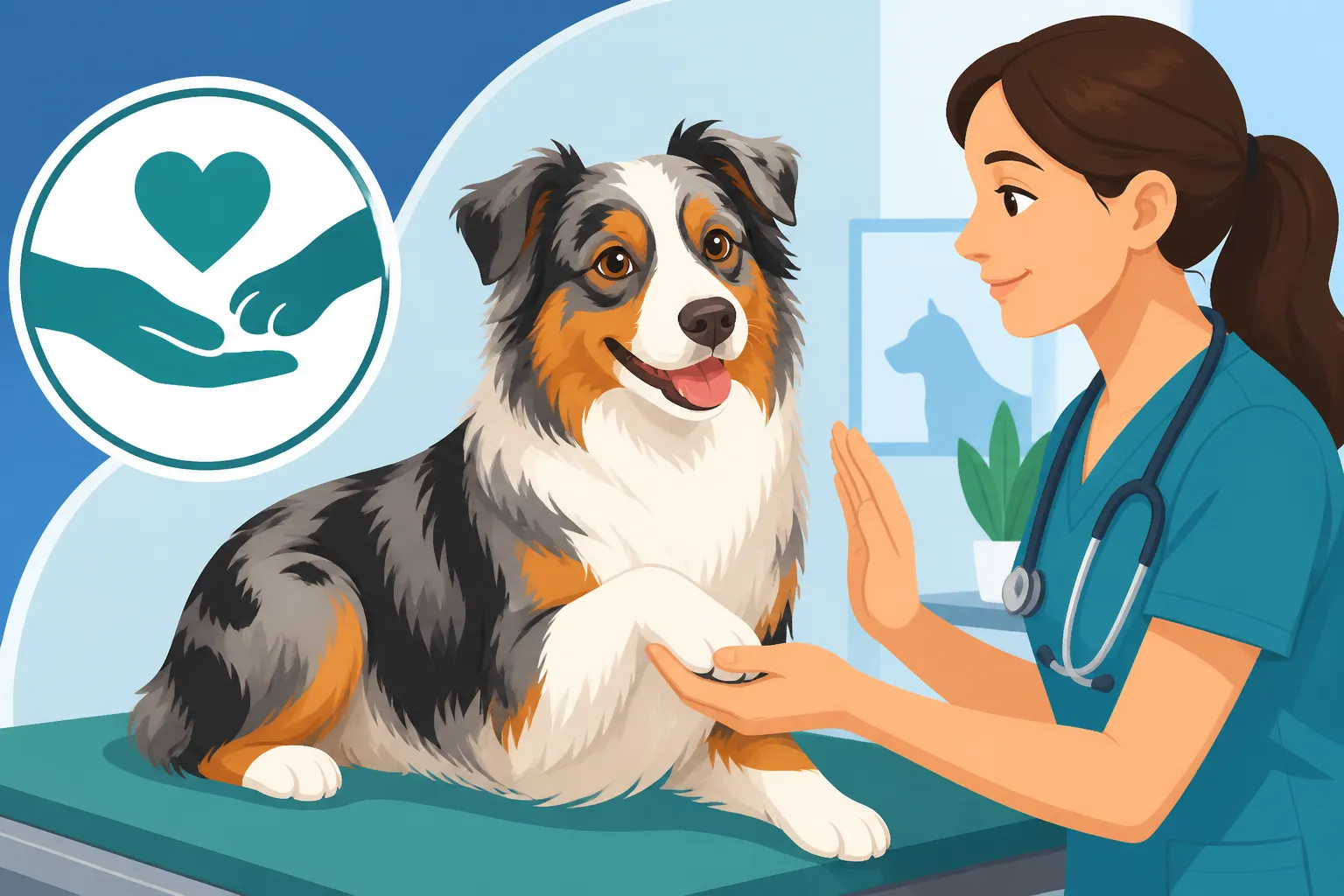
Not all vet clinics are created equal when it comes to managing anxious patients. Look for clinics that explicitly promote "Fear-Free" or "low-stress" handling techniques. These clinics are often designed with features like separate waiting areas for dogs and cats, calming pheromone diffusers, and staff trained in gentle handling, distraction techniques, and reading canine body language. They prioritize your dog's emotional well-being as much as their physical health.
A fear-free vet will be open to discussing your Aussie's anxieties beforehand. They might suggest giving anti-anxiety medication before the visit, allow you to wait in your car until it's your turn, or even do exams on the floor if your Aussie is more comfortable there. Don't be afraid to interview clinics and ask about their approach to fearful dogs. A good fit can make all the difference, especially if your Aussie shows signs of An Australian Shepherd That Gets Worse in the Evening due to anxiety.
| Feature | Traditional Vet Visit | Cooperative Care Vet Visit |
|---|---|---|
| Approach | Restraint-focused, get it done quickly | Consent-based, low-stress, patient comfort first |
| Waiting Room | Shared space, often crowded and noisy | Separate areas, quiet zones, car waiting encouraged |
| Handling | Firm holding, might involve muzzle without prep | Gentle, distraction, treats, less physical restraint |
| Environment | Clinical, sterile, strong smells | Calming pheromones, non-slip surfaces, soothing sounds |
| Treats | Minimal or none, sometimes a generic biscuit | High-value, continuous feeding, "treat conveyor" |
| Medication | Used for extreme cases, often as a last resort | Proactive anti-anxiety meds often prescribed |
| Owner Role | Passive observer, holding the leash | Active participant, advocate, dispenser of treats |
Pre-Visit Preparation and Communication
A little planning goes a long way. Before your appointment, call the clinic to explain your Aussie's anxiety. Ask for a quiet appointment time, perhaps first thing in the morning or mid-afternoon when it's less busy. Inquire if they can offer a longer appointment slot to allow for more time to settle.
On the day of the visit, avoid activities that might heighten your Aussie's arousal. Take a calm walk, but don't engage in high-energy play right before. Bring their favorite blanket or a mat from home with familiar smells, and definitely bring an arsenal of those high-value treats. You can even bring a LickiMat spread with peanut butter or spray cheese, which can provide a sustained distraction. If your vet has prescribed pre-visit medication, administer it well in advance to give it time to take effect. For overall health, ensure you're keeping up with Australian Shepherd Dental Care and Australian Shepherd Ear Cleaning at home, reducing potential discomfort points at the vet.
During the Appointment: Advocacy and Support
When you arrive, advocate for your Aussie. If the waiting room is chaotic, ask if you can wait outside or in an exam room. Once in the room, let your Aussie explore and sniff around for a few minutes. Don't rush into the exam. If possible, let them choose where they'd like to be examined—on the floor, on a mat, or even on your lap.
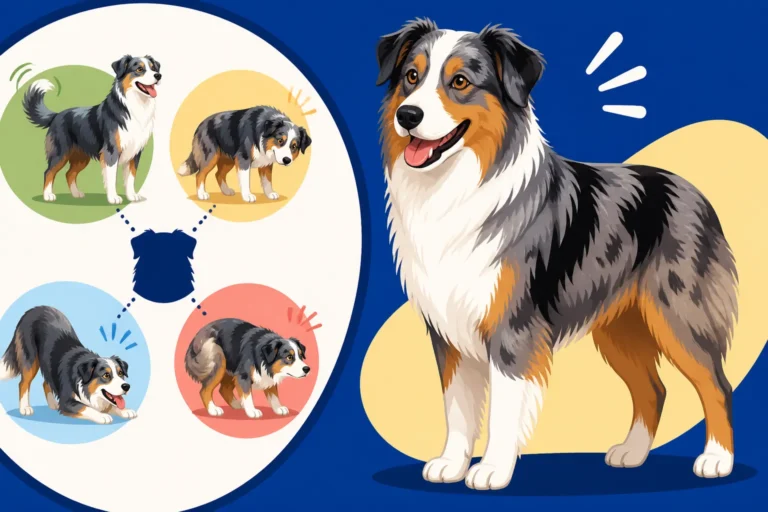
Work with the vet and tech. You are your Aussie's greatest advocate. Continuously feed treats during the exam, especially for procedures like injections or blood draws. If your Aussie is showing signs of stress (lip licking, yawning, stiff body, panting, whale eye), speak up. It's okay to ask the vet to pause, take a break, or try a different approach. Your presence and calm demeanor are incredibly supportive, and your ability to read their signals is paramount. Remember, this is a partnership to ensure your Aussie's well-being. This is an important part of The Health Tests Every Australian Shepherd Parent Needs, ensuring they are done with minimal stress.
Long-Term Benefits and Maintaining Cooperative Care
Cooperative care isn't a one-and-done solution; it's an ongoing commitment that pays dividends throughout your Australian Shepherd's life. The benefits extend far beyond just vet visits, fostering a deeper bond and greater overall confidence in your dog.
Empowering Your Aussie Through Choice
When you practice cooperative care, you teach your Australian Shepherd that they have a voice, that their discomfort will be heard, and that they can actively participate in their own care. This sense of agency is incredibly empowering for a dog, especially a sensitive and intelligent breed like the Aussie. Instead of feeling like a victim of circumstances, they learn to trust that you will protect them and make sure their experiences are as positive as possible.
This empowerment translates into a more confident dog in general. An Aussie who feels secure in handling situations is less likely to become anxious or reactive in other new or challenging environments. They learn that cooperation leads to good things, reinforcing positive choices. This mental shift reduces their overall stress burden, which can have long-term positive impacts on their physical health as well.
Beyond the Vet: General Handling and Grooming
The principles of cooperative care are transferable to almost any situation where your Australian Shepherd needs handling. Think about regular grooming sessions: brushing out that thick double coat, cleaning ears, or trimming nails. If these are already positive, treat-filled experiences at home, then grooming becomes another opportunity for bonding rather than a dreaded chore.
For example, using a high-velocity dryer after a bath can be a frightening experience for many Aussies due to the noise and sensation. By gradually introducing the sound (away from them, then closer) paired with treats, and building up to the actual drying process, you can make it tolerable, even enjoyable. Similarly, if your Aussie needs regular medication or wound care, cooperative care techniques make these tasks much easier and less stressful for everyone involved. For specific advice on coat care, consider resources like Brushing an Australian Shepherd Through Coat Blow or for their general well-being, Australian Shepherd Skin, Coat and Allergy Problems. These skills ensure that all necessary care, whether at home or at the clinic, is met with calm and cooperation.
Disclaimer
This article is for general informational purposes only and does not constitute professional advice. Laws, prices and regulations vary by location and change over time. Consult a qualified professional for guidance on your specific situation.