Two Aussie Hours a Day and What Counts
Many Australian Shepherd owners find themselves utterly baffled by the sheer, boundless energy of their beloved companions, often hearing advice like "Aussies need two hours of exercise a day!" only to discover that two hours of a simple walk leaves their dog just as wired as before. This guide is here to unravel that mystery, explaining what "two hours a day" truly means for an Australian Shepherd, how to make that time genuinely count, and how to prevent the frustration of a dog that seems to run on an endless battery.
Understanding the Australian Shepherd's Energy Drive
It’s easy to look at an Australian Shepherd and see a beautiful, intelligent dog, but it's crucial to remember that beneath that gorgeous coat and those captivating eyes lies centuries of purposeful breeding for hard work. These aren't just pets; they're finely tuned working machines, designed to spend their days covering vast distances, making split-second decisions, and managing livestock with intense focus and stamina. When we bring them into our homes, we're asking them to adapt their deeply ingrained instincts to a very different world, and that requires us to understand their fundamental needs.
More Than Just a Walk in the Park
A common misconception is that physical exercise alone will satisfy an Australian Shepherd. Many new owners diligently walk their Aussie for an hour or two, only to find them pacing, nipping, or destroying furniture once they get home. The truth is, a casual stroll around the block, no matter how long, often does little to engage the profound mental and physical drive that defines this breed. They weren't bred to amble; they were bred to work. Their minds are constantly processing information, anticipating movement, and looking for a task.
Imagine a highly intelligent person given a repetitive, boring job – they'd quickly become restless and frustrated. An Australian Shepherd experiences something similar when their daily "exercise" consists solely of undemanding physical movement. Their brains are wired for complex problem-solving and intense concentration, and without an outlet for these capabilities, that energy simply doesn't dissipate. It's not just about burning calories; it's about fulfilling their intrinsic nature. This deeply ingrained instinct, The Australian Shepherd Herding Drive You Cannot Train Out, will always be present, and it needs a proper outlet.
The Mental Component of Exercise
This brings us to a critical point: for an Australian Shepherd, mental exercise is just as, if not more, exhausting than purely physical exertion. A tired body with an under-stimulated mind often results in a dog that is still anxious, destructive, or prone to obsessive behaviors. Their intelligence is a double-edged sword; it makes them incredibly trainable and capable, but if not channeled constructively, it can lead to boredom and problematic habits.
Think about a dog who has spent an hour intently focusing on a scent trail, solving a complex puzzle feeder, or learning a new multi-step trick. That dog often comes home and collapses, truly exhausted, because their brain has been working overtime. This kind of mental engagement taps into their natural instincts for problem-solving, decision-making, and focus, mimicking the cognitive demands of herding livestock. Providing outlets for this mental energy is absolutely key to a calm, well-adjusted Australian Shepherd. Understanding Mental Work That Actually Tires an Australian Shepherd is fundamental to their well-being.
What "Two Hours a Day" Really Looks Like
When people talk about two hours of exercise for an Australian Shepherd, they aren't suggesting a single, unbroken block of running or walking. While some high-drive Aussies might thrive on a long, continuous hike, for most, and for their owners' sanity, it's about smart distribution and varied activities. The quality and type of activity far outweigh merely clocking time.
Breaking Down the Time: Quality Over Quantity
The real secret to that "two hours" is often found in breaking it up into several shorter, more intense, and mentally engaging sessions throughout the day. Instead of one long, monotonous walk, consider two or three 30-45 minute sessions that combine physical exertion with mental challenges. For example, a morning power walk or jog, a midday training session with some vigorous fetch, and an evening sniffari or puzzle game. This varied approach keeps your Aussie guessing, prevents boredom, and works different muscle groups and cognitive functions.
It's also about understanding your individual dog. Some Aussies have higher physical stamina, while others might be more mentally driven. Observing your dog's behavior after different types of exercise will give you clues. Do they crash after a long run but still seem restless? Add more mental games. Do they seem bored by simple fetch? Introduce a flirt pole or more advanced training. The goal is a truly satisfied dog, not just a physically drained one. This approach is key to Building an Australian Shepherd Exercise Routine.
The High-Impact Activities That Count
When we talk about activities that truly 'count' towards an Aussie's exercise needs, we're looking for things that mimic their historical purpose: intense bursts of speed, quick changes of direction, problem-solving, and deep engagement. These are the activities that will leave your Aussie both physically tired and mentally fulfilled.
Consider dog sports like agility, flyball, or disc dog. These aren't just fun; they're incredible outlets for an Aussie's intelligence, athleticism, and drive. They require focus, communication, and fast reflexes. Herding instinct tests, even if you never intend to work sheep, can be profoundly satisfying for an Aussie and provide an immense mental workout. Long-distance fetch with multiple balls, vigorous swimming in a safe environment, or intense off-leash trail hikes where they can explore and sniff are also fantastic. These activities, like Australian Shepherd Agility and Disc Sports, are excellent because they tap into their natural desire to chase, gather, and solve problems. Remember, your Aussie thrives on having a job, and these activities provide excellent substitutes for their ancestral duties.
Incorporating Mental Stimulation into Daily Exercise
Physical activity is important, but without a robust mental component, an Australian Shepherd can still be a handful. Their intelligence demands to be challenged, and when it is, you'll find a much calmer, more settled dog.
Puzzle Solvers and Scent Work
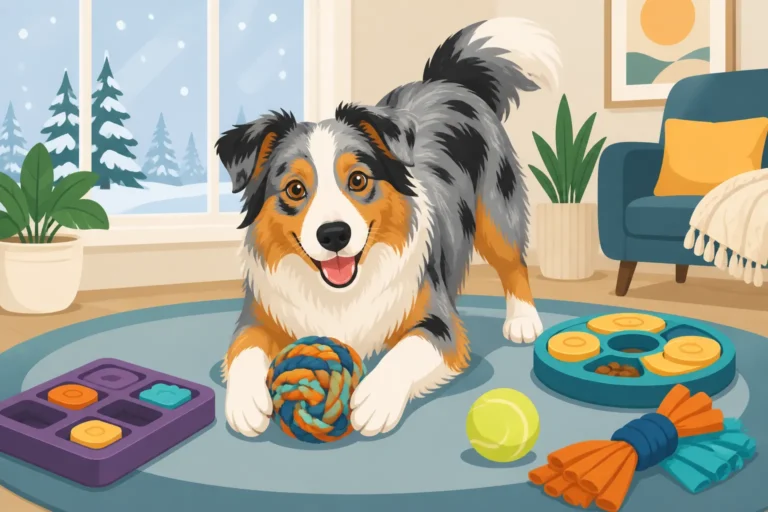
One of the most effective ways to tire out an Australian Shepherd's brain is through puzzle toys and scent work. These activities tap into their innate problem-solving abilities and powerful sense of smell, providing a deeply satisfying challenge. Instead of simply eating dinner from a bowl in two minutes, an Aussie can spend 15-30 minutes working to extract their meal from a KONG Wobbler, a snuffle mat, or a more complex dispensing toy. The mental effort involved in manipulating these toys, strategizing how to get the food out, and using their nose is surprisingly exhausting.
Scent work, or "nose work," is another fantastic option. You can start simply by hiding treats around the house or yard and encouraging your dog to find them. As they get better, you can introduce more complex scenarios, using specific scents (like essential oils on cotton swabs, available from specialty dog supply stores) and teaching them to alert you. This kind of focused sniffing and problem-solving is incredibly enriching and tiring for an Aussie. It’s a wonderful way to engage their brains, even on days when physical exercise might be limited due to weather or your schedule. Scent Games That Tire an Australian Shepherd can be done almost anywhere and are excellent for building confidence.
Training as a Form of Exercise
Training isn't just about teaching manners; it's a powerful form of mental exercise for an Australian Shepherd. Every new command, every refined cue, every complex trick learned requires focus, memory, and sustained attention. Short, frequent training sessions – think 5-10 minutes, several times a day – can be incredibly effective at burning mental energy.
Beyond basic obedience, consider teaching advanced tricks like "weave through legs," "fetch a specific toy by name," or even complex obstacle courses in your yard. Cooperative care training, where your dog learns to voluntarily participate in grooming or vet procedures, also provides mental stimulation and builds trust. The beauty of using training as exercise is that it also strengthens your bond with your Aussie, improving communication and making them a more responsive companion in all aspects of life. It’s an investment that pays dividends in a calmer, happier dog. Many Aussies thrive on the challenge of learning new things, and Trick Training as Aussie Mental Work can be a great way to do this.
Tailoring Exercise to Your Aussie's Age and Health
Just like humans, an Australian Shepherd's exercise needs change throughout their life. What's appropriate for a rambunctious adolescent might be detrimental to a growing puppy or a slowing senior. Always consult with your veterinarian to establish the best exercise regimen for your individual dog, especially if they have any health concerns.
Exercise Limits for Growing Puppies
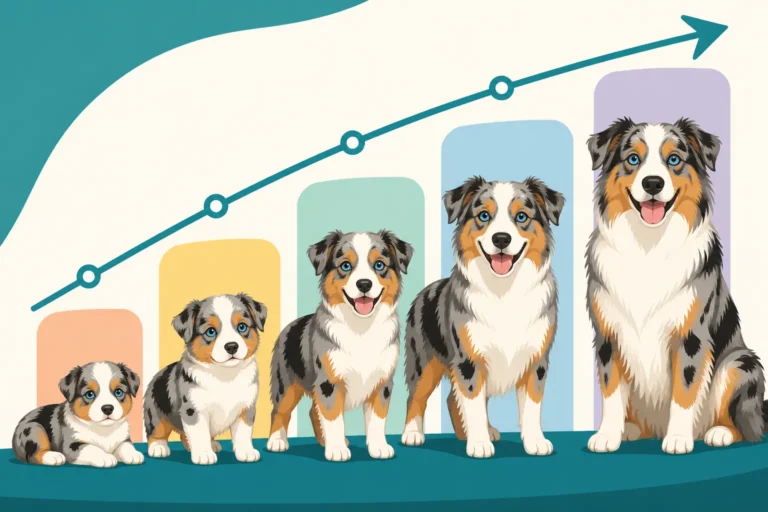
This is a critical point that many new Australian Shepherd owners overlook: over-exercising a puppy can cause irreversible damage to their developing joints and bones. While their energy seems endless, their skeletal system is still soft and vulnerable to impact. The general rule of thumb is about 5 minutes of structured exercise per month of age, twice a day. So, a 4-month-old puppy might get two 20-minute sessions of walking or gentle play.
Avoid forced running, long-distance jogging, jumping from high places, or intense, repetitive impact activities until their growth plates have closed, usually around 12-18 months of age. Instead, focus on short, supervised play sessions, gentle walks, and plenty of mental stimulation. Puppy classes are excellent for socialization and basic training without overexertion. Think about protecting their future working ability now. You can learn more about Exercise Limits for an Australian Shepherd Under a Year to ensure you're setting your pup up for a healthy life.
Adapting for Senior or Health-Compromised Aussies
As your Australian Shepherd enters their senior years, typically around 7-10 years old, their physical capabilities will naturally decline. They might develop arthritis, hip dysplasia, or other age-related conditions. This doesn't mean they stop needing exercise, but rather that the type and intensity must be adjusted.
Swimming is often an excellent low-impact exercise for senior Aussies, providing cardiovascular benefits without stressing joints. Shorter, more frequent walks at a comfortable pace are better than one long, strenuous outing. Mental stimulation remains crucial; puzzle toys, slow sniffaris, and gentle trick training can keep their minds sharp even if their bodies are slowing down. If your Aussie has specific health issues, like Australian Shepherd Arthritis After Years of Work, your vet can recommend physical therapy exercises or dietary supplements to support their mobility. The goal is to keep them comfortable, engaged, and happy, adapting to their changing needs with empathy and care.
Tools and Resources to Help Meet Exercise Needs
Meeting the exercise demands of an Australian Shepherd can feel like a full-time job, but there are plenty of tools, gear, and support systems available to make it more manageable and effective. Don't feel like you have to do it all alone!
Essential Gear for Active Aussies
Having the right equipment can make a huge difference in the quality and safety of your Aussie's exercise routine. A sturdy, well-fitting harness is essential for walks and hikes, distributing pressure evenly and preventing strain on their neck. Long lines (15-30 feet) are invaluable for practicing recall and allowing safe exploration in open, but unfenced, areas. You can often find a good selection of these at pet retailers like Chewy or Amazon.
For play, invest in durable, high-quality toys. Australian Shepherds are often powerful chewers and retrievers, so look for toys designed for vigorous play, such as sturdy rubber balls, frisbees, or flirt poles. Flirt poles are particularly great for channeling their prey drive and can provide an intense workout in a small space. Herding balls, those large, hard plastic balls that Aussies can push and chase, are another fantastic way to provide an outlet for their herding instinct without livestock. Having a variety of toys keeps things interesting and engages different aspects of their play drive.
Finding Professional Support and Community
Sometimes, despite your best efforts, you might need a little extra help. Professional dog walkers who specialize in high-energy breeds can be a lifesaver on busy days, ensuring your Aussie gets their necessary outing. Doggy daycares are another option, but choose carefully. Look for facilities that offer structured play, mental enrichment, and staff who understand the unique needs of herding breeds. A chaotic free-for-all daycare might overwhelm an Aussie and exacerbate reactivity, but a well-run program can be incredibly beneficial. Daycares That Can Tire an Aussie Out will often have specific programs or areas for herding breeds.
Joining local dog sports clubs (agility, flyball, obedience, nose work) can provide fantastic opportunities for structured exercise, training, and socialization for both you and your Aussie. These communities are often incredibly supportive and can offer expert guidance. If you're struggling with specific behavioral challenges related to under-exercise or over-stimulation, consider working with a certified professional dog trainer or behaviorist who has experience with Australian Shepherds. They can help you develop a tailored exercise and enrichment plan.
Common Mistakes and How to Avoid Them
Even with the best intentions, it's easy to fall into common traps when trying to manage an Australian Shepherd's energy. Recognizing these pitfalls can save you a lot of frustration and lead to a happier, better-adjusted dog.
The Pitfall of Only Physical Exercise
This is perhaps the biggest mistake new Aussie owners make. You might think, "My dog needs to run, so I'll take them for a two-hour run every day." While admirable in effort, if that run is purely physical, without mental engagement, you're essentially building a canine marathon runner. An Australian Shepherd that only gets physical exercise can become incredibly fit, but their minds remain restless. This can lead to an Aussie who seems to have more energy after a long run, not less. They might pace, bark excessively, or seek out destructive activities indoors because their brains are still underwhelmed and looking for a "job."
This cycle can be incredibly frustrating for owners. You're doing everything you think is right, pouring hours into physical activity, yet your dog still isn't settled. It's a clear sign that their mental needs aren't being met. Remember, they were bred for intense focus and problem-solving, not just endurance. To truly settle an Aussie, you need to combine that physical outlet with intellectual challenges. As we discussed earlier, Why Two Hours of Running Never Settles an Aussie often comes down to this missing mental component. An Aussie that is not mentally stimulated can struggle to "switch off" even after physical exertion, leaving you with An Australian Shepherd That Cannot Switch Off.
Ignoring Early Warning Signs of Under-Stimulation
Australian Shepherds are vocal and active communicators. When their needs aren't being met, they will absolutely let you know, often in ways that are inconvenient or destructive. Ignoring these early warning signs can lead to deeply ingrained behavioral problems that are much harder to address later on.
Common signs of an under-stimulated Aussie include:
- Excessive Barking: Barking at shadows, at sounds, at nothing in particular.
- Destructive Chewing: Chewing on furniture, shoes, walls, or anything they can get their mouths on.
- Nipping and Herding Behaviors: Nipping at heels, trying to "herd" children or other pets, especially indoors.
- Restlessness and Pacing: Unable to settle down, constantly moving from room to room, seeking attention.
- Anxiety and Obsessive Behaviors: Excessive licking, tail chasing, or showing signs of stress.
- General Hyperactivity: Seeming to bounce off the walls, inability to focus, easily startled.
If you're noticing these behaviors, it's not necessarily because your dog is "bad"; it's a desperate plea for more appropriate mental and physical outlets. These are classic Australian Shepherd Behavior Problems From Under-Exercise. Addressing these issues proactively by re-evaluating and diversifying their exercise and enrichment routine is far more effective than trying to punish the behaviors themselves. Your Aussie is trying to tell you something important about their needs.
Here’s a quick overview of how different activities contribute to your Aussie’s well-being:
| Activity Type | Physical Benefit | Mental Benefit | Recommended Daily Duration (Adult Aussie) | Example Gear/Method |
|---|---|---|---|---|
| Vigorous Fetch/Disc | High | Moderate | 30-60 minutes (split) | Durable frisbee, Chuckit! launcher, multiple balls |
| Agility/Flyball | High | High | 30-45 minutes (structured sessions) | Agility tunnel, jumps, weave poles, instructor |
| Hiking/Trail Running | High | Moderate-High (with sniffari) | 60-90 minutes (can be longer on occasion) | Harness, long leash, water bottle, sturdy shoes |
| Scent Work/Nose Games | Low | Very High | 15-30 minutes (split) | Snuffle mat, puzzle feeder, hidden treats |
| Trick Training | Low | High | 15-30 minutes (short sessions) | High-value treats, clicker, quiet environment |
| Herding Ball Work | Moderate-High | Moderate | 20-40 minutes (supervised) | Large, hard plastic herding ball (e.g., from Amazon) |
| Swimming | Moderate-High (low impact) | Low-Moderate | 20-40 minutes (supervised) | Life vest (if needed), safe water access |
| Structured Walks | Moderate | Low-Moderate (if varied) | 30-60 minutes (can be part of total) | Leash, harness, varying routes, allowing sniffing |
Remember, the key to a happy, well-adjusted Australian Shepherd isn't just about meeting a specific time quota, but about providing a diverse, engaging routine that addresses both their incredible physical capabilities and their sharp, working minds. It's a commitment, but the reward is an incredibly devoted and joyful companion.
Disclaimer
This article is for general informational purposes only and does not constitute professional advice. Laws, prices and regulations vary by location and change over time. Consult a qualified professional for guidance on your specific situation.