Why Two Hours of Running Never Settles an Aussie
It's a frustration many Australian Shepherd owners know all too well: you've just spent two solid hours throwing the ball, going for a brisk run, or even taking a long hike, only to come home to an Aussie who seems to have even more energy than before, perhaps pacing, nipping, or finding something to "herd" indoors. This guide is here to explain why endless physical exertion often misses the mark with this brilliant breed and what you can do to truly settle your high-drive companion.
The Deep Roots of Australian Shepherd Energy
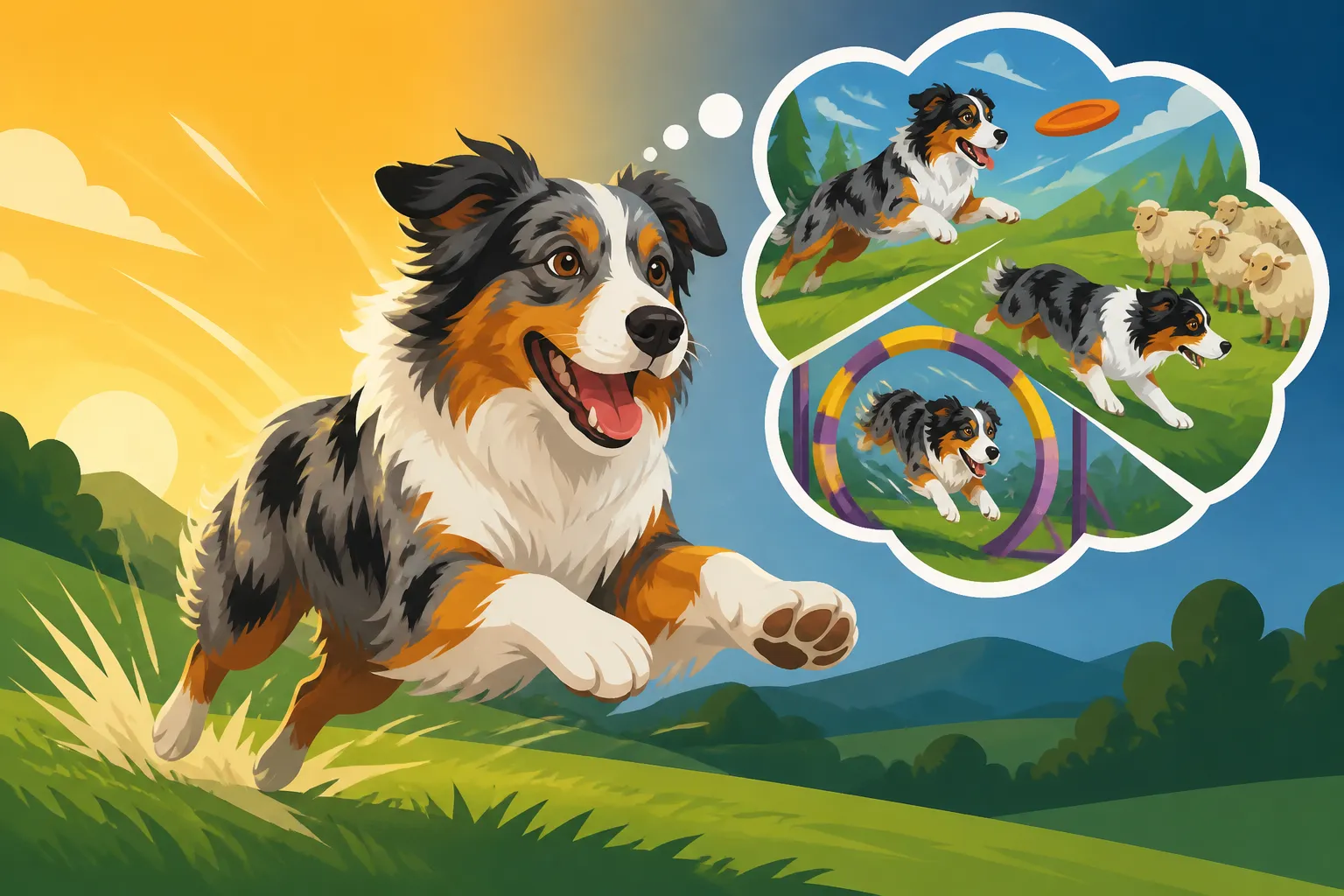
Let's be real, Australian Shepherds are not your average couch potato. They were bred for a demanding, mentally taxing job: herding livestock. This isn't just about running around a field; it's about strategy, quick decisions, intense focus, and responding to complex commands over long periods. When you bring an Australian Shepherd into your home, you're bringing in centuries of selective breeding that created a dog designed for both incredible physical stamina and profound mental acuity.
Bred for Brains and Brawn, Not Just Miles
Think about a sheepdog working a flock. They don't just sprint aimlessly. They assess the situation, anticipate movement, use their eyes to "eye" the sheep, block escape routes, and guide the flock with precision, all while staying connected to their handler. This requires immense problem-solving skills, memory, and the ability to process multiple pieces of information simultaneously. Their physical endurance was a prerequisite for the job, yes, but it was always paired with a highly engaged mind. A dog that could only run fast but couldn't think wouldn't have been much use on a ranch. This is why when we only offer physical exercise, we're only addressing half of their genetic programming. We're asking them to use their legs without engaging their incredibly powerful brains. It's like giving a rocket scientist a treadmill and expecting them to feel intellectually satisfied.
The Herding Instinct That Runs Deep
That intense desire to move things, to gather, to control, is the core of an Australian Shepherd's being. It's often referred to as Why Herding Instinct Is the Aussie Operating System. This isn't just a cute quirk; it's a deeply ingrained behavioral pattern. When an Aussie nips at your heels, circles children in the yard, or tries to "organize" other dogs at the park, they are acting on this powerful, instinctual drive. Running for hours might burn off some physical steam, but it doesn't necessarily satisfy that primal need to work and think. In fact, for some Aussies, a long, repetitive run without any mental engagement can just get them more keyed up and agitated, rather than calm. They're revved up but not truly fulfilled.
Beyond the Physical: The Critical Need for Mental Stimulation
If you're finding that physical exercise alone isn't doing the trick, it's time to shift your focus to their mental landscape. This is where you'll find the real key to a settled, happy Australian Shepherd. Their brains need a workout just as much, if not more, than their bodies.
The Brain Workout That Truly Tires an Aussie
Imagine an Australian Shepherd tasked with finding a hidden toy or solving a complex puzzle. Their ears twitch, their nose is to the ground, their brow furrows in concentration. This kind of work drains their energy in a way that simply running cannot. It engages the same parts of their brain that were used for outsmarting sheep. Mental Work That Actually Tires an Australian Shepherd is often far more effective at creating a calm, content dog than endless physical sprints. Activities like scent work, where they use their powerful noses to locate hidden treats or articles, can be incredibly exhausting. Think about it: a twenty-minute scent session might leave your Aussie snoozing contentedly, while an hour of fetch might leave them panting but still looking for more action.
Consider incorporating a range of mental challenges:
- Puzzle Toys: Investing in interactive puzzle toys, readily available on platforms like Amazon, where your Aussie has to manipulate parts to get a treat, can be a game-changer. Start with easy ones and gradually increase the difficulty.
- Training Sessions: Short, frequent training sessions throughout the day are invaluable. Teach new tricks, refine obedience commands, or even explore more advanced concepts. Programs like those offered by BAXTER & Bella can provide a structured curriculum for trick training and obedience, giving you endless ideas for mental engagement. Trick Training as Aussie Mental Work is a fantastic way to bond and build confidence.
- Scent Games: Hide treats around the house or yard and encourage your Aussie to find them using their nose. This is low-impact but high-engagement. Scent Games That Tire an Australian Shepherd are incredibly powerful for tiring out an active mind.
- Flirt Poles: While seemingly physical, a flirt pole engages their prey drive and impulse control. The erratic movement of the lure requires focus and quick reactions, making it a mental as well as physical challenge, especially when combined with "leave it" and "take it" commands.
Why More Running Can Lead to More Arousal
This might sound counterintuitive, but sometimes, giving an Australian Shepherd more of the wrong kind of exercise can actually make them more wound up, not less. If your Aussie is constantly on the go, always chasing, always running at top speed, they can enter a state of chronic overarousal. Their adrenaline and cortisol levels remain elevated, making it difficult for them to relax and settle down. You might observe behaviors like excessive panting, increased reactivity to sounds or movements, trouble sleeping, or even nipping and mouthing more frequently. They become addicted to the "high" of constant motion. This is why simply adding more mileage to their runs won't work; it might just be fueling the fire. This state is sometimes called An Australian Shepherd That Cannot Switch Off. What they need isn't just to be tired, but to learn how to be calm.
Structuring a Balanced Exercise Routine for Your Aussie
The key to a well-adjusted Australian Shepherd isn't just about how much exercise they get, but the type and quality of that exercise. A balanced approach that integrates both physical and mental stimulation is crucial.
Breaking Down the Day: Quality Over Quantity
Instead of one massive, exhausting burst of physical activity, consider breaking your Aussie's day into smaller, varied segments. This allows for different types of energy expenditure and mental engagement. Splitting an Aussie's Exercise Across the Day can be much more effective than a single marathon session.
Here's a sample framework:
| Time Slot | Type of Activity | Examples | Benefits |
|---|---|---|---|
| Morning | Moderate Physical + Mental | Brisk walk with sniffing time, short training session, puzzle feeder | Awakens body and mind, satisfies scent drive, sets a calm tone |
| Mid-day | Mental | Kong filled with peanut butter, new trick practice, scent game indoors | Intellectual stimulation, prevents boredom while you're busy |
| Afternoon | Higher Energy Physical + Mental | Structured fetch with 'drop it' commands, flirt pole session, short run with directional changes | Burns off steam, reinforces obedience in motion, engages prey drive |
| Evening | Low-key Mental + Relaxation | Chew toy, quiet cuddle time, gentle grooming, soft music | Promotes settling, strengthens bond, prepares for sleep |
Remember, the goal isn't just to tire them out, but to fulfill their innate drives. A proper Building an Australian Shepherd Exercise Routine will always include both components.
Incorporating Purposeful Play and Training
Every interaction can be an opportunity for mental engagement. When you're playing fetch, don't just throw the ball endlessly. Incorporate commands like "sit," "stay," "wait," and "go" before releases. Make them think about when they get to chase. This transforms simple fetch into a structured game that builds impulse control and reinforces training.
Consider these purposeful activities:
- Tug-of-War with Rules: Tug is an excellent physical and mental outlet for an Aussie's herding drive, especially if they like to nip. Teach them to "take it" and "drop it" on command. This gives them a legal, structured outlet for that intense mouthy energy. Tug as a Legal Outlet for Aussie Herding Drive is a wonderful way to channel their drive.
- Herding Balls/Treibball: If you don't have access to livestock, a large herding ball can simulate the experience. Your Aussie can push, nudge, and direct the ball, satisfying that innate desire to gather and move. Introducing an Aussie to a Herding Ball can be a fantastic alternative.
- Online Training Programs: For consistent, varied mental stimulation, look into online dog training resources. Many offer structured courses on everything from basic obedience to advanced tricks and canine fitness, ensuring your Aussie's brain is always learning something new.
- Interactive Feeders: Ditch the plain bowl! Puzzle Feeders That Slow an Australian Shepherd make mealtime a mental challenge, extending the process and adding enrichment to a daily routine.
Recognizing the Signs of an Under-Stimulated Aussie
Sometimes, an Aussie owner can be doing everything right, or so they think, but still see problematic behaviors. It's often a sign that despite the efforts, the dog's unique needs for mental and physical fulfillment aren't being met. Your Australian Shepherd is communicating with you, and understanding those signals is the first step to a happier, calmer home.
The Tell-Tale Behaviors
An Australian Shepherd that isn't receiving adequate mental and physical stimulation often resorts to "self-employment." This means they'll find a job to do, and more often than not, that job won't align with your household rules.
Common signs include:
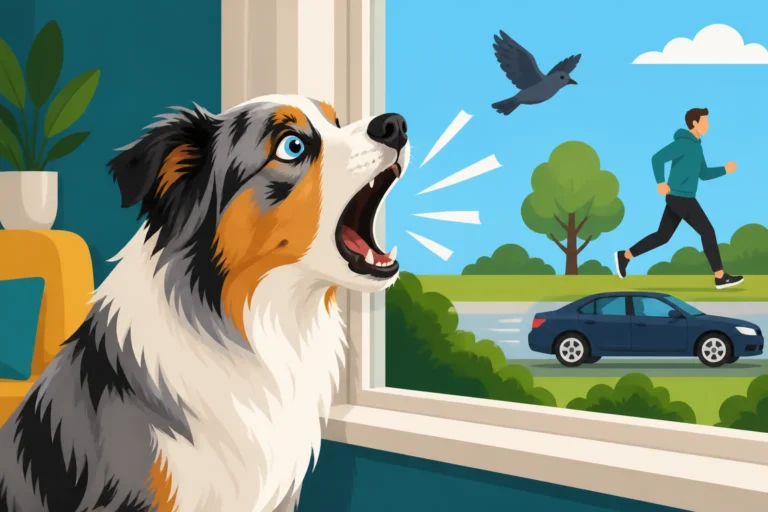
- Excessive Barking: This isn't just alert barking; it can be incessant, attention-seeking, or boredom barking. They might bark at shadows, leaves blowing, or simply because they have nothing else to do.
- Destructive Chewing: Are your furniture legs looking a bit gnawed? Is the trash can a frequent target? A bored Aussie will find ways to entertain their mouth, and unfortunately, it's often on your belongings.
- Nipping and Herding Indoors: This is a classic. They might try to "herd" children, other pets, or even you, by nipping at heels, circling, or pushing with their nose. It's their instinct kicking in, looking for an outlet.
- Pacing and Restlessness: Even after a long walk, they might pace the house, unable to settle. They may follow you from room to room, always "on alert" and ready for something to happen.
- Difficulty Settling: When you sit down to relax, does your Aussie bring you a toy repeatedly, nudge your hand, or hover nearby, unable to just lay down and chill? This inability to "switch off" is a clear indicator. Whether an Aussie Needs a Job to Be Calm is a good way to frame their constant need for engagement.
It's Not About Being a "Bad Dog"
It's crucial to understand that these behaviors aren't about your Aussie being disobedient or "bad." They are natural expressions of an unfulfilled breed. They are trying to meet their innate needs in the only ways they know how within the confines of your home. It's a cry for help, signaling that their powerful brains and bodies need more appropriate outlets.
By understanding that two hours of running, while physically tiring, often fails to address the complex mental and instinctual needs of an Australian Shepherd, you can begin to craft a truly effective and enriching routine for your beloved companion. It’s about working smarter, not just harder, to bring true contentment to your intelligent, driven Aussie.
Disclaimer
This article is for general informational purposes only and does not constitute professional advice. Laws, prices and regulations vary by location and change over time. Consult a qualified professional for guidance on your specific situation.