Exercise Limits for an Australian Shepherd Under a Year
Bringing home an Australian Shepherd puppy is an absolute joy, filled with boundless energy and adorable antics. But that high-octane enthusiasm often leaves new owners wondering how to properly manage their puppy's exercise. It’s a common frustration: you have a dog that seems to never tire, yet you've heard countless warnings about protecting their growing joints. This guide is here to help you navigate those crucial first twelve months, offering clear, actionable advice on appropriate exercise to ensure your Aussie grows into a healthy, robust adult without unnecessary strain or injury.
Understanding Puppy Growth and Joint Development
It’s completely understandable to feel a bit overwhelmed when trying to figure out the right amount of exercise for your Australian Shepherd puppy. Their energy levels might suggest they need to run for miles, but their bodies are still very much under construction. Ignoring these developmental stages can lead to serious, long-term health issues, which is something every dedicated Aussie parent wants to avoid.
The Vulnerability of Growth Plates
Your Australian Shepherd puppy isn't just a mini-adult; their skeleton is undergoing significant changes. The long bones in their legs have areas called "growth plates" (or epiphyseal plates) made of cartilage. These plates are responsible for bone lengthening. They remain soft and open throughout puppyhood, gradually hardening and closing as your dog matures. For Australian Shepherds, these growth plates typically close between 12 and 18 months of age, though it can vary slightly by individual.
Think of these growth plates like soft, pliable sponges at the ends of growing bones. Intense, repetitive, or high-impact activities can easily damage them. A growth plate injury can lead to abnormal bone growth, pain, and even permanent lameness. This is why you often hear vets and experienced breeders caution against too much strenuous exercise too soon. It’s not about stifling their natural exuberance, but about channeling it safely. Australian Shepherd Growth Plates and When They Close goes into even more detail about this critical period.
Protecting Developing Joints
Beyond growth plates, a puppy's entire musculoskeletal system, including their joints, ligaments, and tendons, is still developing. High-impact activities like jumping off furniture, intense fetching sessions with sudden stops and starts, or long, forced runs on hard surfaces can put undue stress on these immature structures. This stress can contribute to the development or exacerbation of conditions like hip and elbow dysplasia, even in dogs genetically predisposed to them.
Imagine a child's bones and joints being asked to perform the feats of a professional athlete. It just doesn't make sense, right? The same logic applies to our Aussie pups. Their youthful energy needs an outlet, but it needs a safe outlet. We want to build strong, healthy bodies that can enjoy their naturally active lives for years to come, not push them to the point of injury before they've even finished growing. This means being mindful of the surfaces they exercise on, the intensity of their play, and the duration of their activities.
Safe Exercise for Young Australian Shepherds: The "Five-Minute Rule" and Beyond
The concept of puppy exercise limits might feel counterintuitive for such an energetic breed, but it's a golden rule for a reason. We're aiming for healthy development, not exhaustion. The most common guideline you'll hear, and one that I wholeheartedly endorse, is the "five-minute rule."
The "Five-Minute Rule" Explained
The "five-minute rule" is a simple but effective guideline for structured, leash-led exercise for puppies. It suggests that a puppy should get no more than five minutes of structured exercise per month of age, twice a day. So, if your Aussie pup is three months old, they should get no more than 15 minutes of structured walking, twice a day. A six-month-old pup would get 30 minutes, twice a day. This applies to activities like walking on a leash, rather than unrestricted, self-regulated play.
It’s a general guide, of course, and you should always observe your puppy for signs of fatigue or discomfort. Some days they might be more energetic, others less so. The key is to be flexible and tune into their body language. The purpose of this rule is to provide some physical activity without overtaxing those delicate growth plates and developing joints. It ensures a gradual increase in activity as they mature, giving their bones and muscles time to catch up.
Tailoring Exercise to Age and Development
While the five-minute rule is a fantastic starting point, understanding how exercise needs evolve as your Aussie grows is crucial. Their body changes, and so should their activity.
2-4 Months Old: At this stage, your Aussie puppy is a tiny bundle of fluff and teeth. Most of their "exercise" should come from free play in a safe, enclosed space like your living room or a securely fenced yard. Short bursts of wrestling with littermates or safe toys, exploring the house, or short trips outside for potty breaks are sufficient. Structured walks should be very short, perhaps just around the block, focusing more on leash manners than covering distance. Avoid stairs, jumping on and off furniture, and rough play with much larger dogs. This is a critical period for bone development, and excessive strain can set the stage for problems later.
4-6 Months Old: Your Aussie is getting bigger and more confident! The five-minute rule really comes into play here for structured walks. You can start introducing gentle retrieves or short games of tug, always on soft surfaces like grass. Continue to prioritize free play and exploration in safe environments. Supervised play with other well-matched, gentle puppies can be wonderful for socialization. Avoid anything that involves repetitive jumping, sustained running, or sudden stops and turns on hard ground. Keep an eye out for Growing Pains in a Six Month Old Aussie, which can sometimes manifest as limping or reluctance to play.
6-12 Months Old: This is the awkward teenage phase. Your Aussie might look like an adult, but they are absolutely not fully grown. Their energy levels will be sky-high, making it tempting to push them harder. Stick to the five-minute rule for structured walks, and extend free play sessions. You can start to introduce very light, controlled agility work if it involves low jumps and soft landings, but focus on building body awareness and confidence, not speed or endurance. Swimming, if introduced safely, can be an excellent low-impact exercise during this period. Remember, prolonged, high-impact activities like intense dog park romps, long runs, or competitive sports are still off-limits. Their growth plates are likely still open, and protecting them remains paramount. It's truly a balancing act during these months.
| Age (Months) | Recommended Structured Exercise (Twice Daily) | Types of Activities to Emphasize | Activities to Avoid |
|---|---|---|---|
| 2-4 | 10-20 minutes | Free play, short exploration, leash introduction | Stairs, jumping, forced long walks, rough play with large dogs |
| 4-6 | 20-30 minutes | Free play, gentle retrieves, short walks, puppy playdates | Repetitive jumping, sustained running, hard surfaces, intense fetch |
| 6-12 | 30-60 minutes | Longer walks (on leash), hiking on soft trails, swimming, light body awareness exercises | High jumps, competitive agility, long distance running, dog park free-for-alls |
| 12+ | Gradual increase based on maturity & vet advice | Full range of activities, introduce sports slowly | Any activity causing pain or limping; still avoid extreme repetitive impact |
Note: Always consult your veterinarian for personalized advice regarding your individual puppy's health and development.
Activities to Embrace and Avoid Before One Year
When you have a smart, driven breed like an Australian Shepherd, simply saying "don't over-exercise them" isn't enough. We need to explore what safe and beneficial activities look like, and which ones pose a risk to their growing bodies.
Encouraging Safe Movement and Exploration
The goal is to allow your Aussie puppy to move naturally, building muscle and coordination without stressing their joints.
- Free Play in a Fenced Yard: This is king for puppies! Let them run, sniff, pounce, and interact with toys at their own pace. They’ll naturally take breaks when they’re tired. Just make sure the yard is secure and free of hazards. You can find excellent, durable toys for free play on Amazon or Chewy.
- Short, Controlled Leash Walks: As mentioned with the five-minute rule, these are perfect for exploring the neighborhood, getting exposure to new sights and sounds, and practicing leash manners. Focus on enjoying the sniff-fest, not covering miles.
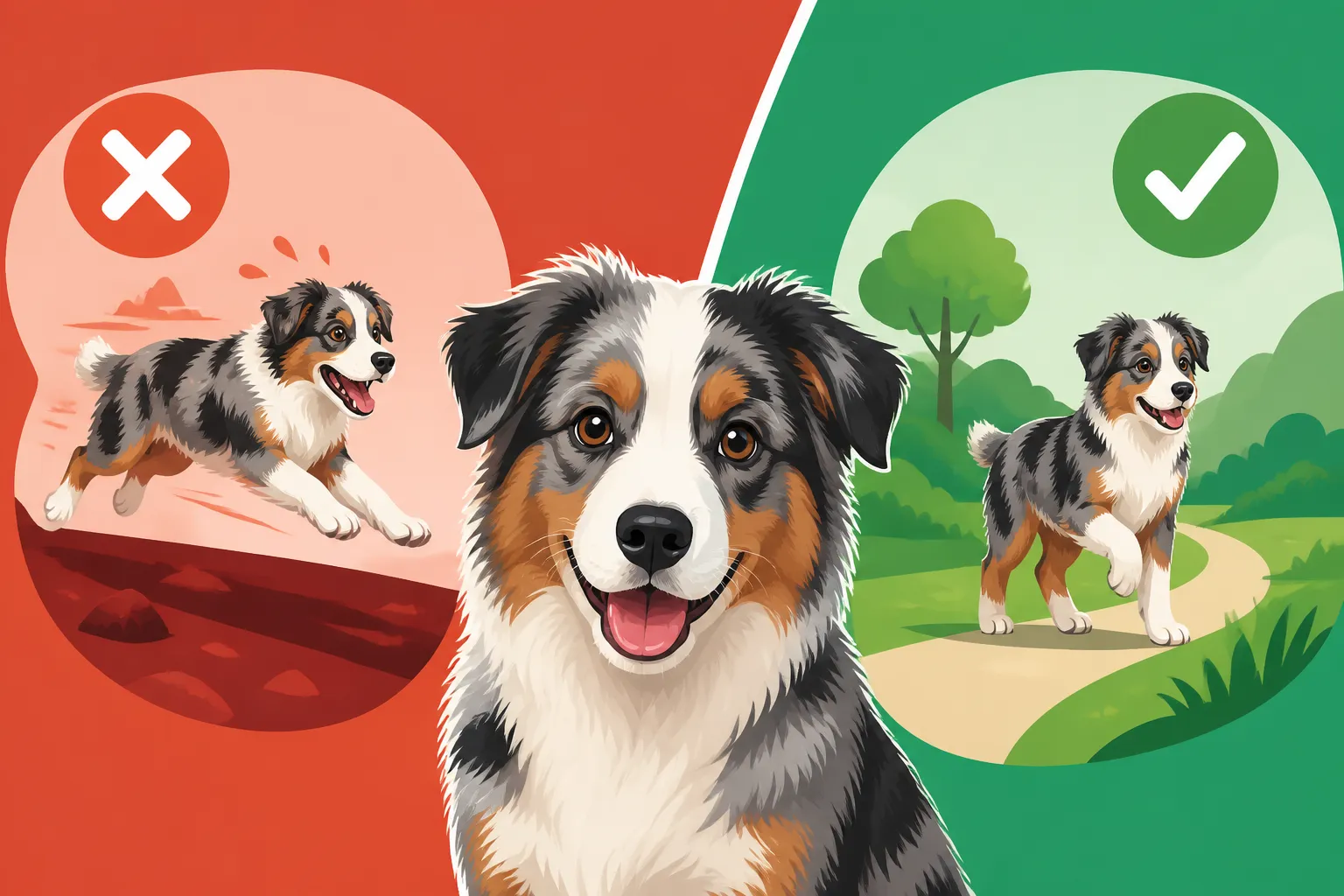
- Soft Surface Exploration: If you're going for a walk, choose grassy parks or dirt trails over pavement or concrete. Softer surfaces are much gentler on developing joints.
- "Find It" Games and Scent Work: Hiding treats around the house or yard encourages natural sniffing, problem-solving, and movement without high impact. It's a fantastic mental workout that subtly engages their body.
- Gentle Swimming (Supervised): If your Aussie loves water and you have access to a safe, calm environment (like a shallow pond or dog-friendly pool), swimming is a wonderful low-impact way to build muscle. Always supervise closely and introduce it slowly.
- Body Awareness Exercises: Simple exercises like walking over low cavaletti (poles on the ground), stepping over small objects, or learning to back up gently can build core strength and coordination without strenuous impact. These help prepare them for more complex movements later.
Activities to Strictly Limit or Avoid
This is where many well-meaning owners accidentally push their pups too hard. It's tough when your Aussie acts like they want to do all the things, but it's our job to protect them.
- Forced Runs/Jogging: Running alongside you on a bike or for long distances on a leash is a big no-no until well past one year of age, ideally closer to 18 months or even two years, once all growth plates are confirmed closed by your vet. The repetitive impact is incredibly damaging.
- High-Impact Jumping: Repeatedly jumping off furniture, leaping for frisbees, or intense, high-jump agility obstacles are out. While a puppy might jump occasionally in play, repeated high jumps put immense strain on their joints.
- Stairs (especially for young puppies): While not always avoidable in every home, try to limit continuous stair climbing for very young puppies (under 4-5 months). Carrying them up and down, or using ramps, can reduce the strain.
- Intense Fetch Sessions: While a quick game of fetch on grass is fine, don't throw the ball endlessly. The sudden stops, starts, and twists can be hard on hips, elbows, and knees. Keep it short and sweet, and focus on controlled retrieves rather than all-out sprints.
- Rough Play with Unsupervised Larger Dogs: While socialization is vital, allowing a small puppy to be repeatedly body-slammed or run over by a much larger, rambunctious dog is a recipe for injury. Supervise all play interactions carefully.
- Dog Parks (with caution): Dog parks can be a mixed bag, especially for puppies. The unpredictable nature of play, the varying sizes and temperaments of other dogs, and the potential for a puppy to get overwhelmed or injured means they should be approached with extreme caution, if at all, before maturity. You'll find more insights on this in Dog Park Risks for an Australian Shepherd.
- Competition Sports Training: While you can introduce basic concepts and foundational skills, intensive training for competitive sports like agility, flyball, or advanced herding should wait until your Aussie is physically mature. Building a strong foundation with body awareness and conditioning is key, but pushing for speed or height too soon is risky.
Balancing Physical Activity with Mental Stimulation
This is perhaps the most critical takeaway for Australian Shepherd owners with young pups. Aussies are incredibly intelligent and driven dogs. If you can't provide endless physical activity due to their age, you must ramp up the mental stimulation. A mentally tired Aussie is a well-behaved Aussie, and it saves their growing body from unnecessary strain. Why Physical Exercise Alone Never Settles an Aussie really drives this point home.
Engaging Their Brilliant Minds
Mental stimulation is like a puzzle for their brain, and Aussies thrive on it. It can be just as tiring, if not more so, than physical exercise.
- Puzzle Toys and Treat-Dispensing Toys: These are fantastic! Fill them with kibble or healthy treats and let your puppy figure out how to get the reward. Kongs, snuffle mats, and various puzzle toys from brands you can find on Chewy or Amazon can keep them occupied for a good chunk of time.
- Trick Training: Aussies love to learn! Teaching new tricks, from basic "sit" and "stay" to more advanced "spin" or "bow," engages their brain and strengthens your bond. Keep sessions short, fun, and positive. Trick Training as Aussie Mental Work has some great ideas.
- Scent Games: Hide-and-seek with treats or a favorite toy is a wonderful game that taps into their natural scenting abilities. Start easy, then make it more challenging. This tires them out without a single high-impact jump.
- "Chore" Training: Give them simple "jobs" around the house. Can they learn to put their toys away? Carry a light basket? Even something as simple as waiting patiently at a door until released requires significant mental effort.
- Enrichment Activities: Rotating toys, introducing new safe chew items (like appropriate dental chews you might find at Ollie or other pet supply stores), or even letting them watch safe, stimulating dog-friendly TV shows can provide novelty and mental engagement.
The Role of Naps and Rest
Just like human toddlers, puppies need a lot of sleep. All that growth, learning, and developing takes a huge toll on their little bodies and brains. An overtired puppy is often a cranky, nippy, and destructive puppy.
- Enforced Naps: If your Aussie puppy seems to get overstimulated and can't settle down, put them in their crate for an enforced nap. Crate training is invaluable for this, providing a safe, quiet space for them to decompress. Aim for a good 1-2 hours of quiet time after active periods.
- Quiet Time: Even if they're not sleeping, having dedicated quiet time with a chew toy or a stuffed Kong in their crate or a puppy-proofed area helps them learn to self-regulate and relax. This is a crucial skill for such an energetic breed.
- Observe for Fatigue: Learn to recognize the signs your puppy is getting tired: excessive yawning, clumsiness, increased nipping, or becoming overly hyper. These are all cues that they need a break, not more stimulation.
By carefully managing your Australian Shepherd puppy's physical exercise and providing ample mental stimulation, you’re setting them up for a lifetime of health and happiness. It’s an investment in their future, ensuring those strong joints and brilliant minds develop exactly as they should.
Disclaimer
This article is for general informational purposes only and does not constitute professional advice. Laws, prices and regulations vary by location and change over time. Consult a qualified professional for guidance on your specific situation.