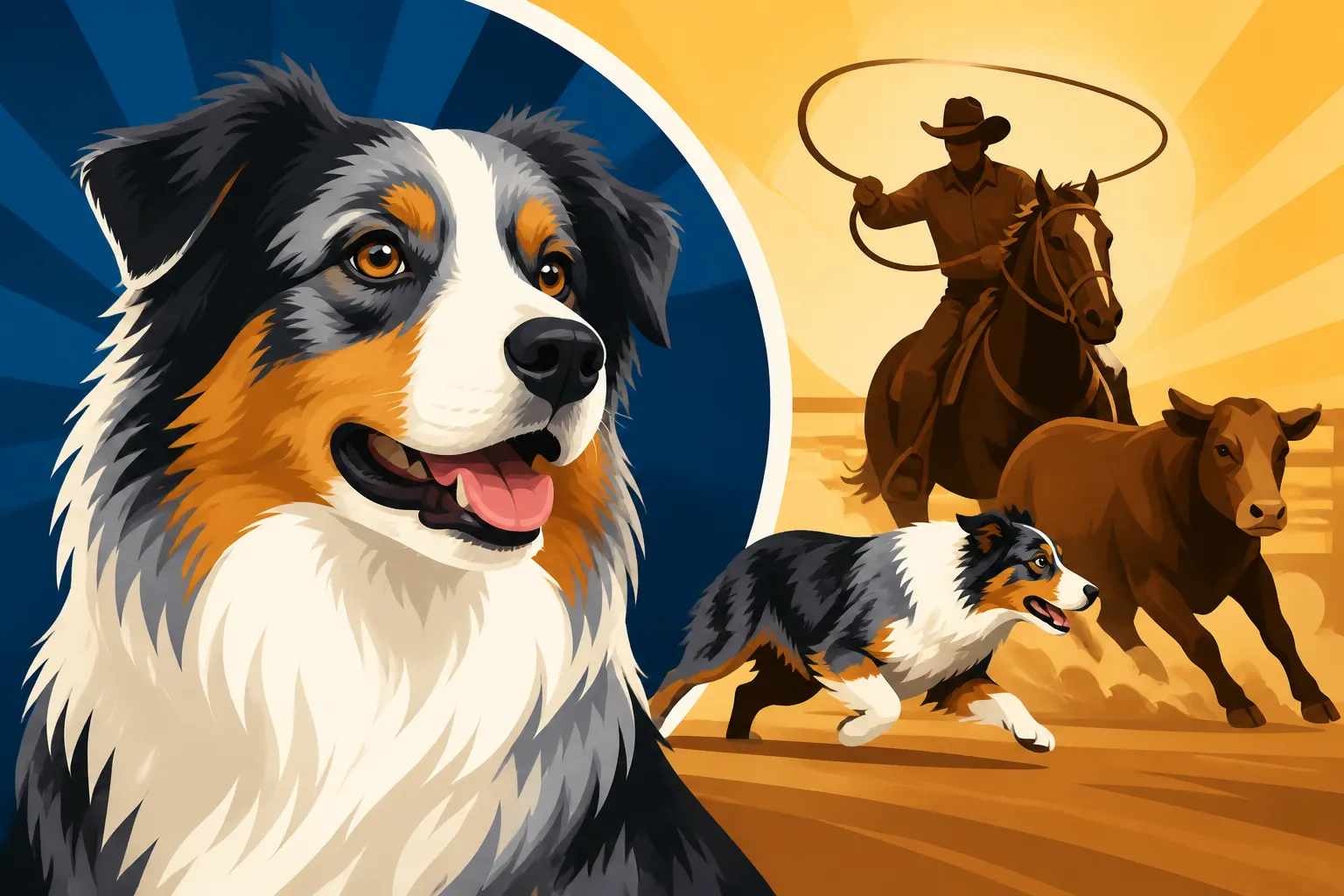
How Rodeos Made the Australian Shepherd Famous
For many of us who adore Australian Shepherds, their distinctive look and boundless energy are immediately recognizable. But if you’re like a lot of folks, you might assume, given their name, that they originated down under. That’s a common misconception! The real story of how these incredible dogs rose to prominence is deeply woven into the fabric of American Western culture, particularly through the electrifying world of rodeos. This guide will take you on a journey through history, revealing how the dust and spectacle of the rodeo arena were instrumental in making the Australian Shepherd the beloved breed we know today.
The Australian Shepherd's True American Roots
It’s easy to get sidetracked by the name, isn't it? Australian Shepherd. It conjures images of vast sheep stations in the Outback. However, the truth is far more American, rooted firmly in the rugged landscapes and working ranches of the American West. Understanding this geographical correction is crucial to appreciating their journey to fame.
Dispelling the "Australian" Myth
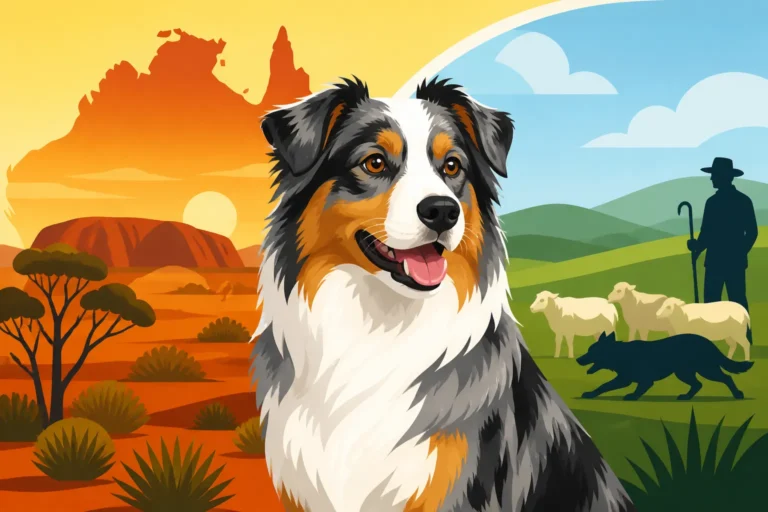
The biggest puzzle for new Aussie owners, and even some seasoned enthusiasts, is often the breed's name. How can a dog so quintessentially American be called an "Australian" Shepherd? The most widely accepted theory points to the dogs arriving in the American West with flocks of sheep imported from Australia in the 19th and early 20th centuries. These sheep themselves were often of Merino stock, and the dogs that accompanied them were likely Pyrenean Shepherds or British working collies. It wasn't the dogs themselves that were Australian, but their direct route to America with those specific sheep. Think of it like a "French fry"—it’s not from France, but it was popularized by French cooking techniques. In the same vein, the dogs were associated with the "Australian" sheep they herded, and the name just stuck. Many believe the breed as we know it today was refined and developed entirely in the U.S. This is a topic explored further in Why the Australian Shepherd Is Not From Australia.
The Basque Connection
A significant piece of the Aussie puzzle involves the Basque people. These skilled shepherds, hailing from the border regions of France and Spain, immigrated to the United States, particularly to California, Oregon, and Nevada, during the 19th and early 20th centuries. They brought with them their own loyal and intelligent herding dogs. These dogs were adept at managing large flocks in challenging terrains, a skill set that immediately impressed American ranchers. As these Basque shepherds settled into the American West, their dogs interbred with other working collies and local herding types, contributing significantly to the genetic pool that would eventually form the Australian Shepherd breed. The deep historical ties between these resilient people and their equally hardy dogs are a foundational element in the Aussie's lineage, a story intricately detailed in The Basque Shepherds Behind the Australian Shepherd.
Post-War California Ranches
The mid-20th century, particularly after World War II, was a boom time for ranching in California and other Western states. With increased demand for livestock, ranchers needed highly efficient and versatile dogs. This was a critical period for the Australian Shepherd. Ranchers were actively breeding for specific traits: intelligence, biddability, an intense but controllable herding instinct, and the stamina to work all day under various conditions. The dogs that became known as Australian Shepherds fit this bill perfectly. They were excellent at moving cattle and sheep, navigating rough terrain, and adapting to different tasks. This environment of practical utility on sprawling Western ranches became the crucible where the breed's characteristics were truly forged, long before they stepped into the dazzling lights of a rodeo arena.
Rodeo's Rise and the Demand for Versatile Dogs
The American rodeo is more than just a sport; it's a spectacle deeply embedded in the mythology of the American West. It's a place where cowboy skill, animal athleticism, and pure entertainment collide. As rodeos grew in popularity, so did the need for acts that would thrill audiences, and surprisingly, dogs played a crucial role in filling that void.
The Golden Age of Rodeos
From the 1930s through the 1960s, rodeos experienced a "golden age." They weren't just local events; they were touring spectacles, drawing huge crowds across the country. These were family-friendly affairs, featuring everything from bronc riding and bull riding to barrel racing and roping. To keep the audience engaged between main events, and to showcase the diverse talents of ranch hands and their animals, novelty acts became highly sought after. This created a unique niche for working dogs that could do more than just herd livestock. They needed to be performers, capable of dazzling crowds with their intelligence and agility. The grandeur and excitement of these traveling shows provided an unprecedented platform for talented animals to become stars.
More Than Just Bull Riding
While the image of a bucking bull or a galloping horse might dominate our perception of rodeo, the reality of a full rodeo program was much richer. Beyond the adrenaline-pumping contests, there were demonstrations of ranch skills, parades, and variety acts. These shows needed filler, entertainment that was both authentic to the cowboy lifestyle and engaging for a broad audience. This is where dogs, especially those already accustomed to working closely with humans on a ranch, found their calling. They could participate in demonstrations of herding, certainly, but more importantly, they could be trained to perform complex tricks and routines that highlighted their smarts and athletic prowess. This expanded role set the stage for dogs like the Australian Shepherd to truly shine.
What Ranchers Needed
Beyond the glitz of the arena, ranchers themselves needed dogs that were adaptable and keen. A good ranch dog had to be a jack-of-all-trades. They needed to herd cattle and sheep, often independently, but also work as a team with their handler. They had to be brave enough to face a stubborn cow, yet gentle enough not to injure young stock. Stamina was paramount for long days in the saddle, covering miles of open range. These were not just pets; they were essential tools for the rancher's livelihood. The dogs that would eventually become known as Australian Shepherds possessed this rare combination of intelligence, strong herding instinct, and trainability, making them invaluable on a working ranch. This underlying utility meant that any dog showcasing these traits in a public forum, like a rodeo, was demonstrating real-world value alongside entertainment.
Jay Sisler: The Original Aussie Ambassador
If there's one individual most synonymous with launching the Australian Shepherd into the national consciousness, it's Jay Sisler. His unique talent for training, combined with the inherent brilliance of his dogs, turned them into household names across America.
A Man and His Dogs
Jay Sisler was an Idaho rancher with an extraordinary gift for dog training. He recognized early on the exceptional intelligence and eagerness to please in his Australian Shepherds. But more than just recognizing it, he had the patience and vision to nurture it into something truly spectacular. He didn't just teach them commands; he taught them complex routines, sequencing multiple actions, and performing feats that seemed almost human-like in their understanding. His dogs, like Stub and Shorty, became extensions of his will, moving with uncanny synchronicity and precision. Sisler’s approach wasn't about brute force; it was about building a bond and a deep understanding of what motivated his canine partners. This level of dedication created a partnership that captivated everyone who witnessed it.
From Ranch to Arena
Sisler's dogs didn't just perform tricks; they told a story of the American ranch. They would herd ducks, jump through hoops, walk on their hind legs, and even "talk" on command, all with an enthusiasm that was infectious. Their natural herding ability was seamlessly woven into their entertainment routines. When they performed in rodeo arenas across the country, audiences were absolutely mesmerized. Here were these beautiful, intelligent dogs, showcasing skills that were both practical and awe-inspiring. They represented the heart of the Western spirit – hard work, loyalty, and a touch of showmanship. Australian Shepherds in Rodeo Arenas delves deeper into the atmosphere these dogs created. This exposure was groundbreaking; suddenly, a dog previously known only to a tight-knit community of ranchers was performing in front of thousands, nightly, across different states.
Hollywood and Beyond
The fame of Jay Sisler and his Australian Shepherds quickly spread beyond the rodeo circuit. Their captivating performances caught the eye of Hollywood producers. Sisler’s dogs appeared in several Disney films, including "Stub: The Best Cowdog in the West" and "Run, Appaloosa, Run." These cinematic appearances cemented the Australian Shepherd's image in the public imagination as a smart, capable, and charismatic dog. Imagine children and families across the nation watching these films, falling in love with these remarkable dogs on the big screen. This media exposure was invaluable, transforming them from regional working dogs into national celebrities. Without Sisler's pioneering efforts, the Australian Shepherd might have remained a hidden gem of the ranching world for much longer. He effectively served as a walking, barking advertisement for the breed’s incredible potential. For more about their media presence, check out Aussie Trick Dogs on Television.
The Australian Shepherd's Unique Rodeo Skills
What was it about the Australian Shepherd that made them such a perfect fit for the rodeo stage? It wasn't just their looks, though their vibrant merle coats and striking eyes certainly helped. It was a combination of inherent working traits, intelligence, and an undeniable stage presence.
Herding in the Spotlight
Even amidst the dazzling tricks, the Australian Shepherd's fundamental herding instinct remained a core part of their rodeo appeal. Sisler and other handlers showcased their dogs' ability to expertly move ducks, geese, or even small ponies around the arena. This wasn't just cute; it was a demonstration of genuine working talent, albeit in a theatrical setting. The audience could see firsthand the dog's precision, its intense focus, and its subtle communication with the stock. They circled, fetched, and drove the animals with an effortless grace that spoke volumes about their capabilities on a real ranch. This validated their working heritage while simultaneously entertaining, creating a powerful impression of competence and charm.
Trick Dogs Extraordinaire
Beyond herding, Australian Shepherds captivated audiences with a vast repertoire of tricks. These weren't simple "sit" and "stay" commands. We're talking about complex sequences: jumping rope, walking tightropes, performing intricate dances, and even pretending to "talk" or "count." The mental agility required for these feats is immense, showcasing the breed's high intelligence and trainability. The Temperament the Aussie Standard Requires highlights their sharp minds. What made these performances truly special was the dogs' obvious joy and enthusiasm. They didn't just go through the motions; they seemed to genuinely love their work, their tails wagging furiously, eyes bright with excitement. This genuine connection between dog and handler, combined with the sheer difficulty of the tricks, was what made them unforgettable stars.
An Unforgettable Presence
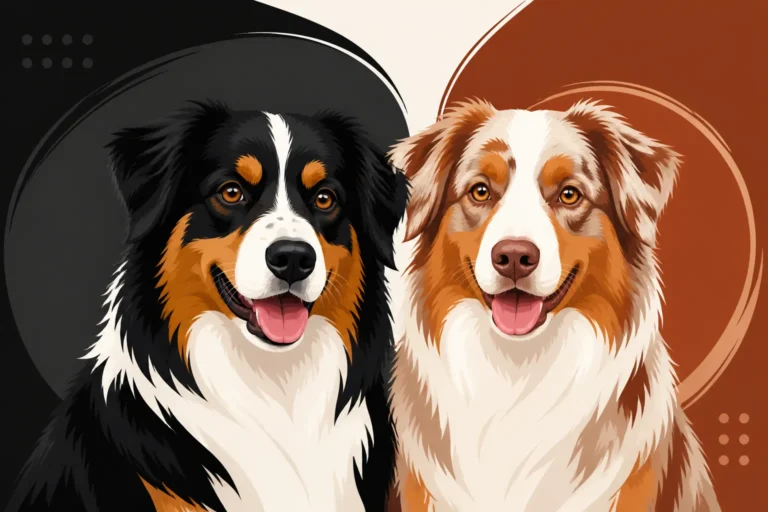
There’s no denying the visual impact of an Australian Shepherd. Their medium size, athletic build, and often striking coat patterns—blue merle, red merle, black tri, red tri—with their accompanying blue or amber eyes, made them stand out under the bright lights of the rodeo arena. Many Aussies also possess a natural bobtail, which adds to their unique silhouette and gives them an even more distinctive appearance. This combination of physical beauty and vivacious personality meant they demanded attention. When they entered the arena, heads turned. Their energy was palpable, their movements fluid and purposeful. They were, and still are, a breed that leaves a lasting impression, embodying both rustic charm and sophisticated showmanship. For details on their physical attributes, you can read Australian Shepherd Height and Weight.
| Trait | Description in Rodeo Context |
|---|---|
| Herding Instinct | Demonstrated through controlled movement of small livestock (ducks, ponies), showcasing precision and natural drive in an entertaining way. |
| Intelligence | Exhibited through complex, multi-step trick routines and quick learning, proving their mental agility and problem-solving skills to a wide audience. |
| Agility | Shown in intricate maneuvers like jumping through hoops, navigating obstacles, and fast-paced sequences, highlighting their athleticism and coordination. |
| Trainability | The ability to master a vast array of commands and tricks, often performed off-leash and with minimal visible cues, speaking to their eagerness to please and strong bond with their handler. |
| Stamina | Performing multiple routines and herding demonstrations during long rodeo events, demonstrating their endurance and boundless energy. |
| Charisma/Presence | Their striking merle coats, expressive eyes, and enthusiastic demeanor captivated audiences, making them memorable and beloved performers. They loved being the center of attention. |
From Rodeo Star to Family Companion
The widespread fame generated by rodeo performances, particularly by Jay Sisler's dogs, began to shift the perception of the Australian Shepherd. No longer just a rancher's tool, they were now seen as intelligent, versatile, and beautiful animals capable of much more.
Public Fascination
The enchanting performances of Australian Shepherds in rodeos and films sparked immense public fascination. People who had never set foot on a ranch were suddenly seeing these dogs perform incredible feats. They were intelligent, cooperative, and incredibly engaging. This led to a significant increase in demand for Australian Shepherds as family pets. Everyone wanted a dog as smart and loyal as those they saw on screen. This new popularity, while a boon for the breed's recognition, also brought new challenges. Breeders, who had previously focused solely on working ability, now had to consider the needs of pet owners looking for companions, not just livestock managers.
The Transition to Pet Homes
Bringing a dog with such a strong working heritage into a suburban or urban home presented a learning curve for many new owners. The same intense herding drive that made an Aussie brilliant in the arena or on the ranch could manifest as nipping at children's heels, circling household members, or trying to "herd" other pets or even the vacuum cleaner. Their boundless energy and sharp minds meant they needed consistent mental and physical stimulation, far beyond a simple walk around the block. Without proper outlets, these intelligent dogs could become bored, destructive, or develop problematic behaviors. This is why understanding Working Line Australian Shepherd Traits is so important, even for those seeking a companion animal. New owners quickly learned that an Australian Shepherd required a significant commitment to training, exercise, and enrichment to truly thrive in a non-working environment. For suitable long-lasting toys and enrichment items, many owners turn to retailers like Chewy.
Breed Recognition and Growth
As the Australian Shepherd's popularity soared, there was a growing movement to formally recognize the breed. The Australian Shepherd Club of America (ASCA) was founded in 1957, establishing a breed standard to preserve the characteristics and working abilities that made Aussies so special. Later, in 1993, the American Kennel Club (AKC) also recognized the breed, further solidifying its place in the canine world. This formal recognition brought both benefits and debates. It ensured a consistent standard for breeders and judges, but also raised concerns among some working-line enthusiasts about the potential for the breed to be bred purely for show ring aesthetics rather than working utility. Regardless of these internal discussions, rodeo performances undeniably played a pivotal role in propelling the Australian Shepherd into mainstream recognition, leading to their formal acceptance by major kennel clubs. For details on the breed's formal standards, you can read The ASCA Australian Shepherd Standard.
The Lasting Rodeo Legacy
Even though fewer Australian Shepherds perform in rodeos today compared to their heyday, the impact of those years continues to shape the breed and our understanding of it. The characteristics that made them rodeo stars are still very much present, defining their personality and their needs.
Drive and Temperament Today
The intense drive, intelligence, and eagerness to work that were so evident in rodeo-performing Aussies are still hallmark traits of the breed today. Modern Australian Shepherds, whether from working lines or show lines, retain a strong instinct to herd and a desire for a "job." This means they excel when given purpose, whether it's through structured training, dog sports, or even complex puzzle toys from Chewy. They are highly attuned to their handlers and thrive on interaction. This is the enduring legacy of their ranching and rodeo past; they are dogs built for engagement and activity. Understanding The Australian Shepherd Herding Drive You Cannot Train Out is fundamental to successful Aussie ownership, reminding us that these aren't couch potatoes by nature.
Modern Dog Sports
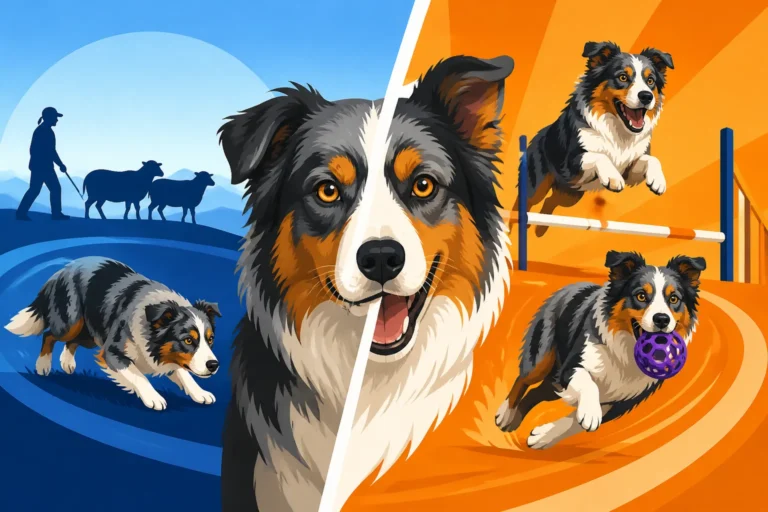
While the traditional rodeo circuit might not feature as many trick-performing Aussies as it once did, the breed has found new arenas to showcase its incredible talents: modern dog sports. Australian Shepherds are consistently top performers in agility, obedience, flyball, disc dog, and even competitive herding trials. These sports demand the same intelligence, athleticism, biddability, and bond with a handler that Jay Sisler’s dogs demonstrated. Agility, in particular, perfectly suits their quick reflexes and jumping ability, while obedience showcases their keen minds and desire to please. These venues allow Aussies to express their natural abilities in a structured, competitive, and fun way, carrying on the tradition of performance and partnership. For more on their athletic pursuits, check out Australian Shepherd Agility and Disc Sports.
Preserving the Heritage
For many breeders and owners, preserving the Australian Shepherd's working heritage is paramount. This means not just focusing on physical appearance, but also on temperament, health, and, critically, maintaining their strong working drive. Responsible breeders often still perform health screenings, including genetic tests for conditions like The Genetic Panel Every Australian Shepherd Needs, to ensure the longevity and health of their lines. They strive to produce dogs that are not only beautiful but also capable, intelligent, and true to their historical roots. By understanding the breed's history—from the Basque shepherds to the American ranches, and finally, to the dazzling rodeo arenas—we can better appreciate the complex, intelligent, and highly capable companions we have today. It's a testament to their enduring spirit that the fame they garnered under the rodeo lights continues to define and celebrate them.
Disclaimer
This article is for general informational purposes only and does not constitute professional advice. Laws, prices and regulations vary by location and change over time. Consult a qualified professional for guidance on your specific situation.