Cryptic Merle That Fools Aussie Breeders
It's incredibly frustrating when you're trying to breed responsibly, pouring your heart and soul into understanding genetics, only to find that some aspects of coat color inheritance can still sneak up on you. The concept of "cryptic merle" in Australian Shepherds is one of those curveballs that can truly fool even the most dedicated breeders, leading to unforeseen health challenges and heartbreaking situations. This guide aims to pull back the curtain on cryptic merle, explaining exactly what it is, why it's so tricky to identify, and what responsible breeders are doing to prevent its devastating impact.
Understanding the Merle Gene and How It Works
Before we dive into the tricky world of cryptic merle, let's first get a solid grasp on what the merle gene (M locus) actually does in Australian Shepherds. It's a fascinating, but sometimes complicated, piece of their genetic puzzle that gives us those stunning, mottled coats we all adore.
The Visual Splendor of Merle Coats
The merle gene is what creates those distinctive patches of diluted color on a dog's coat, often combined with areas of solid color. You see it most often in blue merles, with their grey and black patches, or red merles, sporting liver and cream or reddish-brown patterns. But it's not just about the coat; merle can also affect eye color, leading to striking blue eyes or even "marbled" eyes where different colors swirl together. The way these patterns express themselves is influenced by other genes, of course, but the merle gene itself is the primary driver. It's truly what makes a blue merle Australian Shepherd a head-turner, and understanding How Merle Works in an Australian Shepherd Coat is key to appreciating their unique beauty.
The Double-Edged Sword of Merle Genetics
While beautiful, the merle gene comes with a significant caveat, and this is where the "double-edged sword" analogy really hits home. Dogs that inherit one copy of the merle gene (Mm) typically display the classic merle pattern and are generally healthy. The trouble arises when a dog inherits two copies of the merle gene (MM), which is what happens when you breed two merle dogs together. This is commonly referred to as a "double merle." Double merles are often predominantly white, and tragically, this increased dilution of pigment isn't just cosmetic. It's intrinsically linked to severe health issues, particularly affecting vision and hearing. This is precisely Why Aussie Breeders Never Cross Merle to Merle. The consequences can be devastating, leading to puppies born with significant impairments.
What Exactly Makes a Merle "Cryptic"?
Now that we've covered the basics of visible merle, let's shine a light on its elusive cousin: cryptic merle. This is where things get truly complicated for breeders trying their best to make informed decisions.
The Hidden Merle Gene Expression
A cryptic merle Australian Shepherd carries the merle gene (Mm), just like a dog with a clearly visible merle coat. The crucial difference is that the merle pattern on a cryptic merle dog is either so minimal it's imperceptible to the naked eye, or it's completely hidden by other factors, like a very dark or solid coat color. Imagine a black tri Australian Shepherd that looks completely solid black, but underneath that dark coat, the merle gene is silently doing its work, just not expressing outwardly in a noticeable way. These dogs don't show any of the classic dilute patches or eye color changes associated with merle. They appear as solid-colored dogs – black, red, or even solid blues and reds if they also carry dilution genes. This lack of visible expression is what makes them "cryptic," meaning hidden. You simply can't tell they carry the merle gene just by looking at them.
Why Cryptic Merles Are So Deceiving for Breeders
The deception lies in their appearance. A breeder might look at a seemingly solid black tri Australian Shepherd, assume it does not carry merle, and then breed it to a known merle dog. From a purely visual standpoint, they would believe they are performing a solid-to-merle breeding, which typically produces a litter with about 50% merle and 50% solid puppies, all healthy. However, if that "solid" dog is actually a cryptic merle, then what they've actually done is a merle-to-merle breeding. This significantly increases the odds of producing A Quarter of a Merle Aussie Litter Born Double, with the associated health risks. This scenario is every responsible breeder's nightmare, as they've unknowingly contributed to the possibility of severe genetic issues, despite their best intentions. This is a primary reason Why a Cheap Merle Aussie Puppy Is a Warning if the breeder hasn't conducted proper genetic testing.
The Risks of Unidentified Cryptic Merles in Breeding
The biggest danger of cryptic merle is the unwitting creation of double merles. When a cryptic merle is accidentally bred to a standard merle, the chances of severe health consequences for the puppies skyrocket.
Producing Double Merles Accidentally
The core problem, as discussed, is the accidental merle-to-merle pairing. If a breeder uses a cryptic merle (Mm) as if it were a solid (mm) dog, and breeds it to another visible merle (Mm), approximately 25% of the resulting puppies will be double merles (MM). These double merles are at a very high risk for a range of profound sensory and developmental issues. It’s not just about aesthetics; it’s about quality of life. The frustration and heartbreak for families who welcome one of these puppies, only to discover severe health problems, is immense. It's a stark reminder that what you see isn't always what you get in genetics.
The Health Consequences for Double Merle Offspring
The health issues faced by double merle Australian Shepherds can be severe and lifelong. The most common and devastating problems involve their eyes and ears.
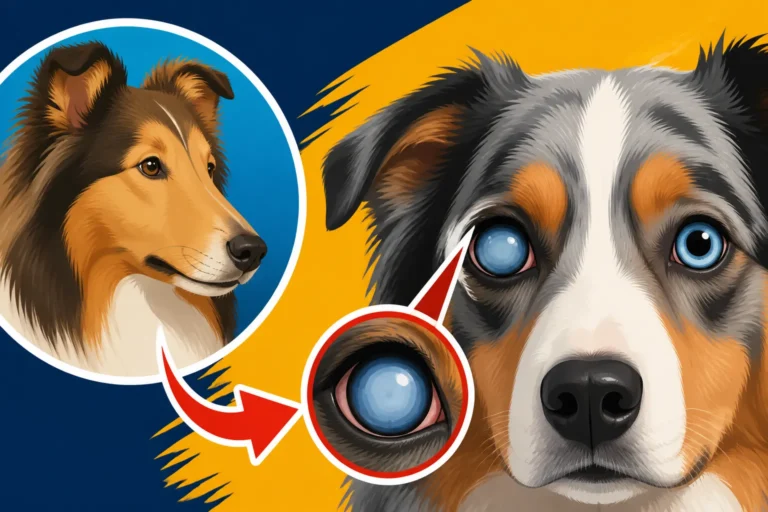
- Vision Impairments: Double merles often suffer from a range of ocular defects. This can include microphthalmia (abnormally small eyes), colobomas (missing tissue in parts of the eye), detached retinas, or even complete blindness. Their eyes might appear unusual, sometimes misshapen or underdeveloped. Many of these puppies will have significantly reduced vision, or no vision at all. Learning about Eye Defects in a Double Merle Australian Shepherd can be sobering, and it underscores the importance of careful breeding.
- Hearing Loss: Just as problematic is the high incidence of deafness. The gene responsible for merle patterns plays a role in the development of pigment in the inner ear, which is crucial for hearing. In double merles, the extreme dilution can lead to underdeveloped or malformed cochlea, resulting in partial or complete deafness in one or both ears. Discovering Deafness in a Double Merle Australian Shepherd in a new puppy is a challenge many owners are simply not prepared for.
These conditions are not curable and often require extensive lifelong care. Imagine the emotional toll on owners who have to navigate raising a dog with severe vision and hearing impairments. The costs, too, can be substantial, with specialized vet visits, training, and adaptations to their home environment. This is where comprehensive pet insurance, like a plan from Healthy Paws, can become a lifesaver, helping families manage the significant financial burden of these complex needs.
Testing and Responsible Breeding Practices
Thankfully, modern advancements in canine genetics provide us with the tools to identify cryptic merles and prevent accidental double merle breedings. This empowers breeders to act responsibly and prioritize the health of their puppies.
DNA Testing for the Merle Allele
The absolute best way to identify a cryptic merle is through genetic testing. Reputable laboratories offer DNA tests specifically for the merle allele. This test can accurately determine if a dog carries one copy of the merle gene (Mm, whether visibly merle or cryptic merle), two copies (MM, a double merle), or no copies (mm, a solid).
The process is usually straightforward: a simple cheek swab or blood sample is sent to a lab, and within a few weeks, you receive a detailed report on your dog's merle status. This crucial information allows breeders to make informed pairing decisions, ensuring they never accidentally breed two merles together, even if one appears solid. It truly removes the guesswork and provides peace of mind. Learning about DNA Testing for the Merle Allele in an Aussie is a must for anyone involved in breeding.
Identifying Carriers Versus Affected Dogs
The genetic test results will typically indicate whether a dog is:
- m/m (Non-Merle/Solid): Does not carry the merle gene.
- M/m (Merle/Heterozygous Merle): Carries one copy of the merle gene. This dog will either be visibly merle or a cryptic merle.
- M/M (Double Merle/Homozygous Merle): Carries two copies of the merle gene. This dog is a double merle.
It's vital for breeders to understand these distinctions. A dog testing M/m, even if it looks solid, must be treated as a merle for breeding purposes. This means it should only be bred to an m/m (non-merle) dog to ensure no double merles are produced. This principle is fundamental to preventing the devastating health issues associated with double merle offspring.
Here's a quick reference table to visualize breeding outcomes:
| Sire's Merle Status | Dam's Merle Status | Offspring Probabilities (Approximate) | Risks |
|---|---|---|---|
| m/m (Solid) | m/m (Solid) | 100% m/m (Solid) | No merle-related health risks |
| m/m (Solid) | M/m (Merle/Cryptic) | 50% m/m (Solid), 50% M/m (Merle) | No double merle risks |
| M/m (Merle/Cryptic) | M/m (Merle/Cryptic) | 25% M/M (Double Merle), 50% M/m, 25% m/m | High risk of double merles with health issues |
| M/M (Double Merle) | Any | 100% M/m (Merle) | Not recommended due to inherent health issues of M/M parent and guaranteed merle offspring |
Responsible Breeding Protocols
Responsible breeders have stringent protocols in place to avoid the accidental production of double merles. This includes:
- Mandatory Genetic Testing: Every breeding dog, regardless of its visible coat color, should be tested for the merle gene before being considered for a litter. This is part of a comprehensive The Genetic Panel Every Australian Shepherd Needs to ensure overall health.
- Careful Pairing: Once merle status is known, breeders only pair a merle (M/m) dog with a solid (m/m) dog. This eliminates the possibility of producing M/M double merles. This is also often stipulated in Aussie Contracts That Bar Merle Breeding to protect the welfare of the puppies.
- Education and Transparency: Reputable breeders are transparent about their dogs' genetic testing results and educate prospective puppy buyers about merle genetics. They understand that Double Merle Australian Shepherds and What Breeding Two Merles Costs both ethically and financially, and strive to prevent it at all costs.
- Vet Checks for Puppies: Even with careful breeding, puppies should receive thorough veterinary checks, including eye exams by a veterinary ophthalmologist (ACVO exam) and potentially BAER testing for hearing, especially if there's any uncertainty about parentage or unusual markings. These initial Australian Shepherd Puppy Health Checks at Eight Weeks are incredibly important.
The commitment to these practices is what truly distinguishes a responsible breeder. They understand that while merle coats are beautiful, the health and well-being of every Australian Shepherd puppy is paramount. The initial What an Australian Shepherd Puppy Costs might seem higher from such breeders, but it reflects the investment in health testing and responsible care, ultimately saving owners from potential heartbreak and significant Aussie Vet Bills Between $15,000 and $40,000 down the line, which even a robust pet insurance like Healthy Paws can't fully mitigate if it's a pre-existing genetic condition.
Navigating Life with a Cryptic Merle
If you discover your Australian Shepherd is a cryptic merle after the fact, or if you're considering adopting one, it's important to understand what that means for their individual health and any potential future breeding considerations.
Health Implications for the Cryptic Merle Itself
For the cryptic merle dog itself, carrying one copy of the merle gene (M/m) but displaying minimal or no merle pattern typically does not pose any direct health risks. These dogs are generally as healthy as any other Australian Shepherd of their phenotype. Their hidden merle status doesn't mean they are predisposed to vision or hearing problems like a double merle. The concern primarily lies in their potential to pass on the merle gene, inadvertently leading to double merle offspring if bred improperly.
Therefore, if you have a cryptic merle Australian Shepherd, your main responsibility is to ensure that if they are ever bred, their merle status is known and taken into account to avoid dangerous pairings. If they are spayed or neutered, their cryptic merle status becomes largely irrelevant to their personal health, and they can live a full, normal life.
Considerations for Breeding a Cryptic Merle
For those involved in breeding, once a dog is identified as a cryptic merle, it must be treated with the same caution as a visibly merle dog.
- Pairing Only with Non-Merles: As emphasized, a cryptic merle (M/m) should only ever be bred to a genetically verified non-merle (m/m) dog. This ensures that no double merle (M/M) puppies are produced, safeguarding the health of the litter.
- Transparency is Key: Any reputable breeder will be completely transparent about their dog's cryptic merle status with potential puppy buyers. They will explain the genetics involved and why such careful pairing is necessary. This builds trust and ensures that new owners are well-informed.
- Genetic Counseling: If there's ever any doubt or confusion, working with a veterinary geneticist or an experienced mentor in the Australian Shepherd community can provide invaluable guidance. They can help navigate complex pedigrees and make the best decisions for the future of the breed.
By embracing genetic testing and adhering to responsible breeding practices, the risks associated with cryptic merle can be effectively managed. It allows breeders to continue producing the beautiful, intelligent Australian Shepherds we love, while prioritizing their health and well-being above all else. This proactive approach minimizes suffering and supports the long-term health of the breed, a goal that every owner and breeder shares.
Disclaimer
The information provided in this article is for educational purposes only and should not be considered a substitute for professional veterinary advice. Always consult with a qualified veterinarian or veterinary geneticist regarding your Australian Shepherd's health and breeding plans.