The First Seizure in a Two Year Old Australian Shepherd
Watching your vibrant, two-year-old Australian Shepherd suddenly collapse into a seizure is one of the most terrifying experiences an owner can face. One moment they're playing, the next they're rigid, convulsing, and unresponsive. It's a deeply distressing event that leaves you feeling helpless and frantic, wondering what just happened and what you should do next. This guide aims to walk you through understanding that first seizure, what steps to take, and how to work with your veterinarian to navigate this challenging situation.
The Terrifying Reality of a First Seizure in a Young Aussie
When your young Australian Shepherd, a breed known for its boundless energy and intelligence, suddenly experiences a seizure, it's nothing short of shocking. The sheer unexpectedness combined with the dramatic physical manifestations can leave you feeling completely overwhelmed. It’s crucial to understand what you’re witnessing, as your detailed observations will be invaluable to your veterinarian.
What a Seizure Looks Like in a Two-Year-Old Australian Shepherd
For many Aussies, especially at the age of two, the first seizure often presents as a generalized, or "grand mal," seizure. This is the most dramatic and recognizable type, characterized by a sudden, complete loss of consciousness and intense, uncontrolled muscle activity. Your dog might suddenly drop to the ground, its body becoming stiff and rigid. This initial tonic phase is quickly followed by the clonic phase, where all four limbs begin paddling rhythmically and violently. You might see involuntary chewing motions, excessive drooling or foaming at the mouth, and even loss of bladder or bowel control. Their eyes may roll back or stare blankly.
The sight of your normally alert and responsive dog in this state is deeply upsetting. You'll likely feel a surge of panic, a desperate urge to help them, but it’s important to understand that during this phase, your dog is completely unaware of its surroundings and cannot be roused. The seizure can last anywhere from a few seconds to several minutes, and every second can feel like an eternity. For an active two-year-old Aussie, who usually seems indestructible, this sudden vulnerability is particularly heartbreaking.
Understanding Subtle Versus Severe Seizure Activity
While grand mal seizures are often the most recognized, not all seizures present with such dramatic, full-body convulsions. Your Australian Shepherd might experience more subtle forms, known as focal or partial seizures, which can sometimes be harder to identify as seizure activity. These involve abnormal electrical activity in only one part of the brain, leading to localized signs rather than a full-body event.
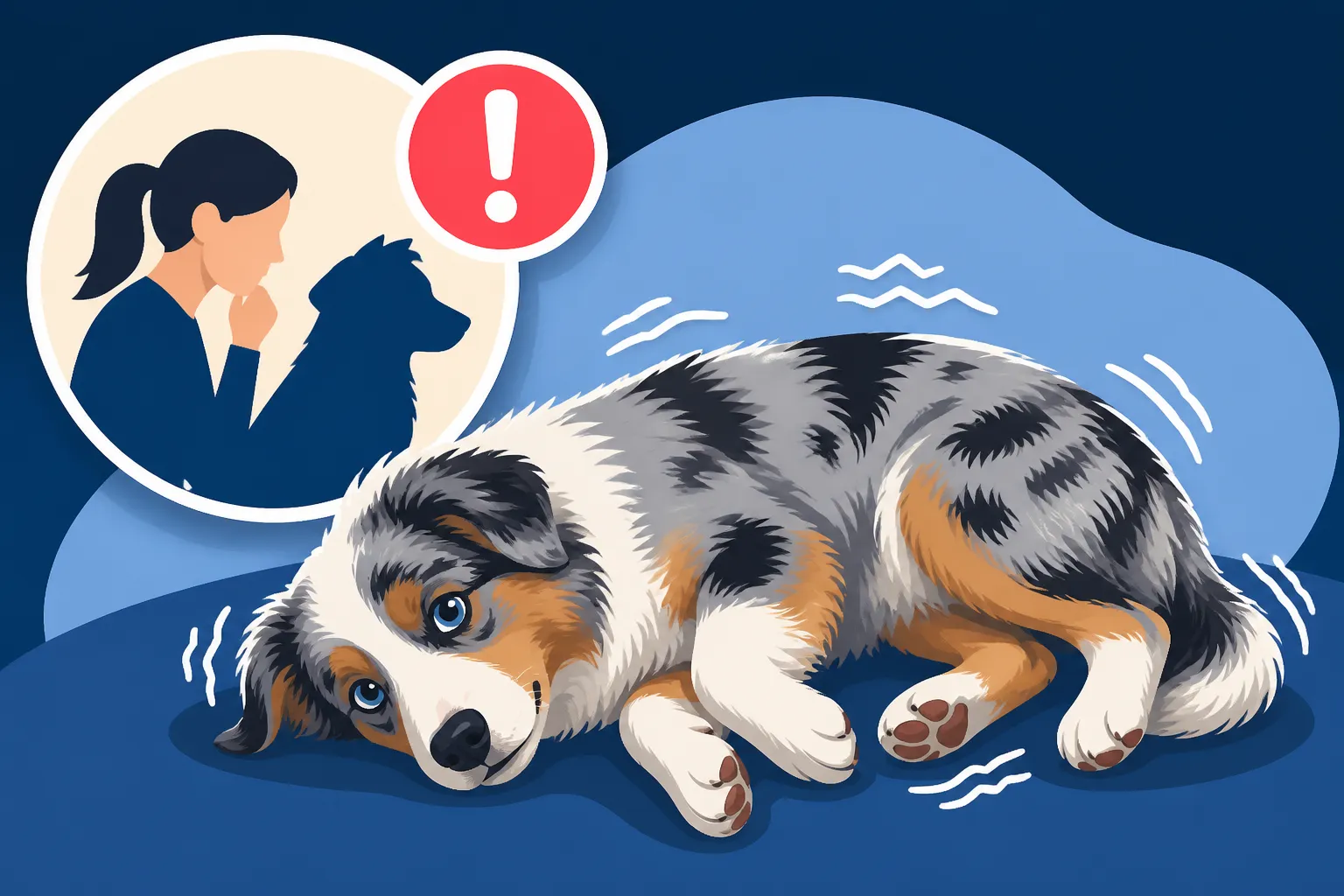
Focal seizures can manifest in various ways: a twitching limb, repetitive jaw-snapping, unusual eye movements, or even behavioral changes like "fly-biting" (snapping at invisible objects) or staring blankly. Your Aussie might seem anxious, restless, or disoriented without losing full consciousness. These more subtle signs can be particularly tricky to distinguish from normal quirks or other medical conditions, which is why detailed observation and even video recording are so helpful for your vet. Regardless of severity, all seizures have a pre-ictal phase (aura) where an Aussie might become clingy, anxious, or hide, and a post-ictal phase, which is the recovery period. During the post-ictal phase, which can last minutes to hours, your young Aussie might appear profoundly disoriented, confused, pace aimlessly, or even temporarily lose their vision or coordination, often bumping into furniture. This phase can be just as distressing as the seizure itself, as your dog slowly returns to normal, often with profound hunger or thirst.
Immediate Actions During and After Your Aussie's First Seizure
Witnessing your beloved Australian Shepherd in the throes of a seizure is an emergency, but knowing what to do – and what not to do – can make a significant difference in their safety and your peace of mind. Your immediate response focuses on safety and meticulous observation.
Ensuring Safety and Gathering Critical Information
The absolute first priority during a seizure is to keep your Aussie safe from injury. If they are near stairs, sharp furniture, or other hazards, gently try to scoot them to a safer, open area, but do not attempt to restrain them or put your hands in their mouth. It’s a common misconception that dogs can swallow their tongue during a seizure; this is physically impossible. Putting your hands near their mouth risks a severe bite injury to yourself as they have no control over their jaw muscles. Instead, cushion their head if possible with a blanket or pillow. Keep the environment calm, quiet, and dim.
One of the most crucial things you can do, as hard as it might be, is to time the seizure. Note down the exact start and end times. The duration of the seizure is a vital piece of information for your veterinarian. If it's safe to do so, and you can remain calm, discreetly video-record the event. This visual evidence can be incredibly helpful for your vet in diagnosing the type of seizure and understanding its characteristics. Even a short clip can provide more information than a verbal description alone. Remember any abnormal behaviors leading up to the seizure (the pre-ictal phase) and observe closely for changes immediately after.
Navigating the Confusing Post-Ictal Period
Once the seizure activity stops, your Australian Shepherd will enter the post-ictal phase, a period of recovery that can range from a few minutes to several hours. During this time, your dog will often be disoriented, confused, restless, and may pace aimlessly. They might bump into objects, experience temporary blindness, or have difficulty recognizing familiar surroundings or even you. This can be deeply unsettling when your dog doesn't seem to know who you are. They may also exhibit extreme hunger or thirst, drinking excessive amounts of water or demanding food.
It's vital to provide a calm, quiet, and safe space for your Aussie to recover. Keep them away from stairs and other dangers until their coordination returns to normal. Avoid excessive stimulation. While it’s natural to want to comfort them, some dogs prefer to be left alone to recover quietly. Offer fresh water, but don't force it. The immediate aftermath of a seizure requires patience and understanding. However, there are times when emergency veterinary care is warranted immediately after a seizure. If the seizure lasts longer than 5 minutes, if your Aussie has multiple seizures in a short period (known as Cluster Seizures in an Australian Shepherd), or if they do not regain consciousness between seizures, you must seek emergency vet care right away. These situations can be life-threatening and require immediate medical intervention.
Why a Two-Year-Old Australian Shepherd Might Experience a Seizure
Discovering why your two-year-old Australian Shepherd had a seizure is often a process of careful investigation. While the immediate cause of the first seizure might remain a mystery initially, veterinarians follow a systematic approach to rule out various possibilities, with some conditions being more common in this breed and age group.
The High Likelihood of Idiopathic Epilepsy in Aussies
For many young Australian Shepherds experiencing their first seizure, the ultimate diagnosis often points to idiopathic epilepsy. "Idiopathic" simply means that there's no identifiable underlying cause for the seizures – no brain tumor, infection, or metabolic imbalance. This form of epilepsy is considered genetic and inherited, meaning it's passed down through generations. Australian Shepherds are, unfortunately, one of the breeds with a known predisposition to this condition.
The typical age of onset for idiopathic epilepsy in dogs is generally between one and five years old, making a two-year-old Australian Shepherd a prime candidate for this diagnosis. It's incredibly frustrating for owners because a diagnosis of idiopathic epilepsy means there's no "cure" in the traditional sense; rather, it's a condition that needs to be managed. The process of arriving at this diagnosis often involves what's called "diagnosis by exclusion," where the veterinarian systematically rules out all other potential causes before settling on epilepsy. Understanding that your Aussie might have a genetic predisposition can be a tough pill to swallow, highlighting the importance of knowing your dog's full health history and genetic background, which can be uncovered through a comprehensive The Genetic Panel Every Australian Shepherd Needs. You can learn more in our detailed article, Australian Shepherd Epilepsy Starting Between One and Five.
Investigating Other Possible Causes with Your Vet
While idiopathic epilepsy is a common diagnosis for a two-year-old Australian Shepherd's first seizure, your veterinarian will meticulously investigate other potential causes to ensure nothing is overlooked. This thoroughness is crucial because seizures can be a symptom of a wide range of underlying health issues, some of which are treatable or curable.
One category your vet will explore is metabolic imbalances. This includes conditions like hypoglycemia (low blood sugar), which can be due to various factors, or liver shunts and other liver diseases, which can lead to a build-up of toxins in the bloodstream that affect brain function. Kidney disease, while less common in a two-year-old, can also cause neurological symptoms. Another critical area of investigation is exposure to toxins. Dogs are curious creatures, and they can accidentally ingest anything from human medications (even common ones like ibuprofen) to pesticides, antifreeze, or certain plants. Even some flea and tick products can be dangerous if your Aussie carries the MDR1 Mutation Half of Australian Shepherds Carry, leading to adverse reactions. Structural issues within the brain, such as tumors, inflammation (encephalitis), or hydrocephalus, are also considered. While brain tumors are less common in young dogs, they are not unheard of and require advanced diagnostics. Your vet will piece together your Aussie's history, perform a physical exam, and run initial blood tests to begin narrowing down the possibilities.
Partnering with Your Veterinarian for Diagnosis and Management
After the shock of your Australian Shepherd's first seizure, the next vital step is to partner closely with your veterinarian. They are your primary resource for understanding what happened, determining the cause, and developing a management plan moving forward. This collaborative effort is key to ensuring the best possible outcome for your beloved companion.
What Information Your Vet Needs to Help Your Aussie
When you call or visit your veterinarian, providing as much detailed information as possible is paramount. Remember that video you took? That’s gold. Show it to your vet, as it allows them to observe the seizure firsthand, which is incredibly difficult to describe accurately with words alone. You’ll also need to recall:
- The exact time and duration of the seizure: From start to finish, including any pre-seizure odd behaviors (like restlessness or anxiety) and post-seizure recovery time.
- Type of seizure: Was it full-body convulsing, or more subtle twitching?
- Any distinguishing features: Vocalization, drooling, loss of bladder/bowel control, eye movements.
- Your Aussie's recent history: Any new foods, treats, medications, supplements, flea/tick products, exposure to toxins, recent travel, or changes in behavior, diet, or routine.
- Other symptoms: Have you noticed any limping, lethargy, changes in appetite or thirst, or any other unusual signs before or after the seizure?
Every detail you provide helps your vet build a complete picture, allowing them to differentiate between various conditions. Keeping a log of any future seizures will also be crucial for monitoring the condition, and we have a whole guide on Logging Aussie Seizures for the Neurologist.
Diagnostic Procedures and Understanding the Results
Your veterinarian will likely start with a thorough physical examination, a neurological assessment, and a series of initial diagnostic tests. These usually include a complete blood count (CBC) and a biochemistry panel to assess organ function (liver, kidneys), blood sugar levels, and electrolyte balance. A urinalysis might also be performed. These tests are essential for ruling out metabolic causes, toxins, or infections that could be triggering the seizures.
If these initial tests come back normal, and especially if seizures recur, your vet might recommend further investigation. This could include a bile acid test to check for subtle liver dysfunction or a referral to a veterinary neurologist. A neurologist might suggest advanced imaging, such as an MRI (Magnetic Resonance Imaging) of the brain, to rule out structural issues like brain tumors, inflammation, or fluid buildup (hydrocephalus). They might also perform a CSF (cerebrospinal fluid) tap to check for infections or inflammatory conditions affecting the brain and spinal cord. While an MRI and CSF tap can be costly, they provide definitive answers and can be critical for an accurate diagnosis, especially when facing something as serious as brain lesions. When considering such extensive diagnostics, having pet insurance like Healthy Paws can significantly alleviate the financial burden, as these procedures can easily run into thousands of dollars.
Navigating Treatment Decisions After the First Event
The decision to start anti-seizure medication after a single seizure in a two-year-old Australian Shepherd is a complex one, and it's a conversation you'll have in depth with your veterinarian. Not every dog that has one seizure immediately goes on medication. Several factors influence this decision:
- Severity and duration: Was the seizure prolonged or particularly severe?
- Presence of cluster seizures: Did your Aussie have multiple seizures within a 24-hour period?
- Frequency: If seizures recur, how often do they happen?
- Underlying cause: Is there an identifiable and treatable cause that can be addressed directly?
If idiopathic epilepsy is suspected or diagnosed, and your Aussie has recurring or severe seizures, your vet may recommend starting anti-epileptic drugs (AEDs). Common medications like phenobarbital or potassium bromide are often prescribed, and you can learn more about them in our articles, Starting an Australian Shepherd on Phenobarbital and Anti-Seizure Medication for an Australian Shepherd. These medications don't cure epilepsy but help to control the frequency and severity of seizures. Starting AEDs is often a long-term, sometimes lifelong, commitment, and it requires regular monitoring (including blood tests to check drug levels and liver function, as discussed in Liver Monitoring on Australian Shepherd Seizure Drugs). It’s a significant lifestyle adjustment for both you and your Aussie, and understanding the financial implications, which can be substantial over your dog's lifespan, is important. This is another area where a comprehensive pet insurance plan from providers like Healthy Paws can offer crucial support for ongoing medication costs and vet visits, helping you manage the Budgeting for an Australian Shepherd With Epilepsy.
| Seizure Type | Key Characteristics | Immediate Action for Owner | Vet Visit Urgency |
|---|---|---|---|
| Generalized (Grand Mal) | Full body convulsions, loss of consciousness, paddling, drooling, potential loss of bladder/bowel control. Lasts seconds to minutes. | Ensure safety (move hazards), time seizure, video if safe. Keep quiet. | Essential and Urgent: Contact vet immediately. Emergency visit if >5 min or cluster seizures. |
| Focal (Partial) | Localized twitching (face, limb), "fly-biting," staring, mild disorientation, may or may not lose consciousness. | Observe closely, time event, video if possible. Note any unusual pre/post behavior. | Essential: Schedule vet visit soon, especially if recurrent or worsening. |
| Status Epilepticus | Seizure lasting >5 minutes or multiple seizures without full recovery between them. | IMMEDIATE EMERGENCY ACTION: Protect safety, time accurately, prepare for transport. | LIFE-THREATENING EMERGENCY: Rush to nearest emergency vet immediately. |
| Cluster Seizures | Two or more seizures within a 24-hour period. | Ensure safety during each seizure, time each event. | Urgent: Contact vet immediately. May require emergency visit depending on severity. |
Disclaimer
Please note that this information is intended for educational purposes only and should not replace professional veterinary advice. Always consult with a qualified veterinarian for any health concerns or before making any decisions about your pet's medical care.