How Weight Multiplies the Load on Aussie Joints
It's a tough pill to swallow when you realize your vibrant Australian Shepherd, the dog that used to leap and bound with boundless energy, is starting to show signs of stiffness or discomfort, especially after a good romp. Often, our first thought goes to age or genetics, and while those definitely play a role, there's a silent, insidious factor that many of us overlook: extra weight. Even a few seemingly insignificant pounds can multiply the stress on your Aussie's joints exponentially, turning a minor predisposition into a painful reality. This guide is all about understanding that crucial link, how to spot it, and what you can do to protect your beloved companion.
The Hidden Strain of Extra Pounds on Aussie Joints
Australian Shepherds are built for movement, for agility, for covering ground with grace and power. Their skeletal structure, while robust, is designed to efficiently distribute the forces generated by their active lifestyle when they are at an ideal weight. Introduce even a small amount of extra body fat, and that delicate balance is thrown completely off, putting immense and unnatural pressure on their joints.
Understanding the Biomechanics of Weight Bearing
Think about it like this: imagine carrying a backpack that's just a little bit too heavy for a long hike. At first, it might not seem like much, but over miles, that extra weight begins to strain your knees, your hips, and your back. It's no different for your Australian Shepherd. Every step they take, every jump, every sudden stop or turn, sends forces reverberating through their joints. When they're carrying excess weight, these forces are dramatically amplified.
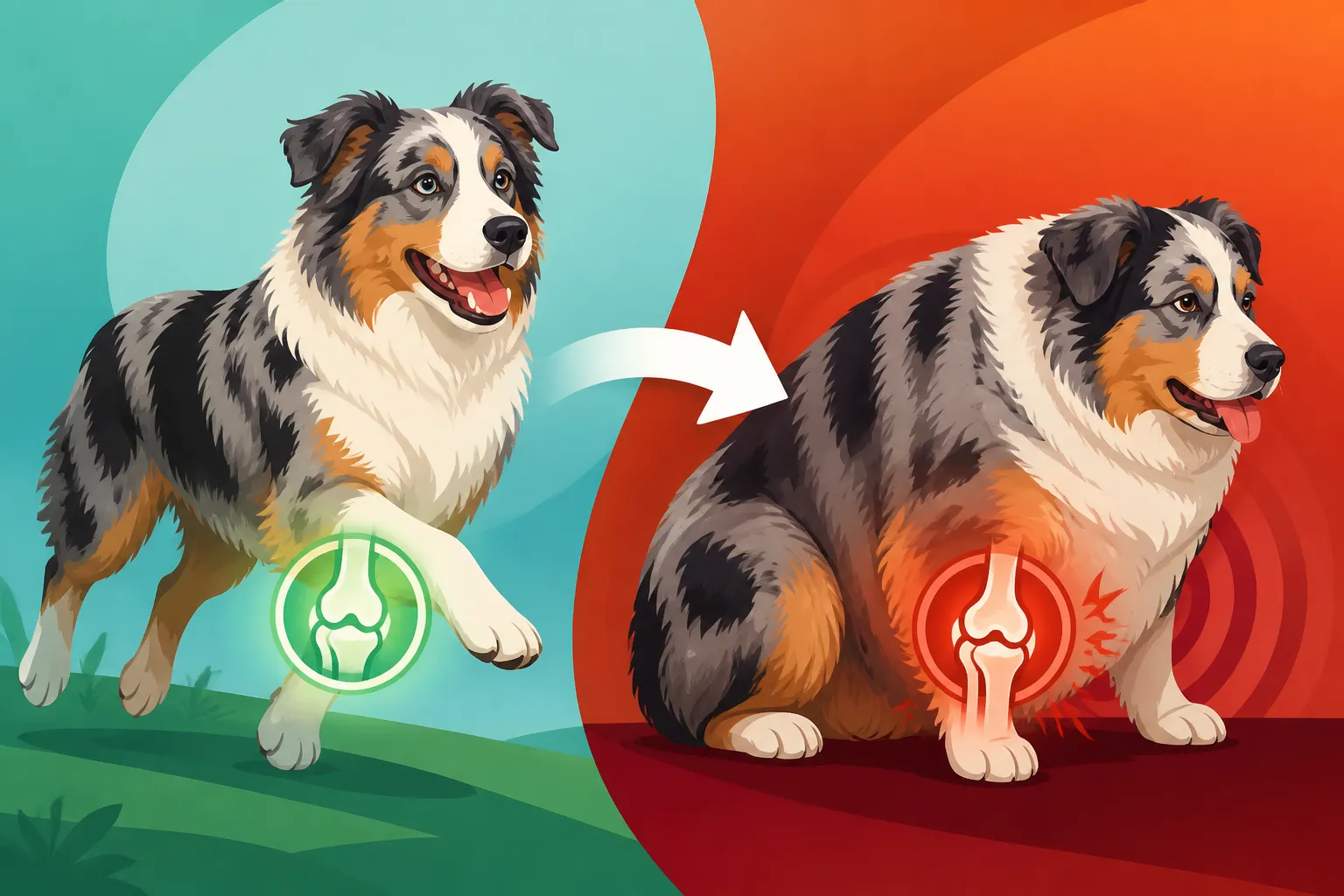
A mere 10% increase in body weight can lead to a disproportionately higher increase in load on weight-bearing joints like the hips, elbows, and knees. This isn't a linear relationship; it's often exponential. So, if your 50-pound Aussie carries an extra five pounds, it's not just an additional five pounds of pressure. It's like those joints are constantly absorbing the impact of a much heavier dog, day in and day out. Over weeks, months, and years, this constant, amplified stress grinds away at cartilage, inflames soft tissues, and accelerates degenerative changes.
Common Joint Issues Exacerbated by Excess Weight
Our amazing Australian Shepherds are unfortunately predisposed to certain orthopedic conditions, and extra weight turns these predispositions into full-blown problems much faster and more severely.
First on the list is Australian Shepherd Hip Dysplasia and Working Joints. This is a condition where the hip joint doesn't form correctly, leading to a loose fit between the ball and socket. When an Aussie is overweight, the already ill-fitting joint is subjected to even greater grinding and friction with every movement. This accelerates the breakdown of cartilage, leading to pain, inflammation, and early onset arthritis. A dog that might have managed a mild case of hip dysplasia comfortably for years could find itself severely crippled by just a few extra pounds.
Similarly, Aussie Elbow Dysplasia From Hard Turning is another common culprit. This is a complex condition involving multiple developmental abnormalities in the elbow joint. Just like with hips, excess weight dramatically increases the compressive forces on these already compromised elbows. Imagine the impact of your Aussie jumping off the couch or turning sharply during a game of fetch. If their elbows are trying to bear more weight than they're designed to, the tiny micro-traumas accumulate, leading to chronic pain, lameness, and debilitating arthritis.
Beyond these developmental issues, extra weight directly contributes to and worsens Australian Shepherd Arthritis After Years of Work. Arthritis is essentially the inflammation and degradation of joint cartilage. When joints are consistently overloaded, the cartilage wears down faster, the underlying bone becomes irritated, and inflammatory chemicals are released, creating a vicious cycle of pain and further damage. Even a perfectly formed joint will succumb to arthritis more quickly if it's perpetually under excessive load. Furthermore, excess body fat isn't just inert tissue; adipose (fat) tissue is metabolically active and produces inflammatory mediators that can worsen systemic inflammation, exacerbating joint pain even further. It's a double whammy for their comfort and mobility.
Recognizing When Your Aussie Is Carrying Too Much Weight
It's easy to fall into the trap of thinking a slightly softer look is just part of getting older, or that a few extra pounds won't hurt. But recognizing when your Australian Shepherd is overweight is the crucial first step to protecting their joints. Many owners are surprised when their vet points out a weight issue, often because they see their dog every day and the change can be gradual.
The Rib Test and Visual Cues
The "rib test" is one of the simplest and most effective ways to assess your Aussie's weight. Here's how to do it:
- Run your hands along their sides: Place your thumbs on your Aussie's spine and spread your fingers over their rib cage. You should be able to easily feel their ribs without pressing hard. They shouldn't be visible from a distance (unless your Aussie has a very short coat), but they should be palpable. If you have to press firmly to feel the ribs, your dog is likely carrying too much weight. If you can't feel them at all, they're definitely overweight.
- Check their waistline: Stand above your Aussie and look down at their back. You should see a distinct waistline, an indentation behind their ribs, before their hips. If they have a straight "barrel" shape or a bulging waist, they're overweight.
- Observe their tuck: Now, look at your Aussie from the side. Their abdomen should tuck up nicely from their rib cage to their hind legs, not hang low or be parallel to the ground. A lack of an abdominal tuck indicates excess fat.
- Feel for a fat pad at the tail base: Excess fat often accumulates at the base of the tail. Feel this area; if it feels soft and cushiony rather than firm, it's another sign of being overweight.
It's important to remember that an Australian Shepherd's double coat can hide a lot, making visual assessment alone tricky. A fluffy coat can make a truly overweight dog appear merely "sturdy." That's why the hands-on rib test is so vital.
Beyond the Scale: Body Condition Scoring (BCS)
While knowing your Aussie's weight is a useful baseline, relying solely on the number on the scale can be misleading. A heavily muscled working Aussie might weigh more than a less active, less muscled Aussie of the same height, yet be perfectly lean. This is where Body Condition Scoring (BCS) comes in.
BCS is a standardized, subjective assessment tool that evaluates your dog's overall body fat percentage. Most vets use a 5-point or 9-point scale. On a 5-point scale:
- 1 (Emaciated): Ribs, lumbar vertebrae, pelvic bones, and all bony prominences are evident from a distance. No discernible body fat.
- 2 (Underweight): Ribs easily palpable and visible. Minimal fat covering. Waist easily noted.
- 3 (Ideal): Ribs easily palpable without excess fat covering. Waist observed from above. Abdominal tuck evident. This is your target!
- 4 (Overweight): Ribs palpable with difficulty; definite fat covering. Waist discernible but not prominent. Slight abdominal tuck.
- 5 (Obese): Heavy fat deposits over lumbar area and chest. Waist absent. No abdominal tuck.
On a 9-point scale, 4-5 is generally considered ideal. Your veterinarian can help you accurately assess your Aussie's BCS and set a realistic target if they need to lose weight. Don't be shy about asking them for a hands-on demonstration and guidance. It's one of the most proactive things you can do for your dog's long-term health.
Here's a simplified BCS table to help you visualize:
| BCS Score (5-point) | Appearance (Visual) | Palpation (Ribs) | Waist/Tuck (Visual) |
|---|---|---|---|
| 1 (Emaciated) | Ribs, spine, hip bones prominent and visible. | Ribs very easily felt, no fat cover. | Extreme abdominal tuck, severe hourglass shape. |
| 2 (Underweight) | Ribs, spine easily visible. | Ribs easily felt, minimal fat cover. | Obvious abdominal tuck, pronounced hourglass shape. |
| 3 (Ideal) | Ribs felt but not seen. Smooth overall body contour. | Ribs easily felt, thin fat cover. | Well-proportioned waist, definite abdominal tuck. |
| 4 (Overweight) | Ribs difficult to feel, some fat padding. | Ribs palpable with difficulty, moderate fat cover. | Waist present but not prominent, slight abdominal tuck. |
| 5 (Obese) | No ribs felt, heavy fat deposits over body. | Ribs not palpable or very difficult to feel, heavy fat cover. | No waist, abdomen distended or pendulous. |
Strategies to Manage and Prevent Weight-Related Joint Stress
Once you've identified that your Australian Shepherd might be carrying too much weight, or even if you just want to ensure they stay at a healthy weight to protect their precious joints, you need a multi-pronged approach. It’s not just about one thing; it’s about a lifestyle adjustment.
Tailoring Diet for Weight Management
Diet is arguably the most impactful factor when it comes to weight management. It's often where the extra pounds creep in unnoticed.
- Accurate Portion Control: This is paramount. Don't just eyeball it. Use a measuring cup or, even better, a kitchen scale to weigh out your Aussie's kibble. Calorie counts on food bags are averages, and your dog's individual needs will vary. Remember that if you're Feeding an Australian Shepherd on a Working Day, their caloric needs will be higher than on a rest day. Adjust accordingly.
- Choose Appropriate Food: A high-quality dog food designed for active breeds is a good start. If your Aussie is already overweight, your vet might recommend a specific "weight management" or "light" formula. These foods typically have fewer calories and higher fiber content to help your dog feel full while consuming less.
- Limit Treats and Scraps: Treats are a huge source of hidden calories. They add up quickly! Opt for low-calorie training treats, or use small pieces of healthy vegetables like carrots, green beans, or cucumber as rewards. Absolutely no table scraps, as these are often high in fat, sugar, and sodium, and can also upset their digestive system. For more on safe food choices, see The Everyday Foods That Harm an Aussie.
- Meal Frequency: Splitting your Aussie's daily food allowance into two smaller meals can help manage hunger and metabolism throughout the day. This also helps with bloat prevention, a risk for deep-chested breeds.
- Slow and Steady Wins the Race: Rapid weight loss isn't healthy for dogs. Aim for a gradual, consistent loss of 1-2% of their body weight per week. This means patience is key. Your vet can help you calculate the ideal daily caloric intake to achieve this. If you're struggling to reduce calories without cutting meals, consider exploring strategies like Cutting Aussie Calories Without Cutting Meals by adding safe, low-calorie fillers like cooked green beans.
Adapting Exercise Routines for Joint Health
While diet is critical, appropriate exercise complements it beautifully, not just for burning calories, but for strengthening the muscles that support joints. However, for an overweight Aussie or one with existing joint issues, the type of exercise is crucial.
- Low-Impact Activities: High-impact activities like intense fetch sessions involving sudden stops, sharp turns, and jumping can be detrimental to compromised joints. Instead, focus on low-impact exercises. Swimming is fantastic as it provides excellent cardiovascular exercise and muscle building without any weight-bearing impact on joints. Long, consistent walks on soft surfaces (grass, dirt trails) are also great.
- Controlled Leash Walks: Regular, brisk walks on a leash are essential. Aim for consistent duration and frequency rather than sporadic, intense bursts. Start slow and gradually increase the distance and pace as your Aussie’s stamina improves and weight decreases. Remember, How Much Daily Exercise an Australian Shepherd Needs might need to be adjusted down initially if they are very overweight or have severe joint pain.
- Mental Stimulation: Don't forget mental exercise! Puzzle toys, obedience training, scent work, or even learning new tricks can be incredibly tiring for an Aussie's mind without stressing their body. This helps satisfy their high drive even if their physical activity is limited.
- Avoidance of High-Stress Movements: For Aussies prone to issues like Aussie Elbow Dysplasia From Hard Turning or Australian Shepherd Hip Dysplasia and Working Joints, avoid activities that involve excessive jumping (like jumping on/off furniture or high jumps in agility), long-distance running on pavement, or repetitive sharp turns. If your Aussie has been active in sports, you might need to reconsider their routine to avoid conditions like An Aussie Stiff After a Career in Agility.
Supportive Care and Veterinary Interventions
Even with proper diet and exercise, some Aussies will benefit from additional support, especially if joint issues are already present.
- Joint Supplements: Many veterinarians recommend joint supplements containing ingredients like glucosamine, chondroitin, MSM, and omega-3 fatty acids (like fish oil). These can help support cartilage health, reduce inflammation, and improve joint lubrication. It’s often beneficial to begin Starting Joint Support on a Young Working Aussie as a preventative measure. Always consult your vet before starting any supplements.
- Pain Management: If your Aussie is already showing signs of joint pain (stiffness, lameness, reluctance to move), your vet may prescribe anti-inflammatory medications (NSAIDs) or other pain relievers. These can significantly improve their comfort and mobility, allowing them to engage in more exercise.
- Physical Rehabilitation: A certified canine rehabilitation therapist can develop a tailored exercise program using techniques like hydrotherapy, therapeutic exercises, and massage to strengthen muscles, improve range of motion, and reduce pain.
- Regular Veterinary Check-ups: Regular visits to the vet are crucial for monitoring weight loss progress, adjusting diet plans, and assessing joint health. Your vet can also screen for other health issues. Remember to maintain Australian Shepherd Dental Care as good overall health contributes to their well-being.
- Pet Insurance: The costs associated with diagnosing and treating chronic joint conditions can be substantial, especially for things like X-rays, medications, and physical therapy. Many owners find peace of mind with pet insurance. Companies like Healthy Paws offer comprehensive coverage that can help ease the financial burden of managing long-term health issues, allowing you to focus on getting your Aussie the best care possible. It's smart to consider insurance early, ideally before any pre-existing conditions arise, to maximize your coverage options with providers such as Healthy Paws. Their plans can cover a significant portion of unexpected veterinary bills.
The Long-Term Impact of Maintaining a Healthy Weight
The effort you put into managing your Australian Shepherd's weight pays dividends that extend far beyond aesthetics. It's truly an investment in their happiness, comfort, and longevity.
Extending Lifespan and Quality of Life
Simply put, a healthy weight can add years to your Aussie's life. Studies have shown that dogs maintained at an ideal body condition live, on average, two years longer than their overweight counterparts. Those two years aren't just more years; they're often better years.
Imagine your senior Australian Shepherd still enjoying walks, playing gentle games, and moving comfortably well into their golden years. That's the gift of maintaining an ideal weight. They’ll have more energy, breathe easier, and experience less discomfort. Their mobility will be preserved for longer, allowing them to participate in family activities and enjoy a fuller, more active life. They won't struggle to get up from a nap, climb stairs, or jump into the car for an adventure. This greatly enhances their overall quality of life and strengthens the bond you share.
Preventing and Slowing Progression of Arthritis
One of the most significant long-term benefits of an ideal weight is its profound impact on joint health, particularly in the context of arthritis. As discussed, excess weight accelerates the wear and tear on cartilage and can bring on or worsen arthritis.
By keeping your Aussie lean, you dramatically reduce the mechanical stress on their joints. This means:
- Delayed Onset: If your Aussie has a genetic predisposition to arthritis (which is common in many breeds, including Aussies), maintaining a healthy weight can significantly delay the onset of clinical signs. They might develop arthritis later in life, but it will be much less severe.
- Slower Progression: For Aussies who already have some degree of arthritis, losing even a small amount of weight can make a world of difference. It slows down the progression of the disease, reduces pain, and improves mobility. Less stress on the joints means less inflammation, less cartilage damage, and more comfortable movement.
- Reduced Medication Needs: Often, an overweight dog with arthritis will require higher doses or more frequent administration of pain medications. By reducing their weight, you might be able to lower medication dosages, or even eliminate the need for them entirely, which can save money and reduce the risk of side effects over time. This also aligns well with leveraging pet insurance, such as a plan from Healthy Paws, to manage any necessary veterinary care or rehabilitation if arthritis progresses despite best efforts.
Ultimately, keeping your Australian Shepherd at a healthy, lean weight is one of the most powerful and effective things you can do to safeguard their joint health, ensure their comfort, and allow them to live the long, active, happy life they deserve by your side. It’s a commitment, but one that yields immeasurable rewards.
Disclaimer
The information provided in this article is for general educational purposes only and is not a substitute for professional veterinary advice. Always consult with a qualified veterinarian for any health concerns or before making any changes to your pet's diet, exercise routine, or medical treatment.