Hereditary Cataracts and the Australian Shepherd HSF4 Test
There's nothing quite as heartbreaking as seeing the sparkle dim in your beloved Australian Shepherd's eyes, especially when it's due to something you could have prepared for or even prevented. Hereditary cataracts are a genuine concern for Aussie owners, often leading to progressive vision loss that can drastically change your dog's quality of life. This guide is here to walk you through understanding hereditary cataracts in Australian Shepherds, demystifying the crucial HSF4 genetic test, and equipping you with the knowledge to protect your furry family member's precious sight.
Understanding Hereditary Cataracts in Australian Shepherds
When we talk about cataracts, many people think of age-related changes, like the cloudiness we sometimes see in older dogs' eyes. But hereditary cataracts in Australian Shepherds are a different beast entirely. They're genetically passed down, often appearing much earlier in life and can progress to severe vision impairment, sometimes even blindness. It's a tough reality for many Aussie families, and understanding what you're up against is the first step toward managing it.
What are Hereditary Cataracts?
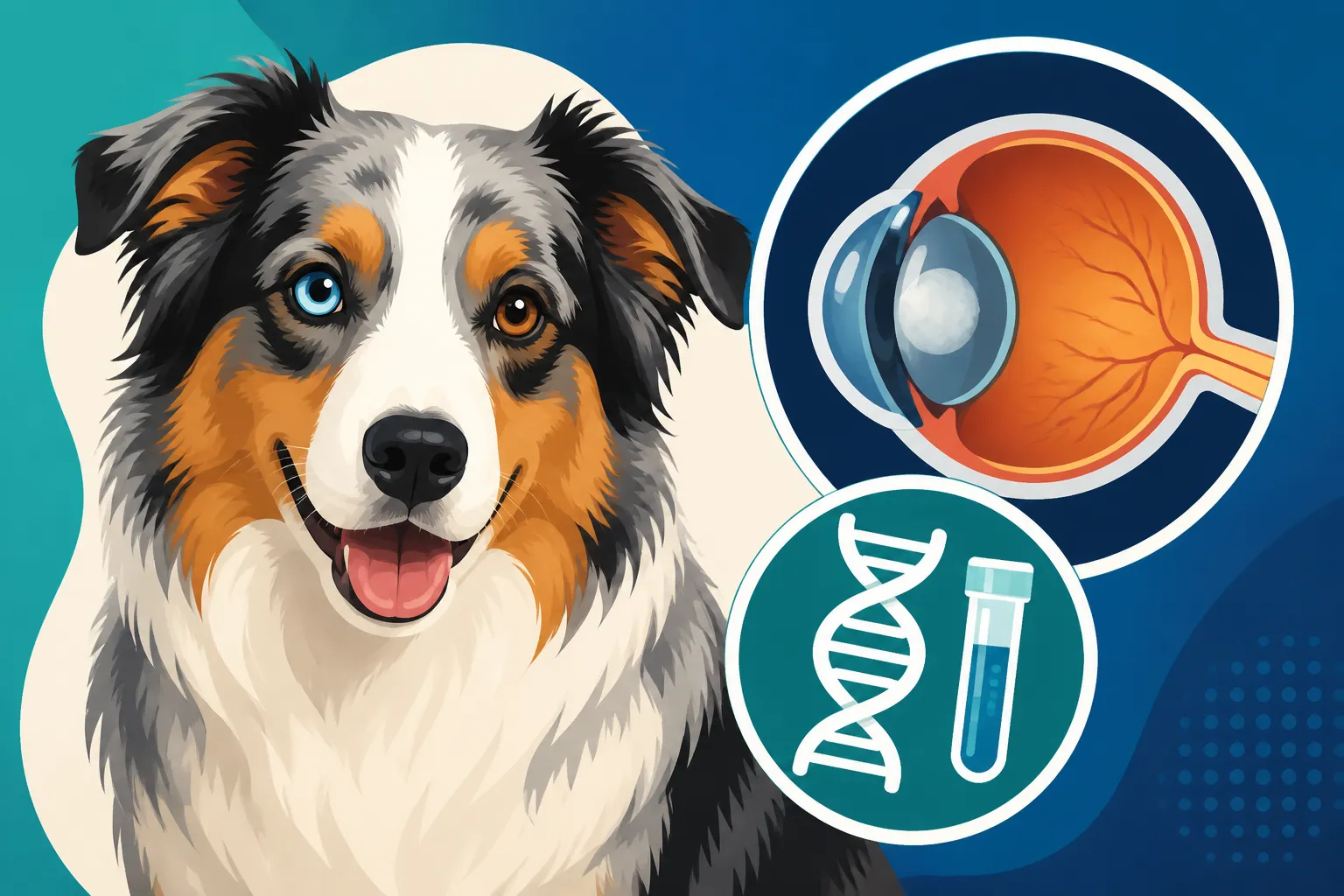
At its core, a cataract is an opacity or cloudiness in the lens of the eye. Think of looking through a window that's become increasingly frosted – that's what a dog with cataracts experiences. In hereditary cataracts, this cloudiness isn't caused by injury, diabetes, or old age, but by a specific genetic predisposition. For Australian Shepherds, the primary culprit for a specific form of hereditary cataract, known as Hereditary Cataracts (HC) or Posterior Polar Cataracts (PPC), is a mutation in the HSF4 gene. These cataracts are typically bilateral, meaning they affect both eyes, though often not symmetrically or at the same rate. They can range from small, non-progressive lesions that barely impact vision to dense, blinding opacities that require surgical intervention. Imagine your active Aussie, who thrives on chasing a frisbee or herding imaginary sheep, slowly losing the ability to see its world clearly. It's a profoundly distressing experience for both dog and owner.
How Hereditary Cataracts Manifest in Aussies
Unlike age-related cataracts that usually develop in a dog's golden years, HSF4-related hereditary cataracts often begin to show up when an Australian Shepherd is still relatively young. We commonly see them manifest anywhere from six months of age up to seven years, though they can sometimes appear earlier or later. The progression varies wildly from dog to dog, even within the same litter. Some Aussies might develop small, pinprick cataracts that never truly hinder their vision, remaining clear-eyed observers for their Australian Shepherd Lifespan Across Twelve to Fifteen Years. Others might experience a rapid progression, with the lens clouding over significantly in just a few months, turning their vibrant world into a blurry landscape.
Owners might first notice their dog bumping into furniture in dim light, hesitating before jumping, or misjudging distances when playing fetch. A slight bluish-white haze in the pupil might also be visible if you look closely. It's not uncommon for these cataracts to start subtly at the back pole of the lens (posterior polar) and then spread over time. For an Aussie, a breed known for its sharp intelligence and athleticism, even minor vision impairment can be incredibly frustrating, impacting their confidence and desire to engage in activities they once loved. Early detection through regular veterinary eye exams, like The ACVO Eye Exam Australian Shepherd Breeders Run, is absolutely critical.
The Heartbreak of Vision Loss
The reality of an Australian Shepherd facing progressive vision loss due to hereditary cataracts is incredibly challenging. These dogs are highly dependent on their keen eyesight for their work, play, and general interaction with their environment. Imagine your agile companion, once confidently navigating the backyard or a busy dog park, suddenly hesitant, bumping into familiar objects, or startled by sudden movements it can no longer anticipate. This can lead to anxiety, changes in behavior, and a significant reduction in their quality of life.
A dog that starts to lose its sight might become more clingy, more vocal, or even more prone to nipping out of fear if surprised. For owners, it means a profound shift in how they interact with and care for their dog. Paths need to be kept clear, furniture moved with caution, and training cues adapted to include more verbal and tactile signals. We had a beautiful red merle named Rusty who developed severe cataracts by age four. His owners, based in Flagstaff, Arizona, told us how he went from a champion agility dog to a dog that struggled to find his water bowl. They installed baby gates, added textured mats near entrances, and used scent markers to help him navigate his home. It takes immense patience and dedication, but with adjustments, Aussies can adapt remarkably well to life with limited vision.
The Role of the HSF4 Gene
Understanding that hereditary cataracts aren't just bad luck, but are linked to a specific genetic marker, revolutionized how we approach this condition in Australian Shepherds. The discovery of the HSF4 gene mutation has provided breeders and owners with a powerful tool for screening and making informed decisions.
What is the HSF4 Gene?
The HSF4 gene, or Heat Shock Transcription Factor 4, plays a vital role in the normal development and maintenance of the lens in a dog's eye. When there's a specific mutation in this gene, it disrupts the intricate cellular processes that keep the lens clear, leading to the formation of cataracts. What makes this particular mutation fascinating, and sometimes frustrating, is its inheritance pattern: it's considered an autosomal dominant trait with incomplete penetrance.
What does "dominant with incomplete penetrance" really mean for you and your Aussie? It means that if your dog inherits even one copy of the mutated HSF4 gene (from one parent), it has a higher risk of developing cataracts. However, "incomplete penetrance" is the tricky part – not every dog with the mutated gene will necessarily develop cataracts, or they might develop them to different degrees and at different ages. So, while the gene significantly increases risk, it's not a 100% guarantee of severe cataracts. It's like having a strong predisposition, but other factors, possibly environmental or other genetic modifiers, might influence the ultimate outcome. This nuance is crucial for breeders when planning pairings, as even a dog carrying one copy could potentially pass the risk on.
How the HSF4 Test Works
The HSF4 test is a straightforward, non-invasive genetic screening that can be done at any age, even on young puppies. Most commonly, it involves a simple cheek swab collection. You receive a kit, gently rub a sterile swab along the inside of your Aussie's cheek to collect cells, and then mail it off to a specialized veterinary genetics lab. Companies like Canine Health Check or Paw Print Genetics are reputable labs that offer this testing.
Once the lab receives the sample, they extract DNA and analyze it for the specific HSF4 mutation. Within a few weeks, you'll receive a report detailing your dog's HSF4 status. This test has become an indispensable part of The Genetic Panel Every Australian Shepherd Needs for responsible breeders and conscientious owners. It provides objective, scientific data that helps predict a dog's risk and informs breeding decisions aimed at reducing the prevalence of these hereditary cataracts in future generations.
Interpreting Your Aussie's HSF4 Results
When your HSF4 test results come back, you'll typically see one of three designations:
- N/N (Normal/Clear): This means your Australian Shepherd does not carry the HSF4 mutation and is therefore clear of this specific genetic predisposition for hereditary cataracts. They cannot develop HSF4-related cataracts and cannot pass the gene on to their offspring. This is the ideal result for breeding dogs, as it minimizes the risk.
- N/HC (Carrier): This indicates your Aussie carries one copy of the HSF4 mutation. As a carrier, your dog has an increased risk of developing HSF4-related cataracts, though, due to incomplete penetrance, it's not a certainty. They can pass this gene to about 50% of their offspring. While a carrier might not develop severe cataracts, responsible breeders would avoid breeding them to another carrier or an affected dog to prevent producing homozygous affected offspring.
- HC/HC (Affected): This means your Australian Shepherd has inherited two copies of the HSF4 mutation, one from each parent. Dogs with this result are at a very high risk of developing HSF4-related cataracts, often with a more severe presentation and earlier onset. They will pass a copy of the mutated gene to 100% of their offspring.
It's important to remember that even if your Aussie is "Clear" for HSF4, it doesn't mean they are immune to all types of cataracts. Other forms, like juvenile cataracts from different genetic causes, or even age-related cataracts, can still occur. However, the HSF4 test specifically targets one of the most common and significant hereditary forms in the breed. This is why regular eye examinations with a board-certified veterinary ophthalmologist remain vital throughout your dog's life, starting with The Aussie Puppy Eye Check at Six Weeks and Australian Shepherd Puppy Health Checks at Eight Weeks.
Here's a quick look at what those results really mean:
| HSF4 Result | Meaning for Your Aussie | Breeding Implications | Risk of HSF4 Cataracts |
|---|---|---|---|
| N/N (Clear) | Does not carry the HSF4 mutation. | Can be bred to any dog without risk of passing HSF4 mutation. | Very Low (not HSF4-related) |
| N/HC (Carrier) | Carries one copy of the HSF4 mutation. | Should only be bred to an N/N (Clear) dog to avoid producing HC/HC puppies. | Increased Risk |
| HC/HC (Affected) | Carries two copies of the HSF4 mutation. | Should not be bred. Will pass mutation to 100% of offspring. | High Risk |
Managing and Preventing HSF4 Cataracts
Knowledge is power, especially when it comes to your Aussie's health. With the HSF4 test, we have a powerful tool for prevention and management. But genetic testing is just one piece of the puzzle; proactive care and responsible breeding practices are equally crucial.
Regular Eye Exams and Early Detection
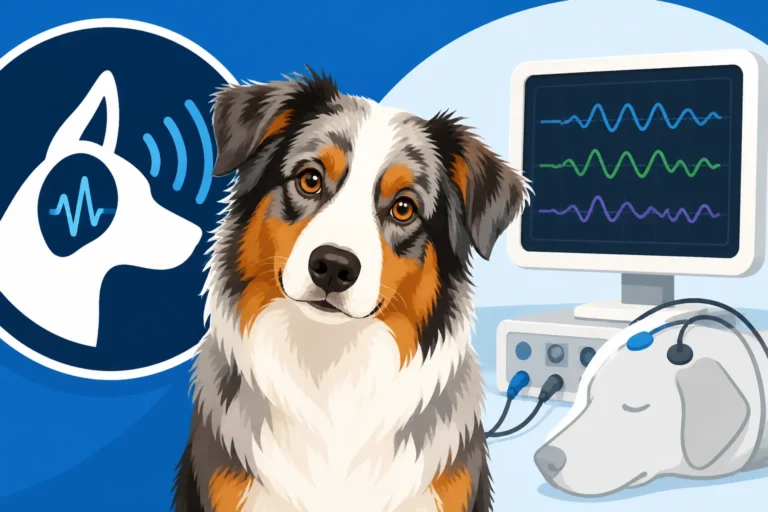
Even with an HSF4 clear result, or especially if your Aussie is a carrier, regular eye examinations are incredibly important. A board-certified veterinary ophthalmologist can detect the earliest signs of cataract formation, often long before you, as an owner, would notice any changes in vision. These specialized vets use instruments like indirect ophthalmoscopes and slit lamps to examine the lens in detail.
For Aussies, a recommended schedule often involves an initial eye exam at around six to eight weeks of age, followed by annual examinations, especially for breeding dogs. This allows for early intervention, helps track progression, and confirms the type of cataract. If cataracts are identified, your vet can discuss options. Sometimes, certain supplements might be suggested, although their efficacy for preventing or reversing cataracts is limited. More importantly, early detection allows you to prepare for potential vision changes and discuss surgical options, like those explored in Whether an Aussie Sees Again After Cataract Removal, if the cataracts become vision-impairing. Staying on top of these routine checks can make a world of difference in your dog's quality of life, allowing you to adapt and support them every step of the way, rather than reacting in crisis.
Breeding Responsibly with HSF4 in Mind
For breeders, the HSF4 test is an invaluable tool for ethical and responsible breeding practices. Given the dominant nature of the HSF4 mutation, even a carrier dog (N/HC) can pass the gene to its offspring. This means that if you breed two carriers, there's a 25% chance of producing a puppy that is HC/HC (affected with two copies), a 50% chance of producing a carrier (N/HC), and a 25% chance of producing a clear puppy (N/N). The absolute ideal is to breed only N/N dogs to N/N dogs, virtually eliminating the risk of HSF4 cataracts.
However, sometimes a breeder might have a dog that is an N/HC carrier with exceptional qualities in other areas – temperament, health, structure, or working ability. In such cases, responsible breeding dictates that the carrier dog should only be bred to an N/N (Clear) mate. This way, while some offspring might still be carriers, no puppies will inherit two copies of the mutated gene and be at the highest risk. All puppies from such a pairing should also be tested, and buyers should be fully informed about their puppy's HSF4 status. This commitment to genetic testing and transparency is a hallmark of breeders who truly care about the long-term health of the Australian Shepherd breed, going beyond just looking at whether an Australian Shepherd should be bred.
Life with an Affected Aussie
If your Australian Shepherd develops hereditary cataracts, it's certainly a difficult journey, but it's far from the end of the road. Many Aussies live full, happy lives even with vision impairment, thanks to their incredible adaptability and their owners' dedication. The first step is consulting with a veterinary ophthalmologist to assess the severity and progression of the cataracts. They can determine if surgery is a viable option to restore vision. Cataract surgery, involving the removal of the cloudy lens and sometimes replacement with an artificial one, can be highly successful, but it's a significant financial commitment, often discussed when considering Australian Shepherd Surgery Costs From Hips to Eyes.
Beyond surgery, adapting your home environment is key. Maintain a consistent layout of furniture, use distinct scents or textures to mark important areas like food bowls or doors, and keep commands consistent and clear. Always approach your dog slowly and speak to them before touching to avoid startling them. For an older dog, combining vision loss with other age-related changes means that Senior Australian Shepherd Care After Ten needs to be extra attentive. These adaptations help build your dog's confidence and reduce anxiety. Having a robust pet insurance plan, like those offered by Healthy Paws, can certainly alleviate some of the financial strain of managing ongoing vet visits, medications, and potential surgeries for conditions like cataracts, allowing you to focus on your dog's well-being. It's a journey that demands patience, love, and a willingness to learn how to best support your beloved companion through their blurred world.
Disclaimer
The information provided in this article is for general informational purposes only and is not a substitute for professional veterinary advice. Always consult with a qualified veterinarian or veterinary ophthalmologist for any health concerns or before making any decisions related to your Australian Shepherd's health and treatment.