Australian Shepherd Surgery Costs From Hips to Eyes
It’s a heart-stopping moment for any Australian Shepherd parent: the call from the vet with a diagnosis that requires surgery. Maybe your energetic pup suddenly started limping, or perhaps you noticed a clouding in their normally bright eyes. The immediate rush of worry for their well-being is quickly followed by a gut punch of anxiety over what this means for your wallet. Australian Shepherds are prone to certain genetic and breed-specific conditions that often require costly surgical interventions, and understanding these potential expenses upfront is crucial for responsible ownership. This comprehensive guide will walk you through the common surgical needs of Australian Shepherds, what those procedures typically cost, and how you can prepare for these significant financial demands.
The Reality of Australian Shepherd Surgery Costs
Let’s be honest, talking about money when your beloved Aussie is facing a health crisis feels incredibly cold. But the reality is, veterinary care, especially specialized surgery, comes with a hefty price tag. It’s a sad truth that financial constraints can sometimes dictate the level of care a pet receives, and that’s a position no loving owner wants to be in. Understanding the potential costs associated with common Aussie surgeries isn't about being pessimistic; it’s about being prepared, empowering you to make the best decisions for your furry family member without added financial stress in an already emotional time.
Why Aussie Surgery Bills Climb So High
Australian Shepherds are a robust, active breed, but like all purebreds, they come with certain predispositions to health issues that often necessitate surgical correction. These aren't minor issues; we're often talking about complex orthopedic procedures, delicate eye surgeries, or life-saving emergency interventions. The cost isn't just for the surgeon's time; it encompasses pre-operative diagnostics like X-rays, MRIs, blood work, and EKGs, the anesthesia itself, surgical supplies, facility fees, post-operative medications, and follow-up care, which can include extensive physical therapy or specialized monitoring. Each step adds to the final bill, and it can quickly escalate into the thousands, even tens of thousands, of dollars.
Moreover, the expertise required for these surgeries is significant. You’re not just paying for a general practitioner; you’re often paying for board-certified veterinary surgeons, ophthalmologists, or neurologists who have undergone years of additional training. Their specialized knowledge and equipment allow for complex procedures that can restore your Aussie’s quality of life, but this specialization naturally comes at a premium. The geographic location of your veterinary hospital also plays a role, with clinics in major metropolitan areas often having higher overheads and therefore higher prices than those in rural settings.
The Importance of Proactive Planning
Facing an unexpected surgery bill for your Australian Shepherd can be devastating, both emotionally and financially. It's not uncommon for owners to be blindsided by costs ranging from $5,000 to well over $10,000 for a single procedure. This is where proactive planning becomes your best friend. Instead of waiting for a crisis, thinking ahead about how you might manage these potential expenses can save you a lot of heartache down the line.
This isn't just about setting aside money, though that's certainly a huge part of it. It's also about understanding your breed's vulnerabilities, maintaining a good relationship with your veterinarian, and exploring all your options for financial support. Ignorance isn’t bliss when it comes to your Aussie’s health and the associated costs; being informed is your greatest tool. Preparing now means you can focus on your dog's recovery when the time comes, rather than scrambling to figure out how to pay the bills.
Orthopedic Surgeries: Hips, Elbows, and Knees
Australian Shepherds are famous for their agility and boundless energy, traits that make them incredible working dogs and companions. However, this very athleticism, combined with genetic predispositions, makes them susceptible to a range of orthopedic issues that frequently require surgical intervention. These joint problems can significantly impact their quality of life, leading to pain, lameness, and reduced mobility if left untreated.
Hip Dysplasia: Total Hip Replacements and FHOs
Hip dysplasia is a notoriously common ailment in many larger dog breeds, and Australian Shepherds are unfortunately no exception. This condition occurs when the hip joint doesn't form correctly, leading to a loose joint that grinds rather than slides smoothly. Over time, this abnormal wear and tear leads to painful arthritis. Owners often notice their Aussie showing stiffness, reluctance to jump or run, or a "bunny hopping" gait. Diagnosis usually involves X-rays, often performed when the dog is young, to assess the severity of the joint malformation. For a detailed look at this condition, read more about Australian Shepherd Hip Dysplasia and Working Joints.
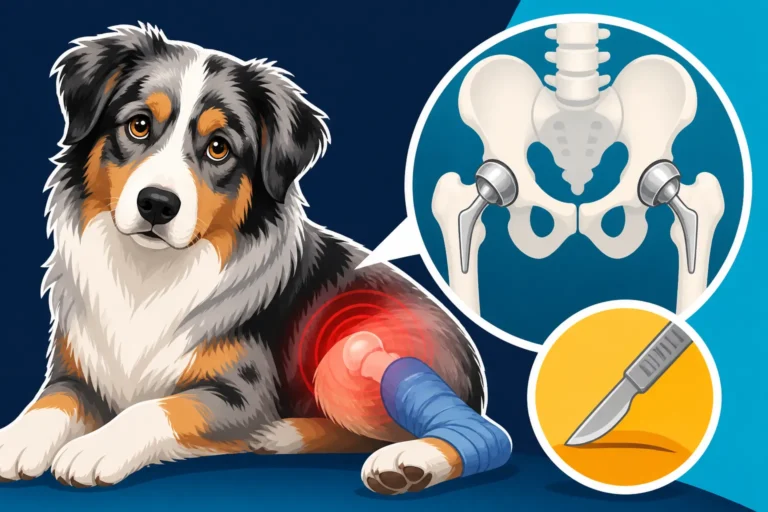
When it comes to treating severe hip dysplasia, surgery is often the most effective route. One of the most common and definitive solutions is a total hip replacement (THR), where the damaged ball and socket are replaced with artificial components. This highly specialized procedure can completely alleviate pain and restore normal function, but it is also one of the most expensive orthopedic surgeries, often ranging from $4,000 to $7,000 per hip. Imagine needing both hips done, and you can see how the costs quickly multiply. A less invasive, and less costly, option is a femoral head ostectomy (FHO). This involves removing the head of the femur, allowing a "false joint" to form. While it doesn't restore full function like a THR, it can significantly reduce pain, especially for smaller or less active dogs, and typically costs between $1,500 and $3,000 per hip. Recovery from either surgery involves extensive rest and rehabilitation.
Elbow Dysplasia and Cruciate Ligament Tears
Beyond the hips, Australian Shepherds can also suffer from elbow dysplasia, another developmental disorder affecting the elbow joint. This condition can involve multiple problems, such as ununited anconeal process, fragmented coronoid process, or osteochondritis dissecans (OCD), all leading to pain, lameness, and eventual arthritis. Surgical correction aims to address the specific defect and typically costs anywhere from $2,000 to $5,000 per elbow. Early diagnosis, often through X-rays or CT scans, is key to preventing further joint degradation.
Another prevalent orthopedic injury, especially in active Aussies, is a torn cranial cruciate ligament (CCL), often compared to an ACL tear in humans. This ligament stabilizes the knee joint, and when it tears, the knee becomes unstable and painful, leading to lameness. Surgical repair is almost always recommended to prevent further damage and arthritis. Common surgical techniques include Tibial Plateau Leveling Osteotomy (TPLO) or Tibial Tuberosity Advancement (TTA), which aim to stabilize the joint by altering its biomechanics. These procedures are highly effective but also costly, typically ranging from $3,500 to $6,000 per knee. The thought of your vibrant Aussie suddenly unable to run or play is heartbreaking, and the financial burden of these essential repairs can feel overwhelming.
Managing Post-Surgical Recovery and Rehabilitation
The cost of orthopedic surgery doesn’t stop the moment your Australian Shepherd leaves the operating room. Post-surgical care and rehabilitation are absolutely crucial for a successful outcome and can add a significant amount to your overall expenses. Immediately after surgery, your Aussie will need pain medication, anti-inflammatories, and possibly antibiotics, which can run a few hundred dollars. Then comes the critical period of restricted activity, which often means crate rest for several weeks or even months. This can be challenging for a high-energy breed, and some owners invest in larger, more comfortable crates or dog playpens to help manage their dog's confinement.
Physical rehabilitation, often involving hydrotherapy, therapeutic exercises, and laser treatments, is highly recommended for most orthopedic surgeries, particularly for hip and knee repairs. These sessions, usually conducted by a certified canine rehabilitation therapist, are essential for rebuilding muscle strength, improving range of motion, and ensuring a full recovery. Each session can cost $50 to $150, and a full course might involve 10-20 sessions or more over several months. This vital component of recovery, while expensive, greatly influences your Aussie's long-term mobility and comfort. Without proper rehab, the success of the surgery can be compromised, potentially leading to chronic issues or even the need for further intervention down the line.
Eye Surgeries: Preserving Your Aussie's Vision
Australian Shepherds are known for their striking, often multicolored eyes, but this beautiful feature can also be prone to a host of inherited conditions. Vision is paramount for such an intelligent and active breed, allowing them to navigate their environment, interact with their family, and, for working lines, perform their duties. When eye conditions threaten their sight, surgical intervention becomes a crucial, albeit expensive, option.
Cataract Removal and Lens Implants
Hereditary cataracts are a common concern in Australian Shepherds, and they can develop at a relatively young age. A cataract is an opacity in the lens of the eye that obstructs the passage of light, leading to blurry vision and eventually blindness if left untreated. Early signs might be a subtle cloudiness in the pupil or your dog bumping into objects in dim light. For an in-depth understanding of this specific condition, you can refer to Hereditary Cataracts Clouding an Aussie Eye. While some cataracts are small and don't significantly impair vision, others can progress rapidly and require surgical removal to restore sight.
Cataract surgery in dogs is a highly specialized procedure performed by a veterinary ophthalmologist. It involves removing the cloudy lens and often implanting an artificial intraocular lens (IOL) to restore clear vision. This delicate microsurgery is very similar to human cataract surgery. The success rate is generally high, but the cost is substantial, typically ranging from $2,500 to $4,500 per eye. This includes the pre-operative work-up, the surgery itself, and extensive post-operative care, which involves administering multiple eye drops several times a day for weeks or months. Missing even one dose can jeopardize the outcome, making the commitment to post-op care just as significant as the financial investment in the surgery itself.
Correcting Collie Eye Anomaly and Eyelid Abnormalities
Collie Eye Anomaly (CEA) is another inherited eye condition that affects Australian Shepherds, alongside Collies and other related breeds. CEA can manifest in several ways, from mild choroidal hypoplasia, which might not affect vision much, to more severe complications like colobomas (defects in the optic nerve head), retinal detachment, or intraocular hemorrhage, all of which can cause significant vision impairment or blindness. While mild forms often don't require surgery, severe cases, especially those with retinal detachment, might warrant surgical intervention. Unfortunately, surgery for CEA, particularly retinal reattachment, is extremely complex and has a guarded prognosis, often costing upwards of $3,000-$6,000, with no guarantee of success. For more information, see Collie Eye Anomaly in an Australian Shepherd.
Beyond inherited internal eye conditions, Aussies can also suffer from structural eyelid abnormalities like entropion or ectropion. Entropion is where the eyelid rolls inward, causing eyelashes to rub against the cornea, leading to irritation, pain, and potential corneal ulcers. Ectropion is the opposite, where the eyelid rolls outward, exposing the eye and making it susceptible to dryness and infection. Both conditions are painful and can lead to chronic eye problems. Corrective surgery involves reshaping the eyelid to ensure it sits properly against the eyeball. These procedures are generally less expensive than cataract surgery but still range from $1,000 to $2,500 per eye, depending on severity and complexity. Early correction is vital to prevent long-term damage to the cornea.
Living with Vision Impairment After Surgery
Sometimes, despite the best surgical efforts, or when surgery isn't an option, an Australian Shepherd may live with significant vision impairment or even complete blindness. This can be a tough adjustment for both the dog and the owner, as Aussies are highly observant and rely heavily on their sight. If your Aussie loses vision, adapting their environment is key. This means keeping furniture in consistent locations, using scent markers or different textured rugs to denote steps or doorways, and maintaining a consistent routine.
While the emotional toll is immense, the financial implications can also continue. This might involve purchasing specialized "halo" harnesses (like the Muffin's Halo for Blind Dogs) to prevent bumping, or investing in trainers experienced with blind dogs. Ongoing medication for conditions like glaucoma (which can sometimes follow cataract surgery) can be a monthly expense. It's a testament to their resilience that most Aussies adapt remarkably well to vision loss, often relying more on their acute hearing and sense of smell. Still, the journey requires patience, commitment, and often, continued financial provision for their specialized care.
Emergency and Soft Tissue Surgeries
Not all surgical needs for an Australian Shepherd are elective or related to chronic conditions. Accidents happen, and sudden, life-threatening emergencies can arise, requiring immediate surgical intervention. These scenarios are often the most stressful because there's no time to plan or save; decisions must be made quickly under immense pressure, and the costs can be astronomical.
Gastric Dilatation-Volvulus Bloat: A Race Against Time
One of the most terrifying emergencies an Australian Shepherd owner can face is Gastric Dilatation-Volvulus (GDV), commonly known as bloat. This condition, which is particularly common in deep-chested breeds like Aussies, occurs when the stomach fills with gas and twists upon itself. This cuts off blood supply to the stomach and other organs, sending the dog into shock. Symptoms are rapid onset and include a distended abdomen, unproductive retching, drooling, restlessness, and pain. For a clearer picture of the risk factors, consider reading Why an Aussie's Deep Chest Raises Bloat Risk.
Bloat is a life-threatening emergency that requires immediate veterinary attention and often, urgent surgery. There is no time to wait; every minute counts. The surgery involves de-rotating the stomach and often performing a gastropexy, where the stomach is surgically tacked to the abdominal wall to prevent future twisting. This complex surgery, along with extensive pre- and post-operative care, IV fluids, pain management, and monitoring for complications like heart arrhythmias, can easily cost between $3,000 and $7,000, or even more if complications arise. Many owners opt for a prophylactic gastropexy at the time of spay/neuter to prevent GDV, which is a much cheaper and less stressful elective procedure, often costing $400-$800 when done concurrently with another surgery.
Tumor Removal and Cancer Treatment
As Australian Shepherds age, the risk of developing various cancers increases. Early detection and prompt removal of tumors are crucial for improving prognosis and quality of life. Owners might notice new lumps or bumps under the skin, changes in appetite, lethargy, or unexplained weight loss. For more on the risks, consult Australian Shepherd Cancer Risks With Age. While some masses are benign, others can be malignant and require aggressive treatment.
The cost of tumor removal surgery varies dramatically depending on the size, location, and type of tumor. A simple subcutaneous mast cell tumor removal might cost $500-$1,500. However, if the tumor is internal, requires extensive dissection, or necessitates reconstructive surgery, the costs can escalate to $2,000-$5,000. Beyond surgery, many cancers require additional treatments like chemotherapy or radiation therapy, which can add thousands more to the overall bill. Diagnostics, including biopsies, imaging (X-rays, ultrasounds, CT scans), and pathology reports, are essential but also contribute significantly to the initial expenses before any treatment even begins.
Other Common Soft Tissue Procedures
Beyond life-threatening emergencies and serious diagnoses, there are many routine and semi-routine soft tissue surgeries that Australian Shepherds might need throughout their lives. Spaying or neutering, while often done when they are young, is a surgical procedure that costs between $200 and $800, depending on gender, weight, and clinic. While not generally considered emergency, it’s a necessary part of responsible pet ownership.
Other common soft tissue surgeries can include hernia repairs (umbilical or inguinal), removal of foreign bodies swallowed accidentally, or wound repair after an injury. For instance, if your Aussie ingests something they shouldn’t, and it causes an intestinal obstruction, emergency surgery to remove the foreign body can cost $2,500-$5,000. Lacerations or severe bite wounds that require extensive cleaning and suturing under anesthesia can also run into the hundreds or even thousands of dollars, particularly if they are deep, infected, or involve delicate areas. These "less dramatic" surgeries, while not as daunting as bloat, still represent significant unplanned expenses for pet parents.
Neurological Surgeries: When Seizures or Spine Issues Arise
The Australian Shepherd's keen intelligence and sharp focus are hallmarks of the breed, driven by a complex neurological system. Unfortunately, like humans, dogs can develop neurological conditions that sometimes require surgical intervention. These surgeries are often among the most complex and expensive, due to the delicate nature of the brain and spine, and the specialized equipment and expertise required.
Diagnostics and Intervention for Epilepsy
Epilepsy is a heartbreaking diagnosis for any dog owner, and Australian Shepherds are predisposed to Idiopathic Epilepsy, meaning seizures occur without an identifiable cause. While many cases are managed with medication, in some severe instances where seizures are frequent, severe, or unresponsive to conventional drugs, a thorough neurological workup is necessary. This workup can include MRI scans of the brain and cerebrospinal fluid analysis to rule out structural abnormalities or other underlying causes, which alone can cost $2,000 to $4,000. Understanding the journey of this condition is crucial, so consider reading Australian Shepherd Epilepsy Starting Between One and Five.
While direct brain surgery for epilepsy in dogs is rare compared to humans, interventions for underlying causes, if found, might be considered. For example, if a brain tumor is discovered to be the cause of seizures, surgical removal might be an option. Brain surgery is incredibly specialized, high-risk, and expensive, potentially costing $5,000 to $10,000 or more, depending on the complexity and location of the mass. Even if surgery isn't performed, the ongoing costs of anti-seizure medication and regular blood work to monitor drug levels and liver function can be a significant lifelong financial commitment.
Intervertebral Disc Disease (IVDD) and Spinal Repair
Intervertebral Disc Disease (IVDD) is another serious neurological condition, though less common in Aussies than in certain chondrodystrophic breeds (like Dachshunds). However, active working breeds can still suffer from disc herniations due to trauma or degenerative changes. IVDD occurs when the cushioning discs between the vertebrae in the spine rupture or bulge into the spinal canal, compressing the spinal cord. This can lead to severe pain, weakness, paralysis, and loss of bladder/bowel control. Symptoms can appear suddenly, such as your Aussie crying out in pain, dragging their back legs, or becoming reluctant to move.
Diagnosis often involves advanced imaging like an MRI or CT scan ($1,500-$3,000) to pinpoint the exact location and severity of the disc compression. If medical management (strict crate rest and medication) is unsuccessful, or if the neurological deficits are severe, emergency spinal surgery may be required to relieve pressure on the spinal cord. This intricate surgery, known as a hemilaminectomy or ventral slot procedure, can cost between $3,000 and $8,000. Post-operative care includes intensive hospitalization, pain management, and extensive rehabilitation, similar to orthopedic surgeries, which will further add to the bill. The emotional and financial stress of an IVDD diagnosis and subsequent surgery can be immense, but early intervention often offers the best chance for recovery of function.
Managing the Financial Burden of Aussie Surgeries
Let's face it, the thought of dropping thousands of dollars on an unexpected vet bill can send shivers down anyone's spine. It's not just about the numbers; it's about the feeling of helplessness if you can't provide the best care for your beloved Australian Shepherd. While we've discussed some hefty price tags, there are practical strategies you can employ to soften the financial blow and ensure your Aussie gets the care they need.
Pet Insurance: A Lifeline for Unexpected Costs
This is often the first thing people think of when discussing high vet bills, and for good reason. Pet insurance can be an absolute lifesaver when unexpected surgical costs arise. Think of it like health insurance for humans – you pay a monthly premium, and in return, the insurance company helps cover a percentage of eligible veterinary expenses, including many surgeries, diagnostics, and emergency care. For Australian Shepherds, given their predispositions to orthopedic and eye conditions, pet insurance can be a particularly wise investment. It's smart to enroll them when they're young and healthy, before any pre-existing conditions develop, as these are typically excluded from coverage.
When choosing a policy, look for one that offers comprehensive coverage for accidents and illnesses. Pay attention to deductibles, reimbursement percentages (often 70%, 80%, or 90%), and annual limits. Brands like Healthy Paws are well-regarded for their comprehensive plans and straightforward reimbursement process, often covering a high percentage of unexpected costs once your deductible is met. While monthly premiums for an Australian Shepherd might range from $35 to $55 a month, the peace of mind it offers is invaluable. Imagine facing a $6,000 TPLO surgery and knowing your policy will cover a significant chunk of that, rather than paying out-of-pocket for the entire bill. Consider delving deeper into Australian Shepherd Insurance at $35 to $55 a Month to understand your options.
Emergency Savings and Payment Plans
Even with pet insurance, there will likely be deductibles and co-pays, and some services might not be fully covered. That's where an emergency savings fund specifically for your Australian Shepherd comes in handy. Try to build up a fund that could cover at least a few thousand dollars, which would go a long way towards covering your deductible, non-covered expenses, or even the full cost of smaller procedures. Automatically transferring a small amount into this fund each month can make it less daunting.
If you find yourself facing a large, unexpected bill without sufficient savings or insurance, many veterinary clinics understand the financial strain and offer payment plans. Some might work directly with you, allowing you to pay in installments over several months, often without interest. Others partner with third-party financing options like CareCredit, which is essentially a credit card specifically for healthcare expenses, offering promotional periods with deferred interest if the balance is paid within a certain timeframe. Don't be afraid to discuss payment options with your vet's office – they want to help your pet, too. For a focused look, read Saving Ahead of an Aussie Hip Surgery which discusses practical financial preparation.
Considering CareCredit and Veterinary Aid Programs
When faced with a sudden and substantial veterinary bill, knowing your options for financial assistance is critical. CareCredit is a popular choice, essentially a credit card designed for healthcare expenses, including veterinary costs. It's accepted at many vet offices and often offers special financing options, such as 0% interest for a certain period, which can be a huge relief if you can pay off the balance within that timeframe. However, if you don't pay it off, the interest rates can be high, so it’s important to understand the terms fully.
Beyond commercial financing, various non-profit organizations and breed-specific rescues offer financial aid for pet owners struggling with veterinary costs. Groups like the Australian Shepherd Health & Genetics Institute (ASHGI) or local breed-specific rescues might have programs or be able to point you toward resources. Organizations like The Pet Fund, RedRover, or The Handicapped Pets Foundation provide grants or assistance for specific medical conditions or for owners who meet certain financial criteria. Don't be too proud to ask for help; these programs exist precisely for situations like these, and every little bit of assistance can make a difference in your Aussie receiving vital care.
Preventative Care and Early Detection: The Best Defense
While we've focused a lot on the costs of reacting to health problems through surgery, a significant part of responsible Australian Shepherd ownership is being proactive. Preventative care and early detection are not just buzzwords; they are tangible strategies that can dramatically reduce the likelihood of costly and invasive surgeries, and ultimately lead to a longer, healthier, and happier life for your beloved companion.
Regular Vet Check-ups and Early Screening
Routine veterinary visits are the cornerstone of preventative care. It’s easy to skip these if your Aussie seems healthy, but annual (or bi-annual for seniors) check-ups allow your veterinarian to establish a baseline of health, monitor for subtle changes, and catch potential issues before they become major problems. During these visits, your vet will perform a thorough physical exam, checking their eyes, ears, teeth, heart, lungs, and joints. They might recommend routine blood work to screen for underlying conditions that aren't yet visible. For example, regular screening might detect early signs of a thyroid issue, which could be managed with medication rather than escalating to a more complex problem.
Beyond general check-ups, early screening for breed-specific genetic conditions is paramount for Australian Shepherds. Before you even bring an Aussie puppy home, responsible breeders should provide genetic health clearances for conditions like hip and elbow dysplasia, hereditary cataracts, and Collie Eye Anomaly (CEA). For an in-depth look at what tests are essential, explore The Genetic Panel Every Australian Shepherd Needs. If you adopt an Aussie without this history, or for conditions that develop later in life, your vet might recommend specific screenings, such as eye exams by a veterinary ophthalmologist at six weeks for puppies or later in life for cataracts. Early diagnosis, even if it confirms a genetic predisposition, allows you to monitor closely and intervene at the optimal time, potentially before a condition becomes surgical.
Lifestyle Choices to Support Long-Term Health
Your daily choices as an Australian Shepherd owner play an enormous role in their long-term health and, by extension, the likelihood of needing expensive surgeries. A balanced diet, appropriate exercise, and maintaining a healthy weight are not just good practices; they are powerful preventative measures. Obesity, for instance, puts immense strain on an Aussie's joints, exacerbating conditions like hip and elbow dysplasia and increasing the risk of cruciate ligament tears. Feeding a high-quality dog food, like options available from Chewy or Ollie, that is appropriate for their age, activity level, and any dietary sensitivities can significantly impact their overall well-being. Avoiding overfeeding and ensuring they stay lean helps protect those critical joints.
Beyond diet, ensuring your Aussie gets consistent, appropriate exercise is vital. Australian Shepherds need a lot of physical and mental stimulation, but it needs to be controlled exercise, especially during their growth phases. Over-exercising a young puppy, particularly with high-impact activities like excessive jumping or forced long runs, can stress developing joints and contribute to orthopedic problems later in life. Instead, focus on varied activities, mental enrichment, and proper warm-ups and cool-downs for adult working Aussies. Regular grooming, including checking their paws and ears, can also prevent infections or injuries that might require vet intervention. Every effort you make in their daily care contributes to a stronger, healthier dog less prone to needing a surgeon's touch.
Disclaimer
The information provided in this guide is for general informational purposes only and does not constitute veterinary advice. Always consult with a qualified veterinarian or veterinary specialist for any health concerns or before making any decisions about your Australian Shepherd's medical care. Surgical costs are estimates and can vary significantly based on geographic location, clinic, surgeon's fees, and the specific needs of the individual animal.