Why an Aussie’s Deep Chest Raises Bloat Risk
Few things strike more fear into the heart of an Australian Shepherd owner than the mention of bloat. It's a sudden, terrifying condition that can turn a perfectly healthy dog into a critically ill patient in a matter of hours, sometimes even minutes. If you’ve ever worried about your beloved Aussie’s deep chest and what it might mean for their health, you’re not alone. This guide aims to demystify gastric dilatation-volvulus (GDV), explaining why our wonderful, deep-chested Aussies are particularly susceptible, what to look for, and crucial steps you can take to protect them.
Understanding Gastric Dilatation-Volvulus GDV in Australian Shepherds
Let's be frank: bloat is a scary word for a reason. It’s not just an upset tummy; it's a rapidly progressing, life-threatening condition that demands immediate veterinary intervention. For Australian Shepherd parents, understanding what's actually happening inside your dog's body is the first step toward prevention and quick action.
What Exactly Is Bloat and GDV?
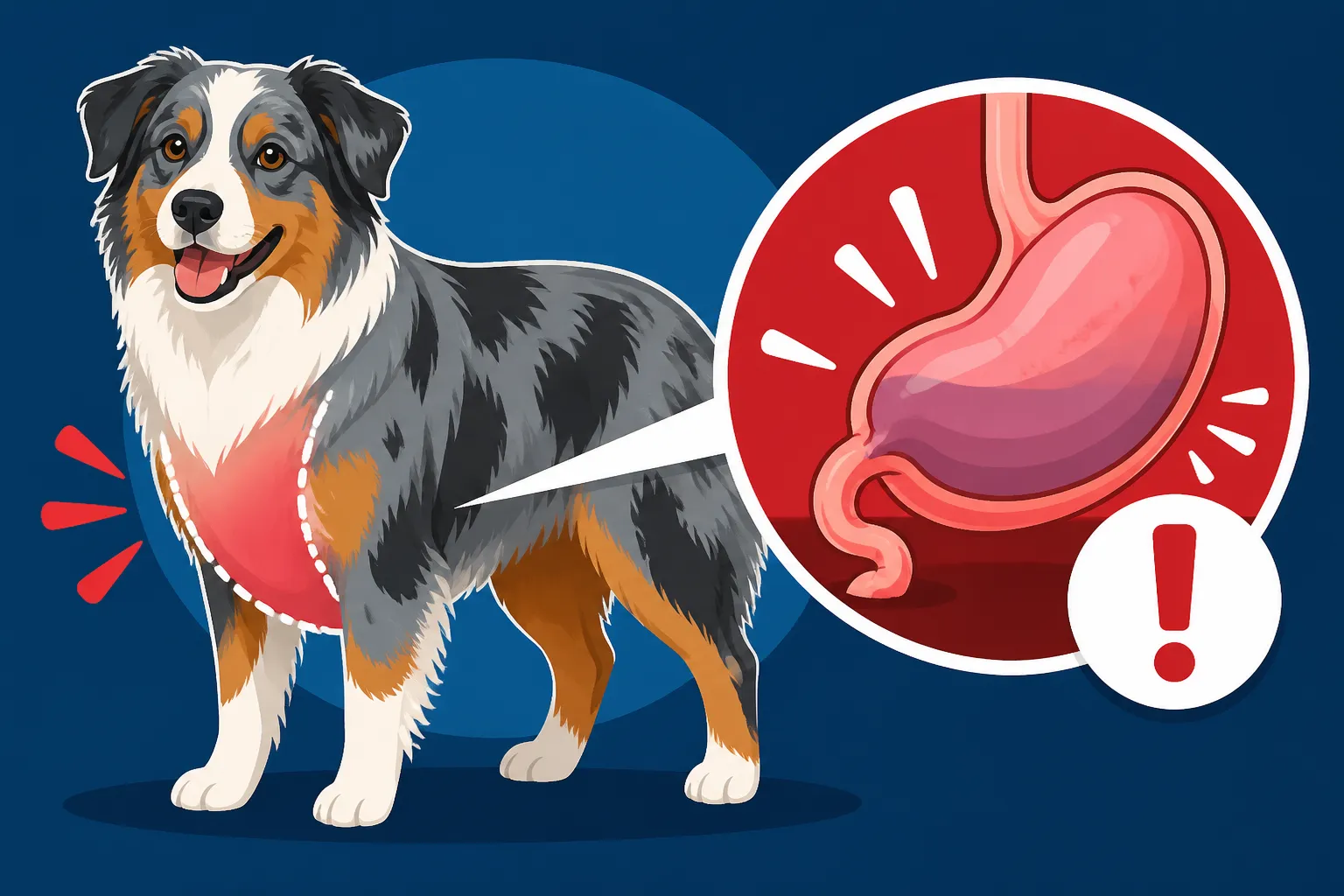
At its simplest, bloat refers to a condition where a dog's stomach fills with gas, fluid, or food, causing it to distend, or "bloat." Imagine a balloon inflating inside your dog's abdomen, pressing against other organs and causing immense discomfort. This initial distension is called gastric dilatation. While serious, gastric dilatation alone isn't always immediately fatal, though it's still a medical emergency.
The truly terrifying part comes with the "volvulus." This is when the distended stomach, now heavy and unnaturally buoyant with gas, twists upon its axis. Think of it like a swing that gets completely wound up on its ropes. This twisting pinches off both the entrance and exit of the stomach, trapping everything inside. Blood supply to the stomach wall is cut off, leading to rapid tissue death. It also puts immense pressure on major blood vessels, impairing blood flow back to the heart and quickly leading to shock. Without immediate surgical intervention, GDV is almost always fatal. It’s a race against time, where every minute truly counts for survival.
Why Australian Shepherds Are More Susceptible
Our beautiful Australian Shepherds, with their athletic builds and often deep, narrow chests, unfortunately, fit the classic profile of a breed prone to GDV. This specific body conformation—a deep chest paired with a narrower waistline—is a significant predisposing factor. The theory is that this chest cavity provides ample space for the stomach to swing and twist when it's distended. If you think about the physics, a shallow, broad chest would offer less room for this kind of rotation. It's not a guarantee that every deep-chested Aussie will bloat, but it certainly increases their baseline risk compared to breeds with different body types.
Beyond chest conformation, several other factors contribute to an Aussie's susceptibility. Like many large and giant breeds, Aussies are simply at a higher risk category. Older dogs, generally those over seven, tend to have a greater incidence, although bloat can strike at any age. Male dogs statistically have a slightly higher risk than females. Fast eaters, those who gulp down their food and air along with it, are also considered to be at greater risk. Stress, whether from environmental changes, travel, or even certain medical conditions, can play a role, as can specific diets, though the exact dietary link is still a topic of ongoing debate among veterinarians. It's a complex interplay of genetics, anatomy, and environmental triggers, making vigilance absolutely critical for Aussie parents.
Recognizing the Urgent Signs of Bloat
One of the most challenging aspects of bloat is how quickly it can escalate from seemingly minor discomfort to a critical emergency. Knowing the signs, even the subtle ones, is paramount for early intervention and increasing your Australian Shepherd's chances of survival.
Early and Subtle Indicators
Initially, your Aussie might just seem a little "off." They might start pacing restlessly around the house, unable to settle into a comfortable position. You might notice unusual anxiety or nervousness in their demeanor. One of the classic, yet often missed, early signs is excessive drooling. They might lick their lips frequently or show pale gums, indicating early signs of circulatory compromise.
Another critical early indicator, and one that should send shivers down any Aussie owner's spine, is non-productive retching. This means your dog is trying to vomit, heaving and gagging, but nothing or very little is coming up. They might only bring up a small amount of foamy saliva. This happens because the twisted stomach prevents anything from passing through. While occasional vomiting is common in dogs, repeated attempts to vomit without success, particularly in a deep-chested breed like an Australian Shepherd, should immediately trigger alarm bells. Don't wait for more obvious signs; these subtle cues are your dog's first cries for help. They might also show signs of general lethargy or weakness, struggling to stand or move normally.
Advanced and Critical Symptoms
As bloat progresses and the stomach twists (volvulus), the symptoms become much more severe and impossible to ignore. The most obvious sign is a rapidly distending abdomen. Your dog's belly will appear visibly swollen, feel hard to the touch, and might even produce a hollow, drum-like sound if you gently tap it. This distension can occur on one side more than the other, making the dog look lopsided. This swelling puts immense pressure on the diaphragm, making it incredibly difficult for your Aussie to breathe normally, leading to rapid, shallow breaths or obvious respiratory distress.
Beyond the visible abdominal changes, your dog's overall condition will deteriorate quickly. They might collapse, unable to stand or even lift their head. Their heart rate will often become rapid, while their pulse feels weak or thready as their body goes into shock. Their gums will turn very pale, almost white, and their capillary refill time (the time it takes for color to return to the gums after you press on them) will be prolonged. They will show extreme signs of pain if their abdomen is touched, and they might groan or whimper. At this stage, your Australian Shepherd is in critical condition, and literally every second counts. This is not the time for home remedies or watchful waiting; it's a desperate emergency that requires immediate, expert veterinary care.
Immediate Action: What to Do If You Suspect Bloat
The moments between suspecting bloat and getting your Australian Shepherd to emergency care are the most crucial. Your swift and decisive action can be the difference between life and death. This is not a drill; this is a true medical emergency.
The Critical Race Against Time
If you ever suspect your Australian Shepherd is bloating, even if you’re only seeing the early, subtle signs like restlessness and non-productive retching, you must act immediately. Do not, under any circumstances, wait to see if it gets better or try to treat it at home. This is arguably the most time-sensitive veterinary emergency there is. The longer the stomach remains twisted, the more damage occurs to the stomach lining, the greater the risk of widespread organ damage, and the lower the chances of survival. Studies show that survival rates decrease significantly with every hour of delay.
Your first step should be to call your regular veterinarian or, if it's after hours, the nearest 24/7 emergency veterinary hospital. Describe your Aussie's symptoms clearly and state that you suspect bloat (GDV). This allows them to prepare for your arrival, ensuring a team is ready to spring into action the moment you walk through the door. Knowing the location of your nearest emergency vet and having their number saved in your phone is an essential part of being a responsible Aussie owner. Considering the potential costs involved, having an emergency fund or pet insurance, like a policy from Healthy Paws, can provide immense peace of mind during such a stressful event. You don’t want financial worries to delay crucial treatment.
Emergency Veterinary Care and Diagnosis
Once you arrive at the emergency clinic, the veterinary team will immediately assess your Australian Shepherd. The initial physical exam will involve checking vital signs, examining the abdomen for distension and tenderness, and assessing for signs of shock. To confirm GDV, an X-ray of the abdomen is the definitive diagnostic tool. The unique "double bubble" or "Popeye arm" appearance of the gas-filled, twisted stomach on an X-ray is unmistakable.
While confirmation is underway, stabilization will begin. This often involves placing intravenous (IV) catheters to administer fluids rapidly, combating shock and supporting blood pressure. Pain medication is crucial, as GDV is incredibly painful. In some cases of gastric dilatation without volvulus, or as a temporary measure if the stomach hasn't completely twisted, the vet might attempt to decompress the stomach using a tube passed orally or, in dire circumstances, a trocar (a hollow needle) to release gas through the abdominal wall. However, if volvulus is confirmed, the ultimate treatment is surgery. The veterinary team will discuss the prognosis, risks, and necessary procedures with you, emphasizing the urgency of the situation. They're working to untwist the stomach, assess damage, and prevent it from happening again.
Surgical Intervention and Prognosis
When bloat with volvulus is confirmed, surgery is not just an option; it's the only way to save your Australian Shepherd's life. It's a major procedure, but one that offers the best hope for recovery.
The Gastric Torsion Surgery Procedure
The primary goal of the surgical procedure for GDV is to untwist the stomach and then perform a gastropexy. Once your Aussie is under general anesthesia, the surgeon will make an incision into the abdomen. They will then carefully rotate the stomach back into its correct anatomical position. This can be a delicate process, as the stomach can be incredibly distended and fragile. Once untwisted, the surgeon will inspect the stomach wall and surrounding organs for damage. Areas of the stomach that have been deprived of blood flow can become necrotic (dead tissue). If there are severely damaged or dead sections, these might need to be surgically removed, which further complicates the prognosis.
The crucial preventative step during this surgery is the gastropexy. This procedure involves surgically attaching the stomach to the abdominal wall. Think of it like tacking down a carpet so it can't slide around. This "tacking" doesn't prevent the stomach from distending with gas (dilatation), but it does prevent it from twisting again (volvulus), which is the life-threatening component of GDV. While it significantly reduces the risk of recurrent GDV, it's important to remember that it doesn't eliminate the possibility of bloat altogether, only the twisting. The recovery from this major surgery is intensive, requiring careful monitoring and dedicated post-operative care.
Post-Operative Care and Potential Complications
The period immediately following GDV surgery is critical. Your Australian Shepherd will require intensive care in the veterinary hospital for several days, often in an ICU setting. Vets will closely monitor them for various complications, which can include cardiac arrhythmias (irregular heartbeats) that frequently occur after the stomach is untwisted, potential infections, and further stomach wall necrosis, even after successful surgery. Damage to the spleen or other abdominal organs can also occur. Pain management is paramount to ensure a comfortable recovery.
Once home, the recovery process continues, often involving strict feeding protocols with small, frequent meals of easily digestible food, and restricted activity for several weeks. Your vet will provide detailed instructions on medication, incision care, and when to slowly reintroduce normal activity. The prognosis for dogs that receive timely surgical intervention and good post-operative care is generally fair to good, with survival rates often ranging from 75-85%. However, dogs that present in severe shock, have significant stomach necrosis, or experience severe complications have a guarded prognosis. A successful surgery is just the beginning of a committed recovery journey, highlighting the long-term care needs you might face.
Proactive Prevention Strategies for Australian Shepherds
While the thought of bloat is terrifying, the good news is that there are many proactive steps Australian Shepherd owners can take to significantly reduce their dog's risk of developing this devastating condition. Prevention truly is key.
Dietary Adjustments and Feeding Practices
How and what your Aussie eats can have a substantial impact on their bloat risk. Instead of feeding one large meal a day, break it down into two or even three smaller meals. This reduces the amount of food and air entering the stomach at any one time, making it less likely to distend excessively. Think of it like filling a bucket: smaller pours are less likely to overflow than one big dump.
For fast eaters, those enthusiastic gobblers who inhale their food in seconds, slow feeder bowls are an absolute game-changer. These bowls have various ridges and patterns that force your dog to eat around obstacles, slowing down their intake and reducing the amount of air they swallow with their food. There are many designs available, from simple maze bowls to more intricate puzzle feeders. While the topic of elevated bowls has been debated, current research actually suggests that feeding from elevated bowls may increase the risk of GDV for some breeds, so it’s generally recommended to feed from ground level. Ensure your Aussie always has access to fresh water, but limit large quantities of water immediately before or after strenuous exercise. It's also vital to avoid vigorous exercise, like a hard run or a session of fetch, for at least one hour before and two hours after meals. A resting stomach is a happy stomach! If you have a working Aussie, you might find our guide on Feeding an Australian Shepherd That Works All Day helpful for tailoring their diet and feeding schedule.
Lifestyle Management and Stress Reduction
Beyond diet, your Australian Shepherd's overall lifestyle plays a role in bloat prevention. Regular, moderate exercise spread throughout the day is far better than one intense burst of activity. This helps manage energy levels and reduces the likelihood of extreme hunger or thirst that could lead to rapid eating or drinking. Our post on Australian Shepherd Exercise at One to Two Hours a Day can provide excellent ideas for balancing activity.
Stress can contribute to various health issues in dogs, including bloat. Creating a calm, predictable environment around mealtimes can help. If your Aussie is prone to anxiety, consider calming strategies or supplements, or simply ensure their feeding area is quiet and free from distractions. Monitoring their eating habits closely is a daily preventative measure; any sudden changes in appetite or eating speed should be noted. Ensuring consistent access to fresh, clean water is essential for general health, but again, avoid guzzling large amounts directly around meals.
Elective Gastropexy: A Preventive Measure
For Australian Shepherd owners with a heightened concern about bloat, an elective prophylactic gastropexy is a significant preventative option to discuss with your veterinarian. This is the same procedure performed during emergency GDV surgery, but it's done before a bloat event occurs. The surgeon tacks the stomach to the abdominal wall, permanently preventing it from twisting.
This elective surgery doesn't prevent the stomach from filling with gas (dilatation), but it does prevent the deadly twisting (volvulus) that turns bloat into a fatal emergency. It's often performed at the same time as spaying or neutering, making it a single anesthetic event, especially for younger dogs. The procedure can also be done laparoscopically, which is less invasive and typically results in a faster recovery time compared to traditional open surgery. The cost of an elective gastropexy is significantly less than emergency GDV surgery, which can run into thousands of dollars. It’s definitely worth considering when evaluating Australian Shepherd Insurance at $35 to $55 a Month because while some policies might cover aspects of emergency surgery, a planned elective procedure could be a wise investment in preventative health, giving you tremendous peace of mind. Discussing the pros and cons, including cost and recovery, with your vet is crucial to decide if it's the right choice for your Aussie.
Long-Term Management and Financial Preparedness
Being a responsible Australian Shepherd owner means being prepared for the unexpected, especially when it comes to serious health conditions like bloat. Planning ahead can alleviate immense stress during a crisis.
The Importance of a Prepared Emergency Plan
The urgency of bloat cannot be overstated, which is why having an emergency plan in place is non-negotiable for Aussie parents. This isn't just about knowing what bloat is; it's about knowing exactly what to do and where to go if it strikes. First and foremost, identify the closest 24/7 emergency veterinary hospital in your area and save their contact information in your phone. Familiarize yourself with the quickest route to get there, even in the middle of the night. Time is literally brain and organ tissue in a bloat emergency.
Secondly, consider the financial aspect. Emergency GDV surgery can easily cost thousands of dollars, depending on the severity and location. Having an emergency fund specifically for your pet is a smart move. Alternatively, comprehensive pet insurance can be a lifesaver. Providers like Healthy Paws offer robust coverage that can help offset the massive costs of emergency surgeries, allowing you to focus on your dog's recovery rather than crippling vet bills. Reviewing different plans and understanding what they cover, especially for emergency situations, is a critical step in your preparedness. For more details, our article on Emergency Vet Bills an Aussie Owner Should Expect can offer a deeper dive into these considerations.
Ongoing Monitoring and Vet Consultations
Beyond immediate emergency preparedness, continuous vigilance and regular veterinary check-ups are vital for your Australian Shepherd's long-term health. Keep an eye on any changes in their eating habits, energy levels, or behavior. Aussies are stoic dogs, and sometimes subtle shifts can indicate underlying issues. If your Aussie seems less enthusiastic about meals, or starts to eat more quickly or slowly than usual, it’s worth noting.
Regular wellness visits to your veterinarian are opportunities to discuss any concerns you have, including bloat risk factors specific to your dog. Your vet can assess your Aussie's body condition – for instance, reviewing Australian Shepherd Weight Control on a Working Frame is important for maintaining optimal health – and offer tailored advice on diet and exercise. They might also recommend certain preventative measures or screenings. Ensuring your Aussie undergoes The Health Tests Every Australian Shepherd Parent Needs as part of their routine care helps build a comprehensive health profile, allowing you and your vet to make informed decisions for a long, healthy Australian Shepherd Lifespan Across Twelve to Fifteen Years. For older Aussies, who may have an elevated risk, discussing Senior Australian Shepherd Care After Ten can also include a review of bloat prevention strategies. This proactive approach, combining daily observation with professional veterinary guidance, creates the strongest defense against bloat.
Recognizing Bloat: Key Symptoms and Actions
| Symptom Category | Early/Subtle Indicators | Advanced/Critical Symptoms | Immediate Action Required |
|---|---|---|---|
| Behavior | Restlessness, pacing, anxiety, inability to get comfortable | Collapse, weakness, lethargy | Call Vet IMMEDIATELY. |
| Vomiting/Retching | Non-productive retching (trying to vomit, but nothing comes up), excessive drooling, licking lips | Head to Emergency Vet. | |
| Abdomen | Mild abdominal discomfort | Visible abdominal distension (swollen, hard, drum-like), pain upon touching abdomen | Do NOT wait. |
| Circulation/Breathing | Pale gums, slight lethargy | Rapid heart rate, weak pulse, difficulty breathing, shallow breaths, gums may be very pale or blue-tinged | Every minute counts for survival. |
Disclaimer
This article is intended for informational purposes only and does not constitute veterinary advice. Always consult with a qualified veterinarian for any health concerns or before making any decisions about your Australian Shepherd's care, diet, or treatment. In case of a suspected emergency like bloat, seek immediate veterinary attention.