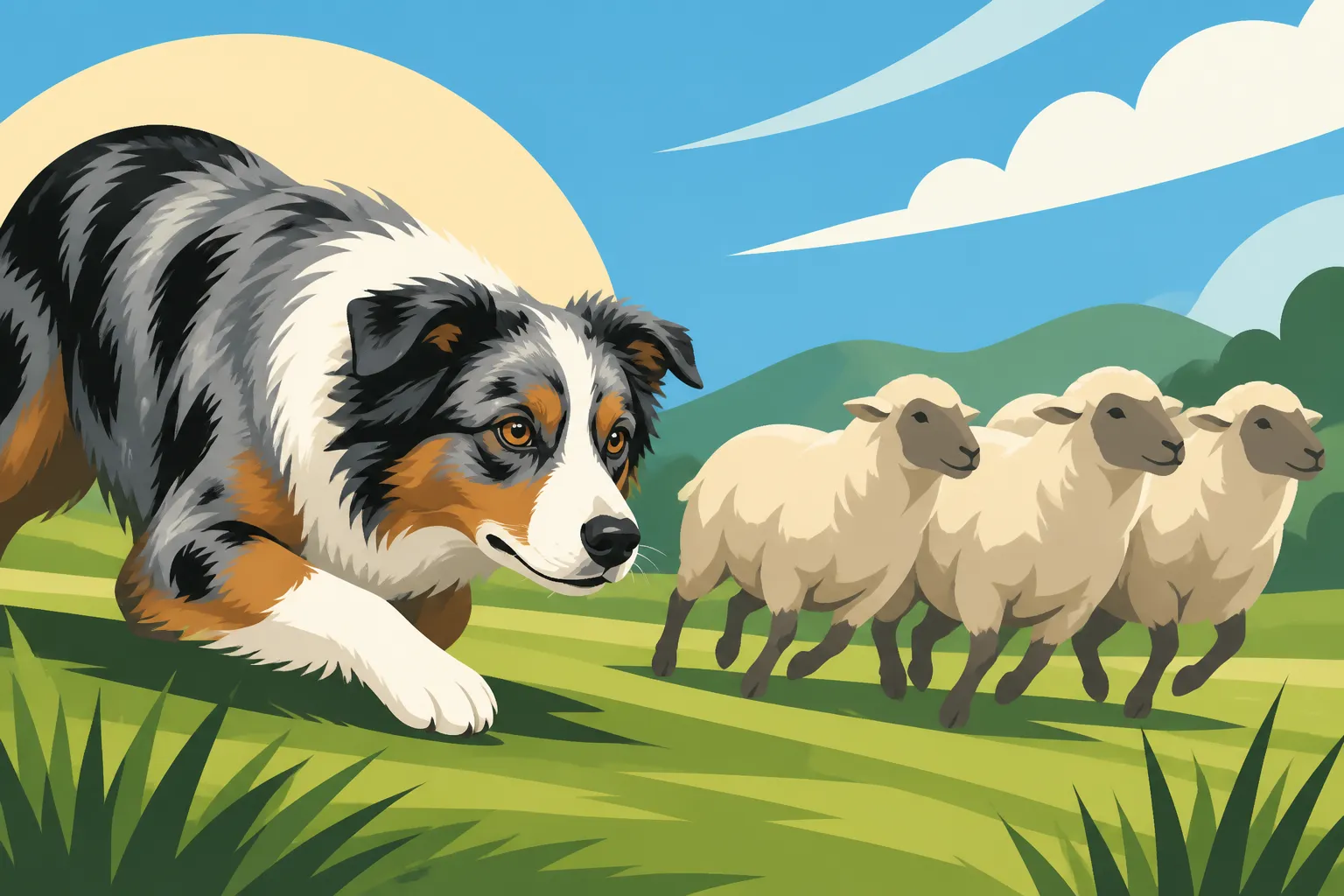
Getting an Australian Shepherd Herding Instinct Tested
It's incredibly common to wonder about the deep-seated instincts in your Australian Shepherd, especially when you see them intently watching squirrels in the park or trying to gather your kids in the backyard. This guide is here to walk you through the process of getting an Australian Shepherd's herding instinct tested, helping you understand what it involves, why it's beneficial, and what to do with the results to better connect with your amazing dog.
Why Test Your Australian Shepherd's Herding Instinct?
Many Aussie owners find themselves staring at their dog, pondering the silent, intense focus they direct at anything that moves in a group. It’s more than just a quirky habit; it’s the echo of generations of working stock dogs. Testing your Australian Shepherd’s herding instinct isn't just about seeing if they can herd sheep; it's about understanding the very essence of their being and how to channel that powerful drive constructively.
Understanding the Breed's Core Drive
Let's be real: your Australian Shepherd wasn't just born to sit pretty on the couch, no matter how much they love to cuddle. This breed was meticulously developed to work livestock, primarily sheep and cattle, across vast Western American landscapes. This history means they come hardwired with an incredible prey drive, an innate desire to gather, push, and control movement. Ignoring this fundamental aspect of their temperament can lead to all sorts of frustrations, both for you and for your dog. They might start "herding" your children, nipping at heels, or becoming overly fixated on cars, bikes, or even the vacuum cleaner. Understanding this deep-seated drive, as explained in Why Herding Instinct Is the Aussie Operating System, is the first step towards a harmonious life together.
When you bring an Aussie into your home, you're not just getting a pet; you're getting a partner with a rich working heritage. Their need to work and apply their intelligence is profound. A herding instinct test offers a window into just how strong that natural inclination is for your particular dog. It's not about forcing them into a job they don't want, but about acknowledging and respecting what they were bred to do. By understanding their genetic predispositions, you can provide appropriate outlets for their energy and mental capabilities, preventing boredom and potential behavioral issues that stem from unfulfilled instincts.
Identifying Raw Talent
For some Aussies, that instinct might be a subtle flicker, a curiosity about movement. For others, it's a roaring fire just waiting for fuel. A herding instinct test is designed to bring that raw talent to the surface in a safe, controlled environment. It's like finding out if a child has a natural ear for music or a knack for painting – you're simply uncovering what's already there. You might have an Aussie who shows intense focus, a natural "eye" for controlling the flock, or one who is more about the chase and gather. Every dog is different, and the test helps reveal these individual nuances.
Identifying this raw talent early can be incredibly rewarding. It opens doors to activities you might never have considered, such as actual herding lessons, Treibball, or even advanced obedience that taps into their intense focus. Imagine watching your dog, who usually just chases a frisbee, suddenly come alive with purpose, circling a small flock of sheep with an intensity that is both ancient and breathtaking. It’s a profound connection to their heritage and an amazing way to strengthen your bond. Even if you never intend for your Aussie to become a working farm dog, witnessing their innate abilities in action is a powerful experience that deepens your appreciation for the breed.
Guiding Their Energy Positively
One of the biggest struggles Australian Shepherd owners face is managing their dog's boundless energy and intelligence. If not given appropriate outlets, this energy can easily manifest in undesirable ways. A dog bred to make decisions and control movement will find something to herd, whether it's your guests, your other pets, or even inanimate objects. A herding instinct test provides invaluable insight into how strongly these drives are present, allowing you to proactively guide their energy in positive, acceptable directions.
Knowing your dog's instinct level helps you choose appropriate activities. If they show strong herding potential, enrolling in beginner herding classes or exploring sports like Treibball can be incredibly fulfilling. If the instinct is present but less intense, channeling it into activities like advanced obedience, agility, or scent work can still provide the mental and physical stimulation they crave. The key is providing an outlet that matches their inherent drives, transforming potential problems into productive endeavors. Instead of constantly correcting unwanted herding behaviors, you can redirect that instinct into something that makes both you and your Aussie happy and fulfilled. This positive redirection is critical for preventing the development of behavior problems from under-exercise or lack of mental stimulation, a common pitfall for this intelligent breed.
What Happens at a Herding Instinct Test?
So, you're curious, you've decided to explore this side of your Aussie. What exactly does a herding instinct test look like? It’s not a full-blown sheepdog trial; it's a carefully designed evaluation to see if your dog has the potential to herd, usually with a small, calm flock of sheep or ducks. The atmosphere is generally supportive and educational, designed to encourage your dog's natural abilities without pressure.
The Setup and Initial Observation
When you arrive at a herding instinct test, you'll typically find a small, fenced arena or pen where the test will take place. Often, there will be a seasoned handler or instructor present who is experienced with herding breeds. Before your dog even sees the stock, they'll usually get a chance to acclimate to the environment. The instructor will want to observe your Aussie's general demeanor: are they confident, shy, overly excited, or calm? This initial observation helps the instructor gauge your dog's personality and potential reactions. They might ask you about your dog's history, any specific behaviors you've noticed, and what you hope to gain from the test.
The stock animals themselves are usually calm and used to dogs. They might be sheep, ducks, or occasionally goats. The goal isn't to scare the animals, but to see how your dog naturally responds to their movement. The instructor might even start by walking your dog on a leash around the perimeter of the pen, allowing them to take in the smells and sights without direct interaction. This calm introduction helps prevent overwhelming your dog and ensures that any instinct they show is genuine, rather than a reaction to fear or confusion. It's a low-pressure environment, designed to let your dog's true nature shine through. For more detail on the process, check out What Happens at an Aussie Herding Instinct Test.
Introducing Your Aussie to Stock
This is often the most exciting part! Your Australian Shepherd will be introduced to a small group of stock, usually three to five animals. The instructor will often hold your dog on a long line, or have them off-leash in a controlled area, to ensure safety for both dog and stock. The key is to see how your Aussie responds naturally. Do they show "eye" – that intense stare that suggests they want to control movement? Do they try to circle the stock, attempting to gather them? Or do they perhaps try to rush in and bite, which indicates a different kind of prey drive that needs careful redirection?
A good instructor will guide your dog subtly, allowing their instincts to emerge. They might move the stock slightly to trigger a response, or they might simply observe your dog's unprompted reactions. This isn't about teaching them specific commands yet; it's purely about observing instinct. You might see your dog crouch low, head down, with a focused gaze – a classic herding posture. Or they might nip at heels, a natural, albeit sometimes unwanted, part of the herding repertoire. The session is typically short, designed to reveal the raw drive without over-tiring or stressing the dog or the stock. Remember, this is about uncovering potential, not producing a finished working dog on the first try.
Reading Your Dog's Reactions
The instructor will be looking for several key indicators of herding instinct. These aren't just random behaviors; they're specific patterns that align with effective herding. Here's a table summarizing some common reactions and what they mean:
| Reaction Observed | Description | Implication for Herding Instinct |
|---|---|---|
| The "Eye" | Intense, focused stare at the stock, often with a lowered head. | Strong potential to control and gather stock. |
| Circling/Flanking | Moving around the perimeter of the stock, trying to get behind them. | Natural desire to gather and move the flock as a unit. |
| Gathering | Bringing the dispersed stock back into a tighter group. | Excellent instinct for control and organization. |
| Heel Nipping | Lightly nipping at the heels of the stock to move them. | Common in early stages, needs redirection for control. |
| Bending | Curving their body towards the stock, leaning in. | Shows engagement and a desire to influence movement. |
| Ignoring Stock | No interest, sniffing the ground, looking away, wanting to play with handler. | Low or absent herding instinct. |
| Chasing/Hunting | Rushing and scattering stock, treating them like prey. | Strong prey drive, needs careful redirection to herd. |
| Fear/Avoidance | Hiding behind handler, trying to escape the pen. | Not comfortable with stock, no herding potential. |
The instructor will help you understand what you're seeing. They’ll point out specific behaviors and explain their significance. Sometimes, a dog might show immense prey drive but not the "gathering" instinct, meaning they want to chase rather than control. This is still valuable information, as it helps tailor future training. Other times, a dog might be a little shy at first, but with gentle encouragement, their instinct bubbles to the surface. The nuances are important, and a good instructor will take the time to explain them all.
After the Test: Interpreting Results and Next Steps
Once the test is over, you'll have a much clearer picture of your Australian Shepherd's innate herding abilities. This isn't a pass/fail situation in the traditional sense, but rather an assessment of their potential. The real work, and the real fun, often begins after the instinct test, as you decide how to channel what you’ve learned.
"Passing" vs. "Showing Instinct"
It’s important to clarify that an instinct test isn’t about "passing" in the same way you pass an obedience class. It’s about determining if your dog "shows instinct" for herding. Most facilities will consider a dog to have "passed" if they display clear, consistent behaviors that indicate a natural desire and ability to control stock, such as "eye," flanking, and gathering. This doesn't mean they're ready for the fields of Montana; it means they have the raw materials that can be developed through training.
If your Aussie shows strong instinct, congratulations! You've got a dog with a clear purpose, and the possibilities for engaging activities are wide open. The next step would likely be to enroll in a beginner herding clinic or class. These classes, which can be found through organizations like ASCA (Australian Shepherd Club of America) or local herding clubs, will teach you how to communicate with your dog and guide their natural instincts into controlled, effective herding behaviors. Remember, even with strong instinct, proper training is crucial to refine those raw drives into a useful skill. Consider enrolling in programs like those offered by BAXTER & Bella that help build foundational skills like focus and impulse control, which are vital before moving onto livestock. For those interested in pursuing formal herding, resources for Starting an Australian Shepherd on Sheep will be very helpful.
What a Lack of Interest Might Mean
What if your Australian Shepherd showed little to no interest in the stock? Maybe they sniffed the ground, tried to play with the handler, or just generally ignored the sheep, preferring to look at you. This isn't a failure, and it doesn't mean your dog is "broken" or less of an Aussie. It simply means that for this particular dog, the herding instinct isn't strong enough to be a primary drive. Not every Australian Shepherd will be a champion herder, and that's perfectly okay.
A lack of interest in herding doesn't diminish your dog's value or potential in other areas. Many Aussies thrive in other dog sports like agility, flyball, disc dog, or obedience. Their intelligence, athleticism, and desire to work with their handler can be channeled into countless other activities. Think of it this way: not every person born with a good singing voice wants to be an opera singer. Your dog might prefer nose work, where their incredible sense of smell is put to use, or perhaps they'd excel as a therapy dog, using their calm demeanor to comfort others. The key is to find what does ignite their passion and energy, and pursue that with enthusiasm.
Moving Forward with Training
Regardless of the test results, the goal is always to provide your Australian Shepherd with appropriate mental and physical stimulation.
If your Aussie showed strong instinct:
- Beginner Herding Classes: This is the most direct path. Seek out instructors who use positive, force-free methods and understand how to develop a young dog’s natural talents.
- Alternative Herding Sports: If access to livestock is limited, consider sports like Treibball, where dogs herd large exercise balls into a goal. This taps into similar drives without actual sheep. You can even create a Building an Aussie Herding Course in a Yard with household items to practice.
- Strong Recall and Impulse Control: Even if herding, you need to ensure your dog has a rock-solid recall and can disengage from exciting situations. This means consistent training at home and potentially working with a professional trainer, and using high-value treats that you can find easily on Amazon.
If your Aussie showed little or no instinct:
- Other Dog Sports: Explore agility, rally obedience, flyball, or scent work. Aussies are incredibly versatile and excel in many disciplines.
- Advanced Obedience: Continue to challenge their intelligence with complex commands and sequences.
- Enrichment Activities: Puzzle toys, interactive games, and long walks with plenty of sniffing opportunities can keep them engaged.
- Focus on Foundational Skills: Regardless of instinct, maintaining a strong bond through consistent positive reinforcement training is paramount. Programs that offer online guidance, like BAXTER & Bella, can be a fantastic resource for ongoing training and skill development at home.
The ultimate goal is a happy, well-adjusted Australian Shepherd who feels fulfilled, whether that fulfillment comes from moving sheep or mastering a complicated agility course. The herding instinct test is simply one valuable tool in understanding your unique companion and tailoring their life to suit their inherent nature.
Preparing Your Australian Shepherd for the Test
So, you're leaning towards getting your Aussie's herding instinct tested – fantastic! While the test itself is designed to reveal natural instinct, there are definitely things you can do to ensure your dog is set up for success and comfortable in the environment. It's not about training them to herd before the test, but about preparing them to confidently engage with the experience.
Foundational Training and Socialization
Even if your Australian Shepherd is a natural prodigy on the sheep, strong foundational training makes the experience much smoother for everyone involved. Think of it as ensuring they have a good "classroom etiquette" before they tackle advanced subjects. This includes:
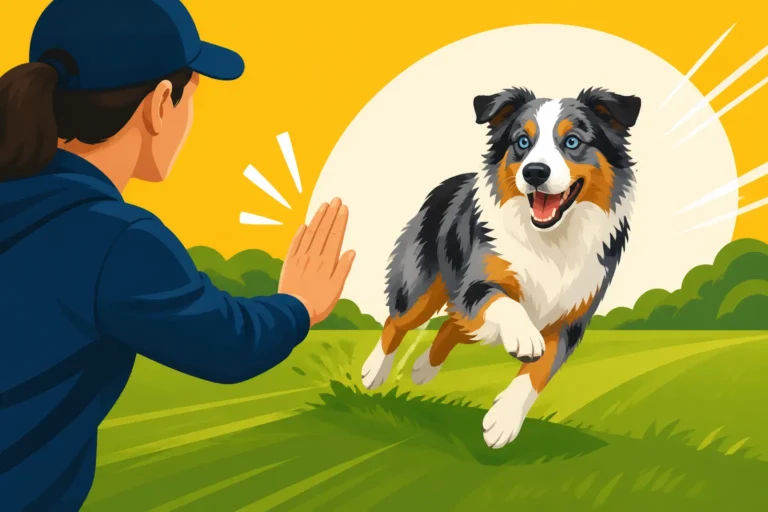
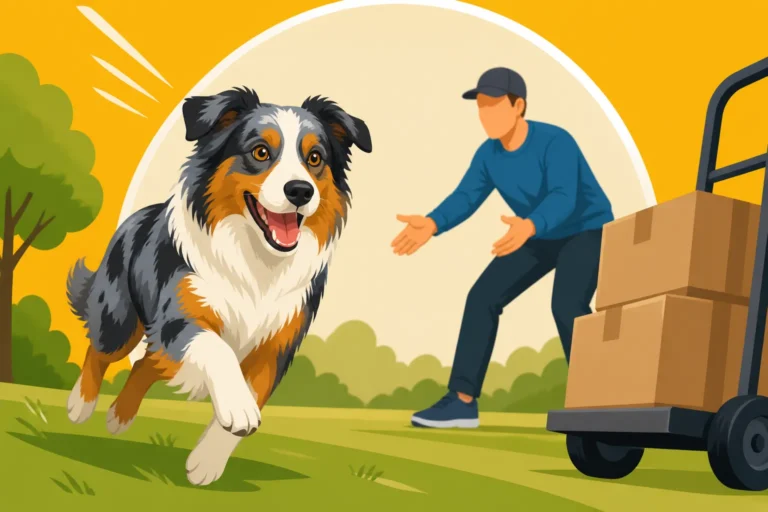
- Reliable Recall: This is paramount. If your dog gets overly excited around the stock, you need to be able to call them back reliably. Practicing Australian Shepherd Recall Around Moving Things in various environments will pay dividends.
- Basic Obedience: A solid "sit," "stay," and "down" will allow the instructor to manage your dog more easily and help your Aussie understand boundaries. A dog that is responsive to basic cues will be much more receptive to the subtle guidance offered during the test.
- Leash Manners: Your dog should be comfortable walking calmly on a leash, especially if they’ll be walked into the pen on one. This shows respect for the facility and the stock.
- Impulse Control: Aussies are known for their intensity. Teaching them to wait, to release a toy on command, or to "leave it" when something exciting presents itself is vital. This helps them manage their excitement when they first see the stock, allowing their true herding instinct to emerge rather than just a frenzied chase.
- Socialization to New Environments: Ensure your Aussie is comfortable in new places, around new people, and with novel smells and sounds. A dog that is overly anxious or fearful in a new setting might not display its true instincts. While herding instinct is innate, a dog stressed by its surroundings will struggle to access those deeper drives. Regularly exposing your Aussie to different, positive experiences from puppyhood helps build this confidence.
Many online training platforms, including those like BAXTER & Bella, offer comprehensive programs that cover these essential foundational skills, making it easier to prepare your Aussie at home before stepping into a specialized environment.
Physical Readiness and Health Checks
Herding, even just an instinct test, involves physical activity and focus. You want your Australian Shepherd to be at their best.
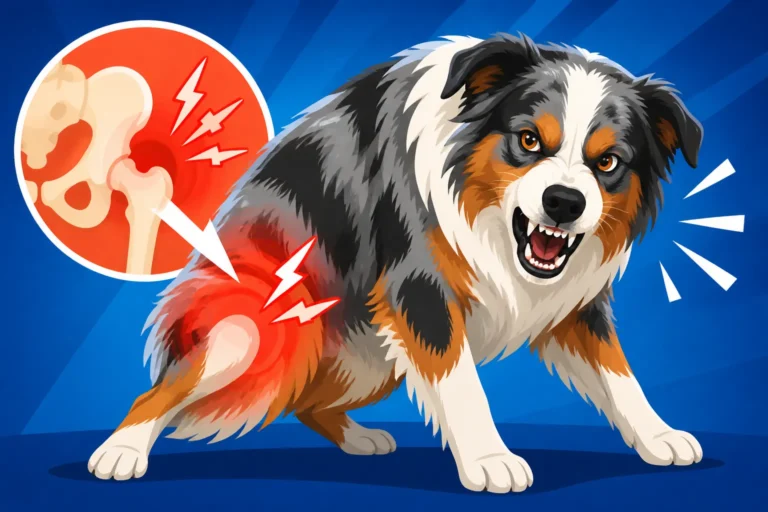
- Good Physical Health: Ensure your dog is in good physical condition. They don't need to be an athlete, but they should be free from lameness or discomfort that might distract them or make the experience unpleasant. If you have any concerns about their joints or overall health, a vet check-up beforehand is a good idea. For example, if your Aussie has Australian Shepherd Hip Dysplasia and Working Joints, even a short herding session could cause discomfort.
- Appropriate Weight: A healthy weight supports their joints and stamina. An overweight dog will tire more easily and may be less agile. Refer to guides on Australian Shepherd Weight Control on a Working Frame to ensure your dog is in prime condition.
- Parasite Control: Ensure your dog is up-to-date on all parasite prevention, including flea, tick, and heartworm medications. You’ll be in a rural environment, and you don’t want to bring home any unwanted hitchhikers. You can often find a variety of safe parasite prevention products on Amazon.
- Vaccinations: Confirm your Aussie is current on all necessary vaccinations to protect them and other dogs (and the stock!) at the facility.
- Mental Freshness: Don't exhaust your dog right before the test. A moderately exercised, well-rested dog will be more attentive and able to focus on the task at hand. You want them keen and eager, not tired and distracted.
By taking these preparatory steps, you're not trying to "trick" the test. Instead, you're ensuring your Australian Shepherd is confident, comfortable, and physically capable of showcasing whatever natural instincts they possess. This way, the test truly reflects their innate potential, giving you the most accurate and valuable insights into their unique working spirit.
Disclaimer
This article is for general informational purposes only and does not constitute professional advice. Laws, prices and regulations vary by location and change over time. Consult a qualified professional for guidance on your specific situation.