Australian Shepherd Overarousal and Frustration
It's incredibly frustrating when your Australian Shepherd seems to constantly live on the edge, always on, barking at shadows, lunging at passing cars, or just unable to settle down even after a long walk. This constant state of heightened alert or explosive reactions isn't just exhausting for you; it's genuinely stressful for your dog. This guide will dive deep into understanding Australian Shepherd overarousal and frustration, exploring why it happens, what it looks like, and most importantly, how you can help your beloved Aussie find a calmer, happier balance.
Understanding Australian Shepherd Overarousal: More Than Just "Zoomies"
When we talk about overarousal in Australian Shepherds, we're not just referring to a burst of playful "zoomies" in the backyard. This is a sustained, often overwhelming state where your dog's nervous system is in overdrive, making it difficult or impossible for them to process information, respond appropriately, or simply be calm. For an Aussie, a breed hardwired for intense focus and rapid reaction, this state can become their default if not properly managed.
What Overarousal Looks Like in an Aussie
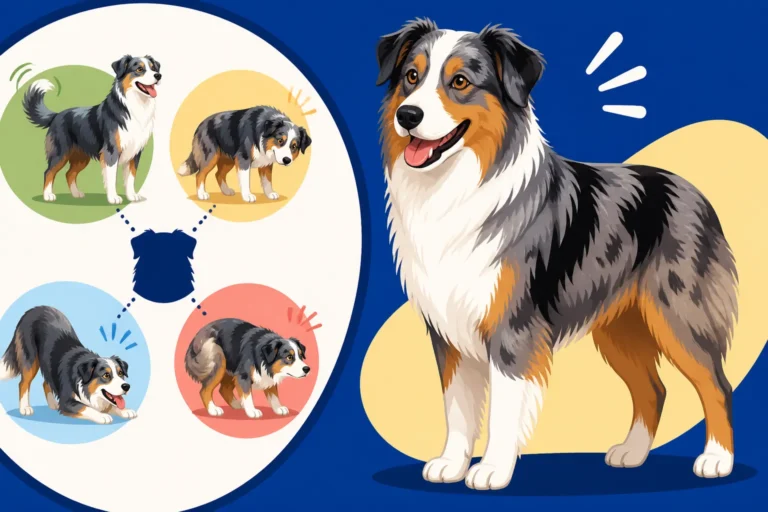
Recognizing overarousal is the first step toward managing it. It can manifest in a myriad of ways, some subtle, others glaringly obvious. Your Aussie might start with what seems like mere excitement, but then it spirals into something more intense. You might see frantic barking at nothing in particular, or perhaps a dog that just can't seem to stop moving, pacing, or spinning in circles even indoors. Some Aussies become mouthy, nipping at hands or clothing, not out of aggression, but a desperate attempt to regulate their internal state or redirect their energy.
Hyper-vigilance is another common sign; your Aussie might be scanning the environment constantly, head twitching at every distant sound or movement, unable to relax. They might pull incessantly on the leash, not just to get somewhere, but with a frantic, almost desperate energy. When pushed past their limit, displacement behaviors can appear – excessive sniffing, sudden grooming, or even yawning in inappropriate contexts, all attempts by your dog to self-soothe. Imagine trying to concentrate on a task when every nerve ending is firing, and you can begin to understand what your Aussie might be experiencing. It’s a far cry from the joyful, tail-wagging greeting you might be hoping for; it’s a dog struggling to cope.
The Difference Between Arousal and Frustration
It's easy to use "arousal" and "frustration" interchangeably, but they represent distinct, though often intertwined, experiences for your Australian Shepherd. Arousal is primarily a physiological state – think of it as the engine running. A low-arousal dog is calm and relaxed, while a high-arousal dog is stimulated and ready for action. This can be positive, like when your Aussie is highly aroused and focused during an agility trial, or negative, when they are highly aroused and frantic from overstimulation.
Frustration, on the other hand, is an emotional state. It occurs when your dog has a goal (like chasing a squirrel, greeting another dog, or getting to a certain spot) but is prevented from achieving it. This blockage often increases arousal, making the combination particularly potent and challenging for Aussies. For example, an Aussie sees a jogger (triggering high arousal due to herding instinct). If they are on a leash and cannot give chase, that arousal quickly turns into intense frustration, which might then manifest as frantic barking, lunging, or whining. The key is understanding that while arousal can be neutral or even positive, unmanaged high arousal often leads to frustration, and both can make your Aussie's world feel overwhelming.
Common Triggers That Push an Aussie Over the Edge
Australian Shepherds are incredibly perceptive and sensitive dogs, and their world is full of potential triggers that can tip them from calm to overaroused in an instant. What might seem like a minor event to us can be a huge deal for a dog whose senses are constantly on high alert, and whose breed history has shaped them to react quickly to stimuli.
Movement and Herding Instinct
Perhaps the most iconic trigger for an Australian Shepherd is movement. It’s in their DNA. Whether it's a child running across the yard, a cyclist whizzing by, a flock of birds taking flight, or even the vacuum cleaner, anything that moves can activate their innate The Australian Shepherd Herding Drive You Cannot Train Out. This instinct, while invaluable on the farm, can be a nightmare in a suburban or urban setting. You’ll see your Aussie fixate, body stiffen, and then often attempt to "gather" or chase the moving object. When on a leash, this translates into lunging, barking, and pulling with immense force.
Imagine you're walking your Aussie down a street, and suddenly, a teenager on a skateboard glides past. For your Aussie, that's not just a person on wheels; it's a fast-moving object that needs to be controlled, herded, or investigated. The internal alarm bells ring, and the arousal skyrockets. If your dog can't act on that impulse, the frustration builds. It's why so many Aussies develop issues with An Australian Shepherd Lunging at Passing Dogs or other moving targets. They aren't trying to be naughty; they are simply doing what millennia of breeding has told them to do. This powerful, primal urge is incredibly difficult to override, especially when their system is flooded with adrenaline.
Environmental Stimuli and Noise Sensitivity
Beyond movement, many Australian Shepherds are acutely sensitive to their environment, making them prone to overarousal from a variety of stimuli. This can include loud, sudden noises like thunder, fireworks, construction sounds, or even just the mail carrier's truck. But it's not just volume; novelty also plays a huge role. New places, strange smells, unfamiliar people, or even changes in routine can be incredibly stimulating. For a dog that's always "on," processing these inputs can quickly become overwhelming.
Some Aussies develop significant Australian Shepherd Noise Sensitivity and Startle, leading to panic or extreme reactions to unexpected sounds. A common scenario is an Aussie reacting vehemently to the distant siren of an ambulance or the rumble of a heavy truck. They might bark frantically, jump, shake, or try to hide, unable to discern the threat level. This isn't just about being a "scaredy-dog"; it's about a nervous system that is highly tuned and easily overloaded. The constant vigilance required to monitor every sound and shadow can keep them in a perpetual state of low-grade stress that easily escalates into full-blown overarousal when a trigger appears.
Social Frustration: Dogs and People
Aussies are often social creatures, but their interactions can be complicated by their high arousal and herding instincts. Many Australian Shepherds experience what's known as "leash reactivity" – a complex issue where they might bark, lunge, or growl at other dogs (or people) while on a leash. This isn't always aggression; it's frequently a manifestation of intense frustration. They want to greet, play, or investigate, but the leash physically prevents them, leading to an explosion of energy and emotion.
Consider your Aussie straining at the end of their leash, desperate to get to the dog across the street. Their body language might be a confusing mix of excitement and tension. They pull, whine, and then, as the gap closes and they still can't reach, the excitement curdles into frustration. This frustration often manifests as barking or lunging, simply because they're overwhelmed and can't get what they want. Similarly, some Aussies, especially those with strong herding instincts, can become frustrated when they can't "manage" the behavior of other dogs or even children. They might try to body-slam, nip at heels, or bark excessively to control the movement of others, and when they fail, overarousal and frustration take over.
The Aussie Operating System: Genetics, Drive, and Sensitivity
Understanding why your Australian Shepherd is prone to overarousal and frustration requires a look at their very core – what makes an Aussie, an Aussie. These aren't flaws in your dog's character; they are deeply ingrained traits that come with the breed, often requiring a unique approach to management and training.
Bred to Be "On": Herding Drive and Hyper-Vigilance
Australian Shepherds were purposefully bred to be working dogs, specifically to herd livestock. This job demanded a dog that was intelligent, highly observant, agile, and incredibly responsive to its handler – and critically, a dog that could be "on" for long stretches, ready to react to any change in the flock or environment. This intense focus and readiness for action, often referred to as "herding drive," is the Aussie's operating system. It's why they excel in dog sports and working roles, but it's also why they struggle so much in a sedentary home environment.
Their hyper-vigilance isn't paranoia; it's a finely tuned instinct to monitor their surroundings for any movement, any change that might signal a need to spring into action. This means they are constantly taking in information, evaluating it, and preparing a response. Imagine if your brain processed every single detail around you at all times, never truly switching off. That's often what it's like for an Aussie. This inherent drive explains Why Herding Instinct Is the Aussie Operating System and why simply telling them to "calm down" doesn't work. Their biology is literally telling them to be "on." Without proper outlets and clear guidance on when not to be "on," they can become chronically overstimulated.
The Impact of a Sensitive Nature
Beyond their robust drive, Australian Shepherds are frequently described as sensitive dogs. They are intelligent, often intuitive, and can pick up on subtle cues from their environment and from their human companions. This sensitivity contributes to their remarkable trainability and their deep bonds with their families, but it also means they can be more easily affected by stress, changes in routine, or overwhelming experiences. A harsh word, an unexpected loud noise, or even a tense atmosphere in the home can resonate deeply with a sensitive Aussie, contributing to their overall arousal levels.
This isn't to say they are fragile; rather, they are complex. Their sensitivity, combined with their strong drive, means that positive reinforcement training methods are usually far more effective than punitive ones. Shouting or using physical corrections can often backfire, causing increased anxiety, fear, and further escalating arousal. Understanding this sensitive nature is crucial for building trust and guiding them toward calmer behaviors. They often mirror our emotions, so a stressed owner can inadvertently contribute to a stressed Aussie.
Under-Exercise and Lack of Mental Stimulation
It's a common misconception that if you just run your Australian Shepherd enough, they'll be calm. While physical exercise is absolutely vital for this high-energy breed, it's often not enough on its own, and sometimes, the type of exercise can even contribute to overarousal. Many owners find that even after two hours of running, their Aussie is still bouncing off the walls. This is because Why Two Hours of Running Never Settles an Aussie stems from the fact that physical exertion alone doesn't tire out their brilliant, active minds.
What an Aussie truly needs, almost as much as physical activity, is mental stimulation. Their brains were made to problem-solve, strategize, and learn complex tasks. When they don't get this "job" for their mind, that unmet mental energy can easily bubble up as overarousal and frustration. This can look like destructive chewing, incessant barking, or simply an inability to relax. Providing opportunities for scent work, puzzle toys, trick training, or even structured play that mimics herding (like using a flirt pole or a herding ball) can provide the mental workout they crave. It's about exhausting the brain, not just the body. When an Aussie's mind is truly engaged and tired, you'll see a dramatic difference in their ability to settle.
Practical Strategies for Managing Overarousal and Frustration
Living with an Australian Shepherd prone to overarousal and frustration can feel like a constant battle, but with consistent effort and the right strategies, you can significantly help your dog. It's about shifting from reacting to proactive management and thoughtful training, creating an environment where your Aussie can thrive rather than just cope.
Proactive Management: Setting Your Aussie Up for Success
The first line of defense against overarousal is always management. This means consciously arranging your Aussie's environment to minimize exposure to triggers that send them spiraling. If you know passing cyclists cause a meltdown, choose a walking route where you're less likely to encounter them, or go at off-peak hours. If your dog gets overly stimulated by visitors, consider crating them with a high-value chew in another room or practicing structured greetings in a controlled way. Creating a "safe space" in your home, like a den or a crate covered with a blanket, can also give your Aussie a calm retreat when things get too much.
Using appropriate gear can also make a huge difference. A well-fitting harness (rather than just a collar) can give you better control without putting pressure on your dog's throat. A long line, available on Amazon and other pet retailers, can allow your Aussie to explore and burn energy in a safe, open space without being right next to you, giving them a sense of freedom while maintaining control. The importance of routine cannot be overstated either. Predictability helps lower overall stress levels, allowing your Aussie to relax more because they know what to expect. Think about what sets your Aussie off, and then brainstorm ways to prevent or reduce those encounters entirely. This isn't avoiding the problem; it's buying you time and reducing stress while you work on training.
Building an "Off Switch": Training Calm Behaviors
Beyond avoiding triggers, actively teaching your Australian Shepherd how to be calm is paramount. This isn't something they instinctively know how to do in our busy human world. One incredibly effective tool is "mat work" or "place training," where your dog learns to go to a designated mat or bed and settle there until released. Start in a quiet environment, reward heavily for simply lying down on the mat, and gradually introduce mild distractions. This teaches your Aussie to relax on cue, giving them a valuable coping mechanism. Teaching an Australian Shepherd an Off Switch is perhaps one of the most important skills an Aussie can learn, empowering them to self-regulate.
Reward calmness whenever you see it! If your Aussie is quietly lying at your feet, toss a treat. If they ignore a squirrel out the window, praise them. You're actively shaping the behavior you want. Structured online training programs, like those offered by BAXTER & Bella, often incorporate these foundational "settle" commands and relaxation protocols, providing step-by-step guidance that can be incredibly helpful for owners struggling with high-energy breeds. The goal is to make "calm" a rewarding default state, rather than just an absence of frantic behavior.
Redirecting Drive and Providing Appropriate Outlets
Since an Aussie's overarousal often stems from their intense drive and mental energy, providing appropriate outlets is critical. Simply running them around aimlessly can sometimes increase their arousal without truly satisfying their mental needs. Instead, focus on activities that engage their brains. Puzzle toys, especially those that dispense food, can provide a fantastic mental workout, forcing them to problem-solve. Engaging in structured games of tug or fetch, where you control the "start" and "stop" and incorporate impulse control (e.g., waiting for a release cue before chasing the ball), can redirect their prey drive in a healthy way.
Consider activities that tap into their natural instincts without causing overstimulation. Scent work, where they use their nose to find hidden treats or articles, is incredibly tiring mentally and often very calming. A flirt pole, which mimics the erratic movement of small prey, can be a fantastic way to burn off energy in a controlled, directed manner. Even just trick training, teaching new commands, or working on complex obedience routines can provide the mental challenge your Aussie craves. As the saying goes, Giving an Australian Shepherd a Job Instead of a Walk often makes all the difference, creating a mentally satisfied dog who is much more capable of relaxing. Remember, it's about channeling that incredible drive, not trying to suppress it entirely.
When to Call in the Pros: Seeking Expert Guidance
Despite our best efforts, sometimes Australian Shepherd overarousal and frustration can become overwhelming, persistent, or even dangerous. It's crucial to recognize when the problem has escalated beyond what you can comfortably manage on your own and to seek professional help. There's no shame in admitting you need an expert; in fact, it's a responsible and loving choice for your dog.
Recognizing When You're Out of Your Depth
There are clear indicators that it's time to bring in professional support. If your Aussie's reactions are consistently aggressive (snapping, biting, growling that seems unprovoked or disproportionate), or if they are causing self-harm (excessive licking that creates hot spots, compulsive behaviors), these are red flags. Similarly, if your dog is experiencing severe, debilitating anxiety that impacts their daily life – refusing to go outside, destructive behavior when left alone, or constant shaking – it's time for intervention.
Perhaps you've diligently tried the management and training techniques, but the behaviors are not improving, or worse, they're escalating. Maybe your Aussie's threshold for triggers is so low that you can't even get close enough to train effectively. Or, you might feel genuinely unsafe managing your dog in certain situations. These are all valid reasons to seek expert guidance. Living with a constantly stressed or reactive dog is exhausting for everyone involved, and a professional can provide fresh eyes and tailored strategies.
Finding a Qualified Professional
Finding the right professional is key. Not all dog trainers are created equal, and for complex behavioral issues like severe overarousal and frustration, you need someone experienced with the nuances of working breeds and positive reinforcement. Look for certified professional dog trainers (CPDT-KA, KPA-CTP) who emphasize force-free, reward-based methods. They should be able to explain the "why" behind their techniques and empower you to implement them effectively. A great place to start looking is by checking out our guide on Finding a Trainer Who Understands an Aussie.
For very severe cases, especially those involving aggression, profound anxiety, or potential underlying medical conditions, a veterinary behaviorist (DACVB) might be the most appropriate choice. These are veterinarians who have specialized in animal behavior, meaning they can diagnose medical issues that might contribute to behavioral problems and prescribe medication if necessary, in conjunction with a behavior modification plan. They work holistically, addressing both the physical and emotional aspects of your dog's well-being. Always be wary of trainers who promise quick fixes, use aversive tools (like shock collars, prong collars, or choke chains), or advocate for methods based on dominance theory, as these can often worsen fear, anxiety, and reactivity in sensitive dogs like Aussies.
Nurturing a Calm Aussie Puppy: Prevention is Key
While we often focus on managing existing problems, much can be done in puppyhood to lay a strong foundation for a calm, well-adjusted Australian Shepherd. Prevention is always easier than cure, and thoughtful early experiences can dramatically impact your Aussie's ability to handle the world without becoming overaroused or frustrated.
Early Socialization and Exposure
Proper socialization is critical, but it's often misunderstood. It's not just about letting your puppy play with every dog they meet; it's about controlled, positive exposure to a wide variety of sights, sounds, people, and environments. Think of it as building a "portfolio" of positive experiences. Introduce your Aussie puppy to different textures underfoot, different types of noises (from city traffic to household appliances), people of all ages and appearances, and other well-mannered, vaccinated dogs.
The key is quality over quantity. A few positive, calm exposures are far more beneficial than overwhelming your puppy with too much at once. Take them to a quiet park and let them observe from a distance, rewarding them for calm behavior. Let them meet one or two calm, friendly adult dogs at a time. This helps them learn that the world isn't a scary or overwhelming place, and that new stimuli aren't always a call to action. Our The Australian Shepherd Socialization Checklist can provide a fantastic framework for this important process, ensuring a broad and positive range of experiences.
Building Foundation Skills for Self-Control
From the moment you bring your Australian Shepherd puppy home, you can start instilling vital self-control and impulse management skills. These aren't just polite manners; they are the building blocks for managing arousal later in life. Games like "leave it" (teaching them to ignore a dropped treat) or "wait" (before eating their food or going through a door) are foundational. These exercises teach your puppy that good things come to those who have patience and self-restraint.
Enroll in a reputable puppy class that uses positive reinforcement. This provides a structured environment for socialization and introduces basic obedience commands that foster focus and responsiveness. The Aussie Puppy Curriculum Month by Month is a great resource for understanding what skills to focus on at different stages of development. Avoid situations that consistently push your puppy into an overaroused state, like chaotic dog parks where they might get overwhelmed or practice frantic play. Instead, focus on structured play, enforced naps (overtired puppies are often overaroused puppies!), and consistent routines. By teaching them how to control their impulses and offering them appropriate outlets for their energy, you're giving your Australian Shepherd the tools to navigate a stimulating world with greater calm and confidence.
| Sign of Overarousal | What It Looks Like in an Aussie | Management & Training Response |
|---|---|---|
| Excessive Barking | Frantic, high-pitched barking at perceived triggers (people, dogs, movement, sounds). | Identify trigger, increase distance, teach "quiet" cue, redirect focus with a high-value toy. |
| Lunging/Pulling on Leash | Straining at the leash, attempting to chase or greet with excessive force. | Use a front-clip harness, practice U-turns, reward loose-leash walking, desensitize to triggers at a distance. |
| Inability to Settle | Pacing, spinning, constant vigilance, unable to lie down or rest calmly even at home. | Practice mat work/settle command, enforce calm naps, provide mentally fatiguing activities. |
| Mouthiness/Nipping | "Sharky" behavior, nipping at hands, clothes, or even people's heels. | Redirect to appropriate chew toys, teach bite inhibition, disengage from unwanted nipping. |
| Hyper-vigilance | Constantly scanning environment, head swiveling, ears twitching, easily startled. | Create quiet den spaces, manage exposure to overwhelming environments, build positive associations with new stimuli. |
| Displacement Behaviors | Sudden intense sniffing, frantic grooming, excessive yawning in high-stress situations. | Observe for early signs of stress, remove from trigger, engage in low-arousal enrichment. |
Disclaimer
This article is for general informational purposes only and does not constitute professional advice. Laws, prices and regulations vary by location and change over time. Consult a qualified professional for guidance on your specific situation.