Australian Shepherd Sport Entry Fees Over a Season
If you're an Australian Shepherd owner, you probably already know that keeping your intelligent, high-energy companion happy and well-behaved isn't a passive activity. It often involves engaging them in structured outlets like dog sports. What many new — and even experienced — Aussie parents might not fully grasp, though, is the significant recurring financial commitment involved in participating in these events over an entire season. This guide will break down the typical entry fees for popular Australian Shepherd sports, shed light on additional costs, and help you budget for a competitive season with your furry athlete.
Why Aussie Sports Aren't a One-Time Cost
Bringing an Australian Shepherd into your life means embracing a dog with a deep-seated need for purpose and activity. These aren't just pets; they are partners, bred to think and work. Their mental and physical needs go far beyond a simple daily walk around the block, making dog sports a common and incredibly beneficial outlet. However, unlike buying a one-time piece of equipment, participating in these sports involves ongoing expenses that can truly add up.
The Drive for Ongoing Engagement
Australian Shepherds possess an incredible work ethic and an insatiable desire to learn and engage. Their genetic makeup primes them for jobs that require both brains and brawn, whether it's herding sheep, navigating an agility course, or excelling in obedience. This isn't just a quirk; it's a fundamental aspect of their well-being. Without sufficient mental and physical challenges, Aussies can quickly become bored, restless, and, let's be honest, a bit destructive around the house. They don't just like having a job; they need one. This inherent drive means that once you start a sport, your Aussie will thrive on the consistency and continued opportunities to compete and improve. It’s not just about one trial; it's about a season, and then another, building skills and titles along the way.
Understanding the Competitive Calendar
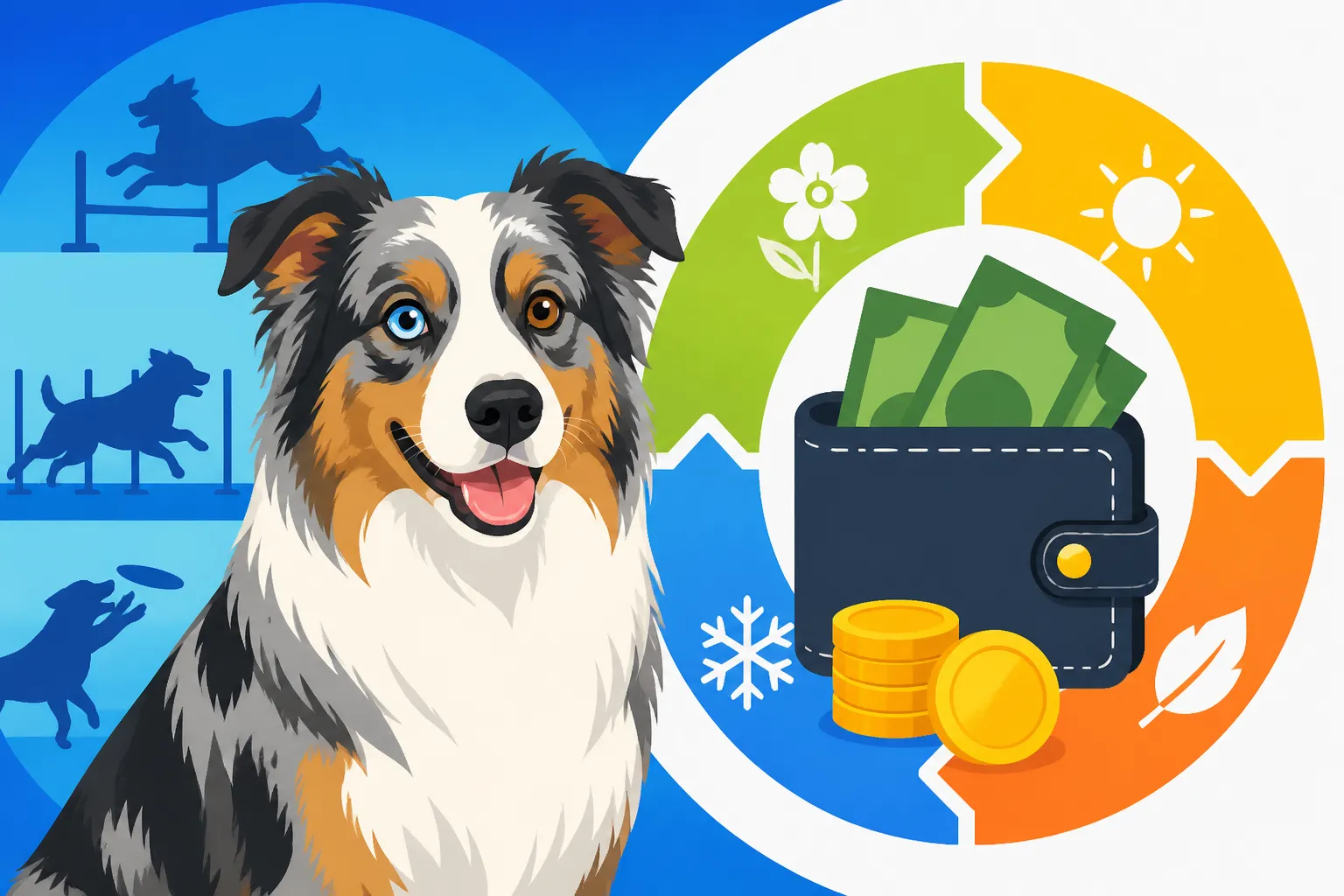
The world of dog sports operates on a calendar that often mirrors human athletic seasons. Whether it's agility, herding, flyball, or obedience, clubs and organizations host a series of trials, tests, and competitions throughout the year. For many Aussie enthusiasts, a "season" isn't just a single event, but a string of weekends traveling to different locations, entering multiple classes, and striving for titles. This continuous nature of competition means that entry fees aren't a one-and-done payment but a recurring expense that needs careful planning. A serious competitor might enter multiple events each month, and each entry carries its own fee, escalating the overall cost significantly. Understanding the rhythm of these competitive calendars is crucial for forecasting your annual spending on Australian Shepherd sports.
Common Australian Shepherd Sports and Their Typical Entry Fees
Australian Shepherds excel in a wide variety of dog sports, thanks to their intelligence, athleticism, and biddable nature. Each sport comes with its own set of challenges, requirements, and, of course, entry fees. These fees can fluctuate based on the organizing club, the level of the trial (local vs. national), the number of classes entered, and even the region.
Agility: Jumps, Tunnels, and Timed Runs
Agility is probably one of the most popular sports for Australian Shepherds, showcasing their incredible speed, coordination, and ability to follow complex sequences of commands. Dogs navigate an obstacle course of jumps, tunnels, weave poles, and contact obstacles, all against the clock. Entry fees for agility trials typically range widely. For a single class entry at a local club trial, you might pay a certain amount, but most handlers enter multiple classes (e.g., standard, jumpers with weaves, tunnelers) per day. A typical weekend trial might see you entering three to four classes per day for two or three days. National or championship events often have higher entry fees per class, and there might be additional administrative or facility fees involved. These events are fantastic for bonding and honing your Aussie's focus, but the costs can accumulate quickly, especially if you're attending multiple trials throughout the year.
Herding: Working the Flock
Herding is perhaps the most natural fit for an Australian Shepherd, tapping directly into their ancestral instincts. In herding trials, Aussies demonstrate their ability to gather, drive, and pen livestock (sheep, ducks, or cattle) under the handler's direction. Herding tests and trials can be quite varied in format and cost. A basic "herding instinct test" to see if your Aussie has the drive might be a moderate fee, while actual trial entries, especially for advanced levels that involve more complex maneuvers and larger fields, will be higher. Since livestock rental and field maintenance are significant expenses for organizers, herding trial fees tend to be on the higher end compared to some other sports. The intensity and fulfillment your Aussie gets from working stock, however, are often priceless, making the investment worthwhile for many. For those interested in this sport, understanding the nuances of how fees are structured, often based on the number of runs or the specific course, is key to budgeting. If you're considering the commitment, check out Australian Shepherd Herding Trial Costs.
Obedience and Rally: Precision and Teamwork
Obedience and Rally emphasize precision, control, and harmonious teamwork between dog and handler. Obedience involves performing a set routine of exercises like heeling, retrieves, and stays with extreme accuracy. Rally is a less formal, more flowing course where dog and handler navigate a series of stations, each with a specific exercise to perform. Entry fees for obedience and rally trials are generally more consistent than agility or herding. You typically pay per class or level entered. These trials often attract a wide range of breeds, and an Australian Shepherd’s intelligence and eagerness to please make them strong contenders. While a single entry might seem modest, serious competitors often enter multiple classes over a weekend or seek to earn various titles throughout a season, meaning multiple entries across several trials. These consistent, though smaller, costs add up over the course of a year.
Disc Dog and Dock Diving: High-Flying Fun
For the Aussie with boundless energy and a love for retrieving, disc dog (Frisbee) and dock diving offer thrilling competitive outlets. Disc dog competitions involve handler and dog performing choreographed routines, catching discs for distance or accuracy. Dock diving sees dogs leaping from a dock into a pool of water, competing for distance or height. Entry fees for these sports can vary. Disc dog events might be a flat fee for a day or a weekend, sometimes covering multiple games or divisions. Dock diving events often charge per splash (each jump attempt) or offer a package deal for a certain number of splashes over a weekend. These sports are incredibly engaging for Aussies who love to run and jump, and while the initial gear investment might be minimal (just discs or a good swimming vest), the cumulative cost of repeated entries over a season, especially if you're traveling to regional competitions, can be substantial.
Here's a generalized look at typical entry fees you might encounter for a single class or run:
| Sport Category | Typical Entry Fee (per run/class) | Notes |
|---|---|---|
| Agility | $25 – $45 | Often enter 3-4 classes per day; can be higher for championships. |
| Herding (Trial Run) | $40 – $75+ | Varies by livestock type and level; instinct tests are lower. |
| Obedience | $20 – $35 | Per class/level; multiple entries common for titles. |
| Rally Obedience | $20 – $35 | Similar to Obedience; often run concurrently. |
| Disc Dog (Single Event) | $20 – $50 | May be a flat day/weekend fee for multiple games. |
| Dock Diving (Per Splash) | $10 – $20 | Often sold in packages for multiple splashes; event entry might be separate. |
| Canine Good Citizen (CGC) | $15 – $25 | One-time test, foundational for many sports. |
| Trick Dog Titles | $10 – $20 | Often video submission or in-person evaluation. |
Note: These ranges are illustrative and can vary significantly based on location, organizing club, and competition level. Always check the premium list for specific event fees.
Beyond Entry Fees: Hidden Costs of a Sport Season
While entry fees are the most obvious recurring expense, they are far from the only financial consideration for an Australian Shepherd sport season. There's a whole host of "hidden" costs that can quickly double or triple your overall budget, often catching new participants by surprise. Thinking holistically about your involvement will help prevent sticker shock down the road.
Travel, Accommodation, and Fuel
Dog sports often take you far from home. Many trials, especially for specific disciplines like herding or larger regional events, are held in more rural areas or at dedicated training facilities that aren't necessarily just down the street. This means significant expenses for travel. Fuel costs for driving your vehicle, potentially with a crate-laden SUV, can add up, especially if you're attending multiple weekend events throughout a season. For overnight or multi-day trials, you'll need accommodation. Finding dog-friendly hotels or campsites can sometimes come with an additional pet fee, and these can range from a modest charge to a substantial percentage of your room rate. Packing meals and snacks can help cut down on restaurant costs, but you still have to factor in food for yourself and your family. These logistical costs are a substantial part of the overall expense of a competitive Australian Shepherd season, especially if you're ambitious about earning titles and traveling to different areas.
Training Classes and Private Lessons
Before your Aussie can excel in competition, they need to be trained. This isn't just basic obedience; it's specialized training for their chosen sport. Most handlers will invest in group classes or private lessons with experienced instructors. For example, weekly agility classes can run for several weeks, and you might take multiple sessions to progress through different levels. Herding lessons, which often involve access to livestock and specialized instructors, can be even more costly per session. Even for seemingly simpler sports like Rally, specific instruction to fine-tune precision and speed can be incredibly beneficial. These upfront and ongoing training costs are crucial investments in your Aussie's success and confidence. While a single class might be affordable, progressing through various levels and honing specific skills over a season means this is an ongoing expense that should be factored into your budget. For help finding the right mentor, consider Vetting a Trainer Before Booking an Aussie.
Gear, Equipment, and Maintenance
Every sport requires specific gear, and while some items are one-time purchases, others need regular replacement or maintenance. For agility, you might need a dedicated harness, lead, special non-slip shoes for yourself, and perhaps a timer or training clicker. Herding involves specific kinds of long lines, whistles, and appropriate footwear for muddy fields. Disc dog means an endless supply of durable, dog-safe flying discs (because they will get lost or chewed up). Even for less equipment-intensive sports, you'll need good quality crates for travel and crating at events, comfortable beds, and durable leashes and collars. Retailers like Chewy offer a vast array of pet supplies, and stocking up on high-quality training treats and specialized equipment from such retailers can make a significant difference in your training journey. Beyond initial purchases, gear breaks, gets lost, or wears out, necessitating replacements throughout the season. Don't forget the everyday items like portable water bowls, cooling mats for warm weather, and first-aid kits for minor scrapes.
Health and Wellness for the Athlete
A competitive Australian Shepherd is an athlete, and like any athlete, they require peak physical condition and diligent health management. This includes regular veterinary check-ups beyond the usual annual visit, sometimes including specialized sports medicine assessments. Nutritional needs can be higher for active dogs, and you might opt for premium dog food or even fresh food options like Ollie, ensuring they get the optimal fuel for performance and recovery. Supplementation, such as joint support, might be recommended to maintain their working joints, especially as they age or if they've had a career in intense sports like agility. Consider the article Starting Joint Support on a Young Working Aussie for more on this. Insurance, like that offered by Healthy Paws, becomes an even more critical consideration. Injuries can and do happen in dog sports, from minor sprains to more serious cruciate tears or impact injuries. Having robust pet insurance can cushion the blow of unexpected veterinary bills, ensuring your Aussie gets the care they need without derailing your finances. The costs associated with keeping your Aussie in top physical form, from specialized diets to potential injury treatments, are an integral part of their competitive life.
Budgeting for an Australian Shepherd's Competitive Season
Understanding the array of costs is the first step; the next is to create a realistic plan to manage them. Participating in dog sports with your Australian Shepherd should be a joyous and fulfilling experience, not a source of financial stress. With thoughtful budgeting and a bit of planning, you can ensure your furry partner gets all the opportunities they deserve without breaking the bank.
Creating a Realistic Sport Budget
The best approach is to sit down and map out your anticipated expenses for a full year. Start by estimating how many trials or events you realistically plan to attend. For each event, factor in the estimated entry fees for all the classes you'd like to enter. Then, layer on your travel costs: fuel, potential accommodation, and food. Don't forget the training component – how many lessons or classes will you need? And finally, account for gear and health. This might look like a detailed spreadsheet.
For example, a dedicated agility enthusiast might project:
- 10 weekend trials x (4 classes/day x 2 days x average $35/class) = $2,800 in entry fees.
- Travel: 10 weekends x (average $100 fuel + $150 accommodation + $50 food) = $3,000.
- Training: 2 blocks of 6-week classes x $200 = $400.
- Gear/Health: $500 for new toys, vests, supplements, and extra vet checks.
This hypothetical total of nearly $7,000 for a single season can be a wake-up call, but it's a realistic picture for active participants. Breaking down these costs helps you see where adjustments can be made. It's also important to factor in that the initial outlay for a puppy, vet bills, and grooming are separate from these sport-specific costs; for a broader view, read Australian Shepherd Training and Sport Costs.
Saving Strategies for the Competitive Handler
Once you have a budget, look for ways to save. One common strategy is to prioritize. You might choose to attend fewer, but more meaningful, trials. Perhaps focus on local events to cut down on travel and accommodation expenses. Carpooling with fellow competitors is another excellent way to share fuel costs and even split hotel rooms. Look for early bird registration discounts offered by many clubs. For gear, buy durable items once rather than cheap replacements often, and don't be afraid to look for gently used equipment from other handlers. Some clubs also offer volunteer opportunities where you can work at a trial in exchange for free or discounted entries. This is a great way to save money and learn the ins and outs of how trials are run. Also, regular discussions with your vet about proper nutrition and conditioning, perhaps with a focus on high-quality foods that support performance, can prevent costlier health issues down the line.
Maximizing Value and Enjoyment
Ultimately, the goal isn't just to spend money, but to invest in your Australian Shepherd's happiness and well-being. Focusing on training your Aussie to be a calm and focused partner, even outside the ring, enhances their quality of life. Consider whether taking part in a wider range of activities might be beneficial; perhaps a little Australian Shepherd Agility and Disc Sports combined with some scent work could keep them mentally stimulated without requiring constant travel for high-stakes trials. If your budget is tight, focus on one or two sports where your Aussie truly shines and where you both find the most enjoyment. The bond you build through shared activity, the confidence your Aussie gains, and the sheer joy of watching them perform are invaluable. Budgeting wisely ensures that these rewarding experiences remain accessible and sustainable for you and your amazing Australian Shepherd for many seasons to come.
Disclaimer
This article is for general informational purposes only and does not constitute professional advice. Laws, prices and regulations vary by location and change over time. Consult a qualified professional for guidance on your specific situation.