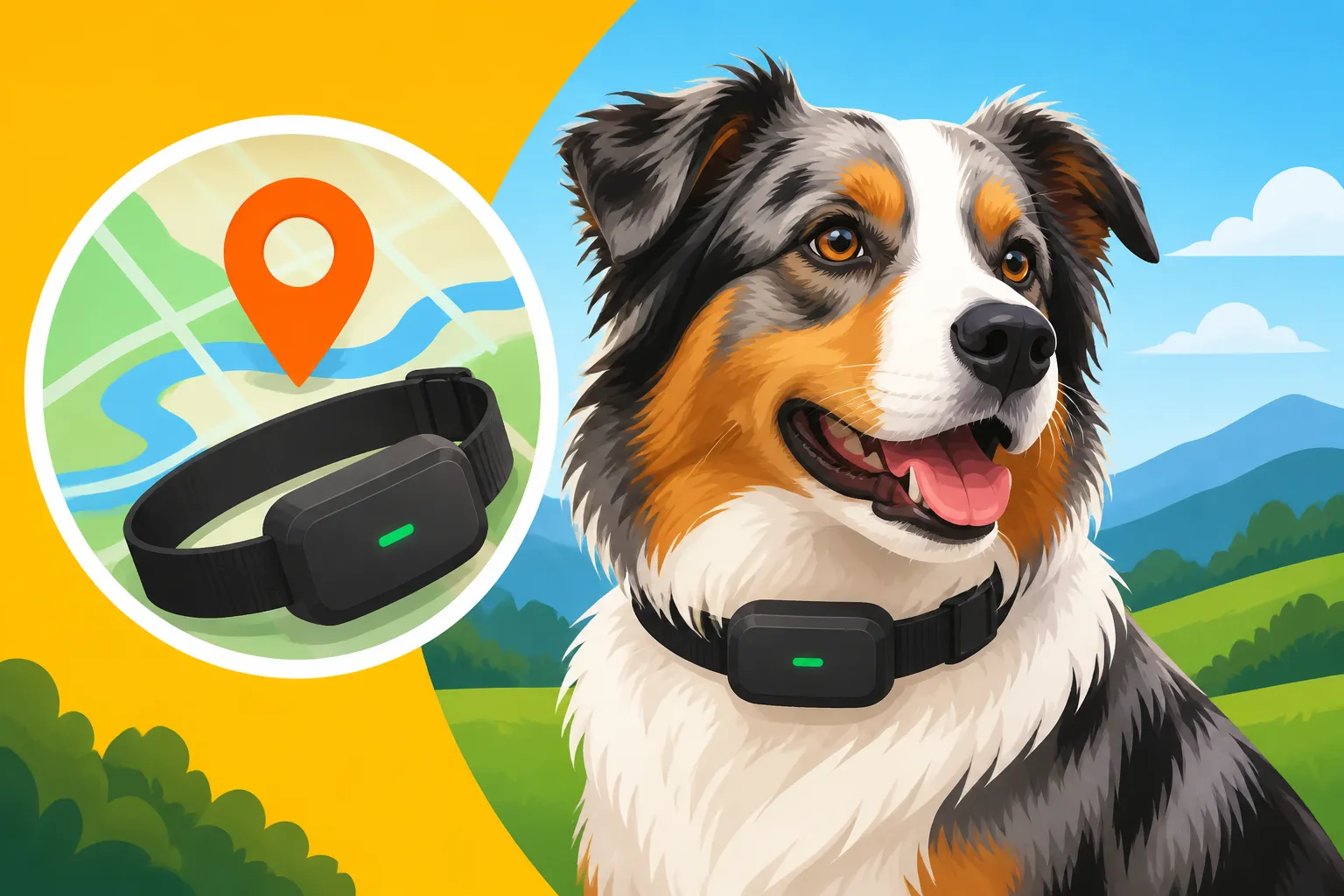
GPS Collars for an Australian Shepherd
It’s a heart-stopping moment that far too many Australian Shepherd owners have experienced: that split second when your usually attentive Aussie spots a squirrel, a cyclist, or even just a blowing leaf, and their intense herding instinct kicks in, sending them off on an unscheduled adventure. The fear that rushes in when you call, and they don’t come back, is absolutely gut-wrenching. You scour the neighborhood, frantically calling their name, praying they haven't darted into traffic or disappeared completely. This guide is here to walk you through how GPS collars can provide an invaluable layer of security and peace of mind, helping you locate your beloved Australian Shepherd should they ever go on an unplanned excursion.
Why Australian Shepherds are Prone to Getting Lost
Let's be honest, our Aussies are brilliant, athletic, and fiercely driven. These traits, while wonderful in many contexts, can also make them masters of the disappearing act. Understanding why they might bolt can help us appreciate the need for extra safety measures.
The Inherent Herding Drive
The most defining characteristic of an Australian Shepherd is their powerful herding instinct. This isn't just a cute quirk; it's hardwired into their DNA. They were bred for centuries to control livestock, which means they are constantly scanning their environment for things that move. A car, a jogger, a child on a scooter, a group of pigeons – to an Aussie, these are all potential "sheep" that need to be gathered or directed. When this instinct is triggered, it can override even the most solid training. They might tunnel under a fence, slip a leash, or simply run straight past you, laser-focused on their perceived "job." You might think your Aussie has amazing recall, but throw a deer into the mix, and suddenly all bets are off. This instinct is so strong, it's often described as the operating system for the breed, truly something you cannot train out of them.
This intense drive means they often chase without considering consequences. Their focus is singular: on the moving object. They're not thinking about the busy road ahead or how far they're straying from home. They're simply reacting to that deep-seated urge to control movement. This can be incredibly frustrating and frightening for owners who are always on alert.
High Energy and a Need for a Job
Australian Shepherds are not content to be couch potatoes. They thrive on activity, both physical and mental. If they don't get enough appropriate exercise and mental stimulation, they will find ways to entertain themselves – and those ways often involve exploring beyond the boundaries of your property. An under-exercised Aussie isn't just bored; they're driven by an internal motor that needs an outlet.
This isn't about simply going for a walk around the block. We're talking about vigorous activity, often for a significant portion of the day. A simple walk might not even scratch the surface of their energy levels. If an Australian Shepherd is consistently denied an outlet for their boundless energy, whether through Australian Shepherd Exercise at One to Two Hours a Day or engaging mental tasks, they might interpret an open gate or an unlatched door as an invitation to go find their own "job" out in the wide world. This search for purpose can lead them miles away from home before they even realize they're lost. This exercise gap is a common reason why many Aussies end up in rescue situations, as owners underestimate their needs.
Curiosity and Independence
Beyond their herding drive and energy, Aussies are intelligent and curious dogs. They love to investigate new sights, sounds, and smells. A fascinating scent trail can be an irresistible pull, leading them further and further afield. They are also problem-solvers; if there's a weakness in your fence, they'll find it. If a gate isn't completely secure, they'll figure out how to open it.
Their independent nature means they can become so engrossed in their exploration that they lose their bearings. They're not necessarily looking to run away, but their focus on the immediate task – following that incredible scent or checking out what's beyond the next bush – makes them forget where they came from. Couple this with their speed and agility, and you have a dog that can cover a significant amount of ground in a very short time, making them incredibly difficult to track down by foot or car alone. This combination of traits means that even the most well-trained Australian Shepherd can have a lapse, and a GPS collar provides that vital safety net.
What a GPS Collar Offers to an Aussie Owner
A GPS collar is more than just a fancy gadget; it’s a modern tool designed to alleviate some of the deepest anxieties of pet ownership, especially with an active, wander-prone breed like the Australian Shepherd. It offers tangible benefits that can be truly life-saving.
Real-Time Location Tracking
The primary function of a GPS collar is, of course, to tell you exactly where your dog is, right now. Imagine the panic of an Aussie bolting after a deer into thick woods. Without a GPS collar, you'd be yelling their name, hoping for a miracle. With one, you pull out your phone, open the app, and see a dot moving on a map, showing you their precise location. This isn't just about finding them; it's about minimizing the time they are exposed to danger.
Many modern GPS collars use a combination of technologies, including GPS satellites, cellular networks, and sometimes even Wi-Fi, to pinpoint your dog's position with surprising accuracy. This means whether they're in your backyard, a local park, or several blocks away, you have a digital leash that extends wherever they go. Some systems even offer "live tracking" modes that update every few seconds, allowing you to follow their path as they move. This instant information can turn a terrifying search into a directed rescue mission, guiding you straight to your dog without wasted time or frantic guesswork. For an Aussie owner, this means no more guessing games about which way they ran when they decided to herd a delivery truck.
Geofencing and Safe Zones
One of the most powerful features of a GPS collar for an Australian Shepherd is the ability to set up "geofences" or virtual safe zones. This allows you to draw boundaries on a map – perhaps around your home, a friend's yard, or a favorite dog park – and receive an immediate alert if your Aussie crosses these digital lines.
Think of it: your Australian Shepherd is playing in your fenced yard. Suddenly, they find a loose board, or a gate is accidentally left ajar. The moment they step outside your defined safe zone, your phone vibrates with a notification. This early warning system is crucial, as it allows you to react instantly, often before your dog has gone too far or encountered significant danger. You can then use the real-time tracking feature to go directly to them. This proactive alert system is a game-changer for a breed known for its Houdini-like abilities and strong prey drive. It's an invaluable tool, especially when you consider how quickly an Aussie can disappear when chasing something like a rabbit or a rogue plastic bag.
Activity Monitoring
While not the primary reason most people purchase a GPS collar, many devices designed for dogs also include activity monitoring features. These can track your Aussie's daily steps, distance traveled, active minutes, and even sleep patterns. For a breed like the Australian Shepherd, known for its incredible energy, this can be a very useful secondary benefit.
Monitoring their activity can help you ensure they're getting enough exercise, which in turn can reduce the likelihood of them seeking "self-employment" by escaping. If you notice a sudden drop in their activity, it might signal a health issue, or conversely, if their activity levels are consistently low, it could be a clue that you need to up their exercise game. Some collars even offer insights into their behavior, comparing their activity to other dogs of similar breeds, which can be an interesting way to ensure your Aussie is living their best, most active life. While not directly related to preventing them from getting lost, understanding their activity patterns can contribute to a happier, healthier, and potentially less escape-prone dog.
Choosing the Right GPS Collar for Your Australian Shepherd
With so many options on the market, selecting the perfect GPS collar for your Australian Shepherd can feel a bit overwhelming. It’s not a one-size-fits-all situation, especially for a breed with specific needs like an Aussie. You want something reliable, comfortable, and effective.
Key Features to Look For
When you're looking at GPS collars, there are several crucial features that will make a big difference in their effectiveness and your peace of mind.
First, battery life is paramount. An Aussie can cover a lot of ground, and if the collar dies an hour into their adventure, it's useless. Look for collars that offer several days of battery life on a single charge, or at least a full 24-48 hours in active tracking mode. Some brands offer extended battery packs or smart power-saving features that are worth investigating. Next, consider durability and waterproofing. Australian Shepherds are robust dogs who love to explore, often through mud, water, and brush. The collar needs to withstand these adventures. Look for high IP (Ingress Protection) ratings – ideally IP67 or IP68 – meaning it's highly resistant to dust and can be submerged in water. A rugged casing will also protect against bumps and scratches.
Subscription models are almost always a part of GPS collars, as they rely on cellular networks to transmit location data. Understand the monthly or annual fees involved and what they include (e.g., unlimited tracking, geofence alerts, activity data storage). Don't just look at the upfront cost of the device; factor in the ongoing subscription. Finally, consider the coverage area. Most GPS collars work wherever there's cellular service, but if you live or frequently hike in very rural areas, confirm that the collar uses a network provider with good coverage in your specific locations. Some advanced collars might even offer satellite connectivity for truly off-grid adventures, though these usually come with a higher price tag. This can be especially important if your Aussie likes to explore vast open spaces or areas where cell service is spotty.
Comfort and Fit for an Active Dog
An ill-fitting or uncomfortable collar is not only useless but can also cause distress or injury to your dog. For an active breed like the Australian Shepherd, comfort and a secure fit are non-negotiable.
Choose a collar that is lightweight and doesn't add unnecessary bulk, especially if your Aussie already wears a training collar or harness. They need to be able to move freely and comfortably during their adventures, whether planned or unplanned. The device itself should ideally be sleek and designed to attach securely to their existing collar or be integrated into a new, comfortable one. Pay attention to how the device sits against their body; you don't want it to rub or cause chafing, particularly on their neck. The materials should be breathable and non-irritating. For an Aussie with a thick The Australian Shepherd Double Coat Explained, ensure the device isn't prone to getting tangled in their fur or causing mats. Some devices are designed to clip onto an existing collar, while others come as full collar units. Ensure whatever option you choose can be adjusted to a snug but not tight fit, preventing it from slipping off over their head while also not restricting their breathing or movement.
Many owners opt for a traditional collar, like those from manufacturers found on Chewy, that can comfortably hold a separate GPS tracker module. This often allows for greater flexibility and ensures the collar itself is the right type for your dog's activity level.
Integration with Your Lifestyle
The best GPS collar is one that seamlessly integrates into your daily routine and provides the information you need, when you need it.
Consider the app features and user interface. Is the app intuitive and easy to navigate? Can you quickly see your dog's location, set geofences, and review activity data? Look for features like location history, which can be fascinating for seeing where your Aussie's adventures have taken them, or the ability to share access with family members or dog walkers. The ease of charging is also important. If it's a hassle, you might forget to do it, rendering the device useless. Magnetic chargers or long battery life can make this less of a chore.
Finally, think about network reliability and customer support. If you ever have an issue with the device or the app, how easy is it to get help? Reading reviews about customer service can be incredibly insightful. While a GPS collar is an amazing safety tool, it doesn't replace solid training, especially for a breed with such intense instincts. However, it provides an unparalleled safety net when those instincts override everything else. Combining a reliable GPS tracker with diligent training on skills like Australian Shepherd Recall Around Moving Things gives you the best chance of keeping your furry friend safe.
The Limitations and Realities of GPS Collars
While GPS collars offer a fantastic layer of security for Australian Shepherd owners, it’s crucial to understand that they aren't a magical, foolproof solution. Like any technology, they have limitations, and relying solely on them without other measures can lead to a false sense of security.
Not a Substitute for Training
This is perhaps the most important point: a GPS collar is a recovery tool, not a training device. It won't teach your Australian Shepherd to come when called, nor will it curb their instinct to chase that squirrel or herd that bicycle. These devices are fantastic for locating a dog that has already escaped, but they don't prevent the escape in the first place.
For a high-drive breed like the Australian Shepherd, foundational training, especially a bomb-proof recall, remains paramount. Investing time in training commands like "come" or a specific "emergency recall" is essential. Practices like using a Long Line Length for an Australian Shepherd in unfenced areas to build reliable recall skills are invaluable. If your Aussie has The Australian Shepherd Herding Drive You Cannot Train Out, you need to actively work on redirecting that energy and focus. A GPS collar merely gives you a way to find them if your training, or their instincts, fail. It's an important distinction, because relying solely on technology without addressing the root behavioral drives is a recipe for ongoing stress, not true safety.
Battery Life and Charging Habits
Ah, the eternal struggle with any modern gadget: battery life. GPS collars are no exception. They require regular charging, often daily or every few days, depending on the model and how actively it's tracking. This means incorporating another charging routine into your busy life.
Imagine your Aussie slips out, and you realize their GPS collar is dead because you forgot to charge it last night. That immediate panic and frustration are real. You have to be diligent about keeping the device powered up. If you're planning a long hike or a weekend away where charging might be inconvenient, you need to think ahead. Some devices offer low-battery alerts, which are helpful, but ultimately, the responsibility lies with the owner. It’s a trade-off for the peace of mind they offer, but it’s a reality that can sometimes be overlooked in the excitement of new tech.
Cost Considerations
The cost of a GPS collar isn't just the upfront purchase price; it's also the ongoing expense of a subscription. Most GPS collars require a monthly or annual subscription fee to access the cellular network that allows them to transmit location data. These fees can add up over the lifespan of your Australian Shepherd.
While we can't share specific figures, understand that you'll be paying for the device itself, and then a recurring service fee. It's important to factor this into your budget, especially when considering the overall Fifteen Years of Australian Shepherd Costs. While pet insurance providers like Healthy Paws can help with unexpected vet bills if your lost dog gets into trouble, the collar and its subscription are a consistent investment in proactive safety. Compare different providers and their plans carefully, weighing the features against the cost to ensure it's a sustainable solution for you.
Network Dependence and Signal Blackouts
GPS collars rely on various signals to function: GPS satellites for location, and cellular networks to send that location data to your phone. This means if your Australian Shepherd wanders into an area without good cellular coverage, the collar might not be able to update its location or send you alerts.
Think about dense forests, remote hiking trails, deep ravines, or even certain areas within buildings like basements or large concrete structures. In these "dead zones," the collar might struggle to get a signal, potentially leaving you in the dark exactly when you need it most. While many advanced collars have better reception and use multiple cellular providers to maximize coverage, it's not a guarantee everywhere. It's a good idea to consider the typical areas where your Aussie spends time and research the cellular coverage in those regions before committing to a specific device. Understanding these limitations is not to discourage use, but to encourage a balanced approach to your Aussie's safety, combining technology with robust training and responsible management.
GPS Collar Features Comparison
To help you visualize the different aspects that set GPS collars apart, here’s a simplified comparison of common features you'll find:
| Feature Category | Basic / Entry-Level Trackers | Mid-Range Trackers | Advanced / Premium Trackers |
|---|---|---|---|
| Tracking Method | Primarily GPS with basic cellular upload | GPS, cellular (multi-network), Wi-Fi triangulation | GPS, cellular (multi-network), Wi-Fi, sometimes short-range RF backup |
| Battery Life | 1-2 days (active tracking), 3-5 days (standby) | 3-5 days (active tracking), 7-10 days (standby) | 5-7+ days (active tracking), 14+ days (standby), quick charge options |
| Durability/Waterproof | Splash-proof (IPX4), basic impact resistance | Water-resistant (IP67), moderate impact resistance, often rugged casing | Waterproof (IP68), highly rugged, designed for extreme conditions |
| Geofencing | Basic "safe zone" alerts (entry/exit) | Multiple custom safe zones, instant alerts, detailed history | Highly customizable geofences, "no-go" zones, advanced notification options |
| Activity Monitoring | Basic step count, general activity levels | Detailed activity tracking (steps, distance, sleep, calories), custom goals | Comprehensive health insights, anomaly detection, vet-sharing capabilities |
| App Features | Live tracking, basic location history | Enhanced live tracking, detailed location history, shared access, pause mode | Real-time map updates, augmented reality view, detailed heat maps, community features |
| Subscription Cost | Typically lower monthly/annual fees | Moderate monthly/annual fees | Higher monthly/annual fees, sometimes includes premium support |
| Weight/Size | Often lighter, more compact | Balanced for features and comfort | Can be slightly larger due to battery/features, but still designed for comfort |
This table is a general guide. Specific models will have their own unique blend of these features. When choosing for your Australian Shepherd, always prioritize reliability, tracking accuracy, and battery life, given their active nature.
Having a robust nutrition plan, perhaps using a service like Ollie, can keep your Aussie in top physical condition, making them less prone to health issues that might affect their activity and mental state. Just as you invest in their physical well-being, a GPS collar is an investment in their safety.
Conclusion
The bond we share with our Australian Shepherds is incredibly strong, and the thought of them ever going missing is truly terrifying. While their intelligence, energy, and powerful herding instincts make them amazing companions, they also contribute to their uncanny ability to disappear in a flash. A GPS collar offers a powerful tool in your arsenal, providing real-time location tracking and peace of mind when those instincts take over.
It's a fantastic safety net, allowing you to quickly locate your beloved Aussie if they ever dart after a deer, chase a bike too far, or simply find an irresistible scent trail that leads them astray. However, it's crucial to remember that a GPS collar is an aid, not a replacement for thorough training, secure fencing, and vigilant supervision. Combine this technology with consistent work on skills like The Recall Word That Stops an Aussie Mid-Chase and understanding Australian Shepherd Behavior Problems From Under-Exercise, and you'll create the safest possible environment for your extraordinary canine companion. Investing in a quality GPS collar is an investment in their safety and your peace of mind, ensuring that those heart-stopping moments are quickly resolved with a joyful reunion.
Disclaimer
This article is for general informational purposes only and does not constitute professional advice. Laws, prices and regulations vary by location and change over time. Consult a qualified professional for guidance on your specific situation.