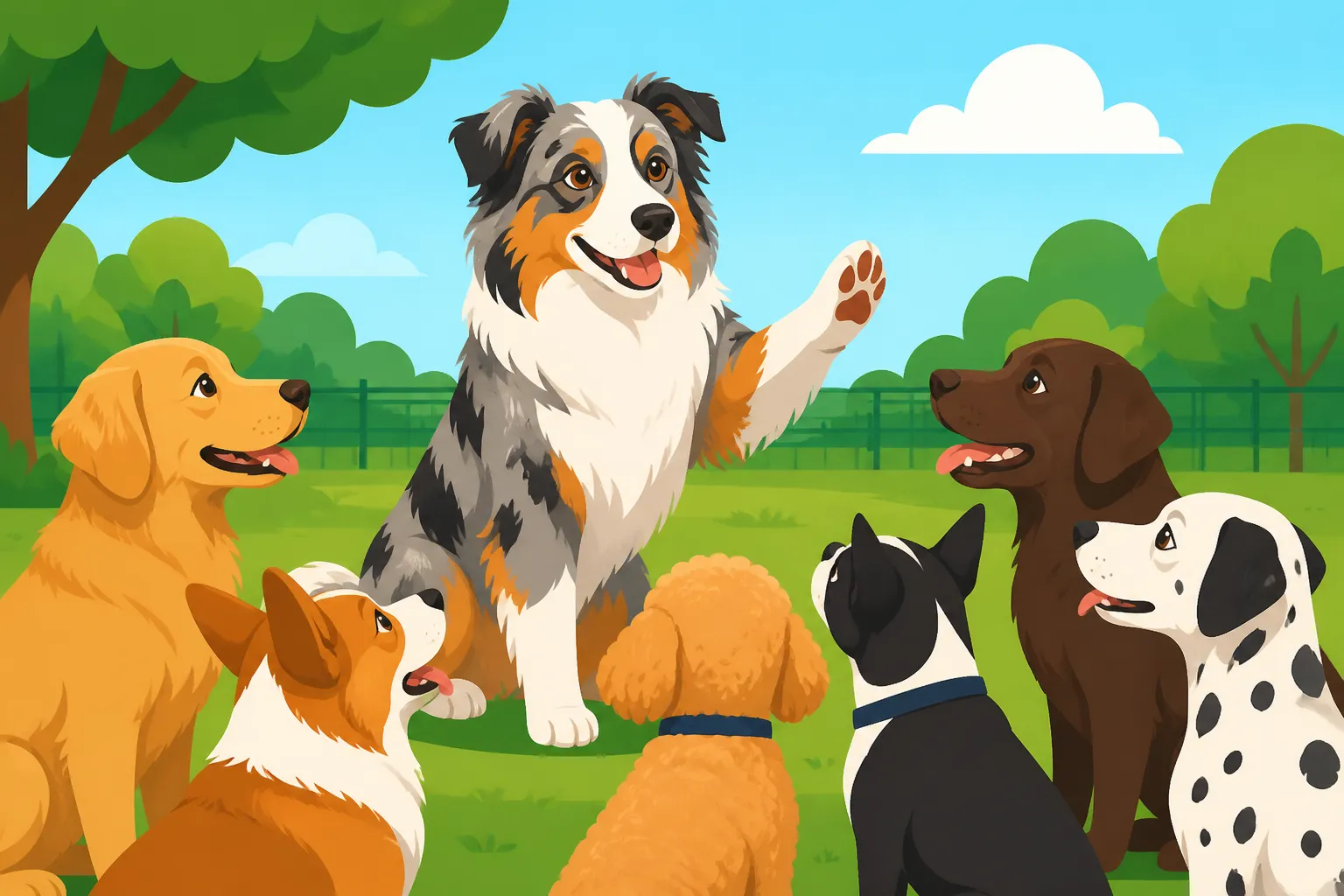
An Aussie That Organizes the Dogs at the Park
It’s a scenario many Australian Shepherd owners know all too well: you’re at the dog park, hoping for a relaxing session of fetch and happy romping, when suddenly you notice your beloved Aussie has taken on the role of self-appointed park manager. Instead of just playing, they’re circling, nudging, and seemingly trying to organize every other dog into a neat, orderly flock. It’s not just embarrassing; it can sometimes lead to misunderstandings with other dogs and their owners, leaving you wondering how to manage that powerful herding drive in such a stimulating environment. This guide will help you understand why your Australian Shepherd tries to organize other dogs at the park, how to recognize the signs, and effective strategies for managing this deeply ingrained behavior so everyone can enjoy their park time safely.
Understanding the Aussie's Herding Instinct at the Dog Park
Australian Shepherds were bred for generations to work livestock, moving and controlling animals with their keen intelligence and unique working style. This isn't just a learned skill; it's deeply wired into their DNA. When they're surrounded by a group of energetic, unpredictable dogs at a park, their ancient instincts can kick in, compelling them to try and bring order to the chaos.
Why Your Aussie Tries to "Organize" Other Dogs
Imagine a pasture full of sheep, moving erratically. Now, picture a dog park with a dozen or more dogs, all running in different directions, playing chase, or wrestling. To an Australian Shepherd, these are remarkably similar scenarios that can trigger their primary directive: gather and control. Even if your Aussie has never seen a sheep in its life, that instinct is still there, lurking just beneath the surface.
This isn't malicious behavior, nor is it usually an attempt to dominate. Instead, it's often your Aussie trying to do what feels natural to them – creating order. They might circle a group of dogs playing too boisterously, attempting to "collect" them. They might nudge a dog that’s straying too far from the group, or even give a little heel nip to encourage movement in a specific direction. For some Aussies, the sheer movement and energy of multiple dogs can be overwhelming, and their way of coping is to try and bring it under control, much like they would a flock of sheep. It’s their brain's operating system, constantly seeking a job, and a busy dog park presents a full-time management position.
The Difference Between Play and Herding
It can sometimes be tricky to tell if your Aussie is genuinely playing or if their herding instinct has taken over. True play usually involves give-and-take: dogs chase each other, take turns being the chaser and the chased, and exhibit loose, bouncy body language. There's often a "play bow" to initiate, and pauses during the play session.
Herding, on the other hand, often looks more purposeful and less reciprocal. Your Aussie might consistently be the one doing the chasing and circling, rarely allowing another dog to "catch" them. Their body language might be tighter, lower to the ground, with an intense, fixed stare. While a playful chase can involve a dog running after another, an Aussie herding will often try to cut off the other dog's path, direct its movement, or even "block" it from moving in a certain direction. Other dogs might respond by running away in frustration, or, if they're not keen on being managed, they might snap or growl to tell your Aussie to back off. Understanding this distinction is vital, because what looks like harmless fun to one owner might be perceived as aggressive or annoying by another dog, potentially escalating into an unpleasant encounter.
Recognizing the Signs Your Aussie Is Herding at the Park
Being vigilant at the dog park is paramount for any Australian Shepherd owner. Their highly intelligent and sensitive nature means they are constantly observing and reacting to their environment. Learning to spot the early signs of herding behavior allows you to intervene before it becomes problematic.
Body Language Cues of a Herding Aussie
An Australian Shepherd's body language is a complex tapestry of communication. When they switch into "herding mode," these cues become particularly noticeable, even if subtle to the untrained eye. Look for a low, deliberate crouch, as if they are stalking prey. Their eyes might narrow, fixed intently on a specific dog or group of dogs, displaying what's often called "the eye" – a powerful stare used to intimidate and direct livestock. You might notice them circling widely around other dogs, systematically trying to gather them into a tighter group, or even driving them towards a fence line or a corner.
Another common sign is the subtle (or not-so-subtle) heel nip. They might dart in quickly, give a small tug on a leg or tail, and then retreat, attempting to direct movement. This isn't usually meant to harm, but it's a clear communication of their desire to control. Pay close attention to their tail carriage as well; while some playful Aussies have wagging tails, a herding Aussie's tail might be held lower, perhaps even tucked slightly, indicating intense focus rather than carefree joy. They might also "flank" other dogs, running parallel to them to push them in a particular direction. If you see your Aussie doing a lot of these behaviors without equal reciprocation from the other dogs, they're likely trying to organize the "flock."
How Other Dogs React to an Aussie's Herding
The way other dogs react to an Aussie's herding attempts provides crucial feedback on whether the behavior is acceptable or causing stress. Some tolerant or submissive dogs might simply try to avoid your Aussie, running away or exhibiting appeasement signals like lip licking or averting their gaze. They might just stand still, hoping your dog will lose interest. This isn't engagement; it's often polite disengagement.
However, many dogs won't appreciate being bossed around. You might see growling, snapping, or barking directed squarely at your Aussie. Sometimes, a dog will simply turn and walk away, but if the herding persists, they might escalate their warnings. A more dominant dog might even decide to challenge your Aussie, leading to a tense standoff or even a fight. It's important to remember that not all breeds are built for the same type of play or interaction. While a Border Collie might understand and even reciprocate some herding games, a playful Golden Retriever or a more sensitive Whippet might find your Aussie’s intensity intimidating and annoying. Being aware of these reactions is your responsibility as an owner, as it tells you immediately if your Aussie's instincts are becoming a nuisance or a danger.
Strategies for Managing Aussie Herding Behavior at the Dog Park
Managing an Australian Shepherd's strong herding drive at the dog park isn't about eliminating the instinct; it's about providing appropriate outlets and clear boundaries. Your goal is to keep your Aussie engaged with you, prevent them from fixating on other dogs, and ensure a positive experience for everyone.
Proactive Management and Observation
The first and most critical step is constant, active supervision. You can't just unleash your Aussie and browse your phone. Your eyes need to be on your dog and the surrounding environment at all times. Look for those subtle body language cues in your Aussie and the reactions of other dogs. If you see your Aussie starting to fixate or if the dog park becomes too chaotic (too many dogs, too much rough play), it's time to intervene or even leave. It's always better to end a session early on a positive note than to wait for a negative interaction to occur.
Consider visiting the dog park during off-peak hours when fewer dogs are present, allowing for more controlled interactions. If your Aussie's recall isn't rock-solid in a high-distraction environment, a long line can be an invaluable tool, even in off-leash areas (where permitted and safe). It allows you to maintain control and gently redirect them without having to chase them down. Remember, the dog park is not a free-for-all; it's a social environment that requires responsible management from every owner. Sometimes, the best management is simply realizing that a particular dog park, or the current situation within it, isn't suitable for your Aussie’s temperament and leaving gracefully.
Redirecting Herding Drive to Appropriate Outlets
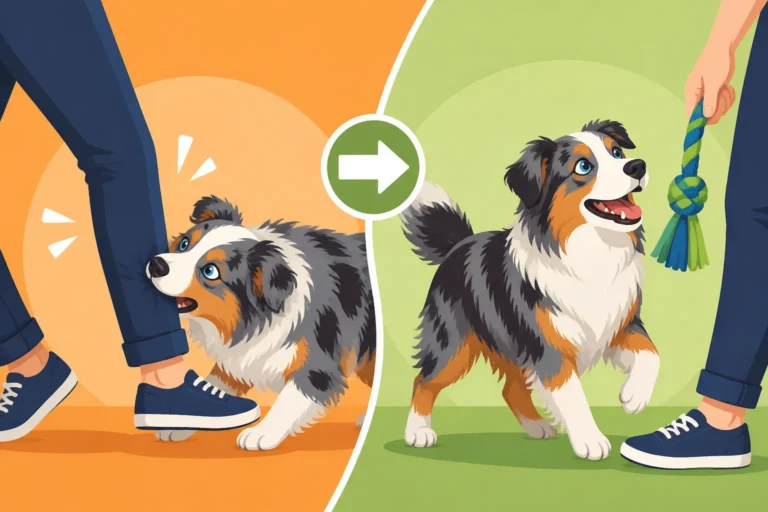
When you spot your Aussie starting to herd, the key is to interrupt the behavior and immediately redirect their attention onto something more appropriate. Carry a favorite, high-value toy – something durable that they love to retrieve or tug on. A robust, engaging toy like a KONG or a Planet Dog Orbee-Tuff ball (readily available on Amazon) can be a fantastic distraction. The moment you see the herding instinct kick in, call your Aussie’s name, get their attention, and engage them in a game of fetch or tug with you. This teaches them that their drive can be satisfied through interaction with you, not by controlling other dogs.
You might find it helpful to explore articles like Tug as a Legal Outlet for Aussie Herding Drive or Introducing an Aussie to a Herding Ball for more ideas on channeling this energy. Short, intense bursts of play with you, followed by a reward, can be very effective. Another tactic is to incorporate brief training sessions into your park visits. Ask for a "sit," "stay," or "down" in between play. This reinforces your leadership and reminds your Aussie that you are the one giving the directions, not the other dogs. Consistent redirection helps them understand that herding other dogs is not the "job" you want them to do at the park.
Building a Solid Recall in a Distracting Environment
An absolutely reliable recall is your most powerful tool in managing herding behavior at the dog park. If you can call your Aussie away from a budding herding scenario, you can prevent issues before they escalate. This isn't something you can just hope for; it requires diligent training in increasingly distracting environments.
Start practicing your recall in a quiet, fenced area with minimal distractions. Once your Aussie is consistently coming when called there, gradually introduce more distractions: another dog on a leash, a person walking by, then maybe a single, calm dog off-leash. Always reward handsomely when they return, making it the most positive experience possible. High-value treats or a favorite toy can be incredibly motivating. Consider reading Australian Shepherd Recall Around Moving Things for tips specific to their strong prey and movement drive. You want to build a recall so strong that even when they're locked onto a "flock" of dogs, your special "recall word" or whistle (perhaps covered in The Recall Word That Stops an Aussie Mid-Chase) immediately breaks their focus and brings them back to you. This takes time, patience, and consistency, but it's worth every bit of effort for the safety and peace of mind it provides at the park.
| Behavior Type | Aussie Actions | Other Dog Reactions | Owner Intervention |
|---|---|---|---|
| Playful Chase | Loose body, play bows, reciprocal chasing | Enthusiastic engagement, happy running | Allow, supervise, ensure mutual enjoyment |
| Herding | Low crouch, intense stare, circling, heel nips | Avoidance, growling, snapping, trying to escape | Intervene immediately, redirect, use recall, leave if necessary |
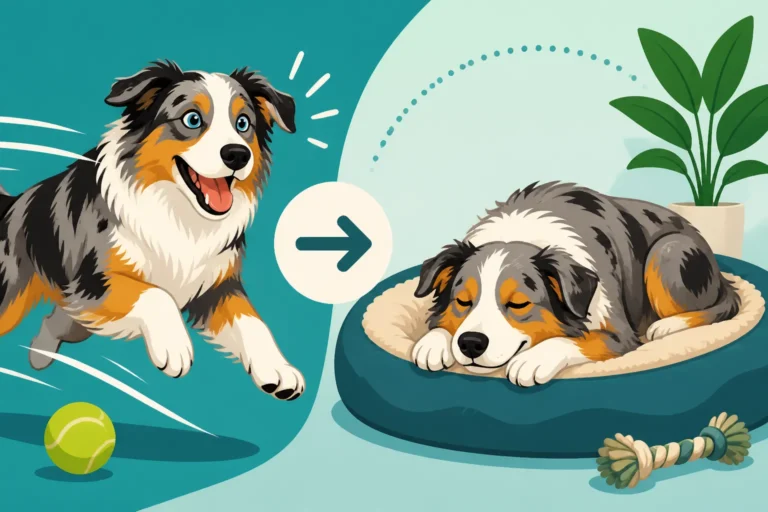
| Over-Arousal | Zoomies, frantic running, unable to settle | Confusion, avoidance, can escalate | Leash time-out, structured break, calm redirection |
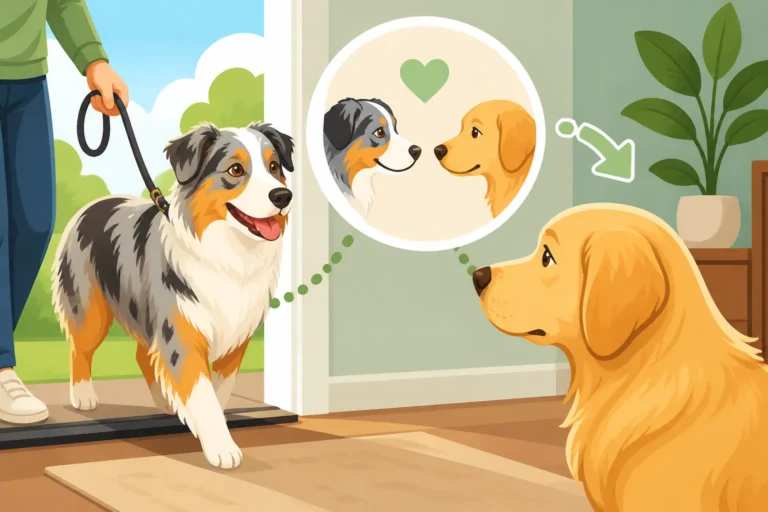
| Greeting | Loose body, sniffing, gentle tail wag | Reciprocal sniffing, relaxed body language | Allow, supervise briefly |
Alternative Exercise and Socialization Options
Sometimes, despite your best efforts, the dog park just isn't the right environment for an Australian Shepherd with a strong herding drive. That doesn't mean your Aussie can't be well-exercised and socialized; it just means you need to get creative and consider alternatives that better suit their specific needs.
Structured Playdates and Small Group Settings
Instead of the unpredictable free-for-all of a public dog park, consider setting up structured playdates with one or two known, compatible dogs. Choose dogs that are either tolerant of your Aussie's herding style (perhaps another herding breed) or, ideally, dogs that won't engage in the kind of chaotic running that triggers your Aussie's instincts. These playdates can happen in a securely fenced yard, giving you more control over the environment and the interactions.
This type of controlled socialization allows your Aussie to practice appropriate social skills without feeling the overwhelming urge to "organize" a large, dynamic group. You can supervise closely, ensuring that play remains balanced and that your Aussie isn't constantly trying to boss others around. It's a fantastic way to meet their social needs without the inherent risks and frustrations of a large dog park. It helps build positive associations with other dogs in a safe and manageable way.
Engaging in Dog Sports and Mental Stimulation
One of the absolute best ways to channel an Australian Shepherd's boundless energy and sharp mind is through structured dog sports. These activities provide a purpose and a job, which is exactly what an Aussie craves. Agility, for example, allows them to use their speed, intelligence, and athleticism to navigate obstacles, all under your direction. Disc dog (Frisbee) provides an intense physical and mental workout, focusing their drive on a specific object rather than other dogs.
You might find great value in exploring options like Aussie Agility Class and Trial Entry Fees or learning about Treibball as an Aussie Alternative to Sheep, which is specifically designed to simulate herding without livestock. Scent work is another fantastic option, allowing them to use their incredible noses and problem-solving skills, which is wonderfully tiring for their brains. Check out Scent Games That Tire an Australian Shepherd for ideas on how to get started. Many reputable online training platforms, such as BAXTER & Bella, offer comprehensive courses that can guide you through foundation skills for various dog sports and provide excellent mental enrichment exercises. By directing their natural talents into these purposeful activities, you'll find your Aussie is much more fulfilled, happier, and less inclined to take on the "park manager" role when opportunities for less structured play arise.
Disclaimer
This article is for general informational purposes only and does not constitute professional advice. Laws, prices and regulations vary by location and change over time. Consult a qualified professional for guidance on your specific situation.