An Australian Shepherd That Barks at Visitors
It can be incredibly frustrating, and let's be honest, downright embarrassing, when your beloved Australian Shepherd turns into a barking maniac the moment a guest steps foot through your door. You love your Aussie's intelligence and loyalty, but this incessant barking at visitors can make you dread hosting. This guide will dive deep into why your Australian Shepherd barks at visitors and, more importantly, equip you with practical, empathetic strategies to help your highly-driven companion learn to greet guests with calm composure instead of a vocal eruption.
Understanding Why Your Aussie Barks at Visitors
First things first, it's crucial to understand that your Aussie isn't barking to be difficult. There's always a reason rooted in their natural instincts, breed traits, or past experiences. They're trying to communicate something, and it's our job as their human companions to decipher it.
The Herding Instinct and Stranger Wariness
Australian Shepherds were bred for generations to work closely with humans and livestock, often in open, rural environments. This means they are inherently watchful and protective of their "flock"—which, in your home, is your family and space. When someone new, a "stranger," enters their territory, their instincts can kick in. They might perceive the visitor as an intruder or, at the very least, an anomaly that needs to be scrutinized and controlled.
Think about it from their perspective: a new person walking into their space. Their strong herding drive, which you can read more about in The Australian Shepherd Herding Drive You Cannot Train Out, can manifest as an attempt to "gather" or "control" the newcomer through barking. It's their way of saying, "Hey! Who are you? What are you doing here? Stay put!" This isn't necessarily aggression, but rather a strong inclination to manage their environment and the beings within it. They might even try to 'herd' children in the yard, so a new adult walking in can trigger similar responses. Beyond herding, many Aussies possess a natural reserve around strangers. While they are loyal and loving with their families, Why an Australian Shepherd Reserves Itself With Strangers explains this inherent caution. They aren't always quick to accept new people, and barking can be their immediate reaction to an unfamiliar presence.
Territoriality and Alert Barking
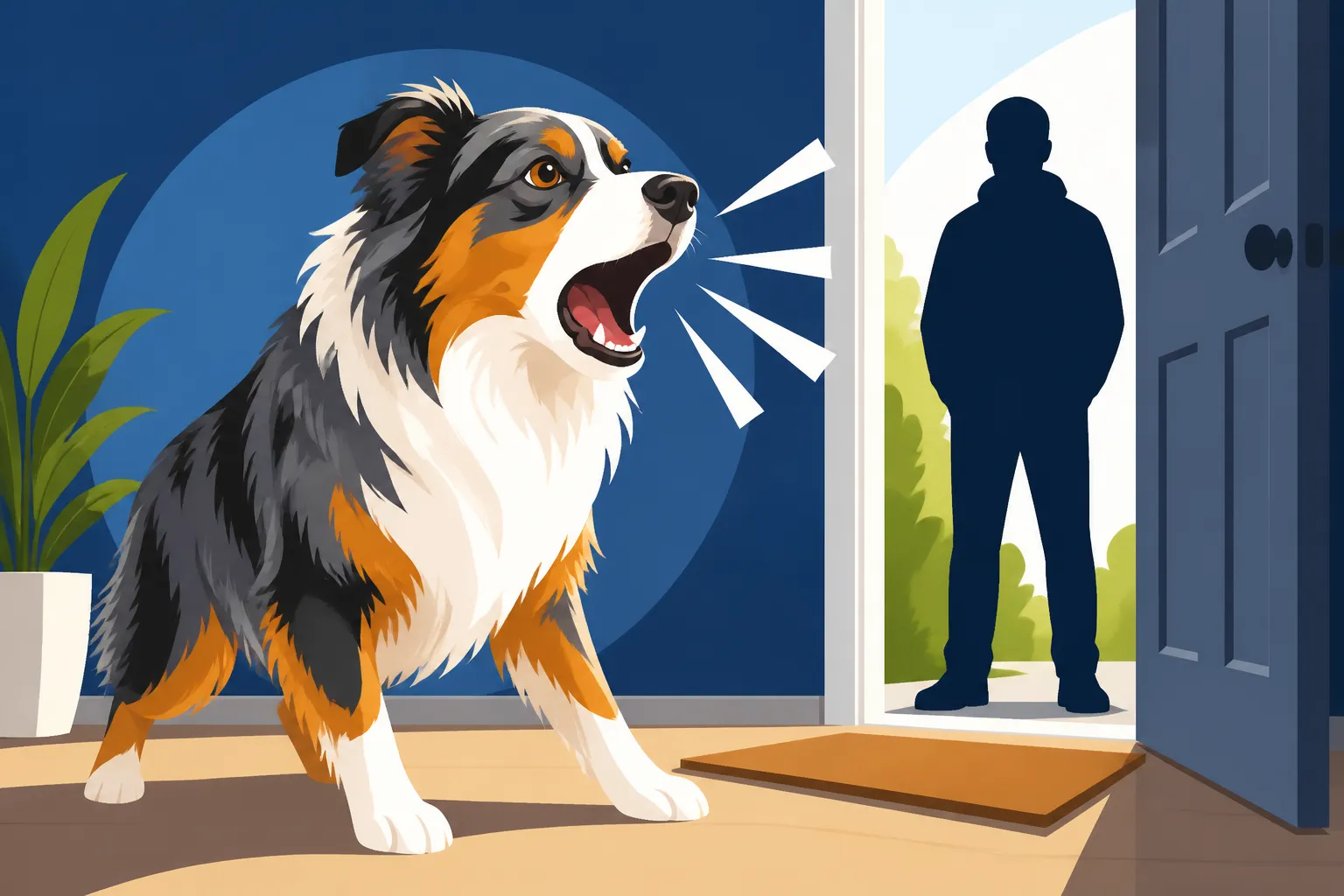
Beyond herding, many Australian Shepherds have a strong sense of territoriality. Your home is their domain, and any approaching person, whether they're still outside or at the front door, is often viewed as encroaching on that territory. This triggers what we call "alert barking." They're essentially sounding the alarm, letting you know that someone is there and, implicitly, asking you to deal with it.
This type of barking is often loud, persistent, and can escalate if not addressed. It's their protective instinct in action, a trait that was highly valued on a ranch but can be a bit much in a suburban home. They're telling the "intruder" to keep their distance and warning their family that an unfamiliar presence is near. It can be hard to tell if this is purely territorial or if it stems from a deeper anxiety, but in many cases, it's a mix of both. This is distinct from generalized Australian Shepherd Barking and Noise Sensitivity, though sometimes the two can overlap if the visitor's arrival involves loud knocking or a doorbell.
Excitement, Frustration, or Fear?
Sometimes, the barking isn't about warding off an intruder, but rather an expression of overwhelming emotion.
- Excitement: Believe it or not, some Aussies bark at visitors out of sheer, unbridled excitement. They're so thrilled by the prospect of a new person (and perhaps new smells or attention) that they simply can't contain themselves. This often looks like frantic tail wags, jumping, and high-pitched vocalizations. It’s an overarousal response, a common issue for many high-drive breeds.
- Frustration: If your Aussie is confined, like behind a gate or on a leash, and desperately wants to get to the visitor but cannot, their barking can quickly turn into frustration. They might whine, lunge, or even try to chew at their restraint. This is particularly true for Aussies who love people but have poor impulse control. They simply haven't learned how to manage their desire to interact calmly.
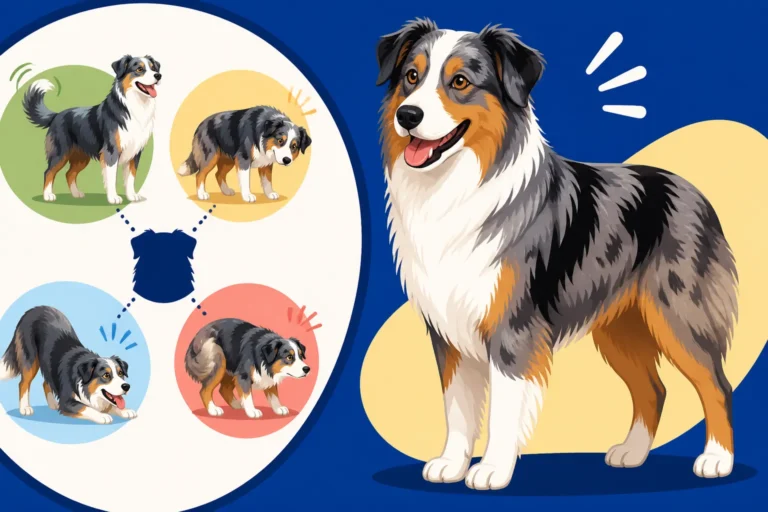
- Fear/Anxiety: This is a more serious underlying cause and should always be considered. An Aussie who barks due to fear might display other stress signals, such as lip licking, yawning, tucked tail, flattened ears, or attempts to retreat. The barking, in this case, is an attempt to create distance from the perceived threat. They're saying, "Go away! You're scary!" This is where consulting a professional becomes crucial, as fear-based barking can escalate if handled improperly. Sometimes, an Aussie may even develop An Australian Shepherd That Gets Worse in the Evening due to accumulated stress or reduced visibility, exacerbating visitor reactivity.
Understanding the why behind the bark is the first step toward finding an effective solution. Take a moment to observe your dog's body language when a visitor arrives. Is it a stiff, low bark? A high-pitched yapping spree? A frustrated whine? These clues will help you tailor your approach.
Practical Strategies to Manage Visitor Barking
Now that we've dug into the reasons, let's talk about what you can actually do to help your Aussie greet guests more politely. This isn't a quick fix; it requires consistency, patience, and a deep understanding of your dog's needs.
Proactive Management and Environmental Control
Before you even begin formal training, effective management strategies can significantly reduce the problem behavior. This is about preventing the barking from happening in the first place, or at least minimizing its impact, especially when you're caught off guard.
One of the simplest yet most effective tools you can use is a baby gate or a sturdy crate. When a visitor is expected, or even when you just hear someone at the door, put your Aussie in their crate or behind a gate in a separate, quiet area of the house. Provide them with a high-value chew toy or a puzzle feeder filled with their favorite treats. This isn't a punishment; it's creating a calm space where they cannot rehearse the unwanted barking behavior. You can find excellent crates and puzzle feeders on platforms like Amazon that can help keep your Aussie occupied. This step also gives your guests a chance to settle in without being bombarded. Remember, every time your dog barks and the visitor eventually enters, the dog learns that barking "worked" to get the person inside, inadvertently reinforcing the behavior. Breaking this cycle is key. For some Aussies, just separating them can reduce Australian Shepherd Reactivity and Overarousal significantly.
Another crucial management tool is the leash. Even if your dog is usually off-leash in the house, having them on a leash when visitors are present allows you to guide them, prevent jumping, and redirect their attention more effectively. A long line can also be useful for practicing recall and polite greetings in a larger space before guests arrive. Consider using a sturdy house line that they can drag, which allows you to gently step on it to interrupt unwanted behaviors without grabbing their collar aggressively.
| Barking Trigger | Likely Cause | Management Strategy | Training Focus |
|---|---|---|---|
| Doorbell/Knock | Territoriality, Alert Barking | Separate Aussie, use white noise, condition doorbell | "Go to mat," "Quiet" cue |
| Visitor enters home | Excitement, Herding, Fear | Crate/gate dog, leash control, high-value chew | Desensitization, polite greetings |
| Visitor moves around | Herding Instinct, Overarousal | Keep dog on leash/behind barrier, structured interaction | Focus on handler, "Leave it" |
| Visitor leaves | Frustration (wanted more interaction), Excitement | Reward calm as visitor exits, keep dog engaged | Practice departures calmly |
Training for Calm Greetings
Now for the proactive work! Training is where you teach your Aussie what you want them to do instead of barking. This often involves teaching a "place" or "mat" command.
The "place" command teaches your dog to go to a designated spot—a dog bed, a mat, or a crate—and stay there until released. This is invaluable when guests arrive. Start by making the "place" a really positive experience. Lure your dog to the mat, reward them heavily with treats, and praise them lavishly for simply being on it. Gradually increase the duration they stay on the mat, then add distractions. The ultimate goal is for your Aussie to happily go to their place when the doorbell rings or a visitor approaches, remaining calm and quiet. Mat Settle Training for a Restless Aussie can be a huge help here.
You can start by practicing with a friend or family member who can act as a "dummy" visitor. Have them approach the door while you work with your Aussie on their "place." The moment your dog starts to get agitated, redirect them to their mat. Reward them for quiet compliance. Gradually, increase the intensity of the "visitor" (knocking, opening the door) while maintaining your dog's calm at their place.
Teaching a "quiet" command is another powerful tool. When your dog barks, wait for a momentary lull, then say "Quiet" and immediately reward them. The timing is crucial here – you're rewarding the absence of barking. Over time, you can ask for "quiet" earlier in the barking sequence.
For Aussies who get over-the-top excited, teaching impulse control is essential. Games like "leave it" and "wait" can translate directly to visitor situations. Practice having them wait for a release cue before taking a treat, or "leave" a toy on the floor. This builds their ability to control their urges, which is a big step towards a calmer greeting. Online training programs, such as those offered by BAXTER & Bella, often have structured lessons that can guide you through these fundamental commands and help you apply them to real-world scenarios like visitor greetings.
Desensitization and Counter-Conditioning
For Aussies who bark out of fear or deep-seated territoriality, simple commands might not be enough. Desensitization and counter-conditioning are more advanced techniques that change your dog's emotional response to visitors.
Desensitization means gradually exposing your dog to the trigger (visitors) at such a low level that they don't react negatively. This often starts with something as simple as the sound of a doorbell or a distant knock. Play a recording of a doorbell at a very low volume. If your Aussie stays calm, reward them. Slowly increase the volume over many sessions, always ensuring they remain below their "threshold" for barking. Once they can handle the sound, move to visual cues: a person walking by the window (at a distance), then approaching the door, and so on.
Counter-conditioning pairs the trigger (visitors) with something your dog loves. The goal is to change their association from "visitor = bark" to "visitor = yummy treats/fun toy."
Here’s how you can combine them:
- Start outside: Have a friend stand across the street. As soon as your dog notices the friend (before barking), start dropping high-value treats on the ground for your dog. Your dog should look at the friend, then look at you for the treat.
- Closer proximity: Gradually have your friend move closer. The moment your dog spots them and doesn't bark, mark the behavior (with a clicker or a verbal "yes!") and reward generously. If your dog barks, the friend is too close – increase the distance next time.
- Inside the home: Once your Aussie is calm with a friend outside, have the friend briefly step inside the door. Again, reward calm immediately. If your dog barks, the exposure was too intense. The key is to keep the dog under threshold.
- Guest interaction: When guests are actually in your home, ensure they participate in the counter-conditioning. Ask them to ignore your dog initially. Once your dog is calm (perhaps on their "place"), the guest can toss a treat or offer a chew toy. This teaches your Aussie that visitors bring good things and aren't a threat or something to herd.
This process can be lengthy, especially for dogs with strong reactions. It requires consistency from everyone who interacts with your dog and your visitors. Socializing an Australian Shepherd Beyond the Farm is a great article to consult for broader socialization techniques that build confidence around novel situations and people.
When to Seek Professional Help and Resources
While many Aussie owners can make significant progress with consistent training, there are times when an Aussie's barking at visitors goes beyond typical breed traits and requires expert intervention.
Recognizing When Barking is More Than a Nuisance
How do you know if your Aussie's barking needs professional help? Look for these signs:
- Aggression: If your Aussie's barking is accompanied by lunging, growling, snapping, or attempts to bite, especially towards visitors or even family members trying to intervene, this is a clear sign of aggression. This is no longer just a nuisance; it's a safety concern.
- Intense fear/panic: If your dog seems genuinely terrified, shaking uncontrollably, attempting to hide, or even urinating/defecating when visitors arrive, their emotional distress is severe. This isn't just a behavior problem; it's an anxiety disorder that needs careful handling.
- Escalation: The barking isn't improving with your efforts, or worse, it's getting more frequent, louder, or harder to interrupt. If your methods are backfiring, it's time to call in an expert.
- Impact on quality of life: If you're constantly avoiding guests, feeling stressed, or your Aussie is visibly unhappy or stressed by visitor situations, professional help can improve everyone's quality of life.
- Underlying medical conditions: Sometimes, a sudden change in behavior, including increased reactivity or territoriality, can be linked to pain or an undiagnosed medical issue. An Aussie might be An Australian Shepherd Snapping Because Its Hips Hurt and reacting more strongly to perceived threats because they are vulnerable. Always rule out medical causes with a vet check first.
If any of these resonate, don't hesitate. You're not failing your dog; you're being a responsible owner by recognizing when you need more specialized guidance.
Finding the Right Trainer or Behaviorist
Finding the right professional is crucial, especially for a complex breed like an Australian Shepherd. Avoid trainers who promise quick fixes, use punishment-based methods, or claim to "dominate" your dog. These approaches can actually worsen fear and aggression in sensitive dogs like Aussies.
Look for certified professional dog trainers (CPDT-KA) or certified dog behavior consultants (CDBC). Veterinary behaviorists (DACVB) are veterinarians who have specialized in animal behavior and can prescribe medication if necessary for severe anxiety or fear.
When vetting a trainer, ask these questions:
- What methods do you use? (Look for positive reinforcement, force-free, reward-based.)
- Do you have experience with Australian Shepherds or herding breeds? (Aussies have unique drives.)
- Can you provide references?
- What is your approach to barking at visitors specifically?
- Do you involve the whole family in the training?
A good trainer will observe your dog in your home environment, create a customized training plan, and teach you how to implement it effectively. They understand that Vetting a Trainer Before Booking an Aussie is a vital step. They should empower you with the tools and knowledge, not just "fix" your dog for you.
Tools and Aids to Support Your Training
While training is paramount, certain tools and aids can significantly assist your efforts.
- Calming Aids: For anxious barkers, your vet might recommend calming supplements (like L-theanine or Zylkene) or even a Thundershirt or similar compression vest. For severe cases, a veterinary behaviorist might discuss anti-anxiety medication to help your dog get to a mental state where they can actually learn from training.
- Enrichment Toys: As mentioned, puzzle feeders and high-value chew toys are invaluable for keeping your Aussie occupied and mentally stimulated during visitor arrivals. Consider a durable Kong filled with frozen peanut butter or a snuffle mat from Amazon.
- Gates and Crates: Investing in sturdy, reliable gates and a comfortable crate is a game-changer for management. You need tools that will safely contain your Aussie without them feeling punished.
- Visual Barriers: If your dog barks at people walking by windows before they even reach the door, consider applying opaque window film or simply keeping blinds/curtains drawn during high-traffic times. Removing the visual trigger can reduce the initial alert barking.
- White Noise Machine: A white noise machine or even a fan can help muffle outside sounds that might trigger barking, especially if your Aussie is particularly sensitive to noise.
Remember, these tools are aids, not replacements for consistent training and a deep understanding of your Australian Shepherd's needs. Combining effective management, positive reinforcement training, and, when necessary, professional guidance, will give you the best chance at turning those frantic barks into calm, happy greetings.
Disclaimer
This article is for general informational purposes only and does not constitute professional advice. Laws, prices and regulations vary by location and change over time. Consult a qualified professional for guidance on your specific situation.