The Recall Word That Stops an Aussie Mid-Chase
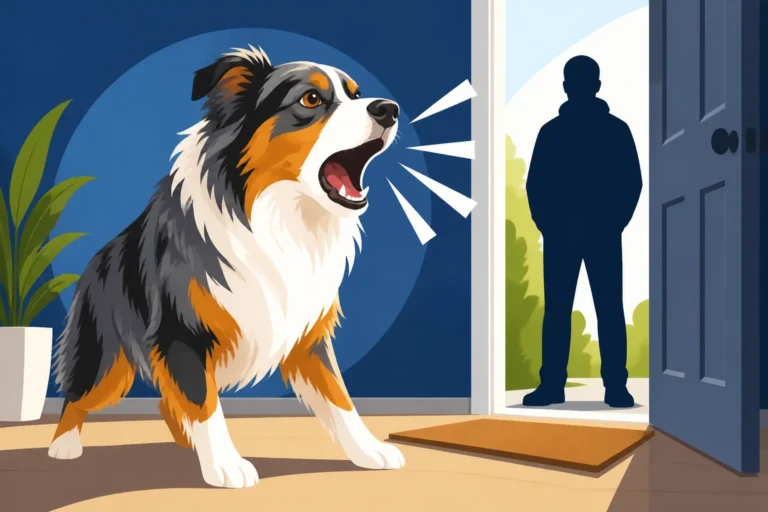
There are few things more terrifying for an Australian Shepherd owner than watching your beloved dog bolt, laser-focused on a deer, a rabbit, or even a distant bicycle, seemingly deaf to your panicked shouts of "Come!" It feels like a punch to the gut when their natural herding and prey drive completely overrides all the basic recall training you’ve diligently put in. This guide is here to help you understand why this happens and, more importantly, how to implement and proof an emergency recall word that truly has the power to stop your Aussie mid-chase, bringing them safely back to you even in the face of their strongest instincts.
Understanding the Aussie's Hardwired Drive: Why "Come" Isn't Always Enough
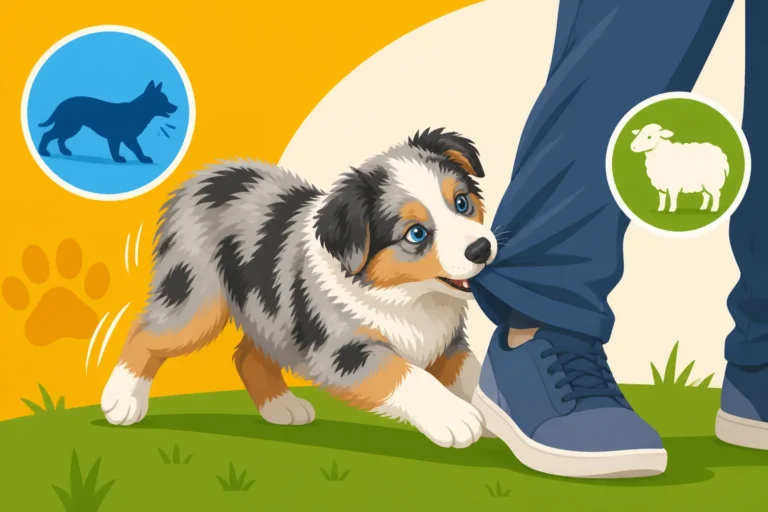
Let's be honest, Australian Shepherds are incredible dogs, brilliant, athletic, and fiercely intelligent. But that intelligence often comes with a potent drive to work – and for many, that translates into a strong desire to chase and control moving objects, whether they're sheep, squirrels, or even the neighborhood kids on skateboards. This isn't naughtiness; it's a deeply ingrained instinct, part of what makes them Aussies.
The Power of Prey Drive and Herding Instinct
Imagine your Australian Shepherd is out in the park, enjoying a sniffari. Suddenly, a rabbit darts across their path, or a flock of pigeons takes flight. In that instant, every ounce of their breeding kicks in. Their pupils dilate, their muscles tense, their brain narrows its focus to one thing: the chase. This is pure, unadulterated prey drive, and for an Australian Shepherd, it's often indistinguishable from their herding instinct. They’re not thinking about your delicious training treats or the cozy bed waiting at home. They’re thinking, "Must pursue. Must control."
What often complicates matters is that for many Aussies, this chase isn't just about catching. It's about the act of moving, of driving, of focusing on a target. They might not even want to harm the rabbit; they just want to move it, to influence its direction, to keep it within their sphere of control. This intense mental state can make them temporarily "deaf" to everything else. Your regular "come" cue, which might work perfectly in the backyard or on a quiet street, suddenly holds no value against the overwhelming reward of the chase. This is precisely why we need something more. We need a signal that cuts through the noise, a recall word that stops an Aussie mid-chase. You can learn more about this inherent drive in The Australian Shepherd Herding Drive You Cannot Train Out.
Why a Regular Recall Breaks Down Under Pressure
Think about how you typically train "come." You probably start in a low-distraction environment, use tasty treats, and reward quick responses. This builds a positive association, which is fantastic. However, the critical error many owners make is not proofing that recall under increasingly high-value distractions. For an Australian Shepherd, a squeaky toy or even a handful of kibble simply cannot compete with the adrenaline rush of a full-speed chase.
When your Aussie is fixated on something, their brain is literally flooded with chemicals that prioritize that chase. The part of their brain that processes your voice and remembers your past training is temporarily overwhelmed. If your "come" has only ever been proofed with moderate distractions, it's not surprising it fails when a real-world, high-value "target" appears. The key is to create an alternative recall that is so profoundly ingrained and so powerfully reinforced that it becomes an instant, automatic response, even when every fiber of their being screams "go!" This is the essence of an emergency recall.
Choosing Your Emergency Recall Word: The Lifesaver Signal
An emergency recall isn't just a stronger version of "come." It's an entirely separate cue, reserved for life-or-death situations, and it needs to be treated with the utmost respect and consistency from the very beginning.
Criteria for a Strong Emergency Recall Word
When you're picking your emergency recall word, think about these qualities:
- Unique and Unused: This is paramount. It cannot be a word you use in casual conversation, or anything that sounds remotely like another command. If your regular recall is "come," don't pick "here" or "front." Think outside the box. The less your dog hears it in everyday contexts, the more impactful it will be when you need it.
- Sharp and Distinct: Choose a word that is clear, short, and easy to pronounce with authority, even when you're feeling frantic. "Freeze," "Anchor," "Pipeline," "Magnet," or even a specific sound like a double whistle blow (if you plan to train with a whistle) can work well. The sound itself should cut through ambient noise.
- High-Value Association (Current & Future): This word needs to be associated only with the most amazing, high-value rewards imaginable. We're talking about shredded rotisserie chicken, premium hot dogs, a chase game with their absolute favorite squeaky toy, or a rapid-fire series of treats. Never, ever use this word for anything less than a jackpot reward. This will ensure that when you say it, your Aussie immediately thinks, "JACKPOT!" and not, "Oh, maybe she has a boring biscuit."
Examples of Effective Emergency Cues
I've seen trainers and owners use all sorts of words and sounds successfully. Some common and effective choices include:
- Words: "Quick!" "Beacon!" "Touch!" "Home!" "Zip!" "Now!" "Treat!" (if "treat" isn't overused already).
- Sounds: A specific whistle pattern (e.g., three short blasts followed by a long one), a unique clicker sequence, or a particular hand clap. If you opt for a whistle, make sure it's a distinct tone and not easily confused with another dog's whistle in a busy park. Many find whistles can carry further in high-distraction environments. You might consider Building an Emergency Recall Whistle for an Aussie.
The most important thing is that you choose something you're comfortable yelling loudly and clearly, and that you commit to making it special. This is your dog's "bat signal" to come home, no matter what.
| Recall Type | Purpose | Cue Examples | Reward Strategy | Typical Environment |
|---|---|---|---|---|
| Casual Recall | Everyday check-ins, moving between rooms | "Come," "Here," "Let's go" | Mild treats, praise, petting | Home, quiet yard |
| Standard Recall | General outdoor use, moderate distractions | "Come," "Front," "To me" | Good treats, toys, enthusiastic praise | Leash walks, dog park (low distraction) |
| Emergency Recall | Life-saving, high-distraction situations | "Freeze!", "Magnet!", Whistle blast | Jackpot (meat, cheese, favorite toy, play session) | Off-leash, high-prey drive scenarios |
The Foundation: Building Unbreakable Value for Your Recall
Once you've chosen your sacred emergency recall word, the real work begins. This isn't a quick fix; it's a dedicated investment in your Aussie's safety. The goal is to make that word the single most powerful, exciting, and rewarding sound your dog ever hears.
The "Jackpot" Principle and High-Value Rewards
The "jackpot" principle means that when your dog responds to the emergency recall, they hit the lottery. This isn't a single piece of kibble; it's a shower of their absolute favorite things. Think about what truly motivates your Australian Shepherd. Is it:
- Food? We're talking about tiny pieces of cooked chicken, roasted beef, cheese, hot dogs, or liverwurst. Something they rarely get and are wildly excited about. Keep these special treats separate from their regular training treats. You can find many suitable options on Amazon for high-value training.
- Toys? A particular squeaky ball they adore, a tug toy they only get to play with when they come back to you. Make the toy a reward for returning, not something you just always have on hand.
- Play? A brief, exhilarating game of tug, a vigorous belly rub, or a quick game of fetch with a special toy.
The moment they reach you after the emergency recall, the jackpot must appear immediately and enthusiastically. Make it a celebration! They should be thinking, "Wow, that was the best decision ever!"
Initial Training in a Low-Distraction Environment
Start simple. Your living room, a quiet hallway, or a securely fenced yard with no distractions.
- Prep Your Rewards: Have your jackpot treats ready and easily accessible.
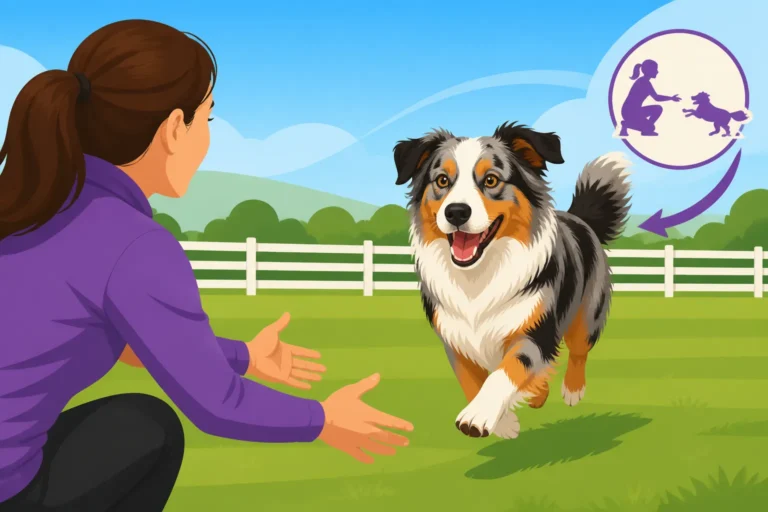
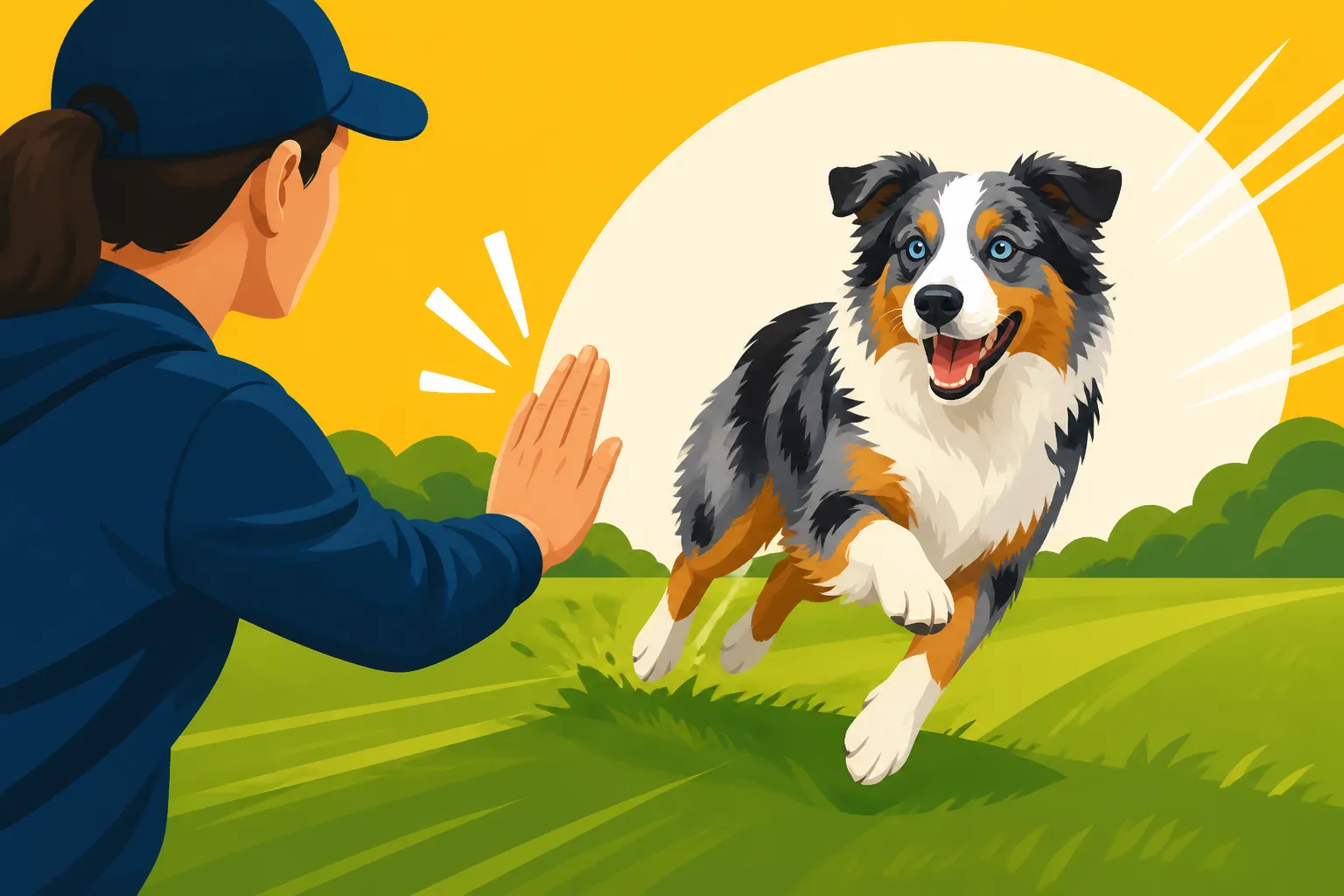
- Say the Word, Reward, Reward, Reward: Get your Aussie's attention. Say your emergency recall word ONCE, clearly and excitedly. As soon as they turn towards you or take a step in your direction, start showering them with jackpot treats. Don't wait for them to reach you; reward the intention to come. Keep rewarding as they close the distance.
- Party Time: When they get to you, make it a huge, enthusiastic party. Kneel down, offer more treats, praise, and a quick, fun game if that’s their reward.
- Release: After a few seconds of celebration, give them a clear release cue like "Okay!" or "Go play!" This tells them the interaction is over, and they can go back to whatever they were doing.
- Short Sessions: Keep these initial sessions very short, perhaps 5-10 repetitions, a few times a day. The goal is to build an overwhelmingly positive association with the word.
Consistency is everything here. NEVER use your emergency recall unless you are absolutely prepared to deliver that jackpot. If you call it and can't deliver, or if you use it for something mundane, you dilute its power. This is a sacred word. BAXTER & Bella's online puppy program, for example, emphasizes building a strong foundation for commands, which can be a great starting point before you introduce such a high-stakes cue.
Proofing Your Recall: Practicing in the Real World
Once your Aussie is reliably rocketing to you in a low-distraction setting, it’s time to slowly and carefully introduce distractions. This is where many owners get stuck, but it’s crucial for making your emergency recall truly reliable when it matters most.
Gradually Increasing Distractions and Distance
This process is like climbing a ladder, one rung at a time. Don't jump from your living room to a dog park.
- Controlled Yard: Move to your backyard with a few mild distractions – maybe a familiar toy on the ground, or another family member quietly walking nearby.
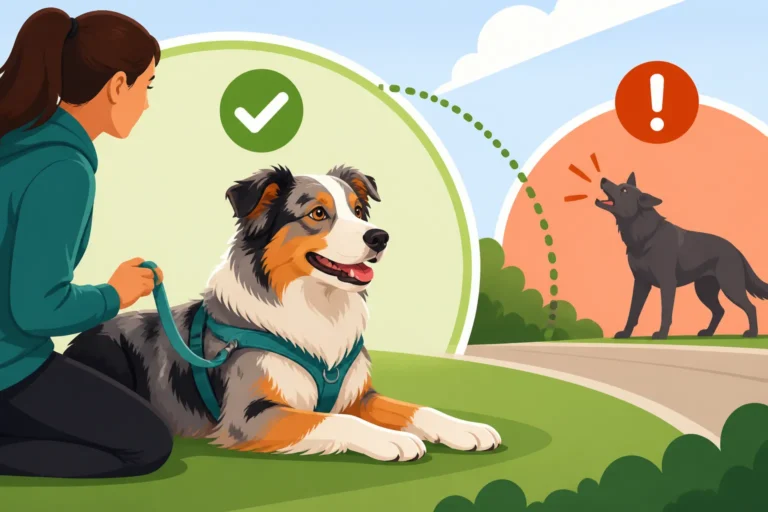
- Leash Work in New Places: Practice your emergency recall on a long line in a moderately distracting environment, like a quiet park during off-peak hours. A 20-30 foot long line is an invaluable tool for this stage. You can find robust options for a Long Line Length for an Australian Shepherd through retailers like Amazon. This allows you to prevent failure (by reeling them in if they get too distracted) and ensures you can reward success.
- Introducing Movement: Have a helper walk slowly at a distance, then a little faster. Introduce a rolling ball (but not too exciting yet).
- Mild Dog Distractions: Practice at the edge of a park where other dogs are playing, but your Aussie isn't actively engaged with them. Call your Aussie while they are observing, not while they are already running towards another dog.
- Build Distance: Once they're reliable with distractions close by, start calling them from further away. Again, use a long line to manage this, gradually increasing the length.
The key is to set your Aussie up for success. If you call them and they fail to respond, you've introduced too much distraction too quickly. Go back a step, simplify the environment, and try again. Each successful response reinforces the power of the cue.
Testing the Recall Around High-Value Scenarios
This is the ultimate test. It's also the stage where you absolutely must manage the environment to prevent failure. This means a secure, escape-proof area, or maintaining control via a long line.
- Simulated Prey: Have a helper run away with a favorite toy, or 'hide' a high-value treat (like a piece of chicken) just out of sight. Call your emergency word when your Aussie is clearly focused on the "prey" but before they're in full flight. Reel them in if needed, then reward the second they reach you.
- Dog Interaction: If your Aussie loves playing with other dogs, call your emergency word when they're about to engage, or just started a brief interaction, not when they're in the middle of a wrestling match. This is hard, but it teaches them that even other dogs are less rewarding than you are.
- Unexpected Movement: Practice in environments where bicycles, joggers, or other fast-moving objects are present, always starting with your Aussie on a long line and at a safe distance. The goal is to have the emergency recall override their instinct to chase these moving stimuli. Australian Shepherd Recall Off a Squirrel explores this challenge further.
Remember, the emergency recall is for true emergencies. In these practice scenarios, you're simulating that urgency. It should still be rewarded with the biggest jackpot every single time. Never use this cue to just bring them in from the yard for dinner; that dilutes its power.
Common Pitfalls and How to Avoid Them
Even with the best intentions, training an Australian Shepherd can present unique challenges, especially when dealing with their strong drives. Being aware of common mistakes can help you navigate the path to a reliable emergency recall.
Over-Calling and Diluting the Cue
One of the biggest mistakes owners make is overusing their recall word, especially the emergency one. If you call your Aussie with your special word every time you want them to come in from the yard, or if you use it for minor infractions, it quickly loses its "emergency" status. It becomes just another command, and its value diminishes.
How to avoid it:
- Reserve it Strictly: The emergency recall should truly be reserved for moments when your Aussie's safety is at stake, or in controlled training setups specifically designed to proof its reliability against high distractions.
- Use Other Cues for Lesser Situations: For everyday calls, use your standard "come," or simply walk over to your dog and put them on a leash. There are many ways to manage an Aussie's behavior without constantly deploying your nuclear option.
- No Punishments for Slow Returns: If your Aussie eventually comes, even slowly, celebrate it! Never scold them for a slow return. That teaches them that coming to you leads to unpleasantness, which is the opposite of what you want. The only "punishment" for a missed recall is that they miss out on the jackpot. If they don't come, you know you pushed too far, too fast, and need to reassess your training environment.
Insufficient Reward Value
For an Australian Shepherd whose brain is firing on all cylinders during a chase, a piece of dry kibble isn't going to cut it. Many owners underestimate just how compelling the prey drive is for an Aussie, and thus, how spectacular the alternative reward needs to be.
How to avoid it:
- Know Your Dog's Ultimate Motivators: Spend time figuring out what your Aussie truly goes crazy for. Is it cheese? A specific brand of chewy treat? A game of tug with a certain toy? Make a list of their top 3-5 motivators.
- Rotate and Elevate Rewards: Don't let your jackpot treats become boring. Rotate through them. Sometimes it's chicken, sometimes it's hot dogs, sometimes it's a super-exciting toy. The element of surprise can also increase value.
- Physical and Mental Engagement: Sometimes the reward isn't just edible. For a high-drive Aussie, a quick, intense game of tug or a short burst of rapid-fire fetch can be just as, if not more, rewarding than food. Ensure that your reward is not just given, but actively engaged with your dog.
Inconsistent Follow-Through
An emergency recall only works if you consistently follow through with the reward and never let your Aussie "get away" with ignoring it. Every time they ignore the cue and aren't brought back to you (via a long line or managed environment), the cue loses power.
How to avoid it:
- Manage the Environment: Until your emergency recall is bulletproof, always use a long line (at least 30 feet, sometimes 50 feet) in any open, distracting environment. This ensures you can physically enforce the return if necessary, even if you have to gently guide them back. This isn't punishment; it's simply ensuring the sequence of "cue -> come -> reward" is always completed.
- Practice in Controlled Settings: Don't wait for a real emergency. Regularly practice in controlled, progressively distracting environments. Make it a routine part of your training.
- "One Call" Rule: Once you use your emergency recall word, that's it. Don't repeat it. If they don't respond, it means either the distraction was too high, the reward wasn't high enough, or you haven't proofed enough. Retreat to an easier scenario and reinforce. Repeating the cue teaches your dog that they don't have to respond the first time.
By avoiding these common pitfalls, you strengthen the foundation of your emergency recall, making it an invaluable tool for keeping your spirited Australian Shepherd safe.
Integrating the Emergency Recall into Your Aussie's Life
The emergency recall isn't just about yelling a word when danger strikes; it's about embedding a deep-seated habit of immediate response. It’s part of a larger picture of responsible Australian Shepherd ownership, where their safety and well-being are paramount.
Maintaining the High Value and Random Reinforcement
Even after your Australian Shepherd's emergency recall seems perfect, the work isn't over. You need to maintain its power.
- Keep it Special: Continue to use your emergency recall sparingly, only for situations that warrant its weight, or for occasional, highly-controlled "refresher" sessions.
- Random Jackpots: Every now and then, even in a low-distraction setting, spontaneously call your emergency word and unleash a massive jackpot. This keeps the anticipation and excitement high. Your Aussie should never quite know when the biggest prize will appear, only that it can appear when you use that special word. This element of surprise is incredibly motivating.
- Vary the Rewards: Don't always give the exact same reward. Sometimes it's food, sometimes a game of tug, sometimes a quick burst of praise and physical affection. Keeping them guessing adds to the excitement. For working line Aussies, a quick, intense burst of their favorite activity can be a huge reward. Whether an Aussie Needs a Job to Be Calm touches on their need for engagement.
Other Essential Safety Measures for an Australian Shepherd
While an emergency recall is incredibly powerful, it's just one piece of the puzzle. Responsible Australian Shepherd ownership involves multiple layers of safety.
- Secure Fencing: A robust, escape-proof fence is non-negotiable for many Aussies, especially those with high prey drive. They can jump, dig, and even scale fences if motivated enough. Consider how Fencing Costs for an Aussie That Herds Everything might apply to your property.
- Long Lines and Leash Etiquette: Until your recall is 100% reliable in every scenario, use a long line. It gives your dog freedom to explore safely while you maintain control. Practice leash manners diligently. A polite Aussie on a leash is safer than one pulling uncontrollably towards every distraction. Long Lines and Harnesses for an Australian Shepherd offers more details.
- Identification: Ensure your Aussie always wears a collar with up-to-date ID tags and is microchipped. If the worst happens and they do get lost, quick identification is crucial.
- Situational Awareness: Always be aware of your surroundings. Scan for potential triggers (squirrels, other dogs, cyclists, children) before they become a problem. Being proactive means you can often intervene before your Aussie gets into a full-blown chase.
- Mental and Physical Exercise: A well-exercised and mentally stimulated Australian Shepherd is less likely to be as prone to bolting. While their drive will always be there, a dog whose needs are met is often more attentive and less restless. Two hours of varied activity is often a minimum. You can find more on this in How Much Daily Exercise an Australian Shepherd Needs. Incorporate scent games, puzzle toys, and trick training to tire their minds as well as their bodies. Scent Games That Tire an Australian Shepherd can be a great resource here.
- Socialization and Training Classes: Regular exposure to different environments, people, and well-behaved dogs, combined with ongoing obedience classes, helps build a more confident and responsive dog. A good training program, like the aforementioned BAXTER & Bella, can lay a fantastic foundation.
Building a truly reliable emergency recall for your Australian Shepherd is a commitment, but it's one of the most vital skills you can teach them. It's the ultimate insurance policy, offering peace of mind and, most importantly, keeping your beloved companion safe in a world full of tempting distractions.
Disclaimer
This article is for general informational purposes only and does not constitute professional advice. Laws, prices and regulations vary by location and change over time. Consult a qualified professional for guidance on your specific situation.