Microphthalmia in a Double Merle Australian Shepherd
Microphthalmia in double merle Australian Shepherds causes abnormally small eyes and vision loss linked to inherited genetics.
Know what to watch for.
Breed-specific conditions, screening and DNA tests, what surgery actually costs, and the daily habits that stretch a healthy lifespan.

Microphthalmia in double merle Australian Shepherds causes abnormally small eyes and vision loss linked to inherited genetics.

The BAER test measures brainstem electrical activity to diagnose unilateral or bilateral congenital deafness in Australian Shepherds.

Congenital deafness in Australian Shepherd puppies stems from the merle gene, requiring visual training methods and BAER testing.

Double merle Australian Shepherds have distinct physical markers like coat white patterns, microphthalmia, and deafness.

Breeding two merle Australian Shepherds creates a twenty five percent chance for deaf or blind puppies with severe health defects.

Breeding two merle Australian Shepherds together carries a twenty five percent chance of producing deaf and blind puppies.

Blue merle and red merle Australian Shepherds have different base coat genetics, silver and cream dilution patterns, and typical eye colors.
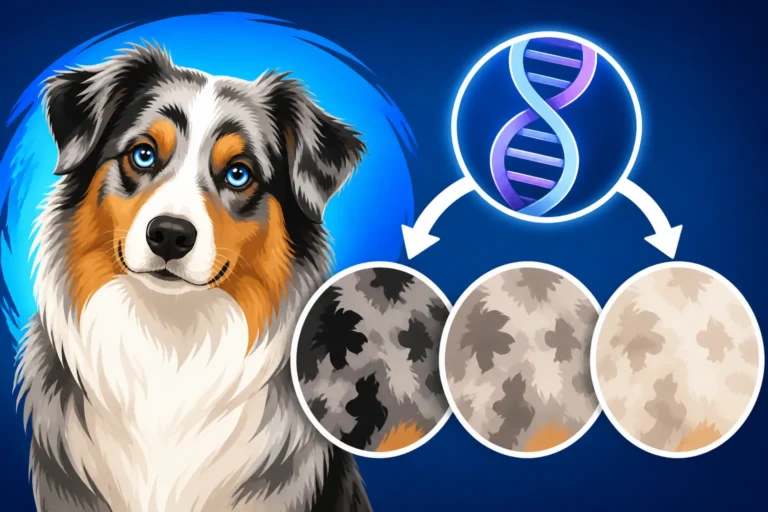
The merle gene dilutes the Australian Shepherd coat, and breeding two merle dogs creates high risks of severe deafness and blindness.

Australian Shepherd breeding decisions regarding the MDR1 mutation require genetic testing results to prevent life-threatening puppy drug sensitivities.

Emergency vet instructions for an MDR1 Australian Shepherd outline dangerous medications, safe drugs, and critical communication strategies to ensure safe care.