Microphthalmia in a Double Merle Australian Shepherd
One of the most heartbreaking realities for Australian Shepherd enthusiasts is encountering a "double merle" dog, often resulting from irresponsible breeding. These beautiful, unique-looking Aussies often come with severe health issues, particularly eye problems, and microphthalmia is one of the most common and challenging. This guide aims to thoroughly explain what microphthalmia is, how it affects double merle Australian Shepherds, and how to best care for a dog living with this condition.
Understanding Microphthalmia in Australian Shepherds
When we talk about vision in Australian Shepherds, especially those with the striking merle pattern, there’s a lot to unpack. Microphthalmia, a condition where the eye is abnormally small and often malformed, is a harsh reality for many double merle Aussies. It's not just about a smaller eye; it often means significantly impaired vision or even total blindness, presenting unique challenges for both the dog and their devoted family.
What Microphthalmia Entails for an Aussie
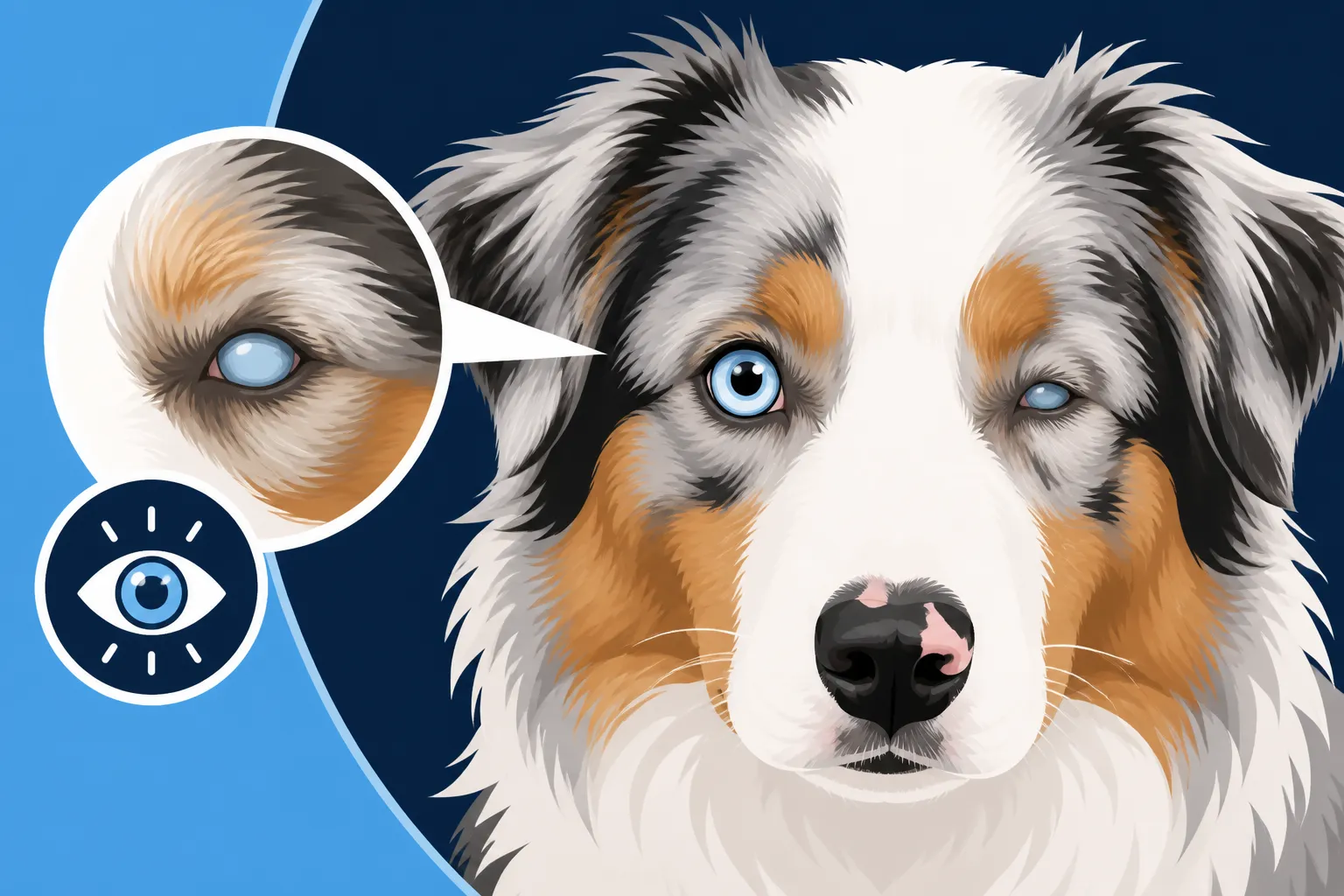
Microphthalmia literally translates to "small eye." In dogs, this isn't just a cosmetic issue. It means the eyeball itself hasn't developed to its full, normal size. This developmental abnormality usually occurs during fetal development. The extent of the condition can vary wildly, from an eye that's only slightly smaller and still retains some vision, to a severely underdeveloped eye that might be sunken into the socket and completely non-functional.
It’s not uncommon for microphthalmia to be accompanied by other ocular defects, making the situation even more complex. You might see issues like cataracts, retinal detachment, or colobomas—which are essentially holes or gaps in structures like the iris or retina. These additional problems further compromise whatever limited vision the dog might have. For instance, an Aussie with microphthalmia might also suffer from Australian Shepherd Iris Coloboma and Merle Eyes, where the iris doesn't fully close, creating an irregular pupil shape.
The reality of living with microphthalmia is that vision can range from being perfectly normal in very mild cases (which are rare in double merles) to completely blind. Most affected dogs will fall somewhere in the middle, having severely limited vision. This means they might perceive light and shadow but struggle with depth perception or distinguishing objects clearly. It's a spectrum, and each dog's experience is unique, but it almost always necessitates significant adjustments to their daily life.
The Genetic Link to Double Merle
The connection between microphthalmia and double merle Australian Shepherds is direct and undeniably genetic. It all boils down to the merle gene, denoted as M. This gene is responsible for the beautiful, mottled coat patterns we adore in Aussies, creating those stunning patches of diluted color on a solid background. However, the merle gene also has implications for eye and ear development.
When a dog inherits just one copy of the merle gene (Mm), they are a "single merle" and typically healthy, displaying the characteristic merle coat and often blue eyes. The problems arise when a dog inherits two copies of the merle gene (MM), making them a "double merle." This occurs when two merle-patterned dogs are bred together, a practice that responsible breeders conscientiously avoid because of the known risks. This is why Why Aussie Breeders Never Cross Merle to Merle is such a critical ethical guideline.
The presence of two merle genes significantly increases the likelihood of a dog developing a range of sensory defects, including microphthalmia, deafness, and other severe eye abnormalities. The double merle gene interferes with the normal development of pigment-producing cells (melanocytes), which are crucial not only for coat color but also for the development of the eyes and inner ears. The severity of the microphthalmia often correlates with the amount of white on the dog's coat, especially around the head and face, as extensive white is a visual indicator of the double merle genetic combination. It's a stark reminder that while the double merle might look striking, it often comes at a very high cost to the dog's health and quality of life, something often detailed in discussions about Double Merle Australian Shepherds and What Breeding Two Merles Costs.
How Microphthalmia Manifests
The manifestation of microphthalmia in a double merle Australian Shepherd can be quite varied, making it important for owners to be observant and informed. Sometimes, the condition is immediately obvious in a newborn puppy, with one or both eyes appearing distinctly smaller than normal, perhaps even sunken. In other cases, it might be more subtle, only becoming apparent as the puppy grows and its vision or behavior indicates an issue.
It's common for affected Aussies to have eyes of different sizes, a condition known as heterophthalmia, where one eye is microphthalmic while the other is normal or less severely affected. This asymmetry can lead to an uneven appearance and differing levels of vision between the eyes. For some, the smaller eye might be non-functional, while the other maintains partial sight, requiring the dog to rely heavily on its better eye.
Beyond just the size, the structure of the eye is often compromised. Pupils might be misshapen or unresponsive to light, indicating damage to the iris or retina. The cornea could be cloudy, or cataracts might be present, further obstructing vision. These dogs might also have nystagmus (involuntary eye movements) or strabismus (crossed eyes), reflecting neurological involvement or significant vision impairment. It’s a complex tapestry of defects that falls under the umbrella of Eye Defects in a Double Merle Australian Shepherd, all stemming from that double merle gene.
The impact on vision naturally dictates how the dog experiences the world. A severely affected Aussie might only perceive light and dark, navigating primarily through smell, sound, and touch. Dogs with partial vision might struggle with depth perception, making stairs, sudden drops, or even navigating a familiar room challenging, especially in dim lighting. They often bump into objects, startle easily, and rely heavily on their other senses and spatial memory. Understanding these manifestations is the first step toward providing the supportive environment an affected Australian Shepherd needs.
Recognizing the Signs of Microphthalmia in Your Aussie
Identifying microphthalmia early is vital for providing the best possible care and support for your Australian Shepherd. While some signs are quite apparent, others can be subtle, requiring keen observation and, eventually, professional veterinary assessment. Knowing what to look for can help you advocate for your dog's health from the very beginning.
Physical Characteristics
The most overt sign of microphthalmia is, of course, the size of the eye itself. You might notice:
- Visibly Smaller Eyes: One or both eyes may appear noticeably smaller than typical for an Australian Shepherd. In severe cases, the eye might be almost imperceptible, sunken deep within the socket, or seem to be replaced by a small, scarred area.
- Asymmetry: It's common for only one eye to be affected, leading to a clear difference in size between the two eyes. This can be quite striking and is often one of the first things people notice.
- Abnormal Eye Shape or Structure: Beyond size, the entire structure of the eye can be malformed. The pupil might be irregularly shaped (often appearing as a "keyhole" or stretched oval due to iris coloboma), or it might not react normally to changes in light. The lens could be cloudy, indicating cataracts, or the retina might be visibly detached.
- Excessive White on Face/Head: While not a direct sign of microphthalmia itself, an Australian Shepherd with an excessive amount of white on its face and head, especially around the eyes and ears, is a strong indicator that it is a double merle. This phenotype is highly correlated with the genetic defects that cause microphthalmia and deafness. It’s an observable trait that should immediately raise a red flag.
- Coat Dilution in Patches: If your Aussie has patches of pale, washed-out color in their merle pattern, especially around their eyes, it's another visual cue that they carry the double merle gene. The Merle Gene and How It Dilutes Aussie Coat can help you understand this phenomenon better.
These physical cues are often present from birth or early puppyhood, making a thorough The Aussie Puppy Eye Check at Six Weeks incredibly important for any puppy, but especially those suspected of being double merle.
Behavioral Indicators
Beyond what you can see, how your Australian Shepherd behaves can give crucial clues about their vision. Dogs are incredibly adaptive, so they might compensate for poor vision in ways that aren't immediately obvious, especially if their vision loss is congenital.
- Bumping into Objects: A dog with limited vision will frequently bump into furniture, walls, or other obstacles, particularly in unfamiliar environments or if furniture has been rearranged. This is often more pronounced in low light conditions.
- Hesitation in New Environments: They might be reluctant to enter new rooms, go down stairs, or navigate outside areas, relying heavily on you for guidance. They might move slowly and deliberately, sniffing extensively before stepping.
- Startling Easily: Because they can't see approaching people, animals, or objects, they might startle easily when touched or when something unexpected enters their space. This can manifest as jumping, yelping, or even snapping out of fear.
- Reliance on Other Senses: You'll observe your Aussie using their nose and ears much more intensely. They might sniff the air constantly, rely on sound cues to locate you, or follow familiar scents. This heightened reliance on other senses is a coping mechanism for vision impairment.
- Difficulty with Depth Perception: Stairs, curbs, or changes in ground level can be problematic. They might hesitate, misjudge steps, or fall. This is a common issue for dogs with vision deficits, as depth perception is often among the first visual abilities to be compromised.
- Changes in Play: If a dog struggles to see, games involving fast-moving objects like fetch might become difficult or frustrating. They might prefer games that use scent, such as hide-and-seek with treats, or auditory cues, like squeaky toys.
If you observe any of these behavioral changes, especially in a puppy with a suspected double merle background, it's essential to seek veterinary advice promptly.
Veterinary Diagnosis
If you suspect your Australian Shepherd has microphthalmia or any other vision issues, a comprehensive veterinary examination is the next crucial step. This isn't just a regular check-up; it needs to be an in-depth assessment by a professional.
- General Ophthalmic Exam: Your primary veterinarian will perform an initial eye exam, checking for obvious signs of microphthalmia, pupil response, and general eye health. They will look for inflammation, discharge, or any visible abnormalities.
- Referral to a Veterinary Ophthalmologist: For a definitive diagnosis and to understand the full extent of the condition, your vet will likely recommend a specialist. A board-certified veterinary ophthalmologist has the advanced equipment and expertise to conduct a thorough examination. This often includes:
- Slit-lamp biomicroscopy: Allows the ophthalmologist to examine the front part of the eye (cornea, iris, lens) in detail.
- Ophthalmoscopy: Used to view the back of the eye (retina, optic nerve) to check for abnormalities like retinal detachment or colobomas.
- Ultrasound: An ocular ultrasound can be critical to assess the structures within a very small or malformed eye that can't be seen directly. It can confirm the small size of the globe and identify internal malformations.
- Electroretinography (ERG): This test measures the electrical responses of the cells in the retina to light. While not always used for microphthalmia directly, it can assess retinal function if there's any uncertainty about light perception.
- Genetic Testing: If the double merle status is unconfirmed, or if you're concerned about potential future breeding (which, for a double merle, is a strong no), genetic testing can definitively identify the presence of two merle alleles. This test can be part of The Genetic Panel Every Australian Shepherd Needs to avoid such issues in future generations.
- Hearing Assessment (BAER Test): Since deafness often co-occurs with severe eye defects in double merles (leading to conditions like Congenital Deafness in an Australian Shepherd Puppy), your vet or ophthalmologist might also recommend a BAER (Brainstem Auditory Evoked Response) test to assess hearing in both ears.
A prompt and thorough diagnosis is important not just for understanding the condition but also for ruling out other causes of vision impairment and for establishing a baseline for ongoing care. Pet insurance providers like Healthy Paws often cover diagnostic procedures for unexpected illnesses and accidents, which can be a huge relief if you're facing specialist vet bills for such comprehensive testing.
Living with an Australian Shepherd Affected by Microphthalmia
Bringing home an Australian Shepherd with microphthalmia can feel daunting, but it's absolutely possible for these dogs to live full, happy, and enriching lives. It simply requires a thoughtful approach to their environment, training, and daily routines. Your Aussie is still a smart, loving companion who thrives on connection and purpose.
Management and Care
The first step in caring for an Aussie with microphthalmia is to make their environment safe and predictable. Consistency is key when vision is impaired.
- Maintain a Consistent Home Layout: Avoid frequently rearranging furniture or leaving obstacles in unexpected places. If you must move something, guide your dog around the new layout several times. Their mental map of the home is their navigation system.
- Safety First Indoors and Outdoors:
- Indoors: Ensure stairways are safely managed. You might need to block access with baby gates, or carefully teach your dog how to navigate them with verbal cues and tactile markers. Remove sharp objects at their eye level.
- Outdoors: A securely fenced yard is non-negotiable. Even with partial vision, the herding instinct is strong, and a double merle Aussie might bolt if startled or intrigued by movement. Always supervise outdoor time. When on walks, a long leash in a familiar, quiet area can provide enrichment, but always be aware of their surroundings.
- Vocal Cues and Touch: Develop a consistent set of verbal cues for everything: "step up," "step down," "stop," "left," "right," "watch out." Use a consistent sound, like a jingle bell on your shoe, to help them locate you. Touch signals can also be incredibly useful.
- Eye Protection: If your Aussie has residual vision, protecting their eyes from injury is vital. Goggles specifically designed for dogs, like those from Rex Specs, can shield their eyes from branches, dust, or accidental bumps during play or walks.
- Regular Veterinary Check-ups: Continue with routine vet visits. Even if an eye is non-functional, it still needs to be monitored for discomfort, infection, or pressure changes. If an eye becomes painful or chronically infected, discuss options with your vet, which might include enucleation (removal of the eye) for the dog's comfort. This is often an overwhelming thought, but sometimes, it's the kindest decision.
Training and Enrichment
An Australian Shepherd, even with limited vision, is an intelligent breed that craves mental stimulation and a job to do. Don't let microphthalmia limit your expectations for their learning.
- Scent Work: This is where your Aussie can truly shine! Their powerful nose is an incredible tool. Introduce them to nose work games, hide-and-seek with treats, or even formal K9 Nose Work classes. This builds confidence and provides immense mental enrichment.
- Auditory Training: Teach them to respond to specific sounds. A clicker can be an excellent tool, as can a variety of verbal cues. Practice recall using a specific whistle or sound.
- Tactile Training: Use different textures or surfaces as markers. For example, a small mat could signal where they should lie down, or a rug could indicate a doorway.
- Positive Reinforcement: Always use positive reinforcement. Building a strong bond and trust is paramount. Frustration on your part will only confuse and stress a dog that is already working harder to understand its environment.
- Interactive Toys: Engage them with toys that have different textures, make sounds, or dispense treats. Puzzle feeders are fantastic for mental engagement and slowing down meal times.
- Socialization (Carefully!): While a double merle Aussie might be more reserved, careful and controlled socialization is still important. Introduce them to calm, gentle dogs and people in quiet environments. Always advocate for your dog, letting others know they have vision impairment and need a slow approach. A sudden grab or approach can be terrifying for a dog that cannot see it coming.
Remember, a dog with limited vision can still learn complex tasks and enjoy activities. They just need a different approach, one that leans into their stronger senses.
Support and Resources
You are not alone in caring for a visually impaired Australian Shepherd. There are incredible communities and resources available.
- Connect with Support Groups: Online forums and local groups for owners of blind or visually impaired dogs are invaluable. You can share experiences, ask for advice, and find encouragement from others who truly understand. Organizations like the Blind Dog Support Group (on Facebook) or resources from The Canine Vision Blog can be fantastic starting points.
- Veterinary Specialists: Your veterinary ophthalmologist is a key resource. They can offer ongoing guidance, monitor eye health, and advise on any new developments or treatments. Building a good relationship with them is essential.
- Certified Professional Dog Trainers (CPDT): Look for trainers experienced with working with visually impaired or deaf dogs (as deafness often co-occurs with microphthalmia in double merles). They can help you develop specific training protocols and build your confidence.
- Pet Insurance: This is where comprehensive pet insurance, like a plan from Healthy Paws, can be a game-changer. While pre-existing conditions are typically not covered, if you enroll your Aussie early, before any diagnosis, future conditions that are not directly linked to microphthalmia, or even treatments for complications arising from the condition that are not considered pre-existing, might be covered. It's crucial to understand policy details, but having a financial safety net for veterinary care, especially for a dog with potential ongoing health needs, can make a huge difference.
Caring for an Australian Shepherd with microphthalmia is a journey of patience, love, and adaptation. These dogs often have extraordinary spirits and teach us so much about resilience and living in the moment.
The Crucial Role of Responsible Breeding
The existence of microphthalmia in Australian Shepherds, particularly in double merles, is a stark reminder of the immense responsibility breeders carry. The choices made by breeders directly impact the health and welfare of generations of dogs. Understanding and promoting responsible breeding practices is paramount to preventing such heartbreaking conditions.
Why Merle-to-Merle Breeding is Dangerous
The practice of breeding two merle-patterned dogs together is, without exception, considered irresponsible and dangerous within ethical breeding circles. This is because each merle parent passes on one copy of the merle gene (M) to their offspring. Statistically, this means that approximately 25% of the puppies in such a litter will inherit two copies of the merle gene (MM), making them double merles. Another 50% will be single merles (Mm), and 25% will be non-merle (mm).
The issue isn't with the single merles, who are typically healthy, but with that 25% chance of producing double merles. The double merle gene, when inherited in a double dose, is directly linked to an increased risk of severe health defects, most notably:
- Ocular Defects: Microphthalmia is common, but also colobomas (holes in the iris or retina), cataracts, retinal detachment, and general blindness. These conditions can range from mild impairment to complete lack of vision, often covered in detail when discussing Eye Defects in a Double Merle Australian Shepherd.
- Auditory Defects: Deafness, partial or complete, is also a highly prevalent issue in double merles. This is due to the same genetic mechanism affecting pigment cells in the inner ear.
- Lethal White Syndrome: While more commonly associated with Border Collies, the principles are similar. The extreme white patterning seen in many double merles is visually striking but indicates the underlying genetic risk.
The ethical dilemma is clear: a breeder knowingly gambles with the health of a quarter of their litter by choosing to breed merle to merle. This is why the breeding community so strongly emphasizes Why Aussie Breeders Never Cross Merle to Merle. It's not about prohibiting merle dogs from breeding entirely, but about pairing them with non-merle partners to ensure no double merles are produced.
Genetic Testing and Breeder Responsibility
Responsible breeding begins long before puppies are conceived. It involves thorough health screening and genetic testing of both prospective parents. For Australian Shepherds, this is especially critical given their predisposition to certain genetic conditions.
- Full Genetic Panel: Every Australian Shepherd intended for breeding should undergo a comprehensive genetic panel. This panel should include testing for the merle gene (M/m), allowing breeders to definitively know if a dog is merle, cryptic merle (appears non-merle but carries the gene), or non-merle. It also tests for other common Aussie health concerns like The MDR1 Mutation Half of Australian Shepherds Carry, hereditary cataracts (HSF4), and Collie Eye Anomaly (CEA). This ensures breeders can make informed pairing decisions, proactively avoiding combinations that produce affected puppies.
- OFA and CERF Certifications: Beyond genetic tests, reputable breeders perform health clearances such as Orthopedic Foundation for Animals (OFA) evaluations for hip and elbow dysplasia, and yearly eye exams by a certified veterinary ophthalmologist (ACVO), often referred to as a CERF exam. The ACVO Eye Exam Australian Shepherd Breeders Run is crucial for catching subtle eye abnormalities not picked up by genetic tests alone.
- Transparency and Education: A responsible breeder is transparent about all health testing results, whether good or imperfect. They should be eager to educate prospective puppy buyers about the breed's health concerns, the implications of genetic conditions, and their breeding philosophy. They will readily provide The Test Results an Aussie Breeder Must Produce upon request.
The goal is to improve the breed's health over generations, not to perpetuate or introduce genetic problems. Buyers should be extremely cautious of any breeder who cannot provide comprehensive health clearances and genetic test results for their breeding dogs.
Supporting Ethical Breeders
As prospective puppy owners, your choices have power. By seeking out and supporting ethical Australian Shepherd breeders, you contribute to the overall health and welfare of the breed.
- Ask Questions: Don't be shy about asking detailed questions about health testing, breeding practices, and the breeder's experience. A good breeder welcomes these questions.
- Request Documentation: Always ask to see the genetic test results and health clearances for both parents of the litter. Verify the tests were done by reputable labs and certified organizations.
- Visit the Kennel: If possible, visit the breeder's facility. Observe the living conditions, the temperament of the parent dogs, and how the puppies are raised. A clean environment and well-socialized parents are good indicators.
- Review Contracts: A reputable breeder will have a comprehensive contract that outlines health guarantees, spay/neuter clauses, and often a "return to breeder" clause if you can no longer care for the dog.
- Be Patient: Good breeders often have waiting lists because they prioritize health, temperament, and responsible breeding over rapid production. Be prepared to wait for the right puppy from the right breeder.
By supporting those who prioritize the well-being of their animals above all else, you help ensure that conditions like microphthalmia become rarer, and that Australian Shepherds continue to be the healthy, vibrant companions they are meant to be.
Understanding the Visual Impact of Microphthalmia
Microphthalmia, as a developmental defect, affects vision in a way that goes beyond just a physically smaller eye. It's often a complex interplay of structural abnormalities that prevent the eye from processing light and images correctly.
| Aspect of Vision | Normal Eye Function | Microphthalmic Eye Impact |
|---|---|---|
| Acuity (Clarity) | Sharp, detailed vision across various distances. | Significantly reduced, blurry, or non-existent vision. |
| Field of Vision | Broad peripheral and central vision. | Constricted, tunnel vision, or entirely absent. |
| Light Perception | Distinguishes between light and dark, adjusts to changes. | May only perceive light/shadow, or complete inability to do so. |
| Depth Perception | Accurately judges distances and dimensions. | Severely compromised, leading to missteps, bumping into objects. |
| Color Vision | Limited color spectrum (blue/yellow in dogs). | Further reduced or non-existent. |
| Eye Structures | Well-formed cornea, iris, lens, retina, optic nerve. | Often malformed (coloboma, cataracts, retinal dysplasia). |
| Comfort/Health | Generally comfortable, healthy, tear production. | Prone to dryness, pain, infection due to malformation. |
This table illustrates that microphthalmia isn't a single issue but a constellation of potential problems that dramatically affect how an Australian Shepherd perceives its world. It underscores why early diagnosis and understanding are so important for managing the condition.
Disclaimer
The information provided in this article is for educational and informational purposes only and does not constitute veterinary advice. Always consult with a qualified veterinarian or veterinary specialist for any health concerns or before making any decisions about your pet's medical care.