Cold Chews for an Aussie Puppy Cutting Teeth
Watching your adorable Australian Shepherd puppy transform into a land shark as those tiny, needle-sharp teeth erupt can be an incredibly frustrating, and often painful, experience for everyone involved. The constant nipping, the relentless chewing on everything but their toys, and the general crankiness can make you wonder if you've brought home a furry piranha instead of a sweet companion. But fear not, fellow Aussie parent! This guide is all about navigating that challenging teething phase by harnessing the soothing power of cold chews, giving your little one much-needed relief and saving your furniture (and your fingers) in the process.
Understanding Australian Shepherd Puppy Teething
Teething is a completely normal, yet undeniably uncomfortable, developmental stage for all puppies, and your intelligent, high-drive Australian Shepherd is no exception. It’s a crucial period where those temporary puppy teeth make way for a full set of adult choppers, and understanding the process helps you prepare and provide the best support.
The Teething Timeline for Your Aussie Puppy
Generally, Australian Shepherd puppies are born without teeth. Those first tiny, sharp teeth, known as deciduous or "milk" teeth, usually start to erupt around 3 to 4 weeks of age. By the time they are 6 to 8 weeks old – often around the time they come home to you – most puppies will have a full set of 28 puppy teeth. These are incredibly sharp, as many an Aussie owner's hand can attest to during playful nips.
The real show, or perhaps, the real chew, begins when these puppy teeth start falling out to make room for adult teeth. This transition typically starts around 3 to 4 months of age and can continue until your Aussie is about 6 to 7 months old. During this time, those 28 puppy teeth are replaced by 42 permanent adult teeth. It’s a lot of dental construction happening in a very small mouth, and it’s no wonder they’re looking for anything to gnaw on to help ease the discomfort! Keep an eye out for finding tiny puppy teeth on the floor or embedded in a toy, though many puppies simply swallow them.
Why Teething Is Such a Painful Process
Imagine having all your teeth slowly pushed out of your gums, with new, bigger teeth pushing up right behind them. Sounds pretty awful, right? That’s essentially what your Aussie puppy is going through. The gums become swollen, tender, and incredibly itchy. This constant pressure and irritation are the primary drivers behind their relentless chewing behavior. Chewing provides a counter-pressure that helps to alleviate some of the pain and encourages the loose puppy teeth to fall out, making way for the adult ones.
It’s not just physical pain; it can be emotionally taxing for them too. A puppy that was once playful might become a bit more withdrawn, whiny, or even slightly irritable during this phase. Their natural instinct is to explore the world with their mouth, and when their mouth is hurting, it can lead to frustration. This is where providing appropriate outlets for chewing becomes absolutely critical, not just for their physical comfort but for their mental well-being too.
Specific Aussie Puppy Behaviors During Teething
During the peak teething period (roughly 3-7 months), you’ll notice a few distinct behaviors in your Australian Shepherd puppy. First and foremost, expect an increase in chewing. And not just polite chewing on their designated toys. They might start to target chair legs, baseboards, shoes, remote controls – basically, anything they can get their jaws on. This isn’t necessarily destructive behavior born of malice; it’s born of discomfort and an instinctual need to relieve pressure. This is also when you'll likely experience more of that classic Australian Shepherd Puppy Biting and Herding Nips. Those nips aren't just playful anymore; they're also a puppy trying to find something to put pressure on its sore gums.
You might also observe increased drooling, especially after a good chewing session, as their salivary glands work overtime. Some puppies might have a slightly reduced appetite for their dry kibble if their gums are particularly sore, though most Aussies are too food-motivated to let teething entirely derail mealtime. However, if your puppy seems excessively lethargic, refuses to eat for extended periods, or shows signs of extreme pain, it’s always wise to consult your vet to rule out any underlying issues. For most, though, it’s just a rough patch that requires patience, understanding, and a whole lot of appropriate chew options.
The Magic of Cold Chews for Teething Relief
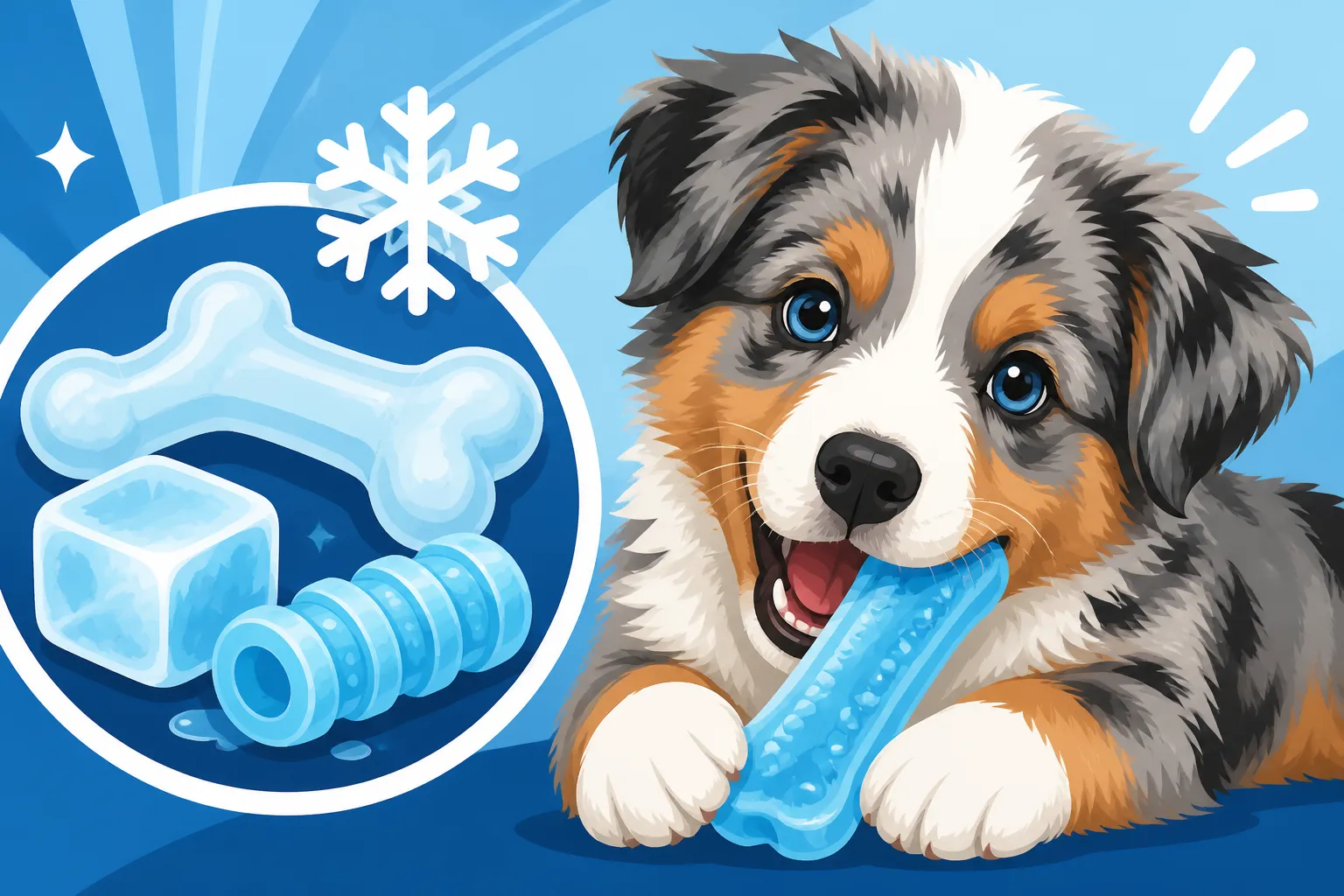
When those little jaws are aching and your Aussie puppy is searching desperately for relief, cold chews can be a true godsend. The combination of something firm to chew on and the numbing coolness works wonders.
How Cold Soothes Sore Gums
Think about when you've had a toothache or had your wisdom teeth out. What's one of the first things you reach for? An ice pack, right? The same principle applies to your teething Aussie puppy. The cold temperature acts as a mild analgesic, numbing the inflamed tissues in their gums. This temporary numbing effect reduces pain and swelling, providing significant comfort.
Beyond the numbing, the cold also feels incredibly refreshing against irritated, warm gums. It's like a cool drink on a hot day, but for their mouth. When your puppy bites down on a frozen or chilled chew, the pressure combined with the cold helps to further massage the gums, which can facilitate the eruption of adult teeth and the shedding of puppy teeth. It's a natural, drug-free way to help them feel better, which means less whining, less destructive chewing, and a happier household for everyone.
Types of Chews That Can Be Chilled or Frozen
The beauty of cold chews is that you can adapt many existing puppy-safe items or create simple ones at home. Here are some popular options:
- Rubber or Silicone Puppy Teethers: These are specifically designed for teething puppies. Look for durable, non-toxic options that can be safely popped in the freezer. Brands often make them with interesting textures to further massage gums.
- Stuffable Kongs or Similar Toys: These are fantastic because you can fill them with a variety of puppy-safe ingredients (like plain yogurt, mashed banana, or even wet kibble) and then freeze them. The frozen contents take longer to get out, extending the chewing time and providing prolonged cold relief.
- Hard Rubber Bones/Toys: Many hard rubber toys are freezer-safe. The key is to ensure they are made from a material that won't become brittle or break apart when frozen.
- Washcloths or Rope Toys: A simple, clean cotton washcloth or a sturdy rope toy, soaked in water (or diluted chicken broth for extra appeal) and then frozen, makes an excellent, budget-friendly cold chew. Just be sure to supervise closely, especially with washcloths, to ensure no ingestion of fabric.
Safety First: Choosing Appropriate Cold Chews
While the idea of cold chews is great, safety should always be your top priority. An Australian Shepherd puppy has a strong chew drive, and what might be safe for a smaller, less determined chewer might not hold up to an Aussie.
- Durability is Key: Choose chews that are robust enough to withstand your Aussie's powerful jaws without breaking into small, swallowable pieces. Small fragments can pose a choking hazard or lead to internal blockages. If a toy starts to show significant wear, get rid of it.
- Size Matters: The chew should be large enough that your puppy cannot accidentally swallow it whole, but not so large that they can't comfortably get their mouth around it. When in doubt, err on the side of slightly larger.
- Non-Toxic Materials: Always opt for products made from food-grade, non-toxic rubber, silicone, or cotton. If you're unsure, check the product's description or manufacturer's website.
- Avoid Real Bones: While it might seem natural, real bones (cooked or raw) can splinter, break teeth, or cause digestive upset. Stick to synthetic, puppy-safe chews.
- Supervision: Even with the safest chews, never leave your Australian Shepherd puppy unsupervised, especially with new types of chews or frozen items. They can find creative ways to get into trouble, and you want to be there to intervene if a piece breaks off or they start to struggle. Regular Australian Shepherd Dental Care is important throughout their life, but laying good habits early with appropriate chews starts now.
DIY Cold Chews and Store-Bought Options
You've got options when it comes to cold chews, whether you're a DIY enthusiast or prefer the convenience of ready-made products. Both can provide much-needed relief for your teething Aussie.
Simple Homemade Cold Chew Ideas
Creating your own cold chews can be cost-effective and allow you to tailor them to your puppy's preferences.
- Frozen Wet Washcloths: This is a classic for a reason. Take a clean washcloth, soak it thoroughly in water, wring it out slightly so it's damp but not dripping, twist it into a knot or braid, and freeze it. Some owners like to use diluted, low-sodium chicken broth for extra flavor, but be mindful of any additives. Always supervise your puppy with fabric chews to ensure they don't ingest large pieces.
- Stuffed & Frozen Kongs: A Kong Classic or a similar rubber stuffable toy is invaluable. Fill it with a mixture of wet puppy food, plain yogurt (make sure it's xylitol-free!), mashed banana, or even just softened kibble mixed with a little water. Freeze it for a few hours. This turns into a long-lasting, soothing treat. My Aussie, Rusty, loved his Kong filled with a bit of peanut butter (xylitol-free, of course!) mixed with kibble and frozen solid. It would keep him occupied for a good twenty minutes, giving his gums a workout and a cool down. You can find these easily on platforms like Chewy or Amazon.
- Frozen Fruit/Veggie Cubes: For older puppies who are already accustomed to certain fruits and vegetables as treats, you can blend puppy-safe options like pumpkin puree, mashed sweet potato, or plain yogurt with a little water and freeze them in ice cube trays. These are softer and melt quicker, so they're often best as a quick cool-down snack rather than a heavy-duty chew.
- Iced Rope Toys: Similar to washcloths, soaking a sturdy cotton rope toy in water and then freezing it can make it much more appealing and soothing for sore gums. Ensure the rope is tightly woven and robust, as loose strings can be ingested.
Popular Store-Bought Cold Chew Products
If you prefer to buy dedicated products, there are many excellent options available designed specifically for teething puppies.
- Nylabone Puppy Teething Keys/Bones: Many Nylabone products are designed with softer, puppy-friendly materials and textures that can be chilled or frozen. Their Puppy Teething Keys are a popular choice, often having different textures for gum massage. Always double-check the specific product to ensure it's freezer-safe and appropriate for your puppy's size and chew strength.
- Kong Teething Sticks/Toys: Beyond their classic stuffable Kongs, the Kong brand also offers a variety of teething-specific toys made from softer rubber that are great for chilling. These often have grooves that can hold a dab of peanut butter or paste to entice your puppy. I've often seen these available through pet supply retailers like Chewy.
- Benebone Puppy Chews: While not specifically designed for freezing, some Benebone puppy chew models, made from durable nylon with enticing flavors, can be chilled to add an extra layer of relief. Always check manufacturer instructions.
- Chilled Natural Chews: Some brands offer natural chews that are safe to chill, such as certain dental chews or bully sticks (ensure they are digestible and don't pose a choking hazard when they get small). For instance, brands like Ollie that focus on fresh, human-grade food sometimes offer treat options that could be chilled, but you'd want to verify specific products. Remember, natural chews should always be given with close supervision, regardless of whether they're chilled or not.
When selecting a store-bought option, read reviews, check the recommended age/weight range, and ensure it's made from materials suitable for freezing without becoming too hard or brittle. You can find a huge selection of these on Amazon, often with customer reviews that give insights into how well they hold up to enthusiastic chewers like an Australian Shepherd puppy.
Rotating Chews for Engagement and Variety
Imagine eating the same meal every single day – it gets boring, right? The same goes for your Aussie puppy’s toys and chews. To keep them engaged and prevent boredom (which often leads to destructive chewing out of sheer frustration), it’s crucial to rotate their chew toys. Have a selection of 3-5 different cold chews that you can cycle through.
Perhaps one day it’s a frozen Kong, the next it’s a chilled Nylabone, and the day after it’s a frozen washcloth. This variety keeps their interest piqued and prevents them from getting "chew fatigue." It also helps if some chews offer different textures or flavors. For example, a textured rubber chew provides a different mouthfeel than a frozen rope. A puppy that's constantly provided with fresh, exciting options is far less likely to turn its attention to your favorite pair of shoes or the leg of your dining table. This strategy also aligns with the broader idea of enriching your The Aussie Puppy Curriculum Month by Month, providing varied stimuli for development.
| Chew Type | Pros | Cons | Best For |
|---|---|---|---|
| Frozen Wet Washcloth | Inexpensive, easy to make, soft on gums | Can fray/be ingested, requires supervision | Quick relief, gentle chewers |
| Stuffed & Frozen Kong | Long-lasting, mentally stimulating, customizable | Requires prep time, can be messy | Extended relief, problem chewers, enrichment |
| Rubber Teethers | Durable, various textures, freezer-safe | Can be pricey, some get too hard when frozen | Consistent relief, strong chewers |
| Frozen Fruit/Veggie Cubes | Hydrating, tasty, softer | Melts fast, can be messy, not for heavy chewing | Quick cool-down, light chewers, treats |
| Iced Rope Toys | Good for tugging, satisfying texture | Can fray/be ingested, requires supervision | Active play, gum massage |
Integrating Cold Chews into Your Aussie Puppy's Routine
Getting into a rhythm with cold chews will make the teething phase much smoother for both you and your Australian Shepherd puppy. It’s not just about what to give them, but when and how.
When and How Often to Offer Cold Chews
The best time to offer a cold chew is typically when you notice your puppy starting to get restless, mouthy, or specifically seeking out inappropriate items to chew. If your Aussie puppy has a predictable "witching hour" in the evening where they get extra nippy and energetic, that's a perfect time to bring out a frozen Kong. They might also appreciate one after a particularly active play session, or when they're settling down for an Enforced Naps for an Overtired Aussie Puppy.
You can offer cold chews several times a day, as needed, but always in moderation. A fully frozen Kong might last a good 15-30 minutes, while a frozen fruit cube might be gone in 5 minutes. The key is to respond to your puppy's discomfort, not just offer them continuously. If they are showing signs of discomfort or are starting to get destructive, reach for a cold chew. Remember, the goal is relief and redirection, not just constant entertainment.
Supervision is Key: Why You Can't Just Walk Away
I cannot stress this enough: always supervise your Australian Shepherd puppy with cold chews, especially frozen ones. While a durable rubber toy is designed to withstand chewing, freezing can sometimes alter the material, making it more brittle or rigid. This increases the risk of a piece breaking off, which could be a choking hazard or cause internal injury if swallowed.
Even a frozen washcloth, seemingly innocuous, can unravel or be ingested if not supervised. Your Aussie is intelligent and determined, and they might find a weak point you hadn't considered. Close supervision allows you to:
- Prevent choking: If a piece breaks off, you can immediately remove it.
- Monitor durability: You'll see if the chew is wearing down too quickly or if it's no longer safe.
- Manage mess: Frozen items will melt, creating puddles. Supervising allows you to place a towel underneath or confine them to an easy-to-clean area.
- Observe effectiveness: You can tell if the chew is actually providing relief or if your puppy needs something different.
Think of it as active management of their teething pain. You're not just handing them a toy; you're actively ensuring their safety and comfort.
Beyond Chews: Other Ways to Support a Teething Aussie
While cold chews are excellent, they’re just one piece of the puzzle. Supporting your Australian Shepherd puppy through teething also involves managing their environment and offering alternatives.
- Redirection is Paramount: When you catch your puppy chewing on something inappropriate, calmly redirect them to an appropriate chew toy. Praise them when they choose the right item. This positive reinforcement teaches them what they should chew on. You can read more about this in Redirecting Aussie Puppy Teeth Onto a Toy.
- Bitter Sprays: For items you absolutely cannot move (like furniture legs), a puppy-safe bitter spray can make them unappealing. Just be sure to test it in an inconspicuous spot first.
- Puppy-Proof Your Home: Before your Aussie puppy arrives, or as soon as you notice serious chewing, go through your home at puppy-level. Remove anything valuable, dangerous, or tempting. Secure electrical cords, put shoes away, and move plants. Assume if it’s within reach, it’s a target.
- Plenty of Appropriate Chew Toys: Beyond cold chews, ensure your Aussie always has a variety of regular, durable chew toys available. Ropes, rubber toys, and nylon chews all serve a purpose.
- Patience and Understanding: This phase doesn't last forever! Your puppy isn’t trying to be naughty; they’re just trying to alleviate discomfort. A calm, consistent approach from you will go a long way in helping them through it. Remember, these intelligent dogs thrive on routine and clear boundaries, even when their mouths are aching.
By combining the soothing power of cold chews with smart management and a bit of extra patience, you can help your Australian Shepherd puppy navigate their teething phase with minimal stress and maximum comfort, setting them up for a lifetime of healthy chewing habits.
Disclaimer
This article is for general informational purposes only and does not constitute professional advice. Laws, prices and regulations vary by location and change over time. Consult a qualified professional for guidance on your specific situation.