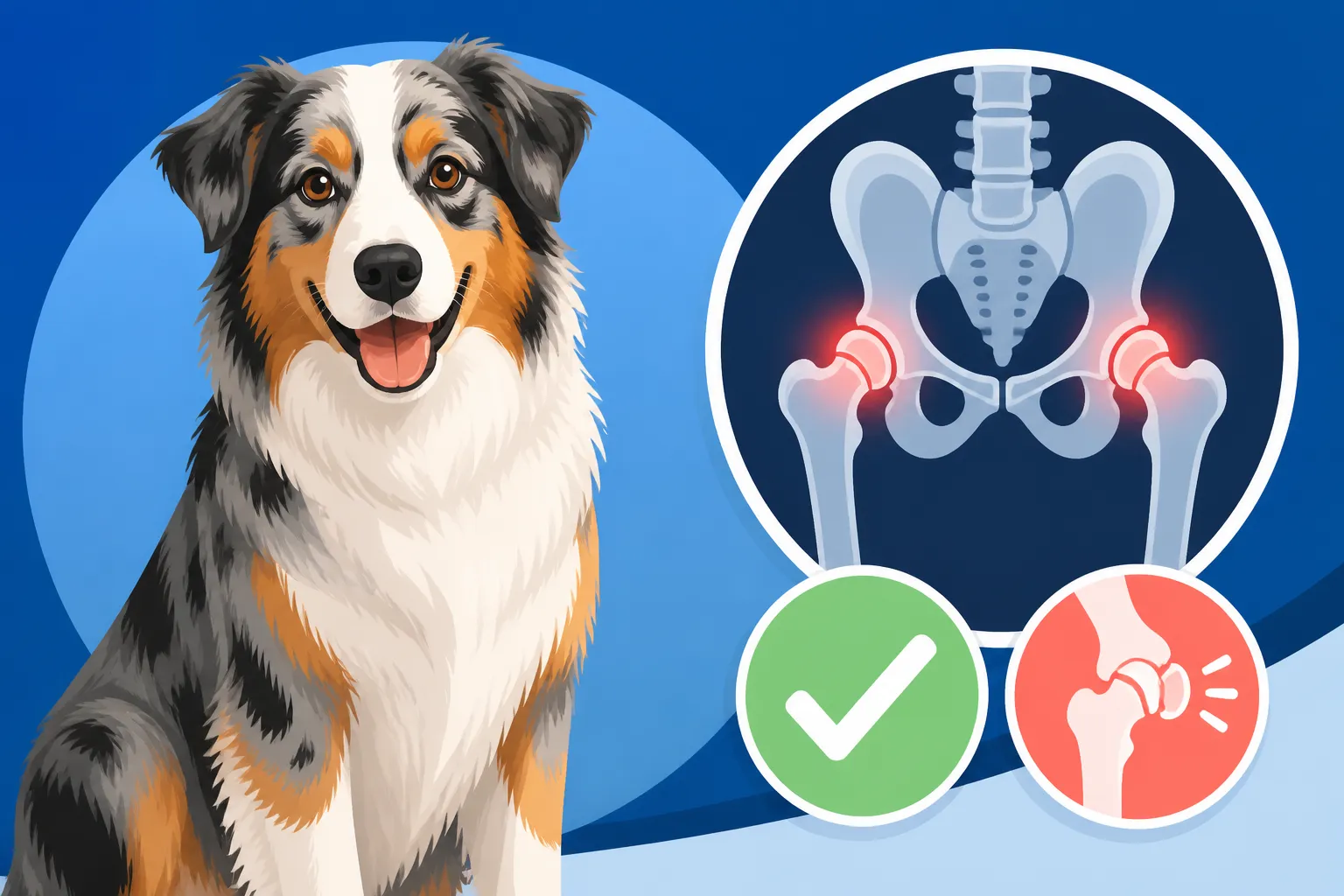
Australian Shepherd Hip Dysplasia and OFA Scoring
One of the most heartbreaking things we can face as Australian Shepherd parents is seeing our energetic, joyful companions struggle with pain, especially when it affects their mobility. Hip dysplasia is a condition that casts a long shadow over many dog breeds, and our beloved Aussies are unfortunately not immune. This guide aims to demystify Australian Shepherd hip dysplasia, explain the critical role of OFA scoring, and equip you with the knowledge to navigate this challenging health concern.
Understanding Hip Dysplasia in Australian Shepherds
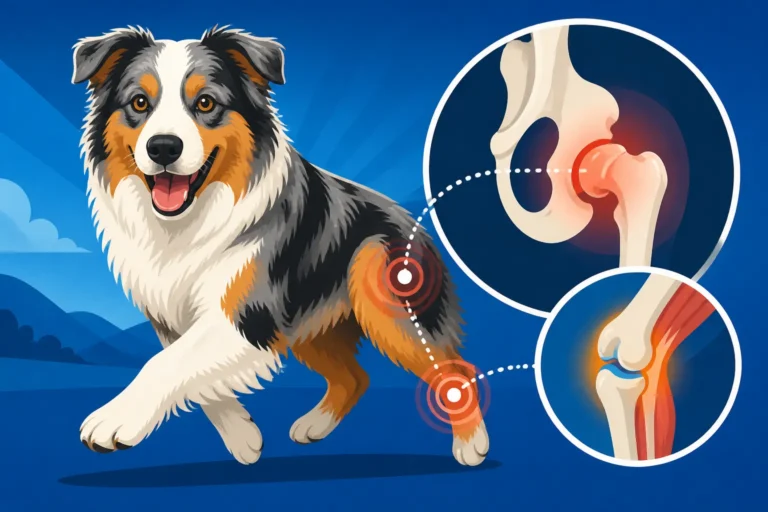
Hip dysplasia isn't just a fancy vet term; it's a real, often debilitating condition that affects the hip joint. Imagine your Aussie's hip as a ball-and-socket joint – a perfect fit allowing for smooth, powerful movement. In dogs with hip dysplasia, this fit isn't quite right. Over time, the imperfect fit leads to wear and tear, pain, and eventually, degenerative joint disease. It's a progressive condition, meaning it often gets worse with age, and it can significantly impact your dog's quality of life.
How Hip Dysplasia Affects the Joint
At its core, hip dysplasia means the "ball" (the head of the femur, or thigh bone) doesn't fit snugly into the "socket" (the acetabulum, part of the pelvis). Instead of gliding smoothly, the joint components rub and grind against each other. This friction causes laxity in the joint, meaning it’s too loose, leading to instability. The body tries to compensate by laying down new bone, which often results in painful bone spurs and changes to the joint's shape. Think of it like a poorly engineered hinge that starts to creak, wobble, and eventually seizes up. This constant friction and inflammation lead to osteoarthritis, which is the chronic pain we often associate with hip dysplasia. The severity can vary wildly, from mild discomfort that's barely noticeable to crippling pain that makes every step a struggle.
Early Signs and Symptoms to Watch For
Recognizing hip dysplasia early can make a huge difference in managing the condition. Sometimes, the signs are subtle, especially in stoic breeds like Aussies who are bred to work through discomfort. You might notice your energetic companion is a little less enthusiastic about their favorite activities. Perhaps they're reluctant to jump into the car, climb stairs, or even stand up after a nap. A classic symptom is a "bunny hop" gait, where they move both hind legs together, almost like a rabbit. You might also observe lameness in one or both hind legs, a decreased range of motion in their hips, or muscle loss in their hindquarters as they try to shift weight away from the painful area. Stiffness after rest is also a common indicator. If you're seeing any of these signs, especially in a young, active Aussie, it’s worth a trip to the vet. Even if it's not hip dysplasia, addressing any limping or stiffness is crucial, as early intervention often leads to better outcomes. Our detailed guide on Australian Shepherd Hip Dysplasia Symptoms Before Two dives deeper into what to look out for.
The Genetic Predisposition and Responsible Breeding
When we talk about hip dysplasia in Australian Shepherds, genetics are a massive part of the conversation. While environmental factors play a role, the blueprint for a dog's hip structure is largely passed down from their parents. This is why responsible breeding practices are so incredibly important, and why you'll often hear breeders emphasize health clearances.
Inheritance Patterns and Risk Factors
Hip dysplasia is considered a polygenic trait, meaning it's influenced by multiple genes working together, not just one. This complexity makes breeding away from it a significant challenge, but not impossible. Both parents can contribute genes that increase the likelihood of their offspring developing the condition. It's not as simple as "if parents have good hips, puppies will too," but it significantly stacks the odds in favor of healthier outcomes. Larger, fast-growing breeds are generally more susceptible, and while Aussies aren't giant dogs, their active, agile nature puts particular stress on their joints. Rapid growth, excessive weight gain during puppyhood, and improper nutrition can exacerbate a genetic predisposition. This is why understanding an Australian Shepherd Puppy Growth Chart is so vital for new owners.
Why Breeders Prioritize Hip Health
Any reputable Australian Shepherd breeder understands their responsibility to the breed and to the future owners of their puppies. This means diligently screening their breeding stock for genetic conditions like hip dysplasia. For them, it’s not just about producing beautiful puppies; it’s about producing healthy ones who can live full, active lives without chronic pain. They invest in expensive health tests, including OFA evaluations, to ensure they're not inadvertently passing on predispositions to debilitating conditions. Good breeders are transparent about their dogs' health clearances and should be able to provide documentation for both parent dogs. They are aiming for the best possible genetic combination to minimize the risk, even though a guarantee against hip dysplasia is impossible due to its polygenic nature. It's an ethical commitment that separates backyard breeders from those genuinely dedicated to the welfare of the Australian Shepherd breed.
The Role of OFA Scoring in Australian Shepherds
When you're researching Australian Shepherd breeders or adopting an adult Aussie, you'll inevitably encounter the acronym OFA. This isn't just another vet bill; it's a vital tool in the fight against canine hip dysplasia and a cornerstone of responsible breeding.
What is the OFA and Its Mission?
OFA stands for the Orthopedic Foundation for Animals, a non-profit organization established in 1966. Its primary mission is to promote the health and welfare of companion animals through a program of standardized evaluations for genetic diseases. For hip dysplasia, the OFA provides a universally recognized system for evaluating hip joint conformation based on X-ray images. Their database allows for the identification of dogs with healthy hips, enabling breeders to make informed decisions and reduce the incidence of hip dysplasia over generations. It brings a scientific, consistent approach to a complex problem, allowing for data collection that benefits the entire breed community. Without organizations like the OFA, it would be much harder for breeders to accurately assess the hip health of their dogs.
Why OFA is the Gold Standard for Aussies
For Australian Shepherds, and many other breeds, OFA scoring has become the gold standard for hip evaluation. This is because of its long-standing history, rigorous methodology, and extensive database. When an Aussie has an OFA hip clearance, it means that a panel of three independent, board-certified veterinary radiologists has reviewed the dog's hip X-rays and assigned a consensus rating. This multi-expert review minimizes individual bias and ensures a high level of accuracy. Breeders rely on OFA clearances to guide their breeding decisions, aiming to only breed dogs with "Fair" or better hip ratings. This proactive approach helps decrease the prevalence of hip dysplasia in the breed over time. It's widely accepted by breed clubs and registries as the most reliable method for assessing hip conformation, offering a degree of assurance that the parent dogs have been screened for this debilitating condition.
Navigating the OFA Examination Process
Getting your Australian Shepherd's hips evaluated by OFA is a specific process that requires careful planning and execution. It's not just a quick X-ray; proper technique is crucial for accurate results.
Timing the X-Rays for Accurate Results
The OFA's official recommendation for hip and elbow evaluations is for dogs to be at least 24 months (two years) of age. The reason for this specific age is that by two years, the hip joints are considered mature, and the skeletal growth plates have typically closed. Taking X-rays earlier can lead to misleading results because a puppy's bones and joints are still developing, and what might look dysplastic at a young age could improve, or vice versa. Some preliminary evaluations can be done at a younger age (as early as 4 months), but these are not considered final certifications and are primarily for breeders who want an early indication. For the definitive "passing" grade that breeders use, waiting until the dog is two years old is essential. This waiting period can feel long, especially for breeders anxious to know their dog's status, but it's a necessary step for reliable results.
The Sedation and Positioning Protocols
For an OFA hip evaluation, your Australian Shepherd will need to be sedated or anesthetized. This isn't just to keep them still; it's absolutely critical for proper positioning. The X-ray image needs to be taken with the dog lying on its back, hind legs extended straight back and parallel to each other, with the femurs rotated slightly inward. This specific positioning, known as the "VD view" (ventrodorsal extended), is designed to optimally visualize the hip joint and detect any signs of laxity or malformation. Even a slight rotation or improper extension can distort the image and lead to an inaccurate reading. Because our Aussies are often strong-willed and high-energy, achieving this precise position without sedation is nearly impossible and would be unfair to the dog. The sedation ensures comfort and cooperation, allowing the veterinary team to capture high-quality, diagnostic images that the OFA radiologists can accurately evaluate.
Submitting Films for Evaluation
Once the X-rays are taken, the veterinary clinic will typically submit them to the OFA. This involves sending the physical films or digital images along with a completed application form and fee. The form includes details about your Australian Shepherd, such as its name, registration numbers, breed, date of birth, and owner information. It's crucial that all information is accurate and legible. The OFA then sends these images to three different board-certified veterinary radiologists who independently review and grade the hips. This consensus approach is what gives the OFA its credibility. After all three radiologists have submitted their findings, the OFA compiles the results and sends a report to the owner and the submitting veterinarian. This process can take several weeks, but the wait is well worth it for the peace of mind and reliable data it provides. Remember, clear, correctly positioned X-rays are paramount for a fair assessment.
Deciphering Your Australian Shepherd's OFA Results
Receiving your Aussie's OFA hip results can feel like opening a report card. Understanding what those grades mean is essential, whether you're a breeder, a prospective puppy owner, or simply want to know more about your dog's health.
Understanding the Seven Hip Ratings
The OFA uses a standardized seven-point grading scale for hip conformation, ranging from excellent to severely dysplastic. It's a comprehensive system designed to provide a clear picture of joint health:
| OFA Hip Rating | Description | Breeding Recommendation (General) |
|---|---|---|
| Excellent | Superior hip conformation, with a tightly fitting femoral head in a well-formed acetabulum. Minimal joint space and almost perfectly aligned components. | Recommended |
| Good | Well-formed hips with slightly less conformity than Excellent. The femoral head fits well within the socket, indicating a healthy joint. | Recommended |
| **Fair | Functionally normal hips, but with minor irregularities. Slight looseness or shallow acetabulum might be present, but typically no clinical signs of dysplasia. Considered within the normal range. | Recommended |
| Borderline | Hips that show some subtle changes that prevent a clear "normal" rating, but without definitive evidence of dysplasia. Re-evaluation at a later date might be suggested. | Use with caution |
| Mild | Definite evidence of hip dysplasia. Significant laxity, shallow socket, and early degenerative changes may be present. Dogs may or may not show clinical signs. | Not Recommended |
| Moderate | Obvious radiographic evidence of hip dysplasia. Moderate to severe laxity, significant bone spurs, and degenerative changes. Clinical signs are often present. | Not Recommended |
| Severe | Extreme evidence of hip dysplasia. Gross hip laxity, flattened femoral head, very shallow socket, and extensive degenerative changes. Dogs typically experience significant pain and lameness. | Not Recommended |
For breeding purposes, the OFA only issues certifications for "Excellent," "Good," and "Fair" hips. These are considered within the normal range. "Borderline" results often prompt a re-evaluation, while "Mild," "Moderate," and "Severe" indicate dysplasia and mean the dog should not be bred. Understanding Reading an OFA Hip Grade on an Australian Shepherd can really help clarify what these terms mean for your dog.
What a "Dysplastic" Result Truly Means
Receiving a "Mild," "Moderate," or "Severe" rating, meaning your Australian Shepherd's hips are dysplastic, can be incredibly disheartening. However, it's crucial to remember that a dysplastic X-ray doesn't automatically mean a life of constant pain or an immediate need for surgery. The X-ray image shows the structural changes in the joint, but the clinical signs (pain, lameness) don't always perfectly align with the radiographic severity. Some dogs with "mild" dysplasia might be very comfortable, while others with similar X-rays might be in significant pain. Conversely, some dogs with severe-looking X-rays can surprisingly manage quite well, especially if they are lean and muscular.
A dysplastic diagnosis means you need to be proactive about joint health. This often involves careful management of exercise, maintaining a lean body weight (as How Weight Multiplies the Load on Aussie Joints highlights), considering joint supplements (like glucosamine and chondroitin), and regular veterinary check-ups. Physical therapy, anti-inflammatory medications, or even surgery (like a total hip replacement or FHO) might become necessary options down the line, but many dogs with dysplasia live comfortable lives with proper care. It also means that the dog should absolutely not be bred to prevent passing on these genetic predispositions. Insurance providers like Healthy Paws often have policies that can help with the substantial costs associated with managing hip dysplasia, especially if the condition develops after enrollment.
Beyond OFA: Other Factors and Considerations
While OFA scoring is an invaluable tool, it's not the only piece of the puzzle when it comes to Australian Shepherd hip health. Many other factors contribute to a dog's overall joint longevity, and understanding these can help you support your Aussie throughout their life.
Environmental Influences on Hip Health
Genetics might load the gun, but environment pulls the trigger. Even a dog with excellent genetic hip conformation can develop joint issues if not properly cared for. Conversely, a dog with a predisposition to dysplasia might thrive with meticulous environmental management. Key environmental factors include nutrition, exercise, and weight management. Overfeeding puppies and allowing them to grow too quickly or become overweight puts immense stress on developing joints. High-impact, repetitive activities (like excessive fetching on hard surfaces or long runs on pavement) during critical growth periods can also be detrimental. Instead, controlled exercise, like swimming or walking on soft ground, is often recommended for young, growing Aussies. Providing good traction on slippery floors at home can also prevent painful slips and falls that can exacerbate underlying joint issues. It's a holistic approach, where every choice contributes to your Australian Shepherd Hip Dysplasia and Working Joints for the long haul.
Supporting Your Aussie's Joint Longevity
Taking a proactive stance on joint health can make a world of difference for your Australian Shepherd. Beyond choosing a reputable breeder who performs The Health Tests Every Australian Shepherd Parent Needs, there are many things you can do throughout your Aussie's life. Maintaining a healthy weight is paramount – every extra pound adds stress to their hips. A balanced diet with appropriate protein and calorie levels is crucial, especially during puppyhood. Consider supplements like glucosamine, chondroitin, and omega-3 fatty acids, which can support cartilage health and reduce inflammation. Many vets recommend starting joint support early, particularly for active breeds. You might want to consider Starting Joint Support on a Young Working Aussie even before any signs of issues appear.
Regular, appropriate exercise builds strong muscles around the joints, providing natural support, but avoid high-impact activities on hard surfaces, especially as your Aussie ages or if they show signs of stiffness. Swimming is an excellent, low-impact exercise. For older Aussies, Australian Shepherd Arthritis After Years of Work is a real concern, and a comfortable, orthopedic bed can also provide much-needed relief. Investing in pet insurance like Healthy Paws when your Aussie is young can also provide a financial safety net for potential future orthopedic issues, helping you afford the best possible care without economic strain. Regular veterinary check-ups, especially as your Aussie becomes a senior, are vital to monitor joint health and address any concerns promptly.
Disclaimer
This article is intended for informational purposes only and does not constitute veterinary advice. Always consult with a qualified veterinarian for any health concerns or before making any decisions about your Australian Shepherd's care, diet, or treatment. Genetic testing and OFA evaluations should be discussed with your vet and a reputable breeder.