Whether an Australian Shepherd Breeder Tests for MDR1
Bringing home a new Australian Shepherd puppy should be a joyous, exciting time, but the truth is, for many hopeful owners, it's also fraught with anxiety. You want to do everything right, ensuring your new family member is as healthy as possible, yet the world of genetic testing and inherited conditions can feel like a labyrinth. One of the most critical health concerns for an Australian Shepherd is the MDR1 gene mutation, and knowing if your breeder has tested for it is absolutely paramount. This guide will walk you through why MDR1 testing is so vital, what responsible breeders do, and how you can ensure your Aussie comes from a foundation of informed, ethical breeding practices.
Understanding the MDR1 Mutation in Australian Shepherds
Let's face it, the sheer amount of information about dog genetics can be overwhelming. But when it comes to the Australian Shepherd, the MDR1 gene is one you simply cannot afford to ignore. This isn't just some obscure genetic quirk; it's a fundamental piece of information that can literally save your dog's life.
What is the MDR1 Gene and Why It Matters
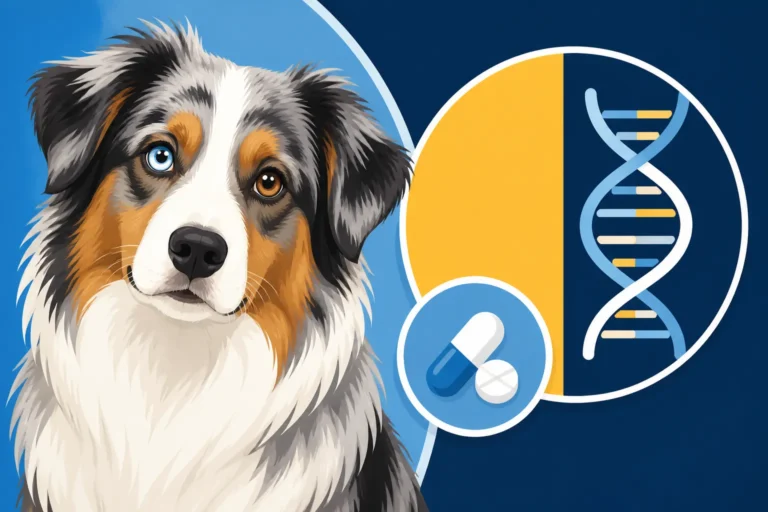
The MDR1 gene, which stands for Multi-Drug Resistance 1, is like a tiny, but incredibly important, bouncer at the blood-brain barrier. Its job is to produce a protein called P-glycoprotein, which acts as a pump, actively removing certain drugs and toxins from the brain, keeping harmful substances out. Think of it as your Aussie's personal security system, protecting its neurological health.
Now, here's where the mutation comes in. Many Australian Shepherds, and other herding breeds like Collies and Shetland Sheepdogs, carry a genetic mutation that causes this P-glycoprotein pump to be faulty or non-existent. This means that if an Aussie with the mutation is exposed to certain common medications, those drugs can cross the blood-brain barrier easily, accumulate in toxic levels, and cause severe, even fatal, neurological damage. It’s like the bouncer has fallen asleep on the job, letting all sorts of problematic guests into the VIP section.
Knowing whether your Australian Shepherd carries this mutation is not just a "good to know" — it's a "must know." It directly impacts how your vet can safely treat your dog for everything from routine parasite control to emergency surgeries. For a deeper dive into how this gene functions, you might want to read more about What MDR1 Does Inside an Australian Shepherd Brain.
The Real-World Risks of an Undetected MDR1 Status
Imagine this scenario: your energetic Australian Shepherd, Buster, suddenly becomes acutely ill. Maybe he ate something he shouldn't have, or developed a sudden infection. You rush him to the emergency vet, a place where quick decisions are often necessary. In the rush, if the vet isn't aware of Buster's potential MDR1 status, they might administer a common medication that, for an MDR1-affected dog, could turn a bad situation into a catastrophic one.
For example, Ivermectin, a common ingredient in many heartworm preventatives, is perfectly safe for most dogs, but for an MDR1-affected Aussie, even a small dose can cause seizures, blindness, coma, or even death. Similarly, common anti-diarrhea medications like Loperamide (Imodium) or certain anesthetics can also be incredibly dangerous. We're talking about drugs that are frequently used in veterinary medicine without a second thought. Without prior knowledge, your vet is flying blind, and your Aussie is at a significant, unnecessary risk. This is why discussions around The Drugs an MDR1 Australian Shepherd Cannot Take are so crucial.
It's a terrifying thought, right? That a medication intended to help could cause such harm. This isn't just theoretical; countless heartbreaking stories from owners of undiagnosed MDR1 dogs underscore this very real danger. Proactive testing eliminates this terrifying gamble, giving both you and your veterinarian the vital information needed to keep your Aussie safe and sound.
The Role of Responsible Breeders in MDR1 Testing
When you're searching for an Australian Shepherd, you're not just buying a puppy; you're investing in a future family member. And a huge part of that investment is trust in the breeder. A responsible breeder understands this implicitly, especially when it comes to genetic health conditions like MDR1.
Why Testing is a Standard for Ethical Breeders
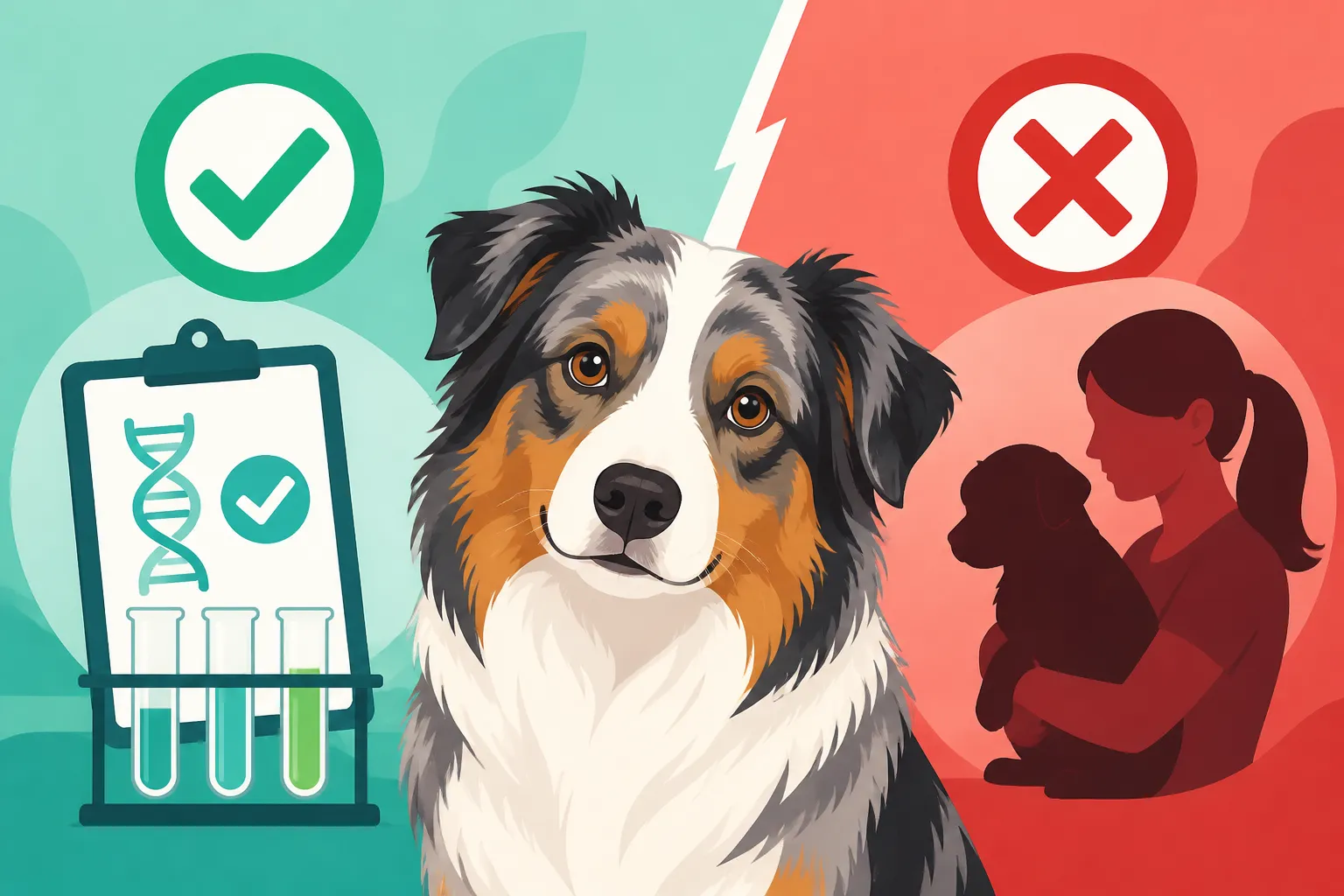
For an ethical, reputable Australian Shepherd breeder, genetic testing for MDR1 isn't an optional extra; it's a fundamental requirement. They view it as their duty to ensure the health and well-being of the puppies they bring into the world. This means not only testing the parent dogs for the MDR1 mutation but also using those results to make informed breeding decisions.
Breeders who are truly committed to the health of the Australian Shepherd breed will often go beyond just MDR1. They'll conduct a comprehensive The Genetic Panel Every Australian Shepherd Needs to screen for a range of inherited conditions prevalent in the breed, such as Collie Eye Anomaly (CEA), hereditary cataracts, and hip and elbow dysplasia. Testing for MDR1 is considered a basic standard because of how widespread and impactful the mutation is within the breed, with a significant percentage of Aussies carrying at least one copy of the mutated gene. They know that without this testing, they could be unknowingly passing on a serious health risk, leading to potential heartbreak and significant veterinary bills for new owners down the line.
How Breeders Conduct MDR1 Testing
The good news is that testing for the MDR1 mutation is straightforward and non-invasive. Most reputable breeders use a simple cheek swab kit. They rub a small brush or cotton swab on the inside of the dog's cheek to collect saliva and epithelial cells. This sample is then sent to a specialized veterinary genetics laboratory. Labs like Paw Print Genetics, Embark Veterinary, or Optigen are well-known for offering comprehensive genetic testing panels for various breeds, including the Australian Shepherd.
The results from these labs typically categorize a dog's MDR1 status into one of three classifications:
- N/N (Normal/Clear): The dog does not have the mutation and will not pass it on. They are unlikely to have adverse drug reactions related to MDR1.
- M/N (Mutant/Carrier): The dog carries one copy of the mutated gene but usually does not experience adverse drug reactions at standard dosages. However, they can pass the mutation on to their offspring. Owners of carriers should still exercise caution with certain drugs. We have more information on What a Carrier MDR1 Result Means for an Aussie.
- M/M (Mutant/Affected): The dog has two copies of the mutated gene and is highly sensitive to certain drugs. They are at significant risk of adverse reactions.
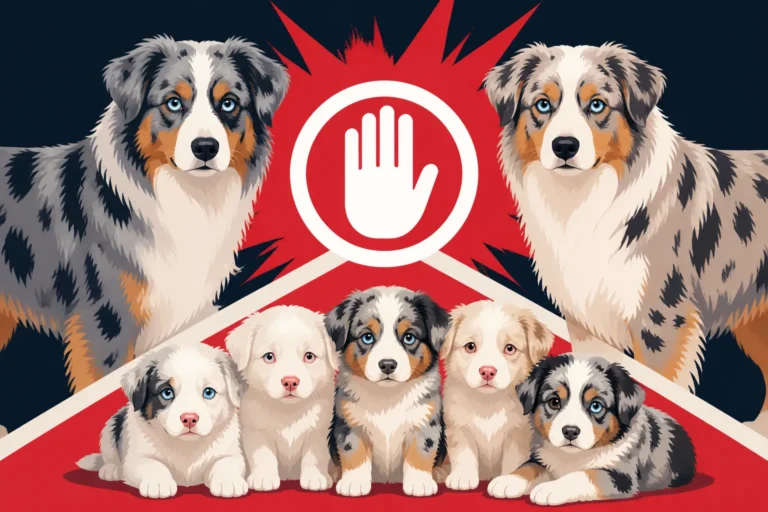
Responsible breeders use these results to avoid breeding two M/N or M/M dogs together, as this significantly increases the chances of producing M/M affected puppies. They aim to breed N/N dogs or carefully pair an N/N with an M/N to minimize risk. This thoughtful approach protects the future health of the breed and ensures puppies are born with the best possible genetic start. You can learn more about the testing process by looking into Testing an Australian Shepherd for MDR1.
Here's a simplified look at potential breeding outcomes:
| Parent 1 MDR1 Status | Parent 2 MDR1 Status | Potential Offspring | Likelihood of M/M Affected Puppy |
|---|---|---|---|
| N/N (Clear) | N/N (Clear) | 100% N/N | 0% |
| N/N (Clear) | M/N (Carrier) | 50% N/N, 50% M/N | 0% |
| N/N (Clear) | M/M (Affected) | 100% M/N | 0% |
| M/N (Carrier) | M/N (Carrier) | 25% N/N, 50% M/N, 25% M/M | 25% |
| M/N (Carrier) | M/M (Affected) | 50% M/N, 50% M/M | 50% |
| M/M (Affected) | M/M (Affected) | 100% M/M | 100% |
As you can see, the only way to get an M/M (affected) puppy is if at least one parent is a carrier (M/N) and the other is either a carrier (M/N) or affected (M/M). A truly responsible breeder will never knowingly breed two carriers together.
What to Look For and Ask When Choosing a Breeder
This is where you, as the prospective owner, become an advocate for your future puppy's health. Don't be shy about asking direct questions; a good breeder will appreciate your thoroughness.
Essential Questions About Genetic Health Clearances
When you're talking to a potential breeder, asking about genetic health clearances, especially for MDR1, should be at the top of your list. Don't just ask if they test; ask for specifics. Here are some key questions:
- "Do you test your breeding dogs for the MDR1 mutation?" This is your baseline. If the answer is no, it's a huge red flag, and you should probably look elsewhere.
- "Can I see the official documentation of the MDR1 test results for both the dam (mother) and the sire (father) of the litter?" Don't just take their word for it. Reputable breeders will be proud to share these documents, which often come directly from the testing laboratory. These documents will clearly state whether each parent is N/N (clear), M/N (carrier), or M/M (affected). You should also expect them to provide The MDR1 and CEA Results an Aussie Comes With as part of their comprehensive health documentation.
- "What are the MDR1 results for the parents?" Understanding the parents' status (e.g., "The mother is N/N and the father is M/N") gives you a good idea of the potential status of the puppies. As seen in the table above, if one parent is N/N and the other is M/N, all puppies will be either N/N or M/N, meaning none will be M/M (affected).
- "What are the chances that my puppy will be MDR1 affected or a carrier based on the parentage?" A good breeder will be able to clearly explain the genetic probabilities of their litter.
- "Will my puppy come with its individual MDR1 test results?" Some breeders choose to test each puppy in a litter, while others might provide a guarantee based on parentage if both parents are N/N. If the parents are M/N or M/M, individual puppy testing becomes even more crucial.
Remember, a breeder who hedges, gets defensive, or simply says they "don't believe in" genetic testing for MDR1 is not a breeder you want to get a puppy from. They're either uninformed or, worse, unwilling to take the necessary steps to ensure the health of their dogs. Be wary of listings that feature an Aussie Listing With No MDR1 Result – it's a critical piece of the puzzle.
Interpreting Breeder Responses and Documentation
When a breeder presents you with the genetic test results, take the time to actually read and understand them. They should be official documents from a recognized veterinary genetics lab. Look for the names of the parent dogs, their registration numbers, and the clear designation of their MDR1 status (N/N, M/N, or M/M).
If a breeder tells you that both parents are N/N (clear), then you can be confident that all puppies in that litter will also be N/N (clear) for MDR1. This is the ideal scenario for minimizing risk. If one parent is N/N and the other is M/N, then each puppy has a 50% chance of being N/N and a 50% chance of being M/N. While these puppies won't be M/M affected, knowing if your puppy is a carrier (M/N) is still important for their long-term care and for any future breeding considerations if that's something you decide to pursue. You can get more details on Reading an Aussie MDR1 Result Line by Line.
Any breeder who claims their dogs "don't need testing because they've never had a problem" or offers vague assurances without documentation should be avoided. These are common tactics used by less reputable breeders who prioritize profit over health. Ultimately, an Aussie breeder must produce verifiable test results. If they don't, walk away. This upfront diligence is far less costly and stressful than dealing with an MDR1 reaction in an emergency later on. Being prepared for the unexpected, perhaps with pet insurance from a provider like Healthy Paws, is always a good idea, but solid genetic health from your breeder is the first line of defense.
Living with an MDR1-Affected or Carrier Australian Shepherd
So, you've done your due diligence, and you know your Australian Shepherd's MDR1 status. Now what? Knowing is truly half the battle, and living with an MDR1-affected or carrier Aussie is entirely manageable with proactive care and clear communication.
Managing Your Aussie's Health Proactively
If your Australian Shepherd is identified as an M/N carrier or, less commonly from a responsible breeder, an M/M affected dog, the most important step is to educate yourself and your vet. The key is to be extremely proactive.
First, create a comprehensive list of drugs that are known to cause issues for MDR1-affected dogs. This list includes common medications like Ivermectin (at certain dosages), Loperamide, Acepromazine, Butorphanol, and many others. Keep this list handy, ideally taped to your refrigerator, stored on your phone, and most importantly, shared with every veterinary professional who might ever treat your dog. You can find excellent, up-to-date lists from organizations like the Washington State University Veterinary Clinical Pharmacology Laboratory (VCPL), which pioneered much of the research on MDR1. For specific information on safe parasite control, you should look into Parasite Prevention Safe for an MDR1 Australian Shepherd.
Second, ensure your veterinarian is fully aware of your dog's MDR1 status. When discussing any new medication or procedure, always explicitly state, "My dog is MDR1 (carrier/affected), so we need to be careful with drug interactions." A good vet will already be familiar with MDR1, but it never hurts to remind them, especially if you're seeing a new vet or in an emergency situation. This open line of communication is vital, even when it comes to routine care like Australian Shepherd Vaccination and MDR1 Concerns.
Third, consider having a medical alert tag for your Aussie's collar that clearly states "MDR1 Sensitive" and your contact information. This is a simple but powerful tool that can alert emergency responders or a new vet to your dog's condition if you're not able to communicate it yourself. This simple act of Putting MDR1 on an Australian Shepherd's Collar Tag can be a lifesaver.
The Importance of Communication with Your Veterinarian
Your veterinarian is your primary partner in your Australian Shepherd's health journey. Establishing clear and consistent communication about your Aussie's MDR1 status is non-negotiable. Don't assume they know or will remember; always bring it up.
Before any procedure, medication, or even during a routine check-up, reiterate your dog's MDR1 status. Ask them to confirm that any prescribed medication is safe for an MDR1-sensitive dog or that they are adjusting dosages appropriately. If you're ever in doubt, don't hesitate to ask for clarification or to double-check information. Remember, they are professionals, but they are also human, and a reminder can prevent a critical oversight.
If you ever find yourself in an emergency vet situation, where time is of the essence, clearly state your dog's MDR1 status immediately upon arrival. Having a printed copy of the safe/unsafe drug list and your dog's official genetic test results in a "vet bag" can be incredibly helpful. This ensures that even under pressure, the medical staff has the critical information they need to provide safe care. It might even be worth talking to your vet about creating Emergency Vet Instructions for an MDR1 Australian Shepherd.
Even with the best planning, life happens. This is where comprehensive pet insurance can offer immense peace of mind. Knowing your dog's MDR1 status allows you to discuss comprehensive coverage options, perhaps with a provider like Healthy Paws, right from the start, ensuring you're prepared for any necessary care, whether it's related to MDR1 or an unrelated health issue. While insurance like Healthy Paws typically doesn't cover pre-existing conditions, being informed about genetic predispositions before symptoms arise gives you the best chance to secure good coverage and manage future medical costs effectively.
Choosing a responsible breeder who prioritizes genetic health testing, particularly for conditions like MDR1, is one of the most important decisions you'll make for your Australian Shepherd. It lays the foundation for a long, healthy, and happy life, minimizing preventable risks and giving you peace of mind.
Disclaimer
The information provided in this article is for general informational purposes only and is not a substitute for professional veterinary advice. Always consult with a qualified veterinarian regarding any health concerns or before making any decisions about your pet's medical care.