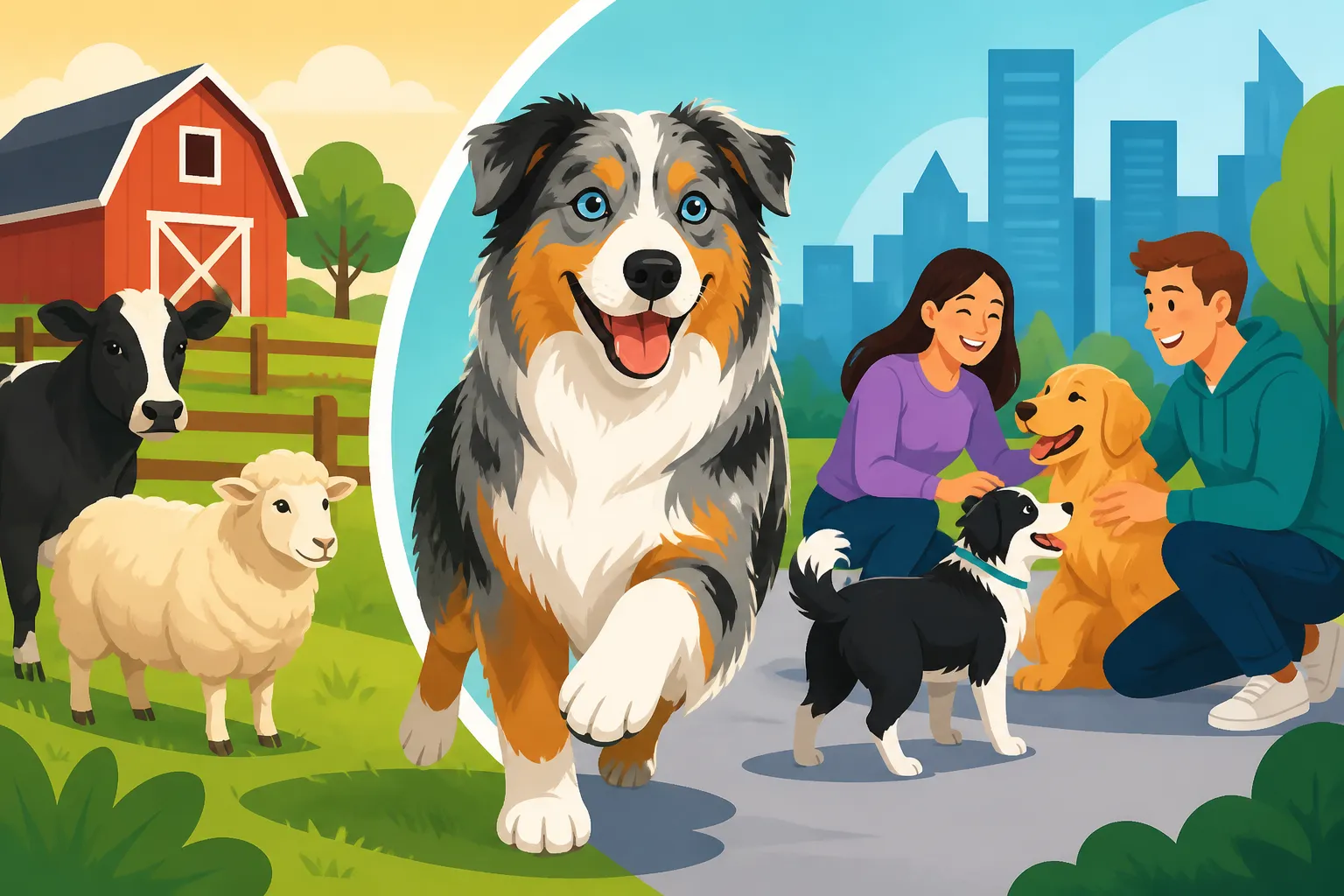
Socializing an Australian Shepherd Beyond the Farm
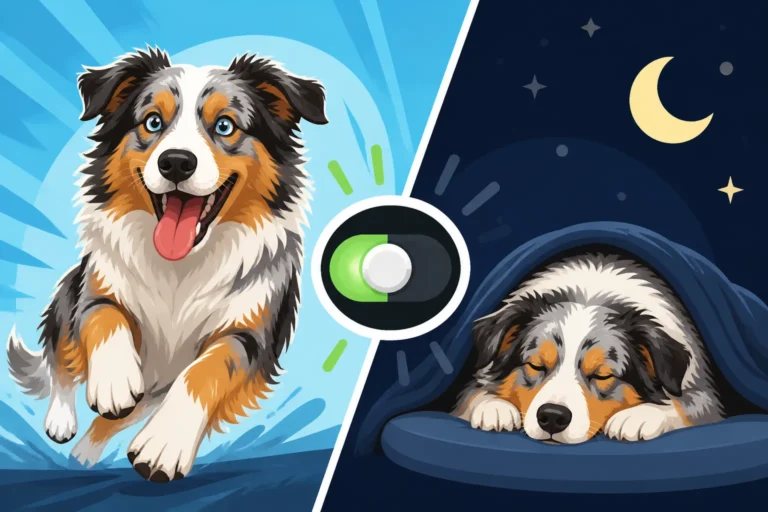
Australian Shepherds possess an extraordinary working intelligence, but taking a dog whose genetics crave wide open spaces and predictable routines into a noisy city or busy suburban neighborhood often leads to intense sensory overload. You might find your dog lunging at fast-moving bicycles, barking at approaching strangers, or hyper-fixating on passing traffic. This guide outlines realistic strategies to help you socialize your Australian Shepherd beyond quiet fields and secluded yards, turning environmental overarousal into calm, focused confidence.
The Core Instincts of the Australian Shepherd and the Socialization Challenge
The Working Brain and Environmental Hyper-Awareness
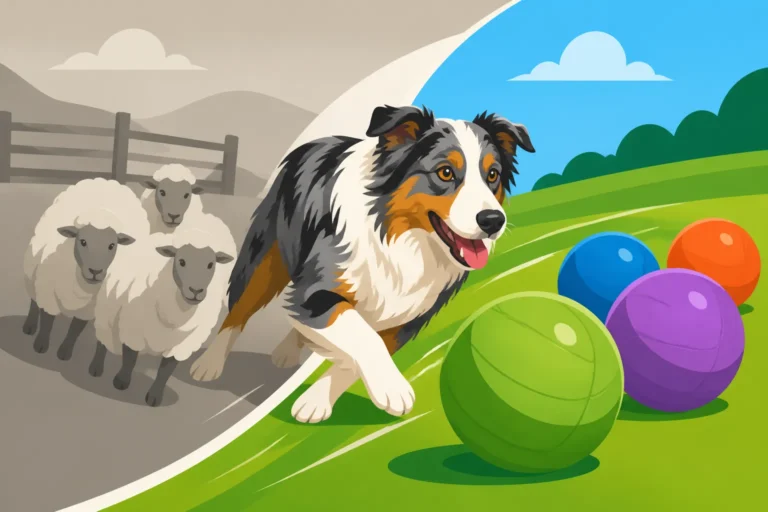
To understand why your Australian Shepherd reacts so intensely to suburban environments, you have to look directly at what they were bred to do. For generations, these dogs were selected for an astonishing level of environmental hyper-awareness. A working shepherd must notice the subtle shift of a stray sheep on a distant ridge, react instantaneously to sudden movement, and make split-second decisions without waiting for explicit commands. When you place that exact same hardwired brain on a narrow suburban sidewalk, every passing car, runner, and rustling leaf becomes a trigger that demands a response.
This hyper-awareness is not a behavioral defect; it is the fundamental operating system of a herding breed. When an Aussie steps outside, their senses are processing a continuous stream of visual and auditory data that an average dog might ignore completely. They notice the exact angle of an approaching pedestrian’s posture, the high-pitched squeak of a bicycle brake two blocks away, and the subtle scent of another dog on a fire hydrant. Without intentional guidance, this natural gift for observation rapidly morphs into hyper-vigilance, where the dog feels personally responsible for tracking and managing everything that moves in their line of sight.
Managing this working brain requires shifting your mindset from trying to eliminate their sensitivity to actively directing it. You are working with a dog that craves information and purpose. If you do not give your Aussie a clear, rewarding job to perform when navigating complex environments, they will default to their working instincts: controlling movement through staring, barking, chasing, or nipping at the heels of whatever is causing them distress.
Why Farm-Bred Lines Struggle in Suburban Settings
Many Australian Shepherd owners bring home puppies or young adults originating from strong ranching or working lines. These dogs possess incredible grit, stamina, and drive, but they are often genetically unprepared for the erratic stimuli of modern suburban life. On a farm or rural property, open spaces allow a dog to maintain comfortable distances from novel objects. A tractor moving down a dirt road provides ample space for a young dog to observe, process, and retreat if necessary.
In contrast, a suburban neighborhood compresses all these interactions into tight, inescapable spaces. Sidewalks force dogs to pass within feet of unfamiliar people and leashed pets. Noise is trapped between houses, and rapid movement occurs suddenly around blind corners. For a dog raised with the spatial freedom of a rural setting, this sudden loss of distance can feel intensely threatening. The dog cannot use flight as an option, so they resort to fight or proactive control tactics, leading to reactive lunging and frantic barking on the leash.
Furthermore, farm-bred lines often exhibit a strong natural reserve around unfamiliar humans and animals. While a well-bred show-line dog might take novel crowds in stride, a working-line Aussie is hardwired to protect their territory and livestock from intruders. When transitioning these dogs into urban environments, owners must recognize that Socializing an Aussie Puppy Off the Farm requires a vastly different strategy than simply exposing them to as many people as possible. It demands careful distance management and micro-exposures that respect the dog’s innate need for space.
Distinguishing Between Natural Reservation and Fear Reactivity
The official breed standard explicitly states that the Australian Shepherd may show a natural reservation toward strangers. This trait is deeply rooted in their heritage as guardian-herders. A reserved Aussie is cool, aloof, and observant; they do not feel the need to greet every person they meet, nor do they seek attention from passing strangers. They simply observe from a distance, remaining neutral and focused on their handler.
However, there is a fine line between breed-appropriate aloofness and fear-based reactivity. Natural reservation looks like a dog standing calmly at your side, watching a passerby with a neutral body posture, soft eyes, and a loose tail. Fear reactivity, on the other hand, presents as tense muscles, hard staring, weight shifted backward, lip licking, tucked tails, or explosive outbursts aimed at driving the threat away. When an Aussie exhibits Australian Shepherd Suspicion of Strangers, it is crucial to determine whether the behavior stems from polite indifference or escalating anxiety.
Confusing these two states can lead to significant socialization mistakes. Forcing an aloof Australian Shepherd to accept handling or petting from strangers in the name of “socialization” will often push a naturally reserved dog straight into fear reactivity. Proper socialization does not mean teaching your Aussie to love everyone they see; it means teaching them that unfamiliar people and situations are entirely benign and do not require any reaction at all.
| Behavioral Metric | Natural Reservation | Fear Reactivity |
|---|---|---|
| Body Language | Weight balanced, soft posture, loose tail | Weight back, stiff posture, tucked tail |
| Eye Contact | Soft gaze, easily breaks eye contact | Hard stare, hyper-fixated on stimulus |
| Vocalization | Silent or single alert bark | Continuous barking, growling, or whining |
| Response to Approach | Steps back calmly or ignores person | Lunges forward or attempts frantic retreat |
| Handler Focus | Reads handler, accepts high-value treats | Blind to handler, refuses food rewards |
Early Socialization Foundations for Australian Shepherd Puppies
The Critical Development Window and What It Really Means
The primary socialization window in dogs closes dramatically early, typically between three and fourteen weeks of age. During this brief developmental phase, a puppy’s brain is uniquely malleable. Experiences encountered during this time are cataloged as “normal” and safe, while novel stimuli introduced later in life are met with greater skepticism. For an Australian Shepherd, whose genetic default leans toward intense alertness, capitalizing on this early window is the single most important proactive health and behavior step an owner can take.
However, many owners misinterpret what “socialization” actually means during this critical stage. It is not an endless parade of dog parks, chaotic puppy parties, and letting every stranger on the street handle the dog. Exposing an sensitive Aussie puppy to overwhelming, unstructured environments often results in sensitization—where the puppy becomes more afraid or more overaroused with each exposure—rather than desensitization.
True socialization is about building positive associations and neutral responses to a vast array of sights, sounds, textures, and spaces. The goal is to teach your puppy how to process novelty calmly while maintaining engagement with you. Every exposure should be kept short, positive, and strictly managed so that the puppy leaves the interaction feeling secure and victorious.
Exposing Your Aussie to Sounds, Textures, and Motion
To prepare a working breed for the modern world, socialization plans must systematically break down the environment into specific sensory categories. Australian Shepherds are remarkably sensitive to motion and sound. A comprehensive strategy requires introduced exposures across varied surfaces, high-frequency sounds, and erratic movements long before the puppy encounters them in high-stress public settings.
Start by varying the surfaces your puppy walks on at home and in controlled environments. Guide them across wet grass, slick tile, unstable wooden planks, metal grates, gravel, and plastic tarps. Navigating novel footing builds proprioception—body awareness—which directly translates to psychological confidence. A puppy that knows how to balance their body on an uneven surface is far less likely to panic when stepping onto a vibrating elevator or a metal drainage grate on a busy street corner.
Sound and motion exposure must be managed with equal care. Use recordings of thunder, fireworks, traffic, lawnmowers, and crying children at extremely low volumes while feeding your puppy their dinner or playing interactive games. Gradually increase the volume over several weeks as long as the puppy remains relaxed. For motion, introduce moving items at a distance: a child riding a scooter, a neighbor pushing a trash can, or a basketball bouncing on a driveway. Pairing the sudden appearance of motion with a high-value treat shifts the puppy’s emotional response from an impulse to herd or chase to a desire to look at you for a reward.
Building Confidence Through Positive Reinforcement and Safe Boundaries
When introducing a young Australian Shepherd to novel surroundings, your primary job is to act as a secure base. If a puppy encounters something intimidating—a strange statue, a loud delivery truck, or a person wearing a bulky coat—never force them to approach the object. Dragging a fearful puppy toward a terrifying trigger completely shatters their trust in you and reinforces their fear.
Instead, utilize a policy of voluntary exploration coupled with positive reinforcement. Allow the puppy to observe the novel object from a comfortable distance where they show no signs of distress. The moment the puppy looks at the object, mark the behavior with a clicker or a clear verbal marker like “yes,” and reward them with a high-value treat. If the puppy takes a single curious step toward the object, mark and treat lavishly. If they decide to retreat, allow them to move back without judgment.
Creating clear boundaries during outings is equally crucial. Prevent well-meaning strangers from rushing up to pet your puppy without permission. Protect your puppy from rude, pushy adult dogs that might jump on them or intimidate them. When your Aussie learns that you will step in to advocate for their physical space, they no longer feel compelled to protect themselves through lunging, growling, or barking.
Navigating High-Trigger Urban and Suburban Environments
Managing Motion Sensitivity Around Bikes, Skateboards, and Cars
One of the most pervasive challenges facing suburban Aussie owners is the breed’s intense visual motion sensitivity. Fast-moving objects instantly ignite the shepherd’s predatory motor pattern: orient, stare, stalk, chase, bite/nip. On a suburban street, this manifests as An Aussie That Reacts to Skateboards and Bikes, runners, rollerbladers, and fast-moving automobiles. When restricted by a tight leash, the dog cannot complete the chase chain, resulting in extreme frustration that boils over into explosive reactivity.
Addressing motion sensitivity requires early, proactive management before the behavior becomes a ingrained habit. Start by setting up controlled training scenarios far removed from actual traffic lanes. Find an open park where you can sit fifty to one hundred yards away from a bike path. The moment a cyclist appears in the distance, mark your dog’s quiet observation immediately and feed a continuous stream of high-value rewards until the cyclist disappears.
If your Aussie stiffens, fixates, or begins to whine, you are simply too close. Increase the distance until your dog can look at the moving object and still easily eat a treat from your hand. Over time, you can gradually decrease the distance. For busy owners looking for structured home training modules to support this real-world work, online platforms like BAXTER & Bella offer excellent, step-by-step video lessons that walk handlers through step-by-step motion desensitization protocols right in their own living rooms.
| Trigger Category | Underlying Instinct Driven | Primary Management Strategy |
|---|---|---|
| Skateboards & Bicycles | Predatory Chase / Herding Nipping | High-distance mark-and-reward / Turn away |
| Passing Leashed Dogs | Territorial / Frustrated Greet | Parallel walking / Pattern games |
| Joggers & Children Running | Herding Control / Heel Nipping | Emergency U-turns / Mat Settle practice |
| Cars & Heavy Machinery | Sound & Visual Overload | Vehicle desensitization / Target focus |
Sidewalk Etiquette and Passing Other Leashed Dogs Safely
Narrow suburban sidewalks are a breeding ground for leash reactivity. When two leashed dogs approach each other head-on on a narrow path, it violates natural canine etiquette. In the canine world, direct head-on approaches with hard eye contact are considered confrontational. Off-leash dogs will naturally arc around one another, sniffing the ground and signaling peaceful intentions. Being trapped on a six-foot lead forces dogs into a tense, face-to-face confrontation with zero escape options.
For an Australian Shepherd, this structural tension often leads to Australian Shepherd Overarousal and Frustration. They want to approach to inspect or control the other dog’s movement, but the restraint of the leash builds immense physical pressure. To navigate sidewalks successfully, throw out the idea that your dog must walk past every dog in a tight heel. Practice “sidewalk etiquette” by creating artificial space whenever possible.
When you see another dog approaching, step off the sidewalk onto a grass verge, step into a driveway, or cross the street entirely. Use simple focus games, such as the “Find It” game—tossing high-value treats into the grass for your dog to snuffle out as the other dog passes. Sniffing naturally lowers a dog’s heart rate and diverts their visual attention away from the trigger. If you are stuck on a narrow path with no space to yield, perform a crisp 180-degree emergency U-turn and walk in the opposite direction until a safe turn-off is available.
Handling Crowded Spaces and Loud Urban Sounds
Taking an Australian Shepherd into densely populated urban centers, farmers’ markets, or outdoor shopping plazas requires a rock-solid foundation of focus and emotional regulation. In these environments, triggers do not arrive one at a time; they hit the dog simultaneously from every direction. The echo of metallic sounds bouncing off brick walls, chatter from crowds, screeching brakes, and children running past can rapidly push an unprepared Aussie into severe sensory overwhelm.
Before attempting a crowded venue, test your dog’s readiness in intermediate spaces like quiet strip mall parking lots or outside hardware stores on a weekday afternoon. Focus entirely on engagement drills rather than walking long distances. Ask your dog for simple, highly rewarded behaviors like a basic “sit,” “look at me,” or hand targets. If your Aussie is hyperventilating, refusing high-value food, or frantically scanning the horizon, their nervous system is flooded with adrenaline.
To build urban sound tolerance, systematically pair loud, unpredictable noises with immediate positive outcomes. Carry ultra-high-value food—such as cooked chicken, freeze-dried liver, or squeeze cheese—that is reserved strictly for loud sound events. When a heavy bus roars past or a metal tray drops at an outdoor cafe, immediately mark the sound and deliver the high-value treat before your dog has time to panic. This converts a scary acoustic event into a cue that predicts an amazing reward.
Structuring Controlled Exposure and Threshold Management
Recognizing Distance Thresholds and Stress Signals
Successful socialization relies entirely on your ability to read subtle canine body language and manage distance thresholds. A “threshold” is the exact boundary distance at which your dog can process a trigger without entering a stress-induced fight-or-flight state. When an Aussie is below threshold, they are capable of learning, taking food, and responding to known cues. The moment they cross over threshold, executive brain function shuts down, replaced by autonomic, reactive survival instincts.
Learning to identify micro-signals of stress allows you to retreat before an explosive reaction occurs. Far too many handlers miss the early warnings and only react when their dog is already barking and lunging on the lead. Long before an Aussie erupts, they will display subtle behavioral shifts that signal escalating tension.
Pay close attention to the following early stress indicators:
- Panting when not hot: A sudden, rapid pant with a tight tongue edge indicating internal stress.
- Fixated Staring: The dog’s body stiffens, their ears point sharply forward, and they lock eyes on a trigger, refusing to break gaze.
- Lip Licking and Yawning: Displaced behaviors performed out of context when the dog feels anxious.
- Whiteness of the Eye (Whale Eye): The dog holds their head still while tracking a trigger, showing the white sclera of their eyes.
- Refusing High-Value Food: A dog that normally loves treats suddenly turns their head away or spits food out.
- Grooming or Sniffing Displacements: Abruptly scratching themselves or intensely sniffing a blank patch of grass to avoid looking at a threatening trigger.
Desensitization and Counter-Conditioning Techniques
Desensitization and counter-conditioning are the gold standards of behavioral modification for working breeds facing environmental triggers. Desensitization means systematically exposing the dog to a low-intensity version of the stimulus—usually achieved through extreme distance—so that it does not trigger an emotional reaction. Counter-conditioning means altering the dog’s underlying emotional response to that stimulus, changing it from “that thing is scary/exciting” to “that thing makes delicious treats appear.”
The classic implementation of this technique is the “Look at That” (LAT) game developed by trainer Leslie McDevitt. To play LAT, position your Aussie at a safe distance from a trigger, such as a dog sitting quietly fifty yards away. When your dog turns their head to look at the trigger, immediately click or use your verbal marker. Your dog will naturally turn back to you to receive their treat.
Through repetition, the dog realizes that simply noticing the trigger causes great things to happen from the handler. Over time, the physical presence of the trigger becomes the ultimate cue for the dog to automatically whip their head around and focus on you. This fundamentally rewires the Aussie’s instinct from “I must control or attack that moving object” to “I should check in with my person.”
The Role of Online Training and Structured Programs
Socializing a complex, highly intelligent breed requires consistent structure, clear metrics, and ongoing educational support for the owner. Many Aussie handlers find themselves overwhelmed by conflicting advice found on public forums or generic pet store classes that fail to understand high-drive herding dogs. Working with professional digital curricula provides a controlled, step-by-step roadmap that can be worked through at your dog’s individual pace.
Utilizing dedicated online platforms like BAXTER & Bella allows owners to build solid foundational skills indoors long before testing them in chaotic real-world environments. Their step-by-step modules guide handlers through impulse control games, heelwork mechanics, and leash-handling techniques within the safety of a living room. Mastering these behaviors in a distraction-free space ensures that when you finally step into a challenging suburban setting, both you and your Australian Shepherd share a well-rehearsed vocabulary of cues and games to rely on.
In addition to digital platforms, finding a local, certified force-free trainer who explicitly understands herding breed mechanics is invaluable. Look for trainers holding certifications from organizations like the Karen Pryor Academy (KCPCT) or the Certification Council for Professional Dog Trainers (CCPDT). Avoid trainers who suggest using physical corrections, prong collars, or e-collars to suppress reactivity; applying pain or physical pressure to a hyper-aroused or fearful Aussie simply confirms their suspicion that environmental triggers cause bad things to happen, leading to severe behavioral fallout down the road.
Equipment and Tools for Effective Out-and-About Socialization
Long Lines, Harnesses, and Safety Gear
Having the right gear is critical when socializing an active, strong Australian Shepherd. Standard six-foot leashes are fine for basic street walking, but they restrict natural exploration and can build unnecessary leash tension. A well-fitted Y-shaped, non-restrictive harness is essential for out-and-about training. Ensure the harness does not sit across the shoulder blades or restrict the dog’s natural gait, as restricting joint movement causes physical discomfort that directly contributes to irritability and reactivity.
A fifteen-to-thirty-foot long line made of lightweight, weather-resistant Biothane is one of the single most transformative tools for socializing an Aussie. Biothane lines do not absorb moisture, gather burrs, or snag on bushes, making them ideal for field trips to open parks or quiet trails. A long line allows your dog to explore environments with a sense of semi-freedom while you maintain complete safety and control.
Using a long line changes the entire energy of a walk. It allows your Australian Shepherd to engage in natural foraging and sniffing behaviors, which actively lowers cortisol levels. When using a long line, practice holding the line in loose loops, letting it slide out as the dog moves forward and gathering it neatly as they move back toward you. Never attach a long line to a neck collar; always clip it to the back ring of a sturdy harness to prevent neck injury if the dog suddenly hits the end of the line.
| Socialization Gear | Best Application Scenario | Key Safety Consideration |
|---|---|---|
| Y-Shaped Harness | Everyday walking & long-line work | Avoid shoulder-restricting “no-pull” straps |
| 15–30ft Biothane Line | Open parks, beaches, quiet trails | Attach strictly to back harness ring |
| Treat Pouch | Continuous real-world training | Keep treats instantly accessible |
| Mat / Portable Bed | Outdoor cafes, parks, public venues | Teach mat settle duration at home first |
| Hands-Free Leash Belt | Urban walks, dual-handler training | Ensure belt has quick-release safety loop |
Treat Pouches, High-Value Rewards, and Enrichment Tools
Socializing a high-drive working dog requires rewards that can effectively compete with the extreme chemical high of environmental stimuli. Standard dry kibble or low-value crunchy treats will completely fail when your Aussie is staring down a passing motorcycle or an approaching dog. You need a dedicated, quick-access treat pouch filled with high-value, high-moisture, scent-heavy rewards.
Order a wide-mouth treat pouch that clips securely to your waist, easily found on Amazon, so you can draw rewards instantly without fumbling with zippers or pockets. Time-delay in reward delivery completely ruins the precision needed for desensitization work. Fill your pouch with a mix of high-value rewards chopped into tiny, pea-sized bits:
- Real cooked chicken breast or turkey roast.
- Diced string cheese or mild cheddar.
- Squeezable baby food or peanut butter in refillable silicone tubes.
- Freeze-dried beef liver, heart, or salmon bites.
- Commercial rolled food cut into soft cubes.
In addition to food rewards, consider using interactive toys as enrichment and decompression tools during public outings. Many Australian Shepherds are far more motivated by play than food. A soft fleece tug toy or a rubber ball on a rope tucked into your pocket can be pulled out instantly to redirect your dog’s focus away from a trigger. Tug games allow the dog to safely express their herding energy through gripping and pulling, serving as a powerful mechanical stress release.
Comparison of Socialization Environments and Exposure Strategies
Not all environments offer the same learning value. Selecting the right venue based on your dog’s current training stage is essential to prevent accidental overarousal.
| Environment Type | Visual Stimulus Level | Foot Traffic Density | Recommended Training Focus |
|---|---|---|---|
| Quiet Residential Street | Low to Moderate | Low | Basic heelwork & sniffing games |
| Open Suburban Park | Moderate | Variable | Long line exploration & LAT game |
| Strip Mall Sidewalk | High | Moderate | Threshold management & focus |
| Hardware Store Interior | Moderate (Acoustic) | Low to Moderate | Novel surfaces & sound exposure |
| Outdoor Farmers Market | Extremely High | High (Dense) | Advanced duration & mat settle |
Socializing the Older or Rescue Australian Shepherd
De-Escalating Established Reactivity Patterns
Socializing an adult or rescue Australian Shepherd that comes with pre-existing behavioral baggage requires a complete reset of expectations. Unlike a clean-slate puppy, an adult Aussie with a history of reactivity has spent months or years rehearsing negative emotional responses. Neural pathways associated with lunging, barking, and hyper-vigilance are deeply carved into their brain.
The first phase of socializing an adult dog is complete management: stopping the rehearsal of the bad behavior entirely. For two to four weeks, completely alter your daily routine to avoid known triggers. Walk your dog during off-peak hours—early in the morning or late at night—and avoid high-traffic parks entirely. This extended “cortisol detox” allows stress hormones to drain completely from your dog’s system, bringing their baseline anxiety down to a manageable level.
Once the dog’s nervous system is baseline quiet, you can begin systematic counter-conditioning. Accept that progress with an adult dog is measured in small increments over months, not days. Work at extreme distances where the dog feels entirely secure. Focus on building clear, predictable routines so the dog always knows what is coming next. When an adult Aussie learns that their handler predictably controls space and prevents scary encounters, their compulsive need to react begins to diminish.
Rebuilding Trust with Unfamiliar People and Dogs
An adult rescue Aussie that missed early socialization may harbour deep suspicion toward strangers or other animals. Attempting to force an adult dog to “make friends” by taking them to dog parks or letting strangers pet them is a recipe for catastrophic failure. Safety must always come first, which includes introducing tools like a comfortable, basket muzzle early in the process.
Muzzle training should be done slowly using positive reinforcement at home until the dog happily shoves their snout into the basket to get peanut butter. A muzzle is not a sign of a bad dog; it is a vital safety shield that protects everyone involved and gives the handler the emotional confidence needed to relax during training walks. Dogs read handler tension instantly; if you are holding your breath and bracing for an outburst, your Aussie assumes there is a genuine threat present.
When introducing an adult Aussie to new people, adopt a strict “ignore the dog” rule. Direct human eyes, reaching hands, and front-facing bodies are deeply threatening to a nervous shepherd. Instruct visitors or acquaintances to completely ignore the dog—no eye contact, no speaking, no reaching out to pet them. Place your dog on a leash or behind a baby gate with a long-lasting chew toy. Allow the dog to observe the person for as long as they need without any pressure to interact. If the dog chooses to approach and sniff the guest, the guest should remain still and continue to ignore them. Voluntary, unpressured curiosity is the foundation of genuine trust.
Pacing the Journey to Prevent Burnout and Regression
Socializing a reactive adult Australian Shepherd is rarely a smooth, linear process. You will experience brilliant breakthroughs followed by sudden, frustrating regressions where your dog reacts to something they handled fine the day before. This non-linear trajectory is entirely normal. Stress accumulates over time through a process known as “trigger stacking.”
Trigger stacking occurs when a dog encounters multiple small stressors over a day or week. While the dog might handle a passing car, a barking dog, and a noisy garbage truck individually without exploding, the combined physical stress of those events stays in their system. The next day, a minor event—like a person wearing a hat—causes a massive explosive reaction because the dog’s emotional bucket is already overflowing.
To prevent burnout for both you and your dog, build mandatory rest days into your socialization schedule. After a challenging training outing in a complex environment, spend the next two days engaging in calm, low-arousal activities at home. Focus on nosework games, lick mats, chew toys, and quiet backyard trick training. Respecting your dog’s need for recovery ensures that your long-term socialization trajectory stays on track without causing emotional exhaustion.
| Training Phase | Operational Target | Key Handler Strategy |
|---|---|---|
| Phase 1: Cortisol Detox | Lower baseline stress levels | Avoid all triggers; walk at off-peak times |
| Phase 2: Micro-Exposures | Build positive trigger associations | LAT game at extreme distance; high rewards |
| Phase 3: Proximity Work | Decrease functional threshold distance | Parallel walking; controlled environments |
| Phase 4: Maintenance | Generalize real-world neutrality | Variable environments; rest days included |
Long-Term Maintenance and Real-World Scenarios
Transitioning From Controlled Setups to Daily Life
Once your Australian Shepherd has built a strong foundation of environmental focus through controlled setups, you can gradually transition those skills into daily real-world scenarios. Real-world socialization is not a formal training class that starts and stops at a specific hour; it is a lifestyle that seamlessly weaves into every walk, outing, and field trip you take together.
Start integrating micro-training moments into standard daily routines. When you walk out your front door, ask your Aussie to sit and check in with you before stepping onto the driveway. When waiting to cross a street, ask for a quick hand target or a brief “look at me.” Turn routine neighborhood walks into active engagement sessions by changing your pace, weaving around light poles, and playing sudden games of “find it” in the grass.
By turning everyday environments into an interactive game shared with you, the surrounding world loses its overwhelming power. Your Aussie begins to view external triggers not as things they must control or fear, but as background noise that signals an opportunity to earn fun rewards and praise from their favorite human.
Social Outings, Dog-Friendly Venues, and Travel Routine
Taking a well-socialized Australian Shepherd along on weekend trips, outdoor patio dining, or visits to dog-friendly stores is exceptionally rewarding. However, achieving this relaxed state in high-distraction public settings requires teaching your dog a dedicated “settle” cue.
Teach your dog the “Mat Settle” game at home using a light, portable fleece mat or foldable dog bed. Reward your dog for placing all four paws on the mat, shifting into a down position, and eventually resting their chin on the fabric. Gradually build duration until your dog can happily chill out on their mat for thirty minutes while you watch television or read a book.
When taking your Aussie to a dog-friendly cafe or brewery, bring that exact same familiar mat along. Place the mat underneath your outdoor table, away from heavy foot traffic lanes. The mat acts as a powerful visual cue, telling the dog: “This is your safe station; your only job here is to lie down and rest.” Having a dedicated boundary gives the working Aussie a clear “job”—staying on the mat—which prevents them from feeling responsible for monitoring the surrounding patio space.
Knowing Your Dog’s Limits and Advocating for Their Space
Even the most thoroughly socialized Australian Shepherd will have environmental boundaries that should be respected. An Aussie is an active working breed, not a golden retriever built for unvetted social chaotic events. Expecting your shepherd to happily tolerate crowded dog parks, screaming children’s birthday parties, or chaotic street festivals is setting them up for failure.
Part of long-term socialization success is accepting your individual dog’s personality and advocating fiercely for their comfort zone. If a stranger asks to pet your dog and you know your Aussie feels stressed by direct touch from unfamiliar people, feel entirely comfortable saying “No, sorry—we are in training today and need space!” Keep a stash of quick-reward toys or enrichment items readily available by browsing through options on Amazon, such as puzzle toys or sturdy long-lines, so you are always equipped to manage situations seamlessly.
When you consistently step up as a firm buffer between your dog and the unpredictable world, your Australian Shepherd develops absolute trust in your leadership. They realize that they never need to bark, lunge, nip, or take control of a situation because you will always manage it for them. That deep mutual trust is the ultimate goal of socialization, yielding a happy, confident Australian Shepherd that can navigate any environment calmly by your side.
Disclaimer
This article is for general informational purposes only and does not constitute professional advice. Laws, prices and regulations vary by location and change over time. Consult a qualified professional for guidance on your specific situation.