Building an Aussie Herding Course in a Yard
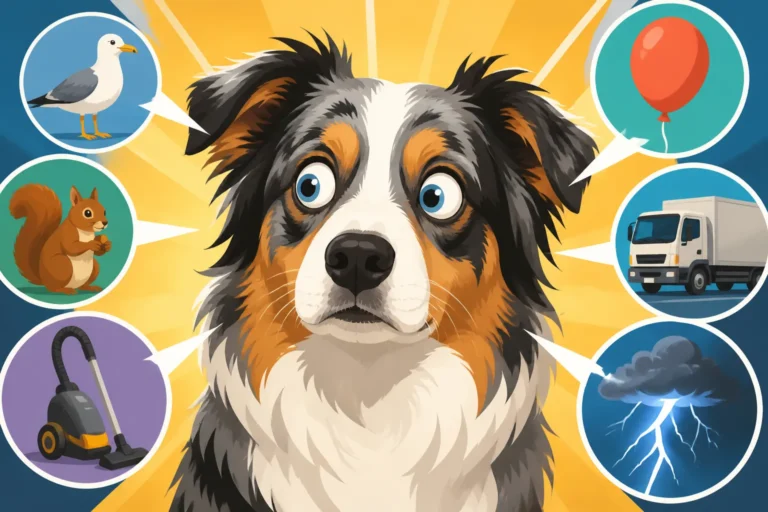
One of the biggest joys, and sometimes the biggest headaches, of living with an Australian Shepherd is their incredible, innate herding drive. You see it when they try to gather the kids, circle the cat, or even eye the vacuum cleaner like a rogue sheep. If you’re like most Aussie owners, you’re constantly looking for healthy, productive ways to channel that powerful instinct, and today we’re going to explore how to create a simple yet effective herding course right in your own backyard.
Understanding Your Aussie's Herding Instinct in a Backyard Setting
It’s easy to think of herding as something that only happens on a vast ranch with actual livestock, but for an Australian Shepherd, that drive is deeply ingrained. It's not just about chasing; it's about control, movement, and establishing order. Ignoring or suppressing this instinct can lead to frustration for both you and your dog, often resulting in behaviors you'd rather not see.
The Urge to Gather and Control
Your Aussie's ancestors were bred for centuries to work alongside humans, guiding and moving flocks of sheep and cattle. This isn't just a learned behavior; it's hardwired into their DNA. Even if your Australian Shepherd has never seen a sheep, they often possess an uncanny understanding of how to influence movement and position. You might notice your dog trying to "flank" you as you walk, cutting you off, or nudging you in a certain direction. They might quietly stalk a squirrel or a bird, exhibiting that intense stare and low crouch characteristic of a working dog.
Indoors, this might translate to your Aussie gently (or not so gently) Australian Shepherd Heel Nipping and How to Redirect It at your heels, especially if you're moving quickly. They might try to "collect" family members in one room, or get between two playing children, attempting to break up the action and regain control. I've even seen Aussies try to herd their owner's Roomba, treating it like a wayward lamb! It’s a natural manifestation of their desire to manage their environment and the creatures within it. This isn't naughtiness; it's just pure, unadulterated Aussie.
Why a Controlled Outlet is Crucial
Without appropriate outlets, this powerful herding instinct can become misdirected or problematic. An under-stimulated Australian Shepherd isn't just bored; they're often frustrated. They might start herding cars, bicycles, or even other dogs at the park in an uncontrolled manner, which can be dangerous for everyone involved. The mental energy required for herding is often far greater than the physical exertion of a simple walk or a game of fetch. While a good run is essential, it rarely taps into the deep psychological need an Aussie has to work its brain.
Providing a structured, safe outlet like a backyard herding course allows them to engage these instincts in a way that is both satisfying for them and manageable for you. It builds their confidence, strengthens your bond, and gives them a meaningful "job" to do, which is paramount for an Australian Shepherd's overall well-being. Think of it as intellectual stimulation for their inner ranch hand. It's a fantastic way to offer them some Mental Work That Actually Tires an Australian Shepherd and truly feel fulfilled.
Designing Your Backyard Herding Course: Key Elements and Safety
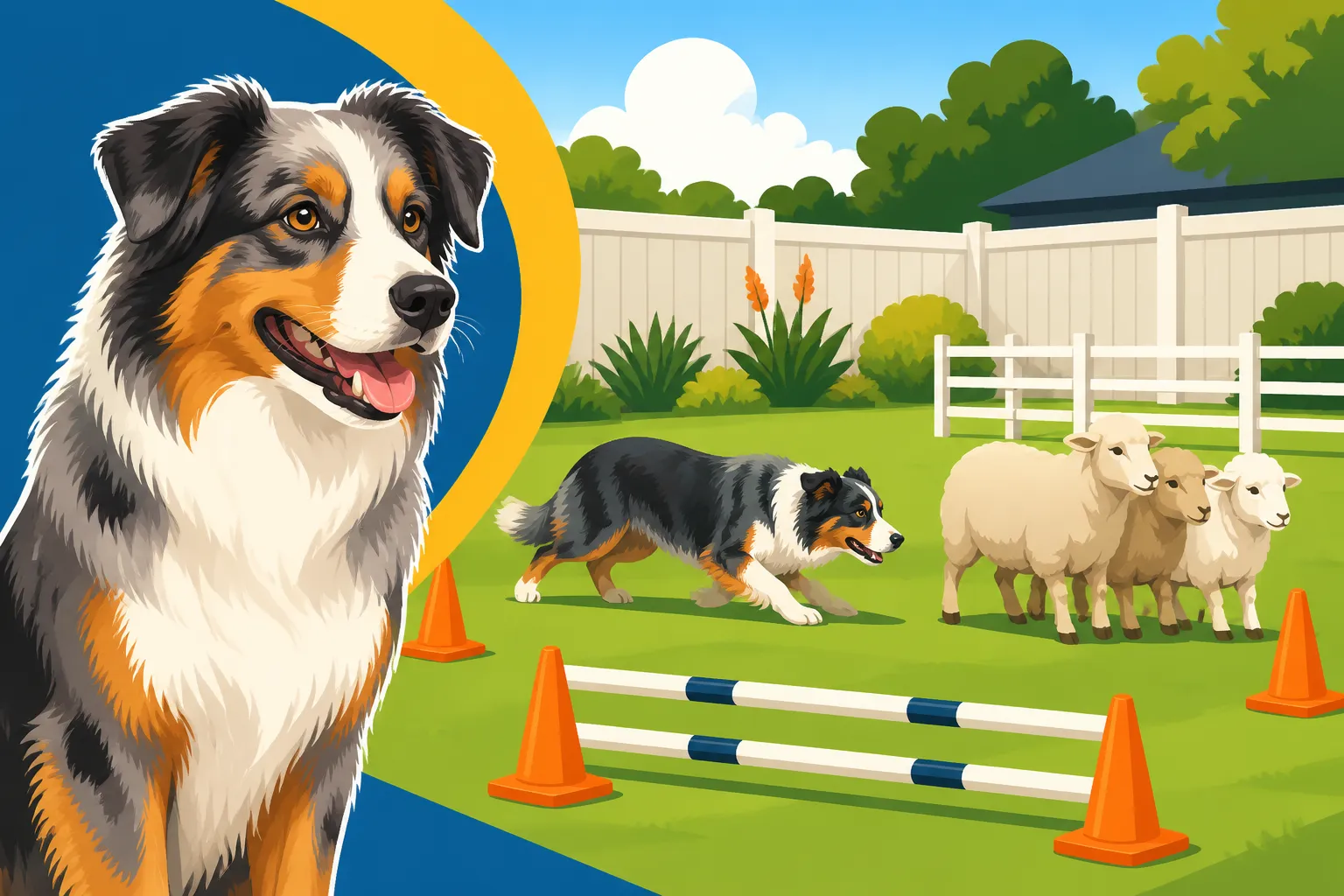
When you're envisioning a "herding course," don't let your mind immediately jump to acres of rolling pasture and a flock of sheep. A backyard course is about simulating the principles of herding in a confined space. It's about movement, direction, and gentle control, not actual livestock.
Assessing Your Space and Safety Considerations
Before you start setting up, take a good look at your backyard. The size isn't as critical as you might think; even a moderately sized suburban yard can work. What is critical is safety. Make sure your fencing is secure and there are no easy escape routes for your enthusiastic Aussie. Remove any potential hazards: sharp objects, toxic plants, or anything that could injure your dog or be damaged by a rolling "flock" object. Think about the ground surface too – grass is ideal, but a mixed surface can work as long as it’s not too rough or slippery.
The "flock" itself needs to be safe and appropriate. We're not using live animals here, but rather inanimate objects that can be pushed and moved. A sturdy, large exercise ball is often the go-to. It's light enough for your dog to push, but big enough that they can't easily bite or carry it. Look for durable, animal-friendly options on platforms like Amazon that can withstand some enthusiastic pushing and light nips. Avoid anything too small that could be swallowed, or too heavy that could injure your dog if it rolls into them. Flirt Poles and Herding Balls for an Australian Shepherd often come in robust materials suitable for this kind of play.
Essential Components of a Simple Herding Course
Once you've assessed your space, it's time to gather your "course" elements. Remember, simplicity is key when starting out.
- The "Flock" Object: As mentioned, a large, durable exercise ball (around 24-30 inches) is perfect. Some people use inflatable beach balls, but these are often too flimsy for an Aussie's determination. A sturdy utility ball, designed for dog play or even large children's play, works well.
- Cones or Markers: These are your "gates" or "boundaries." Simple traffic cones, bright buckets, or even sturdy plant pots can define the path. You can find multi-packs of bright, flexible cones quite affordably on Amazon. Start with just a few to create a simple channel.
- "Pen" or "Containment Zone": This can be as simple as a corner of your yard, or you can create a temporary "pen" using lightweight hurdles or even just a line of cones forming a small circle. The goal is to teach your Aussie to maneuver the "flock" into a specific spot.
- A Long Line: Especially when you're first teaching, a long line (15-30 feet) can be invaluable for guiding your dog and preventing them from getting too far afield or becoming overly excitable. This allows you to maintain gentle control without direct physical contact, which mimics the subtle cues used in real herding.
Progressive Difficulty and Engagement
Start incredibly simple. Your first "course" might just be two cones set wide apart, and the goal is for your Aussie to push the ball between them. Once they understand that, you can:
- Narrow the "Gates": Bring the cones closer together.
- Add More Gates: Create a zigzag pattern or a simple L-shape.
- Introduce a "Pen": Challenge your dog to push the ball into a designated containment area.
- Use Different Surfaces: If your yard has a patio area, try moving the course slightly to introduce a new texture.
The key is to build success upon success. Keep sessions short and fun, ending always on a positive note. This isn't about perfection; it's about engagement and channeling that incredible drive. This methodical approach to increasing challenge is something you can learn more about from resources like BAXTER & Bella, which emphasize gradual steps and positive reinforcement in all aspects of training.
Implementing and Training on Your Backyard Herding Course
Now for the fun part: getting your Australian Shepherd to actually interact with the course! Remember, patience and positive reinforcement are your best friends here.
Introducing Your Aussie to the "Flock"
First, introduce your Aussie to their "flock" object (the exercise ball) in a low-pressure environment. Let them investigate it. Some Aussies will instinctively want to push it, others might be wary, and some might try to bite it like a toy. If they try to bite it, gently redirect them with a firm "no" and encourage pushing with your hand or foot. Use high-value treats and enthusiastic praise whenever they show interest in pushing or nosing the ball.
The goal is to teach them that the ball is not a chew toy or something to be pounced on, but something to be moved with their body or nose. Think of it as a Tug as a Legal Outlet for Aussie Herding Drive, but for their body. Keep the ball moving away from them initially, encouraging them to drive it forward. You might even start by kicking the ball gently and praising them when they follow or try to keep it from moving away.
Guiding Your Aussie Through the Course
Once your Aussie understands the concept of moving the ball, you can start introducing directional cues. These are often called "flank" commands in traditional herding, like "come by" (clockwise) and "away" (counter-clockwise).
- Start with "Come By" (Clockwise): With the ball in front of your dog, stand to their left side. As you gently encourage the ball to move forward and to the right, take a few steps in that direction, using a clear verbal cue like "Come by!" and sweeping hand motion. Reward any attempt to circle the ball in that direction.
- Then "Away" (Counter-Clockwise): Repeat the process from their right side, using "Away!" and encouraging movement to the left.
- Use Your Body Language: Aussies are incredibly sensitive to body language. Your position relative to the ball and your dog can communicate a lot. Moving behind the ball encourages your dog to push it forward. Moving to the side encourages them to flank.
- The Long Line is Your Helper: If your dog is struggling with direction or getting too excited, use that long line. Guide them gently in the direction you want them to go. A quick, light tug can redirect, followed immediately by slack and praise as they get it right. Remember, this isn't about force, but clear communication.
Keep sessions short, maybe 5-10 minutes, especially at the beginning. End on a success, even if it's a small one. The aim is to make it a positive, engaging experience that builds their confidence and provides that vital mental workout.
Troubleshooting Common Challenges
You’re bound to encounter a few bumps along the way. Don’t get discouraged!
- Biting or Chewing the Ball: This is common. It means your Aussie sees the ball as a toy to be claimed, not a "flock" to be moved. Interrupt immediately with a firm "No!" and remove the ball for a few seconds. Reintroduce it and try to get them to push it gently. If it persists, try a different type of ball, perhaps one that's less satisfying to bite. Sometimes, simply supervising closely and redirecting with a verbal cue or light leash pressure is enough.
- Losing Interest: Is the session too long? Is it too hot? Are you making it fun enough? If your Aussie seems bored, try making the "flock" more exciting by gently rolling it and getting them to engage. Shorten sessions and introduce more high-value treats and enthusiastic praise.
- Over-Excitement: Some Aussies get too into it, lunging and bouncing off the ball. This can indicate overarousal. Take a break. Bring their energy down with a brief "settle" command or a moment of quiet focus, then re-engage at a lower intensity. A long line can help manage this initial burst of energy.
- Not Understanding the Directions: Go back to basics. Make the "gates" wider, use more exaggerated body language, and practice the directional cues separately from the course first, rewarding just the circling motion around the ball. You might find resources on basic obedience and communication from reputable sources like BAXTER & Bella helpful in refining these foundational skills.
Beyond the Basics: Evolving Your Backyard Herding Activities
Once your Australian Shepherd is confidently maneuvering their "flock" through your basic backyard course, you can start to introduce more complexity and truly deepen their engagement.
Incorporating Advanced Elements
Think about how you can make the game more challenging and mentally stimulating.
- Multiple "Flock" Objects: Instead of one ball, try two or even three! This simulates a real flock's dynamics, where animals move independently. Your Aussie will need to learn to manage multiple objects, pushing one while keeping an eye on the others. This requires increased focus and strategic thinking.
- More Complex Patterns: Move beyond simple gates. Create circular patterns, figure-eights, or even a labyrinth of cones. This demands more precise directional control and a better understanding of your cues. You can even experiment with creating a "holding pen" with an entrance and exit, requiring your Aussie to guide the ball in and then out.
- Simulated "Obstacles": Introduce a small, stable jump (like a PVC pipe frame) that the ball needs to be pushed under, or a tunnel. This adds another layer of problem-solving and can be really fun for your Aussie. Just ensure any added obstacles are safe and secure.
- Varying Environments: If you have access to a safely fenced, larger space, try setting up a course there. The change in environment can challenge their focus and generalize their skills beyond your immediate backyard.
Integrating Other Training Principles
This backyard herding course isn't just a standalone activity; it's a fantastic way to reinforce other training and behavioral skills.
- Enhanced Focus and Obedience: The course demands intense concentration from your Aussie, strengthening their ability to ignore distractions and focus on your cues. It builds a strong working relationship, reinforcing your role as a trusted guide. This translates to better obedience in other areas of their life.
- Impulse Control: Mastering the course requires your Aussie to control their urges – not just to chase or bite, but to respond precisely to your directions. This builds critical Aussie Impulse Control With Moving Toys, teaching them to think before acting.
- Problem-Solving Skills: Every new configuration or obstacle is a puzzle for your dog to solve. This mental gymnastics is incredibly tiring and satisfying for a bright breed like the Australian Shepherd.
- Bridge to Formal Sports: For some Aussies, this backyard fun might spark a genuine interest in more formalized herding sports like Treibball. Treibball as an Aussie Alternative to Sheep specifically uses large exercise balls and gates, making your backyard course an excellent preparatory step. If you're wondering Whether a Pet Aussie Can Learn to Herd, the answer is often yes, and starting in your backyard is a perfect, low-pressure way to explore that potential. You could even consider taking them for Getting an Australian Shepherd Herding Instinct Tested to see how strong their natural predispositions truly are.
By continually challenging your Aussie within this safe, controlled environment, you're not just providing exercise; you're nurturing their inherent talents, building their confidence, and strengthening the incredible bond you share.
| Course Element | Purpose in Backyard Herding | Equivalent in Formal Treibball | Where to Find |
|---|---|---|---|
| Large Exercise Ball | The "flock" to be moved; provides resistance and feedback. | The large stability ball (often 65-75 cm) driven by the dog. | Pet stores, sporting goods stores, Amazon |
| Traffic Cones | Define "gates" or pathways; guide direction. | Cones mark the gate, recall areas, or specific courses. | Hardware stores, Amazon |
| Temporary Fencing/Hurdles | Create "pens" or containment zones for the ball. | Designated "goal" area where the ball must be pushed. | Pet supply stores, DIY stores |
| Long Line | Gentle guidance and control; maintains focus. | Often used in initial training or for recall during trials. | Pet supply stores |
| Handler's Body Cues | Primary method of communication; directs movement. | Handler uses verbal cues, whistles, and body language from a distance. | BAXTER & Bella (for general training principles), online tutorials |
Disclaimer
This article is for general informational purposes only and does not constitute professional advice. Laws, prices and regulations vary by location and change over time. Consult a qualified professional for guidance on your specific situation.